Within Macedonian Mystery Beasts
Which Real Animals Become Macedonian Monsters?
Pelicans, catfish, otters, bears and the elusive Balkan lynx can all produce strange sightings when distance, darkness or perspective interfere.
On this page
- Waterbirds and fish that distort scale on lakes
- Bears, wolves and the rare Balkan lynx
- How habitat change creates unfamiliar encounters
Page outline Jump by section
Introduction
Many North Macedonian mystery-beast stories become less mysterious when viewed through the lens of the country’s real wildlife. The lakes of the Prespa and Ohrid region, the forests of Mavrovo, and the rugged western mountains support animals that are genuinely large, elusive or visually striking. Seen at long range, in poor light or through waves and mist, ordinary wildlife can appear extraordinary. In a country where lake-monster rumours and stories of strange creatures occasionally surface, the most likely explanations usually involve known animals whose size, behaviour or rarity create misleading impressions.
The key question is not whether witnesses are inventing what they saw. Most people probably report something real. The challenge is identifying how distance, perspective and expectation can transform a pelican into a lake monster, a lynx into a phantom cat, or a swimming mammal into a serpentine shape.
Waterbirds and Fish That Distort Scale on Lakes
The Prespa lake system is one of the most important wetland habitats in Europe and supports enormous numbers of waterbirds, including some of the world’s most impressive pelicans. The region hosts the largest breeding colony of Dalmatian pelicans, a species with a massive wingspan and a bulky body that can look startlingly prehistoric when seen from afar. Prespa is internationally famous for these birds and for its rich birdlife, with hundreds of recorded species.[prespawaterbirds.gr]prespawaterbirds.grthe national park weg 34943The National ParkPrespa is home to the largest colony of Dalmatian pelicans in the world, with over 1400 pairs. Little Egrets, Great Egre…
A pelican on open water can create several classic “monster” illusions:
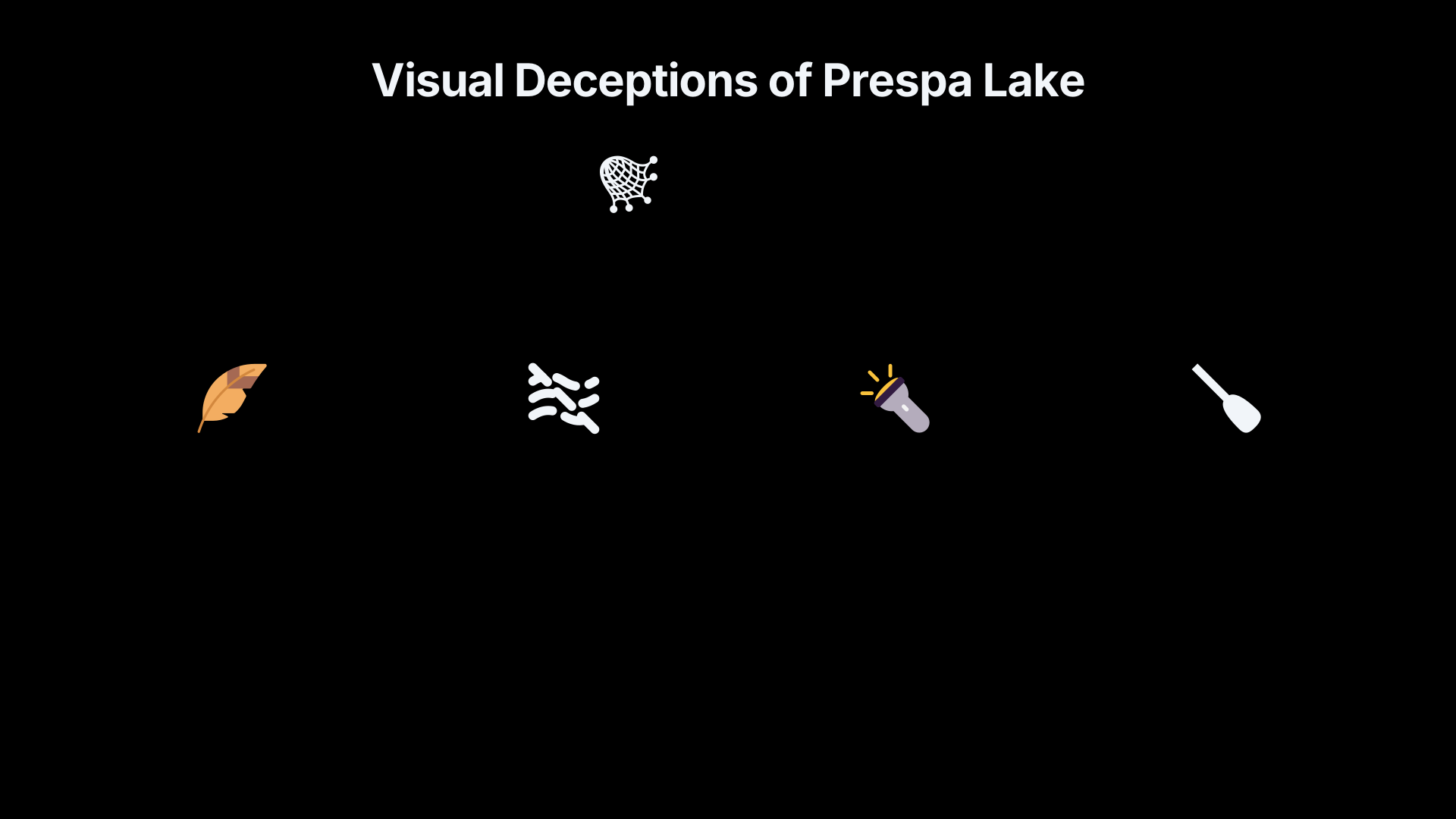
- When only the head and upper neck are visible above waves, the bird can resemble a long-necked creature.
- Groups of birds swimming in a line may appear to be a single animal with several humps.
- A bird diving, resurfacing and changing direction can seem larger than it really is because observers struggle to judge distance across a wide lake.
- Low-angle sunlight can exaggerate shadows and silhouettes, making a normal bird appear oddly shaped.
These effects matter because reports of lake monsters often begin with brief observations rather than prolonged close views. A witness may see only a dark shape emerging from the water and naturally interpret it according to familiar monster imagery rather than local bird behaviour.
Large fish can also contribute to unusual reports. Prespa’s waters contain substantial fish populations, including species capable of producing sizeable surface disturbances. Fishermen in the wider region have long encountered large catfish and carp. Although fish rarely create the classic “neck and head” profile associated with lake-monster legends, a surfacing fish, a rolling shoal or a fish disturbing floating vegetation can generate puzzling shapes and wakes.[Wikipedia]WikipediaDalmatian pelicanDalmatian pelican
The important point is that lakes do not need unknown animals to produce strange sightings. Water itself is a powerful source of visual deception. Reflections, waves, floating reeds, birds and fish often combine into fleeting scenes that look far more dramatic than they really are.
Bears, Wolves and the Rare Balkan Lynx
Away from the lakes, North Macedonia’s mountains support several large predators that can easily become the basis of mystery-animal stories.
Brown bears remain present in parts of the western Balkans, including mountain landscapes connected to North Macedonia. Wolves are also widespread enough to be familiar to rural communities while still remaining elusive to most visitors. Both species are large, mostly secretive and often active during low-light periods when identification becomes difficult.[theguardian.com]theguardian.comLocated at the tri-border of Greece, Albania, and North Macedonia, the area features two ancient lakes — Lesser and Great Prespa — surrou…
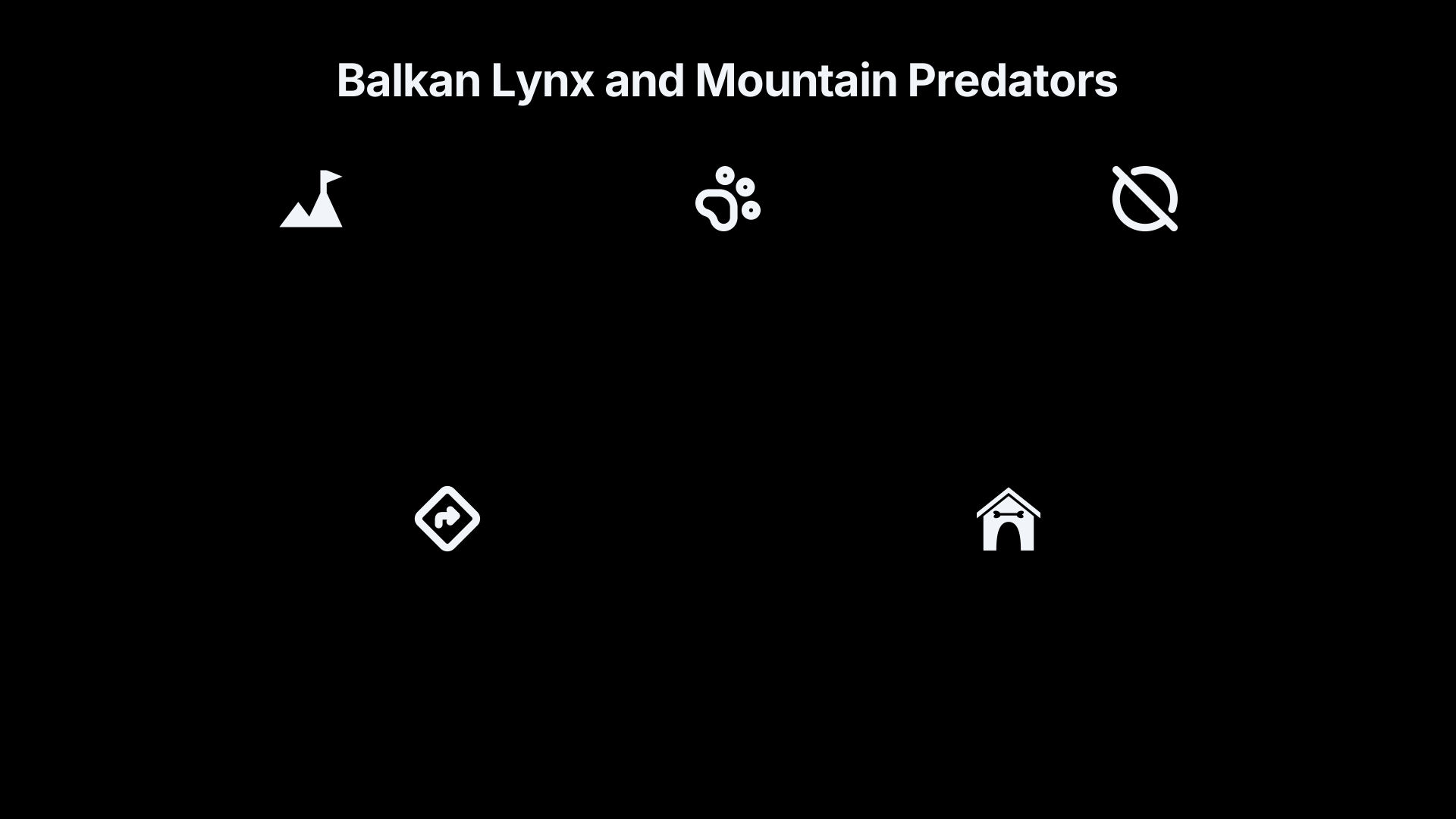
The most intriguing candidate for phantom-cat reports is the Balkan lynx. This critically endangered subspecies survives in extremely small numbers in the border regions of North Macedonia, Albania and neighbouring areas. Estimates commonly place the population at fewer than fifty animals, making encounters exceptionally rare.[wildbeimwild.com]wildbeimwild.comWild beim Wild Is the Balkan lynx dying out?Wild beim Wild Is the Balkan lynx dying out?
Its rarity creates a perfect recipe for mystery-beast sightings:
- Most people have never seen one in the wild.
- Brief sightings leave little time for accurate identification.
- Its short tail and powerful build can make it look unlike domestic cats.
- Observers may overestimate its size when startled.
- A glimpse through vegetation can create the impression of an unknown feline species.
Because the Balkan lynx is both real and extraordinarily difficult to observe, it occupies an unusual middle ground between wildlife and legend. Many residents know of it, few have seen it, and stories about unexpected encounters can quickly acquire an air of mystery.
Wolves can create similar confusion. A lone wolf crossing a road at dawn or dusk may appear larger than it really is. In poor conditions, observers sometimes report unusually large dogs, wolf-dog hybrids or unidentified predators when the simplest explanation is an ordinary wolf seen under unusual circumstances.
How Habitat Change Creates Unfamiliar Encounters
Another reason mystery-animal reports emerge is that wildlife does not remain fixed in one place. Changes in habitat, conservation measures, climate conditions and human land use can alter where animals appear.
The Prespa region has become increasingly recognised as an internationally important conservation landscape, drawing attention to species that many people rarely noticed before. Growing wildlife tourism, birdwatching and conservation monitoring mean more observers are spending time in places where unusual animals can be seen.[wwf.gr]wwf.grOpen source on wwf.gr.
At the same time, human expansion can push wildlife into unexpected locations. Large mammals sometimes move closer to settlements, while stray and feral animals may enter forest habitats and interact with native wildlife. Conservationists monitoring the Balkan lynx have documented increasing concerns about free-ranging dogs in North Macedonian forests, demonstrating how changing ecological conditions can create surprising animal encounters.[EuroNatur]euronatur.orgbalkan lynx threatened by stray dogsbalkan lynx threatened by stray dogs
When people encounter unfamiliar animals outside the places where they expect them, the experience often feels stranger than it actually is. A large bird seen far from a known colony, a bear crossing an unexpected route, or a lynx photographed on a remote trail camera can all seem remarkable enough to inspire rumours.
Why Ordinary Animals Become Extraordinary
The most convincing explanation for many North Macedonian mystery-beast reports is not that witnesses are fabricating stories. Rather, real animals are being filtered through imperfect viewing conditions and human expectations.
Several factors repeatedly appear in mystery-animal cases:
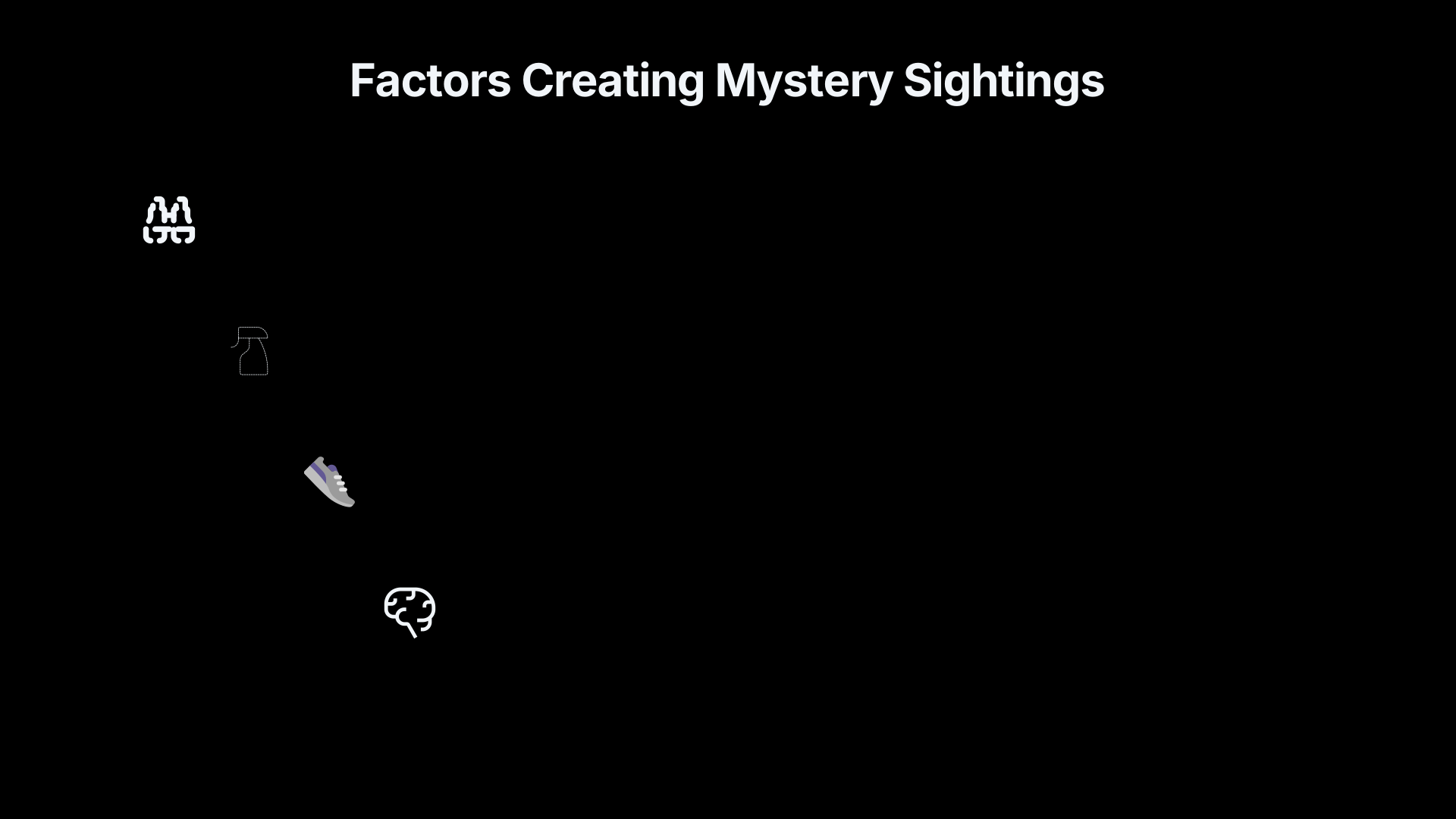
- Distance: Objects on large lakes are notoriously difficult to size accurately.
- Poor light: Dawn, dusk and fog obscure important identifying features.
- Movement: Swimming, diving or running animals reveal only parts of their bodies.
- Rarity: Uncommon species such as the Balkan lynx are unfamiliar to most observers.
- Expectation: Once a lake gains a monster reputation, ambiguous sights are more likely to be interpreted as evidence for it.
North Macedonia’s landscapes genuinely contain impressive wildlife. Giant pelicans glide across the Prespa lakes, rare lynx move through remote forests, wolves roam mountain valleys and bears still inhabit parts of the wider region. These animals are fascinating enough on their own. The mystery often lies not in discovering a hidden species, but in understanding how ordinary wildlife can briefly look like something out of legend.
Amazon book picks
Further Reading
Books and field guides related to Which Real Animals Become Macedonian Monsters?. Use these as the next step if you want deeper reading beyond the article.
Field Guide to Lake Monsters, Sea Serpents, and Other Mystery...
Provides examples of aquatic sightings later linked to known wildlife.
eBay marketplace picks
Marketplace Samples
Live-tested eBay searches with available results related to this page.


Endnotes
1.
Source: prespawaterbirds.gr
Title: the national park weg 34943
Link:https://www.prespawaterbirds.gr/the-national-park-weg-34943.html
Source snippet
The National ParkPrespa is home to the largest colony of Dalmatian pelicans in the world, with over 1400 pairs. Little Egrets, Great Egre...
2.
Source: researchgate.net
Link:https://www.researchgate.net/publication/227125302_The_importance_of_Prespa_National_Park_for_breeding_and_wintering_birds
Source snippet
ResearchGate(PDF) The importance of Prespa National Park for breeding...Prespa lakes is a well-known location in Europe for bird breedin...
3.
Source: Wikipedia
Title: Dalmatian pelican
Link:https://en.wikipedia.org/wiki/Dalmatian_pelican
4.
Source: researchgate.net
Link:https://www.researchgate.net/publication/236953458_Conflicts_between_lynx_other_large_carnivores_and_humans_in_Macedonia_and_Albania
Source snippet
ResearchGate(PDF) Conflicts between lynx, other large carnivores, and...The survey uncovered a lot of conflict between livestock herders...
5.
Source: euronatur.org
Title: balkan lynx threatened by stray dogs
Link:https://www.euronatur.org/en/what-we-do/news/balkan-lynx-threatened-by-stray-dogs
6.
Source: wwf.gr
Link:https://www.wwf.gr/en/our_work/nature/terrestrial/protected_areas/prespes/
7.
Source: Wikipedia
Title: Prespa National Park (Albania)
Link:https://en.wikipedia.org/wiki/Prespa_National_Park_%28Albania%29
8.
Source: datazone.birdlife.org
Title: dalmatian pelican pelecanus crispus
Link:https://datazone.birdlife.org/species/factsheet/dalmatian-pelican-pelecanus-crispus
9.
Source: spp.gr
Link:https://spp.gr/what-we-do/species/
Source snippet
Society for the Protection of PrespaSpeciesPrespa is home to both pelican species found in Europe: the Dalmatian pelican (Pelecanus crisp...
10.
Source: theguardian.com
Link:https://www.theguardian.com/travel/2025/aug/06/balkan-bounty-the-little-known-corner-of-greece-now-ripe-for-walkers-and-nature-tourism
Source snippet
Located at the tri-border of Greece, Albania, and North Macedonia, the area features two ancient lakes — Lesser and Great Prespa — surrou...
11.
Source: wildbeimwild.com
Title: Wild beim Wild Is the Balkan lynx dying out?
Link:https://wildbeimwild.com/en/the-balkan-lynx-is-becoming-extinct/
12.
Source: balkanlynx.com
Link:https://www.balkanlynx.com/en/news/north-macedonia-2
Additional References
13.
Source: nationalparksassociation.org
Link:https://nationalparksassociation.org/greece-national-parks/lake-prespa-national-park/
14.
Source: youtube.com
Title: Birds of Lake Prespa, southern border, Greece
Link:https://www.youtube.com/watch?v=G7lXkJOE3Fg
Source snippet
Dalmatian Pelicans Prespa lake Dalmatian Pelicans in Lake Prespa Mala Prespa...
15.
Source: youtube.com
Title: Bear Conservation in Macedonia: Adventure in the Balkans
Link:https://www.youtube.com/watch?v=RQfYDqNr-zA
Source snippet
Birds of Lake Prespa, southern border, Greece...
16.
Source: youtube.com
Title: North Macedonia park vote offers hope for lynx
Link:https://www.youtube.com/watch?v=VT5iFYiiUQc
Source snippet
Bear Conservation in Macedonia: Adventure in the Balkans...
17.
Source: facebook.com
Link:https://www.facebook.com/balkaninsight/posts/after-a-wolf-was-found-in-a-parking-lot-in-skopje-a-persistent-problem-has-been-/1655934923205435/
18.
Source: conservationevidencejournal.com
Link:https://conservationevidencejournal.com/reference/pdf/11640
19.
Source: tourduvalat.org
Link:https://tourduvalat.org/en/actions/conservation-of-white-and-dalmatian-pelicans/
20.
Source: theanimalreader.com
Link:https://www.theanimalreader.com/tag/north-macedonia/
21.
Source: birdingalbania.com
Link:https://birdingalbania.com/prespa-national-park/
22.
Source: facebook.com
Link:https://www.facebook.com/pelican.LIFE/posts/-pelican-way-of-life-is-nearing-its-end-but-the-work-to-protect-the-dalmatian-pe/949946343920692/
Topic Tree