Within Tuvalu
How Did an Eel and Flounder Make Tuvalu?
The Eel and Flounder explain Tuvalu's flat islands and coconut palms through transformed animal bodies, not hidden species.
On this page
- The contest with the stone
- Animals as models for islands and palms
- Moray eels and the story's natural roots
Page outline Jump by section
Introduction
How did an eel and a flounder make Tuvalu? According to one of Tuvalu’s best-known origin stories, the islands, coconut palms and even the name of the country emerged from a struggle between two marine animals. Unlike a cryptid tale about a mysterious creature still lurking in the sea, this is a creation myth: a traditional explanation for why Tuvalu’s atolls are flat, why coconut palms are tall and slender, and how the islands themselves came into being. The story remains one of the most distinctive examples of how Tuvaluan folklore uses familiar reef animals to explain the landscape around them.[Wikipedia]WikipediaTuvaluan mythologySeptember 5, 2025 — The Flounder's flat body became the model for the atolls of Tuvalu. The Eel's thin round body became the model for th…
Within Tuvalu’s wider body of sea-centred traditions, the tale of the Eel and the Flounder stands out because it transforms ordinary marine creatures into the architects of an entire island nation. Rather than describing hidden beasts, it turns the shapes and behaviour of real animals into a memorable explanation of geography, identity and survival in a coral-atoll world.[Wikipedia]WikipediaTuvaluan mythologySeptember 5, 2025 — The Flounder's flat body became the model for the atolls of Tuvalu. The Eel's thin round body became the model for th…
The Contest with the Stone
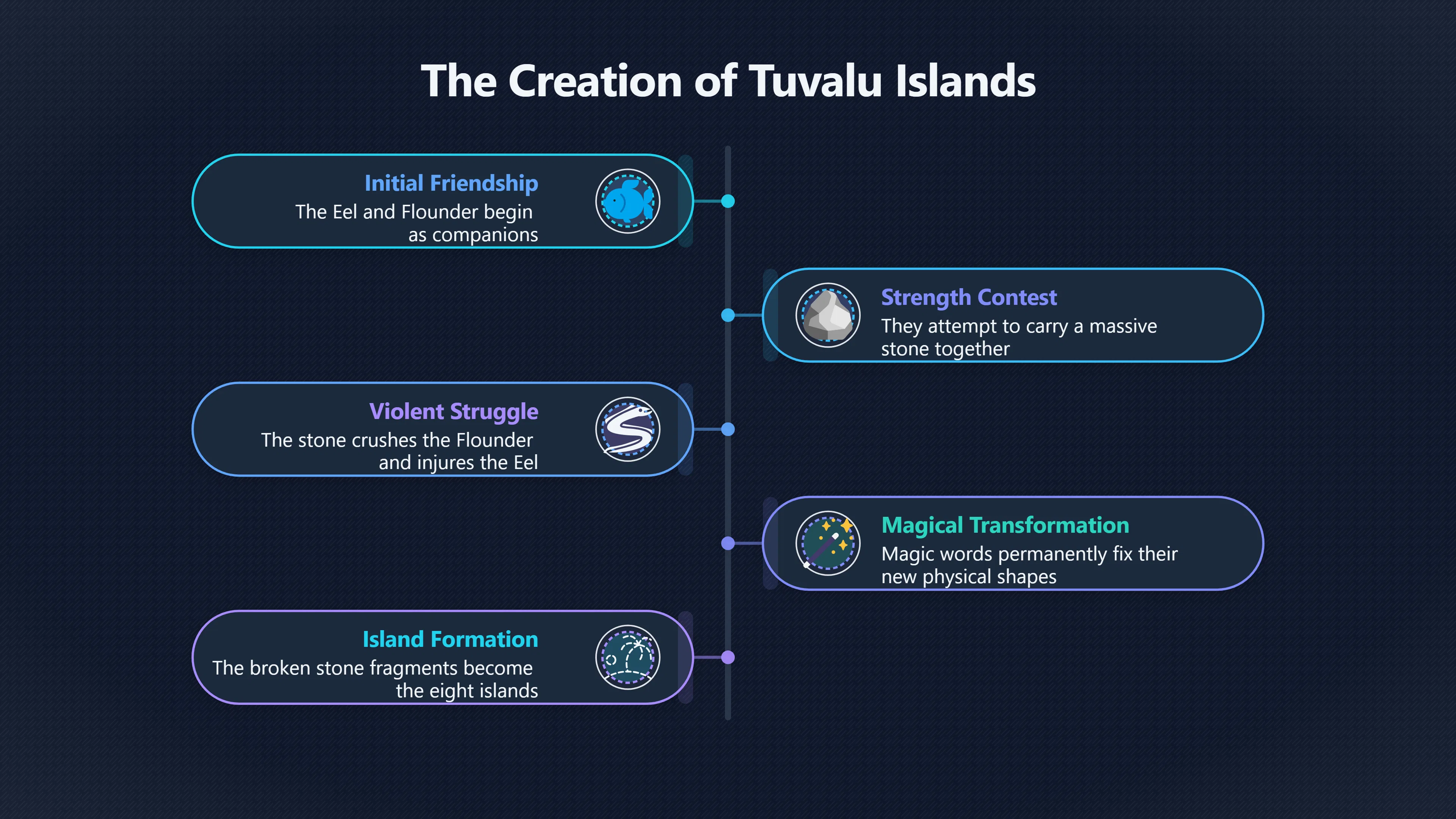
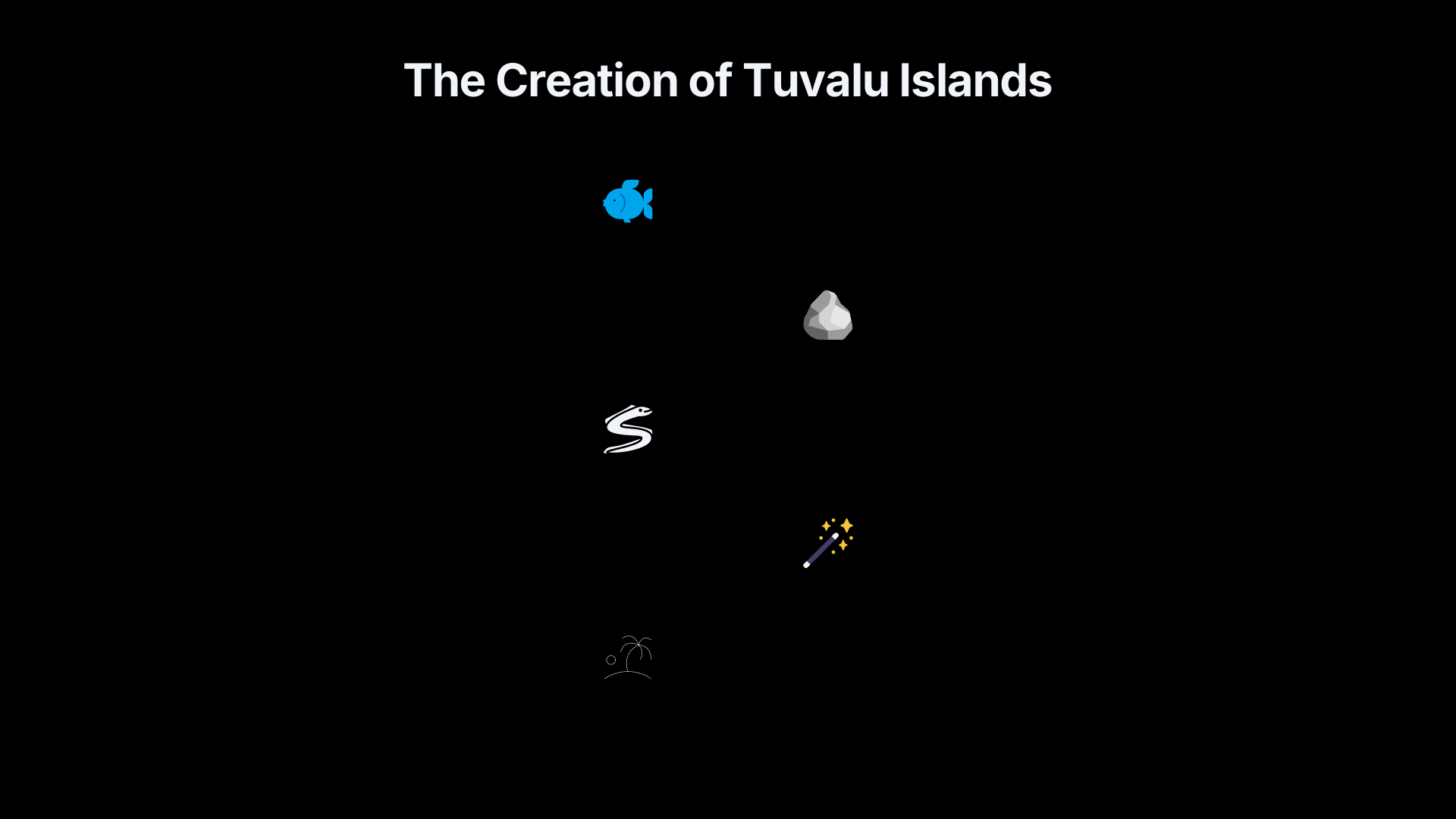
In the most widely recorded version of the story, the Eel and the Flounder begin as friends. To settle a question of strength, they decide to carry a huge stone together. The test becomes an argument, and the argument becomes a fight. During the struggle, the stone crushes the Flounder, flattening its body. The Flounder retaliates by striking the Eel, injuring it so badly that it becomes thinner and thinner as it flees and eventually hides in a hole.[wikipedia.org]WikipediaTuvaluan mythologySeptember 5, 2025 — The Flounder's flat body became the model for the atolls of Tuvalu. The Eel's thin round body became the model for th…
The conflict does not end with the animals’ injuries. In many retellings, magical words are spoken that permanently fix their new shapes. The Flounder remains broad and flat, while the Eel remains long and narrow. Those transformed bodies then become the pattern from which parts of the visible world are formed.[Wikipedia]WikipediaTuvaluan mythologySeptember 5, 2025 — The Flounder's flat body became the model for the atolls of Tuvalu. The Eel's thin round body became the model for th…
The stone itself also acquires cosmic importance. After the struggle, the Eel throws it into the sky. Different versions describe the stone’s colours—often black, white and blue—becoming associated with darkness, light, sky and sea. Finally, the remaining stone is broken into pieces that become the islands of Tuvalu. Some tellings specifically connect the eight fragments to the traditional meaning of Tuvalu, often translated as “eight standing together”, reflecting the eight historically inhabited islands.[wikipedia.org]WikipediaTuvaluan mythologySeptember 5, 2025 — The Flounder's flat body became the model for the atolls of Tuvalu. The Eel's thin round body became the model for th…
Animals as Models for Islands and Palms
The most important feature of the myth is not the battle itself but the way animal bodies become a map of the environment.
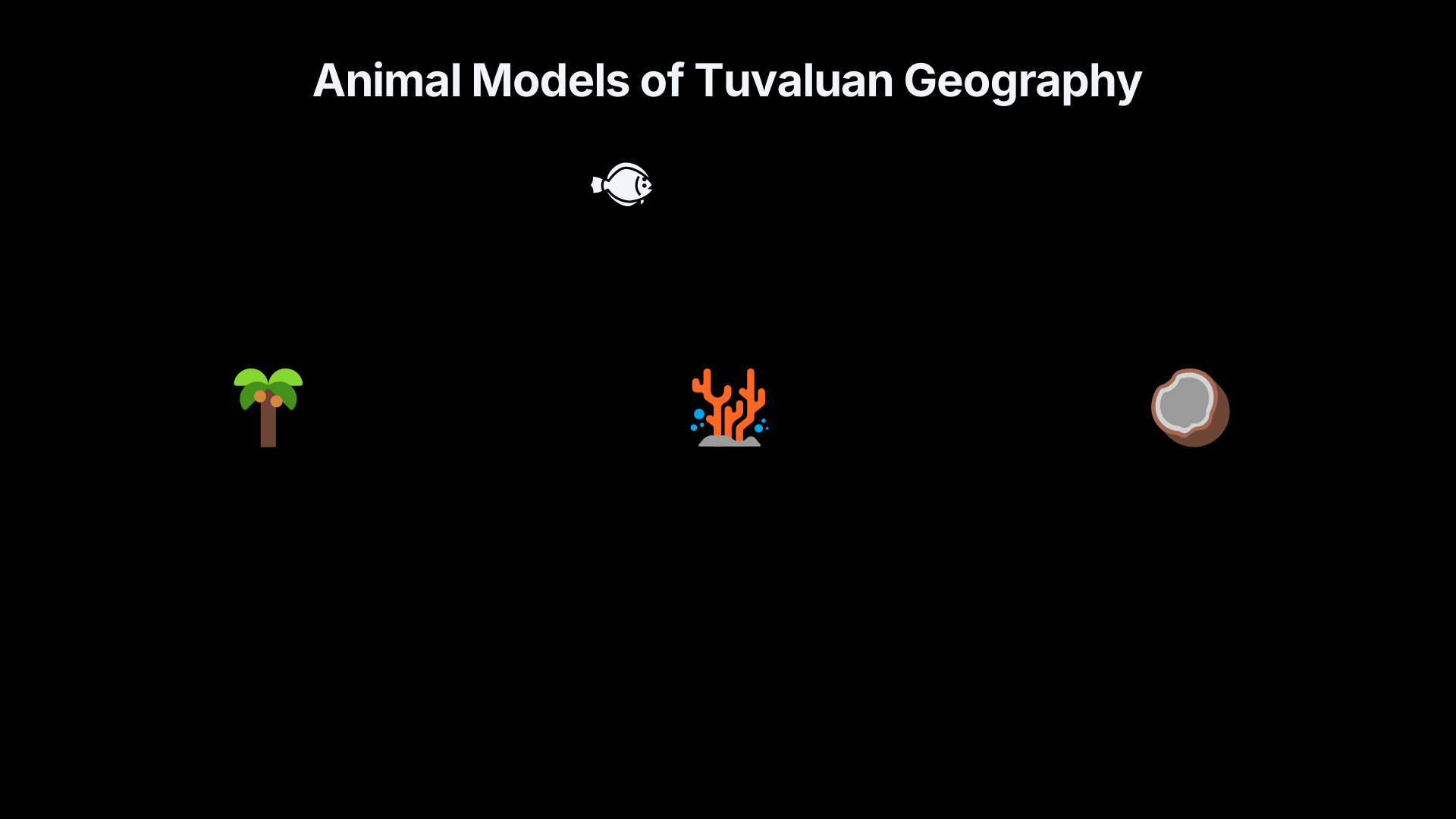
The Flounder’s flattened form explains the appearance of Tuvalu’s low coral atolls. Seen from above, the broad shape of a flatfish provides an imaginative model for islands that barely rise above the sea. The story turns a familiar fishing-ground animal into a living explanation for the country’s geography.[Wikipedia]WikipediaTuvaluan mythologySeptember 5, 2025 — The Flounder's flat body became the model for the atolls of Tuvalu. The Eel's thin round body became the model for th…
The Eel undergoes the opposite transformation. Its body becomes elongated, thin and cylindrical, qualities that are then associated with the coconut palm. Coconut trees are among the most important plants in Pacific island life, providing food, drink, fibre, building materials and fuel. By linking the coconut palm to the Eel, the myth connects one of Tuvalu’s most valuable resources directly to a marine ancestor.[wikipedia.org]WikipediaTuvaluan mythologySeptember 5, 2025 — The Flounder's flat body became the model for the atolls of Tuvalu. The Eel's thin round body became the model for th…
This symbolic logic is characteristic of many Pacific origin stories. Instead of separating people from nature, the myth treats landscape, plants and animals as different expressions of the same creative process. The islands are not merely places where people live; they are living extensions of creatures known from the surrounding sea.[Wikipedia]WikipediaTuvaluan mythologySeptember 5, 2025 — The Flounder's flat body became the model for the atolls of Tuvalu. The Eel's thin round body became the model for th…
Why an Eel and a Flounder?
The choice of animals makes sense in the environmental setting of Tuvalu. Both creatures are recognisable inhabitants of tropical marine ecosystems. Flatfish naturally suggest flat landforms, while eels possess long, serpentine bodies that resemble trunks, roots or vines. The story works because it begins with shapes that listeners already know.[Wikipedia]WikipediaTuvaluan mythologySeptember 5, 2025 — The Flounder's flat body became the model for the atolls of Tuvalu. The Eel's thin round body became the model for th…
The eel is especially significant across Polynesia. Throughout the region, eels appear in myths explaining the origin of coconut palms. The famous Samoan story of Sina and the Eel, for example, tells how the first coconut tree grew from an eel’s remains. The Tuvaluan version follows a similar pattern but adapts it into a local explanation for both coconut palms and the islands themselves.[wikipedia.org]WikipediaSina and the EelOctober 27, 2025 — Sina and the Eel is a myth of origins in Samoan mythology, which explains the origins of the first coconut tree. Cocon…
This wider Polynesian background suggests that the Tuvaluan story belongs to a broad family of oceanic traditions while still retaining its own distinctive features. Instead of focusing on a human hero and a single coconut tree, it uses a contest between two marine animals to explain an entire archipelago.[Wikipedia]WikipediaTuvaluan mythologySeptember 5, 2025 — The Flounder's flat body became the model for the atolls of Tuvalu. The Eel's thin round body became the model for th…
Moray Eels and the Story’s Natural Roots
For readers interested in cryptid traditions, the Eel can initially sound like a giant supernatural creature. Yet the tale is not presented in Tuvaluan tradition as evidence for a hidden species. It is an origin narrative built around animals that islanders would have encountered in daily life.[Wikipedia]WikipediaTuvaluan mythologySeptember 5, 2025 — The Flounder's flat body became the model for the atolls of Tuvalu. The Eel's thin round body became the model for th…
Moray eels, common on Pacific reefs, likely helped shape the imagery. Their elongated bodies, secretive behaviour and tendency to emerge suddenly from coral crevices make them striking animals. To people living on coral atolls, they are among the most memorable creatures in the reef environment. The myth transforms those familiar observations into a story about creation rather than mystery-animal sightings.[Wikipedia]Wikipediacreated the islands of Tuvalu; te Ali (flounder) is…Read more…
An intriguing cultural detail survives in some accounts: the importance of the Eel in the creation story contributed to a traditional respect for moray eels, which were regarded as tapu, or sacred, and not eaten in some communities. This places the animal firmly within the realm of cultural meaning rather than cryptozoological speculation.[Wikipedia]Wikipediacreated the islands of Tuvalu; te Ali (flounder) is…Read more…

A Landscape Explained Through Animal Shapes
The lasting appeal of the Eel and Flounder story lies in its simplicity. Anyone looking at a flatfish can see a resemblance to a low atoll. Anyone looking at an eel can imagine a connection to the slender trunk of a coconut palm. The myth turns those visual similarities into a dramatic narrative of friendship, rivalry, transformation and creation.[Wikipedia]WikipediaTuvaluan mythologySeptember 5, 2025 — The Flounder's flat body became the model for the atolls of Tuvalu. The Eel's thin round body became the model for th…
Within Tuvalu’s folklore, the Eel and the Flounder are therefore not cryptids hiding in lagoons or unexplored waters. They are ancestral creators whose transformed bodies explain why Tuvalu looks the way it does. The story preserves local observations of marine life while expressing a deeper idea: that islands, sea creatures and people all belong to the same interconnected world.[wikipedia.org]WikipediaTuvaluan mythologySeptember 5, 2025 — The Flounder's flat body became the model for the atolls of Tuvalu. The Eel's thin round body became the model for th…
Amazon book picks
Further Reading
Books and field guides related to How Did an Eel and Flounder Make Tuvalu?. Use these as the next step if you want deeper reading beyond the article.
The Uses of Enchantment
Explains how traditional stories and creation narratives function within cultures.
The Hero with a Thousand Faces
Helps readers understand recurring mythic patterns and symbolic storytelling.
Polynesian Mythology:
Directly connects to Pacific Island mythological traditions related to Tuvalu.
The Oxford Companion to World Mythology
Places Tuvaluan creation stories within global mythological traditions.
eBay marketplace picks
Marketplace Samples
Live-tested eBay searches with available results related to this page.
Endnotes
1.
Source: Wikipedia
Title: Tuvaluan mythology
Link:https://en.wikipedia.org/wiki/Tuvaluan_mythology
Source snippet
September 5, 2025 — The Flounder's flat body became the model for the atolls of Tuvalu. The Eel's thin round body became the model for th...
Published: September 5, 2025
2.
Source: Wikipedia
Title: History of Tuvalu
Link:https://en.wikipedia.org/wiki/History_of_Tuvalu
3.
Source: frieze.com
Link:https://www.frieze.com/article/celeste-olalquiaga-tuvalu-issue-234
Source snippet
As Tides Rise, Tuvalu Faces a Future on the MetaverseIn the Tuvaluan origin myth Te Pusi mo te Ali (The Eel and the Flounder), thes...
4.
Source: devpolicy.org
Title: island song a week in tuvalu 20191018
Link:https://devpolicy.org/island-song-a-week-in-tuvalu-20191018/
Source snippet
Devpolicy BlogIsland song: a week in Tuvalu18 Oct 2019 — Hit in the stomach and badly injured, the eel magically cursed the flounder, who...
5.
Source: Wikipedia
Link:https://en.wikipedia.org/wiki/Tuvalu
6.
Source: Wikipedia
Link:https://en.wikipedia.org/wiki/Portal%3ATuvalu/Selected_article/2
Source snippet
) created the islands of Tuvalu; te Ali (flounder) is...Read more...
7.
Source: Wikipedia
Title: Tuvaluan cuisine
Link:https://en.wikipedia.org/wiki/Tuvaluan_cuisine
8.
Source: Wikipedia
Title: Sina and the Eel
Link:https://en.wikipedia.org/wiki/Sina_and_the_Eel
Source snippet
October 27, 2025 — Sina and the Eel is a myth of origins in Samoan mythology, which explains the origins of the first coconut tree. Cocon...
Published: October 27, 2025
9.
Source: Wikipedia
Title: Tuna (Polynesian mythology)
Link:https://en.wikipedia.org/wiki/Tuna_%28Polynesian_mythology%29
10.
Source: nps.gov
Title: National Park Service Sina and Her Eel (tuna)
Link:https://www.nps.gov/npsa/learn/historyculture/sinatuna.htm
Additional References
11.
Source: worldbooktour.wordpress.com
Title: theworldbooktour Tuvalu (Part 2)
Link:https://worldbooktour.wordpress.com/2017/04/21/tuvalu-part-2/
Source snippet
theworldbooktourTuvalu (Part 2) - theworldbooktour - WordPress.com21 Apr 2017 — The eel, in the safety of its hole casts some magic words...
12.
Source: youtube.com
Title: Te Pusi mo te Ali — Tuvalu Creation Myth (Eel & Flounder) | The Mythic Vault
Link:https://www.youtube.com/watch?v=y2NEi8NnFVg
Source snippet
The Eel and The Flounder: The Creation Story of Tuvalu...
13.
Source: youtube.com
Title: The Eel and The Flounder: The Creation Story of Tuvalu
Link:https://www.youtube.com/watch?v=vjXxaq6aTes
Source snippet
Tuvalu Explained in 9 Minutes (History And Culture)...
14.
Source: facebook.com
Link:https://www.facebook.com/thecoconet/posts/find-out-how-the-islands-of-tuvalu-got-their-name-the-story-of-the-eel-flounders/1618815051589042/
15.
Source: facebook.com
Link:https://www.facebook.com/peacecorpssamoa/posts/sina-and-the-eeldo-you-know-the-story-of-sina-and-the-eel-which-tells-the-story-/1275441812911981/
16.
Source: youtube.com
Link:https://www.youtube.com/watch?v=WM1WhySdkaU
Source snippet
Te Pusi mo te Ali — Tuvalu Creation Myth (Eel & Flounder) | The Mythic Vault...
17.
Source: youtube.com
Title: Tuvalu Explained in 9 Minutes (History And Culture)
Link:https://www.youtube.com/watch?v=RSrmZA7XrM0
Source snippet
Geography Now! TUVALU...
18.
Source: assets.sortedinschools.org.nz
Title: sortedinschools.org.nz Motu Quest Cave Island
Link:https://assets.sortedinschools.org.nz/public/Motu-Quest/Motu-Island-students-book_Cave-Island.pdf
19.
Source: mythcrafts.com
Title: the cost of a kiss sina and the eel
Link:https://mythcrafts.com/2018/07/26/the-cost-of-a-kiss-sina-and-the-eel/
20.
Source: youtube.com
Title: The Legend of Sina and Tuna
Link:https://www.youtube.com/watch?v=vb-tVzHiqtA
Topic Tree