Strange Creatures of Belize's Forests and Reef
Belize’s mystery-creature tradition is less a catalogue of proven “unknown animals” than a lively borderland between forest folklore, cautionary tales, tourism storytelling, rare wildlife encounters and a few modern monster reports.
Page outline Jump by section
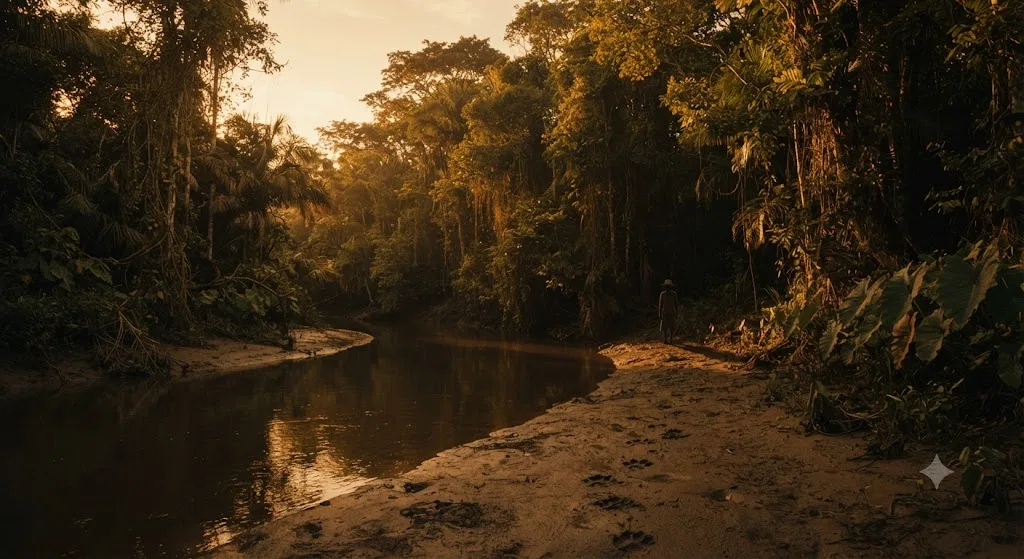
The forest is the centre of Belize’s monster map
Belizean creature lore is strongly tied to the bush: the wooded edge beyond the village, the place where children might wander, hunters might overreach, and adults might meet something they cannot quite explain. That setting matters. Belize lies in the Mesoamerican biodiversity hotspot and still has large forest blocks, including the Maya Mountains and the Belize Maya Forest/Rio Bravo area; its 2025 national wildlife policy records 145 mammal species, 129 of them terrestrial, and identifies habitat loss, hunting and wildlife-human conflict as continuing pressures.[forest.gov.bz]forest.gov.bzBELIZE WILDLIFE POLICY FINALBELIZE WILDLIFE POLICY FINAL
That real ecology gives the legends their texture. Belize’s forests contain animals that are secretive, nocturnal or difficult to see well: the Belize Zoo notes that wild mammals often hear, smell or see people before people notice them, and that Belize has Yucatan spider monkeys, white-tailed deer, peccaries, tapirs and five wildcat species.[belizezoo.org]belizezoo.orgThe Animals – The Belize ZooThe Animals – The Belize Zoo A glimpse at dusk, a whistle in dense vegetation, a strange footprint in mud, or a braided horse’s mane in the morning can become a story about an intelligence in the forest.
This does not mean that Tata Duende or the Sisimito should be treated as undiscovered primates. It means the legends grew in a landscape where the forest felt alive, watched and morally charged. Many Belizean tales are not just “there is a monster”; they are “do not go too far”, “do not kill animals wastefully”, “do not drink and wander at night”, or “respect places where you are not fully in control”.
Tata Duende: the little forest owner with missing thumbs
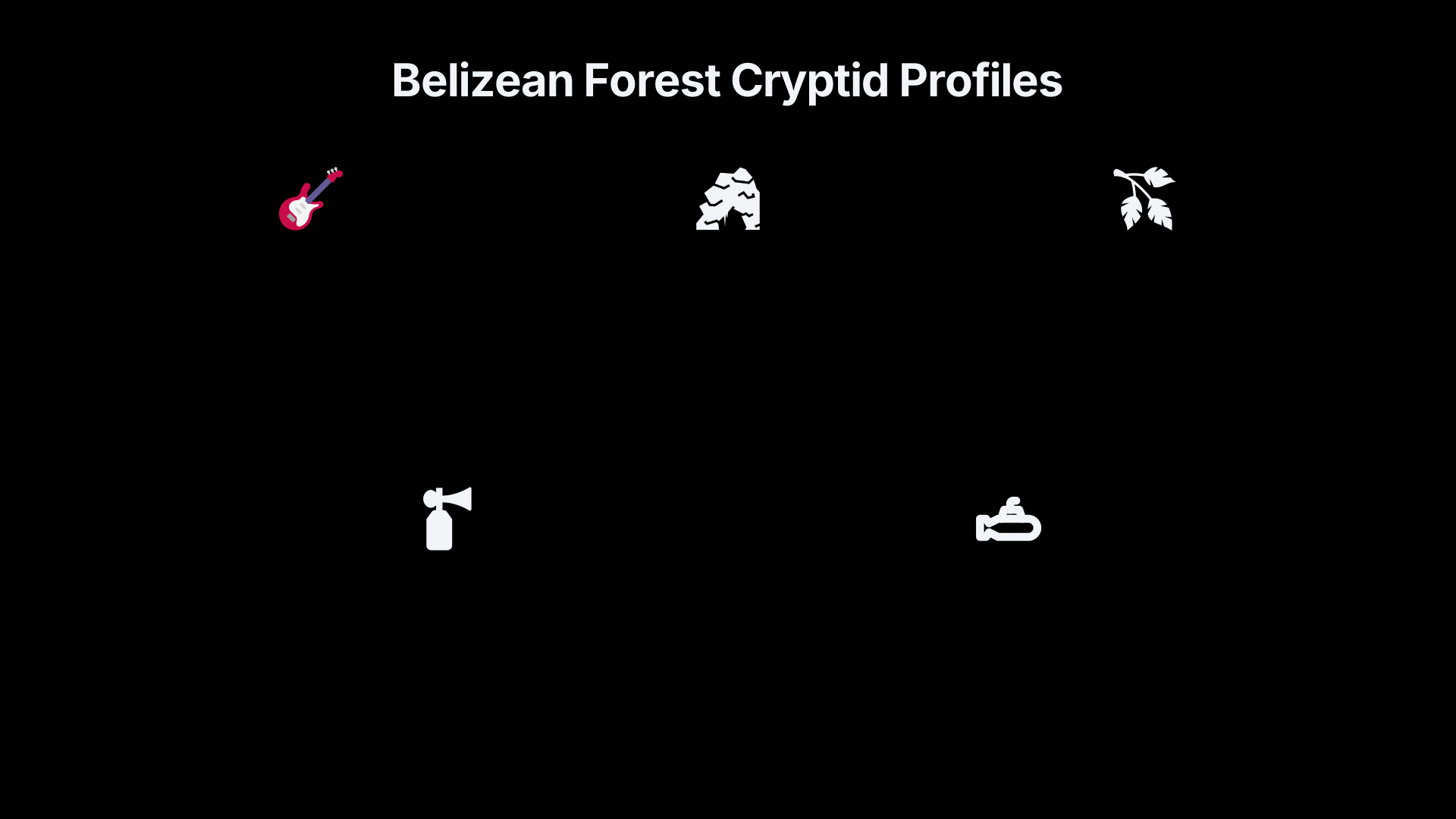
The Tata Duende is the most recognisable Belizean cryptid-like figure because it sits perfectly between monster, spirit, ecological warning and childhood fear. Official tourism material describes him as a four-foot forest guardian with backward feet, a large hat and no thumbs, recognised by distant whistling or guitar music; woodcutters are said to have reported encounters, and children are warned to hide their thumbs if they meet him.[Travel Belize]travelbelize.orgTravel Belize Get to know Belize’s FolkloreTravel Belize Get to know Belize’s Folklore
Older San Pedro folklore gives the story a more domestic setting. Angel Nuñez recalls that in the 1940s and 1950s children were warned not to go into the bush for firewood, coconut husks or adventure because “El Dueño del Monte” would get them. In that account, the Duende protects animals and becomes angry when boys kill birds for no reason; he is not simply evil, but a punisher of mischief and waste.[ambergriscaye.com]ambergriscaye.comOpen source on ambergriscaye.com.
A recent Belizean media treatment makes the same point from a cultural angle. Greater Belize Media’s 2024 feature presents Tata Duende as both a fearsome child-snatcher in popular memory and, in Yucatec Maya interpretation, a protective forest entity known as Nukuch Tat. Cultural activist Andy Chuc explains the figure not as a horror monster but as a protector, while other interviewees describe the familiar signs: the whistle, the missing thumbs, backward feet, a tall hat and horses’ manes braided in the night.[Greater Belize Media]greaterbelize.comOpen source on greaterbelize.com.
For a cryptid reader, Tata Duende is important because the “sighting” details are unusually consistent: small stature, odd feet, missing thumbs, hat, whistle, forest habitat. Yet those details are also symbolic. Backward feet confuse trackers. Missing thumbs create the famous escape rule. The hat and whistle give the unseen forest a personality. The result is less like a biological animal report and more like a forest code: Belizean children learn that the bush is exciting, but not ownerless.
Sisimito: Belize’s hairy man of caves, riverbanks and old bush camps
The Sisimito is the closest Belizean tradition to a Bigfoot-style mystery animal. San Pedro folklore describes him as a very short but extremely strong hairy man who looked like a gorilla, with backward feet, large spread toes and no knees, so that his movements appeared awkward. The same account says people once kept close to rivers when in the bush because the Sisimito would not enter water, while others carried dogs because barking could scare him away.[ambergriscaye.com]ambergriscaye.comOpen source on ambergriscaye.com.
Modern Belize folklore summaries often present the Sisimito as a tall or hirsute cave-dweller, sometimes compared to Bigfoot, surviving on raw meat and associated with abduction stories. Belize Adventure, for example, describes the Sisemite or Sisimito as a hairy monster said to live in caves, roam riverbanks at dusk and threaten young women who stayed too late washing clothes at the river.[Belize Adventure]belizeadventure.caBelize Adventure Famous Belizean Folklore and Tales – Belize AdventureBelize Adventure Famous Belizean Folklore and Tales – Belize Adventure
The details vary, and that variation is a clue. In some tellings the creature is short; in others it is tall. Sometimes it is almost ape-like; sometimes it is a man of the wild. The common features are more stable: hairiness, strength, backward feet, cave or forest habitat, danger near the bush edge, and a weakness around water or dogs. That makes the Sisimito a classic “wild man” tradition rather than a single, well-documented animal case.
Possible natural triggers are easy to imagine but hard to prove. A spider monkey seen briefly through leaves, a tapir or peccary moving noisily in undergrowth, a jaguar or puma half-seen at night, or even a person glimpsed in poor light could feed a frightening account. Belize’s own wildlife context supports caution here: the country has real large mammals, but they are often secretive and hard to observe clearly.[belizezoo.org]belizezoo.orgThe Animals – The Belize ZooThe Animals – The Belize Zoo None of that explains the whole legend; it simply shows why the forest gives such stories room to breathe.
Xtabai, La Llorona and Cadejo: not cryptids, but part of the same creature landscape
Not every frightening Belizean figure is a mystery animal. Some are better understood as moral or supernatural beings that still overlap with cryptid culture because they appear in specific habitats, have physical descriptions and are reported in encounter-style stories.
The Xtabai is usually described as a beautiful woman with long black hair who lures men, especially drunk or misbehaving men, towards danger. Travel Belize says she is associated with the ceiba tree and may appear with a goat foot, or shapeshift into a prickly tree or snake.[Travel Belize]travelbelize.orgTravel Belize Get to know Belize’s FolkloreTravel Belize Get to know Belize’s Folklore This is not an “unknown species” claim in any ordinary sense, but it belongs on a Belize monster page because it works like a night-road and forest-edge encounter tale: a person sees something attractive, follows it, and discovers too late that the form was deceptive.
La Llorona, shared across Latin America but firmly present in Belizean storytelling, is another warning figure. Travel Belize summarises her as the weeping woman whose cries may be heard in rural villages and who lures intoxicated men into rivers.[Travel Belize]travelbelize.orgTravel Belize Get to know Belize’s FolkloreTravel Belize Get to know Belize’s Folklore Belize Adventure gives a similar version in which she leads children or young men towards forest rivers, where they become lost, sick or dead.[Belize Adventure]belizeadventure.caBelize Adventure Famous Belizean Folklore and Tales – Belize AdventureBelize Adventure Famous Belizean Folklore and Tales – Belize Adventure
The Cadejo is more animal-like and therefore especially relevant to cryptid readers. My Beautiful Belize describes Belizean versions of the Cadejo as a hairy goat-like animal or large shaggy dog, sometimes with goat hooves, bull horns, a puma-like tail, flaming eyes, a foaming mouth and the sound of chains or rattling bones. The same article presents the familiar split between a protective white Cadejo and a harmful black Cadejo, especially around night travel and drunkenness.[My Beautiful Belize]mybeautifulbelize.comBelizean Folktales: El Cadejo - My Beautiful Belize…
These figures show why Belizean monster lore should not be flattened into “local Bigfoot stories”. A Belizean creature may be a forest guardian, a shapeshifting seductress, a river warning, a night dog, or a hairy wild man. The common thread is behaviour: the creatures patrol boundaries between home and bush, sobriety and danger, respect and waste, village order and the wild.

The Blue Hole Monster: Belize’s sea-serpent moment
Belize’s most eye-catching modern monster report is the Blue Hole Monster, linked to a 1972 newspaper story. A later Ambergris Caye summary says The Reporter of 25 February 1972 carried a sighting story and a drawing of a sea-serpent-like creature; a related Belize Audubon social post describes the claimed animal as snake-like, 125 feet long, as wide as two men, and with eyes like red flashlights.[ambergriscaye.com]ambergriscaye.comOpen source on ambergriscaye.com.
The setting is perfect for a legend. The Great Blue Hole is a real marine sinkhole in Lighthouse Reef, part of the Belize Barrier Reef Reserve System. UNESCO identifies Blue Hole Natural Monument as one of the seven protected areas in the World Heritage-listed reef system, and describes the wider reef as the largest in the Atlantic-Caribbean region, with more than 500 fish species and major habitats for threatened marine life including manatees, turtles and American crocodiles.[UNESCO World Heritage Centre]whc.unesco.orgWorld Heritage Centre Belize Barrier Reef Reserve SystemWorld Heritage Centre Belize Barrier Reef Reserve System The EU Space Programme describes the Great Blue Hole as about 300 metres wide and 125 metres deep, with underwater caverns and formations such as stalactites and columns.[EU Space Policy]eu-space.europa.euEU Space Policy The Great Blue Hole in BelizeEU Space Policy The Great Blue Hole in Belize
A deep, dark, circular hole in bright reef water invites sea-monster thinking. Yet there is no strong public evidence that the Blue Hole report represents an unknown animal. The more cautious reading is that it is Belize’s local version of a wider sea-serpent tradition, given extra force by a dramatic setting and a newspaper-era sighting account. The known marine environment is already impressive enough: sharks, rays, turtles, manatees, crocodiles and reef fish can all become strange when seen briefly, magnified by water, distance or fear.
The Blue Hole Monster is therefore valuable less as proof of a giant creature and more as a case study in how geography creates legend. A normal bay might produce a fish story. A world-famous marine sinkhole can produce a monster.
The Chupacabra arrives as modern media folklore
Belize also has at least one modern “mystery carcass” case linked to the Chupacabra, the blood-sucking livestock predator of late twentieth-century Latin American monster culture. In 2014, Amandala reported on a strange creature found in San Lazaro, northern Belize, in a story that connected it with cattle deaths, puncture marks and the family’s suspicion that it could be a Chupacabra. The article also noted the wider sceptical context: many Chupacabra reports are uncorroborated, and some supposed creatures elsewhere have been identified as canids with mange.[amandala.com.bz]amandala.com.bzStrange creature found in northern Belize | Amandala NewspaperStrange creature found in northern Belize | Amandala Newspaper
This is a different kind of Belizean monster story from Tata Duende or Sisimito. It is not rooted as deeply in Belizean oral tradition; it is a travelling media legend that can attach itself to unexplained livestock deaths, diseased animals or unusual carcasses. The key feature is the interpretive leap: a dead or strange-looking animal appears, livestock have died, and a name already familiar from regional folklore supplies a dramatic explanation.
For readers, the useful distinction is simple. Tata Duende and Sisimito are Belizean forest traditions with moral, cultural and ecological roots. The Chupacabra case is closer to a modern news-cycle mystery: a local incident framed through a wider Latin American monster label, with disease, predation, decomposition and misidentification all plausible alternatives unless veterinary evidence says otherwise.
What sceptical explanations fit best?
A sceptical reading does not require dismissing Belizean folklore as “just stories”. It asks what kind of evidence each claim offers and what ordinary causes might explain parts of it.
For the forest beings, several explanations can overlap:
Misidentified wildlife. Belize has spider monkeys, tapirs, peccaries, wildcats and other mammals that are difficult to see clearly in dense forest. Secretive behaviour and poor visibility make brief sightings easy to misread.[belizezoo.org]belizezoo.orgThe Animals – The Belize ZooThe Animals – The Belize Zoo
Moral storytelling. Tata Duende punishes wasteful killing and keeps children from wandering into the bush; the Sisimito warns people away from isolated riverbanks and caves; Xtabai, La Llorona and Cadejo warn against drunkenness, night wandering or unsafe choices. These are not random scares but social rules in memorable creature form.[ambergriscaye.com]ambergriscaye.comOpen source on ambergriscaye.com.
Environmental memory. As forest, hunting grounds and village edges change, stories preserve older relationships with the landscape. Belize’s wildlife policy records continuing pressures from habitat loss, hunting and wildlife-human conflict, which makes the old theme of “respect the bush” feel less quaint than it first appears.[forest.gov.bz]forest.gov.bzBELIZE WILDLIFE POLICY FINALBELIZE WILDLIFE POLICY FINAL
Media amplification. The Blue Hole Monster and Chupacabra-style reports show how a dramatic location or a strange carcass can turn a local puzzle into a monster narrative. In both cases, the evidence available publicly is thin compared with the vividness of the story.[ambergriscaye.com]ambergriscaye.comOpen source on ambergriscaye.com.
The important point is that these explanations do not drain the stories of interest. They make them more interesting. Belizean creature lore is not simply a failed field guide to unknown animals; it is a map of how people imagine risk, respect, wilderness and the unseen.
Why Belize’s creature lore still works
Belize’s monsters endure because they are specific. Tata Duende is not a generic goblin; he whistles in the bush, lacks thumbs, wears a hat and guards animals. The Sisimito is not just “a hairy thing”; his backward feet mislead trackers and his fear of water shapes how people escape him. The Cadejo is not merely a ghost dog; its black-and-white versions turn night travel into a moral fork in the road. The Blue Hole Monster belongs to one of the most visually uncanny marine places in the Caribbean.
They also endure because Belize is a country where the natural world is close to cultural life. The forest is not a distant fantasy backdrop. The reef is not an abstract tourist image. Wildlife, hunting, village memory, conservation, cave country, rivers and coastal travel all sit near the surface of everyday storytelling. That is why Belize’s cryptid tradition feels distinctive even when some figures have cousins elsewhere in Central America and the Caribbean.
The evidence-aware answer is therefore: Belize has no confirmed hidden monster on the public record, but it has one of the region’s richest small-country creature traditions. Its best stories are not strongest where they pretend to be zoology. They are strongest where they reveal how Belizeans have imagined the bush, the river, the reef and the dangerous hour after dark.
Amazon book picks
Further Reading
Books and field guides related to What Haunts Belize's Forests and Reef?. Use these as the next step if you want deeper reading beyond the article.
An Encyclopedia of Fairies
Useful framework for understanding Belizean folklore beings.
The Element Encyclopedia of Magical Creatures
Readers interested in Belizean monsters often browse wider creature lore.
The Mythology of North America
Provides regional context for Mesoamerican and Belizean traditions.
eBay marketplace picks
Marketplace Samples
Live-tested eBay searches with available results related to this page.



Endnotes
1.
Source: ambergriscaye.com
Link:https://ambergriscaye.com/25years/elsisimito.html
2.
Source: ambergriscaye.com
Link:https://ambergriscaye.com/25years/elduende.html
3.
Source: belizezoo.org
Title: The Animals – The Belize Zoo
Link:https://www.belizezoo.org/the-animals/
4.
Source: forest.gov.bz
Title: BELIZE WILDLIFE POLICY FINAL
Link:https://forest.gov.bz/wp-content/uploads/2025/08/BELIZE-WILDLIFE-POLICY-FINAL.pdf
5.
Source: mybeautifulbelize.com
Title: My Beautiful Belize
Link:https://mybeautifulbelize.com/belizean-folktales-el-cadejo/
Source snippet
Belizean Folktales: El Cadejo - My Beautiful Belize...
6.
Source: ambergriscaye.com
Link:https://ambergriscaye.com/photogallery/200416.html
7.
Source: whc.unesco.org
Title: World Heritage Centre Belize Barrier Reef Reserve System
Link:https://whc.unesco.org/en/list/764/
8.
Source: amandala.com.bz
Title: Strange creature found in northern Belize | Amandala Newspaper
Link:https://amandala.com.bz/news/strange-creature-northern-belize/
9.
Source: ambergriscaye.com
Link:https://ambergriscaye.com/25years/laxtabai.html
10.
Source: ambergriscaye.com
Title: get to know belizean folklore
Link:https://ambergriscaye.com/forum/ubbthreads.php/topics/446778/get-to-know-belizean-folklore.html
11.
Source: ambergriscaye.com
Link:https://ambergriscaye.com/forum/ubbthreads.php/posts/508526.html
12.
Source: ambergriscaye.com
Title: grauma used to seh belize proverbs sayings folklore
Link:https://ambergriscaye.com/forum/ubbthreads.php/topics/468027/all/grauma-used-to-seh-belize-proverbs-sayings-folklore.html
13.
Source: ambergriscaye.com
Link:https://ambergriscaye.com/25years/index.html
14.
Source: ambergriscaye.com
Title: the legend of the blue hole monster
Link:https://ambergriscaye.com/forum/ubbthreads.php/topics/536940/the-legend-of-the-blue-hole-monster.html
15.
Source: amandala.com.bz
Link:https://amandala.com.bz/news/devil-in-disguise-wanted-preferably-dead/
16.
Source: forest.gov.bz
Title: Pocket Guide to Human Wildlife Conflict Belize Forest Department (FD)
Link:https://forest.gov.bz/wp-content/uploads/2023/09/Resource-pocket-guide-2022-1_230829_164122.pdf
17.
Source: belize.com
Link:https://belize.com/the-belize-zoo/
18.
Source: travelbelize.org
Title: Travel Belize Get to know Belize’s Folklore
Link:https://www.travelbelize.org/blog/get-know-belizes-folklore/
19.
Source: greaterbelize.com
Link:https://www.greaterbelize.com/tata-duende-the-old-man-who-protects-the-forest/
20.
Source: belizeadventure.ca
Title: Belize Adventure Famous Belizean Folklore and Tales – Belize Adventure
Link:https://www.belizeadventure.ca/get-to-know-belizean-folklore/
21.
Source: eu-space.europa.eu
Title: EU Space Policy The Great Blue Hole in Belize
Link:https://eu-space.europa.eu/components/earth-observation-copernicus/image-of-day/great-blue-hole-belize
22.
Source: facebook.com
Title: Belizean folklore
Link:https://www.facebook.com/groups/BelizeBestKeptSecret/posts/10157669250367248/
23.
Source: Wikipedia
Title: Tata Duende
Link:https://en.wikipedia.org/wiki/Tata_Duende
24.
Source: Wikipedia
Link:https://en.wikipedia.org/wiki/Sisimito
25.
Source: Wikipedia
Title: Belize Zoo
Link:https://en.wikipedia.org/wiki/Belize_Zoo
26.
Source: Wikipedia
Link:https://en.wikipedia.org/wiki/Chupacabra
27.
Source: Wikipedia
Title: Great Blue Hole
Link:https://en.wikipedia.org/wiki/Great_Blue_Hole
28.
Source: mybeautifulbelize.com
Title: passed one generation next belizean folklore
Link:https://mybeautifulbelize.com/passed-one-generation-next-belizean-folklore/
29.
Source: mybeautifulbelize.com
Title: Lizard Tales
Link:https://mybeautifulbelize.com/lizard-tales-the-sisimitesisimito/
30.
Source: geologypage.com
Title: great blue hole
Link:https://www.geologypage.com/2016/06/great-blue-hole.html
31.
Source: prezi.com
Title: Tata Duende
Link:https://prezi.com/p0v9xdziqxt-/tata-duende/
32.
Source: caribbeanlifestyle.com
Title: belizean folklore
Link:https://caribbeanlifestyle.com/belizean-folklore/
Additional References
33.
Source: youtube.com
Title: Literacy Outreach Bullet Tree Falls, Belize, Kristin Pedemonti
Link:https://www.youtube.com/watch?v=k0Jg0Tu5vYc
Source snippet
The SINSIMITO: The most disturbing being in Mexico and Central America...
34.
Source: youtube.com
Title: Tata Duende, The Old Man Who Protects the Forest
Link:https://www.youtube.com/watch?v=9VSmVqWOVkY
Source snippet
Literacy Outreach Bullet Tree Falls, Belize, Kristin Pedemonti...
35.
Source: facebook.com
Link:https://www.facebook.com/CorozalDaily/posts/the-legendary-sisimitebelize-yucatec-maya-sisimite-native-to-the-world-of-the-ma/2911652189051137/
36.
Source: biodiversidad.gob.mx
Link:https://www.biodiversidad.gob.mx/planeta/jaguares/jimg/posters/EN/Belize_Jaguar%20Poster_EN.pdf
37.
Source: researchgate.net
Link:https://www.researchgate.net/publication/342527135_From_Cryptozoology_to_Conservation_Biology_An_Earlier_Baseline_for_Entanglement_of_Marine_Fauna_in_the_Western_Pacific_Revealed_from_Historic_Sea_Serpent_Sightings
38.
Source: researchgate.net
Link:https://www.researchgate.net/publication/375715806_A_phantom_cat_at_last_first_melanistic_jaguar_record_in_northern_Central_America
39.
Source: history.co.uk
Link:https://www.history.co.uk/articles/strange-sea-serpent-sightings-from-history
40.
Source: shutterstock.com
Link:https://www.shutterstock.com/search/belize-zoo
41.
Source: facebook.com
Link:https://www.facebook.com/Tripoto/posts/withkaejon-witnesses-a-marvel-from-the-sky-did-know-about-the-great-blue-hole-in/6179403175479349/
42.
Source: instagram.com
Link:https://www.instagram.com/p/DUD2WiuDMLK/?hl=en
Topic Tree
Follow this branch
Related pages 192
- Antigua Cryptids
- Maldives Monsters
- Malta Monsters
- Qatar Monsters
- Argentina Monsters
- +187 more in sidebar