Within Madagascar Cryptids
Why Madagascar's Monsters Feel Almost Plausible
Elephant birds, dwarf hippos, giant fossas, and lost lemurs help explain why Madagascar's cryptid stories feel unusually plausible.
On this page
- The real animals that vanished recently
- How oral tradition can preserve animal memories
- Where scepticism draws the line today
Page outline Jump by section
Introduction
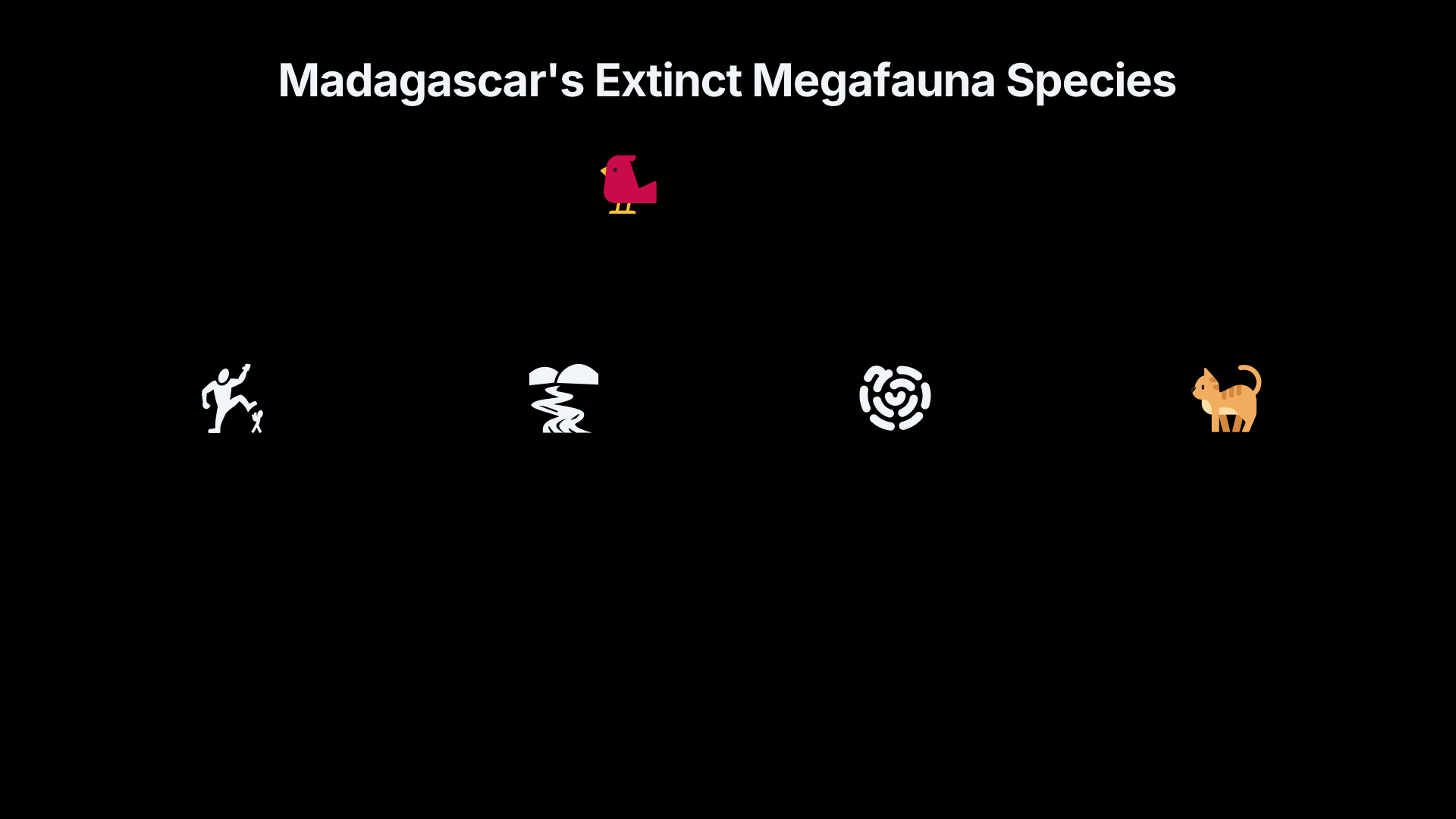
One reason Madagascar’s monster stories feel more believable than many cryptid traditions is that the island genuinely lost a remarkable collection of large animals within the span of human history. Giant lemurs, elephant birds, dwarf hippopotamuses, giant tortoises and a larger extinct relative of the modern fossa all survived long enough to overlap with people. In some cases, these animals may have disappeared only a few centuries ago. That does not mean Madagascar’s legendary creatures are secretly surviving today, but it does mean that stories of strange beasts developed against a real backdrop of recently vanished wildlife.[wikipedia.org]WikipediaSubfossil lemurSubfossil lemur
For readers trying to understand why reports of mysterious animals continue to surface in Madagascar, the island’s lost megafauna provides an important clue. The question is not whether extinct animals still roam the forests. The more interesting question is how memories of real creatures can persist in folklore long after those creatures have gone.
The Real Animals That Vanished Recently
Madagascar was once home to animals that would seem almost mythical if they were discovered only through stories.
The most famous were the elephant birds, enormous flightless birds that stood up to three metres tall and weighed hundreds of kilograms. They laid the largest eggs known from any animal. Evidence suggests they survived until roughly the last millennium, making them surprisingly recent neighbours of human communities.[CSIRO]csiro.auelephant birdsEggshells tell story of extinct elephant birds1 Mar 2023 — Madagascar's elephant birds have been extinct since around the year 1000…
The island also supported several species of Malagasy hippopotamus. These were smaller than the largest African hippos but still substantial animals, inhabiting rivers, wetlands and coastal regions. Alongside them lived giant tortoises and a diverse collection of giant lemurs, some weighing many times more than any living lemur.[wikipedia.org]WikipediaSubfossil lemurSubfossil lemur
Among the most striking were:
- Giant sloth lemurs, which moved slowly through trees in ways unlike modern lemurs.
- Megaladapis, sometimes called the koala lemur, which could reach gorilla-like proportions.
- Archaeolemur and Hadropithecus, more terrestrial species whose behaviour may have looked unfamiliar even to people accustomed to modern lemurs.
- Cryptoprocta spelea, a larger relative of today’s fossa, Madagascar’s top mammalian predator.[Wikipedia]WikipediaSubfossil lemurSubfossil lemur
The scale of these losses matters. Madagascar did not merely lose a few unusual species. It lost virtually all of its native animals above a certain body size, creating a dramatic gap between the wildlife people once knew and the wildlife visible today.[Wikipedia]WikipediaSubfossil lemurSubfossil lemur
How Oral Tradition Can Preserve Animal Memories
The most intriguing link between extinct megafauna and monster reports is not physical evidence but cultural memory.
Researchers studying Madagascar’s subfossil animals have repeatedly noted that some extinctions occurred recently enough for oral traditions to plausibly preserve memories of them. Several giant lemur species survived into the last few hundred to few thousand years, a period well within the reach of long-standing storytelling traditions.[Wikipedia]WikipediaSubfossil lemurSubfossil lemur
One of the best-known examples involves reports of unusual large lemur-like creatures. The seventeenth-century French governor Étienne de Flacourt recorded accounts of an animal called the “tratratratra” or “tretretretre”. Later researchers suggested that such descriptions might reflect memories of giant lemurs, particularly species such as Megaladapis. The match is not perfect, and scholars disagree about exactly which animal, if any, inspired the reports. Nevertheless, the timing is notable: the stories appeared only a few generations after some giant lemurs may still have survived in remote areas.[Wikipedia]WikipediaSubfossil lemurSubfossil lemur
Modern interviews conducted in parts of Madagascar have also collected stories about unusual lemur-like animals known locally by names such as “kidoky”. Witness descriptions sometimes differ from known living lemurs in ways that have attracted attention from both cryptozoologists and scientists. Most researchers favour misidentification or folklore-based explanations, but the reports demonstrate how vivid animal traditions can remain long after a species has vanished.[Wikipedia]WikipediaSubfossil lemurSubfossil lemur
Importantly, oral tradition does not function as a photographic record. Stories change. Different animals can merge into one legend. Behaviour may be exaggerated, and supernatural elements can accumulate over time. Yet oral traditions can sometimes preserve surprisingly durable echoes of real ecological events.[Wikipedia]WikipediaSubfossil lemurSubfossil lemur
Why Cryptid Claims Find Fertile Ground in Madagascar
In many countries, claims about surviving prehistoric animals face an immediate problem: the proposed creatures disappeared millions of years ago. Madagascar is different.
Its extinct megafauna survived into the late Holocene, the geological period that includes recorded human history. Because the extinctions are relatively recent, the idea that stories might contain fragments of genuine encounters feels less far-fetched than tales of surviving dinosaurs or other ancient creatures.[Wikipedia]WikipediaSubfossil lemurSubfossil lemur
That creates a psychological effect. When people hear reports of:
- unusually large lemurs,
- mysterious hoofed animals,
- giant bird legends,[timesofindia.indiatimes.com]timesofindia.indiatimes.comTowering taller than most humans, it was a dominant presence in Madagascar's ecosystem until its extinction a few hundred years ago. Desp…
- oversized predators,
they know that Madagascar really did once contain animals far larger and stranger than those living there today. The island’s natural history lends credibility to the possibility of misunderstanding, memory or exaggeration, even when it does not support claims of survival.[Wikipedia]WikipediaSubfossil lemurSubfossil lemur
The elephant bird illustrates this especially well. Historical travellers’ tales about enormous birds have often been linked to the extinct species, and some writers have even connected elephant birds with legends of the giant roc. Whether those connections are historically accurate remains debated, but the bird’s existence demonstrates how a genuinely gigantic animal can become woven into folklore after extinction.[National Museum of Ireland]museum.ieNational Museum of Ireland Elephant Bird Egg from Madagascar The elephant birdNational Museum of IrelandElephant Bird Egg from MadagascarThe elephant bird - Aepyornis maximus- is an extinct species of large flightle…
Where Scepticism Draws the Line Today
The same facts that make Madagascar’s monster stories fascinating also explain why mainstream zoologists remain unconvinced by claims of surviving megafauna.
Recent extinction is not the same thing as continued survival. Large animals leave traces. Breeding populations produce bones, droppings, tracks, carcasses, genetic material and repeated observations. Despite decades of biological research across Madagascar, no accepted specimen, photograph, DNA sample or verified carcass has demonstrated the survival of elephant birds, giant lemurs, dwarf hippos or other extinct megafauna.[Wikipedia]WikipediaSubfossil lemurSubfossil lemur
Modern explanations for monster reports generally fall into several categories:
- Misidentified living wildlife, especially unusual sightings of existing lemur species.
- Folklore and spiritual traditions that became interpreted as reports of physical animals.
- Oral memories of animals that disappeared in the relatively recent past.
- Exaggeration and retelling, which can transform ordinary encounters into extraordinary stories.[Wikipedia]WikipediaSubfossil lemurSubfossil lemur
From a sceptical perspective, the simplest explanation is usually that Madagascar’s monster lore preserves cultural memories rather than living populations. Yet that conclusion does not make the stories less interesting. In some respects it makes them more remarkable: they may represent one of the rare places in the world where legends developed in the shadow of real giants that humans actually knew.
The Lasting Importance of Lost Fauna
Madagascar’s extinct megafauna occupies a unique place in cryptid history. The island’s giant lemurs, elephant birds, dwarf hippos and other vanished animals provide a genuine historical foundation beneath many later monster traditions. Their existence explains why reports of mysterious creatures often feel unusually plausible compared with similar stories elsewhere.[wikipedia.org]WikipediaSubfossil lemurSubfossil lemur
The evidence, however, points more strongly towards memory than survival. The most compelling lesson is not that extinct animals still hide in Madagascar’s forests, but that people can carry echoes of lost wildlife across centuries. In that sense, some of Madagascar’s “monsters” may be less like undiscovered beasts and more like living reminders of an ecosystem that disappeared surprisingly recently.[Wikipedia]WikipediaSubfossil lemurSubfossil lemur
Amazon book picks
Further Reading
Books and field guides related to Why Madagascar's Monsters Feel Almost Plausible. Use these as the next step if you want deeper reading beyond the article.
The Sixth Extinction
Explores extinction processes that help explain lost Malagasy fauna.
eBay marketplace picks
Marketplace Samples
Live-tested eBay searches with available results related to this page.


Endnotes
1.
Source: Wikipedia
Title: Subfossil lemur
Link:https://en.wikipedia.org/wiki/Subfossil_lemur
2.
Source: csiro.au
Title: elephant birds
Link:https://www.csiro.au/en/news/all/articles/2023/march/elephant-birds
Source snippet
Eggshells tell story of extinct elephant birds1 Mar 2023 — Madagascar's elephant birds have been extinct since around the year 1000...
3.
Source: Wikipedia
Title: Elephant bird
Link:https://en.wikipedia.org/wiki/Elephant_bird
Source snippet
Elephant birdThey are thought to have gone extinct around 1000 AD, likely as a result of human activity. There are three currently rec...
4.
Source: museum.ie
Title: National Museum of Ireland Elephant Bird Egg from Madagascar The elephant bird
Link:https://www.museum.ie/en-IE/Collections-Research/Collection/Documentation-Discoveries/Artefact/An-Elephant-Bird-Egg-from-Madagascar/63324e2f-f7f8-46ac-aa72-a3a930113dd3
Source snippet
National Museum of IrelandElephant Bird Egg from MadagascarThe elephant bird - Aepyornis maximus- is an extinct species of large flightle...
5.
Source: smithsonianmag.com
Link:https://www.smithsonianmag.com/smart-news/droughts-and-human-interference-wiped-out-madagascars-gigantic-wildlife-1500-years-ago-180976094/
Source snippet
Smithsonian MagazineDroughts and Human Interference Wiped Out...20 Oct 2020 — Humans once lived alongside megafauna such as this elephan...
6.
Source: timesofindia.indiatimes.com
Link:https://timesofindia.indiatimes.com/etimes/animals/elephant-bird-madagascars-giant-flightless-bird-that-laid-the-largest-eggs-in-earths-history/articleshow/132211979.cms
Source snippet
Towering taller than most humans, it was a dominant presence in Madagascar's ecosystem until its extinction a few hundred years ago. Desp...
7.
Source: cryptidz.fandom.com
Title: Cryptid Wiki Elephant Bird
Link:https://cryptidz.fandom.com/wiki/Elephant_Bird
Source snippet
Bird - Cryptid Wiki - FandomOne theory states that humans hunted the elephant birds to extinction in a very short time for such a large l...
Additional References
8.
Source: umass.edu
Link:https://www.umass.edu/magazine/ventura-perez-elephant-bird
Source snippet
UMass AmherstVentura Pérez and the case of the elephant birdIt has been understood that the arrival of humans on Madagascar drove megafau...
9.
Source: madacaves.com
Link:https://www.madacaves.com/research
Source snippet
RESEARCH | websiteMalagasy oral tradition also holds some clues to the timing of extinction events; stories... extinction of the giant l...
10.
Source: academia.edu
Link:https://www.academia.edu/682585/Ecology_and_Extinction_of_Madagascars_Subfossil_Lemurs
11.
Source: umass.edu
Title: newly sequenced genome extinct giant lemur sheds light animals biology may offer
Link:https://www.umass.edu/news/article/newly-sequenced-genome-extinct-giant-lemur-sheds-light-animals-biology-may-offer
Source snippet
Newly Sequenced Genome of Extinct Giant Lemur Sheds...23 Jun 2021 — “From skeletal remains and radiocarbon dating, we know that at least...
12.
Source: psu.edu
Title: newly sequenced genome extinct giant lemur sheds light animals biology
Link:https://www.psu.edu/news/research/story/newly-sequenced-genome-extinct-giant-lemur-sheds-light-animals-biology
Source snippet
Pennsylvania State UniversityNewly sequenced genome of extinct giant lemur sheds...22 Jun 2021 — the largest of the 17 or so giant lemur...
13.
Source: artensterben.de
Link:https://www.artensterben.de/en/elephant-bird-aepyornis-maximus/
Source snippet
Elephant bird Aepyornis maximus – When did it go extinct?3 Feb 2026 — Aepyornis maximus, the largest elephant bird, lived on Madagascar...
14.
Source: lemurconservationnetwork.org
Link:https://www.lemurconservationnetwork.org/learn/why-lemurs/
Source snippet
Lemur ancestors likely landed on the island of Madagascar about 70 million years ago. There are over 100 species...
15.
Source: news.mongabay.com
Title: the riddle of madagascars megafauna extinction just got trickier
Link:https://news.mongabay.com/2020/11/the-riddle-of-madagascars-megafauna-extinction-just-got-trickier/
Source snippet
riddle of Madagascar's megafauna extinction just got...17 Nov 2020 — Yet we still do not know for sure what doomed the gorilla-sized lem...
16.
Source: lemurconservationnetwork.org
Title: the power of storytelling to inspire lemur conservation
Link:https://www.lemurconservationnetwork.org/the-power-of-storytelling-to-inspire-lemur-conservation/
Source snippet
15 Sept 2015 — The arrival of man to Madagascar some 1200 years ago is believed to have caused the giant lemurs to go extinct, but the ot...
17.
Source: facebook.com
Link:https://www.facebook.com/serpenillus/posts/about-17-species-of-lemurs-went-extinct-when-humans-arrived-to-madagascar-these-/936204381840363/
Source snippet
re two of the weirdest: Hadropithecus stenognathus and Megaladapis grandidieri...
Topic Tree