Within Bosnian Beasts
Why Bosnia's Wild Places Make Monsters
Forests, mountains, wetlands and karst caves can make ordinary animals sound strange enough to inherit a monster name.
On this page
- Large carnivores in the Dinaric landscape
- Wetlands, caves and eerie soundscapes
- How fear turns wildlife into folklore
Page outline Jump by section
Introduction
Many Bosnian monster stories begin with something entirely real. Bosnia and Herzegovina is one of the last parts of Europe where brown bears, wolves and lynx still occupy large areas of mountain forest, while wetlands, deep river valleys and extensive karst cave systems create unusual sights and sounds that can feel uncanny after dark. In a country where wild landscapes remain close to villages and farms, ordinary wildlife can easily acquire a supernatural reputation. The result is not necessarily a new creature, but a process: landscapes transform uncertain encounters into stories about monsters.[europa.eu]environment.ec.europa.euEnvironment Dinaric-Balkan-Pindos PlatformDinaric-Balkan-Pindos Platform - EU EnvironmentUnlike in Western Europe, bear and wolf populations never became extinct in the…
This helps explain why Bosnian folklore contains screaming creatures, mysterious forest presences and dragon-like cave legends despite limited evidence for unknown animals. The country’s geography encourages misidentification, exaggeration and storytelling. A distant bear can seem enormous, a wolf’s howl can sound human, and an unseen animal moving through reeds at night can become something far stranger in memory than it was in reality.[europa.eu]environment.ec.europa.euEnvironment Dinaric-Balkan-Pindos PlatformDinaric-Balkan-Pindos Platform - EU EnvironmentUnlike in Western Europe, bear and wolf populations never became extinct in the…
Large Carnivores in the Dinaric Landscape
The strongest ingredient in Bosnia’s monster-making environment is the continued presence of large predators. Unlike much of western Europe, the wider Dinaric region never completely lost its populations of bears and wolves. People have lived alongside them for generations, but familiarity does not eliminate fear.[Environment]environment.ec.europa.euEnvironment Dinaric-Balkan-Pindos PlatformDinaric-Balkan-Pindos Platform - EU EnvironmentUnlike in Western Europe, bear and wolf populations never became extinct in the…
The forests of the Dinaric Alps are vast, steep and often difficult to see through. Encounters are frequently partial rather than complete. A witness may hear movement, find tracks, notice livestock disturbance or glimpse a shape at dusk without identifying the animal clearly. Under those conditions, imagination fills gaps in observation.
Several characteristics of Bosnian wildlife lend themselves to monster stories:
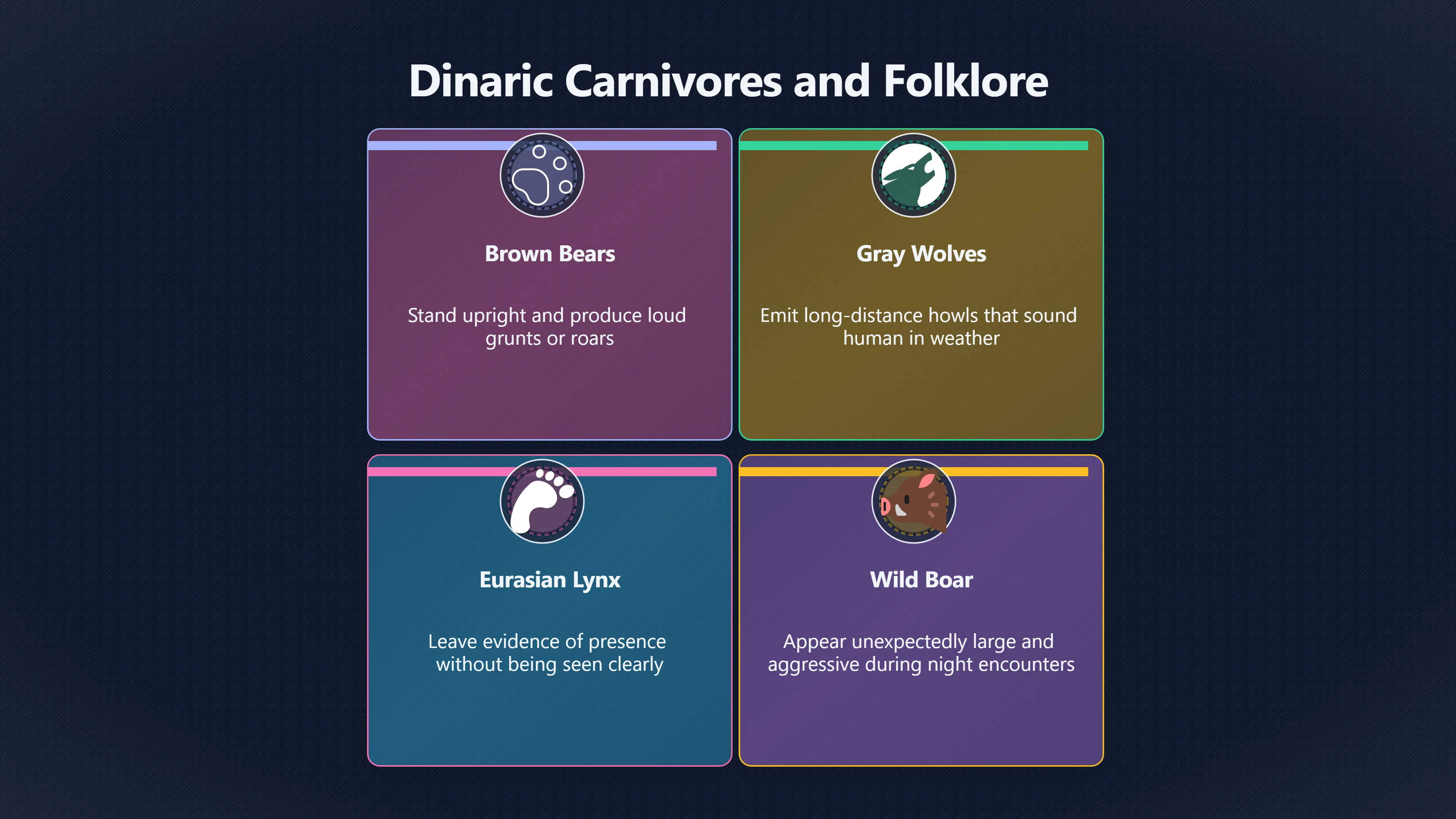
- Brown bears can stand upright, leave large claw marks and produce surprising noises, including grunts, huffs and roars.
- Wolves communicate through long-distance howls that carry across valleys and can sound strangely human in certain weather conditions.
- Lynx are rarely seen but leave evidence of their presence, creating an impression of an invisible predator watching from the forest.
- Wild boar can be unexpectedly large and aggressive, particularly when encountered suddenly at night.
Bosnia remains an important habitat for all three of Europe’s great Dinaric carnivores—bear, wolf and lynx—which means the raw material for mystery-animal stories is never entirely absent.[Dinaric-Balkan Large Carnivore Initiative]dinaric-carnivores.orgThese include brown bear (Ursus arctos), wolf (Canis lupus) and Eurasian lynx (Lynx lynx)…Read more…
The emotional effect matters as much as the animal itself. A bear viewed briefly through mist or forest cover is not experienced as a zoological specimen. It is experienced as a looming unknown. In folklore, that unknown often becomes a monster.
Forests That Hide More Than They Reveal
Bosnia’s remaining old-growth and near-wild forests amplify uncertainty. Places such as the Perućica forest in Sutjeska National Park contain dense vegetation, deep ravines and limited visibility, creating conditions where wildlife can be sensed long before it is seen. Modern visitors still describe the psychological impact of knowing bears, wolves and lynx are present somewhere nearby even when none appear.[The Guardian]theguardian.comThe Guardian We're going on a Bosnian bear huntin Europe's oldest forestMay 28, 2026 — This article recounts a guided exploration of Perućica, a 20,000-year-old primeval forest located…
That combination of genuine danger and incomplete information is fertile ground for folklore. Many reported monsters are not invented from nothing; they emerge from landscapes where people cannot immediately verify what they heard or saw.
Wetlands, Caves and Eerie Soundscapes
Forests are only part of the story. Bosnia’s wetlands and karst terrain generate their own forms of mystery.
The wetland reserve of Hutovo Blato in Herzegovina hosts hundreds of bird species and enormous seasonal concentrations of migratory birds. During migration periods, the area can become a chorus of calls, splashes, wingbeats and echoes. Someone unfamiliar with the sounds may hear cries that seem unnatural, especially at night or in fog.[wanderbih.com]wanderbih.comWander BiHHutovo Blato: Bosnia's Secret Birdwatching ParadiseHutovo Blato is home to over 240 species of migratory birds from 39 differen…
Wetlands also distort perception. Reed beds conceal animals, sounds travel oddly across water, and reflections can make distances difficult to judge. Around the world, such environments have produced stories of lake monsters, phantom birds and unexplained creatures. Bosnia’s wetlands are not famous for a single monster, but they possess many of the environmental ingredients that generate such legends.

The Dragon Beneath the Limestone
Bosnia lies within the vast Dinaric karst region, a landscape of caves, sinkholes and underground rivers. Karst systems have inspired monster traditions for centuries because much of their wildlife remains hidden from ordinary observation.[Wikipedia]WikipediaOpen source on wikipedia.org.
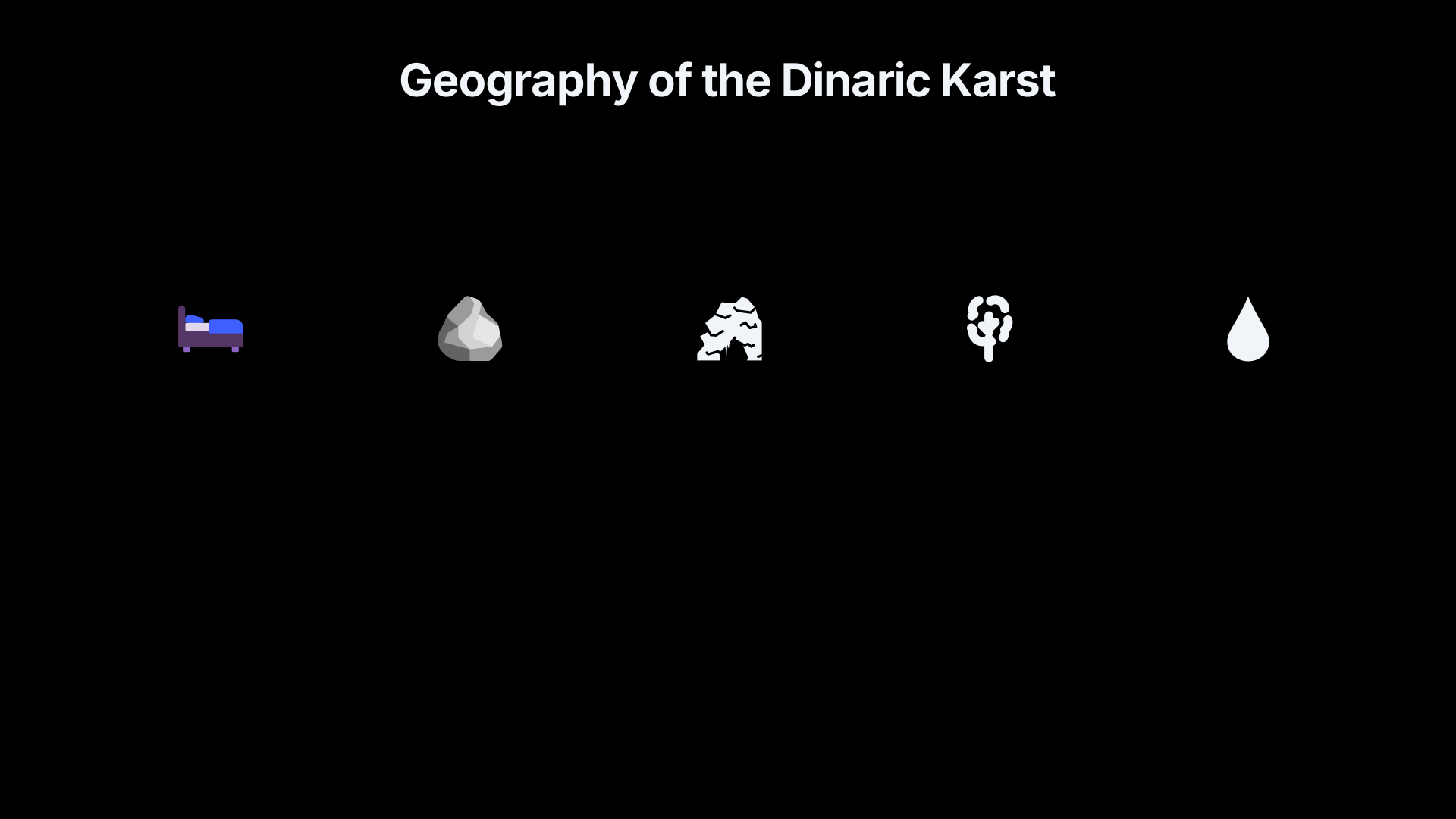
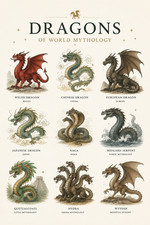
One of the most striking examples is the olm, a pale cave-dwelling amphibian found in parts of the Dinaric karst, including Bosnia and Herzegovina. Historically, heavy rains occasionally washed these strange creatures from underground waterways. To people who had never seen such an animal before, they looked alien. Local traditions in the wider karst region interpreted them as baby dragons emerging from the subterranean world.[wikipedia.org]WikipediaOpen source on wikipedia.org.
The olm demonstrates a recurring pattern in monster folklore. An unusual but real animal appears unexpectedly in a landscape already associated with mystery. The explanation that follows is shaped less by biology than by imagination.
Echoes, Darkness and Misheard Animals
Karst landscapes create acoustic puzzles as well as visual ones. Caves, ravines and limestone cliffs can reflect and distort sound. A fox’s scream, an owl’s call or the cry of another nocturnal animal may bounce through valleys in ways that make its source difficult to locate.
This mechanism is particularly relevant to stories such as the drekavac, often described through its terrifying voice rather than its appearance. In many accounts, witnesses first hear a scream and only later imagine the creature that produced it. The landscape effectively supplies the mystery before folklore supplies the monster.
How Fear Turns Wildlife Into Folklore
A monster story usually emerges from several layers working together.
First comes a genuine environmental trigger: an animal call, an unexplained movement, tracks in mud, livestock disturbance or a fleeting sighting.
Second comes uncertainty. Darkness, distance, weather and terrain prevent a clear identification.
Third comes interpretation. People draw on existing stories, local beliefs and community rumours to explain what happened.
Finally, repetition transforms an isolated event into folklore.
Bosnia’s landscapes support each stage of this process. Large predators provide real causes for concern. Mountains and forests limit visibility. Wetlands and caves produce unusual sounds. Long-standing regional traditions supply ready-made narrative frameworks. By the time a story is retold, the original bear, wolf, owl or cave salamander may have disappeared entirely from the account.
This does not mean witnesses are dishonest. Most folklore begins with sincere attempts to explain unusual experiences. The monster is often the final product of a chain that started with a perfectly ordinary animal encountered under extraordinary circumstances.
Why Bosnia Produces Mystery Creatures Without Needing Unknown Animals
The most convincing explanation for many Bosnian monster traditions is not the existence of undiscovered beasts but the interaction between wildlife and landscape.
Bosnia and Herzegovina contains rugged mountains, primeval forests, predator habitats, wetlands crowded with birds and one of Europe’s most dramatic karst systems. These environments naturally generate strange sounds, fleeting encounters and unexpected discoveries.[europa.eu]environment.ec.europa.euEnvironment Dinaric-Balkan-Pindos PlatformDinaric-Balkan-Pindos Platform - EU EnvironmentUnlike in Western Europe, bear and wolf populations never became extinct in the…
In that sense, Bosnia’s wild places do not merely host monster stories—they help create them. The country’s geography repeatedly turns ordinary animals into extraordinary experiences, allowing folklore to flourish wherever uncertainty meets imagination.
Amazon book picks
Further Reading
Books and field guides related to Why Bosnia's Wild Places Make Monsters. Use these as the next step if you want deeper reading beyond the article.
Where the Wild Things Were
Explains how large predators shape human perception and stories.
The Beast in the Garden
Shows how real predators become larger-than-life in local imagination.
eBay marketplace picks
Marketplace Samples
Live-tested eBay searches with available results related to this page.


Endnotes
1.
Source: dinaric-carnivores.org
Link:https://dinaric-carnivores.org/en/
Source snippet
These include brown bear (Ursus arctos), wolf (Canis lupus) and Eurasian lynx (Lynx lynx)...Read more...
2.
Source: dinaric-carnivores.org
Link:https://dinaric-carnivores.org/en/large-carnivores/
Source snippet
Dinaric-Balkan Large Carnivore InitiativeLarge carnivoresBrown bear (Ursus arctos), wolf (Canis lupus) and Eurasian lynx (Lynx lynx), inc...
3.
Source: fondationsegre.org
Link:https://www.fondationsegre.org/coexistence-of-large-carnivores-and-humans-conflict-reduction-in-bosnia-and-herzegovina/
Source snippet
large carnivores, especially the gray wolf and the brown bear. Both species...Read more...
4.
Source: bosnianvoyager.com
Title: hutovo blato
Link:https://bosnianvoyager.com/hutovo-blato/
Source snippet
birds creates almost surreal visual experiences – hundreds of birds visible simultaneously, their calls creating a cacophony of natural s...
5.
Source: Wikipedia
Link:https://en.wikipedia.org/wiki/Olm
6.
Source: caves.org
Title: National Speleological Society Ivo Lučić
Link:https://caves.org/wp-content/uploads/Publications/JCKS/v83/83_2_57.pdf
Source snippet
An underworld tailored to tourists: A dragon, a...by I Lučić · 2021 — The undisputed star among Postojna. Cave's inhabitants is the olm...
7.
Source: Wikipedia
Title: Bosnia and Herzegovina
Link:https://en.wikipedia.org/wiki/Bosnia_and_Herzegovina
Source snippet
Bosnia and HerzegovinaBosnia is a country in Southeast Europe, situated on the Balkan Peninsula. It borders Serbia to the east, Monten...
8.
Source: Wikipedia
Title: Hutovo Blato
Link:https://en.wikipedia.org/wiki/Hutovo_Blato
Source snippet
Hutovo BlatoHutovo Blato is a nature reserve and bird reserve located in Bosnia and Herzegovina. It is primarily composed of marshland...
9.
Source: Wikipedia
Title: Bosnian War
Link:https://en.wikipedia.org/wiki/Bosnian_War
Source snippet
Bosnian WarThe Bosnian War was characterised by bitter fighting, indiscriminate shelling of cities and towns, ethnic cleansing, and sy...
10.
Source: environment.ec.europa.eu
Title: Environment Dinaric-Balkan-Pindos Platform
Link:https://environment.ec.europa.eu/topics/nature-and-biodiversity/habitats-directive/large-carnivores/eu-large-carnivore-platform/eu-regional-large-carnivore-platforms/dinaric-balkan-pindos-platform_en
Source snippet
Dinaric-Balkan-Pindos Platform - EU EnvironmentUnlike in Western Europe, bear and wolf populations never became extinct in the...
11.
Source: wanderbih.com
Link:https://wanderbih.com/hutovo-blato-bosnias-secret-birdwatching-paradise/
Source snippet
Wander BiHHutovo Blato: Bosnia's Secret Birdwatching ParadiseHutovo Blato is home to over 240 species of migratory birds from 39 differen...
12.
Source: theguardian.com
Title: The Guardian We’re going on a Bosnian bear hunt
Link:https://www.theguardian.com/travel/2026/may/28/bosnia-bear-hunt-europe-oldest-forest
Source snippet
in Europe's oldest forestMay 28, 2026 — This article recounts a guided exploration of Perućica, a 20,000-year-old primeval forest located...
Published: May 28, 2026
13.
Source: postojnska-jama.eu
Link:https://www.postojnska-jama.eu/en/wonderland-stories/baby-dragons-secret-stories/
Source snippet
Postojna Cave ParkBaby Dragons' Secret StoriesOlms are endemic to the Dinaric karst, which means they are only found in a very small part...
14.
Source: environment.ec.europa.eu
Title: eu Large carnivore populations across Europe
Link:https://environment.ec.europa.eu/topics/nature-and-biodiversity/habitats-directive/large-carnivores/large-carnivore-populations-across-europe_en
Source snippet
For the Jura and Vosges-...Read more...
15.
Source: environment.ec.europa.eu
Link:https://environment.ec.europa.eu/news/practical-support-handbook-monitoring-large-carnivores-dinaric-balkan-pindos-region-2025-06-18_en
Source snippet
for monitoring of large carnivores | Dinaric–Balkan...Jun 18, 2025 — The Dinaric-Balkan-Pindos (DiBaPi) region is a critical biodiversit...
16.
Source: birdingplaces.eu
Title: hutovo blato
Link:https://www.birdingplaces.eu/nl/birdingplaces/bosnia-and-herzegovina/hutovo-blato
Source snippet
11 Nov 2020 — Hutovo Blato is one of the largest bird wintering grounds in Europe. This big sub-Mediterranean marsh occupies an area of 7...
17.
Source: state.gov
Title: Bosnia and Herzegovina
Link:https://www.state.gov/reports/2023-country-reports-on-human-rights-practices/bosnia-and-herzegovina
Source snippet
United States Department of StateSignificant human rights issues included credible reports of torture or cruel, inhuman, or degrading tre...
18.
Source: exploremostar.com
Title: hutovo blato
Link:https://exploremostar.com/hutovo-blato/
Source snippet
Nature Park — Bird Watching Guide (2026)24 Apr 2026 — Visit Hutovo Blato wetlands: 240 bird species, boat safaris €10-15, photo blinds. B...
Additional References
19.
Source: researchgate.net
Link:https://www.researchgate.net/publication/377623821Leading_the_way-_presence_of_brown_bear_Ursus_arctos_lynx_Lynx_lynx_and_grey_wolf_Canis_lupus_underlines_the_integrity_and_corridor_function_of_the_upper_Neretva_Valley_in_Bosnia_and_Herzegovina
Source snippet
Leading the way – presence of brown bear Ursus arctos...Apr 29, 2026 — Furthermore, the signs of lynx presence, in addition to brown bea...
20.
Source: researchgate.net
Link:https://www.researchgate.net/publication/377635514_FAUNISTIC_FINDINGS_FROM_VOLUJAK_MOUNTAIN_A_CONTRIBUTION_TO_THE_KNOWLEDGE_OF_THE_FAUNA_OF_THE_REPUBLIC_OF_SRPSKA_BOSNIA_AND_HERZEGOVINA
Source snippet
(PDF) FAUNISTIC FINDINGS FROM VOLUJAK MOUNTAIN30 Nov 2023 — Keystone species, such as grey wolf, brown bear and Balkan chamois were regis...
21.
Source: theanimalmap.com
Link:https://theanimalmap.com/en/countries/bosnia-and-herz
Source snippet
Animals in Bosnia and HerzegovinaIts mountains, rivers and forests host animals such as lynxes, bears, wolves and eagles. The Sutjeska Na...
22.
Source: espn.com
Link:https://www.espn.com/soccer/team/_/id/452/bosnia-herzegovina
Source snippet
Bosnia-Herzegovina Scores, Stats and HighlightsVisit ESPN for Bosnia-Herzegovina live scores, video highlights, and latest news. Find sta...
23.
Source: oneearth.org
Link:https://www.oneearth.org/ecoregions/dinaric-mountains-mixed-forests/
Source snippet
Dinaric Mountains Mixed ForestsLarge carnivores can be found roaming these mountain ranges, including brown bears (approximately 3,000 in...
24.
Source: go-bosnia.com
Link:https://go-bosnia.com/en/entity/hutovo-wetland/
Source snippet
Hutovo Blato – A Ramsar Wetland Wonder – Nature ParkHutovo Blato is a unique oasis of unspoiled nature in the heart of Herzegovina, known...
25.
Source: facebook.com
Link:https://www.facebook.com/Postojnacavepark/posts/ten-years-ago-something-incredible-happened-in-postojna-cave-slovenia-for-the-fi/1340651058088395/
Source snippet
Postojnska jama Cave-Grotte-HöhleLong ago, locals believed it was a dragon's baby, but today we know it as the olm (Proteus anguinus). Ey...
26.
Source: a-z-animals.com
Link:https://a-z-animals.com/animals/location/europe/bosnia-and-herzegovina/
Source snippet
Wildlife in Bosnia and HerzegovinaBosnia and Herzegovina is notable for "wild Europe" encounters-tracking brown bears, wolves, and elusiv...
27.
Source: fatbirder.com
Link:https://fatbirder.com/world-birding/europe/bosnia-and-herzegovina/
Source snippet
This National Park is a Mediterranean wetland situated near Èapljina in Herzegovina. It is an IBA and there are 235 species officially li...
28.
Source: youtube.com
Link:https://www.youtube.com/watch?v=nXX1t8eRN7g
Source snippet
Protecting the European brown bearThe World Conservation Union (IUCN) lists the brown bear in Europe as a species of 'Least Concern'. How...
Topic Tree