Where Ivory Coast's Monsters Meet the Forest
Ivory Coast is not a country with one famous, headline-grabbing cryptid on the model of the Loch Ness Monster. Its mystery-creature material is thinner, more regional, and more entwined with folklore, masquerade, forest ecology, and living wildlife.
Page outline Jump by section
Introduction
That makes Ivory Coast especially interesting for evidence-aware readers. The “monsters” here are often not alleged unknown species. They are remembered beings, ritual forms, moral warnings, tourist spectacles, or ordinary animals made strange by danger, secrecy, scarcity and the forest.
The closest thing to an Ivorian cryptid record is a folklore cluster, not a sighting file
The clearest creature-name that appears in English-language cryptid-style catalogues for Côte d’Ivoire is the dodo, also known in variants such as Kadindi or Kaddodi. This is not the extinct Mauritian bird. In West African folklore material, the dodo is a large, dangerous, humanoid swallowing monster associated with deep forests, swamps, ponds and streams across a broad sub-Saharan range that includes Côte d’Ivoire, Ghana, Nigeria and Sudan. It is described as shaggy, huge, male, meat-eating, and able to swallow people, livestock, wedding guests or even whole communities in moral tales about greed, danger and rescue.[A Book of Creatures]abookofcreatures.comA Book of Creatures Cote d’Ivoire | A Book of CreaturesA Book of Creatures Cote d’Ivoire | A Book of Creatures
The dodo is best treated as folklore rather than a zoological claim. Its geography is wide, its behaviour is symbolic, and the stories work like teaching tales: the monster punishes selfishness, threatens isolated women or children, and is defeated by cunning, prayer, or another powerful being. A Book of Creatures, drawing on A. J. N. Tremearne’s early twentieth-century Hausa folklore collections, notes that the dodo may ultimately be related to tales of giant snakes, which would fit a wider pattern in which real animal fears are magnified into story-beasts.[A Book of Creatures]abookofcreatures.comA Book of Creatures Cote d’Ivoire | A Book of CreaturesA Book of Creatures Cote d’Ivoire | A Book of Creatures
That matters because it prevents a common mistake. A reader searching for “Ivory Coast cryptids” may expect a catalogue of eyewitness cases. The better-supported material points instead to portable West African monster traditions that crossed ethnic, linguistic and colonial borders. Côte d’Ivoire is part of that range, but the dodo is not uniquely Ivorian in the way Nessie is Scottish or the Jersey Devil is tied to New Jersey.
Forest, swamp and river: why the setting makes monsters believable
Ivory Coast’s monster material makes more sense when placed against its real environments. Taï National Park, in the country’s west near Liberia, is one of the last major remnants of primary tropical forest in West Africa and is internationally recognised for threatened mammals including pygmy hippopotamus and multiple monkey species.[UNESCO World Heritage Centre]whc.unesco.orgOpen source on unesco.org. UNEP-WCMC’s World Heritage datasheet also highlights the park’s threatened fauna, including pygmy hippos, tool-using chimpanzees, monkeys and other forest species.[World Heritage Datasheets]world-heritage-datasheets.unep-wcmc.orgWorld Heritage Datasheets TAÏ NATIONAL PARKWorld Heritage Datasheets TAÏ NATIONAL PARK
For cryptid history, this ecological background is important. Dense forest produces partial sightings, tracks, noises, night movement and animal encounters that are easy to narrate as something larger than the visible evidence. A real pygmy hippo is shy, nocturnal and hard to observe; a leopard or African golden cat can pass through a forest edge as a glimpse; a chimpanzee heard before it is seen can feel startlingly human. Recent conservation work still uses camera traps and field surveys to document elusive cats and other mammals in Taï, which underlines how difficult even confirmed wildlife can be to observe directly.[Panthera]panthera.orgA Tale of Hide and Seek in Taï National ParkA Tale of Hide and Seek in Taï National Park
This does not prove unknown animals are hiding in Ivory Coast. It does explain why the country’s creature traditions lean towards forests, rivers, swamps and liminal places where people meet animals imperfectly: water margins, sacred groves, hunting paths, funeral spaces and village edges.

The dodo: a “swallower” rather than a hidden species
The dodo is the most monster-like figure in the Ivorian-adjacent record. In the collected stories, it does several things that mark it as folklore rather than field biology:
- It swallows impossibly much. The dodo can eat meat, livestock, people and crowds in quantities no animal could manage.
- It changes moral function from tale to tale. Sometimes it punishes greed; sometimes it enforces a bargain; sometimes it becomes the obstacle a hero must survive.
- It belongs to water and forest at once. It may be unable to cross running water, yet also emerge from ponds or streams, a contradiction that makes sense in story logic rather than natural history.
- It is defeated symbolically. Knives from heaven, cunning tricksters, or smaller supernatural beings can destroy it from inside after it has swallowed them.[A Book of Creatures]abookofcreatures.comA Book of Creatures Cote d’Ivoire | A Book of CreaturesA Book of Creatures Cote d’Ivoire | A Book of Creatures
One of the most striking associated figures is Zankallala, a tiny but mighty being who appears in a tale where a boy fleeing the dodo is protected by this apparently insignificant creature. Zankallala is described as small enough to be almost comic, yet powerful enough to survive being swallowed repeatedly and finally kill the dodo from within. The tale’s punchline is not “a rare animal was discovered”, but “one power is always greater than another”.[A Book of Creatures]abookofcreatures.comA Book of Creatures Cote d’Ivoire | A Book of CreaturesA Book of Creatures Cote d’Ivoire | A Book of Creatures
For a public cryptid page, the dodo is therefore best framed as Ivory Coast’s link to a wider West African swallowing-monster tradition. It is relevant to Ivorian mystery-creature history, but it should not be inflated into a modern eyewitness cryptid without stronger evidence.
Mask-creatures: when the monster is performed
Some of Ivory Coast’s most vivid “creatures” are not reported animals at all. They are masked beings that appear in ritual, funeral, initiation or public performance contexts. These are not cryptids in the strict zoological sense, but they matter because they create animal-human forms that look like monsters, move like spirits, and carry real social power.
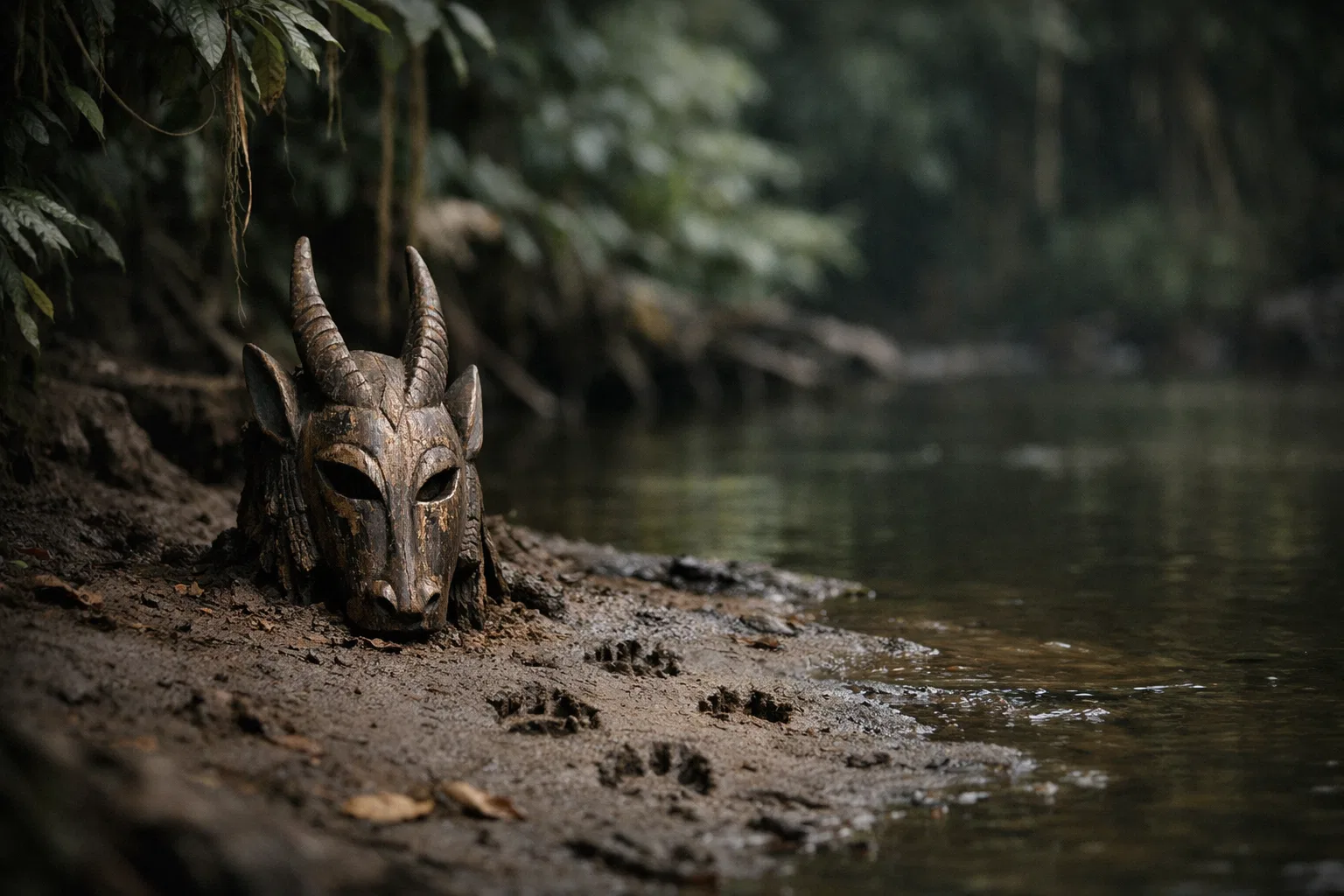
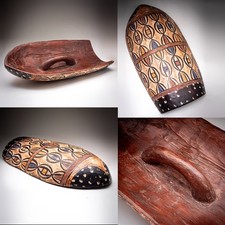
The Senufo kponyugo helmet mask, found in the region spanning northern Côte d’Ivoire, Mali and Burkina Faso, is a strong example. The Metropolitan Museum of Art describes kponyugo masks as fear-inducing composite forms drawing on powerful animals such as crocodiles, warthogs and antelopes. They are not meant to depict one species. Their force comes from uncertainty: open jaws, sharp teeth and mixed animal references combine into a being that seems ready to devour prey.[The Metropolitan Museum of Art]metmuseum.orgThe Metropolitan Museum of Art Helmet Mask (KponyugoThe Metropolitan Museum of Art Helmet Mask (Kponyugo
The Art Institute of Chicago similarly identifies animal components in kponyungo masks, including a crocodile’s jaw, a hyena’s snout, and horns of ram and antelope, while linking the masks to powerful spirits that escort the dead and protect the community from supernatural danger.[The Art Institute of Chicago]artic.eduOpen source on artic.edu. Other museum and teaching sources note that Senufo “firespitter” masks are associated with funerals and Poro society, with fire effects intensifying the sense of a dangerous bush-being entering human space.[Pacific Lutheran University]plu.eduOpen source on plu.edu.
This is a different sort of monster tradition from a lake serpent sighting. The “creature” is deliberately made, worn, danced and socially controlled. Yet to an outsider, a composite animal mask with snapping jaws, horns, tusks and fire may be exactly what a monster looks like. The distinction is crucial: the kponyugo is not evidence for an unknown animal, but it is evidence for a sophisticated Ivorian and regional visual language of dangerous, hybrid, animal-spirit power.
Goli, buffalo heads and protective fear
Central Ivory Coast also has famous mask traditions in which animal form, spiritual authority and spectacle meet. The Goli complex, associated especially with Baule and Wan/Guro contexts, includes masks whose forms can evoke buffalo or horned animals and which appear in dance sequences for major communal occasions. The Cleveland Museum of Art describes a Baule-style kple kple mask as part of the Goli performance sequence, danced by young boys in a rapid stamping style.[Cleveland Museum of Art]clevelandart.orgOpen source on clevelandart.org.
French-language cultural summaries describe Goli as a sacred Ivorian dance-mask tradition, with some accounts linking the larger Goli form to protective divinity and to powerful animal imagery. Such sources should be handled carefully, because online summaries can compress multiple local traditions into a neat national story. Still, they show how strongly animal-headed performance figures have become part of Ivory Coast’s public cultural image.[Wikipedia]WikipediaMasque de Côte d'IvoireMasque de Côte d'Ivoire
For cryptid readers, the takeaway is simple: Ivory Coast has a rich tradition of performed monsters. The frightening being may not be hiding in the bush; it may be summoned into the village square, given a body through wood, fibre, music and dance, and understood as protective rather than merely predatory.
Yamoussoukro’s crocodiles: sacred beasts, tourist spectacle and real danger
The most famous “monster animals” in modern Ivory Coast are arguably the crocodiles of Yamoussoukro. They are not cryptids. They are real crocodiles living in the artificial lakes around the presidential palace, linked to the era and symbolism of Félix Houphouët-Boigny, Ivory Coast’s first president. Voice of America reported in 2024 that Yamoussoukro had roughly 300 crocodiles from Houphouët-Boigny’s time, attracting visitors during the Africa Cup of Nations.[Voice of America]voaafrica.comOpen source on voaafrica.com.
Their story sits exactly on the boundary between wildlife, political theatre and legend. Travel and diplomatic summaries describe the crocodile lake as a major tourist attraction, with Nile crocodiles fed for visitors and associated with Houphouët-Boigny’s political power.[Discover Ivorycoast]discover-ivorycoast.comDiscover Ivorycoast Discover the beautiful city of YamoussoukroDiscover Ivorycoast Discover the beautiful city of Yamoussoukro The New Yorker’s 1984 account of Yamoussoukro described the palace lake as containing man-eating crocodiles that were totemic or emblematic creatures belonging to the president, fed daily and watched by tourists.[The New Yorker]newyorker.comthe crocodiles of yamoussoukroHouphouet-Boigny transformed his ancestral village of Yamoussoukro into an ultra-modern city, aspiring for it to be one of Africa's great…
The danger is not just theatrical. Ivorian and international reports have repeated the 2012 incident in which a long-serving crocodile handler, commonly named as Dicko Toké or Toké Dicko, was killed by one of the crocodiles during a feeding demonstration.[Abidjan.net]news.abidjan.nettout va de travers en cote divoiretout va de travers en cote divoire That event is why the Yamoussoukro crocodiles should be treated as more than a quirky attraction. They are real apex predators placed inside a national political landscape and wrapped in sacred, symbolic and touristic meaning.
In cryptid terms, Yamoussoukro shows how a known animal becomes legendary without becoming imaginary. The crocodile needs no exaggeration to be frightening. Its public feeding, sacred aura, palace setting and fatal incident have already given it the texture of a modern monster story.
Real elusive animals behind strange reports
Ivory Coast’s best sceptical explanations for mystery-beast claims are not boring. They are remarkable animals in their own right.
The pygmy hippopotamus is one of the strongest examples. Conservation groups identify Côte d’Ivoire, especially the Taï area, as vital for the species, and recent field updates still describe sightings as special events because the animal is so elusive.[hipposg.org]hipposg.orgOpen source on hipposg.org. A shy, nocturnal forest hippo moving through swampy vegetation is exactly the kind of animal that can leave ambiguous tracks, sounds and glimpses.
Large cats are another source of plausible “phantom” impressions. Panthera’s 2024 work in Taï used camera traps to study leopards and African golden cats, animals that are present but difficult to detect in dense forest.[Panthera]panthera.orgA Tale of Hide and Seek in Taï National ParkA Tale of Hide and Seek in Taï National Park A fleeting leopard, especially at dusk or near farms, can easily become a “mysterious panther” in local retelling without requiring a new species.
Forest elephants add a further layer. Le Monde reported in 2024 that Côte d’Ivoire’s elephants have fallen from far larger historical numbers to roughly 500, with habitat loss, conflict and fragmented populations shaping present-day encounters. The article’s case of “Le Gros”, a young forest elephant that repeatedly escaped confinement after being linked to a fatal village incident, shows how a real animal can become a named, feared and politically complicated presence.[Le Monde.fr]lemonde.frMassive deforestation for cocoa and cashew farming, political instability, and urbanization have decimated elephant habitats, leaving fra…
These examples are important because they keep scepticism honest. Many strange animal stories can be misidentifications, exaggerations or folklore, but the animals available to be misidentified are themselves rare, powerful and poorly seen.
What Ivory Coast lacks: the classic modern cryptid pattern
So far, the public evidence does not show a strong Ivory Coast tradition of modern lake monsters, sea serpents, ape-men, thunderbirds or repeated newspaper “flaps” comparable to better-known cryptid regions. Searches turn up folklore entries, mask traditions, crocodile tourism, wildlife conservation and occasional animal-conflict stories, rather than a robust archive of named mystery animals with dated witness reports.
That absence is itself useful. It suggests that Ivory Coast’s creature history has been shaped less by twentieth-century monster-hunting media and more by oral tradition, ritual performance, political symbolism and conservation realities. In other words, the country’s “cryptid” profile is not empty, but it is not organised around a single unresolved beast.
There are also language and archive issues. Much of Ivory Coast’s relevant material is likely to be in French, local languages, museum catalogues, ethnographic works, oral histories and regional news rather than in English-language cryptozoology books. That can make the record look thinner than it is. But responsible writing has to distinguish between “hard to access” and “confirmed”.
How to read Ivory Coast’s monster traditions without flattening them
The most accurate reading of Ivory Coast is layered:
Folklore layer: The dodo and related swallowing-monster stories belong here. They are powerful narrative beings, not field reports.
Ritual-performance layer: Kponyugo, Goli and related mask-creatures belong here. They are embodied through art and performance, often drawing on animal danger to express social or spiritual force.[The Metropolitan Museum of Art]metmuseum.orgThe Metropolitan Museum of Art Helmet Mask (KponyugoThe Metropolitan Museum of Art Helmet Mask (Kponyugo
Living-animal layer: Crocodiles, pygmy hippos, leopards, chimpanzees and forest elephants belong here. They are real species that can generate fear, reverence, misidentification and legend through rarity or danger.[voaafrica.com]voaafrica.comOpen source on voaafrica.com.
Tourism and media layer: Yamoussoukro’s crocodiles are the clearest case, because they are repeatedly framed for visitors as sacred, spectacular and dangerous.[Voice of America]voaafrica.comOpen source on voaafrica.com.
This layered approach lets the strange stories remain strange without turning every mask into a cryptid or every crocodile into a monster hoax. It also respects the fact that in many traditions, a creature’s importance is not measured by whether zoologists can classify it. Its importance may lie in what it teaches, protects, threatens or remembers.
The bottom line for Ivory Coast cryptids
Ivory Coast’s mystery-creature landscape is best understood as folklore-rich but cryptid-light. There is no well-supported modern case for an undiscovered Ivorian monster animal in the mainstream evidence. The strongest creature material instead comes from West African ogre and swallowing-monster tales, Senufo and Baule/Wan animal-spirit mask traditions, the politically charged crocodiles of Yamoussoukro, and the real hidden wildlife of the country’s remaining forests.
That makes the country a rewarding page in a cryptids-by-country project precisely because it complicates the category. Ivory Coast shows that “monster history” is not only about blurry photographs and lake ripples. Sometimes it is a tiny hero inside a giant swallower, a fire-breathing funeral mask with crocodile jaws, a palace lake full of sacred predators, or a rare forest animal glimpsed just long enough to become a story.
Amazon book picks
Further Reading
Books and field guides related to Where Ivory Coast's Monsters Meet the Forest. Use these as the next step if you want deeper reading beyond the article.
African Myths of Origin
Provides broad context for West African monster and spirit lore.
African Folktales
Covers creature stories and folklore themes found across the region.
Mythology:Timeless Tales of Gods and Heroes
Appeals to readers interested in comparative myth and legendary beings.
eBay marketplace picks
Marketplace Samples
Live-tested eBay searches with available results related to this page.
Endnotes
1.
Source: whc.unesco.org
Link:https://whc.unesco.org/en/list/195/
2.
Source: archive.org
Link:https://archive.org/details/cu31924026919518
3.
Source: world-heritage-datasheets.unep-wcmc.org
Title: World Heritage Datasheets TAÏ NATIONAL PARK
Link:https://world-heritage-datasheets.unep-wcmc.org/datasheet/output/site/tai-national-park
4.
Source: panthera.org
Title: A Tale of Hide and Seek in Taï National Park
Link:https://panthera.org/blog-post/tale-hide-and-seek-tai-national-park
5.
Source: Wikipedia
Title: Masque de Côte d’Ivoire
Link:https://fr.wikipedia.org/wiki/Masque_de_C%C3%B4te_d%27Ivoire
6.
Source: Wikipedia
Title: Masque Goli
Link:https://fr.wikipedia.org/wiki/Masque_Goli
7.
Source: discover-ivorycoast.com
Title: Discover Ivorycoast Discover the beautiful city of Yamoussoukro
Link:https://discover-ivorycoast.com/the-district-of-yamoussoukro/
8.
Source: news.abidjan.net
Title: tout va de travers en cote divoire
Link:https://news.abidjan.net/articles/439935/tout-va-de-travers-en-cote-divoire
9.
Source: Wikipedia
Title: Crocodiles de Yamoussoukro
Link:https://fr.wikipedia.org/wiki/Crocodiles_de_Yamoussoukro
10.
Source: hipposg.org
Link:https://www.hipposg.org/cote-d-ivoire
11.
Source: Wikipedia
Title: Category:West African legendary creatures
Link:https://en.wikipedia.org/wiki/Category%3AWest_African_legendary_creatures
12.
Source: Wikipedia
Title: Taï National Park
Link:https://en.wikipedia.org/wiki/Ta%C3%AF_National_Park
13.
Source: Wikipedia
Title: Aniota (société secrète)
Link:https://fr.wikipedia.org/wiki/Aniota_%28soci%C3%A9t%C3%A9_secr%C3%A8te%29
14.
Source: whc.unesco.org
Link:https://whc.unesco.org/document/152954
15.
Source: abookofcreatures.com
Title: A Book of Creatures Cote d’Ivoire | A Book of Creatures
Link:https://abookofcreatures.com/category/cote-divoire/
16.
Source: metmuseum.org
Title: The Metropolitan Museum of Art Helmet Mask (Kponyugo)
Link:https://www.metmuseum.org/art/collection/search/312275
17.
Source: voaafrica.com
Link:https://www.voaafrica.com/a/overnight-yamoussoukro-s-crocodiles-popular-with-tourists-and-revered-by-locals/7466451.html
18.
Source: artic.edu
Link:https://www.artic.edu/artworks/18759/helmet-mask-kponyungo
19.
Source: plu.edu
Link:https://www.plu.edu/africanartcollection/masks/firespitter/learn-more-firespitter/
20.
Source: clevelandart.org
Link:https://www.clevelandart.org/art/1975.155
21.
Source: newyorker.com
Title: the crocodiles of yamoussoukro
Link:https://www.newyorker.com/magazine/1984/05/14/the-crocodiles-of-yamoussoukro
Source snippet
Houphouet-Boigny transformed his ancestral village of Yamoussoukro into an ultra-modern city, aspiring for it to be one of Africa's great...
22.
Source: lemonde.fr
Link:https://www.lemonde.fr/en/le-monde-africa/article/2024/03/31/adored-but-poorly-protected-cote-d-ivoire-struggles-to-save-its-last-elephants_6666932_124.html
Source snippet
Massive deforestation for cocoa and cashew farming, political instability, and urbanization have decimated elephant habitats, leaving fra...
23.
Source: abookofcreatures.com
Link:https://abookofcreatures.com/category/bogeys/page/3/
24.
Source: abookofcreatures.com
Link:https://abookofcreatures.com/category/d/page/2/
25.
Source: abookofcreatures.com
Link:https://abookofcreatures.com/category/ogres/page/3/
26.
Source: abookofcreatures.com
Link:https://abookofcreatures.com/tag/african-folklore/page/4/
27.
Source: lemonde.fr
Title: cote d ivoire 60 kilos d ivoire et des peaux de panthere saisis 5125486 3212
Link:https://www.lemonde.fr/afrique/article/2017/05/10/cote-d-ivoire-60-kilos-d-ivoire-et-des-peaux-de-panthere-saisis_5125486_3212.html?srsltid=AfmBOooaQxWhXsHOPR4I8oScGSDspyl3RG4begmWo7Z_1L9l6h91RLn4
28.
Source: lemonde.fr
Link:https://www.lemonde.fr/afrique/article/2024/02/01/cote-d-ivoire-les-caimans-du-president-impressionnants-et-incontournables_6214210_3212.html?srsltid=AfmBOor9X1-8WaJcYdx1G6vDenB3qwgDau7dXFC-svDpSFEn3WDJiZY3
29.
Source: shop.artic.edu
Link:https://shop.artic.edu/products/288239?srsltid=AfmBOorK4EIxNz-YXTeZxI1VgX7HeyDxxJM3jgWccTfTX34QW0t0-pZ4
30.
Source: artic.edu
Link:https://www.artic.edu/artworks/249231/face-mask-kpeliye-e
31.
Source: artic.edu
Link:https://www.artic.edu/files/6ac68469-8bb5-49e3-aa96-20379fd0bb3c/AIC_MuseumStudies_23-2_UPDF.pdf
32.
Source: beastsoflegend.com
Title: West Africa
Link:https://beastsoflegend.com/bestiary/africa/west/
33.
Source: sm76626.wordpress.com
Link:https://sm76626.wordpress.com/category/african-tribes-objects/senufo/firespitter/
34.
Source: naturalworldheritagesites.org
Title: Taï National Park
Link:https://www.naturalworldheritagesites.org/sites/tai-national-park
Additional References
35.
Source: youtube.com
Title: Ivory Coast’s ‘sacred’ crocodiles pull in the crowds
Link:https://www.youtube.com/watch?v=RVJGMOjrXog
Source snippet
Ivory Coast's 'THERAPEUTIC' crocs pull in the crowds...
36.
Source: instagram.com
Link:https://www.instagram.com/p/CN-PYOFCc6H/?hl=en
37.
Source: facebook.com
Link:https://www.facebook.com/ohafrikans/posts/a-story-behind-a-maskthe-yacouba-is-a-group-of-people-who-live-in-the-ivory-coas/488862073266457/
38.
Source: instagram.com
Link:https://www.instagram.com/reel/DWTYbwCFBCr/
39.
Source: instagram.com
Link:https://www.instagram.com/reel/DUaubKojY5u/
40.
Source: facebook.com
Link:https://www.facebook.com/africanfolder/posts/long-before-history-was-written-in-books-many-communities-across-c%C3%B4te-divoire-pr/1001798312462675/
41.
Source: reddit.com
Link:https://www.reddit.com/r/Cryptozoology/comments/1o9upv7/african_cryptids/
42.
Source: facebook.com
Link:https://www.facebook.com/gosherspost/videos/angry-crocodiles-ate-their-supervisor-alve-yamoussoukro-c%C3%B4te-divoire-/1530711315008174/
43.
Source: reddit.com
Link:https://www.reddit.com/r/mythology/comments/127zyqq/anyone_know_of_some_mythological_creatures_from/
44.
Source: facebook.com
Link:https://www.facebook.com/TF1Info/videos/exclusivit%C3%A9-mondiale-la-panth%C3%A8re-noire-dafrique-film%C3%A9e-%C3%A0-la-t%C3%A9l%C3%A9vision-pour-la-1/1002435734559033/
Topic Tree
Follow this branch
Related pages 192
- Antigua Cryptids
- Maldives Monsters
- Malta Monsters
- Qatar Monsters
- Argentina Monsters
- +187 more in sidebar