Cryptids of Honduras' Wild Places
Honduras does not have one tidy, internationally famous “national cryptid” in the way Scotland has Nessie or Puerto Rico has the chupacabra.
Page outline Jump by section
Introduction
The result is a country-level monster map shaped by landscape. Honduras has cloud forests, volcanic lakes, Caribbean coasts, ranching country, and the remote Mosquitia rainforest. Those environments make the legends feel plausible even when the evidence is thin. A strange cry in the mountains, a dog-like shadow on a road, a jaguar caught by a camera trap after years without sightings, or a livestock death blamed on a blood-drinking beast can all become part of the same wider tradition: the sense that Honduran nature still has room for things not fully explained.[panthera.org]panthera.orgOpen source on panthera.org.
The Sisimite: Honduras’s ape-man of caves and mountains
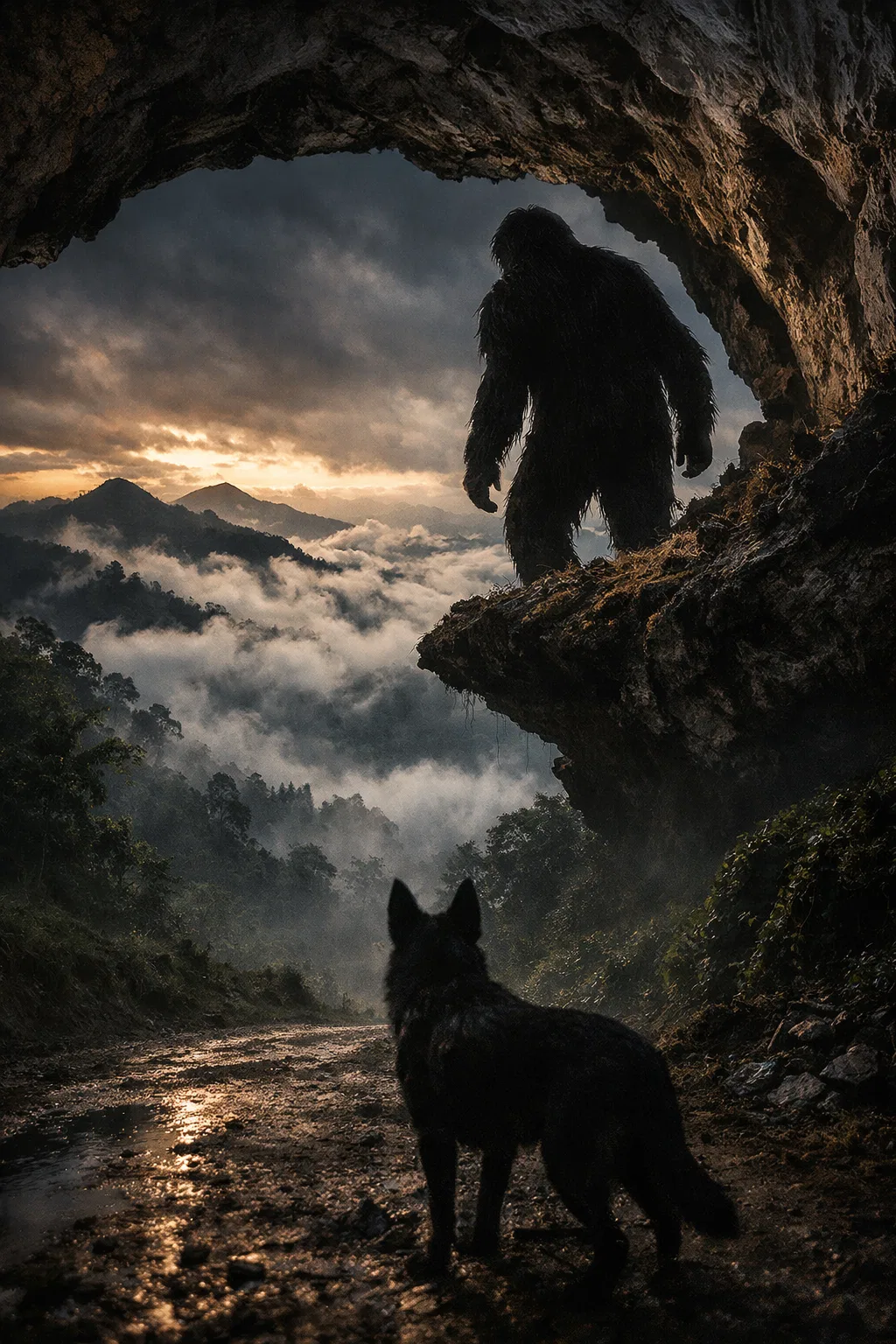
The Sisimite is the nearest thing Honduras has to a classic Bigfoot-style cryptid. It is usually described as a large, hairy, upright humanoid, sometimes with ape-like features, great strength, and feet turned backwards. In Honduran accounts, it is often linked to remote mountains and inaccessible caves rather than to ordinary village space. The folklorist, cartographer and teacher Jesús Aguilar Paz is repeatedly associated with the older Honduran framing of the creature: a being living high in the mountains, feeding on wild fruits, and descending towards settlements in stories that often involve the abduction of women.[wikipedia.org]WikipediaJesús Aguilar PazJesús Aguilar Paz
That description matters because it shows the Sisimite is not simply an imported “Central American Bigfoot”. In cryptid writing it is tempting to flatten every hairy hominoid into a local version of Sasquatch, but the Honduran Sisimite belongs to a more layered tradition. It has elements of a wild man, a forest warning, a cave-dweller, a sexual threat, and a being of the high country. Its backward feet, for example, are not a zoological detail in the modern sense. They work like a folklore mechanism: a way to explain misleading tracks, disorientation, and the danger of following signs too confidently in difficult terrain.[Wikipedia]WikipediaOpen source on wikipedia.org.
The creature also moves across borders. Similar names and descriptions appear in Belize, Guatemala, Nicaragua and Mexico, with some versions making it more predatory and others stressing its fear of water or dogs. That regional spread strengthens the case for the Sisimite as a serious folklore complex, but weakens the case for it as a neatly localised unknown animal. What survives most strongly is not a trail of specimens, photographs or consistent modern sightings, but a recurring story pattern: the forest contains a human-like outsider who is powerful, dangerous, difficult to track, and tied to the oldest edges of settlement.[Wikipedia]WikipediaOpen source on wikipedia.org.
A sceptical reading does not make the Sisimite boring. It makes it more Honduran. The legend reflects a country where mountain travel, caves, forest margins and isolated communities have long shaped everyday imagination. It also keeps alive an older question that cryptid stories often dramatise: when people enter deep forest, are they encountering an animal, a spirit, a memory of older beliefs, or simply the fear that the landscape is not fully under human control?
Chupacabra flaps: when livestock deaths become monster news
The chupacabra is not originally Honduran. The modern legend began in Puerto Rico in the mid-1990s, spread rapidly through Latin America and the United States, and became one of the best-known monster stories of the late twentieth century. Early reports described animals found dead with puncture wounds and claims that their blood had been drained; later North American versions often shifted towards hairless, sickly canids mistaken for a monster. Honduras entered this wider media ecology as one of many countries where unusual livestock deaths could be interpreted through the chupacabra frame.[Wikipedia]WikipediaOpen source on wikipedia.org.
Honduran examples show how the pattern works. In 2013, El Heraldo reported sheep deaths in Comayagua and Villa de San Antonio, with dozens of animals found with neck wounds; the response included plans to use camera traps to identify the attacker rather than simply accept a monster explanation. In 2017, a report circulated that around 35 animals had been killed in Monterrey de Choloma, Cortés, with residents fearing a creature that appeared and vanished in the night. In 2020, cattle deaths in Patuca, Olancho, were initially described by residents in chupacabra terms, while experts pointed instead to vampire bat bites.[elheraldo.hn]elheraldo.hnOpen source on elheraldo.hn.
These stories are useful because they show the difference between a legend and an investigation. The legend supplies a dramatic template: blood-drinking creature, puncture marks, night attack, frightened witnesses, livestock loss. The investigation asks plainer questions: were the wounds made before or after death, are there tracks, are dogs present, are bats feeding on cattle, is disease involved, and has any animal actually been photographed? In the Honduran cases available in open sources, the evidence points less towards an unknown predator and more towards ordinary hazards being filtered through an extraordinary story.[www.elheraldo.hn]elheraldo.hnOpen source on elheraldo.hn.
Vampire bats are especially important here. They are real blood-feeding mammals found in Latin America, and scientific reviews identify the common vampire bat as a major reservoir and transmitter of rabies to domestic animals in the region. Their bites do not resemble a Hollywood vampire attack, but in ranching communities a series of bitten, weakened or dead animals can understandably invite monster language, especially where the chupacabra legend is already familiar.[nih.gov]pmc.ncbi.nlm.nih.govPMCRabies transmitted from vampires to cattle: An overviewPMCRabies transmitted from vampires to cattle: An overview
The broader chupacabra mystery has also been heavily challenged by sceptical research. Benjamin Radford’s investigation argued that the influential early Puerto Rican description was entangled with the 1995 film Species, while other analyses of alleged chupacabra carcasses in the United States have identified mange-ridden coyotes or dogs. That does not automatically explain every Honduran livestock death, but it does warn against treating “drained of blood” as a proven fact when necropsies, tracks and camera evidence are missing.[Wikipedia]WikipediaOpen source on wikipedia.org.
El Cadejo and La Sucia: folklore creatures, not zoological claims
Some of Honduras’s most famous “monster” figures are better understood as folklore beings than cryptids. El Cadejo, often imagined as a mysterious dog or dog-like apparition, belongs to a wider Central American tradition. In many versions, a white Cadejo protects travellers while a black Cadejo threatens or misleads them. Honduran writer and broadcaster Jorge Montenegro helped keep such stories in popular circulation through Cuentos y Leyendas de Honduras, a radio tradition that began in 1964 and later became books and screen adaptations.[wikipedia.org]WikipediaCuentos y leyendas de HondurasCuentos y leyendas de Honduras
El Cadejo is “animal-shaped”, but that does not make it a lost species. Its role is moral and social: it belongs to lonely roads, late nights, drink, danger, and the question of whether a traveller is being guarded or hunted. This is why the creature keeps reappearing in Honduran cultural memory. It turns a familiar rural experience — walking home in darkness, hearing paws behind you, seeing eyes shine in the road — into a story about behaviour, risk and protection.[roma.cervantes.es]roma.cervantes.esOpen source on cervantes.es.
La Sucia is even less like a cryptid in the strict animal sense, but she belongs on a Honduran monster page because she occupies the same public imagination of frightening encounters in specific places. In Honduran versions of the wider Sihuanaba-type legend, she is commonly associated with rivers or streams and appears as a woman who lures men before revealing a terrifying form. Sources describe the Honduran version as a local variant known as La Sucia or Cigua, with stories often involving a failed marriage, rejection, madness or death, followed by haunting near water.[Wikipedia]WikipediaOpen source on wikipedia.org.
These beings show why “cryptids by country” needs a broad but careful frame. If a page only asks, “Could this be a real animal?”, La Sucia drops out immediately. If it asks, “Which creatures do Hondurans remember, fear, retell and place in the landscape?”, she becomes central. The same is true of El Cadejo. They are not evidence for undiscovered zoology, but they are evidence for how night roads, rivers and rural margins become monster-haunted in Honduran tradition.
The Monkey God and the Mosquitia: where archaeology, wildlife and legend overlap
The Mosquitia rainforest in eastern Honduras gives the country one of its most internationally visible mystery traditions: La Ciudad Blanca, often sensationally linked to the “Lost City of the Monkey God”. This is not a cryptid story in the simple sense, but it has become part of Honduras’s monster-adjacent imagination because of its monkey-god motif, remote jungle setting, rumours of hidden ruins, and later media afterlife.[National Geographic]nationalgeographic.com150302 honduras lost city monkey god maya ancient archaeology150302 honduras lost city monkey god maya ancient archaeology
The legend developed over many decades. Accounts of a White City or hidden settlement in the Mosquitia circulated through explorers, archaeologists and local tradition, with twentieth-century figures such as Theodore Morde claiming knowledge of a “City of the Monkey God” but never producing a verifiable location. Modern lidar surveys and expeditions did identify major archaeological remains in the region, but careful reporting has stressed that these discoveries should not be treated as a simple confirmation of every older legend. The real story is subtler: there are genuine ancient sites in an under-studied rainforest, while the “Monkey God” framing is a dramatic label layered onto archaeology, local knowledge and adventure writing.[nationalgeographic.com]nationalgeographic.comOpen source on nationalgeographic.com.
For a cryptid reader, the Mosquitia matters because it shows how “lost world” storytelling forms. The region is biologically rich, hard to access, and threatened by deforestation. Conservation International’s survey around the so-called Lost City documented a remarkable ecosystem with rare and significant species, while other work in the region has recorded a full community of medium and large mammals, including jaguar, puma, ocelot, margay and jaguarundi.[Conservation International]conservation.orgOpen source on conservation.org.
That living wildlife helps explain why Honduran legends can remain vivid without requiring unknown monsters. A rainforest that still supports large cats, monkeys, bats, snakes and rare species is already strange enough. In such a place, a carved animal figure, a night call, a half-seen shape on a trail, or an old account of a monkey god can easily become part of the same imaginative terrain.
Real animals behind strange sightings
Honduras has enough real wildlife to generate convincing “mystery animal” experiences. Big cats are the obvious example. Panthera says it has worked in Honduras since 2009 and helped document jaguars with camera traps in national parks including Pico Bonito, Jeannette Kawas and Cusuco; it also describes Honduras as important to the wider jaguar corridor. In 2026, camera-trap reports of a high-elevation “cloud jaguar” in the Sierra del Merendón drew attention precisely because jaguars can be present yet rarely seen.[Panthera]panthera.orgOpen source on panthera.org.
That is the perfect recipe for phantom-cat folklore. A puma, jaguar or ocelot glimpsed briefly at night may become larger, blacker, more spectral or more unnatural in retelling. A melanistic jaguar, a cat moving through misty cloud forest, or eyeshine on a trail can feel supernatural even when the animal is entirely real. Camera traps have changed this part of the conversation: they do not prove every witness right, but they show that rare sightings of elusive predators can be grounded in real ecology.[panthera.org]panthera.orgOpen source on panthera.org.
Smaller animals also complicate monster reports. Dogs can kill sheep and leave neck wounds. Coyotes or dog-like animals with mange can look hairless, distorted and uncanny. Vampire bats can leave wounds that invite blood-drinking explanations. Owls, herons and other large birds can become “winged beings” under poor viewing conditions. None of these explanations should be forced onto every story, but they are the first place to look before proposing an unknown creature.[wikipedia.org]WikipediaOpen source on wikipedia.org.
Lake Yojoa is a useful contrast. As Honduras’s largest natural lake and a Ramsar wetland, it has the right atmosphere for lake-monster speculation: volcanic origin, mountain setting, biodiversity, fishing culture and tourist visibility. Yet searches for a stable Honduran lake-monster tradition around Yojoa produce little compared with the better documented folklore of the Sisimite, Cadejo, La Sucia and chupacabra flaps. That absence is itself informative. Honduras’s monster map is weighted more towards forests, roads, rivers and livestock deaths than towards a single famous lake beast.[ramsar.org]rsis.ramsar.orgSites annotatedSites annotated
Why Honduran monster stories persist
Honduran creature legends persist because they do several jobs at once. They entertain, but they also warn, explain and localise fear. El Cadejo gives night travel a guardian-and-threat story. La Sucia turns rivers and male misconduct into a haunting. The Sisimite makes the mountains feel inhabited by something older and wilder than ordinary human life. The chupacabra gives ranchers and villagers a dramatic language for sudden animal deaths.[cervantes.es]roma.cervantes.esOpen source on cervantes.es.
Media has been crucial. Jorge Montenegro’s Cuentos y Leyendas de Honduras helped carry oral tales into radio, books and later film, meaning that local legends did not remain isolated village stories. The Instituto Cervantes description of the film adaptation notes that the radio tradition had deep roots in Honduran culture and had been heard by multiple generations, with characters including El Cadejo, La Sucia, El Duende and El Sisimite.[roma.cervantes.es]roma.cervantes.esOpen source on cervantes.es.
Modern journalism plays a different role. When animals die mysteriously, headlines can temporarily turn a farm problem into a monster flap. That does not mean reporters invented the fear; livestock loss is economically and emotionally real. But once the chupacabra label appears, the story enters a pre-existing regional script. Readers know what kind of creature to imagine before any evidence is tested.[elheraldo.hn]elheraldo.hnOpen source on elheraldo.hn.
The most evidence-aware way to read Honduras’s cryptid tradition is therefore not to ask, “Which monsters are real?” It is to ask, “What kind of claim is this?” Some are folklore beings with symbolic roles. Some are modern media legends attached to animal deaths. Some are misidentifications of known wildlife. Some are archaeological or rainforest legends that became monster-like through retelling. A few remain simply unresolved at the level of anecdote, because the available evidence is too thin to decide.
The clearest takeaway
Honduras’s creature lore is strongest when treated as a landscape of overlapping traditions rather than a catalogue of proven mystery animals. The Sisimite is the key ape-like mountain legend. The chupacabra is the recurring modern livestock panic, usually better approached through dogs, bats, disease and predator behaviour before anything paranormal or zoologically unknown is considered. El Cadejo and La Sucia are culturally central folklore beings, not animals awaiting discovery. The Mosquitia’s Monkey God tradition belongs to the borderland between archaeology, rainforest myth and adventure narrative, while real jaguars, pumas, ocelots and vampire bats show how easily genuine wildlife can feed strange stories.[wikipedia.org]WikipediaOpen source on wikipedia.org.
That mixture is what makes Honduras compelling for cryptid history. The country’s legends are not weak because they resist tidy proof. They are revealing because they show how people make sense of dangerous roads, deep forests, remote caves, animal losses, hidden ruins and rare wildlife. In Honduras, the monster is often less a single beast than a question left moving at the edge of the torchlight.
Amazon book picks
Further Reading
Books and field guides related to What Monsters Haunt Honduras' Wild Places?. Use these as the next step if you want deeper reading beyond the article.
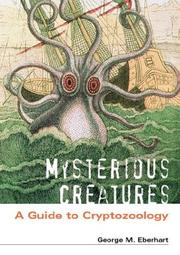
Mysterious Creatures
Provides broader cryptozoological context for mystery-creature reports.
Encyclopedia of Things that Never Were
Explores legendary beings similar to those found in Honduran folklore.
eBay marketplace picks
Marketplace Samples
Live-tested eBay searches with available results related to this page.
Endnotes
1.
Source: Wikipedia
Link:https://en.wikipedia.org/wiki/Sisimito
2.
Source: elheraldo.hn
Link:https://www.elheraldo.hn/honduras/con-camaras-trampa-identificaran-al-chupacabras-NKEH612681
3.
Source: roma.cervantes.es
Link:https://roma.cervantes.es/FichasCultura/Ficha115838_33_1.htm
4.
Source: Wikipedia
Title: Cuentos y leyendas de Honduras
Link:https://es.wikipedia.org/wiki/Cuentos_y_leyendas_de_Honduras
5.
Source: panthera.org
Link:https://panthera.org/panthera-honduras
6.
Source: conservation.org
Link:https://www.conservation.org/research/biological-treasures-of-the-lost-city-of-the-monkey-god-in-honduras
7.
Source: rsis.ramsar.org
Title: Sites annotated
Link:https://rsis.ramsar.org/sites/default/files/rsiswp_search/exports/Ramsar-Sites-annotated-summary-Honduras.pdf
8.
Source: Wikipedia
Title: Jesús Aguilar Paz
Link:https://en.wikipedia.org/wiki/Jes%C3%BAs_Aguilar_Paz
9.
Source: books.google.com
Title: Books Tradiciones y leyendas de Honduras
Link:https://books.google.com/books/about/Tradiciones_y_leyendas_de_Honduras.html?id=rbuAAAAAMAAJ
10.
Source: Wikipedia
Link:https://es.wikipedia.org/wiki/Sisimite
11.
Source: Wikipedia
Link:https://en.wikipedia.org/wiki/Chupacabra
12.
Source: remezcla.com
Title: chupacabra sightings this year
Link:https://remezcla.com/features/culture/chupacabra-sightings-this-year/
13.
Source: elheraldo.hn
Link:https://www.elheraldo.hn/honduras/ganado-murio-por-mordedura-de-murcielago-dicen-expertos-GAEH1401124
14.
Source: pmc.ncbi.nlm.nih.gov
Title: PMCRabies transmitted from vampires to cattle: An overview
Link:https://pmc.ncbi.nlm.nih.gov/articles/PMC11730393/
15.
Source: usgs.gov
Title: management vampire bats and rabies past present and future
Link:https://www.usgs.gov/publications/management-vampire-bats-and-rabies-past-present-and-future
16.
Source: Wikipedia
Link:https://es.wikipedia.org/wiki/Cadejo
17.
Source: Wikipedia
Link:https://en.wikipedia.org/wiki/Sihuanaba
18.
Source: Wikipedia
Title: La Ciudad Blanca
Link:https://en.wikipedia.org/wiki/La_Ciudad_Blanca
19.
Source: Wikipedia
Title: Lake Yojoa
Link:https://en.wikipedia.org/wiki/Lake_Yojoa
20.
Source: Wikipedia
Title: Honduran folklore
Link:https://en.wikipedia.org/wiki/Honduran_folklore
21.
Source: Wikipedia
Link:https://en.wikipedia.org/wiki/Honduras
22.
Source: Wikipedia
Title: The Lost City of the Monkey God
Link:https://en.wikipedia.org/wiki/The_Lost_City_of_the_Monkey_God
23.
Source: Wikipedia
Link:https://en.wikipedia.org/wiki/Jaguar
24.
Source: Wikipedia
Title: Monster of Lake Tota
Link:https://en.wikipedia.org/wiki/Monster_of_Lake_Tota
25.
Source: elheraldo.hn
Link:https://www.elheraldo.hn/opinion/cartasaleditor/el-chupacabras-IE14325793
26.
Source: elheraldo.hn
Link:https://www.elheraldo.hn/mundo/894706-468/supuesto-chupacabras-fue-descubierto-en-paraguay?mainImg=8
27.
Source: elheraldo.hn
Link:https://www.elheraldo.hn/opinion/cartasaleditor/los-chupa-arcas-JF14442957
28.
Source: elheraldo.hn
Link:https://www.elheraldo.hn/honduras/ganado-es-atacado-por-extrano-animal-en-olancho-CPEH1398912
29.
Source: elheraldo.hn
Link:https://www.elheraldo.hn/trending/extrana-criatura-afuera-zoologico-amarillo-texas-AY8634552
30.
Source: elheraldo.hn
Link:https://www.elheraldo.hn/honduras/identifican-huella-de-mordedura-de-felino-en-ovejas-desangradas-HKEH612647
31.
Source: elheraldo.hn
Title: miss grand international 2023 trajes tipicos fotos IP15920811
Link:https://www.elheraldo.hn/fotogalerias/entretenimiento/miss-grand-international-2023-trajes-tipicos-fotos-IP15920811
32.
Source: elheraldo.hn
Link:https://www.elheraldo.hn/honduras/misterioso-animal-mata-ovejas-en-comayagua-BKEH612636
33.
Source: books.google.hn
Title: hn Tradiciones y leyendas de Honduras
Link:https://books.google.hn/books/about/Tradiciones_y_leyendas_de_Honduras.html?id=AMwHAQAAIAAJ
34.
Source: honduras.travel
Link:https://honduras.travel/en/
35.
Source: digitalcameraworld.com
Link:https://www.digitalcameraworld.com/photography/nature-and-wildlife-photography/a-rare-jaguar-was-spotted-in-honduras-for-the-first-time-in-a-decade-thanks-to-a-remote-camera-trap
Source snippet
The discovery is significant for tracking jaguar movement between Honduras and Guatemala and for broader conservation efforts. Jaguars ha...
36.
Source: nationalgeographic.com
Title: 150302 honduras lost city monkey god maya ancient archaeology
Link:https://www.nationalgeographic.com/adventure/article/150302-honduras-lost-city-monkey-god-maya-ancient-archaeology
37.
Source: nationalgeographic.com
Link:https://www.nationalgeographic.com/magazine/article/lost-city-mosquitia-honduras-monkey-god
38.
Source: newyorker.com
Link:https://www.newyorker.com/magazine/2013/05/06/the-el-dorado-machine
39.
Source: cryptidz.fandom.com
Link:https://cryptidz.fandom.com/wiki/Chupacabra
40.
Source: kids.kiddle.co
Title: Lake Yojoa
Link:https://kids.kiddle.co/Lake_Yojoa
41.
Source: GOV.UK
Link:https://www.gov.uk/foreign-travel-advice/honduras
42.
Source: toucandiscovery.com
Title: Lake Yojoa
Link:https://toucandiscovery.com/en/destinations-honduras/lago-de-yojoa/
43.
Source: ebsco.com
Link:https://www.ebsco.com/research-starters/geography-and-cartography/honduras
44.
Source: en.wikivoyage.org
Title: Lake Yojoa
Link:https://en.wikivoyage.org/wiki/Lake_Yojoa
45.
Source: journeylatinamerica.com
Link:https://www.journeylatinamerica.com/destinations/honduras/
46.
Source: fauna-flora.org
Link:https://www.fauna-flora.org/countries/honduras/
47.
Source: nacerenhonduras.com
Link:https://nacerenhonduras.com/category/leyendas
48.
Source: nationalgeographic.com
Title: 101028 chupacabra evolution halloween science monsters chupacabras picture
Link:https://www.nationalgeographic.com/culture/article/101028-chupacabra-evolution-halloween-science-monsters-chupacabras-picture
49.
Source: behance.net
Title: Honduran Legends
Link:https://www.behance.net/gallery/115605821/Honduran-Legends
Additional References
50.
Source: science.org
Title: vampire bats mutual grooming helps spread innovative rabies vaccine
Link:https://www.science.org/content/article/vampire-bats-mutual-grooming-helps-spread-innovative-rabies-vaccine
51.
Source: instagram.com
Link:https://www.instagram.com/p/DBp2O_Ts7yH/?hl=en
52.
Source: instagram.com
Link:https://www.instagram.com/p/DXFaCikDcW2/
53.
Source: facebook.com
Link:https://www.facebook.com/smithsonianmagazine/posts/a-jaguar-has-been-recorded-roaming-through-the-sierra-del-merend%C3%B3n-mountain-rang/1333510135307840/
54.
Source: instagram.com
Link:https://www.instagram.com/p/DX-0WeajoEl/?hl=en
55.
Source: facebook.com
Link:https://www.facebook.com/PopCrush/posts/a-cloud-jaguar-just-showed-up-for-the-first-time-in-years-the-rare-big-cat-was-s/1294923162740209/
56.
Source: trytriprinserepeat.blogspot.com
Link:https://trytriprinserepeat.blogspot.com/p/birds.html
57.
Source: facebook.com
Link:https://www.facebook.com/sonicgang/posts/chupacabra-the-blood-sucking-monster-urbanlegends-curiouspanti/757490973281080/
58.
Source: facebook.com
Link:https://www.facebook.com/Chamelecon2/posts/captan-enorme-serpiente-en-el-lago-de-yojoa/1468265418437366/
59.
Source: archaeologypodcastnetwork.com
Link:https://www.archaeologypodcastnetwork.com/pseudo/49
Topic Tree
Follow this branch
Related pages 192
- Antigua Cryptids
- Maldives Monsters
- Malta Monsters
- Qatar Monsters
- Argentina Monsters
- +187 more in sidebar