Cryptids of Kazakhstan's Wild Places
Kazakhstan’s mystery-creature tradition is not a crowded parade of famous cryptids.

Page outline Jump by section
Introduction
The important thing is not to ask whether Kazakhstan secretly contains a confirmed dinosaur, dragon or ape-man. No strong mainstream evidence supports that. The better question is why some Kazakh landscapes invite monster stories. High mountain lakes, glacial basins, steppe isolation, cave systems, strange water movement, rare predators and oral storytelling all make good raw material for legends. Kazakhstan’s cryptid map is therefore a meeting point between folklore, natural hazards, misread wildlife, regional identity and the pleasure of a good strange tale.
The Kok-Kol monster: Kazakhstan’s clearest lake-beast legend
The main creature associated with Kazakhstan in cryptid catalogues is the Aidakhar of Lake Kok-Kol, usually described as a freshwater monster or huge serpent. George M. Eberhart’s Mysterious Creatures: A Guide to Cryptozoology lists Aidakhar as a Central Asian freshwater monster, gives its reported distribution as Lake Kok-Kol in Zhambyl Region, and summarises the classic description as a 45–50 foot animal with a long neck, one hump and a large head. It also records the best-known sighting claim: Anatolii and Volodya Pecherskii allegedly saw the animal in 1975 from about 25 feet away.[National Digital Library of Ethiopia]ndl.ethernet.edu.etOpen source on edu.et.
Kok-Kol itself is a real, small, high-altitude lake, not a vague “somewhere in the mountains” setting. A travel-geography entry places it at about 2,430 metres above sea level in the Auliekol valley on the northern slope of the Kyrgyz Alatau, around 32 kilometres from Merke in Zhambyl Region. The same source gives the lake’s approximate size as 233 metres north to south and 171 metres across at its widest point, and notes long-standing local legends of a creature with a camel-like hump, a long neck and a snake’s head.[silkadv.com]silkadv.comlake kok kol zhambyl regionMystical places of Kazakhstan…
What makes Kok-Kol memorable is that the monster is tied to observable lake behaviour. Local accounts describe the water suddenly seething, rippling, forming waves or funnels, and producing whistling, hissing or roaring sounds. In folklore terms, this becomes the moment when Aydahar rises. In practical terms, it gives witnesses something visible and dramatic to attach to the legend: not merely “someone saw a monster”, but “the lake itself behaves as if something is moving underneath”.[The Astana Times]astanatimes.comThe Astana Times Enigmatic Secrets of Zhambyl RegionThe Astana Times Enigmatic Secrets of Zhambyl Region
The lake also carries a healing-water motif. Reports say that after the strange churning, the water becomes clearer or medicinal; travel accounts and local retellings connect this to the idea that Aydahar’s movement changes the water’s properties. The Astana Times, summarising the local legend and a 1976 expedition’s explanation, reports that scientists identified Kok-Kol as a glacial lake with rock moraine deposits, channels and caves at the bottom. According to that account, water is drawn through underground cavities, creating waves, funnels and sounds as air and water mix; minerals in those cavities may also explain the lake’s reputation for curative water.[The Astana Times]astanatimes.comThe Astana Times Enigmatic Secrets of Zhambyl RegionThe Astana Times Enigmatic Secrets of Zhambyl Region
That explanation matters because it makes the Kok-Kol story more interesting, not less. A boring hoax leaves little to discuss. A strange lake with real hydrological behaviour, local ritual caution, healing-water belief and later monster-hunting retellings is much richer. The likely natural mechanism does not prove a beast; it explains why a beast story could persist.

What exactly is Aydahar?
Aydahar is not just a one-off “lake monster” name. In Kazakh fairy-tale tradition, Aydahar appears as a fearsome serpent or dragon-like being. The Astana Times recounts the well-known tale of the swallow and Aydahar: the serpent sends a mosquito to find out whose blood is sweetest, the swallow stops the mosquito from betraying humans, and Aydahar’s attack leaves the swallow with its forked tail. The same article notes that the story inspired a 1967 cartoon adaptation by Kazakh animator Amen Khaydarov.[The Astana Times]astanatimes.comThe Astana Times Kazakh Fairy Tales: Heroes, Villains, and Timeless LegendsThe Astana Times Kazakh Fairy Tales: Heroes, Villains, and Timeless Legends
This helps explain why the Kok-Kol creature is so easy to remember. It is not merely “an unidentified animal in a lake”; it borrows the emotional shape of a recognised serpent-dragon figure. In folklore, Aydahar is large, dangerous and associated with appetite, pursuit and water or sky drama. At Kok-Kol, that older figure is localised into a specific lake, a specific set of surface disturbances and a specific tourism-friendly mystery.
There is a useful distinction here:
- Aydahar in folklore is a mythic serpent or dragon figure, part of moral and explanatory tales.
- Aydahar at Kok-Kol is a local lake-monster claim attached to reported water movement, sounds and healing-water belief.
- Aydahar as a cryptid is a modern classification, mostly found in cryptozoology catalogues and online monster lists, where folklore and alleged sighting reports are treated as a mystery-animal case.
Those layers are often blended together in popular retellings. A sceptical reading separates them: the folklore is culturally real, the lake phenomena appear to have plausible natural causes, and the animal claim remains unproven.
The 1975 sighting claim and why it became the key case
The Pecherskii report is the best-known Kok-Kol sighting because it gives the legend a named witness, a date and a close-range encounter. Cryptozoology summaries describe a father and son seeing churning water before a large serpentine form rose from the lake. Eberhart’s reference work preserves the core version: Anatolii and Volodya Pecherskii allegedly saw the animal in 1975 from roughly 25 feet away.[National Digital Library of Ethiopia]ndl.ethernet.edu.etOpen source on edu.et.
The story has obvious appeal. It is cinematic: a remote lake, a scientist or geographer figure, a son, a sudden disturbance, a huge head and body, and the frustration that no decisive photograph or film was taken. Later online versions often add drama, but the underlying evidence remains thin. There is no specimen, no accepted photograph, no verified film, no biological survey confirming an unknown large animal in the lake, and no clear pathway for a breeding population of giant serpentine animals in such a small mountain basin.
The strongest sceptical explanation is not “the witnesses lied”. It is that Kok-Kol’s own water behaviour can create monster-like impressions. Eberhart lists the possible explanation as lake water being sucked into underground caverns, producing noisy, monster-like whirlpools. The Astana Times version similarly points to channels, caves, funnels, air-water mixing and a stable water level maintained by this movement.[National Digital Library of Ethiopia]ndl.ethernet.edu.etOpen source on edu.et.
That does not answer every psychological detail of the sighting, but it does explain why reports would cluster at this lake rather than at random reservoirs. Kok-Kol has the right ingredients: sudden surface disturbance, sound, isolation, a pre-existing serpent legend and local caution about swimming.
Wildmen in the Altai and Tien Shan borderlands
Kazakhstan also sits within a wider Central Asian wildman tradition. These stories are not as cleanly country-specific as the Kok-Kol monster, because the cultural and geographical range crosses modern borders: Mongolia, Kazakhstan, Kyrgyzstan, Xinjiang, the Altai and the Tien Shan all appear in overlapping traditions. In the academic article “Wildmen in Central Asia”, Sabira Ståhlberg and Ingvar Svanberg describe Central Asian wildman traditions as including a line shared by Mongolia, Kazakhstan and Kyrgyzstan, close to Tibetan and Chinese wildman beliefs.[ResearchGate]researchgate.netResearch Gate(PDF) Wildmen in Central AsiaResearch Gate(PDF) Wildmen in Central Asia
The article gives Kazakh and Kyrgyz names such as kiik adam, kiyik kishi and zhabayi kishi for wild, human-like beings, and notes that stories are especially associated with the Gobi, Altai and Tien Shan mountain regions. It also recounts an informant story of Kazakh hunters catching a hairy female wildman in the Altai, tying her to a yurt pole overnight and releasing her in the morning.[ResearchGate]researchgate.netResearch Gate(PDF) Wildmen in Central AsiaResearch Gate(PDF) Wildmen in Central Asia
For cryptid readers, these are Kazakhstan’s nearest relatives to Bigfoot or the Yeti. But the evidence sits mainly in ethnographic narrative, not zoological proof. The stories are valuable because they show how mountain communities imagined the edge between human and animal, settled life and wilderness, known society and dangerous terrain. They are much weaker as evidence for an undiscovered primate or surviving archaic human.
Modern DNA work on “anomalous primate” hair samples also urges caution. A 2014 Proceedings of the Royal Society B study tested hair samples attributed to creatures including yeti, bigfoot and almasty-type beings and found that the samples came from known animals rather than unknown primates. The study was global rather than Kazakhstan-specific, but it is relevant because it shows the evidential standard needed for wildman claims: hair, tracks and stories are not enough unless they survive controlled identification.[Royal Society Publishing]royalsocietypublishing.orgOpen source on royalsocietypublishing.org.
Folklore creatures that shape the monster landscape
Kazakhstan’s monster traditions are broader than cryptid catalogues. Many important beings are clearly folklore figures rather than alleged animals, but they matter because they shape the imaginative world in which later “mystery creature” stories are understood.
Jeztyrnaq, for example, is one of the most memorable beings in Kazakh folklore: a dangerous female figure with brass or copper claws. Qalam Global presents her as a demonic creature who may appear as a beautiful woman to a lone hunter before revealing her lethal claws. This is not a zoological claim; it is a cautionary wilderness story about isolation, temptation and danger.[Qalam]qalam.globalOpen source on qalam.global.
Zhalmauyz Kempir, the cannibal witch figure, appears in Kazakh fairy-tale tradition as a threatening old woman or ogress. In the tale of Er Tostik, she captures the hero and tries to trap him, but is outwitted. The Astana Times frames her as a reflection of the dangers and unpredictability of nomadic life on the steppe, where vigilance and cleverness are survival virtues.[The Astana Times]astanatimes.comThe Astana Times Kazakh Fairy Tales: Heroes, Villains, and Timeless LegendsThe Astana Times Kazakh Fairy Tales: Heroes, Villains, and Timeless Legends
Samruk, the giant bird associated with the cosmic tree motif, belongs to a different emotional register. It is majestic rather than monstrous in the narrow horror sense, but it shows how large, non-ordinary animals occupy Kazakh mythic space. The point for a country-level cryptid page is that Kazakhstan’s creature lore is not just about “unknown animals”; it includes moral beasts, world-structure myths, dangerous women of the wild, serpents, birds and spirits of place.
Why Kazakhstan produces lake monsters, wildmen and steppe spirits
Kazakhstan’s geography encourages stories about thresholds. Much of the country is open steppe or semi-desert, but it also contains mountain systems, glacial lakes, wetlands, the Caspian coast, the Ili-Balkhash system and the Ustyurt Plateau. IUCN describes Central Asia as a region of alpine meadows, glacial lakes, vast steppe grasslands, semi-arid deserts and riparian forests, with key biodiversity areas including the Tien Shan, Ustyurt Plateau, Ili-Balkhash system and remaining wetlands of the Aral Sea basin.[IUCN]iucn.orgin Central Asia | IUCNin Central Asia | IUCN
Those landscapes are ideal for ambiguous encounters. In mountains, a bear standing partly upright can become a wildman at a distance. In reedbeds or wetlands, large birds, seals, fish splashes or swimming mammals can become something stranger. In a high lake with underground channels, whirlpools and gas-water sound effects can become a serpent. In the steppe, night travel, mirages, wind and isolation give old warning tales room to breathe.
Kazakhstan also has real charismatic animals that can feed “phantom beast” impressions. Central Asia’s recognised wildlife includes snow leopards, saiga antelope, Bukhara deer and Asiatic wild ass; Kazakhstan’s mountains and wild lands also support wolves, lynx, bears and large raptors.[IUCN]iucn.orgin Central Asia | IUCNin Central Asia | IUCN None of these explains a 15-metre lake serpent, but they do explain why local storytelling often treats animals as powerful, elusive and morally charged.
The Caspian coast: real seals, not sea serpents
Kazakhstan’s western edge touches the Caspian Sea, which might seem like an obvious place for sea-serpent stories. In practice, the most famous “Caspian Sea Monster” is not a cryptid at all but the nickname for a Soviet ekranoplan, a huge ground-effect aircraft tested over the Caspian. That pop-cultural confusion is worth separating from Kazakhstan’s creature lore: it is a Cold War machine story, not a monster tradition.[Caspian Post]caspianpost.comCaspian Post Does the Caspian Sea Monster Really Exist?Caspian Post Does the Caspian Sea Monster Really Exist?
The real animal of mystery and conservation value in the Caspian is the Caspian seal. IUCN notes that Caspian seals live only in the Caspian Sea, have been listed as Endangered since 2008, and declined by more than 70% in the 20th century, largely because of unsustainable hunting, with ongoing threats including fishing gear mortality, habitat degradation, industrial development and reductions in winter sea ice.[IUCN]iucn.orgOpen source on iucn.org.
For a cryptid page, the seal matters as a reality check. Strange heads in water, distant dark bodies, night sounds and sudden splashes can often come from known animals, especially in places where people do not expect to see them clearly. The Caspian seal is not a monster, but it is a reminder that living wildlife is often stranger, rarer and more threatened than the legends built around it.
What evidence would change the assessment?
The current evidence for Kazakhstan’s cryptids is strongest as folklore and weakest as biology. Kok-Kol has named sighting claims and a real lake with strange behaviour, but no hard zoological evidence. Central Asian wildman stories have ethnographic depth, but no accepted physical proof. Folklore beings such as Aydahar, Jeztyrnaq, Zhalmauyz Kempir and Samruk are culturally important, but they belong primarily to myth, tale and symbol.
Evidence that would materially change the picture would need to be concrete:
- clear, time-stamped images or video with location data and scale references;
- repeated observations by independent witnesses in the same place;
- environmental DNA or biological samples collected under controlled conditions;
- sonar, camera-trap or survey data reviewed by relevant specialists;
- a body, bone, tooth, tissue sample or other physical remains identifiable by mainstream zoology.
Without that, Kazakhstan’s monster stories should be read as legends, local claims, folklore traditions and misidentification puzzles rather than confirmed mystery animals. That is not a disappointment. In some ways, it is the real charm of the subject: the Kok-Kol monster tells us how a lake becomes a personality, Aydahar shows how a dragon enters everyday moral storytelling, and the wildman traditions show how mountain societies imagine the human edge of the wilderness.
Kazakhstan’s place on the cryptid map
Kazakhstan’s cryptid tradition is quieter than Scotland’s Loch Ness, North America’s Bigfoot country or Himalayan Yeti tourism, but it has a distinctive shape. Its best-known monster is not spread across dozens of lakes; it is concentrated at Kok-Kol. Its wildman lore is not a national media franchise; it belongs to a wider Central Asian mountain tradition. Its most vivid creatures often remain firmly in folklore, where their purpose is to warn, explain, entertain and encode values rather than to behave like undiscovered animals.
That makes Kazakhstan a good example of how country-level cryptid history should be handled. The stories are worth preserving, but they should not be flattened into fake certainty. Kok-Kol is interesting because the lake is real and unusual. Aydahar is interesting because the same serpent can be a fairy-tale villain, a water spirit and a cryptid catalogue entry. The wildmen are interesting because they sit between ethnography, mountain ecology and modern Bigfoot-style interpretation. Kazakhstan’s mystery creatures are therefore best read not as hidden zoo specimens waiting to be captured, but as strange, place-bound stories that reveal how people make sense of powerful landscapes.
Amazon book picks
Further Reading
Books and field guides related to What Monsters Haunt Kazakhstan's Wild Places?. Use these as the next step if you want deeper reading beyond the article.
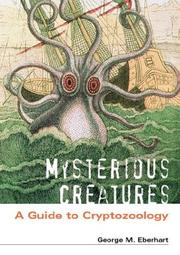
Encyclopedia of Russian and Slavic Myth and Legend
Provides context for Eurasian folklore influencing Central Asia.
Myths and Legends of the World
Places Kazakh folklore within worldwide storytelling traditions.
Encyclopedia of Things that Never Were
Useful for comparing Kazakh monsters with global legendary beings.
eBay marketplace picks
Marketplace Samples
Live-tested eBay searches with available results related to this page.


Endnotes
1.
Source: silkadv.com
Title: lake kok kol zhambyl region
Link:https://silkadv.com/en/content/lake-kok-kol-zhambyl-region
Source snippet
Mystical places of Kazakhstan...
2.
Source: researchgate.net
Title: Research Gate(PDF) Wildmen in Central Asia
Link:https://www.researchgate.net/publication/318563173_Wildmen_in_Central_Asia
3.
Source: qalam.global
Link:https://qalam.global/en/microrubrics/myth-en/jeztyrnaq-en
4.
Source: iucn.org
Title: in Central Asia | IUCN
Link:https://iucn.org/our-work/region/eastern-europe-and-central-asia/our-work/iucn-central-asia
5.
Source: iucn.org
Link:https://iucn.org/news/marine-and-polar/202112/endangered-caspian-seal-habitat-awarded-important-marine-mammal-area-status
6.
Source: qalam.global
Link:https://qalam.global/en/articles/jeztyrnaq-en
7.
Source: qalam.global
Title: BRID E
Link:https://qalam.global/en/articles/women-in-kazakh-mythology-en-1
8.
Source: researchgate.net
Title: 354406345 Painting education of Kazakh mythology
Link:https://www.researchgate.net/publication/354406345_Painting_education_of_Kazakh_mythology
9.
Source: researchgate.net
Link:https://www.researchgate.net/publication/377038482_Conservation_of_snow_leopards_in_Kazakhstan
10.
Source: researchgate.net
Link:https://www.researchgate.net/publication/263583915_Correction_to_Genetic_analysis_of_hair_samples_attributed_to_yeti_bigfoot_and_other_anomalous_primates
11.
Source: iucn.org
Title: association conservation biodiversity kazakhstan joins iucn
Link:https://iucn.org/news/202605/association-conservation-biodiversity-kazakhstan-joins-iucn
12.
Source: silkadv.com
Link:https://silkadv.com/en/nature_kz
13.
Source: silkadv.com
Link:https://silkadv.com/ru/node/2787
14.
Source: digitalcollections.sit.edu
Link:https://digitalcollections.sit.edu/cgi/viewcontent.cgi?article=1780&context=isp_collection
15.
Source: ndl.ethernet.edu.et
Link:https://ndl.ethernet.edu.et/bitstream/123456789/46979/1/George%20M.%20Eberhart.pdf
16.
Source: astanatimes.com
Title: The Astana Times Enigmatic Secrets of Zhambyl Region
Link:https://astanatimes.com/2023/06/enigmatic-secrets-of-zhambyl-region-loch-ness-monster-twin/
17.
Source: astanatimes.com
Title: The Astana Times Kazakh Fairy Tales: Heroes, Villains, and Timeless Legends
Link:https://astanatimes.com/2025/03/kazakh-fairy-tales-heroes-villains-and-timeless-legends/
18.
Source: royalsocietypublishing.org
Link:https://royalsocietypublishing.org/rspb/article/281/1789/20140161/77194/Genetic-analysis-of-hair-samples-attributed-to
19.
Source: caspianpost.com
Title: Caspian Post Does the Caspian Sea Monster Really Exist?
Link:https://caspianpost.com/stories/does-the-caspian-sea-monster-really-exist
20.
Source: cryptidz.fandom.com
Link:https://cryptidz.fandom.com/wiki/Aidakhar
21.
Source: creatures-of-myth.fandom.com
Link:https://creatures-of-myth.fandom.com/wiki/Aidakhar
22.
Source: itsmth.fandom.com
Link:https://itsmth.fandom.com/wiki/Aidakhar
23.
Source: obscurban-legend.fandom.com
Link:https://obscurban-legend.fandom.com/wiki/Aidakhar
24.
Source: Wikipedia
Title: Caspian Sea Monster
Link:https://en.wikipedia.org/wiki/Caspian_Sea_Monster
25.
Source: Wikipedia
Title: Caspian seal
Link:https://en.wikipedia.org/wiki/Caspian_seal
26.
Source: globalsnowleopard.org
Link:https://globalsnowleopard.org/kazakhstan/
27.
Source: e-history.kz
Link:https://e-history.kz/en/news/show/339422
28.
Source: iucncontributionsfornature.org
Link:https://www.iucncontributionsfornature.org/countries/108
Additional References
29.
Source: youtube.com
Link:https://www.youtube.com/watch?v=htx2u0hR4LM
Source snippet
Kazakhstan mythology folklore mythical creatures Ancient Kazakh Myths That Will Blow Your Mind The Astana Times...
30.
Source: youtube.com
Link:https://www.youtube.com/watch?v=v_lVSMNcX58
Source snippet
Almasty Documentary | The Russian Bigfoot Mystery...
31.
Source: youtube.com
Title: Ancient Kazakh Myths That Will Blow Your Mind
Link:https://www.youtube.com/watch?v=x4J3Mw4rfe8
Source snippet
Ancient Spirits: Fallen Goddess of Fertility – Albasty (Kazakh Mythology) | Asian Demonology...
32.
Source: profihunt.com
Link:https://profihunt.com/de/hunt/tian-shan-maral-in-kazakhstan
33.
Source: history.co.uk
Link:https://www.history.co.uk/articles/strange-sea-serpent-sightings-from-history
34.
Source: reddit.com
Link:https://www.reddit.com/r/mongolia/comments/1igmg8p/about_the_almas_the_mongolian_wildman/
35.
Source: crazyalchemist.com
Link:https://www.crazyalchemist.com/bestiary/almas/
36.
Source: animalia.bio
Link:https://animalia.bio/kazakhstan-animals/products.json
37.
Source: reddit.com
Link:https://www.reddit.com/r/Kazakhstan/comments/1oprnfj/any_kazakh_mythological_creatures/
38.
Source: instagram.com
Link:https://www.instagram.com/p/DYRresIlrRd/
Topic Tree
Follow this branch
Related pages 192
- Antigua Cryptids
- Maldives Monsters
- Malta Monsters
- Qatar Monsters
- Argentina Monsters
- +187 more in sidebar