Cryptids of Iraq's Hidden Waters
Iraq has a powerful monster tradition, but it is not built around one famous, Nessie-style creature.

Page outline Jump by section
Introduction
What makes Iraq especially interesting is the way place changes the story. The marshes give the legends reeds, boats, snakes, hidden water and vanishing habitat; Babylon and Assyria give them monumental dragons and winged guardians; Basra gives them war-time rumour and urban anxiety. A reader looking for Iraqi cryptids should expect less “proof of monsters” and more a layered record of folklore, archaeology, environmental disruption, misidentified wildlife and stories that survived because the landscape itself felt mysterious.[unesco.org]whc.unesco.orgOpen source on unesco.org.
The marshes are Iraq’s main mystery-beast landscape
The clearest Iraqi “cryptid” setting is the Ahwar of southern Iraq, also known as the Iraqi Marshlands. UNESCO describes them as one of the world’s largest inland delta systems in an extremely hot, arid environment, formed around the lower Tigris and Euphrates. That combination matters for monster stories: broad reed beds, channels, floating life, snakes, fish, buffalo, birds and difficult visibility make the marshes an ideal place for reports of half-seen animals to become local legend.[UNESCO World Heritage Centre]whc.unesco.orgOpen source on unesco.org.
The best-known cryptozoological names attached to this setting are the afa and the anfish, both linked to explorer Wilfred Thesiger’s account of the Marsh Arabs. Later cryptozoological summaries describe the afa as a large lizard reported from the marshes near the mouth of the Tigris, while the anfish is usually reduced to one striking detail: a deadly marsh creature said to have hairy skin. The problem is that the record is extremely thin. The afa is not supported by a chain of dated sightings, specimens, photographs or local case files; it is a brief folkloric report preserved because Thesiger’s book became a classic source on Marsh Arab life.[karlshuker.blogspot.com]karlshuker.blogspot.comTH E IRAQI AFATH E IRAQI AFA
That does not make the afa worthless as a tradition. It means it should be read as a marsh legend first and a possible unknown animal second. Cryptozoologist Karl Shuker has treated the afa as one of the world’s more obscure mystery reptiles and suggested that, if it had a zoological basis, a monitor lizard would be the obvious comparison because varanid lizards occur across the wider region. But this is a plausibility argument, not evidence that a new species lived in the marshes.[karlshuker.blogspot.com]karlshuker.blogspot.comTH E IRAQI AFATH E IRAQI AFA
The environmental history of the marshes also complicates the question. The wetlands were deliberately drained under Saddam Hussein’s regime after the 1991 uprising, causing severe ecological and human damage; later reflooding restored parts of the system, but drought, water management and upstream pressures have continued to reshape the habitat. Reuters reported in May 2026 that recent rains and releases had revived some marsh areas after years of drought, but also noted that the wetlands had been heavily drained in the 1990s and only partially reflooded after 2003.[unep.org]unep.orgUN Environment Programme Crunch time for Iraqi marshlandsUN Environment Programme Crunch time for Iraqi marshlands
For the afa and anfish, that matters because the best evidence was already minimal before the landscape was transformed. If a real animal inspired the reports, habitat loss and displacement would have made later confirmation harder. If the names belonged mainly to oral warning tales, then the loss of traditional marsh life would also weaken the social setting in which such stories were told and remembered. Either way, the marshes are not just scenery in the legend; they are the reason the legend could exist at all.[unesco.org]whc.unesco.orgOpen source on unesco.org.
The afa: giant lizard, monitor mistake or vanishing rumour?
The afa is the closest Iraq comes to a classic mystery-animal entry. In later summaries, it is described as a large lizard of the marshes at the mouth of the Tigris, associated with the Marsh Arabs and sometimes proposed as an unknown or unusually large monitor lizard. George Eberhart’s cryptozoology reference, as reproduced in online previews, gives its distribution as the Tigris marshes and lists an undescribed monitor lizard as a possible explanation; Shuker repeats the same core point while stressing how little was actually recorded.[National Digital Library of Ethiopia]ndl.ethernet.edu.etOpen source on edu.et.
A monitor-lizard explanation is attractive because it keeps the story grounded. Monitor lizards are large, alert, predatory reptiles; in reeds and shallow water, even a known species could look bigger and stranger than expected. Iraq and the wider Middle East also have real reptiles, snakes and carnivores that can become exaggerated in oral reports. But the afa cannot be identified confidently because the description is too bare. “Large lizard” tells us almost nothing about length, colour, behaviour, tracks, diet or whether witnesses were describing one animal, a class of animals or a dangerous spirit-beast with reptile features.[karlshuker.blogspot.com]karlshuker.blogspot.comTH E IRAQI AFATH E IRAQI AFA
The most honest reading is that the afa sits on the border between folklore and cryptozoology. It is more specific than a general monster because it has a named setting and animal form, but it is less substantial than a modern sighting flap because it lacks a file of independent reports. The strongest sceptical explanation is misidentification or exaggeration of a known reptile. The strongest romantic possibility is that the marshes preserved memories of a rare or locally unfamiliar large lizard. Neither can be proved from the published record now available.[cryptidarchives.fandom.com]cryptidarchives.fandom.comOpen source on fandom.com.
The afa has also been linked in cryptozoological discussion to the “sirrush” or mušhuššu dragon shown on Babylon’s Ishtar Gate. That link is imaginative rather than evidential. The Ishtar Gate creature is an ancient mythological hybrid associated with Marduk, not a field drawing of a marsh animal. It is still worth mentioning because it shows how easily Iraq’s ancient dragon imagery can be pulled into modern mystery-animal speculation.[fandom.com]cryptidarchives.fandom.comOpen source on fandom.com.

The anfish: the even thinner marsh monster
The anfish is more elusive than the afa. In cryptozoological summaries it appears as a freshwater monster of the same southern Iraqi marsh setting, with “hairy skin” the main physical detail. That single phrase makes it memorable, but it also makes it almost impossible to assess. A hairy aquatic creature could suggest an otter, a mammal glimpsed in water, a damaged carcass, a mythic warning being, or simply a traditional name whose meaning has been flattened in later retellings.[National Digital Library of Ethiopia]ndl.ethernet.edu.etOpen source on edu.et.
One grounded comparison is the real mammal life of the marshes. The southern wetlands support otters, including the endemic Iraqi subspecies of smooth-coated otter, and conservation work has treated the marshes as crucial habitat for fish, invertebrates and wildlife. A wet, dark, fast-moving otter seen briefly among reeds could easily become more frightening in a cautionary tale, especially if the story was used to warn children or outsiders away from dangerous channels.[IUCN Otter Specialist Group Bulletin]iucnosgbull.orgAlSheikhly Nadar 2013AlSheikhly Nadar 2013
That does not mean the anfish “was an otter”. It means the ecological setting gives a plausible route from real animal to monster story. In cryptid history, that distinction matters. A good sceptical explanation does not have to solve every detail; it only has to show that the available evidence is too weak to require an unknown species. For the anfish, the evidence is so slight that the most responsible classification is “Marsh Arab monster tradition, possibly influenced by real wetland animals”.[National Digital Library of Ethiopia]ndl.ethernet.edu.etOpen source on edu.et.
The Tantal: a shape-shifter, not a hidden animal
The Tantal belongs more to folklore than to cryptozoology, but it is important for Iraq’s creature map because it is tied to the same marsh landscape. Al Jazeera’s 2023 feature on Arab spirit tales describes Iraq’s marshes as a setting for Tantal stories, presenting the Tantal as an elusive shape-shifter that can appear as a person, beast or even an object, and as a trickster associated with mischief and danger.[Al Jazeera]aljazeera.comspirit tales iraqs shape shifting tantalsspirit tales iraqs shape shifting tantals
This is not a claim about an undiscovered animal. The Tantal is closer to a spirit, bogey figure or shape-shifting trickster than to a lake monster or phantom cat. Its relevance is that it shows how Marsh Arab creature tradition does not divide neatly into “animal” and “supernatural” categories. In a reed-bed world where people travelled by water, navigated at night and depended on local knowledge, a shape-shifter could explain fear, disorientation, bad luck, hidden places and social warnings in one flexible figure.[Al Jazeera]aljazeera.comspirit tales iraqs shape shifting tantalsspirit tales iraqs shape shifting tantals
For a modern reader, the Tantal also helps prevent a common mistake: treating every named monster as a cryptid in the strict sense. The afa invites a zoological question because it is described as a lizard. The anfish is more ambiguous but still framed as a marsh creature. The Tantal, by contrast, changes form by nature. It is best understood as folklore that may use animal forms, not as a mystery animal awaiting biological identification.[Al Jazeera]aljazeera.comspirit tales iraqs shape shifting tantalsspirit tales iraqs shape shifting tantals
Basra’s “monster badgers” show how a cryptid flap forms
Iraq’s clearest modern monster flap happened in Basra in 2007, when rumours spread that British forces had released strange, aggressive, man-eating badgers into the area. ABC News reported that British military spokesman Major Mike Shearer denied the claim, saying the accusation was contrary to the coalition’s stated aim of creating a secure environment. Australian ABC reported that British army spokesman Major David Gell said the animals were thought to be honey badgers, Mellivora capensis, fierce animals but not usually dangerous to humans unless provoked.[ABC News]abcnews.comOpen source on abcnews.com.
This case is valuable because it shows the mechanics of a modern Iraqi “monster” story in real time. A rare or startling animal appears near people. Its behaviour is interpreted through fear and rumour. A military occupation supplies a ready-made conspiracy explanation. Journalists pick up the story because “British blamed for monster badgers” is irresistible. Experts then identify the likely animal, but the legend survives because the original rumour is more vivid than the correction.[theguardian.com]theguardian.comThe Guardian Basra badger rumour mill | NewsThe Guardian Basra badger rumour mill | News
The honey badger explanation is also biologically plausible. The species is widely distributed across Africa, Southwest Asia and the Indian subcontinent, and scientific checklists of Iraqi mammals include the honey badger in Iraq, with records from central and southern areas. Honey badgers are tough, nocturnal, strong-clawed carnivores; to people sleeping outdoors in summer heat, or hearing stories of attacks at night, they could look like something more monstrous than a familiar mammal.[wikipedia.org]WikipediaHoney badgerHoney badger
This is probably Iraq’s best example of a “cryptid claim” that can be largely resolved. The beast was not imaginary in the sense that no animal existed; people really were reacting to frightening animals. But the leap from frightening animal to engineered monster was a rumour shaped by conflict, distrust and local storytelling. That makes the Basra badger a good bridge between cryptozoology and social history.[ABC News]abcnews.comOpen source on abcnews.com.
Ancient Iraq gave the world some of its most enduring monsters
Long before modern cryptid culture, ancient Mesopotamia created some of the most influential monster images in world history. These are not “cryptids” in the biological sense, but they matter because Iraq’s ancient cities supplied a deep visual vocabulary of hybrid beasts: winged bulls, lion-headed eagles, dragon-serpents, fish-men and terrifying forest guardians. Many modern monster discussions about Iraq eventually drift back to these images.[metmuseum.org]metmuseum.orgThe Metropolitan Museum of Art Human-headed winged bull (lamassuThe Metropolitan Museum of Art Human-headed winged bull (lamassu
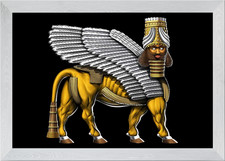
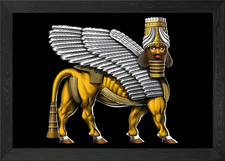
The lamassu is the most recognisable guardian figure. The Metropolitan Museum of Art describes Assyrian human-headed winged bulls as divine protective beings placed at important palace doorways; the sculptors gave some figures five legs so they appeared still from the front but striding from the side. These were not alleged wild animals. They were monumental supernatural guardians, built to impress visitors and protect royal space.[The Metropolitan Museum of Art]metmuseum.orgThe Metropolitan Museum of Art Human-headed winged bull (lamassuThe Metropolitan Museum of Art Human-headed winged bull (lamassu
The mušhuššu dragon is the most tempting ancient creature for cryptid speculation because it looks reptilian. On the Ishtar Gate of Babylon, dragons associated with Marduk appeared alongside bulls and lions in glazed brick relief. The Detroit Institute of Arts describes the mushhushshu as a divine creature combining features such as snake-like scales, eagle claws, lion legs and a scorpion-like tail, while World History Encyclopedia notes that the gate’s dragons, bulls and lions represented Babylonian deities rather than natural history.[Detroit Institute of Arts]dia.orgOpen source on dia.org.
Anzu, the lion-headed eagle, adds a different kind of monster: a stormy, mountain-linked bird of divine power. ORACC’s Nimrud project describes Anzu as a monstrous lion-eagle who appears in Sumerian literary works as a wild mountain creature and in monumental sculpture as a being that can be tamed by the gods. Humbaba, the guardian of the Cedar Forest in the Gilgamesh tradition, is another major figure; British Museum records preserve fired-clay Humbaba masks from Old Babylonian and Mesopotamian contexts, including finds from Sippar and Ur.[upenn.edu]oracc.museum.upenn.eduOpen source on upenn.edu.
These ancient beings should not be flattened into “ancient sightings”. Their power lies in symbolism: protection, kingship, storm, wilderness, danger, divine order and the border between civilisation and chaos. But they do explain why Iraq feels unusually monster-rich even when modern cryptid evidence is sparse. The country’s archaeological record is full of creatures that were never meant to be ordinary animals, yet still look startlingly alive.[metmuseum.org]metmuseum.orgThe Metropolitan Museum of Art Human-headed winged bull (lamassuThe Metropolitan Museum of Art Human-headed winged bull (lamassu

What real animals could explain Iraqi monster reports?
The most useful sceptical approach is not to ask whether Iraqi monsters are “real” or “fake”, but what real animals and settings could feed the stories. Iraq has wolves, jackals, hyenas, foxes, wild cats, otters, honey badgers, reptiles and large birds, all of which can become uncanny when seen at night, at distance or in stressful circumstances. A checklist of Iraq’s mammals includes carnivores such as striped hyena, golden jackal, grey wolf, jungle cat, caracal, Eurasian otter, smooth-coated otter and honey badger.[Wikipedia]WikipediaList of mammals of IraqList of mammals of Iraq
Several explanations are especially relevant:
- Honey badgers in Basra: the 2007 “monster badger” story is the strongest case of a real animal becoming a local monster under rumour pressure.[ABC News]abcnews.comOpen source on abcnews.com.
- Otters in the marshes: a dark, wet mammal moving through reeds is a plausible contributor to hairy water-creature stories, though not a proven explanation for the anfish.[IUCN Otter Specialist Group Bulletin]iucnosgbull.orgAlSheikhly Nadar 2013AlSheikhly Nadar 2013
- Monitor lizards and large reptiles: the afa’s “large lizard” description makes a known or exaggerated reptile the most natural comparison, even if no secure identification can be made.[karlshuker.blogspot.com]karlshuker.blogspot.comTH E IRAQI AFATH E IRAQI AFA
- Hyenas, jackals and feral dogs: scavengers and nocturnal canids can generate frightening night encounters, especially around settlements, cemeteries, livestock and rubbish.[Wikipedia]WikipediaList of mammals of IraqList of mammals of Iraq
- Marsh visibility itself: reeds, water, moonlight, distance and partial glimpses can make ordinary animals look larger, stranger or more hybrid than they are.[UNESCO World Heritage Centre]whc.unesco.orgOpen source on unesco.org.
This kind of explanation does not strip the stories of interest. It often makes them more interesting, because it shows how folklore grows at the meeting point of animal behaviour, local fear and landscape. Iraq’s monster traditions are strongest where that meeting point is most intense: the marshes, the desert edge, the river cities and the ruins of ancient power.[UNESCO World Heritage Centre]whc.unesco.orgOpen source on unesco.org.
Why Iraq has fewer modern cryptid cases than its monster heritage suggests
A first-time reader might expect Iraq, with Babylonian dragons and Assyrian winged bulls, to have a long list of modern cryptids. In practice, the modern evidence is sparse. The main named mystery animals, the afa and anfish, depend heavily on one ethnographic source tradition. The Tantal is a spirit-like shape-shifter rather than an unknown animal. The Basra badger flap has a strong mundane explanation. That leaves Iraq rich in monster culture but relatively poor in unresolved zoological case files.[blogspot.com]karlshuker.blogspot.comTH E IRAQI AFATH E IRAQI AFA
There are good reasons for that gap. Iraq’s twentieth- and twenty-first-century history brought war, displacement, sanctions, political violence, habitat destruction and uneven field research conditions. The southern marshes were drained, partially restored, hit by drought and repeatedly reshaped by water politics. Such conditions can both create rumours and destroy the continuity needed to document them carefully.[unep.org]unep.orgUN Environment Programme Crunch time for Iraqi marshlandsUN Environment Programme Crunch time for Iraqi marshlands
There is also a category problem. Many Iraqi creature traditions belong to religious, mythic or cautionary storytelling rather than to the modern cryptozoological idea of an unknown animal. A lamassu is not a misidentified bull; it is a protective divine hybrid. The Tantal is not a rare mammal; it is a shape-shifting folklore being. The mušhuššu is not good evidence for a surviving dragon; it is a symbol of Marduk worked into imperial art. Treating all of these as “cryptids” would make the subject less accurate, not more exciting.[metmuseum.org]metmuseum.orgThe Metropolitan Museum of Art Human-headed winged bull (lamassuThe Metropolitan Museum of Art Human-headed winged bull (lamassu
The best country-level reading is therefore layered. Iraq’s creature lore runs from ancient symbolic monsters, through marsh oral traditions, to modern rumour-panics around real animals. Its mystery-beast history is not a parade of proven unknown species. It is a study in how powerful landscapes and real wildlife become memorable monsters.
How to read Iraq’s creature stories fairly
The most balanced way to approach Iraqi cryptids is to separate four questions that are often blurred together.
First, is the story zoological? The afa might be, because it is described as a large lizard. The Basra badger flap was zoological because real animals were identified. The Tantal and lamassu are not zoological in the same way; they belong primarily to folklore and myth.[blogspot.com]karlshuker.blogspot.comTH E IRAQI AFATH E IRAQI AFA
Second, is there independent evidence? For the afa and anfish, the answer is weak: brief literary and secondary references, not a modern body of sightings. For the Basra animals, there was press coverage, official denial of the military-release rumour and identification as honey badgers. For ancient monsters, there is abundant archaeological and textual evidence for the images and stories, but not for the creatures as natural animals.[edu.et]ndl.ethernet.edu.etOpen source on edu.et.
Third, does the landscape make the report plausible as experience? In southern Iraq, yes. The marshes are a real, complex wetland system; their wildlife, reed beds and dangerous waters could support both genuine animal encounters and cautionary supernatural tales. Basra’s urban edge and wartime atmosphere likewise explain how honey badgers could become “monster” rumours.[unesco.org]whc.unesco.orgOpen source on unesco.org.
Fourth, what would change the assessment? For an unknown animal claim, useful evidence would include clear photographs, specimens, tracks with scale, multiple independent local accounts, and zoological survey work in the relevant habitat. For folklore, the better evidence would be local oral histories, regional variants, dates, tellers, social use and language context. Iraq’s strongest creature page would not pretend those two evidence types are the same.
The takeaway: Iraq’s monsters are mostly marsh, myth and misidentification
Iraq’s creature tradition is unusually deep but uneven. The ancient record gives it some of the world’s great hybrid monsters: the lamassu at palace gates, the mušhuššu dragon of Babylon, Anzu the lion-eagle and Humbaba of the Gilgamesh cycle. The marsh record gives it the afa, anfish and Tantal, all tied to a wetland world where water, reeds and oral warning tales shaped what people feared. The modern record gives it the Basra badger panic, a near-perfect example of how a real animal can become a conspiracy-flavoured monster story during conflict.[metmuseum.org]metmuseum.orgThe Metropolitan Museum of Art Human-headed winged bull (lamassuThe Metropolitan Museum of Art Human-headed winged bull (lamassu
The evidence does not support presenting any Iraqi cryptid as a confirmed unknown species. The afa remains intriguing but underdocumented; the anfish is even thinner; the Tantal is folklore rather than zoology; and the Basra “monster badgers” are best explained as honey badgers amplified by rumour. Iraq’s monster history is still worth reading because it shows something more durable than a single creature: how landscapes, animals, ruins, fear and memory turn into stories people keep retelling.
Amazon book picks
Further Reading
Books and field guides related to What Monsters Haunt Iraq's Hidden Waters?. Use these as the next step if you want deeper reading beyond the article.
The Marsh Arabs
Primary source for understanding Iraq's marshes and stories such as the afa.
The Element Encyclopedia of Magical Creatures
Explores creature folklore comparable to Iraqi monster traditions.
The Encyclopedia of Things That Never Were
Provides context for monster traditions and hybrid beings.
Myths from Mesopotamia
Covers the mythic background behind creatures linked to ancient Iraq.
eBay marketplace picks
Marketplace Samples
Live-tested eBay searches with available results related to this page.
Endnotes
1.
Source: karlshuker.blogspot.com
Title: TH E IRAQI AFA
Link:https://karlshuker.blogspot.com/2013/11/the-iraqi-afa-middle-eastern-mystery.html
2.
Source: whc.unesco.org
Link:https://whc.unesco.org/en/list/1481/
3.
Source: cryptidarchives.fandom.com
Link:https://cryptidarchives.fandom.com/wiki/Afa
4.
Source: unep.org
Title: UN Environment Programme Crunch time for Iraqi marshlands
Link:https://www.unep.org/news-and-stories/story/crunch-time-iraqi-marshlands
5.
Source: e360.yale.edu
Title: iraq marshes drought climate change
Link:https://e360.yale.edu/features/iraq-marshes-drought-climate-change
6.
Source: reuters.com
Link:https://www.reuters.com/sustainability/climate-energy/iraqs-historic-marshes-revive-water-returns-after-years-drought-2026-05-07/
Source snippet
This revitalization is crucial for the Marsh Arabs, whose livelihoods are deeply connected to the marsh ecosystem. Biodiversity is beginn...
7.
Source: ndl.ethernet.edu.et
Link:https://ndl.ethernet.edu.et/bitstream/123456789/46979/1/George%20M.%20Eberhart.pdf
8.
Source: Wikipedia
Title: Honey badger
Link:https://en.wikipedia.org/wiki/Honey_badger
9.
Source: arpi.unipi.it
Title: Bonn zool Bull 2015
Link:https://arpi.unipi.it/bitstream/11568/755019/5/Bonn%20zool%20Bull%202015.pdf
10.
Source: oracc.museum.upenn.edu
Link:https://oracc.museum.upenn.edu/nimrud/livesofobjects/anzu/index.html
11.
Source: Wikipedia
Title: List of mammals of Iraq
Link:https://en.wikipedia.org/wiki/List_of_mammals_of_Iraq
12.
Source: cryptidz.fandom.com
Link:https://cryptidz.fandom.com/wiki/Afa
13.
Source: cryptidz.fandom.com
Title: Sea Serpents
Link:https://cryptidz.fandom.com/wiki/Sea_Serpents
14.
Source: mythus.fandom.com
Title: Category:Mesopotamian mythology
Link:https://mythus.fandom.com/wiki/Category%3AMesopotamian_mythology
15.
Source: cryptid-that-you-saw.fandom.com
Link:https://cryptid-that-you-saw.fandom.com/wiki/Afa
16.
Source: cryptidz.fandom.com
Link:https://cryptidz.fandom.com/wiki/Garta
17.
Source: itsmth.fandom.com
Link:https://itsmth.fandom.com/wiki/Garta
18.
Source: non-aliencreatures.fandom.com
Link:https://non-aliencreatures.fandom.com/wiki/Garta
19.
Source: Wikipedia
Link:https://en.wikipedia.org/wiki/Mu%C5%A1%E1%B8%ABu%C5%A1%C5%A1u
20.
Source: Wikipedia
Title: Category:Mesopotamian legendary creatures
Link:https://en.wikipedia.org/wiki/Category%3AMesopotamian_legendary_creatures
21.
Source: Wikipedia
Title: List of lake monsters
Link:https://en.wikipedia.org/wiki/List_of_lake_monsters
22.
Source: Wikipedia
Link:https://en.wikipedia.org/wiki/Apkallu
23.
Source: Wikipedia
Title: List of dragons in mythology and folklore
Link:https://en.wikipedia.org/wiki/List_of_dragons_in_mythology_and_folklore
24.
Source: Wikipedia
Title: Desert monitor
Link:https://en.wikipedia.org/wiki/Desert_monitor
25.
Source: Wikipedia
Title: Draining of the Mesopotamian Marshes
Link:https://en.wikipedia.org/wiki/Draining_of_the_Mesopotamian_Marshes
26.
Source: Wikipedia
Title: Wildlife of Iraq
Link:https://en.wikipedia.org/wiki/Wildlife_of_Iraq
27.
Source: Wikipedia
Title: Ishtar Gate
Link:https://en.wikipedia.org/wiki/Ishtar_Gate
28.
Source: Wikipedia
Link:https://en.wikipedia.org/wiki/Lamassu
29.
Source: Wikipedia
Link:https://en.wikipedia.org/wiki/Tiamat
30.
Source: Wikipedia
Link:https://en.wikipedia.org/wiki/Humbaba
31.
Source: Wikipedia
Link:https://en.wikipedia.org/wiki/Anz%C3%BB
32.
Source: Wikipedia
Title: Abu Fanous
Link:https://en.wikipedia.org/wiki/Abu_Fanous
33.
Source: oracc.museum.upenn.edu
Link:https://oracc.museum.upenn.edu/amgg/listofdeities/tiamat/index.html
34.
Source: oracc.museum.upenn.edu
Link:https://oracc.museum.upenn.edu/amgg/bibliography/index.html
35.
Source: oracc.museum.upenn.edu
Link:https://oracc.museum.upenn.edu/amgg/listofdeities/nabu/
36.
Source: oracc.museum.upenn.edu
Link:https://oracc.museum.upenn.edu/amgg/Listofdeities/Ninazu/index.html
37.
Source: oracc.museum.upenn.edu
Link:https://oracc.museum.upenn.edu/amgg/listofdeities/ningizida/
38.
Source: oracc.museum.upenn.edu
Link:https://oracc.museum.upenn.edu/nimrud/ancientkalhu/thepeople/ninurta/
39.
Source: iraqnam.blogspot.com
Link:https://iraqnam.blogspot.com/2007/07/perspective-british-blamed-for.html
40.
Source: reuters.com
Title: iraqs marshes once drained by saddam named world heritage site id USKCN0ZX0SL
Link:https://www.reuters.com/article/lifestyle/iraqs-marshes-once-drained-by-saddam-named-world-heritage-site-idUSKCN0ZX0SL/
41.
Source: reuters.com
Title: british troops pull out of base in iraqs basra idUSKAR044880
Link:https://www.reuters.com/article/economy/british-troops-pull-out-of-base-in-iraqs-basra-idUSKAR044880/
42.
Source: reuters.com
Title: uk soldiers killed in basra named idUSL06572772
Link:https://www.reuters.com/article/world/uk-soldiers-killed-in-basra-named-idUSL06572772/
43.
Source: worldheritageoutlook.iucn.org
Link:https://worldheritageoutlook.iucn.org/node/1193
44.
Source: portals.iucn.org
Link:https://portals.iucn.org/library/sites/library/files/documents/RL-53-001.pdf
45.
Source: artwithhillary.blogspot.com
Title: the making of history brick by brick
Link:https://artwithhillary.blogspot.com/2019/12/the-making-of-history-brick-by-brick.html
46.
Source: youtube.com
Title: The Afa | The Lost Giants of Mesopotamia
Link:https://www.youtube.com/watch?v=qbx01HXY9fM
Source snippet
Mushussu – The Guardian of the Gods of Ancient Babylon...
47.
Source: youtube.com
Title: The Myth of Anzu: The Giant Bird in Mesopotamian Mythology
Link:https://www.youtube.com/watch?v=GnA3OII62Q4
Source snippet
Anzu - The Monster that Challenged the Gods of the Sumerian Pantheon...
48.
Source: youtube.com
Link:https://www.youtube.com/watch?v=tykCpSCl3TM
Source snippet
15 Most Terrifying Demons of Ancient Mesopotamia...
49.
Source: aljazeera.com
Title: spirit tales iraqs shape shifting tantals
Link:https://www.aljazeera.com/features/2023/10/31/spirit-tales-iraqs-shape-shifting-tantals
50.
Source: abcnews.com
Link:https://abcnews.com/International/story?id=3375393&page=1
51.
Source: abc.net.au
Title: giant badgers terrorise iraqi port city
Link:https://www.abc.net.au/news/2007-07-12/giant-badgers-terrorise-iraqi-port-city/97360
52.
Source: smb.museum
Link:https://www.smb.museum/en/exhibitions/detail/from-fragment-to-monument/
53.
Source: metmuseum.org
Title: The Metropolitan Museum of Art Human-headed winged bull (lamassu)
Link:https://www.metmuseum.org/art/collection/search/322608
54.
Source: worldhistory.org
Title: Ishtar Gate
Link:https://www.worldhistory.org/Ishtar_Gate/
55.
Source: dia.org
Link:https://dia.org/collection/mushhushshu-dragon-symbol-god-marduk-55602
56.
Source: iucnosgbull.org
Title: AlSheikhly Nadar 2013
Link:https://www.iucnosgbull.org/Volume30/AlSheikhly_Nadar_2013.pdf
57.
Source: theguardian.com
Title: The Guardian Basra badger rumour mill | News
Link:https://www.theguardian.com/news/blog/2007/jul/12/basrabadgerru1
58.
Source: animaldiversity.org
Title: Mellivora capensis
Link:https://animaldiversity.org/accounts/Mellivora_capensis/
59.
Source: britishmuseum.org
Link:https://www.britishmuseum.org/collection/object/W_1883-0118-AH-2598
60.
Source: britishmuseum.org
Link:https://www.britishmuseum.org/collection/object/W
61.
Source: worldhistory.org
Title: the mesopotamian pantheon
Link:https://www.worldhistory.org/article/221/the-mesopotamian-pantheon/
62.
Source: worldhistory.org
Link:https://www.worldhistory.org/Tiamat/
63.
Source: worldhistory.org
Title: face of the demon humbaba
Link:https://www.worldhistory.org/image/8103/face-of-the-demon-humbaba/
64.
Source: worldhistory.org
Title: aurochs from ishtar gate
Link:https://www.worldhistory.org/image/738/aurochs-from-ishtar-gate/
65.
Source: britishmuseum.org
Link:https://www.britishmuseum.org/collection/object/W_EPH-ME-451
66.
Source: britishmuseum.org
Link:https://www.britishmuseum.org/collection/object/W
67.
Source: ielc.libguides.com
Link:https://ielc.libguides.com/sdzg/factsheets/ratel/distribution
68.
Source: rr-middleeast.woah.org
Link:https://rr-middleeast.woah.org/en/about-us/regional-members-of-woah/iraq/
69.
Source: theguardian.com
Link:https://www.theguardian.com/artanddesign/2008/apr/14/art.iraq
70.
Source: cryptid.blog.jp
Link:https://cryptid.blog.jp/archives/11516124.html
71.
Source: theanimalmap.com
Link:https://theanimalmap.com/en/countries/iraq
Additional References
72.
Source: youtube.com
Title: Mushussu – The Guardian of the Gods of Ancient Babylon
Link:https://www.youtube.com/watch?v=FJ1Sqj9ecD0
Source snippet
The Myth of Anzu: The Giant Bird in Mesopotamian Mythology...
73.
Source: academia.edu
Link:https://www.academia.edu/36711007/The_Man_Bull_and_the_Master_of_Animals_in_Mesopotamia_and_in_Iran_Introduction_The_mythologies_of_the_ancient_Middle_East
74.
Source: facebook.com
Link:https://www.facebook.com/UnitedNationsIraq/posts/worldheritageday-18-april-the-ahwar-of-southern-iraq-are-a-unesco-world-heritage/827439846088361/
75.
Source: researchgate.net
Link:https://www.researchgate.net/publication/401819564_Diversity_and_Conservation_of_the_Mesopotamian_Marshes_of_Southern_Iraq_A_Survey_of_a_World_Heritage_Site
76.
Source: researchgate.net
Link:https://www.researchgate.net/publication/406953828_UPDATED_LIST_OF_AMPHIBIANS_AND_REPTILES_IN_IRAQ_2014_Iraqi_Ministry_of_EnvironmentCenter_of_Sustainable_Management_for_Natural_Ecosystem-biodiversity_unit_1_corresponding_author_Email_ali_bio_84yahooc
77.
Source: lacerta.de
Link:https://lacerta.de/AF/Bibliografie/BIB_13019.pdf
78.
Source: reddit.com
Link:https://www.reddit.com/r/ArtefactPorn/comments/kzruud/a_colossal_sculpture_of_a_humanheaded_winged_bull/
79.
Source: reddit.com
Link:https://www.reddit.com/r/Cryptozoology/comments/1bsmzo8/afa/
80.
Source: medium.com
Link:https://medium.com/teatime-history/al-ghoul-devilish-arabian-monster-6876c0a5b442
81.
Source: animalia.bio
Link:https://animalia.bio/iraq-animals?page=1
Topic Tree
Follow this branch
Related pages 192
- Antigua Cryptids
- Maldives Monsters
- Malta Monsters
- Qatar Monsters
- Argentina Monsters
- +187 more in sidebar