Within Slovak Monsters
Why Slovak Waters Had Spirits Before Monsters
Slovakia's old water beings were supernatural warnings about dangerous rivers and lakes, not reports of undiscovered animals.
On this page
- Regional names and changing descriptions
- Drowned souls, jars and moral warnings
- How folklore shaped modern monster stories
Page outline Jump by section
Introduction
Long before anyone spoke about lake monsters in Slovakia, dangerous water already had inhabitants in the popular imagination. Across Slovak regions, rivers, ponds, mill races and deep lakes were believed to be home to supernatural water beings that could lure, drown or mislead the unwary. These figures were not cryptids in the modern sense. They were folklore characters used to explain sudden drownings, treacherous currents and the unsettling feeling that deep water concealed a will of its own.[Wikipedia]WikipediaOpen source on wikipedia.org.
For understanding Slovakia’s monster traditions, these water spirits matter because they provided a ready-made cultural framework for interpreting strange events near lakes and rivers. When modern stories emerge about mysterious creatures in Slovak waters, they often draw on centuries-old ideas that dangerous places are inhabited by hidden beings. The older legends were less concerned with unknown animals than with mortality, morality and the risks of the natural landscape.[Wikipedia]WikipediaOpen source on wikipedia.org.
Regional Names and Changing Descriptions
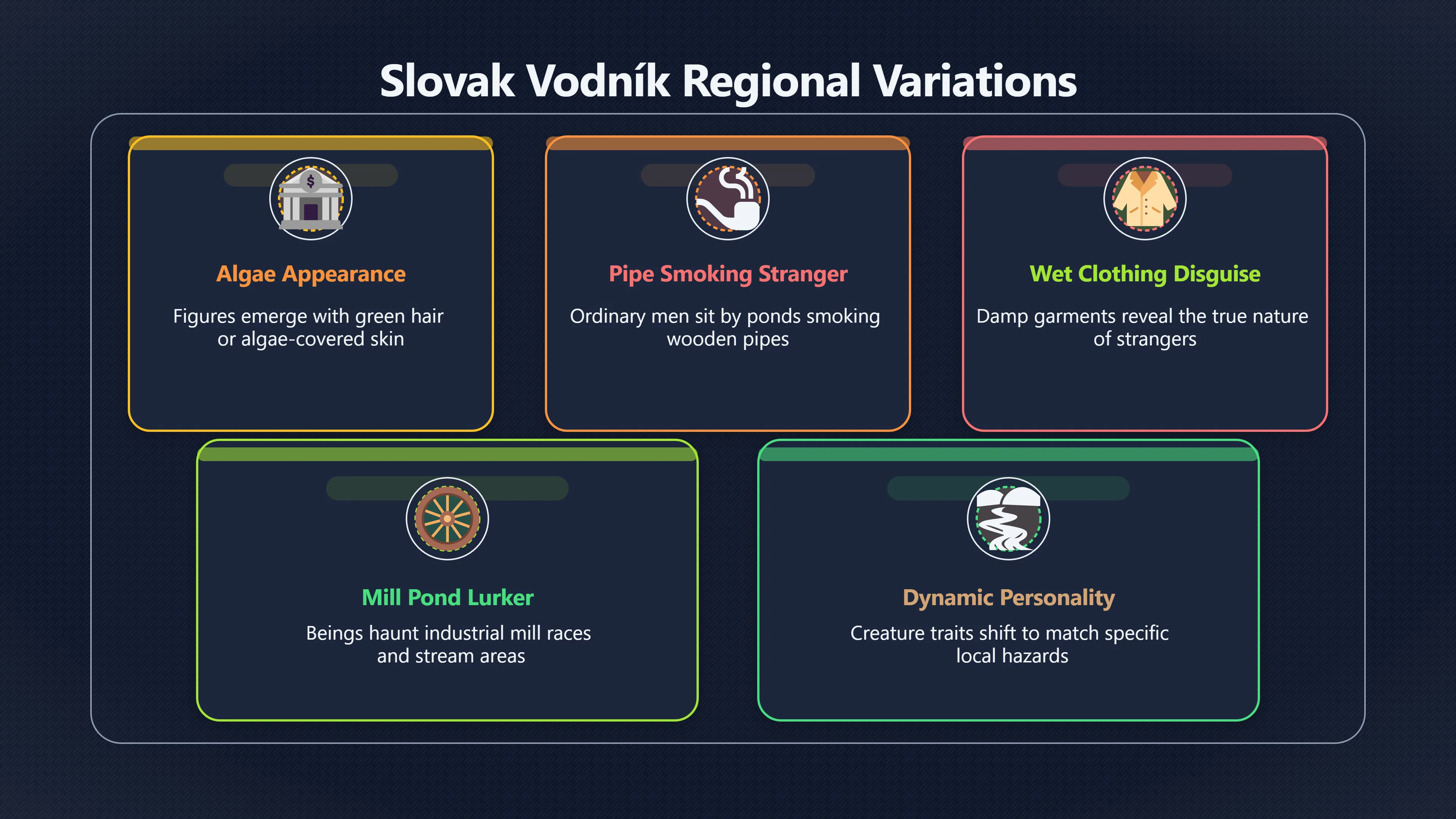
The best-known Slovak water spirit is the vodník, a figure shared with other West Slavic traditions but adapted to local folklore. In Slovak tales he could also appear under regional names such as “water man” or “water fellow”, reflecting local storytelling traditions rather than a single standard character.[Wikipedia]WikipediaOpen source on wikipedia.org.
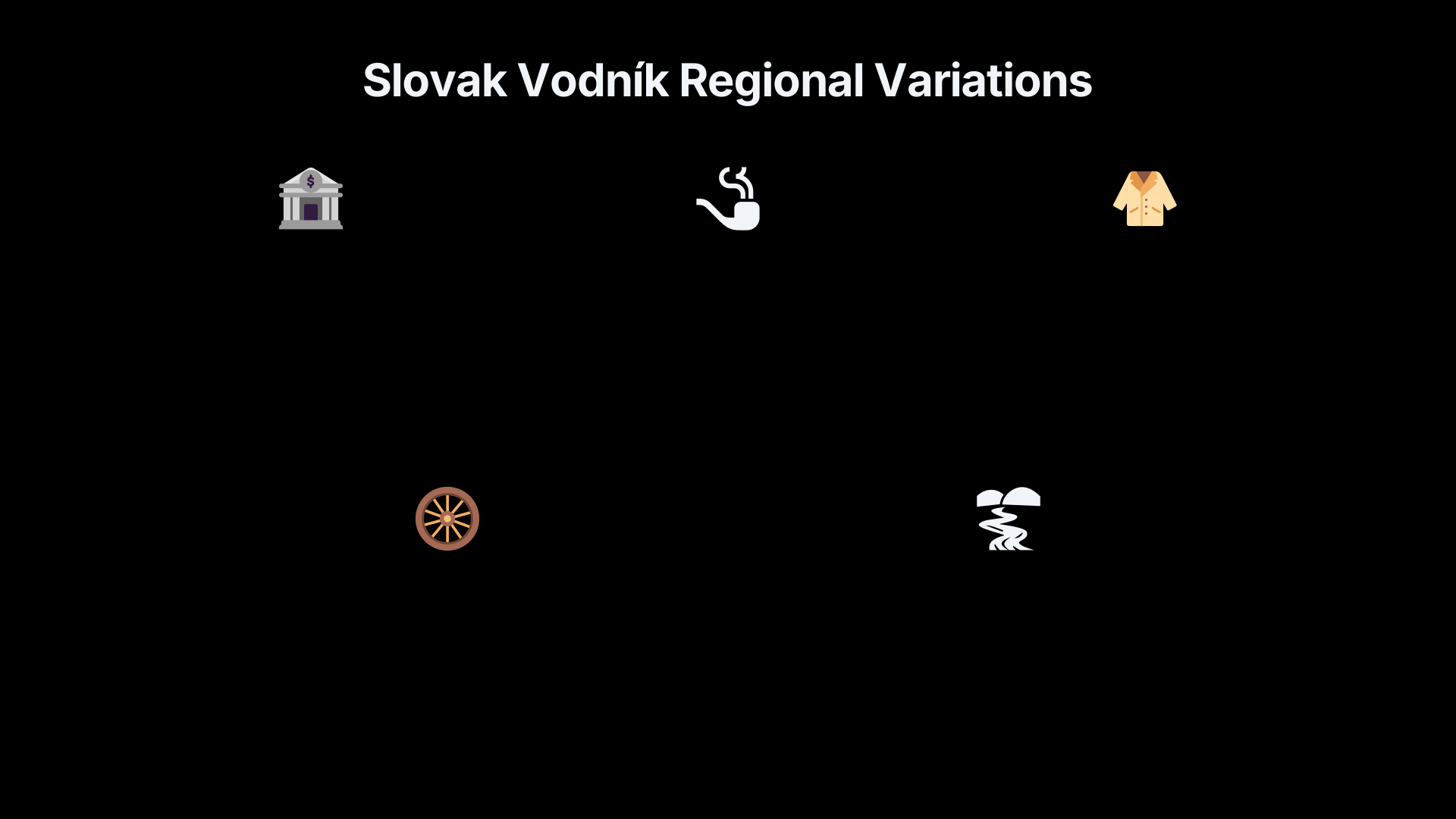
Descriptions varied from place to place. Some stories portrayed him as a green-haired or algae-covered man emerging from a riverbank. Others described an ordinary-looking stranger whose wet clothing revealed his true nature. In some accounts he sat beside ponds smoking a pipe, while in others he lurked near mills, streams and isolated lakes. The details changed, but the central idea remained constant: water had a guardian or predator living beneath the surface.[wikipedia.org]WikipediaOpen source on wikipedia.org.
These changing descriptions reveal something important about Slovak folklore. Unlike reports of an alleged unknown animal, which usually seek a consistent appearance, water-spirit stories were flexible. The creature could become whatever best communicated the danger of a particular place. A fast river might have a violent vodník; a quiet pond might have a deceptive one who appeared friendly before leading victims to disaster.[Wikipedia]WikipediaOpen source on wikipedia.org.
Many stories also linked water spirits with specific locations. Deep pools, mill ponds and isolated mountain waters gained reputations because accidents happened there. Rather than treating drowning as random misfortune, folklore gave the place a personality and a motive.[netky.sk]netky.skThe Enchanting World of Slovak Folklore and LegendsVodník is believed to dwell in rivers and lakes, luring unsuspecting victims to their…
Drowned Souls, Jars and Moral Warnings
One of the most distinctive motifs in Slovak and neighbouring traditions is the belief that the vodník collected the souls of drowned people and stored them in pots or jars beneath the water. Folklore records from Slovak areas include references to these “waterman’s pots”, and similar traditions appear throughout the wider West Slavic world.[Wikipedia]WikipediaOpen source on wikipedia.org.
To modern readers the image may seem bizarre, but it served several purposes. First, it explained why some bodies disappeared into rivers and lakes. Second, it turned drowning into a continuing supernatural drama rather than a simple accident. Third, it reinforced a warning: entering dangerous water risked not only death but captivity by the spirit that ruled that place.[Wikipedia]WikipediaOpen source on wikipedia.org.
Many Slavic traditions also linked water beings with the souls of those who died unnatural deaths, especially drowning victims. Stories of drowned men, women or children becoming restless spirits blurred the line between ghost lore and water-monster folklore. The water itself became a boundary between the living and the dead.[Wikipedia]WikipediaSlavic water spiritsSlavic water spirits
These tales carried clear social messages:
- Children should avoid rivers and ponds without supervision.
- Travellers should respect unfamiliar waterways.
- Young people should not wander near water at night.
- Communities should treat drowning as a serious communal tragedy rather than bad luck alone.
In rural societies where swimming skills were not universal and rescue services did not exist, such stories functioned as memorable safety lessons.[netky.sk]netky.skThe Enchanting World of Slovak Folklore and LegendsVodník is believed to dwell in rivers and lakes, luring unsuspecting victims to their…

Why Water Spirits Were More Than Monsters
Modern readers sometimes assume that folklore creatures existed purely for entertainment. Slovak water spirits had a more practical role.
Large parts of historical Slovakia were shaped by rivers, wetlands and mountain streams. Floods, cold water, hidden currents and sudden changes in depth created genuine hazards. Before scientific explanations became widespread, communities often interpreted these dangers through stories about intentional supernatural actors.[netky.sk]netky.skThe Enchanting World of Slovak Folklore and LegendsVodník is believed to dwell in rivers and lakes, luring unsuspecting victims to their…
The vodník therefore occupied a position somewhere between monster, local spirit and cautionary symbol. He explained why experienced fishermen sometimes vanished, why children were warned away from mill ponds, and why apparently calm water could suddenly become deadly.[Wikipedia]WikipediaOpen source on wikipedia.org.
Some traditions even portrayed water spirits as morally complex rather than purely evil. Certain tales describe helpful or neutral water beings alongside malevolent ones. This reflects a broader folk view of nature itself: water could sustain life, power mills and support communities, yet it could also kill without warning.[netky.sk]netky.skThe Enchanting World of Slovak Folklore and LegendsVodník is believed to dwell in rivers and lakes, luring unsuspecting victims to their…
How Folklore Shaped Modern Monster Stories
The old water spirits of Slovakia were supernatural beings, not hidden animals. Nevertheless, they helped create the cultural environment in which later mystery-creature stories could flourish.
When unusual objects, strange movements or unexplained events are reported in lakes, people naturally reach for familiar narrative patterns. In countries with long traditions of lake monsters, witnesses may interpret an observation as an unknown animal. In Slovakia, older folklore supplied a different set of expectations centred on inhabited waters and unseen presences beneath the surface.[Wikipedia]WikipediaOpen source on wikipedia.org.
This is one reason modern “monster” stories in Slovakia often feel different from classic cryptid traditions elsewhere. The country’s strongest historical water legends are not about surviving prehistoric creatures or undiscovered species. They are about spirits, drowned souls and dangerous places given human form.[Wikipedia]WikipediaOpen source on wikipedia.org.
The distinction matters. A cryptid story asks whether an unknown animal exists. A vodník story asks why a particular stretch of water feels uncanny, why people disappear there, and what lessons the living should learn from those losses. The folklore preserves memories of real environmental dangers while wrapping them in memorable supernatural imagery.[wikipedia.org]WikipediaOpen source on wikipedia.org.

From Drowning Legends to Cultural Memory
Today, few Slovaks literally believe that a water spirit keeps jars of human souls beneath a pond. Yet the imagery remains deeply embedded in regional folklore, literature and popular culture. The vodník survives because he represents something larger than a monster: humanity’s long-standing attempt to understand and respect dangerous water.[Wikipedia]WikipediaOpen source on wikipedia.org.
For the history of strange creatures in Slovakia, these stories form an essential foundation. Before modern sightings, before media-created “Slovak Nessie” headlines and before speculation about unknown animals, there were the rivers and lakes themselves—and the conviction that something watched from below.[Wikipedia]WikipediaOpen source on wikipedia.org.
Amazon book picks
Further Reading
Books and field guides related to Why Slovak Waters Had Spirits Before Monsters. Use these as the next step if you want deeper reading beyond the article.
The Element Encyclopedia of Fairies
Includes many water-spirit traditions comparable to the vodník.
Spirits, Fairies, Leprechauns, and Goblins
Covers water beings and related supernatural folklore.
The Element Encyclopedia of Magical Creatures
Includes water spirits and other legendary beings.
eBay marketplace picks
Marketplace Samples
Live-tested eBay searches with available results related to this page.



Endnotes
1.
Source: Wikipedia
Link:https://en.wikipedia.org/wiki/Vodyanoy
2.
Source: netky.sk
Link:https://www.netky.sk/clanok/the-enchanting-world-of-slovak-folklore-and-legends-a-journey-into-central-europes-mystical-heart-video
Source snippet
The Enchanting World of Slovak Folklore and LegendsVodník is believed to dwell in rivers and lakes, luring unsuspecting victims to their...
3.
Source: Wikipedia
Title: Supernatural beings in Slavic religion
Link:https://en.wikipedia.org/wiki/Supernatural_beings_in_Slavic_religion
4.
Source: Wikipedia
Title: Slavic water spirits
Link:https://en.wikipedia.org/wiki/Slavic_water_spirits
5.
Source: Wikipedia
Link:https://en.wikipedia.org/wiki/Topielec
6.
Source: Wikipedia
Title: Nav (Slavic folklore)
Link:https://en.wikipedia.org/wiki/Nav_%28Slavic_folklore%29
Additional References
7.
Source: prettymarginal.com
Title: Pretty Marginal Vodník: the water spirit and the cult of water
Link:https://prettymarginal.com/vodnik-the-water-spirit-and-the-cult-of-water/
Source snippet
Pretty MarginalVodník: the water spirit and the cult of water - Pretty MarginalVodník is a water spirit that lives at the bottom of a pon...
8.
Source: facebook.com
Link:https://www.facebook.com/cooklikeczechs/posts/czech-vodn%C3%ADk-met-this-guy-during-my-morning-walkthe-vodn%C3%ADk-is-a-mythical-figure-/1186698510127774/
Source snippet
lakes and ponds. He waits by his pond for passers-by and...Read more...
9.
Source: mythoi.substack.com
Title: Your Frog Grandpa Vodyanoy
Link:https://mythoi.substack.com/p/your-frog-grandpa-vodyanoy
Source snippet
Luke - MythoiVodníci can be benevolent or hostile, depending on each individual's disposition. Some might still drown you, but others are...
10.
Source: youtube.com
Title: Vodnyanoy – The Odd Water Spirit of Russian Folklore
Link:https://www.youtube.com/watch?v=ivSc4T_ZcKs
Source snippet
Rusalka - The Enigmatic Water Nymph of Slavic Folklore...
11.
Source: de.pinterest.com
Link:https://de.pinterest.com/pin/21603273207279127/
Source snippet
terest.comVodník – The Soul-Collecting Water Spirit of Slavic Myth 🌊💀11 Aug 2025 — In Slavic folklore, Vodník is a green-skinned water sp...
12.
Source: instagram.com
Link:https://www.instagram.com/reel/DQ6n4PuiIl2/
13.
Source: reddit.com
Link:https://www.reddit.com/r/AskEurope/comments/d50bwv/in_slavic_mythology_vodyanoy_vodyanoi_vodn%C3%ADk/
14.
Source: instagram.com
Link:https://www.instagram.com/p/DY73zzlMAc6/
15.
Source: reddit.com
Link:https://www.reddit.com/r/mythology/comments/iask6r/vodyanoy_vs_vodnik/
16.
Source: brendan-noble.com
Link:https://brendan-noble.com/wodnik-vodyanoy-slavic-spirit-of-the-water/
Topic Tree