Within Lebanon Monsters
From Sea Dragons to the Sack Man
Older Levantine sea dragons and the sack-man Abu Kees show how Lebanon's monsters also live in myth, coast and household warning tales.
On this page
- Yamm, Lotan and the ancient chaos sea
- Tannin and Leviathan like monster imagery
- Abu Kees and household fright stories for children
Page outline Jump by section
Introduction
Lebanon’s monster folklore is not limited to reports of strange animals. Some of its most enduring “monsters” come from two very different traditions: the ancient sea-dragons of the eastern Mediterranean and the household bogeymen used to keep children in line. Together they show how Lebanese monster lore stretches from Bronze Age mythology on the coast to everyday family storytelling in villages and cities.
Unlike modern cryptid stories, these figures were rarely presented as hidden animals waiting to be discovered. They belonged to myth, religion and social life. The sea serpent represented the terrifying power of the sea and cosmic chaos, while the sack-bearing bogeyman known as Abu Kees became a familiar warning figure in family folklore. Both remain part of the wider cultural landscape of Lebanon, even though they occupy very different places in the imagination.[Wikipedia]WikipediaSeptember 21, 2025 — Lotan seems to have been prefigured by the serpent Têmtum represented in Syrian seals of the 18th–16th century BC, a…
Yamm, Lotan and the Ancient Chaos Sea
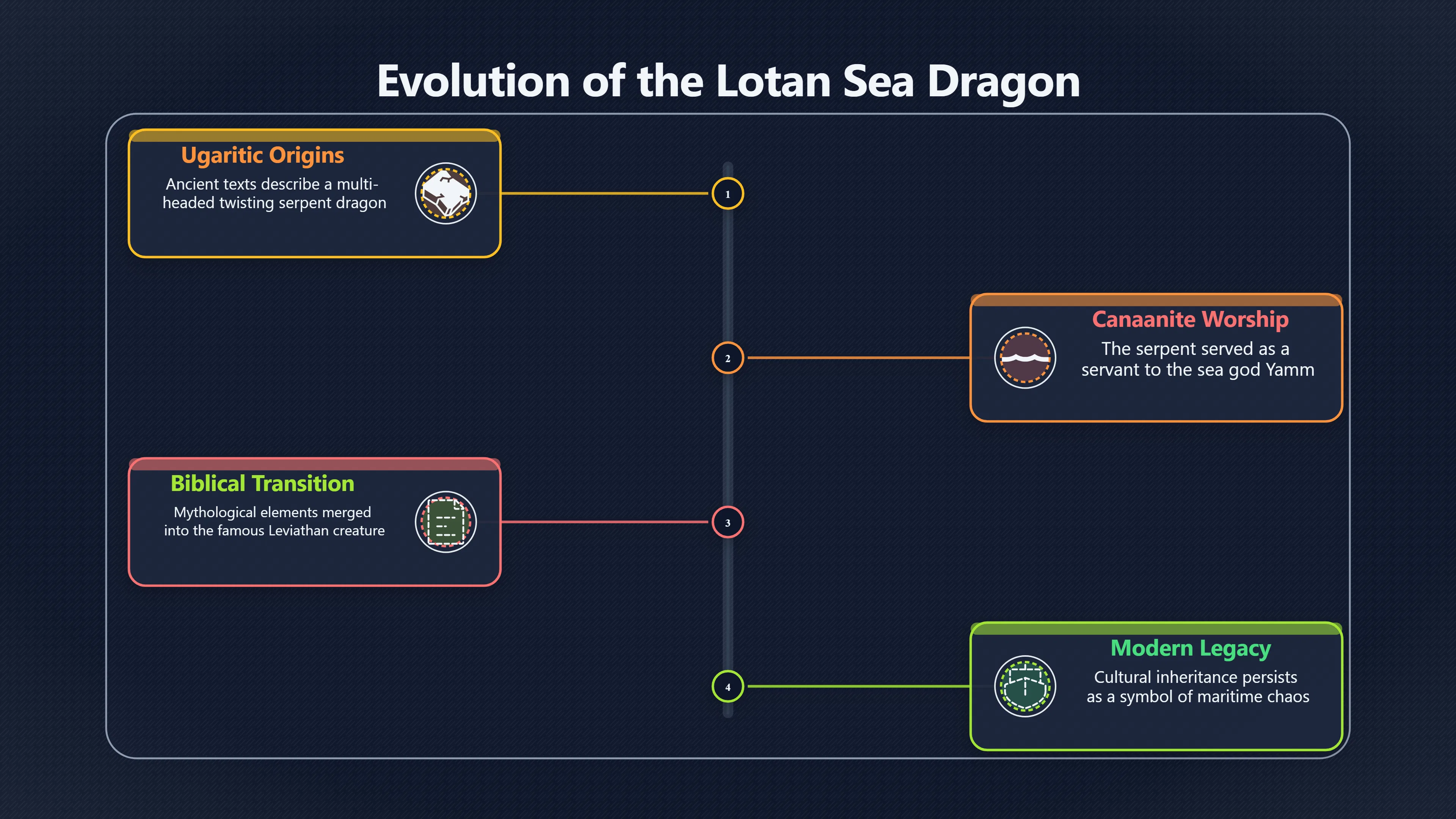
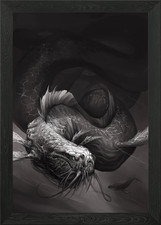
Long before Lebanon existed as a modern state, the coast of the Levant was home to the Canaanite and Ugaritic cultures. Their myths, preserved in texts discovered at ancient Ugarit on the Syrian coast, describe a struggle between order and chaos in which the sea itself becomes a monstrous force. The sea god Yamm was associated with destructive waters, while his ally or servant Lotan appeared as a gigantic twisting serpent or sea dragon.[Wikipedia]WikipediaSeptember 21, 2025 — Lotan seems to have been prefigured by the serpent Têmtum represented in Syrian seals of the 18th–16th century BC, a…
These stories matter to Lebanese folklore because the ancient Canaanite world extended across much of the Levant, including the territory of modern Lebanon. Important Phoenician cities such as Sidon, Tyre and Byblos developed within the same broad cultural environment that produced these myths.[Live Science]livescience.comLive Science Who Were the Canaanites, the ancient Biblical peopleLive ScienceWho Were the Canaanites, the ancient Biblical people…September 8, 2016 — 23 May 2025 — The Canaanites were made up of diff…
In surviving texts, Lotan is described as a powerful multi-headed serpent defeated by a storm god. The story is not a monster hunt in the modern sense. Instead, it is a mythological explanation for why order triumphs over the dangerous, unpredictable sea. Yet the image of a giant sea serpent proved remarkably durable and would echo through later religious traditions.[Wikipedia]WikipediaSeptember 21, 2025 — Lotan seems to have been prefigured by the serpent Têmtum represented in Syrian seals of the 18th–16th century BC, a…
For readers interested in monster traditions, Lotan is significant because he represents one of the oldest sea-serpent figures connected to the Lebanese coast. He belongs to the same family of legendary creatures that produced dragons, sea monsters and world-serpents across many cultures.[Wikipedia]WikipediaOpen source on wikipedia.org.
How Lotan Became Leviathan
The ancient sea dragon did not disappear when Canaanite religion faded. Scholars have long noted that the biblical Leviathan appears to preserve elements of the older Lotan tradition. Both are enormous serpent-like monsters associated with the sea, chaos and divine combat.[Wikipedia]WikipediaSeptember 21, 2025 — Lotan seems to have been prefigured by the serpent Têmtum represented in Syrian seals of the 18th–16th century BC, a…
Biblical texts portray Leviathan as a creature so formidable that only God can defeat it. The monster became one of the most famous sea beasts in world mythology, but its roots can be traced back to older Levantine traditions. Some researchers even argue that certain biblical descriptions closely reflect earlier Ugaritic language about the twisting serpent.[Wikipedia]WikipediaSeptember 21, 2025 — Lotan seems to have been prefigured by the serpent Têmtum represented in Syrian seals of the 18th–16th century BC, a…
This continuity helps explain why sea-monster imagery remained familiar around the eastern Mediterranean for thousands of years. Although modern Lebanon has no famous “sea serpent sightings” comparable to Scotland’s Loch Ness Monster, its cultural inheritance includes some of the ancient world’s most influential sea-dragon myths.[Wikipedia]WikipediaSeptember 21, 2025 — Lotan seems to have been prefigured by the serpent Têmtum represented in Syrian seals of the 18th–16th century BC, a…
Why Sea Monsters Flourished on the Levantine Coast
The eastern Mediterranean was both a source of wealth and a source of danger. Ancient coastal communities depended on maritime trade, yet storms, shipwrecks and unexplored waters made the sea seem unpredictable and threatening.
In that environment, sea-serpent stories carried symbolic power. They transformed natural hazards into memorable creatures. Rather than describing an undiscovered animal, the monster embodied the fear of forces that humans could not control. The dragon of the deep became a way of talking about chaos itself.[Wikipedia]WikipediaOpen source on wikipedia.org.
This is one reason the sea-dragon tradition differs from modern cryptid reports. There is no body of eyewitness testimony claiming encounters with Lotan. The creature survives because of its mythological importance, not because people expected to find one swimming offshore.[Wikipedia]WikipediaSeptember 21, 2025 — Lotan seems to have been prefigured by the serpent Têmtum represented in Syrian seals of the 18th–16th century BC, a…
Abu Kees and the Household Bogeyman
At the opposite end of the folklore spectrum stands Abu Kees, one of the best-known bogeyman figures in Lebanese family tradition. Unlike the cosmic sea serpent, Abu Kees belongs to the world of bedtime warnings and childhood fears.
The character is usually imagined as a man carrying a large sack. Parents and grandparents traditionally warned that misbehaving children might be carried away inside the bag. The story places Abu Kees within a much wider international family of “sack man” legends found across Europe, Asia, North Africa and Latin America.[Wikipedia]WikipediaSack ManSack Man
Lebanese accounts vary. In some versions Abu Kees is simply a child-stealer. In others he resembles a wandering thief who roams villages at night carrying an enormous sack and taking whatever he finds. Over time, the figure became a convenient way to discourage children from wandering off, staying out late or ignoring their parents.[Language Wave]languagewave.comLanguage Wave Episode 18He used to steal chicken…Read more…
Unlike many monsters, Abu Kees was not tied to a specific cave, mountain or stretch of coastline. He could appear anywhere. His power came from uncertainty: children never knew when the mysterious sack man might arrive.[Language Wave]languagewave.comLanguage Wave Episode 18He used to steal chicken…Read more…
A Monster Designed to Teach Behaviour
Bogeyman figures often reveal more about society than about monsters. Folklorists generally view them as social tools that encourage obedience, caution and respect for parental authority. Abu Kees fits this pattern closely.[Wikipedia]WikipediaOpen source on wikipedia.org.
The story also reflects practical concerns. In traditional communities, children wandering alone after dark could face genuine dangers from roads, animals, wells, cliffs or strangers. A frightening tale was often more memorable than a simple warning. Abu Kees therefore functioned as a piece of informal safety education wrapped in monster folklore.[Language Wave]languagewave.comLanguage Wave Episode 18He used to steal chicken…Read more…
What makes Abu Kees distinctive in the Lebanese context is his longevity. Even as urbanisation changed daily life, the name remained recognisable enough to appear in modern discussions of folklore and popular culture. References to Abu Kees still surface in conversations about childhood memories and traditional stories.[Reddit]reddit.comLebanese mythology?: r/lebanonI was wondering if there’s a Lebanese (or the region) mythology, like have you ever heard of a mythi…
From Cosmic Dragons to Childhood Fears
The contrast between Lotan and Abu Kees reveals the breadth of Lebanese monster folklore. One emerged from ancient religious mythology and explained the struggle between order and chaos in the universe. The other belonged to ordinary households and helped adults manage everyday behaviour.
Neither creature is a cryptid in the modern sense of an allegedly undiscovered animal. Yet both have influenced how monsters are imagined in Lebanon. The sea dragon represents the ancient Levant’s fascination with the dangerous sea, while the sack man reflects the practical realities of family life and childhood discipline. Together they show that Lebanese monster traditions live not only in reports of mysterious animals but also in myths, symbols and stories passed from one generation to the next.[wikipedia.org]WikipediaSeptember 21, 2025 — Lotan seems to have been prefigured by the serpent Têmtum represented in Syrian seals of the 18th–16th century BC, a…
Amazon book picks
Further Reading
Books and field guides related to From Sea Dragons to the Sack Man. Use these as the next step if you want deeper reading beyond the article.

The Uses of Enchantment
Useful for understanding bogeyman figures such as the sack man.
Myths from Mesopotamia
Includes ancient Near Eastern chaos-monster traditions tied to Lotan and related figures.
eBay marketplace picks
Marketplace Samples
Live-tested eBay searches with available results related to this page.

Endnotes
1.
Source: Wikipedia
Link:https://en.wikipedia.org/wiki/Lotan
Source snippet
September 21, 2025 — Lotan seems to have been prefigured by the serpent Têmtum represented in Syrian seals of the 18th–16th century BC, a...
Published: September 21, 2025
2.
Source: Wikipedia
Link:https://en.wikipedia.org/wiki/Leviathan
Source snippet
LeviathanLeviathan in the Book of Job is a reflection of the older Canaanite Lotan, a primeval monster defeated by the god Baal Hadad...
3.
Source: Wikipedia
Link:https://en.wikipedia.org/wiki/Dragon
4.
Source: Wikipedia
Title: Sea serpent
Link:https://en.wikipedia.org/wiki/Sea_serpent
5.
Source: Wikipedia
Title: Sack Man
Link:https://en.wikipedia.org/wiki/Sack_Man
6.
Source: Wikipedia
Link:https://en.wikipedia.org/wiki/Bogeyman
7.
Source: icon.ink
Title: Mythical Legends of the Arab World
Link:https://icon.ink/articles/mythical-creatures/
Source snippet
Mythical Legends of the Arab World - ICONThe Sack Man or Abu Kees (Lebanon, Algeria, Tunisia)... The Sack Man is a bogeyman figure t...
8.
Source: reddit.com
Link:https://www.reddit.com/r/lebanon/comments/q007ti/lebanese_mythology/
Source snippet
Lebanese mythology?: r/lebanonI was wondering if there’s a Lebanese (or the region) mythology, like have you ever heard of a mythi...
9.
Source: Wikipedia
Title: Canaanite religion
Link:https://en.wikipedia.org/wiki/Canaanite_religion
Source snippet
Canaanite religionCanaanite religious practices included animal sacrifice, veneration of the dead, and the worship of deities through...
10.
Source: Wikipedia
Link:https://en.wikipedia.org/wiki/Canaan
Source snippet
CanaanThe demonym "Canaanites" serves as an ethnic catch-all term covering various indigenous populations—both settled and nomadic-pas...
11.
Source: reddit.com
Title: Whatever happened to the Canaanites?
Link:https://www.reddit.com/r/DebateReligion/comments/5glekl/whatever_happened_to_the_canaanites/
Source snippet
r/DebateReligionMoses and the Israelites thereupon invaded slaughtered every last Canaanite man,woman, and child in what was perhaps the...
12.
Source: reddit.com
Title: The Leviathan is just a mythological sea monster
Link:https://www.reddit.com/r/exjw/comments/1es9cfd/the_leviathan_is_just_a_mythological_sea_monster/
Source snippet
r/exjwDescription: Lotan is a seven-headed sea serpent or dragon, often associated with chaos. Role: Lotan is seen as a servant of Yam. I...
13.
Source: languagewave.com
Title: Language Wave Episode 18
Link:https://languagewave.com/2020/03/26/episode-18-folktales-from-once-upon-a-time/
Source snippet
He used to steal chicken...Read more...
14.
Source: livescience.com
Title: Live Science Who Were the Canaanites, the ancient Biblical people
Link:https://www.livescience.com/56016-canaanites.html
Source snippet
Live ScienceWho Were the Canaanites, the ancient Biblical people...September 8, 2016 — 23 May 2025 — The Canaanites were made up of diff...
Published: September 8, 2016
15.
Source: kids.kiddle.co
Title: Sack Man
Link:https://kids.kiddle.co/Sack_Man
Source snippet
Man Facts for Kids17 Oct 2025 — He is like a bogeyman, often shown as a man with a big sack on his back. People say he carries away child...
16.
Source: ebsco.com
Link:https://www.ebsco.com/research-starters/religion-and-philosophy/canaanites
Source snippet
Canaanites | Religion and Philosophy | Research StartersThe Canaanites were the ancient inhabitants of the region known as Canaan, locate...
17.
Source: bereanunderground.org
Link:https://www.bereanunderground.org/p/leviathan
Source snippet
When we hear the name Leviathan, most of us picture a sea monster, something like a dragon or giant serpent.Read more...
Additional References
18.
Source: evidenceforchristianity.org
Link:https://evidenceforchristianity.org/did-the-writer-of-job-and-did-isaiah-borrow-the-myth-of-leviathan-from-the-sumerians-and-babylonians/
Source snippet
sea serpent like monster.... Leviathan in the Book of Job is a reflection of the older Canaanite Lotan, a primeval monster defeated by t...
19.
Source: casesblog.blogspot.com
Link:https://casesblog.blogspot.com/2016/04/human-psychology-why-do-we-have.html
Source snippet
Human psychology: Why do we have equivalents of...Lebanon - Children are told stories about Abu l Kees, meaning Father Sack (similar to...
20.
Source: bartehrman.com
Title: Who Were the Canaanites in the Bible?
Link:https://www.bartehrman.com/who-were-the-canaanites/
Source snippet
(And Where Are...6 May 2024 — The Hebrew Bible portrays the Canaanites as the original inhabitants of the Promised Land - a land promise...
Published: May 2024
21.
Source: facebook.com
Link:https://www.facebook.com/groups/levantinearabiclingualism/posts/349245006265764/
Source snippet
g, "Abu i Kees" (ابو كيس), literally "The Man...
22.
Source: youtube.com
Title: Who is Baal
Link:https://www.youtube.com/watch?v=S8Q9uyFASF0
Source snippet
Baal | The Storm God Who Challenged Yahweh, Sea & Death | Ugaritic Myth Exposed...
23.
Source: youtube.com
Title: The Leviathan – Ancient Sea Monster Myth Explained | Mythorex
Link:https://www.youtube.com/watch?v=hgVJkxGQjIM
Source snippet
Canaanite mythology Lotan Yamm Baal - The Forgotten God of Canaanite Mythology See U in History / Mythology...
24.
Source: filmfreeway.com
Title: Abu Kees Bas Bala Kees
Link:https://filmfreeway.com/AbuKeesBasBalaKees
Source snippet
11 Jun 2025 — "Abu Kees Bala Kees" is a light-hearted and humorous take on the traditional Lebanese urban legend of...
25.
Source: youtube.com
Title: Baal | The Storm God Who Challenged Yahweh, Sea & Death | Ugaritic Myth Exposed
Link:https://www.youtube.com/watch?v=E9RJhko23Zk
Source snippet
Yamm, The Serpent of the Seas Canaanite Sea God...
26.
Source: youtube.com
Title: The Phoenicians Explained: Sea Monsters & Ba’al Hadad
Link:https://www.youtube.com/watch?v=eJyzVKsh_qw
Source snippet
Who is Baal - How a Storm Deity Fought Sea, Death and Yahweh only to become a Demon...
27.
Source: smarthistory.org
Link:https://smarthistory.org/canaanites-an-introduction/
Source snippet
introductionThe Canaanites were the Indigenous people of the ancient Levant (modern Israel, Palestine, Transjordan, Lebanon and coastal S...
Topic Tree