Cryptids of Eritrea's Edge
Eritrea is not a country with a long list of internationally famous cryptids.
Page outline Jump by section
The “water calf” of the Mareb: Eritrea’s closest thing to a classic cryptid
The strongest Eritrea-linked cryptid candidate is the auli, also recorded under names such as “ia-bahr-tedcha” or “water calf”. It appears in cryptozoological catalogues as a sirenian-like animal reported from Ethiopian and Eritrean waters, especially Lake Tana and the Mareb river system. The Eritrean link matters because the Mareb, a seasonal river running along parts of the Eritrea–Ethiopia border region, places the story not in the Red Sea but inland, where a manatee-like animal would be biologically surprising.[Cryptid Archives]cryptidarchives.fandom.comCryptid Archives AuliCryptid Archives Auli
The trail leads back to the German explorer and naturalist Theodor von Heuglin, whose 1868 travel account of north-eastern Africa was later cited for reports of a manatee-like creature in Lake Tana and of a large aquatic animal in tributaries of the Mareb. Heuglin was a serious nineteenth-century observer of birds and mammals, but the auli report was not a specimen, photograph, or direct zoological description; it was a reported animal name and comparison. That distinction is crucial. It makes the auli a historical claim worth recording, not a confirmed Eritrean animal.[HathiTrust Digital Library]catalog.hathitrust.orgOpen source on hathitrust.org.
Why did later cryptozoologists find it interesting? Because Africa does have real sirenians. The West African manatee lives in rivers and coastal waters far to the west, while the dugong lives in marine habitats including the Red Sea. The problem is geography and habitat. A dugong is a marine animal and would not explain a freshwater animal in the Mareb. A West African manatee would require a difficult biogeographical leap into the Nile or Horn of Africa drainage. That is why the auli has sometimes been treated as a possible unknown freshwater sirenian, while sceptics see it as a traveller’s report built from local rumour, translation uncertainty, or confusion with other large aquatic animals.[Cryptid Archives]cryptidarchives.fandom.comCryptid Archives AuliCryptid Archives Auli
For readers, the useful takeaway is simple: Eritrea’s auli is not a modern lake-monster flap with repeated sightings, but a small historical knot in the wider “unknown African water animal” tradition. It survives because it sits at a tempting crossroads: a named local report, a respected explorer, a river system on Eritrea’s edge, and a creature type that exists elsewhere in Africa but not, as far as mainstream zoology shows, in Eritrea’s inland waters.
Werehyenas, night roads, and the animal that folklore already knew
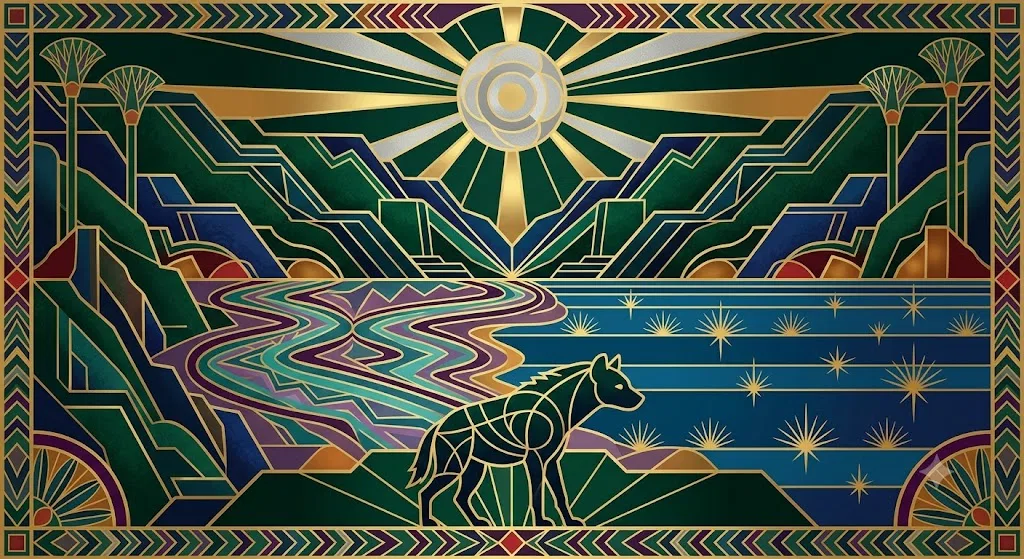
If the auli is Eritrea’s most cryptid-like mystery animal, the hyena is its most folklore-rich monster animal. Across the Horn of Africa, hyenas are not merely scavengers in stories. They can become graveyard animals, tricksters, mounts of evil forces, or shapeshifting beings associated with fear at night. A Ministry of Information article on Eritrean bedtime fears describes a tradition in which the hyena is linked with the devil and can turn into a human being for an urgent mission, hiding behind trees to ambush night travellers.[Eritrea Ministry Of Information]shabait.comOpen source on shabait.com.
This does not mean Eritreans believe in one single, standardised “werehyena” legend. It is better understood as a family of motifs. In Ethiopian and Eritrean folklore, the term buda is widely associated with the evil eye and, in many accounts, with the power to become or act through a hyena. Academic and ethnographic discussions of the wider Horn tradition connect these beliefs to social suspicion, craft specialists, marginalised groups, and anxieties about hidden harm. Hagar Salamon’s study of Ethiopian Jewish communities, for example, examines the “hyena people” stereotype as a social accusation rather than a zoological claim.[Wikipedia]WikipediaBuda (folkloreBuda (folklore
That social dimension is important. A werehyena story can sound like a monster tale, but it often works more like a warning about night travel, envy, social boundaries, ritual danger, or mistrust of outsiders. In that sense it belongs beside global shapeshifter traditions, yet it is rooted in a real local animal. Hyenas are nocturnal, vocal, bold around settlements, and capable of scavenging in places people associate with death and impurity. Those behaviours give the folklore a strong natural anchor even when the supernatural claims are not zoological evidence.
Eritrean animal storytelling also uses the hyena as a symbol of greed, appetite, and danger. Local cultural writing compares gluttony to a hyena, while Eritrean and wider Horn folktales often pair the hyena with cleverer or weaker animals such as the hare. These stories are not “cryptid sightings”, but they explain why a real animal could so easily become monstrous in the imagination: it already carried meanings of hunger, darkness, and moral disorder.[Eritrea Ministry Of Information]shabait.comOpen source on shabait.com.
The Red Sea problem: sea monsters in a place full of real strange animals
Eritrea’s long Red Sea coast and the Dahlak Archipelago create obvious room for sea-serpent and mermaid-style speculation, but the evidence for named Eritrean sea monsters is weak. What is strong is the marine setting. Eritrea has a mainland Red Sea coast of roughly 1,200 km and many islands, including the Dahlak Archipelago; its marine habitats include coral reefs, mangroves and seagrass beds, the very environments where unfamiliar animals can produce memorable but confusing encounters.[FAOHome]fao.orgHome FOSA Country ReportHome FOSA Country Report
The dugong is the key animal here. Eritrean sources describe dugongs in the Red Sea, especially around the Dahlak islands and northern coastal sites, while conservation sources list Eritrea among Red Sea dugong range states. Dugongs are large, grey, air-breathing marine mammals with rounded bodies and paddle-like forelimbs. Seen briefly from a boat, in poor light, or through choppy water, they are exactly the kind of animal that can become a “sea cow”, mermaid, or unknown beast in oral retelling.[Eritrea Ministry Of Information]shabait.comEritrea Ministry Of Information Eritrea's Marine BiodiversityEritrea Ministry Of Information Eritrea's Marine Biodiversity
This is not an argument that every sea-monster story is “just a dugong”. Rather, it shows why Eritrea’s coast is better read through real marine zoology before cryptid speculation. The Eritrean Red Sea is reported to hold hundreds of fish species, marine turtles, cetaceans and dugongs, and the Dahlak area is promoted for reefs, diving, dolphins, turtles and other marine life. A visitor primed for monsters does not need to invent much: the environment already contains large, rare, surfacing, partially glimpsed animals.[cbd.int]cbd.intOpen source on cbd.int.
Sea snakes add another layer. Eritrea has a high diversity of snakes on land, and the Red Sea region includes marine reptiles that can alarm observers unfamiliar with them. Eritrean reporting has noted 36 recorded snake species in the country, six dangerous to humans; that does not prove sea-serpent legends, but it helps explain why snake imagery remains plausible in local fear and misidentification.[Eritrea Ministry Of Information]shabait.comEritrea Ministry Of Information What do we know about Snakes in Eritrea?Eritrea Ministry Of Information What do we know about Snakes in Eritrea?
Phantom cats, lions, and the risk of mistaking rarity for mystery
Some countries develop “phantom cat” legends when people report large cats outside their accepted range. Eritrea is different: the country has, or has historically had, real large carnivores, so a fleeting big-cat report is not automatically anomalous. Wildlife lists and conservation summaries for Eritrea include carnivores such as leopards, caracals, servals, wildcats, hyenas and, in some accounts, lions or remnant lion records.[Wikipedia]WikipediaList of mammals of EritreaList of mammals of Eritrea
This matters for cryptid interpretation. A shadowy animal seen at dusk near escarpment, scrubland, farmland, or a rubbish edge might become a monster in retelling, but the first explanation should usually be a known carnivore. Leopards are elusive, mostly nocturnal, and visually dramatic; hyenas can sound uncannily human; jackals and wildcats can be misjudged at distance. Even baboons, common on the Asmara–Massawa route according to Eritrean biodiversity writing, can startle travellers when seen in large roadside groups.[Eritrea Ministry Of Information]shabait.comthe land of punt untangled from deciphering ancient dnathe land of punt untangled from deciphering ancient dna
That does not make such stories worthless. Local “monster” talk can preserve ecological memory: where predators used to be common, where people feared walking at night, where livestock was vulnerable, or where a rare animal was last noticed. The line between folklore and wildlife reporting is often porous. The important question is not “Is the monster real?” but “What real animal, landscape, or social fear gave the story its shape?”
Why Eritrea has few famous cryptids
The lack of globally famous Eritrean cryptids is itself worth explaining. Eritrea’s modern public record is not rich in the sort of newspaper monster flaps that made lake monsters, phantom cats, and ape-men famous elsewhere. The country’s creature traditions are more likely to appear as oral folklore, family warnings, local-language storytelling, scattered travel writing, biodiversity notes, or diaspora memory than as repeated tabloid-style sighting waves.
A small Reddit discussion among Eritreans, while not a scholarly source, illustrates the problem of documentation. Users named childhood fear figures and folklore terms such as Hongogo, Hidertna, Cheraq, Setan, Buda and Aba Hanjuro, but the thread also shows how fragmentary these memories can be: some names are glossed only as a “boogeyman”, fairy, insult, or child-disciplining figure. This is useful as a signpost to living folklore, but not enough to build a firm cryptid entry without stronger oral-history or ethnographic support.[Reddit]reddit.comOpen source on reddit.com.
There are also language and publication barriers. Eritrea’s major oral traditions cross Tigrinya, Tigre, Afar, Saho, Arabic and other cultural contexts, and many creature stories may not be indexed online in English. A monster that is vivid in family storytelling may leave little searchable trace. Conversely, an English cryptozoology page may overstate Eritrean relevance by attaching the country to a wider Ethiopian, Red Sea, or Horn of Africa tradition.
Best explanations: folklore, misidentification, and thin records
The fairest assessment is that Eritrea’s mystery-creature material falls into three main buckets.
First, historical cryptozoology. The auli belongs here. It has a named nineteenth-century trail and a specific Eritrea-adjacent location in the Mareb system, but no specimen or modern confirmation. It is interesting because it raises a real biogeographical puzzle; it is weak because the original evidence is hearsay and later discussion depends heavily on secondary cryptozoological interpretation.[Cryptid Archives]cryptidarchives.fandom.comCryptid Archives AuliCryptid Archives Auli
Second, folklore built around real animals. Werehyena and buda traditions are not reports of an undiscovered species. They are supernatural and social stories attached to hyenas, night travel, evil-eye fears, and suspicion of hidden harm. Their value lies in cultural interpretation, not zoological proof.[Wikipedia]WikipediaBuda (folkloreBuda (folklore
Third, misidentified wildlife. Dugongs, dolphins, turtles, sharks, large fish, sea snakes, hyenas, leopards, baboons and jackals can all produce brief, startling encounters. Eritrea’s ecology makes such confusion plausible: arid lowlands, highlands, escarpments, mangroves, coral reefs and islands all place people near animals that may be rare, nocturnal, fast-moving, or only partly seen.[Interactive Country Fiches]dicf.unepgrid.chOpen source on unepgrid.ch.
What would make an Eritrean cryptid claim stronger?
A strong Eritrean cryptid case would need more than a repeated name. The useful evidence would be specific: a dated sighting, a clear location, multiple independent witnesses, local-language terms explained by speakers, photographs or tracks that can be checked, and comparison with known Eritrean wildlife. For the auli, the most valuable material would be historical text close to Heuglin’s original wording, plus any independent Mareb-area oral testimony about large aquatic animals. For werehyena traditions, the strongest work would be careful folklore documentation that separates supernatural belief, social stigma, animal behaviour and modern retelling.
Until then, Eritrea is best presented as a country of quiet cryptid traces rather than monster celebrities. Its creature lore is strongest where the landscape is strongest: the Mareb and borderland waterways, the night territories of hyenas and leopards, and the Red Sea’s reefs, islands and seagrass beds. The mystery is not that Eritrea hides a famous monster waiting to be “proved”. It is that real animals, old travel accounts and living folklore keep producing stories that are stranger than a simple wildlife checklist, but thinner than confirmed zoology.
Amazon book picks
Further Reading
Books and field guides related to What Monsters Haunt Eritrea's Edge?. Use these as the next step if you want deeper reading beyond the article.
Cryptozoology A To Z
Relevant to Eritrea's sparse but notable mystery-animal traditions.
The World of Lore: Monstrous Creatures
Connects folklore, monsters, and misunderstood animals.
eBay marketplace picks
Marketplace Samples
Live-tested eBay searches with available results related to this page.


Endnotes
1.
Source: catalog.hathitrust.org
Link:https://catalog.hathitrust.org/Record/007709179
2.
Source: Wikipedia
Title: Theodor von Heuglin
Link:https://en.wikipedia.org/wiki/Theodor_von_Heuglin
3.
Source: Wikipedia
Title: Buda (folklore)
Link:https://en.wikipedia.org/wiki/Buda_%28folklore%29
4.
Source: folktales.africa
Title: The Clever Hare and the Greedy Hyena
Link:https://folktales.africa/the-clever-hare-and-the-greedy-hyena-2/
5.
Source: ecss-online.com
Title: fisheries in eritrea
Link:https://www.ecss-online.com/fisheries-in-eritrea/
6.
Source: Wikipedia
Title: List of mammals of Eritrea
Link:https://en.wikipedia.org/wiki/List_of_mammals_of_Eritrea
7.
Source: reddit.com
Link:https://www.reddit.com/r/Eritrea/comments/1e2y046/what_are_the_folklore_creatures_of_eritrea/
8.
Source: reddit.com
Link:https://www.reddit.com/r/Eritrea/comments/1d5l16k/what_is_the_story_of_hongogo/
9.
Source: Wikipedia
Link:https://en.wikipedia.org/wiki/Catoblepas
10.
Source: Wikipedia
Title: Category:West African legendary creatures
Link:https://en.wikipedia.org/wiki/Category%3AWest_African_legendary_creatures
11.
Source: Wikipedia
Title: Superstition in Ethiopia
Link:https://en.wikipedia.org/wiki/Superstition_in_Ethiopia
12.
Source: Wikipedia
Title: Dahlak Marine National Park
Link:https://en.wikipedia.org/wiki/Dahlak_Marine_National_Park
13.
Source: Wikipedia
Title: Spotted hyena
Link:https://en.wikipedia.org/wiki/Spotted_hyena
14.
Source: folktales.africa
Link:https://folktales.africa/category/african-folktales/east-african-folktales/eritrean-folktales/
15.
Source: dahlak.eu
Title: Tourism and safeguard
Link:https://www.dahlak.eu/tourism_safeguard.html
16.
Source: cryptidarchives.fandom.com
Title: Cryptid Archives Auli
Link:https://cryptidarchives.fandom.com/wiki/Auli
17.
Source: shabait.com
Link:https://shabait.com/2019/11/02/hyenas-wrestling-demons-serpent-kings-and-scream-ing-corpses-all-in-a-nights-bed-time-story/
18.
Source: shabait.com
Link:https://shabait.com/2018/10/24/food-and-culture/
19.
Source: fao.org
Title: Home FOSA Country Report
Link:https://www.fao.org/4/x6782e/X6782E01.htm
20.
Source: dicf.unepgrid.ch
Link:https://dicf.unepgrid.ch/eritrea
21.
Source: shabait.com
Title: Eritrea Ministry Of Information Eritrea’s Marine Biodiversity
Link:https://shabait.com/2019/04/13/eritreas-marine-biodiversity/
22.
Source: cbd.int
Link:https://www.cbd.int/doc/world/er/er-nbsap-01-p2-en.pdf
23.
Source: adulistravel.com
Title: the dahlak archipelago
Link:https://www.adulistravel.com/the-dahlak-archipelago/
24.
Source: shabait.com
Title: Eritrea Ministry Of Information What do we know about Snakes in Eritrea?
Link:https://shabait.com/2022/06/04/what-do-we-know-about-snakes-in-eritrea/
25.
Source: dicf.unepgrid.ch
Link:https://dicf.unepgrid.ch/eritrea/biodiversity
26.
Source: shabait.com
Title: the land of punt untangled from deciphering ancient dna
Link:https://shabait.com/2024/04/13/the-land-of-punt-untangled-from-deciphering-ancient-dna/
27.
Source: abookofcreatures.com
Link:https://abookofcreatures.com/category/ethiopia/
28.
Source: agris.fao.org
Link:https://agris.fao.org/search/en/providers/124740/records/67053f82b1dfe472e146832f
29.
Source: openknowledge.fao.org
Link:https://openknowledge.fao.org/server/api/core/bitstreams/38eef7f8-c372-4b4b-a8f4-953b05654f73/content
30.
Source: fao.org
Title: Country Profile
Link:https://www.fao.org/aquastat/en/countries-and-basins/country-profiles/country/ERI/
31.
Source: faolex.fao.org
Link:https://faolex.fao.org/docs/pdf/eri222520.pdf
32.
Source: fao.org
Link:https://www.fao.org/4/a0477e/a0477e0j.htm
33.
Source: academia.edu
Title: Evil Eye
Link:https://www.academia.edu/128059663/Evil_Eye
34.
Source: facebook.com
Link:https://www.facebook.com/groups/395051826831248/posts/693833506953077/
35.
Source: cryptidarchives.fandom.com
Link:https://cryptidarchives.fandom.com/wiki/Category%3AEthiopia
36.
Source: cryptidarchives.fandom.com
Title: List of sea serpent sightings in the Indian Ocean (1914–1945)
Link:https://cryptidarchives.fandom.com/wiki/List_of_sea_serpent_sightings_in_the_Indian_Ocean_%281914%E2%80%931945%29
37.
Source: mythus.fandom.com
Link:https://mythus.fandom.com/wiki/Werehyena
38.
Source: mythus.fandom.com
Link:https://mythus.fandom.com/wiki/Bouda
39.
Source: cryptidz.fandom.com
Title: Auli (Africa)
Link:https://cryptidz.fandom.com/wiki/Auli_%28Africa%29
40.
Source: cryptidarchives.fandom.com
Title: Lake Chad monster
Link:https://cryptidarchives.fandom.com/wiki/Lake_Chad_monster
41.
Source: cryptid-that-you-saw.fandom.com
Link:https://cryptid-that-you-saw.fandom.com/wiki/Auli
42.
Source: shabait.com
Link:https://shabait.com/2009/11/15/culture/
43.
Source: shabait.com
Title: our eating habits and social propriety
Link:https://shabait.com/2016/09/07/our-eating-habits-and-social-propriety/
44.
Source: shabait.com
Title: shim ymerh twaf yebrh 2
Link:https://shabait.com/2019/12/18/shim-ymerh-twaf-yebrh-2/
45.
Source: shabait.com
Title: men shimki whats your name
Link:https://shabait.com/2021/12/03/men-shimki-whats-your-name/
46.
Source: cbd.int
Link:https://www.cbd.int/doc/world/er/er-nbsap-01-p1-en.pdf
47.
Source: cbd.int
Title: CB D Strategy and Action Plan
Link:https://www.cbd.int/doc/world/er/er-nbsap-v2-en.pdf
48.
Source: chm.cbd.int
Link:https://chm.cbd.int/database/record?documentID=239169
49.
Source: cbd.int
Title: CB D Fifth National Report
Link:https://www.cbd.int/doc/world/er/er-nr-05-en.pdf
50.
Source: britannica11.org
Link:https://britannica11.org/article/09-0777-s6/eritrea
51.
Source: aprm.au.int
Link:https://aprm.au.int/en/member-states/eritrea
52.
Source: incubator.wikimedia.org
Link:https://incubator.wikimedia.org/wiki/Wp/abr/Buda
Additional References
53.
Source: youtube.com
Title: Exploring Eritrea’s Natural Wonders: Wildlife, National Parks, and Scenic Beauty
Link:https://www.youtube.com/watch?v=IHQ4Cvrlh4I
Source snippet
Werehyena: The Terrifying Shapeshifters of African Lore | Monstrum...
54.
Source: youtube.com
Title: Eritrea: Desert Treasures | Beast challenge Stories
Link:https://www.youtube.com/watch?v=-kFZV9tzGo8
Source snippet
Exploring Eritrea's Natural Wonders: Wildlife, National Parks, and Scenic Beauty...
55.
Source: youtube.com
Title: Werehyena: The Terrifying Shapeshifters of African Lore | Monstrum
Link:https://www.youtube.com/watch?v=Ba19Lemgu2U
Source snippet
Welcome To Eritrea, Africa's Hidden Gem ©...
56.
Source: researchgate.net
Link:https://www.researchgate.net/publication/329484520_Status_of_Red_Sea_Dugongs
57.
Source: dugongseagrass.org
Link:https://www.dugongseagrass.org/media/2023/01/IUCN_Dugong-dugong_regional-EastAfrica-May-01-2022.pdf
58.
Source: eritreaembassy-japan.org
Link:https://www.eritreaembassy-japan.org/Biodiversity_Fisheries_en.html
59.
Source: researchgate.net
Link:https://www.researchgate.net/publication/366685198_Spatially_explicit_population_estimates_of_African_leopards_and_spotted_hyenas_in_the_Queen_Elizabeth_Conservation_Area_of_southwestern_Uganda
60.
Source: abookofcreatures.com
Link:https://abookofcreatures.com/tag/african-folklore/
61.
Source: facebook.com
Link:https://www.facebook.com/groups/908491099860875/posts/1069791577064159/
62.
Source: researchgate.net
Link:https://www.researchgate.net/publication/333131606_Agro-ecological_and_Livelihoods_Profiles_of_the_Northern_and_Southern_Red_Sea_Administrative_Zones_of_Eritrea
Topic Tree
Follow this branch
Related pages 192
- Antigua Cryptids
- Maldives Monsters
- Malta Monsters
- Qatar Monsters
- Argentina Monsters
- +187 more in sidebar