Cryptid Reports from Norway's Deepest Waters
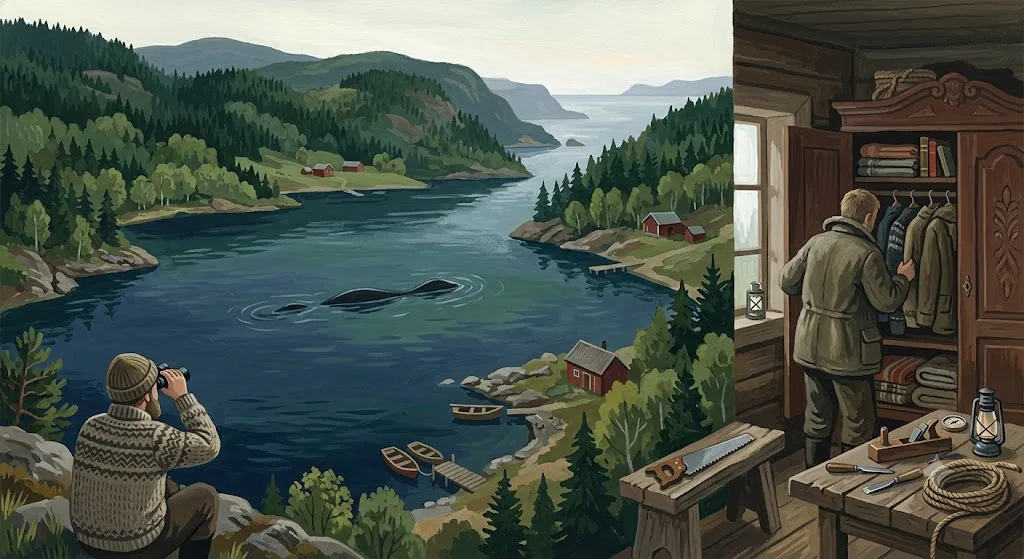
Norway’s mystery-animal tradition is dominated not by forest apes or phantom panthers, but by creatures seen in water. The country’s best-known monster is the Seljord serpent, a long, dark animal said to inhabit Lake Seljord in Telemark.
Page outline Jump by section
Introduction
None has been established as an unknown species. The evidence consists largely of inherited stories, distant sightings, ambiguous photographs and unsuccessful searches. Yet these legends matter because Norway helped shape the modern image of the northern sea monster. Its deep lakes, long fjords and exceptionally rich coastal waters provided convincing settings, while eighteenth-century writers treated testimony about monsters as evidence worth recording rather than mere fantasy. Today, the Seljord serpent survives as folklore, local identity and tourism attraction as much as an animal claim.
Why Norway became monster country
Norway offers unusually fertile scenery for aquatic legends. Its coastline is broken by fjords, islands and narrow sounds, while inland valleys contain long, deep lakes formed by glacial erosion. Lake Seljord itself is about 14 kilometres long, covers 16.7 square kilometres and reaches a measured depth of roughly 145 metres. Those dimensions do not prove that a large unidentified animal lives there, but they make the lake difficult to observe in full and give stories room to grow.[Store norske leksikon]snl.noStore norske leksikonSeljordsvatnet25 Nov 2024 — Seljordsvatnet er ein innsjø i Seljord kommune i Telemark. Innsjøen ligg 116 meter over…
The sea supplied even stronger material. Norwegian waters contain whales, large sharks, squid and dense schools of fish, all capable of producing startling sights when seen briefly or under poor conditions. The basking shark, for example, occurs in northern waters and can exceed 13 metres in length. Although harmless, its size, exposed fins and strangely decomposed carcass can suggest something far more reptilian.[Havforskningsinstituttet]hi.noHavforskningsinstituttetTopic: Basking sharkThe basking shark is a highly migratory shark species that lives in temperate waters in both…
Monster reports also emerged during a period when folklore and natural history overlapped. Sailors could accurately describe unfamiliar behaviour while interpreting it through inherited ideas about serpents and dragons. Scholars, meanwhile, had few reliable ways to verify an account from a distant fjord. A strange wake might therefore move from conversation to written testimony, then from testimony to illustration, acquiring greater certainty at each stage.
This helps explain a defining feature of Norwegian monster lore: the boundary between supernatural tradition and animal report is often blurred. A water spirit belongs to folklore; a witness describing a moving body in a lake is making an observational claim. Later retellings can merge the two, especially when both are associated with dangerous, deep or unusually still water.
The Seljord serpent
The Seljord serpent is Norway’s clearest example of a local creature legend becoming a national cryptid. The animal is usually imagined as a dark, elongated body moving at or just beneath the surface of Lake Seljord. Descriptions vary considerably, with some witnesses reporting humps or coils and others claiming a raised head, neck or serpentine wake. That variation is important: there is no stable anatomical description comparable to one produced from repeated close observation of a known species.
The commonly cited starting point is a written account dated to around 1750. In the traditional version, Gunleik Andersson Verpe was crossing the lake while moving goods when a large creature approached or disturbed one of his boats. The story survives in several retellings, not all of which agree on the details. Local tourism material presents it as the earliest written notice of a long, snake-like animal in the lake, while also acknowledging that much of the tradition was passed on orally and only partly recorded.[Visit Telemark]visittelemark.comVisit Telemark The Sea SerpentVisit TelemarkThe Sea Serpent - Lakes in Seljord…For 250 years, and most likely for a longer period of time, people have claimed to ha…
Later reports commonly place sightings during calm, warm weather, when an unexplained wake is especially conspicuous. A 1999 report in The Guardian, for example, quoted a local observer who described watching movement and repeated splashing on an otherwise quiet lake for about ten minutes. The account is vivid, but it does not establish what caused the disturbance. No specimen, diagnostic photograph or independently verified biological trace resulted from the incident.[The Guardian]theguardian.comThe GuardianSecret life of the Norwegian Nessie | World newsSeptember 1, 1999 — 31 Aug 1999 — It was a quiet day, with no wind, and then…
The legend received international attention around 2000, when a team led by Swedish monster hunter Jan Sundberg attempted to catch the supposed animal in a specially designed trap. Contemporary reporting described plans to take a DNA sample and release the creature if captured. The expedition generated publicity, but not the decisive biological evidence that would have transformed the story into a zoological discovery.[WIRED]wired.comNessie's Cousin?Nessie's Cousin?
That pattern has repeated across many lake-monster investigations: a photograph, sonar return or surface disturbance is treated as promising until closer scrutiny reveals that it cannot identify an animal. Sonar is particularly easy to overinterpret because it records reflected sound rather than a clear anatomical image. Fish shoals, submerged timber, bubbles, bottom features and equipment effects can all produce intriguing shapes.
What might witnesses be seeing?
No single explanation is likely to account for every Seljord report. The broad witness category may include several ordinary causes:
- Boat wakes and crossing waves: Waves can arrive after the vessel that created them has disappeared from view. Interacting wakes may resemble a line of moving humps.
- Floating timber: A long branch or partly submerged log can rise, roll and change direction as wind and currents act upon it.
- Groups of fish or birds: Several animals surfacing in sequence can create the impression of one long creature.
- Otters or swimming deer: A partly visible head followed by a wake may look much larger when distance is difficult to judge.
- Expectation: Once observers know that a serpent is associated with the lake, an ambiguous movement is more likely to be interpreted as the famous creature.
These explanations do not demonstrate that every witness was mistaken. They show why testimony alone is insufficient, particularly when descriptions conflict and no repeatable physical evidence accompanies them.
From local report to civic symbol
The Seljord serpent has become more culturally successful than it has been zoologically convincing. Seljord’s municipal coat of arms, adopted in 1989, depicts a golden sea serpent against a red field. The image formally links the creature to the place, turning an uncertain animal report into a recognised emblem of local identity.[Store norske leksikon]snl.noOpen source on snl.no.
The landscape has also been designed around the act of looking. The Sea Serpent Tower at Bjørgeøyane opened in 2011. Standing 17 metres high and containing three viewing platforms, it allows visitors to scan the lake while also functioning as an architectural attraction in its own right.[Visit Telemark]visittelemark.comVisit Telemark The Sea Serpent TowerVisit Telemark The Sea Serpent Tower
This is more than a commercial afterlife pasted onto an old story. Monster tourism changes the legend itself. Repeated images, viewing points, sculptures and souvenirs encourage a relatively consistent modern creature: a friendly, recognisable lake serpent often called Selma. Older accounts are less tidy. They describe disturbances, threatening encounters or vaguely serpentine forms rather than a single well-defined character.
The comparison with the Loch Ness Monster has also influenced how Seljord is presented. Calling the creature “Norway’s Nessie” immediately tells an international audience what kind of story to expect, but it can conceal the legend’s local development. Seljord’s creature belongs to a broader Norwegian tradition of dangerous or mysterious waters, not simply to a copy of a Scottish tourist formula.
Sea serpents and the kraken
Norway’s influence on monster history extends far beyond Lake Seljord. Early European maps and natural histories repeatedly placed gigantic serpents in northern seas. Olaus Magnus’s sixteenth-century works helped popularise the image of an immense Norwegian sea serpent, sometimes shown rising beside ships or coiling through rough water. Later authors copied and adapted these pictures, allowing the Norwegian serpent to circulate through European books long after the original reports had become impossible to check.[The Public Domain Review]publicdomainreview.orgolaus magnus sea serpentolaus magnus sea serpent
The most influential Norwegian monster source was Erik Pontoppidan, Bishop of Bergen. His Natural History of Norway, first published in Danish in 1752–53 and translated into English in 1755, attempted a broad survey of the country’s landscape, people, plants and animals. Its sections on marine monsters discussed sea serpents, mermaids and the kraken alongside recognised wildlife. Digital copies preserved by major libraries show how material now classed as folklore or cryptozoology once sat within a serious natural-history project.[archive.org]archive.orgnaturalhistory Nc2Pontnaturalhistory Nc2Pont
Pontoppidan did not merely invent a monster and present it as fact. He collected descriptions, evaluated testimony and tried to fit reports into the natural world as it was then understood. His method nevertheless had severe limitations: stories were often second-hand, animal identification was primitive, and spectacular claims could gain authority simply by appearing in print.
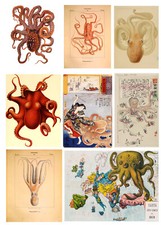
The kraken followed a similar path. Early descriptions associated it with Norway’s coast and imagined it as an animal so vast that sailors might mistake its back for an island. The name was recorded in a seventeenth-century Norwegian glossary before Pontoppidan gave the creature its most famous learned treatment. His version helped turn a regional maritime tradition into one of the world’s best-known sea monsters.[JCU Library News]jculibrarynews.blogspot.comJCU Library News Discovering the Yonge CollectionJCU Library News Discovering the Yonge Collection
Real cephalopods probably contributed to the legend, particularly giant squid washed ashore or encountered at sea. Yet the traditional kraken is not simply an oversized squid described accurately. It is a composite monster enlarged through storytelling, sailors’ fears and attempts to explain unfamiliar events such as sudden fish activity, dangerous currents and enormous shapes beneath the surface.
Sea-serpent traditions may likewise preserve distorted encounters with real animals. Oarfish are exceptionally long, ribbon-shaped deep-water fish and are frequently proposed as sources for serpentine reports. Basking sharks can appear unfamiliar at the surface, while their decomposing carcasses lose parts of the head and gill region, leaving a small skull attached to a long spine-like structure. Whales swimming in line, mating or raising fins and tails at different moments can also produce the illusion of one many-humped animal. Historical researchers have shown that at least some celebrated sea-monster reports are compatible with unusual whale behaviour or misidentified sharks.[publicdomainreview.org]publicdomainreview.orgolaus magnus sea serpentolaus magnus sea serpent
Folklore beneath the sightings
Not every Norwegian water creature should be treated as a proposed unknown animal. Traditional water spirits belong primarily to folklore, even when later writers place them beside lake monsters.
The best-known is the dangerous water being associated with lakes, rivers and pools. Stories describe a shape-shifter capable of appearing as a person, an animal or an enticing object. In some traditions it uses music or a horse-like form to lure people towards the water. Such tales served several purposes: they dramatised drowning hazards, warned children away from deep pools and gave personality to landscapes where calm surfaces could conceal cold water, strong currents or sudden depth.
This tradition helps explain why an ambiguous lake disturbance could feel meaningful before modern cryptozoology existed. Water was not culturally empty space waiting for an unidentified species. It was already populated by stories about deceptive appearances and hidden danger. A serpent report could therefore be remembered both as something physically seen and as confirmation that the lake possessed an uncanny character.
The distinction remains useful:
- Folklore preserves symbolic beings and inherited narratives.
- Eyewitness reports describe something a person believes they observed.
- Cryptozoological claims interpret those reports as possible evidence of an undiscovered animal.
- Tourism and popular culture simplify the material into a memorable local character.
- Scientific assessment asks whether the evidence identifies a biological species and rules out ordinary alternatives.
Confusion begins when evidence from one category is treated as proof in another. A centuries-old water-spirit tale may demonstrate that people feared a lake, but it does not provide a biological record. A sincere modern witness may have seen an unexplained object without having seen an unknown animal.
Other Norwegian mystery beasts
Compared with Britain, Australia or parts of North America, Norway has no equally prominent, well-documented tradition of roaming phantom big cats. Nor does it possess a nationally established ape-like cryptid comparable to Bigfoot. Individual online stories may describe oversized cats, unusual tracks or hairy figures, but they have not produced a coherent Norwegian case history supported by strong archival reporting, repeated geographical clusters or physical evidence.
Norway’s real large mammals already provide ample opportunities for brief misidentification. Brown bears, wolves, lynx, wolverines, elk and reindeer can look unfamiliar when partly hidden, seen at dusk or judged without a reliable sense of scale. The Eurasian lynx is particularly capable of inspiring exaggerated cat reports because it is large, secretive and rarely observed closely. An eyewitness calling an animal “panther-sized” is making a size estimate, not identifying a panther.
Winged-monster claims are similarly peripheral. Large eagles, cranes, owls and distant aircraft can generate striking but ambiguous impressions, yet Norway has not developed a sustained modern winged-creature tradition comparable to famous flaps elsewhere. Trolls, dragons and other beings remain central to Norwegian storytelling, art and tourism, but most are legendary or supernatural figures rather than animals alleged to survive undiscovered.
This imbalance is revealing. Norwegian monster culture grew most strongly where the environment naturally restricts observation: beneath dark lakes and cold coastal water. A large land animal would leave tracks, hair, droppings, kills and repeated camera records. An object glimpsed in deep water can vanish immediately and remain unresolved.
How strong is the case?
The Norwegian record contains sincere testimony, durable local traditions and historically important writings, but no compelling evidence for an undiscovered giant serpent, kraken-like animal or lake monster.
The Seljord case is the strongest in cultural terms because it has a named location, a claimed eighteenth-century starting point, recurring witnesses and repeated attempts at investigation. It remains weak as zoology because the descriptions are inconsistent and no body, tissue, environmental DNA result or unambiguous recording has established a large unknown resident species. The creature’s presence on a coat of arms proves its importance to Seljord, not its biological existence.
Historical sea-serpent accounts deserve neither automatic belief nor automatic ridicule. People sometimes encountered animals that science had not yet described, and sailors could observe genuine events under difficult conditions. Giant squid, for instance, were once known largely through remains and stories before their behaviour in the deep ocean could be recorded. That history shows why unusual testimony can be worth investigating. It does not mean every old monster report was a giant squid or another undiscovered species.
The most reasonable assessment is therefore layered. Some Norwegian monster stories are traditional warnings or supernatural tales. Some are media-shaped legends. Some probably began with known animals, waves, carcasses or floating debris seen under misleading conditions. A smaller residue cannot be reconstructed because the testimony is too limited. “Unexplained” in these cases means that the available information cannot settle what happened; it does not identify a new creature.

Why the legends endure
Norway’s monsters survive because they fit their environments exceptionally well. A dark shape in a deep lake is difficult to revisit. A serpentine wake lasts seconds. A huge marine animal may be glimpsed once before weather, distance and movement erase the scene. The uncertainty is genuine even when the monstrous interpretation is doubtful.
The stories also connect different periods of Norwegian culture. Water spirits express older fears about dangerous landscapes. Pontoppidan’s sea monsters capture an age when learned writers were trying to order a world still full of biological surprises. The Seljord serpent shows how a local account can become civic identity, architecture and tourism without losing its teasing claim to reality.
That combination makes Norway important to cryptid history. Its creatures are not confirmed hidden animals, but neither are they merely interchangeable fairy tales. They reveal how observation becomes testimony, testimony becomes print, print becomes local heritage, and local heritage teaches each new generation what it might see when the water begins to move.
Amazon book picks
Further Reading
Books and field guides related to What Lurks in Norway's Deepest Waters?. Use these as the next step if you want deeper reading beyond the article.
Field Guide to Lake Monsters, Sea Serpents, and Other Mystery...
Perfect fit for Norway's lake and sea monster traditions.
eBay marketplace picks
Marketplace Samples
Live-tested eBay searches with available results related to this page.
Endnotes
1.
Source: theguardian.com
Link:https://www.theguardian.com/world/1999/sep/01/4
Source snippet
The GuardianSecret life of the Norwegian Nessie | World newsSeptember 1, 1999 — 31 Aug 1999 — It was a quiet day, with no wind, and then...
Published: September 1, 1999
2.
Source: wired.com
Title: Nessie’s Cousin?
Link:https://www.wired.com/2000/08/nessies-cousin
3.
Source: archive.org
Title: naturalhistory Nc2Pont
Link:https://archive.org/details/naturalhistoryNc2Pont
4.
Source: news.st-andrews.ac.uk
Title: sea serpents sexy secret
Link:https://news.st-andrews.ac.uk/archive/sea-serpents-sexy-secret/
5.
Source: snl.no
Link:https://snl.no/Seljordsvatnet
Source snippet
Store norske leksikonSeljordsvatnet25 Nov 2024 — Seljordsvatnet er ein innsjø i Seljord kommune i Telemark. Innsjøen ligg 116 meter over...
6.
Source: hi.no
Link:https://www.hi.no/en/hi/temasider/species/basking-shark
Source snippet
HavforskningsinstituttetTopic: Basking sharkThe basking shark is a highly migratory shark species that lives in temperate waters in both...
7.
Source: blog.biodiversitylibrary.org
Link:https://blog.biodiversitylibrary.org/2014/10/the-quest-for-sea-serpent-oarfish-or
Source snippet
Biodiversity Heritage LibraryThe Quest for the Sea Serpent: An Oarfish or Something More?29 Oct 2014 — Later analysis of the skin and car...
8.
Source: visittelemark.com
Title: Visit Telemark The Sea Serpent
Link:https://www.visittelemark.com/seljord/things-to-do/the-sea-serpent-p3377193
Source snippet
Visit TelemarkThe Sea Serpent - Lakes in Seljord...For 250 years, and most likely for a longer period of time, people have claimed to ha...
9.
Source: visittelemark.com
Link:https://www.visittelemark.com/seljord
Source snippet
Visit TelemarkWelcome to Seljordsea serpant tower · The Sea Serpent Tower. The tale of the serpent in the seljord Lake have been told s...
10.
Source: visitnorway.com
Title: the sea serpent tower
Link:https://www.visitnorway.com/listings/the-sea-serpent-tower/22319/
Source snippet
Visit NorwayThe Sea Serpent TowerThe tale of the serpent in the seljord Lake have been told since 1750 and have been passed down in spo...
11.
Source: snl.no
Link:https://snl.no/Seljord
12.
Source: visittelemark.com
Title: Visit Telemark The Sea Serpent Tower
Link:https://www.visittelemark.com/seljord/things-to-do/the-sea-serpent-tower-p539803
13.
Source: visittelemark.com
Title: 10 unique experiences
Link:https://www.visittelemark.com/inspiration/10-unique-experiences
14.
Source: publicdomainreview.org
Title: olaus magnus sea serpent
Link:https://publicdomainreview.org/essay/olaus-magnus-sea-serpent
15.
Source: biodiversitylibrary.org
Link:https://www.biodiversitylibrary.org/item/131226
16.
Source: jculibrarynews.blogspot.com
Title: JCU Library News Discovering the Yonge Collection
Link:https://jculibrarynews.blogspot.com/2018/12/discovering-yonge-collection.html
17.
Source: Wikipedia
Link:https://en.wikipedia.org/wiki/Kraken
18.
Source: ethnobioconservation.com
Link:https://ethnobioconservation.com/ebc/article/view/301
19.
Source: facebook.com
Link:https://www.facebook.com/groups/3208900389223007/posts/7782438271869173/
20.
Source: snl.no
Link:https://snl.no/sj%C3%B8orm
21.
Source: visittelemark.com
Title: Digital prostigudsteneste
Link:https://www.visittelemark.com/seljord/whats-on/digital-prostigudsteneste-p5665163
22.
Source: visittelemark.com
Link:https://www.visittelemark.com/seljord/things-to-do/attractions
23.
Source: visittelemark.com
Title: “Refusert” av Tommy Sørbø
Link:https://www.visittelemark.com/seljord/whats-on/refusert-av-tommy-sorbo-p5921163
24.
Source: visittelemark.com
Title: Last Christmas
Link:https://www.visittelemark.com/seljord/whats-on/last-christmas-p5172063
25.
Source: visittelemark.com
Title: Seljord church
Link:https://www.visittelemark.com/seljord/things-to-do/seljord-church-p542003
26.
Source: visittelemark.com
Title: Telesenteret 35 år
Link:https://www.visittelemark.com/seljord/whats-on/telesenteret-35-ar-p5986173
27.
Source: blogs.lib.ku.edu
Title: sea serpent
Link:https://blogs.lib.ku.edu/spencer/tag/sea-serpent/
28.
Source: europeisnotdead.com
Link:https://europeisnotdead.com/norway-selma/
29.
Source: theguardian.com
Link:https://www.theguardian.com/environment/2026/may/07/basking-shark-sea-monster-canada-marine-mystery-90-years-on
30.
Source: cryptozoo-oscity.blogspot.com
Title: Selma,the Norwegian lake monster
Link:https://cryptozoo-oscity.blogspot.com/2009/05/selma-norwegian-lake-monster.html
31.
Source: en.visittelemark.info
Title: info The Sea Serpent Tower
Link:https://en.visittelemark.info/seljord/things-to-do/the-sea-serpent-tower-p539803
Additional References
32.
Source: youtube.com
Title: Release the Kraken! Origins of the Legendary Sea Monster | Monstrum
Link:https://www.youtube.com/watch?v=tTpbZVxz3SI
Source snippet
The Kraken: Sea Monster of Legend for Kids | History Made Easy...
33.
Source: youtube.com
Title: 200-Year-Old Legend of Seljord Serpent CONFIRMED? | Boogeymen
Link:https://www.youtube.com/watch?v=lWPRLaqbtRE
Source snippet
Release the Kraken! Origins of the Legendary Sea Monster | Monstrum...
34.
Source: history.co.uk
Link:https://www.history.co.uk/articles/strange-sea-serpent-sightings-from-history
35.
Source: messybeast.com
Link:https://messybeast.com/genetics/anomalous-bigcats.html
36.
Source: facebook.com
Link:https://www.facebook.com/groups/3061150887543852/posts/3309893509336254/
37.
Source: facebook.com
Link:https://www.facebook.com/myrkurmyrkur/posts/do-you-know-of-n%C3%B8kken-he-has-many-names-but-he-is-a-creature-from-scandinavian-f/1142330203923638/
38.
Source: anthropocenes.net
Link:https://www.anthropocenes.net/article/931/galley/4830/view/
39.
Source: hurtigruten.com
Link:https://www.hurtigruten.com/en/explore-norway/history-culture/legends-of-norway
40.
Source: reddit.com
Link:https://www.reddit.com/r/Cryptozoology/comments/tm3eaj/making_a_map_over_sea_serpent_sightings_in_norway/
41.
Source: facebook.com
Link:https://www.facebook.com/groups/625436697499583/posts/7968392789870567/
Topic Tree
Follow this branch
Related pages 192
- Antigua Cryptids
- Maldives Monsters
- Malta Monsters
- Qatar Monsters
- Argentina Monsters
- +187 more in sidebar