What Makes Canada's Monsters So Hard To Pin Down?
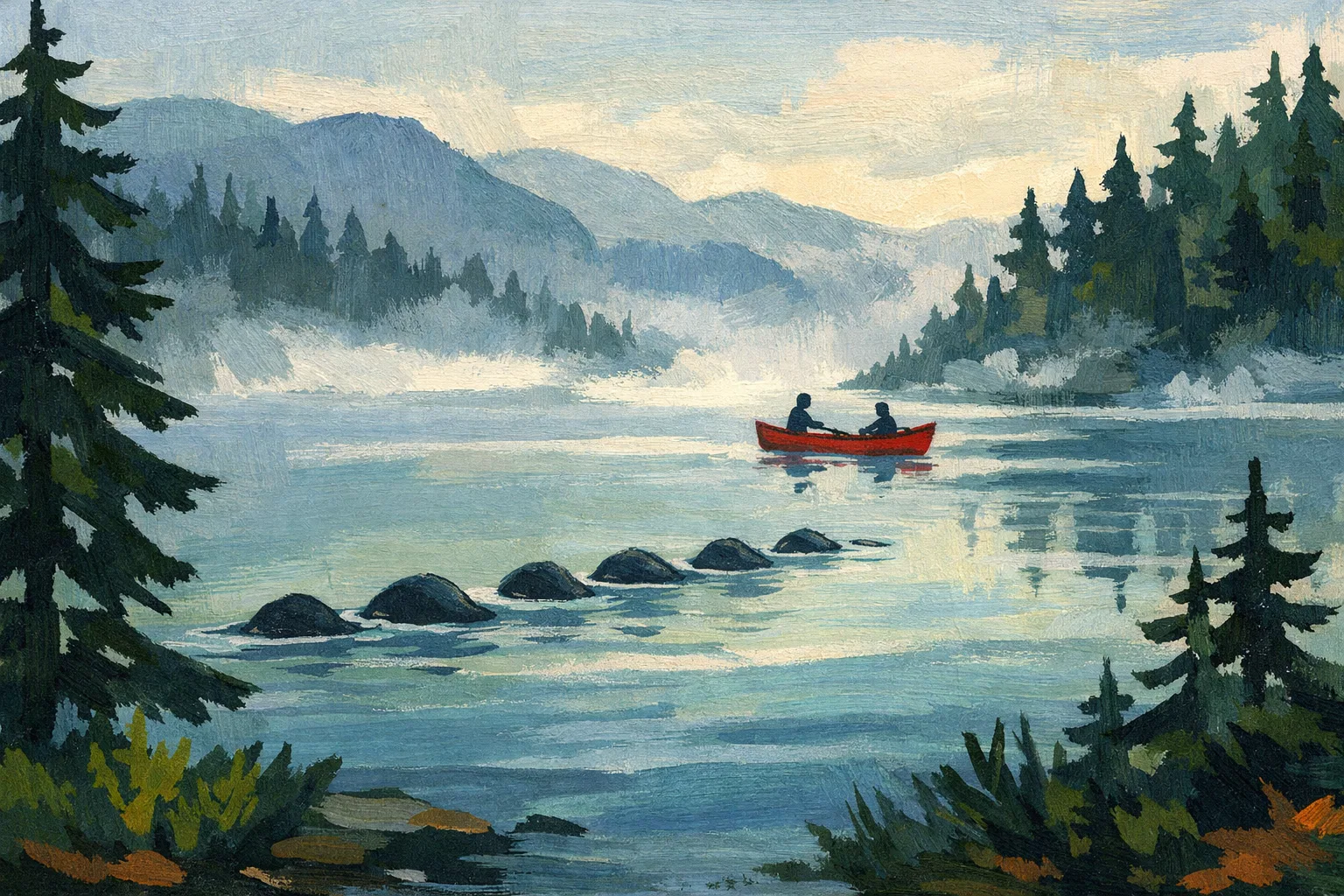
Canada is one of the world’s richest countries for monster traditions because its geography gives strange stories room to breathe: deep glacial lakes, dark coastal waters, remote forests, northern tundra, and long distances between witnesses and verification.
Page outline Jump by section
Why Canada became lake-monster country
Canadian monster lore often starts with water. The pattern is easy to understand: long, cold lakes can hide scale, distance and movement; wind can make odd wakes; otters, beavers, birds and floating logs can look much stranger at a distance than they do close up. The Canadian Encyclopedia’s entry on cryptozoology notes that unidentified lake creatures are claimed in many Canadian lakes, with Ogopogo, Champ and Memphré among the better-known examples.[The Canadian Encyclopedia]thecanadianencyclopedia.caOpen source on thecanadianencyclopedia.ca.
The important point is not that all Canadian lake monsters are the same. They are local stories that often share a shape: a long body, humps, a head briefly visible above the surface, a sudden dive, a witness who saw just enough to be startled but not enough to prove anything. Those ingredients travel well. Once one lake has a “monster”, neighbouring lakes can inherit the grammar of the story: a creature becomes a regional attraction, a newspaper item, a children’s drawing, a roadside statue, a festival mascot, or a serious claim for people who believe something unknown may still be there.
Canada’s lake-monster tradition also sits at an uneasy meeting point between Indigenous teachings and settler monster-making. In some cases, a sacred or cautionary water being was later reframed as a biological “monster” by newspapers, tourism campaigns or cryptozoology writers. That shift matters. It can turn a place-based teaching about respect, danger or reciprocity into a hunt for a hidden animal. Ogopogo is the clearest example.
Ogopogo: the Okanagan spirit turned tourist monster
Ogopogo is Canada’s most famous lake monster, said in popular accounts to live in Okanagan Lake in British Columbia. It is usually pictured as a long, dark, serpentine creature with humps, and it has become part of Kelowna and Okanagan tourist imagery. The Canadian Encyclopedia identifies Ogopogo as a fabled aquatic monster associated with Okanagan Lake, while Tourism Kelowna distinguishes the tourist “Ogopogo” from the Syilx understanding of the being as the sacred spirit of the lake.[The Canadian Encyclopedia]thecanadianencyclopedia.caOpen source on thecanadianencyclopedia.ca.
That distinction is the heart of the story. In Syilx tradition, the being is not simply a giant eel or freshwater dinosaur waiting to be filmed. Tourism Kelowna’s Indigenous heritage material describes it as a teaching carried through oral tradition, connected to safe travel, gratitude and reciprocal responsibility to land and water. A Tourism Kelowna educational sheet quotes Westbank First Nation artist Chad Paul presenting N’ha-a-itk as a metaphor for sustainability: if the spirit disappears through pollution and misuse of the water, so do the plants, medicines, trees and foods that sustain people.[Tourism Kelowna]tourismkelowna.comOpen source on tourismkelowna.com.
The modern monster version took on a different life. Reported sightings, films and photographs have been discussed for decades, but none has supplied clear biological evidence. Sceptical explanations include logs, water birds, otters, beavers, wave patterns and errors of scale. One common problem is distance: a small animal far from shore may look much larger, especially on a long lake with shifting light and wakes.[Wikipedia]WikipediaOpen source on wikipedia.org.
Ogopogo remains compelling because it is really two stories layered together. One is a living Indigenous place-based teaching that should not be flattened into a monster hunt. The other is a modern Canadian lake-monster legend, shaped by tourism, media, shaky footage and the public’s fondness for a local answer to Loch Ness. The more careful reading is not “Ogopogo is real” or “Ogopogo is fake”, but “Ogopogo shows how a sacred water tradition can be transformed when outsiders start looking for a creature rather than listening to the story.”
Sasquatch: Canada’s hairy giant and the forests of belief
Sasquatch is Canada’s great forest cryptid: a large, hairy, human-like being usually associated with British Columbia, the Pacific Northwest and remote wooded regions. The Canadian Encyclopedia describes Sasquatch as an ape-like creature said to live mainly in forests from the West Coast of British Columbia to northern areas, while recent reporting continues to link the figure to both Indigenous traditions and modern sighting culture.[The Canadian Encyclopedia]thecanadianencyclopedia.caOpen source on thecanadianencyclopedia.ca.
The name’s modern spread is strongly tied to British Columbia. Historian and environmental humanities sources point to J. W. Burns, a teacher and Indian agent working with the Sts’ailes, whose 1929 Maclean’s article helped popularise “Sasquatch” for a wider English-speaking audience. Later writers and television treatments gradually pushed the creature towards the now-familiar “Bigfoot” image: a huge, dark, bipedal, ape-like animal striding through the trees.[NiCHE]niche-canada.orgNi CHE“A Bear — A Man — A Giant”: On “Sasquatch” asNi CHE“A Bear — A Man — A Giant”: On “Sasquatch” as
Harrison Hot Springs shows how the legend became local identity. Sasquatch Days, co-hosted by the Village of Harrison Hot Springs and the Sts’ailes Nation, presents the subject through Sts’ailes culture and tradition rather than simply as a monster fair. That matters because Sasquatch is not only a “missing ape” claim. In many communities, related beings can be spiritual, ancestral, cautionary, or part of the moral geography of the forest.[Harrison River Valley]tourismharrison.comHarrison River Valley Sasquatch Days – Harrison River ValleyHarrison River Valley Sasquatch Days – Harrison River Valley
The evidence problem remains severe. Thousands of reports do not equal a breeding population. A large primate would be expected to leave clear remains, DNA, roadkill, bones, scat, repeatable tracks or reliable camera-trap evidence. Sceptics often point to black bears, hoaxes, expectation, poor visibility and the human tendency to recognise living forms in ambiguous landscapes. A 2026 Guardian report on renewed Ontario sightings captured this tension well: believers see a persistent tradition and a wilderness symbol; sceptics see a lack of physical evidence and frequent misidentification.[The Guardian]theguardian.comSasquatch has long fascinated both believers and sceptics. While some see it as a symbol of the unknown or a spiritual being tied to Indi…
Sasquatch endures because it occupies a powerful middle ground. It is wild enough to feel possible in Canada’s forests, human-like enough to be unsettling, and culturally flexible enough to be a sacred being, a campfire fright, a tourism emblem, a television monster, or a serious cryptozoological quarry depending on who is telling the story.
Cadborosaurus: British Columbia’s sea serpent and the shark problem
Cadborosaurus, often nicknamed “Caddy”, belongs to the coast rather than the lake. It is associated with Cadboro Bay near Victoria and wider Pacific coastal waters. Popular descriptions usually give it a horse-like or camel-like head, a long neck, humps or coils, flippers and a serpent body. The name itself reflects a modern naming habit: take a local place, add a classical-sounding creature ending, and a regional monster is born.[Wikipedia]WikipediaOpen source on wikipedia.org.
The most famous Cadborosaurus evidence is not a clear sighting but a carcass story. In 1937, a strange-looking body was reportedly removed from the stomach of a sperm whale at Naden Harbour in Haida Gwaii and photographed. The images helped feed the legend, but the specimen did not survive in a way that allows modern testing. Recent coverage has revived the case because many scientists consider a decomposing basking shark a strong explanation for similar “sea serpent” carcasses. As basking sharks rot, their gill structures and soft tissues can collapse into a long-necked, small-headed form that looks surprisingly reptilian to non-specialists.[The Guardian]theguardian.comExperts now believe the carcass was likely a decomposing basking shark, known to transform significantly during decay, often appearing as…
This is where Cadborosaurus becomes more than a monster tale. It is also a lesson in marine decay, conservation and expectation. British Columbia’s basking sharks were once far more visible, then heavily reduced by human activity. A rare, decomposed animal could therefore become doubly mysterious: unfamiliar in life, misleading in death. The Guardian’s 2026 account noted that some cryptozoologists still reject the basking-shark explanation for the 1937 carcass, while marine specialists argue that “pseudo-plesiosaur” remains are a known trap for interpretation.[The Guardian]theguardian.comExperts now believe the carcass was likely a decomposing basking shark, known to transform significantly during decay, often appearing as…
Cadborosaurus is not disproved in every witness’s mind, but it shows why sea monsters are difficult evidence cases. Ocean animals surface briefly. Carcasses change shape. Newspaper excitement can outrun anatomy. Once a place has a named serpent, later ambiguous encounters are more likely to be sorted into that story.
Canada’s other lake monsters: Manipogo, Memphré and Cressie
Ogopogo gets the attention, but Canada has a wider lake-monster map. These lesser-known creatures are often more revealing because they show how a monster legend can be built from a smaller pool of sightings, local pride and repetition.
Manipogo is associated with Lake Manitoba. Its modern name appears to echo Ogopogo, suggesting a mid-20th-century naming style as much as an ancient creature category. EBSCO’s research summary describes Manipogo as a legendary lake monster said to reside in Lake Manitoba, with stories linked to regional oral traditions and early 20th-century recorded sightings.[EBSCO]ebsco.comOpen source on ebsco.com.
Memphré belongs to Lake Memphremagog, which straddles the Quebec–Vermont border. It is usually described as a long, elusive lake creature, and the story crosses national boundaries as easily as the lake does. EBSCO summarises Memphré as a monster tradition with claimed sightings reaching back to the early 19th century and more than 200 people said to have reported encounters by the 21st century.[EBSCO]ebsco.comOpen source on ebsco.com.
Cressie, from Crescent Lake near Robert’s Arm in Newfoundland and Labrador, is more eel-like than dinosaur-like. Reports often describe a dark, long, slick body. CBC coverage and local folklore discussions have treated Cressie as a Newfoundland water monster whose sightings are woven into community identity, tourism and roadside display. Sceptical accounts propose large eels, otters, fish, logs and misperception rather than one unknown monster.[Wikipedia]WikipediaOpen source on wikipedia.org.
These stories are strongest as local folklore, not as zoological evidence. Their value is in how they make landscape memorable. A lake becomes more than water on a map: it becomes a place where people watch the surface, compare stories, debate what they saw, and hand the mystery to the next generation.
Hairy men, phantom cats and animals just beyond the map
Not every Canadian cryptid lives in water. Old Yellow Top, a Sasquatch-like figure reported around the Cobalt area of northern Ontario, is usually described as a large hairy creature with a pale or yellowish head or mane. The evidence is thin and mostly dependent on retellings, but the legend fits a broader Canadian pattern: mining country, forest edge, working men, sudden sightings, and later newspaper or folklore recycling.[Mysteries of Canada]mysteriesofcanada.comold yellow top the bigfoot of northern ontario canadaold yellow top the bigfoot of northern ontario canada
Phantom cats form another category. Eastern Canada has long produced cougar and “black panther” reports, especially in Ontario, Quebec and the Maritimes. This is a different sort of mystery from Ogopogo or Sasquatch because cougars are real animals in western Canada; the question is whether eastern reports represent remnant populations, wandering individuals, escaped captives, misidentified animals, or folklore. Environment and Climate Change Canada notes that the historically eastern cougar subspecies was listed separately under wildlife trade rules, while a COSEWIC-linked status report treated the eastern population as uncertain rather than straightforwardly confirmed.[Canada]canada.caOpen source on canada.ca.
Ontario research complicates the picture further. A Canadian Field-Naturalist paper on cougar evidence in Ontario reported credible cougar evidence, but it also noted 52 credible “black cougar” sightings from 1991 to 2010 and treated them separately because black cougars are not known from North America; escaped exotic animals were suggested as a possible explanation for those cases.[Canadian Field-Naturalist]canadianfieldnaturalist.caCanadian Field-Naturalist Evidence Confirms the Presence of Cougars (PumaCanadian Field-Naturalist Evidence Confirms the Presence of Cougars (Puma
That is exactly why phantom cats are good cryptid material. They sit close to real zoology. A mistaken dog, bobcat, lynx, house cat in forced perspective, escaped captive animal, or wandering western cougar can all feed the same rumour stream. Unlike a plesiosaur in a lake, an out-of-place big cat is not impossible. But possibility is not proof of a hidden breeding population.
Wendigo and why not every Canadian “monster” is a cryptid
The Wendigo is often dragged into Canadian monster lists, but it needs careful handling. The Canadian Encyclopedia describes the windigo or wendigo as a supernatural being in the spiritual traditions of Algonquian-speaking First Nations in North America. That makes it part of Indigenous spiritual and moral tradition, not a mystery animal claim in the same sense as Ogopogo footage, Sasquatch tracks or a Cadborosaurus carcass.[The Canadian Encyclopedia]thecanadianencyclopedia.caOpen source on thecanadianencyclopedia.ca.
The difference matters. A cryptid article asks whether witnesses may have seen an unknown or misidentified animal. A Wendigo story usually asks a different kind of question: what does a frightening being mean within a community’s teachings, warnings, hunger stories, winter fears, greed, isolation or spiritual worldview? Treating it as just another “Canadian monster” can flatten a complex tradition into a horror prop.
The same caution applies to Indigenous water beings and forest beings across Canada. Some later became entangled with cryptozoology because outsiders looked for animal evidence. But the older story may not have been about proving a species at all. It may have been about conduct, danger, respect, law, memory or the power of a place.
What evidence exists, and why it rarely settles the case
Canadian cryptid evidence usually falls into five buckets: eyewitness testimony, oral tradition, newspaper reports, photographs or film, and physical traces such as tracks or carcasses. Each has value, but each has limits.
Eyewitnesses can be sincere and still wrong. Water, fog, distance, fear, darkness and expectation all distort perception. A line of otters can look like one long animal. A log can rise and roll. A bear standing or walking briefly on its hind legs can look disturbingly human. A rotting shark can resemble a sea serpent. Sceptical investigations of lake monsters regularly emphasise that there may not be one explanation for every sighting; different reports may have different causes.[Skeptical Inquirer]skepticalinquirer.orglake monster lookalikeslake monster lookalikes
Newspaper reports preserve valuable local history, but they also reward novelty. A “sea serpent” story sells better than a cautious account of a distant animal. Once a name like Cadborosaurus or Ogopogo exists, later reports can be written to fit the established creature. The legend becomes a container for uncertainty.
Photographs and film often fail because they capture exactly what made the moment mysterious: distance, blur, scale confusion and partial visibility. A fuzzy video may prove that something was on the water, but not what it was. That is why lake-monster and Sasquatch cases so often remain culturally alive but scientifically weak.
Physical evidence is the missing centre. A confirmed unknown large animal would need repeatable, testable evidence: tissue, DNA, a body, clear tracks with chain-of-custody, ecological consistency and independent expert review. Canada has produced many stories, but not that level of proof for its famous cryptids.
Tourism, pop culture and the afterlife of Canadian monsters
Canadian cryptids survive partly because they are useful. They give towns mascots, festivals, sculptures, museum displays, walking trails, souvenirs and reasons to tell local stories. Harrison Hot Springs has Sasquatch identity; Kelowna and Peachland have Ogopogo imagery; Robert’s Arm has Cressie; Lake Memphremagog has Memphré. These monsters make places legible to visitors.[tourismharrison.com]tourismharrison.comHarrison River Valley Sasquatch Days – Harrison River ValleyHarrison River Valley Sasquatch Days – Harrison River Valley
That does not mean the legends are cynical inventions. Tourism often grows around stories that already mattered locally. But it can change the story’s centre. A sacred lake spirit becomes a cartoon serpent. A frightening forest presence becomes a plush toy. A regional sighting tradition becomes a weekend event. The creature becomes friendlier, more marketable and more visually standardised.
Pop culture also smooths differences. Sasquatch and Bigfoot merge. Ogopogo and Loch Ness are compared. Lake monsters become plesiosaurs whether or not witnesses described anything like one. The more a creature circulates, the more it starts to resemble other monsters. Canada’s cryptid map is therefore both local and global: deeply tied to specific lakes and forests, but constantly reshaped by imported monster imagery.
How to read Canadian cryptid stories without spoiling them
The best way to approach Canada’s cryptids is neither to sneer nor to surrender judgement. A good reading asks what kind of story is being told.
If the claim is a living animal report, ask what evidence exists, what known animals live nearby, how far away the witness was, whether there are photographs or physical traces, and whether the environment could support the creature being proposed.
If the story comes from Indigenous tradition, ask whether it is being represented respectfully and whether it has been wrongly converted into a monster-hunt narrative. Ogopogo’s shift from sacred lake spirit to tourist serpent is the key cautionary example.[Tourism Kelowna]tourismkelowna.comOpen source on tourismkelowna.com.
If the source is newspaper or tourism material, ask what the story was doing for its audience. Was it warning, entertaining, selling a place, building local pride, or reporting a sincere but ambiguous encounter?
If the case involves possible misidentified wildlife, stay open but practical. Canada has bears, otters, beavers, seals, whales, sharks, eels, sturgeon-like possibilities in some waters, large cats in the west, and occasional escaped or wandering animals. Many “monsters” begin with a real animal seen badly.
That balanced approach keeps the wonder without pretending that every ripple is a reptile or every shadow is a hidden ape.

The real pattern in Canada’s mystery-beast map
Canada’s cryptids cluster where landscape, uncertainty and storytelling meet. Lakes produce serpents because water hides scale. Forests produce hairy giants because trees hide bodies and invite imagination. Coasts produce sea serpents because marine animals are strange even when known. Eastern farms and woods produce phantom cats because the boundary between extirpated, wandering and misidentified predators is genuinely confusing.
The strongest evidence does not confirm a new Canadian monster species. It confirms something more human and still worth studying: people repeatedly use animals, half-seen forms and dangerous places to talk about wilderness, respect, fear, identity and belonging. Ogopogo, Sasquatch, Cadborosaurus, Manipogo, Memphré and Cressie are not interchangeable curiosities. Each belongs to a particular waterway, forest, coast or community. Their mystery is not only “does it exist?” but “why did this place need this creature, and why do people keep seeing it?”
eBay marketplace picks
Marketplace Samples
Live-tested eBay searches with available results related to this page.
Endnotes
1.
Source: Wikipedia
Link:https://en.wikipedia.org/wiki/Ogopogo
2.
Source: Wikipedia
Link:https://en.wikipedia.org/wiki/Cadborosaurus
3.
Source: ebsco.com
Link:https://www.ebsco.com/research-starters/environmental-sciences/manipogo-folklore
4.
Source: ebsco.com
Link:https://www.ebsco.com/research-starters/social-sciences-and-humanities/memphre-folklore
5.
Source: Wikipedia
Link:https://en.wikipedia.org/wiki/Cressie
6.
Source: canada.ca
Link:https://www.canada.ca/en/environment-climate-change/services/convention-international-trade-endangered-species/non-detriment-findings/cougar.html
7.
Source: Wikipedia
Title: Category:Canadian legendary creatures
Link:https://en.wikipedia.org/wiki/Category%3ACanadian_legendary_creatures
8.
Source: Wikipedia
Title: List of cryptids
Link:https://en.wikipedia.org/wiki/List_of_cryptids
9.
Source: Wikipedia
Title: British people
Link:https://en.wikipedia.org/wiki/British_people
10.
Source: Wikipedia
Link:https://en.wikipedia.org/wiki/Bigfoot
11.
Source: Wikipedia
Link:https://en.wikipedia.org/wiki/Memphre
12.
Source: Wikipedia
Title: Mugwump (folklore)
Link:https://en.wikipedia.org/wiki/Mugwump_%28folklore%29
13.
Source: Wikipedia
Title: Eastern cougar
Link:https://en.wikipedia.org/wiki/Eastern_cougar
14.
Source: cadborosaurus.ca
Link:https://www.cadborosaurus.ca/History-Facts.html
15.
Source: cosewic.ca
Title: candidate wildlife species
Link:https://cosewic.ca/index.php/en/reports/candidate-wildlife-species.html
16.
Source: canada.ca
Title: canadian wildlife species risk 2024
Link:https://www.canada.ca/en/environment-climate-change/services/species-risk-public-registry/publications/canadian-wildlife-species-risk-2024.html
17.
Source: ebsco.com
Link:https://www.ebsco.com/research-starters/religion-and-philosophy/wendigo-folklore
18.
Source: ebsco.com
Link:https://www.ebsco.com/research-starters/religion-and-philosophy/ogopogo-mythology
19.
Source: thecanadianencyclopedia.ca
Link:https://thecanadianencyclopedia.ca/en/article/cryptozoology
20.
Source: thecanadianencyclopedia.ca
Link:https://thecanadianencyclopedia.ca/en/article/sasquatch
21.
Source: thecanadianencyclopedia.ca
Link:https://thecanadianencyclopedia.ca/en/article/ogopogo
22.
Source: tourismkelowna.com
Link:https://www.tourismkelowna.com/explore/indigenous-heritage/spirit-of-the-lake/
23.
Source: theguardian.com
Link:https://www.theguardian.com/world/2026/jun/11/sasquatch-bigfoot-sightings-fervour-scepticism-ape-ontario
Source snippet
Sasquatch has long fascinated both believers and sceptics. While some see it as a symbol of the unknown or a spiritual being tied to Indi...
24.
Source: niche-canada.org
Title: Ni CHE“A Bear — A Man — A Giant”: On “Sasquatch” as
Link:https://niche-canada.org/2022/10/17/a-bear-a-man-a-giant-on-sasquatch-as-cryptozoological-missing-link/
25.
Source: tourismharrison.com
Title: Harrison River Valley Sasquatch Days – Harrison River Valley
Link:https://tourismharrison.com/event-directory/sasquatch-days/
26.
Source: theguardian.com
Link:https://www.theguardian.com/environment/2026/may/07/basking-shark-sea-monster-canada-marine-mystery-90-years-on
Source snippet
Experts now believe the carcass was likely a decomposing basking shark, known to transform significantly during decay, often appearing as...
27.
Source: mysteriesofcanada.com
Title: old yellow top the bigfoot of northern ontario canada
Link:https://mysteriesofcanada.com/ontario/old-yellow-top-the-bigfoot-of-northern-ontario-canada/
28.
Source: canadianfieldnaturalist.ca
Title: Canadian Field-Naturalist Evidence Confirms the Presence of Cougars (Puma
Link:https://www.canadianfieldnaturalist.ca/index.php/cfn/article/download/1194/1187/4744
29.
Source: thecanadianencyclopedia.ca
Link:https://thecanadianencyclopedia.ca/en/article/windigo
30.
Source: skepticalinquirer.org
Title: lake monster lookalikes
Link:https://skepticalinquirer.org/newsletter/lake-monster-lookalikes/
31.
Source: visitpeachland.com
Link:https://visitpeachland.com/about/ogopogo/
32.
Source: thecanadianencyclopedia.ca
Title: okanagan lake
Link:https://thecanadianencyclopedia.ca/en/article/okanagan-lake
33.
Source: thecanadianencyclopedia.ca
Link:https://thecanadianencyclopedia.ca/en/article/peachland
34.
Source: thecanadianencyclopedia.ca
Link:https://thecanadianencyclopedia.ca/index.php/en/browse/places?page=98&query=
35.
Source: thecanadianencyclopedia.ca
Link:https://thecanadianencyclopedia.ca/fr/naviguer/places/terrain?page=16&query=
36.
Source: youtube.com
Link:https://www.youtube.com/watch?v=jBBoZalw4rs
37.
Source: facebook.com
Title: canada is a land of rich and diverse folklore blending ancient indigenous oral t
Link:https://www.facebook.com/officialcism/posts/canada-is-a-land-of-rich-and-diverse-folklore-blending-ancient-indigenous-oral-t/1403369485129652/
38.
Source: cryptidz.fandom.com
Link:https://cryptidz.fandom.com/wiki/Ogopogo
39.
Source: weirdnwildcreatures.fandom.com
Link:https://weirdnwildcreatures.fandom.com/wiki/Ogopogo
40.
Source: cryptidz.fandom.com
Link:https://cryptidz.fandom.com/wiki/Manipogo
41.
Source: naturerules1.fandom.com
Link:https://naturerules1.fandom.com/wiki/Cadborosaurus
42.
Source: cryptidz.fandom.com
Title: Old Yellow Top
Link:https://cryptidz.fandom.com/wiki/Old_Yellow_Top
43.
Source: cryptidz.fandom.com
Link:https://cryptidz.fandom.com/wiki/Cressie
44.
Source: van-helsing-own-story.fandom.com
Link:https://van-helsing-own-story.fandom.com/wiki/Ogopogo
45.
Source: cryptidz.fandom.com
Title: Lake Monsters
Link:https://cryptidz.fandom.com/wiki/Lake_Monsters
46.
Source: mysteriesofcanada.com
Title: native cryptid encounters
Link:https://mysteriesofcanada.com/alberta/native-cryptid-encounters/
47.
Source: mysteriesofcanada.com
Link:https://mysteriesofcanada.com/bc/ogopogo/
48.
Source: mysteriesofcanada.com
Link:https://mysteriesofcanada.com/bc/cadborosaurus/
49.
Source: mysteriesofcanada.com
Title: classic canadian sasquatch stories harrison hot springs
Link:https://mysteriesofcanada.com/bc/classic-canadian-sasquatch-stories-harrison-hot-springs/
50.
Source: mysteriesofcanada.com
Title: forgotten lake monsters of native canadian legend
Link:https://mysteriesofcanada.com/saskatchewan/forgotten-lake-monsters-of-native-canadian-legend/
51.
Source: tourismkelowna.com
Title: how to uncover the true spirit of ogopogo
Link:https://www.tourismkelowna.com/blog/stories/post/how-to-uncover-the-true-spirit-of-ogopogo/
52.
Source: tourismkelowna.com
Title: the legend the spirit the creature the history of ogopogo
Link:https://www.tourismkelowna.com/blog/stories/post/the-legend-the-spirit-the-creature-the-history-of-ogopogo/
53.
Source: canadaehx.substack.com
Title: the sea monster of oyster river
Link:https://canadaehx.substack.com/p/the-sea-monster-of-oyster-river
54.
Source: tourismharrison.com
Title: sasquatch days
Link:https://tourismharrison.com/events/sasquatch-days/
55.
Source: canadacommons.ca
Link:https://canadacommons.ca/artifacts/4590487/update/5414337/
56.
Source: canadashistory.ca
Title: lore and legends
Link:https://www.canadashistory.ca/explore/arts-culture-society/lore-and-legends
Additional References
57.
Source: ncwildlife.gov
Link:https://www.ncwildlife.gov/species/eastern-cougar
58.
Source: publications.gc.ca
Link:https://publications.gc.ca/collections/collection_2023/eccc/cw66/CW66-1142-4-1998-eng.pdf
59.
Source: publications.gc.ca
Link:https://publications.gc.ca/site/eng/9.925122/publication.html
60.
Source: mythfolks.com
Link:https://www.mythfolks.com/cryptids/cadborosaurus
61.
Source: canadiancanvas.ca
Link:https://www.canadiancanvas.ca/s/stories/canadian-cryptids-creatures-that-might-be-lurking-in-the-wild-near-you?srsltid=AfmBOopDu-7ODnSIjJMvrw8JHzkjQRLHzngf5BW5oE_K-ZqbtJfcLS4C
62.
Source: reddit.com
Link:https://www.reddit.com/r/AskACanadian/comments/1jo7w9c/canadian_legendary_monsters_cryptids/
63.
Source: reddit.com
Link:https://www.reddit.com/r/AskACanadian/comments/17i44mq/canadian_mythology_whats_the_most_curious/
64.
Source: reddit.com
Link:https://www.reddit.com/r/Cryptozoology/comments/1brei1t/cool_map_of_eastern_cougar_and_black_panther/
65.
Source: facebook.com
Link:https://www.facebook.com/groups/1421263468146690/posts/3790909401182073/
66.
Source: facebook.com
Link:https://www.facebook.com/groups/weloveyarmouth/posts/2439110946479747/
Topic Tree
Follow this branch
Related pages 192
- Antigua Cryptids
- Maldives Monsters
- Malta Monsters
- Qatar Monsters
- Argentina Monsters
- +187 more in sidebar