Monster Traditions of Germany
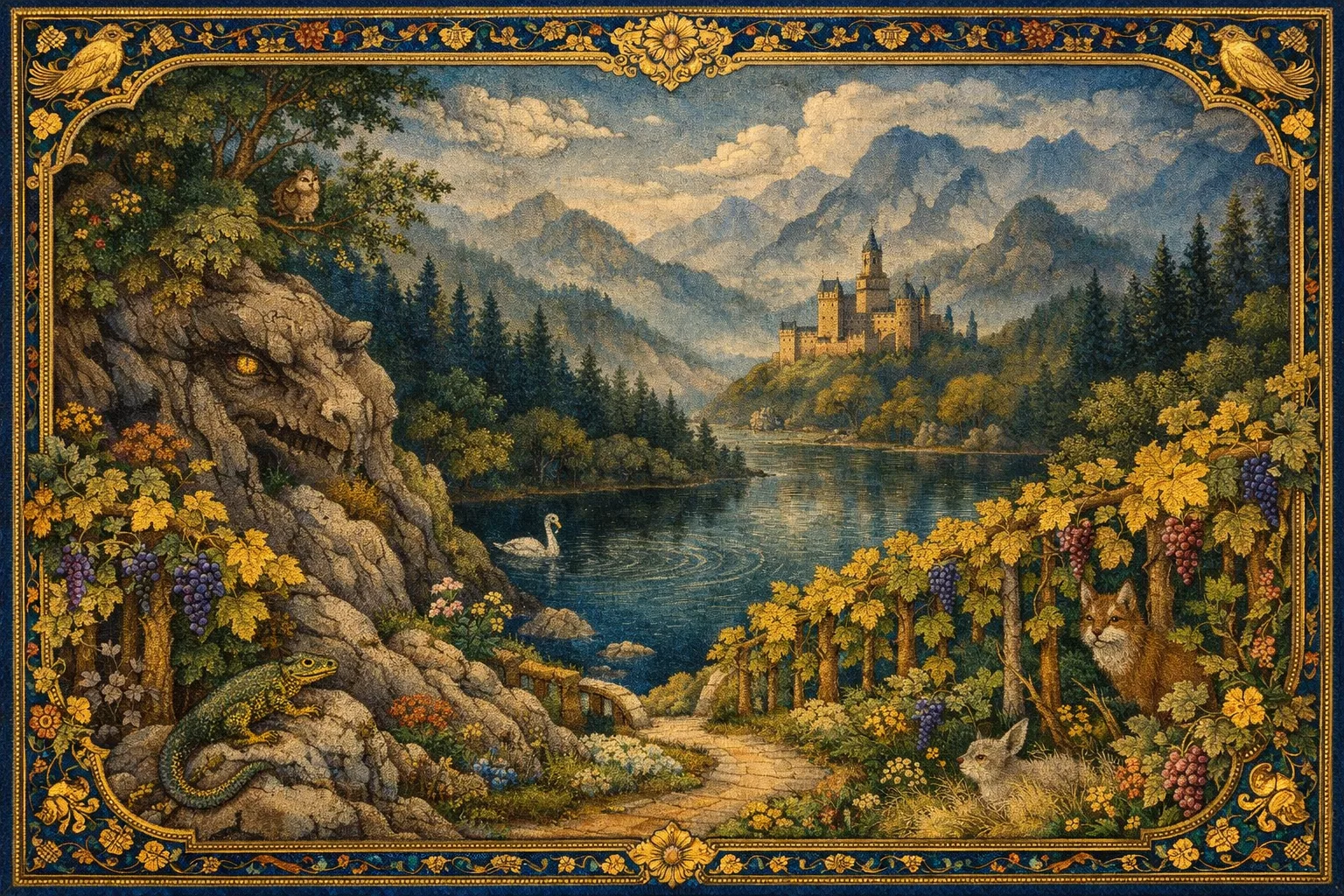
Germany has no single national “monster” in the way Scotland has the Loch Ness Monster, but it has a rich countrywide pattern of mystery-beast traditions: Alpine dragon-serpents, Black Forest water spirits, Bavarian joke-taxidermy creatures, Palatinate bird-beasts, phantom big-cat scares, and modern misidentification flaps.
Page outline Jump by section
Introduction
The evidence is uneven. Some creatures, such as the Wolpertinger and Elwetritsch, are openly folkloric or comic. Others, such as the Tatzelwurm, sit closer to classic cryptid territory because they combine old Alpine testimony with later sightings and proposed animal explanations. Recent German “big cat” stories are better understood through known wildlife, escaped animals, and the return of lynx rather than through a hidden panther population.[wikipedia.org]WikipediaOpen source on wikipedia.org.
The German pattern: local beasts, not one national cryptid
Germany’s monster map is strongly regional. Bavaria and the Alps favour clawed serpents, dragons and hybrid forest animals. The Palatinate has the Elwetritsch, a bird-like creature tied to local humour, wine culture and playful night hunts. The Black Forest has lakes and water spirits, especially around Mummelsee. The Rhine has dragon-slayer tourism and the Nibelung tradition around Worms and Drachenfels. Modern Berlin, meanwhile, has produced one of Europe’s most memorable recent mystery-animal episodes: the 2023 “lioness” search that was later judged most likely to have been a wild boar.[wikipedia.org]WikipediaOpen source on wikipedia.org.
That regionalism matters because many German “cryptids” are not presented locally as zoological claims. A visitor may see a Wolpertinger in a museum case, but the point is the joke: a made-up animal assembled from real animal parts. Someone may “hunt” an Elwetritsch, but the ritual is closer to a snipe hunt than a wildlife survey. By contrast, Tatzelwurm stories often read more like encounter reports: a strange animal seen in mountain terrain, described with consistent motifs, and then debated as a possible misidentified reptile, mammal or folklore survival.[wikipedia.org]WikipediaOpen source on wikipedia.org.
Tatzelwurm: the Alpine clawed serpent
The Tatzelwurm is Germany’s strongest candidate for a classic cryptid. It belongs to the wider Alpine folklore of southern Germany, Austria, Switzerland, northern Italy and neighbouring mountain regions. Descriptions vary, but the typical creature is a short, thick, lizard- or serpent-like animal with a cat-like head, a pair of forelegs or clawed feet, and sometimes poisonous breath. The name itself points to the idea of a “clawed worm”, with “worm” in older European usage often meaning a serpent or dragon rather than an earthworm.[Wikipedia]WikipediaOpen source on wikipedia.org.
The Tatzelwurm’s appeal comes from the way it sits between dragon legend and field report. Early modern Alpine naturalists and collectors recorded stories of strange mountain “dragons”, while later folklore treated the creature as a smaller, more animal-like survivor of that dragon family. Reports have been linked to humid weather, mountain paths, forests and rocky terrain: exactly the sort of places where a brief glimpse of a snake, salamander, otter, marten or unusual lizard could become more memorable in retelling.[Wikipedia]WikipediaOpen source on wikipedia.org.
The sceptical explanations are not dismissive so much as ecological. Central Europe has real reptiles and amphibians, but no known venom-breathing cat-headed lizard. Some historic explanations reduce Tatzelwurm accounts to snakes or lizards; other commentary has suggested stray otters for some sightings, especially where a long-bodied, low-moving animal was seen near water. The problem for believers is the absence of a specimen, clear photograph, DNA evidence or consistent modern documentation. The problem for sceptics is that the same compact pattern of description has remained culturally durable for centuries.[Wikipedia]WikipediaOpen source on wikipedia.org.
For a Germany-focused cryptid page, the Tatzelwurm is best treated as an Alpine border creature with a Bavarian foothold rather than a purely German animal. Its German relevance comes from Bavaria, the Alpine fringe and the long German-language tradition of dragon-serpent folklore. It also links naturally to broader pages on Austrian and Swiss mystery beasts, where the same creature has even stronger sighting traditions.
Wolpertinger: Bavaria’s honest hoax
The Wolpertinger is not a hidden animal in any serious zoological sense. It is a Bavarian hybrid creature usually imagined with a small mammal’s body, antlers, wings, fangs or other mismatched parts. Its closest international cousin is the American jackalope, but the Wolpertinger has a specifically southern German flavour: alpine forests, hunting culture, inn humour, tourist souvenirs and taxidermy jokes.[Wikipedia]WikipediaOpen source on wikipedia.org.
The most important thing about the Wolpertinger is that its “evidence” is part of the performance. Stuffed examples are made from real animal parts joined together, then displayed as if they were local wildlife. The German Hunting and Fishing Museum in Munich, a major museum devoted to hunting and fishing culture, is closely associated with Wolpertinger displays, and Munich’s official tourism material identifies the museum as one of the city’s important hunting-related attractions.[jagd-fischerei-museum.de]jagd-fischerei-museum.deOpen source on jagd-fischerei-museum.de.
That makes the Wolpertinger a useful cautionary case. A hoax does not always mean a malicious fraud. In this tradition, the fake animal is the joke, and everyone eventually learns how to read it. It preserves a hunting-lodge style of storytelling in which rural expertise, tourist gullibility and comic exaggeration all meet in one glass case. The creature survives because it is visibly impossible, not despite that fact.
Elwetritsch: the Palatinate bird you are invited to hunt
The Elwetritsch, or Elwedritsch, belongs especially to the Palatinate in south-west Germany. It is usually described as a bird-like creature, sometimes chicken-like, sometimes with a long beak, weak wings, scales, antlers or other odd features. Like the Wolpertinger, it is often presented with a wink; unlike the Wolpertinger, it has a strong local identity tied to vineyards, forest edges, fountains, walking trails and community rituals.[Wikipedia]WikipediaOpen source on wikipedia.org.
The creature’s geography is unusually clear for folklore. Accounts cluster around the historic Palatinate and neighbouring parts of south-west Germany, with Neustadt an der Weinstraße often treated as one of its symbolic centres. Local culture has turned the creature into public art, museum display and playful “hunt” tradition. The Palatinate tourist context matters here: the German Wine Route runs through a region marketed for villages, vineyards, wine festivals and local conviviality, which is exactly the social setting in which a comic night creature can thrive.[Wikipedia]WikipediaOpen source on wikipedia.org.
Some modern explanations connect the Elwetritsch to older night-fear or nightmare traditions, later softened into a harmless bird-beast that people can joke about, chase and symbolically control. Whether or not that precise origin is accepted, the broad movement is easy to see: a frightening unseen thing becomes a named local mascot. The Elwetritsch is therefore less a cryptid to be proved than a folk mechanism for turning darkness, woodland and social teasing into a shared regional game.[Wikipedia]WikipediaOpen source on wikipedia.org.
Black Forest water beings and Mummelsee
Germany’s lake-monster tradition is not dominated by one giant reptile in the Loch Ness mould. Instead, many German water legends are about spirits, women, kings beneath the water, drownings, enchanted lakes and dangerous thresholds. Mummelsee in the northern Black Forest is the clearest example for a country-level monster page because it combines a real tourist lake, a striking natural setting and a long afterlife in literature and visitor culture.
The lake lies on the Black Forest High Road and is promoted as the largest of the remaining cirque lakes in the Black Forest, about 3.7 hectares in area, roughly 800 metres around and over 1,000 metres above sea level. Local legend connects it with water spirits, a lake king and beings living beneath the surface. Tourism material and literary references have kept those stories visible, while the lake’s dark water, steep wooded slopes and mountain weather do much of the atmospheric work.[mummelsee.de]mummelsee.deOpen source on mummelsee.de.
The Mummelsee stories also show the difference between a lake monster and a lake legend. There is no strong modern evidence trail of a large unknown animal living there. The enduring figure is not a flesh-and-blood plesiosaur-style beast but a supernatural water community: beautiful, dangerous, hidden and tied to older European ideas about lakes as entrances to another realm. Eduard Mörike’s poem about spirits at Mummelsee helped give the place a literary afterlife, and modern tourism continues to package the lake as both scenic and enchanted.[nyfos.org]nyfos.orgHugo Wolf and Eduard Mörike: Die Geister am MummelseeHugo Wolf and Eduard Mörike: Die Geister am Mummelsee
Dragons on the Rhine: folklore that became geography
German dragon lore is too broad to treat as cryptozoology in the strict sense, but it is essential background for Germany’s mystery-beast imagination. The Nibelung tradition, written down around 1200, includes Siegfried the dragon-slayer and is strongly associated in modern tourism with Worms. The Nibelungen Museum in Worms describes the epic as a UNESCO Memory of the World document and presents the legend of Siegfried, Kriemhild and the dragon as central to the city’s cultural identity.[nibelungenmuseum.de]nibelungenmuseum.deOpen source on nibelungenmuseum.de.
Drachenfels on the Rhine adds another kind of dragon geography. Its name means “Dragon’s Rock”, and the hill above the Rhine has long been a magnet for romantic tourism, castle ruins and dragon associations. Modern visitor material emphasises the view, the ruins and the Rhine setting, but the dragon name is part of why the site is memorable.[Drachenfelsbahn Königswinter]drachenfelsbahn.deOpen source on drachenfelsbahn.de.
These dragon places are not evidence for unknown animals. Their value is interpretive. They explain why later German-speaking reports of strange serpents, lindworms or clawed reptiles can feel culturally plausible even when the biology is weak. The dragon is already in the landscape: in place names, festivals, museum trails, poems, sculptures and tourist routes.
Phantom cats, lynx and the Berlin “lioness”
Modern Germany does produce mystery-animal flaps, but the best-known recent example shows how quickly a cryptid-style panic can dissolve into ordinary wildlife. In July 2023, police and local authorities near Berlin searched for what was believed to be a lioness after mobile-phone footage and witness reports suggested a large cat. Reuters reported that the search involved police, helicopters, heat cameras and drones; officials later said the animal was probably a wild boar, and a searched woodland area produced only a family of boar.[Reuters]reuters.comLioness escapes in Berlin; police comb streets, woodlandsLioness escapes in Berlin; police comb streets, woodlands
The case is useful because it compresses a whole cryptid mechanism into two days: ambiguous footage, official caution, public warning, media amplification, expert review, memes and a mundane explanation. Germany’s forests and city edges really do contain large animals. Wild boar are powerful, common and surprisingly urban in places such as Berlin, and they can look strange in poor light or partial cover. A 2026 Berlin shopping-centre incident involving a wild boar underlined how readily these animals can enter built-up spaces and generate dramatic responses.[People.com]people.comEfforts to tranquilize the boar were abandoned due to the store's layout. Instead, rescue teams used riot shields and pallets to carefull…
The return of real wild cats also complicates sightings. Eurasian lynx are not cryptids: Germany’s Federal Agency for Nature Conservation says the lynx currently occurs in three German populations, including the Harz, eastern Bavaria and the Palatinate Forest. Conservation projects are also trying to connect isolated lynx populations, including through releases in the Thuringian Forest. A fleeting sighting of a lynx, European wildcat, large domestic cat or dog can easily become a “big cat” story when distance, dusk and expectation do their work.[bfn.de]bfn.deOpen source on bfn.de.
What counts as evidence in German cryptid stories?
German mystery-beast traditions range from open folklore to modern police incidents, so the standard of evidence has to change by category. A Wolpertinger in a museum case is evidence of a comic taxidermy tradition, not evidence of a breeding animal. An Elwetritsch fountain or trail is evidence of regional folklore, not zoology. A Tatzelwurm sighting is closer to a cryptozoological claim, but without a specimen or clear modern documentation it remains an anecdotal tradition. A suspected lioness near Berlin is a contemporary sighting claim, but official reassessment moved it into the misidentification category.[wikipedia.org]WikipediaOpen source on wikipedia.org.
A practical reader can sort German cases into four broad types:
- Folklore creatures: dragons, lake spirits and water beings that belong mainly to legend, literature and place identity.
- Comic invented beasts: Wolpertinger and Elwetritsch-style creatures, where the joke or ritual is part of the point.
- Classic cryptid claims: Tatzelwurm-like reports, where witnesses describe an unknown animal but physical evidence is lacking.
- Modern misidentification flaps: big-cat or predator scares later explained by boar, lynx, dogs, domestic cats, escaped animals or poor footage.
That does not make the stories worthless. It makes them more interesting. Germany’s mystery beasts show how people interpret animals through local terrain: a mountain glimpse becomes a dragon-serpent, a lake becomes a spirit kingdom, a vineyard night walk becomes a bird hunt, and a blurry suburban animal becomes a lioness until the boar explanation catches up.
Why Germany’s monster traditions still work
German cryptids and legendary creatures endure because they are attached to places people can actually visit. You can go to Mummelsee and see why a dark mountain lake invited water-spirit stories. You can visit Worms and understand how a medieval dragon-slayer epic became civic identity. You can encounter Wolpertinger displays in Munich and recognise the humour of a hunting culture that invents impossible quarry. You can follow Palatinate Elwetritsch references through wine country and see how a local joke becomes a mascot.[mummelsee.de]mummelsee.deOpen source on mummelsee.de.
The country’s strongest mystery-beast material is therefore not a single unresolved monster case, but a set of overlapping traditions about how people explain the half-seen. Germany’s forests, mountains, lakes and urban edges contain real animals, but they also contain old story-forms waiting to receive them. A lynx is a lynx; a boar is a boar. Yet in the right light, in the right place, with the right rumour already in circulation, Germany still knows how to make a monster.
Amazon book picks
Further Reading
Books and field guides related to What Monsters Does Germany Really Have?. Use these as the next step if you want deeper reading beyond the article.
The Book of Imaginary Beings
Covers legendary creatures comparable to German monster lore.
eBay marketplace picks
Marketplace Samples
Live-tested eBay searches with available results related to this page.


Endnotes
1.
Source: Wikipedia
Link:https://en.wikipedia.org/wiki/Tatzelwurm
2.
Source: Wikipedia
Link:https://en.wikipedia.org/wiki/Wolpertinger
3.
Source: bfn.de
Link:https://www.bfn.de/daten-und-fakten/luchsverbreitung-deutschland
4.
Source: reuters.com
Title: lioness spotted near berlin may have been boar mayor says 2023 07 21
Link:https://www.reuters.com/world/europe/lioness-spotted-near-berlin-may-have-been-boar-mayor-says-2023-07-21/
5.
Source: Wikipedia
Link:https://en.wikipedia.org/wiki/Elwetritsch
6.
Source: mummelsee.de
Link:https://www.mummelsee.de/en_US/erlebnis/mummelsee
7.
Source: nibelungenmuseum.de
Link:https://www.nibelungenmuseum.de/nibelungenmuseum-en/
8.
Source: creatures-of-myth.fandom.com
Link:https://creatures-of-myth.fandom.com/wiki/Elwetritsch
9.
Source: Wikipedia
Title: Tatzelwurm (Fabeltier)
Link:https://de.wikipedia.org/wiki/Tatzelwurm_%28Fabeltier%29
10.
Source: jagd-fischerei-museum.de
Link:https://www.jagd-fischerei-museum.de/
11.
Source: munich.travel
Link:https://www.munich.travel/en/pois/arts-culture/hunting-and-fishing-museum
12.
Source: Wikipedia
Link:https://de.wikipedia.org/wiki/Elwetritsch
13.
Source: pfalz.de
Link:https://www.pfalz.de/de/deutsche-weinstrasse
14.
Source: Wikipedia
Link:https://en.wikipedia.org/wiki/Mummelsee
15.
Source: nyfos.org
Title: Hugo Wolf and Eduard Mörike: Die Geister am Mummelsee
Link:https://nyfos.org/hugo-wolf-eduard-morike-die-geister-mummelsee/
16.
Source: drachenfelsbahn.de
Link:https://www.drachenfelsbahn.de/en/drachenfels
17.
Source: Wikipedia
Link:https://en.wikipedia.org/wiki/Drachenfels_%28Siebengebirge%29
18.
Source: reuters.com
Title: Lioness escapes in Berlin; police comb streets, woodlands
Link:https://www.reuters.com/world/europe/berliners-warned-suspected-lioness-loose-2023-07-20/
19.
Source: people.com
Link:https://people.com/wild-boar-wanders-into-berlin-mall-sending-shoppers-running-11928172
Source snippet
Efforts to tranquilize the boar were abandoned due to the store's layout. Instead, rescue teams used riot shields and pallets to carefull...
20.
Source: reuters.com
Link:https://www.reuters.com/business/healthcare-pharmaceuticals/germany-detects-swine-fever-case-wild-boar-2026-07-08/
21.
Source: luchs-thueringen.de
Link:https://luchs-thueringen.de/en/projekt/rueckkehr-thueringer-wald
22.
Source: Wikipedia
Title: Alp (folklore)
Link:https://en.wikipedia.org/wiki/Alp_%28folklore%29
23.
Source: Wikipedia
Title: Category:German legendary creatures
Link:https://en.wikipedia.org/wiki/Category%3AGerman_legendary_creatures
24.
Source: Wikipedia
Title: British big cats
Link:https://en.wikipedia.org/wiki/British_big_cats
25.
Source: Wikipedia
Title: German Hunting and Fishing Museum
Link:https://en.wikipedia.org/wiki/German_Hunting_and_Fishing_Museum
26.
Source: Wikipedia
Link:https://en.wikipedia.org/wiki/Berlin
27.
Source: Wikipedia
Link:https://en.wikipedia.org/wiki/Sigurd
28.
Source: Wikipedia
Title: Loch Ness Monster
Link:https://en.wikipedia.org/wiki/Loch_Ness_Monster
29.
Source: Wikipedia
Title: Lake Constance
Link:https://en.wikipedia.org/wiki/Lake_Constance
30.
Source: Wikipedia
Title: Europäische Wildkatze
Link:https://de.wikipedia.org/wiki/Europ%C3%A4ische_Wildkatze
31.
Source: cryptidz.fandom.com
Link:https://cryptidz.fandom.com/wiki/Elwetritsch
32.
Source: cryptidz.fandom.com
Link:https://cryptidz.fandom.com/wiki/Tatzelwurm
33.
Source: cryptidz.fandom.com
Link:https://cryptidz.fandom.com/wiki/Wolpertinger
34.
Source: cryptidz.fandom.com
Link:https://cryptidz.fandom.com/wiki/Dwarves
35.
Source: cryptidz.fandom.com
Link:https://cryptidz.fandom.com/wiki/Lindworm
36.
Source: cryptidz.fandom.com
Link:https://cryptidz.fandom.com/wiki/Gulon
37.
Source: genies.fandom.com
Link:https://genies.fandom.com/wiki/Alp
38.
Source: cryptidz.fandom.com
Link:https://cryptidz.fandom.com/wiki/Snallygaster
39.
Source: cryptidz.fandom.com
Title: Shug Monkey
Link:https://cryptidz.fandom.com/wiki/Shug_Monkey
40.
Source: cryptidz.fandom.com
Title: Pale Crawlers
Link:https://cryptidz.fandom.com/wiki/Pale_Crawlers
41.
Source: cryptidz.fandom.com
Link:https://cryptidz.fandom.com/wiki/Trotterhead
42.
Source: pdsh.fandom.com
Link:https://pdsh.fandom.com/wiki/Wolpertinger
43.
Source: warhammerfantasy.fandom.com
Title: Constant Drachenfels
Link:https://warhammerfantasy.fandom.com/wiki/Constant_Drachenfels
44.
Source: mythos-and-legends.fandom.com
Link:https://mythos-and-legends.fandom.com/wiki/Siegfried
45.
Source: cryptidarchives.fandom.com
Title: List of Lake Monsters in Europe
Link:https://cryptidarchives.fandom.com/wiki/List_of_Lake_Monsters_in_Europe
46.
Source: devon-cornwall.police.uk
Link:https://www.devon-cornwall.police.uk/foi-ai/devon–cornwall-police/disclosure-logs/2025-disclosures/big-cat-sightings/
47.
Source: the-black-forest.com
Link:https://www.the-black-forest.com/mummelsee/
48.
Source: luchs-thueringen.de
Link:https://luchs-thueringen.de/en/projekt/luchs-naturschutz
49.
Source: mummelsee.de
Link:https://www.mummelsee.de/en_US/home
50.
Source: berlin.de
Link:https://www.berlin.de/en/
51.
Source: oxfordsong.org
Link:https://oxfordsong.org/song/die-geister-am-mummelsee
52.
Source: astonishinglegends.com
Link:https://astonishinglegends.com/astonishing-legends/2018/9/24/tatzelwurm
53.
Source: medievalfantasiesco.com
Link:https://www.medievalfantasiesco.com/s/stories/tatzelwurm
54.
Source: tripadvisor.co.uk
Title: DRACHENFEL S
Link:https://www.tripadvisor.co.uk/Attraction_Review-g198615-d1875744-Reviews-Drachenfels-Koenigswinter_North_Rhine_Westphalia.html
55.
Source: deutschland.de
Link:https://www.deutschland.de/en/topic/environment/species-protection-wolf-lynx-and-elk-are-returning-to-germany
56.
Source: deutschland.de
Title: german legends nibelungen pied piper faust
Link:https://www.deutschland.de/en/topic/culture/german-legends-nibelungen-pied-piper-faust
57.
Source: reutersconnect.com
Link:https://www.reutersconnect.com/item/berliners-warned-of-suspected-lioness-on-the-loose/dGFnOnJldXRlcnMuY29tLDIwMjM6bmV3c21sX1JDMjM3MkFTWDhCMA?lastViewed=dGFnOnJldXRlcnMuY29tLDIwMjM6bmV3c21sX1JDMjQ3MkE3NDlaQw&position=1
58.
Source: e-methodology.eu
Link:https://e-methodology.eu/index.php/e-methodology/article/view/1495/1284
Additional References
59.
Source: youtube.com
Title: The Terrifying Legend of the Tatzelwurm: Alpine’s Forgotten Monster
Link:https://www.youtube.com/watch?v=tyqcllIO3q8
Source snippet
Canadian reacts to the German Wolpertinger: Exploring Bavarian Folklore...
60.
Source: youtube.com
Title: Canadian reacts to the German Wolpertinger: Exploring Bavarian Folklore
Link:https://www.youtube.com/watch?v=hGTLYfvDvGI
Source snippet
Grunt not roar: Berlin lion likely a wild boar | DW News...
61.
Source: youtube.com
Title: The Most Disturbing Mythical Creatures From German Folklore
Link:https://www.youtube.com/watch?v=TKZKB1xopYc
Source snippet
The Terrifying Legend of the Tatzelwurm: Alpine's Forgotten Monster...
62.
Source: youtube.com
Title: Grunt not roar: Berlin lion likely a wild boar | DW News
Link:https://www.youtube.com/watch?v=xiZ0U3vgyIo
Source snippet
German Folklore about monsters in deep waters... | Fireside Fairy Tales...
63.
Source: gettyimages.com
Link:https://www.gettyimages.com/photos/tatzelwurm
64.
Source: facebook.com
Link:https://www.facebook.com/groups/badtaxidermy/posts/10159583196423944/
65.
Source: reddit.com
Link:https://www.reddit.com/r/folklore/comments/1m80cso/a_dark_legend_from_the_black_forest_the_water/
66.
Source: reddit.com
Link:https://www.reddit.com/r/de/comments/1o7xya2/hinter_den_pf%C3%A4lzer_weinh%C3%BCgeln_jagt_der/?tl=en
67.
Source: cntraveler.com
Link:https://www.cntraveler.com/destinations/berlin
68.
Source: tripadvisor.co.uk
Link:https://www.tripadvisor.co.uk/Tourism-g187323-Berlin-Vacations.html
Topic Tree
Follow this branch
Related pages 192
- Antigua Cryptids
- Maldives Monsters
- Malta Monsters
- Qatar Monsters
- Argentina Monsters
- +187 more in sidebar