Cryptids of Estonia's Wild Places
Estonia is not a country with one dominant “national cryptid” in the Loch Ness sense.
Page outline Jump by section
Why Estonia’s monster lore feels different from modern cryptid hunting
A reader looking for an Estonian Bigfoot, phantom black cat flap, or famous lake monster case will find the record surprisingly thin. Estonia’s strongest “monster” material sits closer to folklore than to twentieth-century cryptozoology: stories explain places, warn against greed, dramatise wolf fear, or turn natural forces into characters. The Estonian Folklore Archives and related publications preserve many such narratives, including accounts of werewolves, treasure-bearers, water beings, giants and nature spirits, but these are usually not presented as undiscovered animals in the modern biological sense.[Folklore]folklore.eeOpen source on folklore.ee.
That does not make the material weak. It simply changes the question. Instead of asking, “Could this creature be a surviving unknown species?”, the better questions are: What real landscape produced the story? What animal or hazard might sit behind it? Why did this creature become memorable in Estonia specifically? A lake monster near Tallinn means something different from a Highland water-horse; a werewolf in Estonia sits beside actual wolf populations; a treasure-carrying farm spirit says more about envy, poverty and social control than about unknown zoology.
Estonia’s geography helps explain the tone. The country has extensive forest cover, wetlands, lakes, coastline and islands. European biodiversity data characterises Estonia as dominated by forest ecosystems, while official and conservation reporting confirms the continued importance of large carnivores, including brown bears, wolves and lynx. These are not cryptids, but they are the kind of animals that make forests feel inhabited, unpredictable and story-rich.[europa.eu]biodiversity.europa.euEstonia | CountriesEstonia | Countries
The lake that threatens Tallinn
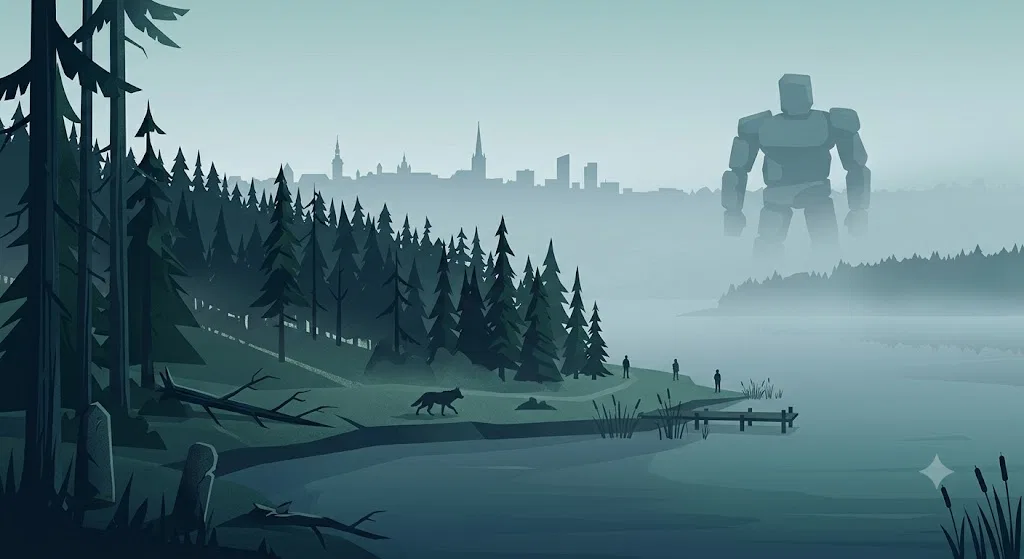
The closest Estonia comes to a nationally recognisable lake-monster legend is the Old Man of Lake Ülemiste, attached to the large lake beside Tallinn. The figure is not usually described as a flesh-and-blood animal. He is a mythological being who asks whether Tallinn is finished; if someone answers yes, he will flood the city. In popular versions, the correct answer is always that Tallinn is still under construction, which neatly turns endless urban growth into a survival strategy.[Wikipedia]WikipediaLegends of TallinnLegends of Tallinn
The story works because Lake Ülemiste is not remote scenery. It sits beside the capital and is central to Tallinn’s water system. Modern descriptions of the lake note its role in supplying most of the city’s drinking water, which gives the old flood legend an extra urban edge: this is not a monster in a distant wilderness, but a water-being imagined at the city’s threshold.[Wikipedia]WikipediaLake ÜlemisteLake Ülemiste
For cryptid-minded readers, the important point is classification. The Ülemiste figure is not a claimed surviving aquatic species, and there is no strong modern evidence trail of sightings, carcasses, sonar searches or newspaper flaps comparable with better-known lake monsters elsewhere. Its power comes from place-lore. The lake is dangerous because it can rise in imagination over the city; the “creature” is the story-form of that danger.
The legend also has a visible afterlife. A 2024 public sculpture in Ülemiste City explicitly brings the Old Man into urban space, describing him as one of the best-known figures of Estonian folklore and as a being who watches over Tallinn’s fate. That is how many Estonian monsters survive today: not as zoological puzzles, but as public art, local identity and a playful warning that a city should never declare itself complete.[Ülemiste City]ulemistecity.eeÜlemiste City The Old Man of Ülemiste“The Old Man of Ülemiste” is a sculpture created by Andres Rattasepp, bringing one of the best-knownÜlemiste City The Old Man of Ülemiste“The Old Man of Ülemiste” is a sculpture created by Andres Rattasepp, bringing one of the best-known
Werewolves where real wolves still matter
Estonia’s werewolf tradition is one of the country’s most important beast-lore strands. In archive material, a werewolf may be a human transformed into a wolf, a wolf cub with uncanny qualities, or a figure produced by bewitchment. One Estonian Folklore archive example describes a belief that when a wolf has many cubs, one of them is a werewolf; another gives a ritualised account of a person crawling around a stone to become wolf-like.[Folklore]folklore.eeOpen source on folklore.ee.
These stories are not just imported horror clichés. A scholarly overview of Virumaa belief material notes two broad explanations in local werewolf tradition: a person either turns into a wolf or is bewitched into one. Another Estonian Folklore publication points to the persistence and later transformation of werewolf beliefs from the sixteenth and seventeenth centuries into nineteenth- and twentieth-century tradition.[Folklore]folklore.eeKujutelmad üleloomulikest olenditest Virumaa rahvaususKujutelmad üleloomulikest olenditest Virumaa rahvausus
The ecological background matters. Estonia still has wolves, and recent reporting from the Estonian public broadcaster notes that wolves, bears and lynx are found across most of the country, though large carnivores are less numerous on the islands than on the mainland. Official large-carnivore planning also treats wolf, lynx and bear populations as real conservation and management issues rather than vanished folklore animals.[ERR]news.err.eenew wildlife atlas shows estonia s large predators expanding rangesnew wildlife atlas shows estonia s large predators expanding ranges
That makes the Estonian werewolf a useful bridge between folklore and plausible animal explanation. A livestock attack, a glimpse of a wolf at dusk, a frightening encounter in forest country, or rumours about a socially marginal person could all feed werewolf narratives without requiring an unknown animal. The monster is partly a wolf, partly a human accusation, and partly a way of talking about hunger, danger and boundary-crossing.
The kratt: Estonia’s homemade monster of greed and labour
The kratt is one of Estonia’s most distinctive legendary creatures, even though it is not a cryptid in the animal-report sense. In folklore it is a treasure-bearer or supernatural helper associated with names such as spark-tail and other local variants. Estonian Folklore material explains these beings as creatures that bring wealth to their masters, while also expressing social suspicion toward people who suddenly become richer than their neighbours.[Folklore]folklore.eeOpen source on folklore.ee.
This is a wonderfully strange monster because it is often made rather than born. Later summaries and cultural retellings describe the kratt as assembled from household or farm materials and animated through a pact with the Devil. Its job is practical and morally rotten: fetch goods, steal wealth, work without rest. In that sense, it is less like a hidden animal and more like a nightmare tool.[Interlude]interlude.hkEduard Tubin: Kratt The Goblin from Estonian folkloreEduard Tubin: Kratt The Goblin from Estonian folklore
The kratt’s modern afterlife is unusually strong. Eduard Tubin’s ballet “Kratt” was already attached to an old Estonian legend of devilish soul-selling, and the creature returned to wider international attention through Rainer Sarnet’s 2017 film “November”, based on Andrus Kivirähk’s novel “Rehepapp”. Discussions of the film repeatedly highlight its village world of kratts, werewolves, spirits and the Devil, showing how Estonian folk beings have become part of contemporary folk-horror and art cinema.[folklore.ee]folklore.eeOpen source on folklore.ee.
The kratt has even become a metaphor for artificial intelligence in Estonia. Commentators have noted that the word was used in debates about whether AI should receive special legal status, because the old folklore image of an obedient but potentially dangerous artificial worker maps so neatly onto modern automation anxieties. For a cryptid page, this is a useful reminder: not every “monster tradition” is about an unknown animal. Some monsters survive because they keep finding new jobs.[Eesti Elu]eestielu.cakratid farm spirits and chilling images of the futurekratid farm spirits and chilling images of the future
The Northern Frog and Estonia’s dragon problem
Estonia’s most dragon-like monster is the Northern Frog, a huge frog or dragon-like creature made famous in Friedrich Reinhold Kreutzwald’s nineteenth-century collection of old Estonian tales and later known in English through “The Yellow Fairy Book”. Folklore scholarship treats the tale as a local form of the dragon-slayer story type, with the frog taking the place of the more familiar dragon.[Wikipedia]WikipediaThe Dragon of the NorthThe Dragon of the North
The creature is memorable because it does not fit the neat western dragon template. It is frog-like, monstrous, destructive, and sometimes described in modern retellings as living underground or connected with deep cultural memory. One academic discussion of Baltic catastrophe echoes notes an Estonian tale of a flying frog-like monster with glowing eyes and a long tail, cautiously suggesting that such imagery can be compared with meteor-like phenomena, though that is an interpretive possibility rather than proof of a single origin.[Folklore]folklore.eeOpen source on folklore.ee.
Its meaning has changed over time. In recent cultural use, the Northern Frog can become not merely a monster to defeat but a protector of language and local life. In 2025, a statue at Tamula beach in Võru was reported as a deliberate twist on the older legend: the old evil frog is reimagined as a nurturing figure connected with the protection of the Võro language.[ERR]news.err.eeVõru gets its own twist on the 'Northern frog' with new statueVõru gets its own twist on the 'Northern frog' with new statue
For cryptid readers, this is a case study in transformation. The same creature can move from fairy-tale threat to national-cultural symbol to public sculpture. That does not make it more biologically likely, but it does make it more culturally alive.
Giants, stones and island landscapes
Estonian giant lore supplies another major “monster” strand, especially through Kalevipoeg and Suur Tõll. Kalevipoeg is attached to Estonia’s national epic, while Suur Tõll belongs especially to Saaremaa. These are not mystery animals, but they function like landscape-making beings: their stories explain stones, routes, islands, heroic strength and local identity.[Folklore]folklore.eeOpen source on folklore.ee.
Suur Tõll is especially useful for understanding how Estonian monster-lore becomes tourism. Visit Saaremaa presents Suur Tõll and Piret as mythical heroes of Saaremaa, with Tõll imagined as so huge that he could cross to neighbouring Hiiumaa in only a few steps. In Kuressaare, sculptural depictions make the giants part of the visitor landscape rather than a hidden or frightening claim.[Visit Saaremaa]visitsaaremaa.eeVisit Saaremaa The legends and major figures of SaaremaaVisit Saaremaa The legends and major figures of Saaremaa
This pattern is common in northern European folklore: erratic boulders, craters, lakes and odd landforms invite stories of giants throwing, dropping or carrying stones. Estonia has a particularly strong example in Kaali on Saaremaa, where a real meteorite crater became a lake and a site of legend. Modern tourism writing presents the crater as both a geological event and a place where people without a scientific explanation would naturally have imagined extraordinary forces.[Visit Estonia]visitestonia.comVisit Estonia A sustainable spin around SaaremaaVisit Estonia A sustainable spin around Saaremaa
The sceptical explanation here is not “the witnesses were wrong”, because giant stories are not usually witness reports. They are mythic geology. They turn confusing or dramatic landforms into memorable acts: someone threw that stone, someone crossed that sea, someone shaped that place.

Water spirits, forest beings and animal-shaped belief
Beyond the named celebrity creatures, Estonian tradition includes water spirits, forest mothers, underground beings, will-o’-the-wisp figures, ship spirits and animal-shaped supernatural helpers. The Estonian Folklore natural history anthology presents nature as a populated moral world, where cold, wind, water, forest and homestead forces may appear as beings with roles and personalities.[Folklore]folklore.eeOpen source on folklore.ee.
Water beings are especially relevant to a cryptid-country page because they sit close to lake-monster traditions without becoming modern lake cryptids. Estonian folklore lists include water spirits such as the Mother of Waters and shape-shifting water beings, while local lake legends often focus less on a hidden animal than on a spirit or personified force. This is why Estonia’s “lake monster” material feels more like place-belief than zoological mystery.[Wikipedia]WikipediaEstonian folkloreEstonian folklore
Contemporary belief has not simply vanished either. Folklore research on Estonian spirit-animal narratives shows that modern people still use animal encounters and animal images to express spiritual meaning, identity and personal experience. That does not turn a fox, wolf, snake or bird into a cryptid, but it shows how animal-shaped stories continue to evolve in present-day Estonia rather than remaining museum pieces.[Folklore]folklore.eeOpen source on folklore.ee.
What might explain Estonia’s mystery-beast stories?
The best explanations vary by creature type. Estonia’s monster traditions are too diverse for one tidy debunking, and the strongest reading is usually cultural plus ecological rather than either/or.
Real predators and livestock fear help explain werewolf traditions. Wolves were not abstract symbols in rural Estonia; they were real animals capable of threatening livestock and frightening people. Modern Estonia still manages wolves, lynx and bears, so old stories about dangerous forest-beasts remain tied to a recognisable animal world.[kliimaministeerium.ee]kliimaministeerium.eeConservation and management plan for large carnivoresConservation and management plan for large carnivores
Landscape memory explains many giant and lake legends. Boulders, craters, wetlands, islands and large lakes invite narrative. A giant can carry a stone; a lake elder can threaten a city; a meteor crater can become a mythic place. These stories are not failed science so much as memorable local explanations before modern geology and hydrology became ordinary public knowledge.[Visit Estonia]visitestonia.comVisit Estonia A sustainable spin around SaaremaaVisit Estonia A sustainable spin around Saaremaa
Social suspicion is central to the kratt. A neighbour who becomes wealthy too quickly, a household that seems to prosper unfairly, or an anxiety about work without moral limits can be turned into a treasure-bearing creature. The Estonian Folklore anthology explicitly reads treasure-bearer stories as a form of social control around wealth accumulation and community separation.[Folklore]folklore.eeOpen source on folklore.ee.
Literary reshaping matters more in Estonia than in many cryptid traditions. Kreutzwald, Kivirähk, Tubin, Sarnet and contemporary artists have not merely preserved creatures; they have remade them. The Northern Frog, kratt and werewolf are now as much part of literature, film, music and public art as of oral belief.[Wikipedia]WikipediaThe Dragon of the NorthThe Dragon of the North
Estonia’s cryptid profile in one view
Estonia’s strongest mystery-creature tradition is not a single elusive beast but a compact bestiary of folklore beings shaped by forest, water, wolves, labour and national storytelling.
Creature or traditionMain association in EstoniaBest understood asCryptid-style strengthOld Man of Lake ÜlemisteTallinn, Lake Ülemiste, flood threatLake spirit and city legendStrong folklore, weak zoological claimWerewolfRural Estonia, wolves, shapeshifting beliefsBeast folklore tied to real predator fearStrong folklore, plausible animal triggersKrattFarmsteads, wealth, labour, devil-pactsMade supernatural helper or treasure-bearerStrong monster tradition, not an animal claimNorthern FrogKreutzwald tales, later cultural symbolismDragon-slayer monster adapted into Estonian formStrong literary-folkloric monsterSuur Tõll and other giantsSaaremaa, stones, islands, heroic landscapesLandscape-making giant loreStrong tourism and place-loreWater and forest spiritsLakes, rivers, bogs, woods, homesteadsNature belief and local spirit traditionBroad folklore background
The key distinction is that Estonia’s creature lore rarely asks the reader to believe a hidden breeding population is waiting to be discovered. It asks the reader to notice how a country of forests, wetlands, wolves, lakes, islands and old farm communities turned danger and desire into memorable beings.
The honest bottom line
Estonia is a rich country for monster folklore but a modest one for modern cryptid evidence. There is no well-supported Estonian equivalent of a famous photographed lake monster, no widely documented ape-man flap, and no mainstream evidence for an unknown large animal behind the best-known legends. The strongest cases are cultural rather than biological: Ülemiste’s lake elder, the kratt, the werewolf, the Northern Frog and the giants of Saaremaa endure because they are vivid, adaptable and rooted in recognisable Estonian places.[wikipedia.org]WikipediaLegends of TallinnLegends of Tallinn
That makes Estonia valuable in a country-by-country cryptid project precisely because it resists the usual template. Its monsters are not failed animals. They are lake warnings, wolf anxieties, labour nightmares, dragon-slayer variants, island giants and living cultural symbols. Read as folklore with an eye on ecology, they show how strange creatures can remain compelling without pretending to be proven zoology.

Amazon book picks
Further Reading
Books and field guides related to What Monsters Haunt Estonia's Wild Places?. Use these as the next step if you want deeper reading beyond the article.

Mythology:Timeless Tales of Gods and Heroes
Provides comparative context for legendary creatures and folklore.
The Baltic Mythology Reader
Covers Baltic folklore traditions that help contextualize Estonian monster lore.
Endnotes
1.
Source: kliimaministeerium.ee
Title: Conservation and management plan for large carnivores
Link:https://kliimaministeerium.ee/sites/default/files/documents/2025-11/Large%20Carnivore%20action%20plan_EE_2022-2031.pdf
2.
Source: news.err.ee
Title: new wildlife atlas shows estonia s large predators expanding ranges
Link:https://news.err.ee/1610050315/new-wildlife-atlas-shows-estonia-s-large-predators-expanding-ranges
3.
Source: folklore.ee
Link:https://folklore.ee/loodus/en/kodu
4.
Source: folklore.ee
Link:https://folklore.ee/loodus/en/maa/loomad
5.
Source: folklore.ee
Link:https://www.folklore.ee/folklore/vol77
6.
Source: biodiversity.europa.eu
Title: Estonia | Countries
Link:https://biodiversity.europa.eu/countries/estonia
7.
Source: keskkonnaamet.ee
Link:https://keskkonnaamet.ee/en/news/environmental-board-approved-new-action-plan-protection-and-management-large-carnivores-ten
8.
Source: Wikipedia
Title: Legends of Tallinn
Link:https://en.wikipedia.org/wiki/Legends_of_Tallinn
9.
Source: Wikipedia
Title: Lake Ülemiste
Link:https://en.wikipedia.org/wiki/Lake_%C3%9Clemiste
10.
Source: folklore.ee
Link:https://folklore.ee/loodus/en/suhtlemine-loodusega/olendite-mojutamine
11.
Source: folklore.ee
Title: Kujutelmad üleloomulikest olenditest Virumaa rahvausus
Link:https://www.folklore.ee/tagused/nr66/hiiemae_usund.pdf
12.
Source: folklore.ee
Link:https://www.folklore.ee/tagused/sites/default/files/2025-07/mt80x.pdf
13.
Source: folklore.ee
Link:https://folklore.ee/loodus/en/kodu/uleloomulikud-abilised-noid-kratt
14.
Source: interlude.hk
Title: Eduard Tubin: Kratt The Goblin from Estonian folklore
Link:https://interlude.hk/eduard-tubin-kratt-the-goblin-from-estonian-folklore/
15.
Source: folklore.ee
Link:https://www.folklore.ee/rl/pubte/ee/cf/cf/22.html
16.
Source: Wikipedia
Title: November (2017 film)
Link:https://en.wikipedia.org/wiki/November_%282017_film%29
17.
Source: Wikipedia
Title: The Dragon of the North
Link:https://en.wikipedia.org/wiki/The_Dragon_of_the_North
18.
Source: folklore.ee
Link:https://www.folklore.ee/folklore/vol23/echoes.pdf
19.
Source: news.err.ee
Title: Võru gets its own twist on the ‘Northern frog’ with new statue
Link:https://news.err.ee/1609712151/voru-gets-its-own-twist-on-the-northern-frog-with-new-statue
20.
Source: folklore.ee
Link:https://www.folklore.ee/folklore/vol64/giants.pdf
21.
Source: folklore.ee
Link:https://folklore.ee/loodus/en/loodusjoud
22.
Source: Wikipedia
Title: Estonian folklore
Link:https://en.wikipedia.org/wiki/Estonian_folklore
23.
Source: news.err.ee
Title: Kaval-Ants voted most Estonian folk character
Link:https://news.err.ee/1609243377/kaval-ants-voted-most-estonian-folk-character
24.
Source: eesti.pl
Title: myths and legends in tallinn 1336
Link:https://www.eesti.pl/myths-and-legends-in-tallinn-1336.html
25.
Source: Wikipedia
Title: List of lake monsters
Link:https://en.wikipedia.org/wiki/List_of_lake_monsters
26.
Source: Wikipedia
Link:https://en.wikipedia.org/wiki/Kratt
27.
Source: Wikipedia
Title: Fauna of Estonia
Link:https://en.wikipedia.org/wiki/Fauna_of_Estonia
28.
Source: Wikipedia
Title: The Dragon of the North
Link:https://simple.wikipedia.org/wiki/The_Dragon_of_the_North
29.
Source: Wikipedia
Title: Toell the Great
Link:https://en.wikipedia.org/wiki/Toell_the_Great
30.
Source: Wikipedia
Link:https://en.wikipedia.org/wiki/Kalevipoeg
31.
Source: folklore.ee
Link:https://www.folklore.ee/folklore/vol32/news.pdf
32.
Source: folklore.ee
Link:https://www.folklore.ee/balkan_baltic_yearbook/YBBS/article/download/290/303/1182
33.
Source: folklore.ee
Link:https://www.folklore.ee/rl/folkte/myte3/vh20.pdf
34.
Source: folklore.ee
Link:https://www.folklore.ee/folklore/vol26/rehepapp.pdf
35.
Source: folklore.ee
Title: O Oinas, Felix J[ohannes]
Link:https://www.folklore.ee/rl/pubte/ee/erbibl/o.html
36.
Source: folklore.ee
Title: CURREN T STUDIES
Link:https://folklore.ee/sator/wp-content/uploads/2021/11/sator22.pdf
37.
Source: folklore.ee
Link:https://www.folklore.ee/folklore/sites/default/files/2025-07/fl_ejf_77x.pdf
38.
Source: folklore.ee
Link:https://www.folklore.ee/rl/pubte/ee/araamat/2010/metsvahi.pdf
39.
Source: folklore.ee
Link:https://www.folklore.ee/folklore/sites/default/files/2025-07/fl_ejf_58x.pdf
40.
Source: folklore.ee
Link:https://www.folklore.ee/tagused/sites/default/files/2025-10/mt66x.pdf
41.
Source: folklore.ee
Link:https://www.folklore.ee/pubte/eraamat/voimjakultuur2/voimjakultuur2.pdf
42.
Source: folklore.ee
Link:https://www.folklore.ee/CEES/narratiivid.pdf
43.
Source: folklore.ee
Link:https://www.folklore.ee/folklore/authors/reet-hiiemae
44.
Source: folklore.ee
Title: previous issues
Link:https://www.folklore.ee/folklore/previous-issues?page=2
45.
Source: folklore.ee
Link:https://www.folklore.ee/rl/pubte/loomad/
46.
Source: folklore.ee
Title: Eesti-uuringute Tippkeskus (CEES)
Link:https://www.folklore.ee/CEES/?id=7
47.
Source: environment.ec.europa.eu
Title: eu Large carnivores
Link:https://environment.ec.europa.eu/topics/nature-and-biodiversity/habitats-directive/large-carnivores_en
48.
Source: kliimaministeerium.ee
Title: hunting estonia
Link:https://kliimaministeerium.ee/en/water-forest-resources/metsandus/hunting-estonia
49.
Source: visitestonia.com
Title: bears lynx wolves wildlife watching in estonia
Link:https://visitestonia.com/en/what-to-do/bears-lynx-wolves-wildlife-watching-in-estonia
50.
Source: ulemistecity.ee
Link:https://www.ulemistecity.ee/en/art-work/the-old-man-of-[ulemiste
51.
Source: eestielu.ca
Title: kratid farm spirits and chilling images of the future
Link:https://eestielu.ca/kratid-farm-spirits-and-chilling-images-of-the-future/
52.
Source: visitestonia.com
Link:https://visitestonia.com/en/kalevipoeg-museum
53.
Source: visitsaaremaa.ee
Title: Visit Saaremaa The legends and major figures of Saaremaa
Link:https://www.visitsaaremaa.ee/en/inspiration/the-legends-and-major-figures-of-saaremaa/
54.
Source: visitestonia.com
Title: Visit Estonia A sustainable spin around Saaremaa
Link:https://visitestonia.com/en/where-to-go/a-sustainable-spin-around-saaremaa
55.
Source: cryptidz.fandom.com
Title: Lake Monsters
Link:https://cryptidz.fandom.com/wiki/Lake_Monsters
56.
Source: eestielu.ca
Title: the significance of suur toll toll the great in estonian mythology
Link:https://eestielu.ca/the-significance-of-suur-toll-toll-the-great-in-estonian-mythology/
57.
Source: visitestonia.com
Title: visiting estonian bogs a complete guide for a tourist
Link:https://visitestonia.com/en/what-to-do/visiting-estonian-bogs-a-complete-guide-for-a-tourist
58.
Source: obs.ee
Link:https://www.obs.ee/~cps/ajakirjad/folklore/fl077FX000546.htm
59.
Source: cbd.int
Link:https://www.cbd.int/countries/profile/?country=ee
Additional References
60.
Source: youtube.com
Title: Kodukäija and Külmking
Link:https://www.youtube.com/watch?v=UyfFak1_JQo
Source snippet
How To Kill a Kratt, Estonian Folklore, AI, and Two Movies to Watch This Weekend...
61.
Source: youtube.com
Link:https://www.youtube.com/watch?v=VEtTIHg8Glk
Source snippet
Kodukäija and Külmking - The Haunting Spirits of Ancestors from Estonian Folklore...
62.
Source: arxiv.org
Link:https://arxiv.org/abs/2203.12998
63.
Source: youtube.com
Title: How To Kill a Kratt, Estonian Folklore, AI, and Two Movies to Watch This Weekend
Link:https://www.youtube.com/watch?v=5kb9072s9sY
Source snippet
Katharine's Creatures Episode 191: Kratt...
64.
Source: youtube.com
Title: 25 Creatures in Estonian Folklore & Mythology
Link:https://www.youtube.com/watch?v=0pbvTrxpT6s
Source snippet
Koerakoonlased - The Dog-Snouted Monsters of Estonian Folk Tales...
65.
Source: researchgate.net
Link:https://www.researchgate.net/publication/337701717_Belief_Narratives_of_Spirit-Animals_A_Case_Study_on_Estonian_Contemporary_Folklore
66.
Source: academia.edu
Link:https://www.academia.edu/49499356/Beliefs_About_Flying_Serpents_In_Belarusian_Estonian_And_Russian_Estonian_Traditions
67.
Source: facebook.com
Link:https://www.facebook.com/groups/217092875144407/posts/2630199803833690/
68.
Source: linkedin.com
Link:https://www.linkedin.com/posts/eu-environment-climate_happy-national-day-to-estonia-estonia-activity-7299725652788707328-gRbj
69.
Source: speysidewildlife.co.uk
Link:https://www.speysidewildlife.co.uk/PrinterVersions/ESTONIAMAMMALS.pdf
Topic Tree
Follow this branch
Related pages 192
- Antigua Cryptids
- Maldives Monsters
- Malta Monsters
- Qatar Monsters
- Argentina Monsters
- +187 more in sidebar