Does DR Congo Hide a Living Dinosaur?
DR Congo’s place in cryptid history rests less on a long list of well-documented monsters than on one enormous idea: that the Congo Basin might still hide an unknown large animal.
Page outline Jump by section
Why DR Congo became a believable place for hidden-animal stories
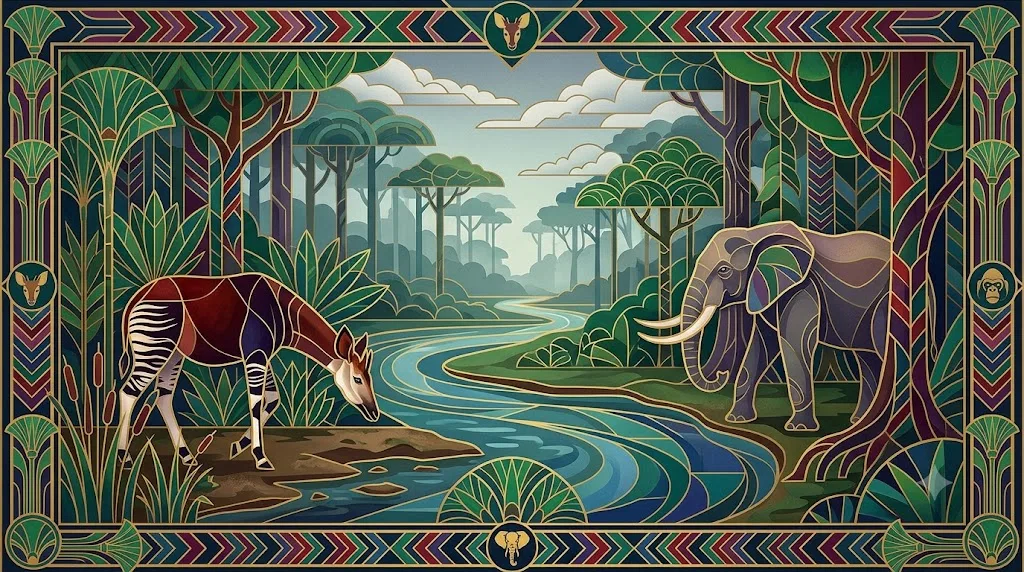
DR Congo sits at the heart of the wider Congo Basin, a vast region of forest, rivers, savannas and wetlands that conservation groups describe as the world’s second-largest tropical forest after the Amazon. The basin spans six countries, including DR Congo and Republic of Congo, and contains forest elephants, great apes, buffalo, birds, fish and thousands of plant species. For readers in Europe and North America, especially in the early 20th century, that scale made the region easy to imagine as a last refuge for animals unknown to science.[World Wildlife Fund]worldwildlife.orgWorld Wildlife Fund The Congo Basin's Animals & People | WWF | WWFWorld Wildlife Fund The Congo Basin's Animals & People | WWF | WWF
That imagination was not entirely silly. Central Africa really did produce zoological surprises. The okapi, now a symbol of DR Congo’s real wildlife, was introduced to European science around 1901 and was quickly framed in Britain as an “African unicorn” because it looked so unlike familiar zoo animals: striped like a zebra, shaped partly like an antelope, and related to the giraffe. Historian Edward Guimont points out that this kind of discovery fed a wider imperial-era belief that African forests might still contain legendary beasts waiting to be collected, named and displayed.[CONTINGENT]contingentmagazine.orgCONTINGENTHunting Dinosaurs in Central AfricaCONTINGENTHunting Dinosaurs in Central Africa
DR Congo’s actual biodiversity also keeps the atmosphere alive. A 2025 IUCN country brief describes the DRC as one of the world’s most biodiverse countries, with more than 10,000 plant species and iconic wildlife including mountain gorillas, bonobos, okapis and forest elephants, spread across rainforest, savannas, wetlands and montane forests. In other words, the country does not need invented dinosaurs to be biologically extraordinary.[IUCN Portals]portals.iucn.orgPortals Country Brief: Democratic Republic of Congo (DRCPortals Country Brief: Democratic Republic of Congo (DRC
Mokele-mbembe: the famous Congo monster that is not neatly a DR Congo case
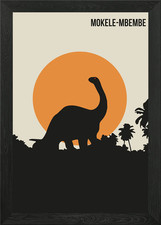
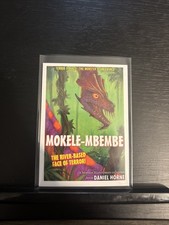
Mokele-mbembe is usually described in popular writing as a large, water-associated creature of the Congo River Basin, often with a long neck, heavy body and tail. In Western cryptozoology it became the classic “surviving sauropod” claim: a brontosaurus-like animal supposedly lingering in swamp forest. The problem for a DR Congo page is that many of the most repeated modern sighting areas are across the river system in Republic of Congo, especially the Likouala swamp region and Lake Télé, not cleanly within DR Congo’s present borders.[Wikipedia]WikipediaOpen source on wikipedia.org.
The story’s early written form is also more complicated than the pop version. New Lines Magazine’s 2025 reporting, drawing on historian Adrienne Mayor, notes that a 1913 report by German colonial officer Ludwig Freiherr von Stein described mokele-mbembe as a cave-dwelling, reptilian being combining features of several known African animals. That is a long way from a clear eyewitness account of a sauropod. The dinosaur interpretation grew later, helped by Western fascination with prehistoric beasts and by the fact that old reconstructions often portrayed sauropods as swamp-dwelling animals.[New Lines Magazine]newlinesmag.comNew Lines Magazine The Congo’s Dinosaur of DiscordNew Lines Magazine The Congo’s Dinosaur of Discord
This does not make mokele-mbembe irrelevant to DR Congo. The Congo River, shared ecosystems, cross-border languages, colonial routes and expedition literature all helped blur the distinction between the DRC, Republic of Congo, Cameroon and the wider basin. For a general reader, “Congo” became a single mythic landscape. For evidence-aware history, however, it is better to say that mokele-mbembe is a Congo Basin legend with strong neighbouring-country clusters, often attached to DR Congo in global pop culture because the DRC dominates the map and the imagination of the basin.[World Wildlife Fund]worldwildlife.orgWorld Wildlife Fund The Congo Basin's Animals & People | WWF | WWFWorld Wildlife Fund The Congo Basin's Animals & People | WWF | WWF

What evidence exists for a dinosaur-like animal?
The evidence for a dinosaur-like mokele-mbembe is weak. It consists mainly of second-hand accounts, interviews, expedition anecdotes, local story material filtered through outsiders, and later retellings by cryptozoologists. Smithsonian Magazine’s science coverage is blunt: despite multiple expeditions to DR Congo over many years, there is no solid evidence that mokele-mbembe is a dinosaur or even a real unknown animal. For a claim as large as a surviving non-bird dinosaur, eyewitness stories are not enough; researchers would expect bones, clear photographs, DNA, tracks, repeated camera-trap records, carcasses or ecological signs.[Smithsonian Magazine]smithsonianmag.comSmithsonian Magazine Living Sauropods? No WaySmithsonian Magazine Living Sauropods? No Way
The most famous modern expeditions did not solve that problem. Roy Mackal, a University of Chicago biochemist with a serious scientific career and a side life as a cryptozoologist, made expeditions in the early 1980s to investigate mokele-mbembe reports. The University of Chicago Magazine notes that those trips helped attach his name permanently to the legend, but they did not produce physical proof. Mackal’s work became part of the modern mythology because it gave the hunt a scholarly face, not because it confirmed an animal.[The University of Chicago Magazine]mag.uchicago.eduOpen source on uchicago.edu.
There is also a selection problem. Many accounts survive because they fit the monster-hunt frame: a river creature, a long neck, a dangerous beast, a remote swamp. Reports that sound more like known animals, spirits, taboo places or metaphorical traditions tend to be flattened into the dinosaur storyline. Newer reporting from the region has stressed that local meanings may have been spiritual or ecological before foreign writers converted them into a cryptid hunt.[New Lines Magazine]newlinesmag.comNew Lines Magazine The Congo’s Dinosaur of DiscordNew Lines Magazine The Congo’s Dinosaur of Discord
The most plausible explanations
The strongest explanations do not require a hidden sauropod. They involve folklore, misidentification, memory of real animals, translation drift and the way outside audiences reshape local stories.
Misidentified megafauna is the simplest possibility for some sightings. The Congo Basin has forest elephants, hippos, crocodiles and large mammals moving through dense vegetation and muddy water. In poor visibility, a partial view of a hippo, elephant, trunk, back, wake, tail or floating vegetation can become something stranger in memory. National Geographic’s recent coverage of Congo Basin “dinosaur” claims included a local explanation that one supposed dinosaur-like sighting was really a large forest elephant, and noted that elephants or hippos can be mistaken for something more mysterious in the right conditions.[National Geographic]nationalgeographic.comcongo basin mokele mbembe deforestationcongo basin mokele mbembe deforestation
Rhino memory is another common sceptical theory, though it must be handled carefully. Some summaries argue that mokele-mbembe or related horned water-beast traditions may preserve memories of rhinoceroses. IUCN material shows that rhinoceros history in and around DR Congo is real but uneven: northern white rhinos were once known from Garamba National Park, while black rhino historical-range discussions place some occurrence around southern DRC or nearby regions rather than the deep rainforest core. This makes “rhino memory” plausible for some horned-beast motifs, but not a universal explanation for every long-necked swamp monster story.[IUCN Portals]portals.iucn.orgOpen source on iucn.org.
Folklore changed by outsiders may be the most important explanation. A local river being, dangerous place-name, spirit, taboo animal or story about human relationships with forest and water can be transformed when missionaries, colonial officers, journalists or cryptozoologists ask, “Is this a dinosaur?” Once the question is framed that way, drawings and dinosaur pictures can steer answers. This is how a flexible oral tradition becomes a single creature profile with a standard body plan.[New Lines Magazine]newlinesmag.comNew Lines Magazine The Congo’s Dinosaur of DiscordNew Lines Magazine The Congo’s Dinosaur of Discord
Pop culture fed the feedback loop. Early 20th-century newspapers were already primed by dinosaur excitement, and later films and books made the Congo dinosaur a recognisable adventure trope. The 1985 Disney film Baby: Secret of the Lost Legend drew from the mokele-mbembe idea, even while relocating and fictionalising it, and helped cement the image of a family of hidden brontosaurs in African forest.[The University of Chicago Magazine]mag.uchicago.eduOpen source on uchicago.edu.
Other Congo Basin mystery beasts linked to the DR Congo imagination
Mokele-mbembe is not alone. The wider Congo Basin has a cluster of named mystery animals, although many are even more weakly sourced and often belong more clearly to Republic of Congo, Cameroon, Gabon, Zambia or Central African Republic than to DR Congo itself.
One recurring example is emela-ntouka, often glossed in cryptozoology as a horned, elephant-killing water beast. Some writers have speculated about a surviving ceratopsian dinosaur; others treat it as an exaggerated rhinoceros-like or folklore-derived animal. The difficulty is that the case depends heavily on secondary cryptozoology literature and later retellings, not on modern zoological evidence.[Cryptid Wiki]cryptidz.fandom.comCryptid Wiki Emela-NtoukaCryptid Wiki Emela-Ntouka
Another is mbielu-mbielu-mbielu, described in cryptid sources as a river animal with “planks” or plates along its back, leading to stegosaur comparisons. This is a good example of how dinosaur imagery can take over a vague report: a back with ridges could suggest a crocodile, floating debris, vegetation, a fish, a mythic descriptor, or a stegosaur, depending on the listener’s expectations. The surviving public material is too thin to treat it as a strong DR Congo case.[Cryptid Archives]cryptidarchives.fandom.comCryptid Archives Mbielu-mbielu-mbieluCryptid Archives Mbielu-mbielu-mbielu
Then there is Kasai rex, a supposed giant predatory dinosaur associated with the Kasai region of southern DR Congo. Unlike mokele-mbembe, this one is more directly tied to the DRC by location, but it is also far more obviously damaged by hoax material. Cryptid archive summaries describe the famous “photographs” as fake, with the story best known today as an example of how a dramatic image can keep a flimsy monster claim alive. For a DR Congo cryptid history, Kasai rex belongs in the hoax-and-afterlife file rather than the serious mystery-animal file.[Cryptid Archives]cryptidarchives.fandom.comCryptid Archives Kasai rex | Encyclopaedia of CryptozoologyCryptid Archives Kasai rex | Encyclopaedia of Cryptozoology
The real “hidden animal” lesson: okapi, bonobo and the forest record
The most persuasive hidden-animal story in DR Congo is not a monster. It is the history of animals that were real, elusive and late to Western science. The okapi is the perfect example: endemic to central and north-eastern tropical rainforest in the DRC, elusive enough to become a symbol of mystery, and spectacular enough that early European audiences treated it almost like a legendary animal made real.[IUCN]iucn.orgOkapi (Okapia johnstoniOkapi (Okapia johnstoni
That matters because cryptid stories often borrow credibility from genuine discoveries. “The okapi was once unknown to Western science, so why not a dinosaur?” is a common style of argument. The answer is that new or elusive mammals can exist without making every large-monster claim equally likely. Okapis leave bodies, bones, dung, tracks, ecological relationships and eventually camera-trap records. A breeding population of giant sauropod-like animals would leave far larger signs across landscape, food webs and local hunting knowledge.[Smithsonian Magazine]smithsonianmag.comSmithsonian Magazine Living Sauropods? No WaySmithsonian Magazine Living Sauropods? No Way
DR Congo’s forests still deserve biological humility. New species are documented in the wider Congo Basin, and large areas remain difficult to survey. But “not fully surveyed” is not the same as “anything can hide there”. The more spectacular the proposed animal, the heavier the evidence burden becomes. A new frog, fish, insect, plant or small mammal is far more plausible than a surviving dinosaur-sized reptile.[World Wildlife Fund]worldwildlife.orgWorld Wildlife Fund The Congo Basin's Animals & People | WWF | WWFWorld Wildlife Fund The Congo Basin's Animals & People | WWF | WWF
Why the legends keep changing
DR Congo’s monster stories have changed because the country itself has often been viewed from outside through layers of fantasy: colonial exploration, dangerous-jungle adventure, lost-world fiction, conservation crisis, war reporting and online cryptid culture. Each layer adds something. Early colonial accounts supplied remote rivers and “native reports”. Dinosaur mania supplied the sauropod silhouette. Cryptozoology supplied expeditions and witness interviews. Creationist media supplied a reason to keep searching for living dinosaurs. Internet culture supplied short monster profiles, recycled maps and fake images.[newlinesmag.com]newlinesmag.comNew Lines Magazine The Congo’s Dinosaur of DiscordNew Lines Magazine The Congo’s Dinosaur of Discord
The environmental story also changed. Modern Congo Basin reporting is increasingly about deforestation, roads, mining, poaching and armed insecurity rather than blank spaces on a map. WWF describes the region as under pressure from illegal hunting, wildlife trade, logging, infrastructure, agriculture and mineral extraction. IUCN’s DRC country brief similarly stresses poaching, habitat destruction, illegal wildlife trade and insecurity as central conservation challenges. In that setting, the idea of an untouched lost world becomes harder to sustain.[World Wildlife Fund]worldwildlife.orgWorld Wildlife Fund The Congo Basin's Animals & People | WWF | WWFWorld Wildlife Fund The Congo Basin's Animals & People | WWF | WWF
This does not kill the legends; it updates them. A monster that once represented remoteness can become a symbol of vanishing forest. A “dinosaur sighting” may be retold as evidence that animals are being pushed out by habitat loss. A myth once rooted in water, danger or restraint can be repackaged as tourism, YouTube mystery content or a warning about ecological disruption. The creature survives culturally because it is flexible.[New Lines Magazine]newlinesmag.comNew Lines Magazine The Congo’s Dinosaur of DiscordNew Lines Magazine The Congo’s Dinosaur of Discord
How to read DR Congo cryptid claims without losing the fun
The best way to enjoy DR Congo’s cryptid tradition is to keep three categories separate.
First, there is folklore and local knowledge: stories, warnings, place-based beings, animal memories and ecological observations. These may be culturally important even when they are not zoological reports. Treating them only as “failed evidence for dinosaurs” misses much of their meaning.[New Lines Magazine]newlinesmag.comNew Lines Magazine The Congo’s Dinosaur of DiscordNew Lines Magazine The Congo’s Dinosaur of Discord
Second, there are mystery-animal claims: reports of large unknown creatures, unusual tracks, frightening encounters or strange river movements. These can be interesting, but they need careful questions. Who saw it? Where exactly? When? Was the account first-hand? Was a drawing or dinosaur image shown before the description? Are there independent reports from the same area? Is there physical evidence?[Smithsonian Magazine]smithsonianmag.comSmithsonian Magazine Living Sauropods? No WaySmithsonian Magazine Living Sauropods? No Way
Third, there are media inventions and hoaxes: fake photographs, exaggerated expedition claims, renamed hybrid animals, recycled “Congo monster” articles and cases where “Congo” is used more as an exotic label than a precise location. Kasai rex is the clearest warning sign here: dramatic, memorable, and much weaker than its online afterlife suggests.[Cryptid Archives]cryptidarchives.fandom.comCryptid Archives Kasai rex | Encyclopaedia of CryptozoologyCryptid Archives Kasai rex | Encyclopaedia of Cryptozoology
What remains genuinely interesting
The strongest DR Congo cryptid story is not that a sauropod probably survives in the swamp. It is that one of the world’s richest real ecosystems became the stage on which outsiders projected dinosaurs, unicorns, lost worlds and monster hunts. The country’s forests and rivers are strange enough without pretending the evidence is stronger than it is. They hold elusive okapis, bonobos, forest elephants, gorillas, crocodiles, hippos, rare birds, deep local knowledge and landscapes that remain hard to study under real political and conservation pressures.[worldwildlife.org]worldwildlife.orgWorld Wildlife Fund The Congo Basin's Animals & People | WWF | WWFWorld Wildlife Fund The Congo Basin's Animals & People | WWF | WWF
For readers, the payoff is sharper than a simple yes-or-no monster verdict. DR Congo shows how cryptids are made: from real animals glimpsed badly, stories translated unevenly, colonial-era collecting fever, scientific discoveries like the okapi, fake images like Kasai rex, and modern media that prefers a dinosaur to a complicated forest. The mystery is not just “what creature was seen?” It is also “who shaped the story, and why did this place make the story feel possible?”
Amazon book picks
Further Reading
Books and field guides related to Does DR Congo Hide a Living Dinosaur?. Use these as the next step if you want deeper reading beyond the article.
Abominable Science!
Examines famous monster claims including living-dinosaur narratives.
Hunting Monsters
Discusses Mokele-Mbembe and hidden-animal claims in scientific context.
eBay marketplace picks
Marketplace Samples
Live-tested eBay searches with available results related to this page.
Endnotes
1.
Source: contingentmagazine.org
Title: CONTINGENTHunting Dinosaurs in Central Africa
Link:https://contingentmagazine.org/2019/03/18/hunting-dinosaurs-africa/
2.
Source: portals.iucn.org
Title: Portals Country Brief: Democratic Republic of Congo (DRC)
Link:https://portals.iucn.org/library/sites/library/files/documents/2025-046-En.pdf
3.
Source: Wikipedia
Link:https://en.wikipedia.org/wiki/Mokele-mbembe
4.
Source: portals.iucn.org
Link:https://portals.iucn.org/library/sites/library/files/documents/2025-004-En.pdf
5.
Source: iucn.org
Title: Okapi (Okapia johnstoni)
Link:https://iucn.org/resources/publication/okapi-okapia-johnstoni
6.
Source: worldheritageoutlook.iucn.org
Link:https://worldheritageoutlook.iucn.org/node/1076
7.
Source: Wikipedia
Title: Congolese spotted lion
Link:https://en.wikipedia.org/wiki/Congolese_spotted_lion
8.
Source: youtube.com
Title: Mokele-mbembe and the “Lost” Dinosaurs of the Congo
Link:https://www.youtube.com/watch?v=TI_9mN8JzpI
9.
Source: archive.org
Title: The ISC Newsletter Collection
Link:https://archive.org/details/The-ISC-Newsletter-Collection
10.
Source: dn721605.ca.archive.org
Title: Dragon Magazine108
Link:https://dn721605.ca.archive.org/0/items/DragonMagazine260_201801/DragonMagazine108.pdf
11.
Source: archive.org
Link:https://archive.org/stream/B-001-014-617/B-001-014-617_djvu.txt
12.
Source: archive.org
Link:https://archive.org/stream/bub_gb_icMuBQhW4vgC/bub_gb_icMuBQhW4vgC_djvu.txt
13.
Source: archive.org
Link:https://archive.org/stream/history-of-monsters-mythical-beasts/History%20of%20Monsters%20%26%20Mythical%20Beasts_djvu.txt
14.
Source: archive.org
Link:https://archive.org/stream/Cryptozoology_201608/Cryptozoology_djvu.txt
15.
Source: dn720405.ca.archive.org
Link:https://dn720405.ca.archive.org/0/items/fringesofreasonw00unse/fringesofreasonw00unse.pdf
16.
Source: archive.org
Link:https://archive.org/stream/bulletinofafrica1012afri/bulletinofafrica1012afri_djvu.txt
17.
Source: ia801301.us.archive.org
Title: Fortean Times Christmas 2015
Link:https://ia801301.us.archive.org/24/items/Fortean_Times_Christmas_2015/Fortean_Times_Christmas_2015.pdf
18.
Source: archive.org
Link:https://archive.org/stream/disney-adventures-magazine-collection/disney-adventures-v3i1_djvu.txt
19.
Source: Wikipedia
Title: Wildlife of the Democratic Republic of the Congo
Link:https://en.wikipedia.org/wiki/Wildlife_of_the_Democratic_Republic_of_the_Congo
20.
Source: Wikipedia
Link:https://en.wikipedia.org/wiki/Mbielu-mbielu-mbielu
21.
Source: Wikipedia
Title: Black rhinoceros
Link:https://en.wikipedia.org/wiki/Black_rhinoceros
22.
Source: Wikipedia
Link:https://en.wikipedia.org/wiki/Okapi
23.
Source: wwf.de
Title: Report New Life in the Congo Basin
Link:https://www.wwf.de/fileadmin/fm-wwf/Publikationen-PDF/Afrika/WWF-Report-New-Life-in-the-Congo-Basin.pdf
24.
Source: iucn.org
Link:https://iucn.org/resources/grey-literature/country-brief-democratic-republic-congo-drc
25.
Source: iucn.org
Link:https://iucn.org/sites/default/files/import/downloads/garamba_translocation.pdf
26.
Source: youtube.com
Link:https://www.youtube.com/watch?v=G-6XbWL97Eg
27.
Source: youtube.com
Link:https://www.youtube.com/watch?v=tDw7bkcvLJ0
28.
Source: youtube.com
Link:https://www.youtube.com/watch?v=yFje4KNUnr4
29.
Source: rhinos.org
Title: state of the rhino
Link:https://rhinos.org/about-rhinos/state-of-the-rhino/
30.
Source: awsassets.wwf.es
Link:https://awsassets.wwf.es/downloads/2012_07_24_datasheet_african_rhinos_1.pdf
31.
Source: amazon.de
Link:https://www.amazon.de/-/en/Larry-Jaffer-ebook/dp/B00HN7803M?tag=searcht-20
32.
Source: iucn.nl
Link:https://www.iucn.nl/en/story/citizen-science-leads-to-better-protection-of-hippos-in-dr-congo/
33.
Source: youtube.com
Title: The Mokele-Mbembe Mystery: Dinosaur, Myth, or Unknown Animal?
Link:https://www.youtube.com/watch?v=sTVTuo48ZpQ
Source snippet
MOKELE MBEMBE: The Last Living Dinosaur Cryptid | Documentary...
34.
Source: youtube.com
Title: MOKELE MBEMBE: The Last Living Dinosaur Cryptid | Documentary
Link:https://www.youtube.com/watch?v=N-zq-AgUmEw
Source snippet
Real Cryptids: OKAPI! | Lindsay Nikole...
35.
Source: youtube.com
Title: Real Cryptids: OKAPI! | Lindsay Nikole
Link:https://www.youtube.com/watch?v=aHaF0RqvWRk
Source snippet
The Cryptid That Turned Out To Be Real...
36.
Source: youtube.com
Title: The Cryptid That Turned Out To Be Real
Link:https://www.youtube.com/watch?v=Qb4zumgj_ZY
Source snippet
Living Dinosaurs in the Congo: Mokele Mbembe Part 2...
37.
Source: youtube.com
Title: Living Dinosaurs in the Congo: Mokele Mbembe Part 2
Link:https://www.youtube.com/watch?v=Q_rTFf9Nxq0
38.
Source: smithsonianmag.com
Title: Smithsonian Magazine Living Sauropods? No Way
Link:https://www.smithsonianmag.com/science-nature/living-sauropods-no-way-120910306/
39.
Source: newlinesmag.com
Title: New Lines Magazine The Congo’s Dinosaur of Discord
Link:https://newlinesmag.com/reportage/the-congos-dinosaur-of-discord/
40.
Source: worldwildlife.org
Title: World Wildlife Fund The Congo Basin’s Animals & People | WWF | WWF
Link:https://www.worldwildlife.org/places/congo-basin/
41.
Source: mag.uchicago.edu
Link:https://mag.uchicago.edu/science-medicine/roy-mackals-wild-speculation
42.
Source: nationalgeographic.com
Title: congo basin mokele mbembe deforestation
Link:https://www.nationalgeographic.com/environment/article/congo-basin-mokele-mbembe-deforestation
43.
Source: cryptidz.fandom.com
Title: Cryptid Wiki Emela-Ntouka
Link:https://cryptidz.fandom.com/wiki/Emela-Ntouka
44.
Source: cryptidarchives.fandom.com
Title: Cryptid Archives Mbielu-mbielu-mbielu
Link:https://cryptidarchives.fandom.com/wiki/Mbielu-mbielu-mbielu
45.
Source: cryptidarchives.fandom.com
Title: Cryptid Archives Kasai rex | Encyclopaedia of Cryptozoology
Link:https://cryptidarchives.fandom.com/wiki/Kasai_rex
46.
Source: cryptozoologycryptids.fandom.com
Title: Cryptid Wiki Kasai Rex
Link:https://cryptozoologycryptids.fandom.com/wiki/Kasai_Rex
47.
Source: smithsonianmag.com
Title: a dinosaur expedition doomed from the start 103367120
Link:https://www.smithsonianmag.com/science-nature/a-dinosaur-expedition-doomed-from-the-start-103367120/
48.
Source: ambacongo-us.org
Title: congo basin
Link:https://www.ambacongo-us.org/en/about-congo/congo-basin
49.
Source: whc.unesco.org
Link:https://whc.unesco.org/en/list/718/
50.
Source: cryptidarchives.fandom.com
Title: Water lion
Link:https://cryptidarchives.fandom.com/wiki/Water_lion
51.
Source: cryptidz.fandom.com
Title: Water lion
Link:https://cryptidz.fandom.com/wiki/Water_lion
52.
Source: cryptidarchives.fandom.com
Link:https://cryptidarchives.fandom.com/wiki/Dodu
53.
Source: cryptidarchives.fandom.com
Title: Mokele mbembe
Link:https://cryptidarchives.fandom.com/wiki/Mokele-mbembe
54.
Source: cryptidarchives.fandom.com
Title: Mourou ngou
Link:https://cryptidarchives.fandom.com/wiki/Mourou-ngou
55.
Source: cryptidz.fandom.com
Title: Mokèlé mbèmbé
Link:https://cryptidz.fandom.com/wiki/Mok%C3%A8l%C3%A9-mb%C3%A8mb%C3%A9
56.
Source: mythus.fandom.com
Title: Mokélé mbembé
Link:https://mythus.fandom.com/wiki/Mok%C3%A9l%C3%A9-mbemb%C3%A9
57.
Source: cryptidz.fandom.com
Link:https://cryptidz.fandom.com/wiki/Marozi
58.
Source: cryptidz.fandom.com
Link:https://cryptidz.fandom.com/wiki/Mbielu-Mbielu-Mbielu
59.
Source: cryptidz.fandom.com
Title: Kasai Rex
Link:https://cryptidz.fandom.com/wiki/Kasai_Rex
60.
Source: facebook.com
Link:https://www.facebook.com/groups/487648871307669/posts/8402161159856361/
61.
Source: beastsoflegend.com
Link:https://beastsoflegend.com/bestiary/africa/central/
62.
Source: wwf.panda.org
Link:https://wwf.panda.org/discover/knowledge_hub/where_we_work/congo_basin_forests/the_area/wildlife/mammals
Additional References
63.
Source: researchgate.net
Link:https://www.researchgate.net/publication/306026622_Okapia_johnstoni_The_IUCN_Red_List_of_Threatened_Species_2015
64.
Source: reddit.com
Link:https://www.reddit.com/r/Cryptozoology/comments/1fghp2v/a_timeline_of_the_mokele_mbembe_the_living/
65.
Source: reddit.com
Link:https://www.reddit.com/r/Cryptozoology/comments/1c7g9a1/about_the_mokelembembe/
66.
Source: genesispark.com
Link:https://genesispark.com/essays/behemoth-or-bust/
67.
Source: rhinoresourcecenter.com
Link:https://rhinoresourcecenter.com/library/species/black-rhino/
68.
Source: greenpeace.org
Link:https://www.greenpeace.org/usa/forests/congo-basin/
69.
Source: deviantart.com
Link:https://www.deviantart.com/themorlock/art/Cryptids-of-Central-Africa-170598112
70.
Source: michaeldelahoyde.org
Link:https://michaeldelahoyde.org/monsters/crypto-intro/
71.
Source: facebook.com
Link:https://www.facebook.com/johanegerkranspublic/posts/emela-ntouka-is-a-large-horned-cryptid-from-the-congo-rumoured-to-be-a-highly-de/1285484333379144/
72.
Source: reddit.com
Link:https://www.reddit.com/r/Cryptozoology/comments/18essfb/emelantouka_is_a_neodinosaurian_cryptid_ungulate/
Topic Tree
Follow this branch
Related pages 192
- Antigua Cryptids
- Maldives Monsters
- Malta Monsters
- Qatar Monsters
- Argentina Monsters
- +187 more in sidebar