Within Mexico Monsters
What Was the Ahuizotl of Mexico's Lake World?
The ahuizotl turns the canals and vanished lakes of central Mexico into a landscape of danger, sacred meaning and remembered drownings.
On this page
- The creature in Indigenous records
- Why water shaped the legend
- Otters, opossums and symbolic explanations
Page outline Jump by section
Introduction
The ahuizotl is one of the most distinctive monster traditions associated with central Mexico, not because of reports of a hidden animal, but because it is inseparable from a vanished landscape. In Mexica tradition, the creature haunted the lakes, canals and marshes of the Valley of Mexico, especially around the great lake system that once surrounded Tenochtitlan. It was described as a small dog-like aquatic being with dexterous hands and a strange hand at the end of its tail, capable of dragging people into the water. According to traditional accounts, it targeted those who ventured too close to dangerous shorelines, canals or pools.[Wikipedia]WikipediaAhuizotl (mythologyAhuizotl (mythology
Today, much of that watery world has disappeared beneath Mexico City. The legend therefore survives not only as a monster story but also as a memory of a lost environment. The ahuizotl belongs to a Mexico of causeways, reed beds, fishing communities and waterways where drowning was a real danger and where water itself carried sacred meaning.[Wikipedia]WikipediaFlorentine CodexFlorentine Codex
What Was the Ahuizotl of Mexico’s Lake World?
The most detailed early descriptions come from Indigenous knowledge recorded in the sixteenth-century Florentine Codex, compiled by Bernardino de Sahagún with Nahua collaborators. There the creature appears as an aquatic predator associated with lakes, springs and deep water. It was commonly described as roughly dog-sized, with pointed ears, dark waterproof fur and unusual hands. The most famous feature was a hand-like appendage on its tail, used to seize victims.[Wikipedia]WikipediaFlorentine CodexFlorentine Codex
Stories claimed that the ahuizotl lurked near the water’s edge waiting for fishermen, travellers and children. Some versions said it imitated the cry of a baby to attract curious people. Others claimed it stirred fish and frogs into unusual activity, tempting fishermen closer to dangerous water before attacking.[Wikipedia]WikipediaAhuizotl (mythologyAhuizotl (mythology
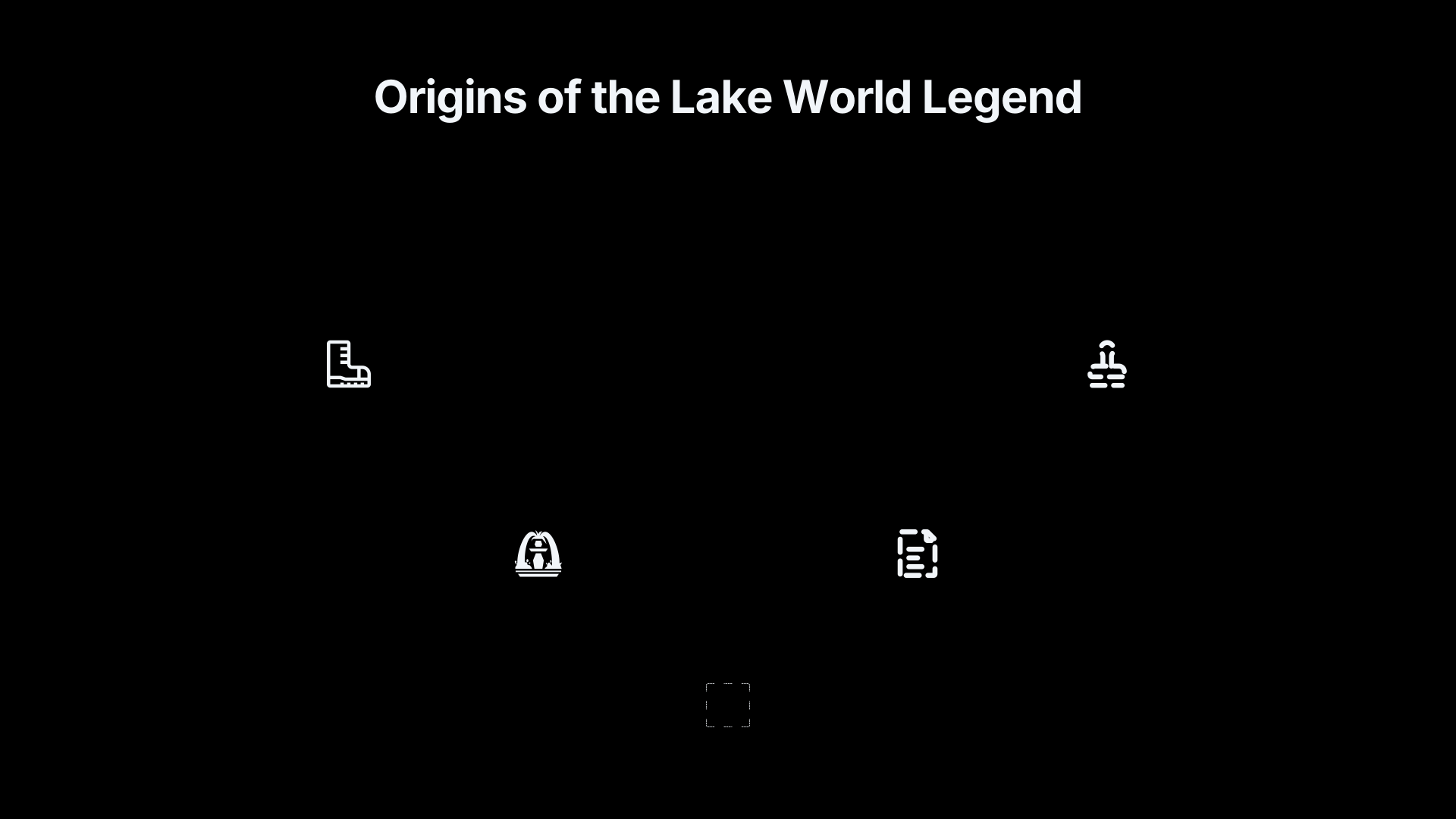
Unlike many later cryptid traditions, the ahuizotl was not simply a monster that killed for food. In Mexica belief it was closely connected to powerful water deities. Victims were sometimes said to have been chosen by divine forces, making their deaths part of a sacred order rather than a random attack.[Wikipedia]WikipediaAhuizotl (mythologyAhuizotl (mythology
The Creature in Indigenous Records
The ahuizotl occupies an unusual place because it appears in Indigenous records produced close to the period when the Mexica state still existed. That does not make it a real animal, but it does mean the legend has deeper historical roots than many modern monster stories.
Accounts preserved through Nahua traditions describe the recovery of bodies supposedly taken by the creature. These stories often included striking details: victims were found after several days, and particular body parts such as eyes, nails and teeth were said to be missing. Only priests were believed to have the right to handle such remains because the dead had been claimed by the powers of water.[Wikipedia]WikipediaAhuizotl (mythologyAhuizotl (mythology
The creature’s prestige is reflected in the fact that the Mexica ruler Ahuizotl, who reigned in the late fifteenth century, adopted the name as an emblem. The association suggests the being was not merely feared but also respected as a symbol linked to water, power and divine favour.[Wikipedia]WikipediaOpen source on wikipedia.org.
The tradition was sufficiently widespread that later colonial writers repeated stories about it, and one account attributed to Hernán Cortés even claimed that a member of his expedition had fallen victim to an ahuizotl. Such reports are impossible to verify, but they show how firmly the legend had entered regional folklore.[Wikipedia]WikipediaAhuizotl (mythologyAhuizotl (mythology
Why Water Shaped the Legend
To understand the ahuizotl, it helps to picture the Valley of Mexico before modern drainage projects transformed it. Rather than the vast urban basin seen today, the region once contained interconnected lakes, marshes, canals and islands. Tenochtitlan itself stood amid water, connected by causeways and dependent on canals for transport and trade.[Wikipedia]WikipediaFlorentine CodexFlorentine Codex
In such an environment, water was both essential and dangerous. Sudden drops in lakebeds, hidden channels, soft mud and strong currents could all prove deadly. A creature that dragged people beneath the surface offered a vivid explanation for drownings that occurred without witnesses.
The legend also reflected the sacred status of water. The Mexica world was filled with powerful water gods and spirits. Lakes and springs were not merely physical features; they were places where divine forces acted upon human lives. The ahuizotl therefore functioned as more than a predator. It became a guardian, messenger or collector acting on behalf of supernatural powers.[Wikipedia]WikipediaAhuizotl (mythologyAhuizotl (mythology
This helps explain why many stories focus less on hunting behaviour than on ritual consequences. The creature’s victims were often portrayed as chosen people rather than unlucky swimmers. The legend transformed accidental death into an event with religious meaning.[Wikipedia]WikipediaAhuizotl (mythologyAhuizotl (mythology
A Monster of a Disappearing Landscape
One reason the ahuizotl remains fascinating is that the world it inhabited has largely vanished.
Beginning in the colonial period and accelerating over centuries, the lakes of the Valley of Mexico were drained to reduce flooding and create space for urban growth. The great aquatic landscape that shaped Mexica life survives only in fragments, most famously in the canals of Xochimilco. As the physical environment disappeared, the creature associated with it became increasingly legendary.[Wikipedia]WikipediaFlorentine CodexFlorentine Codex
This gives the ahuizotl a different character from many modern cryptids. There are no significant contemporary sighting waves, newspaper panics or tourism-driven monster hunts. Instead, the creature persists as cultural memory. It evokes a lost network of waterways that once defined central Mexico and influenced everyday life.
For modern readers, the legend can be read almost as environmental folklore: a reminder that Mexico City stands atop a landscape where water once ruled movement, survival and belief.
Otters, Opossums and Symbolic Explanations
Most researchers do not regard the ahuizotl as evidence for an undiscovered species. Instead, they have proposed several explanations for how the legend developed.
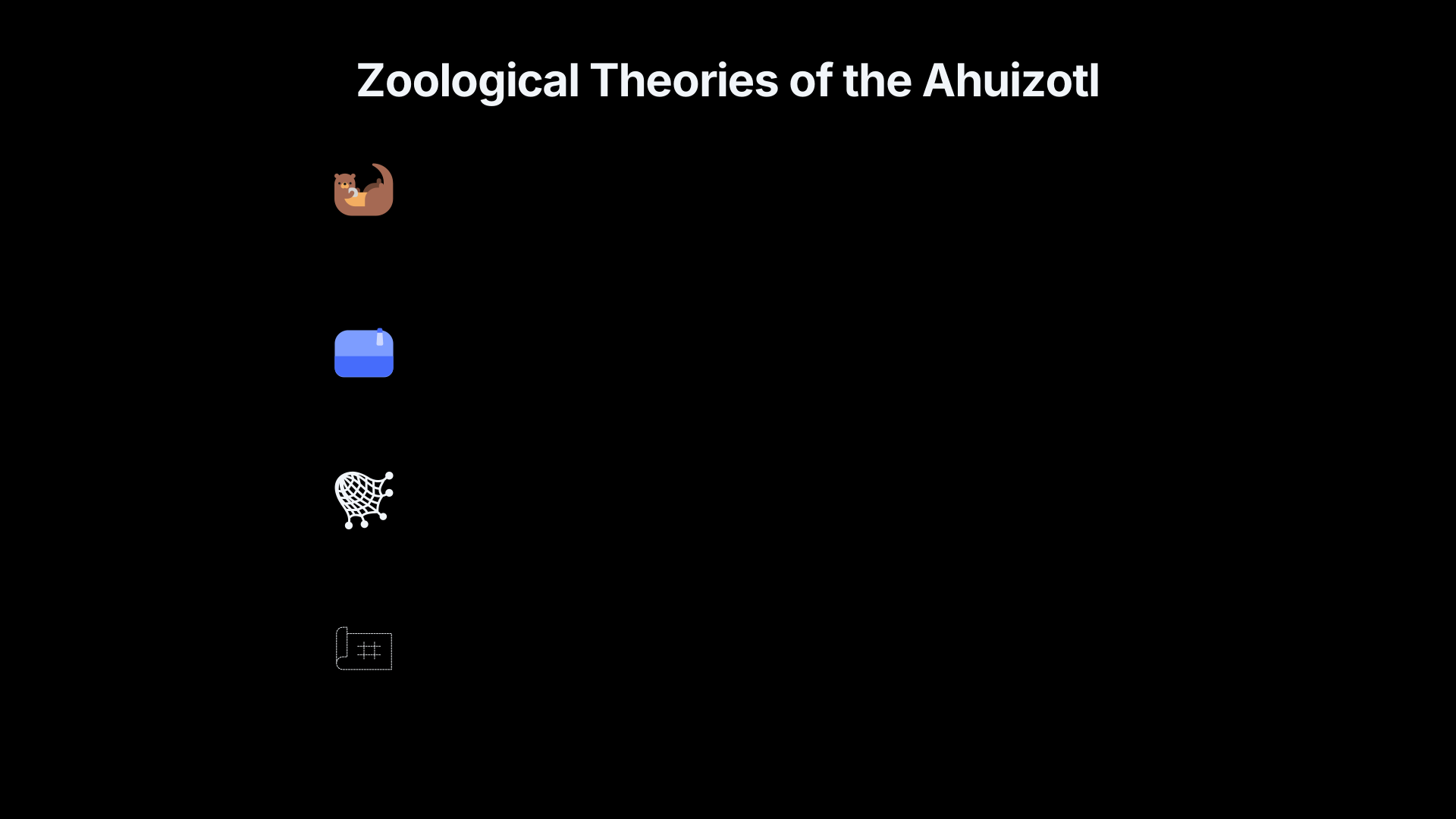
One possibility is that the creature reflects observations of real aquatic mammals. Otters are frequently suggested because of their swimming ability, playful behaviour and occasional appearance near shorelines. The creature’s reported size and aquatic habits fit an otter more closely than many other animals.[mexicolore.co.uk]mexicolore.co.ukThe AhuizotlThe Ahuízotl is thought by some investigators to be a mythical animal, bane of the water goers. It would lie in wait of a vic…
Another proposal links the ahuizotl to the water opossum. This unusual aquatic marsupial has dexterous hands, waterproof fur and a prehensile tail. Supporters of this interpretation argue that stories about a tail ending in a grasping hand may have grown from observations of the animal’s remarkable tail and climbing abilities.[Wikipedia]WikipediaAhuizotl (mythologyAhuizotl (mythology
Yet purely zoological explanations do not account for the creature’s religious role. The ahuizotl may be best understood as a blend of natural observation and symbolic storytelling. Real animals provided raw material, while spiritual beliefs transformed them into a guardian of sacred waters and an explanation for mysterious drownings.
That combination helps explain the legend’s longevity. The ahuizotl was frightening because it occupied the boundary between the known and the unknown. People recognised elements of familiar animals, yet the creature belonged to a deeper world beneath the lakes, one tied to divine forces and the dangers hidden beneath calm water.
Why the Ahuizotl Still Matters
Among Mexico’s many legendary creatures, the ahuizotl stands out because it is rooted so firmly in a specific landscape. Its story cannot be separated from the lakes, canals and marshes that once filled the Valley of Mexico.
Whether interpreted as a supernatural water beast, a cautionary tale about drowning, a distorted memory of real animals or a symbol of sacred waters, the ahuizotl reveals how closely folklore can be tied to geography. As the old lake world disappeared, the creature became less a potential monster and more a cultural echo of the environment that created it.
In that sense, the ahuizotl is not only a legend about what lurked beneath the water. It is also a reminder that much of central Mexico’s original aquatic world survives today mainly through stories.
Amazon book picks
Further Reading
Books and field guides related to What Was the Ahuizotl of Mexico's Lake World?. Use these as the next step if you want deeper reading beyond the article.
Gods and Symbols of Ancient Mexico and the Maya
Provides symbolic and mythological context for aquatic beings.
Aztec Thought and Culture
Explains the cultural environment behind lake-world legends.
The Mythology of Mexico and Central America
Places the ahuizotl within wider Mesoamerican traditions.
eBay marketplace picks
Marketplace Samples
Live-tested eBay searches with available results related to this page.



Endnotes
1.
Source: Wikipedia
Title: Ahuizotl (mythology)
Link:https://en.wikipedia.org/wiki/Ahuizotl_%28mythology%29
2.
Source: mexicolore.co.uk
Link:https://www.mexicolore.co.uk/aztecs/aztefacts/ahuizotl
Source snippet
The AhuizotlThe Ahuízotl is thought by some investigators to be a mythical animal, bane of the water goers. It would lie in wait of a vic...
3.
Source: Wikipedia
Title: Florentine Codex
Link:https://en.wikipedia.org/wiki/Florentine_Codex
4.
Source: Wikipedia
Title: Ahuízotl (criatura)
Link:https://es.wikipedia.org/wiki/Ahu%C3%ADzotl_%28criatura%29
5.
Source: Wikipedia
Link:https://pt.wikipedia.org/wiki/Ahuizotl
6.
Source: Wikipedia
Link:https://en.wikipedia.org/wiki/Ahuitzotl
7.
Source: Wikipedia
Link:https://it.wikipedia.org/wiki/Ahuizotl
8.
Source: youtube.com
Link:https://www.youtube.com/watch?v=FdNHLYn0-cQ
Source snippet
Ahuizotl - The Water Beast (Aztec Mythology)...
9.
Source: youtube.com
Link:https://www.youtube.com/watch?v=1JjgJRh8iF0
Source snippet
Decoding the dreaded AZTEC beast AHUIZOTL in 6.21 mins...
10.
Source: warriorsofmyth.fandom.com
Link:https://warriorsofmyth.fandom.com/wiki/Ahuizotl
11.
Source: clayvermulmfiction.com
Link:https://www.clayvermulmfiction.com/post/cryptid-tidbit-february-2-ahuizotl
Additional References
12.
Source: atozmonsters.com
Link:https://atozmonsters.com/ahuizotl/
Source snippet
rimary function in the lore is to ambush and kill...Read more...
13.
Source: monster.fandom.com
Title: Monster Wiki Ahuizotl | Monster Wiki
Link:https://monster.fandom.com/wiki/Ahuizotl
Source snippet
Monster WikiAhuizotl | Monster Wiki - FandomA legendary creature in Aztec mythology. It is said to lure people to their deaths. The creat...
14.
Source: arxiv.org
Link:https://arxiv.org/abs/2504.03787
15.
Source: youtube.com
Title: Ahuizotl: Mexico’s Terrifying Water Demon
Link:https://www.youtube.com/watch?v=IXjg_9ywd_4
Source snippet
The Ahuizotl: The Aztec Water Monster That Collected Eyes, Teeth, and Nails for Its God...
16.
Source: youtube.com
Title: Decoding the dreaded AZTEC beast AHUIZOTL in 6.21 mins!
Link:https://www.youtube.com/watch?v=HOVHez8WvE4
Source snippet
Ahuizotl: The Aztec Lake Monster Revealed...
17.
Source: facebook.com
Link:https://www.facebook.com/abby.kube/posts/ahuizotl-a-monster-of-aztec-myths-for-the-october-drawing-challenge-heres-this-c/10238801814129217/
18.
Source: ancient-origins.net
Link:https://www.ancient-origins.net/ahuizotl
19.
Source: nightbringer.se
Link:https://nightbringer.se/myths-and-legends/mythic-ahuizotl/
20.
Source: facebook.com
Link:https://www.facebook.com/authoralisavaldes/posts/ive-been-researching-mesoamerican-mythology-and-ive-decided-i-need-an-ahuitzotl-/3763514160376658/
21.
Source: reddit.com
Link:https://www.reddit.com/r/SpeculativeEvolution/comments/1l4tpsc/the_ahuizotl_from_aztec_mythology_as_a_giant/
Topic Tree