Why Does Monaco Keep Meeting Sea Monsters?
Monaco does not have a famous home-grown cryptid in the way that Scotland has Nessie or the United States has Bigfoot.
Page outline Jump by section
Monaco’s “cryptid” tradition is really a sea-monster tradition
The most credible way to approach Monaco in cryptid terms is to treat it as a sea-monster and mystery-animal setting rather than a land-beast setting. Searches for a distinct Monégasque phantom cat, ape-man, lake monster or village dragon turn up little of substance, but Monaco’s coastal identity is unusually strong: the country’s public heritage is tied to the Oceanographic Museum, the Oceanographic Institute and the Prince Albert I tradition of marine exploration. The official Oceanographic Institute describes Albert I as the “Prince of the Seas” and credits him with major oceanographic campaigns, while noting that the Oceanographic Museum in Monaco opened in 1910 as a “temple” dedicated to the sea.[Institut océanographique]oceano.orgInstitut océanographique Prince Albert IAlbert I developed the project of creating a temple entirely dedicated to the sea.Read more…
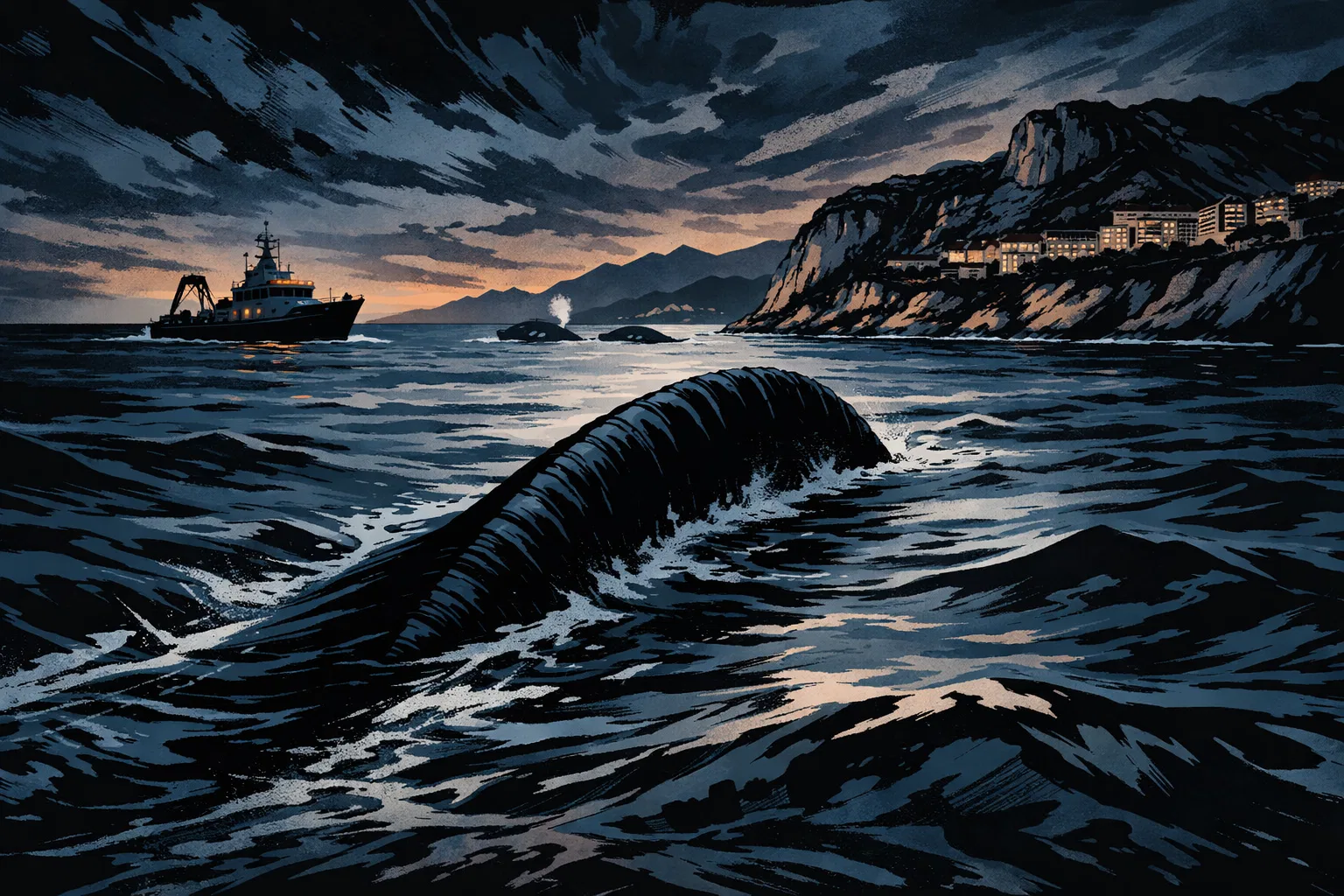
That matters because sea monsters often live in the borderland between folklore and observation. A fleeting dark back, a tall fin, a chain of waves, a long animal seen from a moving vessel or a damaged carcass washed ashore can become a “serpent” before anyone has a chance to examine it properly. Monaco’s own waters are not empty stage scenery: the Pelagos Sanctuary, agreed by France, Italy and Monaco, was created to protect marine mammals and their habitats, and its official site lists regular species including striped dolphin, bottlenose dolphin, common dolphin, Cuvier’s beaked whale, Risso’s dolphin, long-finned pilot whale, sperm whale and fin whale.[Pelagos Sanctuary]pelagos-sanctuary.orgPelagos SanctuaryPelagos Sanctuary - Home - Pelagos Sanctuary…
The Prince of Monaco and the sea-serpent problem
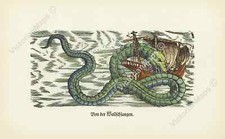
The most colourful Monaco-linked cryptid episode is the claim that Prince Albert I took an active interest in the “sea serpent” question. A modern reposting of historical newspaper material describes “the Prince of Monaco” as determined to test reports of sea serpents rather than simply laugh them away; it presents him not as a credulous monster-hunter, but as a scientifically minded observer intrigued by repeated maritime testimony. The source is secondary and should be treated cautiously, but it fits the wider historical picture: Albert I really was a prominent marine researcher whose expeditions, collections and institutions made Monaco unusually visible in ocean science.[hauntedohiobooks.com]hauntedohiobooks.comthe prince of monaco hunts for the sea serpentThe Prince of Monaco Hunts the Sea Serpent18 Aug 2015 — The Prince of Monaco is determined to prove, once for all, whether or not these a…
This is the useful distinction. Monaco’s sea-serpent association is not based on a single well-documented local beast repeatedly sighted in Port Hercule or off Larvotto Beach. It is better understood as part of the late nineteenth- and early twentieth-century sea-serpent debate, when newspapers, sailors, naturalists and early oceanographers were still arguing over whether some reports might represent unknown animals, giant squid, misidentified whales or pure invention. Prince Albert I’s relevance comes from his position at the exact point where romantic ocean mystery met modern marine science.[University of California Press]online.ucpress.eduUniversity of California PressEncounters in the Living Ocean: Giant Squid and Human…April 1, 2026 — 1 Apr 2026 — Pioneering marine sci…
What witnesses might really have seen
A Monaco sea-serpent story does not require an unknown monster to be interesting. The waters around Monaco sit within a productive north-western Mediterranean zone where large, rarely glimpsed animals can appear suddenly and look strange from a boat. The Pelagos Agreement page even notes a tradition that Prince Albert I saw many cetaceans from the window of his palace, a striking reminder that large marine life was not an exotic abstraction for Monaco’s rulers; it was part of the local seascape.[Pelagos Sanctuary]pelagos-sanctuary.orgPelagos Sanctuary Pelagos AgreementPelagos SanctuaryPelagos Agreement - Pelagos Sanctuary…
Several ordinary explanations can produce extraordinary reports:
Whales and dolphins. A fin whale or sperm whale surfacing at distance can look like a dark ridge, a moving back or a “monster” if the viewer sees only fragments. The IUCN’s 2023 regional overview records 24 cetacean species in the Mediterranean, with 10 considered resident, which gives plenty of room for rare or poorly understood encounters without invoking an undiscovered beast.[IUCN]iucn.orgThe conservation status of cetaceans in the Mediterranean SeaThe conservation status of cetaceans in the Mediterranean Sea - resource | IUCN…
Sharks, rays and large fish. The Mediterranean has historically supported large predators, though many are now depleted. Modern conservation work repeatedly stresses that the sea’s biodiversity is rich but threatened, making sightings of big animals both plausible and increasingly precious.[CIESM]ciesm.orgColletal PLo SOneColletal PLo SOne
Deep-sea animals and carcasses. Monaco’s oceanographic identity was built partly on the fascination of the deep sea. Deep-water animals, decomposed bodies, loose skin, exposed vertebrae or floating remains can all become “serpents” in eyewitness retellings, especially before photography and rapid biological identification became routine.
Wave trains and optical effects. A line of porpoises, floating debris, crossed wakes or a swimming animal seen in choppy water can create the illusion of a single long, undulating body. That is one reason sea-serpent reports often sound precise in the moment but become hard to verify afterwards.
The real animals are stranger than the missing monsters
For Monaco, the best “monster” material may be the proven wildlife rather than the unproven cryptids. The Pelagos Sanctuary is the only international sea area in the Mediterranean dedicated to marine mammals and their habitats, established by a multilateral agreement between France, Italy and Monaco and brought into force in 2002. Its purpose is to coordinate protection from human-caused disturbance and mortality, including pollution, noise, accidental capture and injury.[Pelagos Sanctuary]pelagos-sanctuary.orgPelagos Sanctuary Pelagos AgreementPelagos SanctuaryPelagos Agreement - Pelagos Sanctuary…
That gives Monaco’s mystery-animal tradition a modern twist. The old sea-serpent question asked whether something unknown might be hiding offshore. The contemporary question is almost the reverse: can well-known but elusive animals still survive there under pressure from shipping, fishing, pollution, recreational boating and climate change? The Pelagos site lists ship strikes, bycatch, underwater noise, disturbance, pollution, sporting competitions, recreational boating and climate change among the pressures on marine mammals.[Pelagos Sanctuary]pelagos-sanctuary.orgPelagos SanctuaryPelagos Sanctuary - Home - Pelagos Sanctuary…
A broad scientific review of Mediterranean biodiversity estimated roughly 17,000 marine species in the sea and described it as a biodiversity hot spot, while also warning that habitat loss, degradation, fishing impacts, pollution, climate change and alien species are major threats. In that setting, the line between folklore and conservation becomes unexpectedly close: yesterday’s “monster” may have been a misread whale, but tomorrow’s absence may be caused by very real ecological decline.[CIESM]ciesm.orgColletal PLo SOneColletal PLo SOne

Why Monaco has few land cryptids
Monaco’s lack of a large land-cryptid tradition is not surprising. It is extremely small, heavily urbanised and bordered by France and the Mediterranean, leaving little room for the kind of remote forests, mountains, marshes or lake systems that often sustain mystery-beast legends. Where older animal traces do appear, they belong more to archaeology than folklore. The Observation Cave below the Exotic Garden preserves evidence of prehistoric human presence, including animal bone fragments, and the cave’s remains are used to show climatic changes over roughly 250,000 years.[jardin-exotique.mc]jardin-exotique.mcThe caveThe cave
That prehistoric material is valuable, but it is not a cryptid record. It tells us that the Monaco area once had very different human and animal landscapes, not that a surviving unknown beast is reported today. The Museum of Prehistoric Anthropology, founded by Prince Albert I, preserves remains connected with early humanity and regional prehistory, while the broader official heritage framing places Monaco’s deep past in archaeology rather than monster legend.[map.gouv.mc]map.gouv.mcabout the museumabout the museum
This helps explain the shape of the country’s mystery-animal profile. Monaco’s “wild unknown” is not hidden in woodland; it is offshore, below the surface, or preserved in museum cases.
How to read Monaco monster claims
A good Monaco cryptid claim should be sorted into one of four categories.
Folklore or inherited sea-monster imagery: general Mediterranean or European sea-serpent motifs that are attached to Monaco because of its maritime identity, rather than because of a specific local sighting tradition.
Historical press curiosity: newspaper-era claims about sea serpents, especially those linked to Prince Albert I’s scientific reputation. These are worth recording, but they need careful handling because old newspapers often mixed genuine testimony, exaggeration, humour and syndicated copy.
Misidentified known wildlife: whales, dolphins, sharks, rays, large fish, floating carcasses or groups of animals seen under difficult conditions. This is the most plausible explanation for many “monster” sightings in a place where large marine animals are genuinely present.[Pelagos Sanctuary]pelagos-sanctuary.orgPelagos SanctuaryPelagos Sanctuary - Home - Pelagos Sanctuary…
Modern tourism and ocean culture: Monaco’s public-facing ocean identity, including the Oceanographic Museum, whale-watching culture and Pelagos conservation messaging. This is not cryptozoology in the strict sense, but it shapes how visitors imagine the sea as a place of hidden life.[Musée Océanographique de Monaco]musee.oceano.orgMusée Océanographique de Monaco HomeMusée Océanographique de Monaco Home

The verdict on Monaco’s cryptids
Monaco’s creature lore is thin if judged by the usual cryptid checklist: there is no famous national monster, no recurring lake beast, no established ape-like wanderer and no strong modern flap of phantom cats or winged beings. But it becomes richer when read as a maritime case. Monaco is a place where sea-serpent rumours, real deep-sea science, cetacean habitat and ocean-conservation storytelling overlap.
The country’s most honest cryptid entry is therefore the Monaco sea serpent as a historical and interpretive theme, not as a confirmed animal. It belongs beside Prince Albert I’s oceanographic legacy, the Oceanographic Museum’s public imagination of the deep, and the Pelagos Sanctuary’s living whales and dolphins. The monster, in the end, is less a single creature than a question Monaco has been unusually well placed to ask: when something huge and unfamiliar breaks the surface offshore, are we looking at folklore, a misidentified animal, a scientific discovery waiting for a name, or simply the sea reminding us how little we see of it?
Amazon book picks
Further Reading
Books and field guides related to Why Does Monaco Keep Meeting Sea Monsters?. Use these as the next step if you want deeper reading beyond the article.
Abominable Science!
Provides context for how sea-monster claims are investigated and interpreted.
The Search for the Giant Squid
Shows how legendary sea creatures can emerge from real but elusive animals.
eBay marketplace picks
Marketplace Samples
Live-tested eBay searches with available results related to this page.
Endnotes
1.
Source: pelagos-sanctuary.org
Link:https://pelagos-sanctuary.org/
Source snippet
Pelagos SanctuaryPelagos Sanctuary - Home - Pelagos Sanctuary...
2.
Source: iucn.org
Title: The conservation status of cetaceans in the Mediterranean Sea
Link:https://iucn.org/resources/grey-literature/conservation-status-cetaceans-mediterranean-sea
Source snippet
The conservation status of cetaceans in the Mediterranean Sea - resource | IUCN...
3.
Source: pelagos-sanctuary.org
Title: Pelagos Sanctuary Pelagos Agreement
Link:https://pelagos-sanctuary.org/pelagos-agreement/
Source snippet
Pelagos SanctuaryPelagos Agreement - Pelagos Sanctuary...
4.
Source: hauntedohiobooks.com
Title: the prince of monaco hunts for the sea serpent
Link:https://hauntedohiobooks.com/news/the-prince-of-monaco-hunts-for-the-sea-serpent/
Source snippet
The Prince of Monaco Hunts the Sea Serpent18 Aug 2015 — The Prince of Monaco is determined to prove, once for all, whether or not these a...
5.
Source: ciesm.org
Title: Colletal PLo SOne
Link:https://www.ciesm.org/news/mscience/Colletal-PLoSOne.pdf
6.
Source: jardin-exotique.mc
Title: The cave
Link:https://www.jardin-exotique.mc/en/the-cave
7.
Source: map.gouv.mc
Title: about the museum
Link:https://map.gouv.mc/en/about-the-museum
8.
Source: gouv.mc
Link:https://www.gouv.mc/en/government-institutions/history-and-heritage/periods/an-ancient-history-prehistory-and-antiquity/an-ancient-occupation
9.
Source: map.gouv.mc
Link:https://map.gouv.mc/en/our-scientific-activities/excavations/archaeological-sites-in-monaco
10.
Source: portals.iucn.org
Link:https://portals.iucn.org/library/sites/library/files/documents/RL-262-005-En.pdf
11.
Source: portals.iucn.org
Link:https://portals.iucn.org/library/efiles/documents/RL-262-001.pdf
12.
Source: hauntedohiobooks.com
Link:https://hauntedohiobooks.com/tag/valhalla-sea-serpent/
13.
Source: archeologie.culture.gouv.fr
Link:https://archeologie.culture.gouv.fr/chauvet/en/fauna
14.
Source: youtube.com
Title: Monaco’s Museum of Oceanography and its Splendid Aquarium
Link:https://www.youtube.com/watch?v=uzrGYYfXaCU
Source snippet
PELAGOS Sanctuary...
15.
Source: youtube.com
Title: PELAGOS Sanctuary
Link:https://www.youtube.com/watch?v=bfpRi-zMEKo
16.
Source: oceano.org
Title: Institut océanographique Prince Albert I
Link:https://www.oceano.org/en/organization/the-great-figures/prince-albert-i/
Source snippet
Albert I developed the project of creating a temple entirely dedicated to the sea.Read more...
17.
Source: online.ucpress.edu
Link:https://online.ucpress.edu/hsns/article/56/2/103/217800/Encounters-in-the-Living-OceanGiant-Squid-and
Source snippet
University of California PressEncounters in the Living Ocean: Giant Squid and Human...April 1, 2026 — 1 Apr 2026 — Pioneering marine sci...
Published: April 1, 2026
18.
Source: musee.oceano.org
Title: Musée Océanographique de Monaco Home
Link:https://musee.oceano.org/en/
19.
Source: Wikipedia
Title: Sea serpent
Link:https://en.wikipedia.org/wiki/Sea_serpent
20.
Source: facebook.com
Link:https://www.facebook.com/groups/287284131334748/posts/2631504910245980/
21.
Source: cryptidz.fandom.com
Title: Sea Serpents
Link:https://cryptidz.fandom.com/wiki/Sea_Serpents
22.
Source: oceano.org
Link:https://www.oceano.org/en/marine-protected-areas-in-the-mediterranean-sea/
23.
Source: monacopratique.com
Title: exotic garden
Link:https://monacopratique.com/en/guide/exotic-garden/
24.
Source: rac-spa.org
Link:https://www.rac-spa.org/sites/default/files/doc_spabio/western.pdf
25.
Source: trove.nla.gov.au
Link:https://trove.nla.gov.au/newspaper/article/222948253
26.
Source: deims.org
Title: Pelagos Sanctuary
Link:https://deims.org/0fb65931-5eeb-4645-bf0b-6170adbd1131
27.
Source: royalhotelsanremo.com
Title: pelagos sanctuary
Link:https://www.royalhotelsanremo.com/en/blog/pelagos-sanctuary
28.
Source: menkab.it
Link:https://www.menkab.it/eng/cetacei-co/
29.
Source: wwfmmi.org
Link:https://www.wwfmmi.org/what_we_do/wildlife/the_pelagos_sanctuary/
Additional References
30.
Source: centrescientifique.mc
Link:https://www.centrescientifique.mc/en/article/monaco-scientific-center/prince-albert-1st-a-pioneer-of-marine-sciences
Source snippet
Centre Scientifique de MonacoPrince Albert 1st, a pioneer of Marine SciencesThrough fishing and hunting, he developed his gifts as a born...
31.
Source: youtube.com
Title: Engineering Marvel by the Sea: The Oceanographic Museum of Monaco
Link:https://www.youtube.com/watch?v=UC6Le7JHZp0
Source snippet
The Pelagos Sanctuary for Mediterranean Marine Mammal, aims and goals...
32.
Source: planbleu.org
Link:https://planbleu.org/wp-content/uploads/2023/01/An_assessment_of_marine_biodiversity_protection_in_the_Mediterranean_Sea__3_.pdf
33.
Source: monaconow.com
Link:https://monaconow.com/a-museum-to-help-understand-and-protect-the-ocean/
34.
Source: togetherforthemed.org
Link:https://www.togetherforthemed.org/a-new-project-in-the-pelagos-sanctuary-featured-at-the-green-shipping-industry-day/
35.
Source: tethys.org
Link:https://www.tethys.org/cetacean-sanctuary-research/csr-research/csr-study-area/
36.
Source: manawa.com
Link:https://www.manawa.com/en-GB/activity/monaco/monaco/whale-watching/cetacean-watching-in-the-pelagos-sanctuary-from-monaco/24677
37.
Source: initiativepelagos.org
Link:https://www.initiativepelagos.org/en/index
38.
Source: accobams.org
Link:https://accobams.org/wp-content/uploads/2022/03/ACCOBAMS_ConservingWDP_web_2022.pdf
39.
Source: vliz.be
Link:https://www.vliz.be/imisdocs/publications/228937.pdf
Topic Tree
Follow this branch
Related pages 192
- Antigua Cryptids
- Maldives Monsters
- Malta Monsters
- Qatar Monsters
- Argentina Monsters
- +187 more in sidebar