Where Legend and Living Predators Meet
Timor-Leste does not have a well-documented tradition of modern cryptids resembling Scotland’s Loch Ness Monster or North America’s Bigfoot. Searches of wildlife research, journalism, folklore studies and government material reveal no strong national archive of recurring unknown-animal sightings, photographs or organised monster hunts.

Page outline Jump by section
Introduction
The saltwater crocodile is at once a dangerous wild animal, a sacred ancestor and a living reminder of Timor-Leste’s creation story. Folklore says that a crocodile befriended a boy and eventually became the island of Timor, its ridged back forming the mountains. This belief has shaped national imagery, attitudes towards killing crocodiles and interpretations of attacks. Around Ataúro Island, stories of a giant eel add a more conventionally fabulous sea creature, but the surviving evidence is cultural rather than zoological. Timor-Leste’s monster history is therefore best understood as an overlap between oral tradition, real predators, environmental danger and modern storytelling—not as a catalogue of undiscovered beasts.[timor-leste.gov.tl]timor-leste.gov.tlOpen source on timor-leste.gov.tl.
The crocodile that became Timor
The best-known Timorese origin story concerns a young crocodile rescued by a boy. In widely circulated versions, the two become companions and travel across the sea together. When the crocodile grows old, it promises the boy a permanent home; after its death, its body changes into the island of Timor. The mountains are interpreted as the animal’s rough back and the surrounding ocean as its final resting place. Timor-Leste’s government still invokes the story when describing the country’s relationship with the sea, calling the Timorese the crocodile’s descendants or grandchildren.[timor-leste.gov.tl]timor-leste.gov.tlOpen source on timor-leste.gov.tl.
This is not simply a tourist folktale invented to explain the island’s crocodile-like outline. Researchers studying Timorese histories and oral traditions describe crocodiles as recurring ancestral, creative and spiritually potent beings across both eastern and western Timor. Depending on the community and narrative, a crocodile may be the creator of the island, an ancestor of local rulers, a source of fertility or a powerful being that expects respectful conduct from its human relatives.[theopenscholar.com]uva.theopenscholar.comGet Started with OpenScholarHistories of Origin and Settlement from Timor-LesteFebruary 5, 2020 — The crocodile in its various manifestat…
The national version is commonly known in English as The Good Crocodile. It has proved especially adaptable because it joins landscape, ancestry and nationhood in one memorable image. It appears in government discussion of maritime identity, cultural interpretation and travel writing, while the phrase “land of the sleeping crocodile” is frequently used to describe Timor. The story’s importance does not depend on whether the coastline resembles a reptile precisely; the crocodile has become a way of imagining the country as a living ancestral body.[insidestory.org.au]insidestory.org.auInside Story The crocodile and the waferInside Story The crocodile and the wafer
For a cryptid-minded reader, the crucial distinction is that the gigantic island-forming crocodile belongs to creation tradition, not eyewitness zoology. No physical remains are being offered as evidence for an island-sized reptile. The mountains and coastline act as symbolic confirmation within the story rather than testable traces of an unknown species.
When the ancestral monster is real
Saltwater crocodiles inhabit Timor-Leste’s rivers, estuaries, lagoons and coastal wetlands. They are not hypothetical survivors or misidentified shadows: they are the world’s largest living reptiles and are capable of moving through both freshwater and the open sea. This makes Timor-Leste unusual in monster folklore. Its most culturally powerful beast can genuinely appear near a fishing place, cross a beach or surface beside a boat.[conservation.org]conservation.orgOpen source on conservation.org.
Respect for crocodiles is often connected with traditional ideas of sacredness and kinship. Studies and community reporting describe them being addressed as grandparents or ancestors, while killing or eating them may be regarded as taboo. Some communities interpret particular crocodiles as protectors or moral agents rather than interchangeable wild animals. An attack may consequently be explained as punishment for a breach of social, spiritual or environmental rules. Such interpretations should not be treated as a single belief held identically by every Timorese person, but they are sufficiently widespread to affect conservation and public safety.[rufford.org]media.rufford.orgHuman Dimensions of Wildlife, 2019more…
This creates a tension rarely found in conventional cryptid stories. Elsewhere, mystery-animal enthusiasts struggle to prove that a legendary creature exists. In Timor-Leste, nobody needs to prove that crocodiles exist; the difficult questions concern how many there are, why attacks have increased and how people can manage a predator regarded by many as a relative.
Where encounters cluster
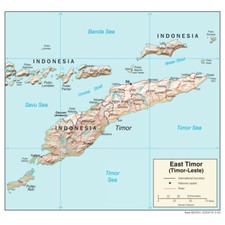
Research has repeatedly identified the southern coastal lowlands as an important centre of human–crocodile conflict. These areas contain wetlands, river mouths, rice-growing land and fishing grounds used by people as well as crocodiles. Earlier analysis found a high proportion of recorded attacks in southern coastal wetlands, with fishing presenting particular risk because people must enter or work close to crocodile habitat.[ResearchGate]researchgate.netResearch Gate An analysis of recent saltwater crocodile (CrocodylusResearch Gate An analysis of recent saltwater crocodile (Crocodylus
A later study covering reported incidents between 2006 and 2022 highlighted three places in particular: Lake Ira Lalaro, Beco and Uani Uma. Of 46 attacks recorded in the study area, 35 occurred from 2015 to 2022, and most victims were fishing or collecting mud crabs. Lake Ira Lalaro, a large seasonal wetland in Lautém municipality, accounted for 19 recorded incidents, making it one of the clearest modern encounter clusters.[Cambridge University Press & Assessment]cambridge.orgOpen source on cambridge.org.
These figures describe documented cases, not necessarily every event. Researchers and conservation organisations caution that attacks can go unreported, partly because of remote locations and partly because victims or families may feel shame when an encounter is interpreted as supernatural judgement. Databases also differ in coverage and verification. The CrocAttack database lists 73 incidents in Timor-Leste for 2015–2024, of which 42 were fatal, while other studies use different periods and collection methods. The numbers should therefore be read as evidence of a serious pattern, not as one perfectly complete tally.[CrocAttack]crocattack.org2015 2024attackstats2015 2024attackstats
Why crocodile attacks became a modern mystery
Researchers found that recorded crocodile attacks rose sharply after independence. One peer-reviewed analysis identified 130 attacks between 1996 and 2014 and reported a particularly steep increase during the later years of that period. Another management study described the rise as approximately 23-fold, while stressing that the country’s earlier crocodile population was poorly documented.[wildlife.onlinelibrary.wiley.com]wildlife.onlinelibrary.wiley.comOpen source on wiley.com.
Several explanations have been proposed. Protective laws and cultural restrictions on killing crocodiles may have allowed numbers to recover. Human populations and wetland use have also changed, placing more people in waters used by crocodiles. Fishing, crab collection, bathing and work in rice fields all create opportunities for close encounters. Habitat disturbance may further alter crocodile movements, although separating these influences is difficult because long-term population surveys are limited.[rufford.org]media.rufford.orgHuman Dimensions of Wildlife, 2019more…
A more dramatic suggestion emerged in news coverage in 2019: perhaps crocodiles from northern Australia were crossing the Timor Sea and contributing to the rise in attacks. The idea was biologically possible because saltwater crocodiles can travel considerable distances at sea, and researchers collected DNA for comparison with Australian samples. At the time, however, it was a hypothesis under investigation, not an established explanation. Some headlines transformed that uncertainty into a story of invading foreign crocodiles, giving a complex conservation problem the shape of a monster migration narrative.[abc.net.au]abc.net.auABC News DNA testing aims to determine if Australian crocodiles areABC News DNA testing aims to determine if Australian crocodiles are
Subsequent genetic research across northern Australia and nearby countries has shown that the origins and dispersal of troublesome crocodiles can be investigated scientifically. Yet the existence of long-distance movement does not by itself prove that Australian animals caused Timor-Leste’s attack increase. Local population recovery, greater exposure around wetlands and incomplete historical records remain more cautious explanations.[wildlife.onlinelibrary.wiley.com]wildlife.onlinelibrary.wiley.comOpen source on wiley.com.
The giant eel of Ataúro
Beyond the crocodile, one of Timor-Leste’s most intriguing creature traditions concerns a giant eel associated with Ataúro, the island north of Dili. Academic discussion of Timorese historical mythology refers to a giant Ataúro eel that controls or divides the surrounding sea and remains connected with powerful taboo. The surviving English-language references are brief, so it would be misleading to present a single fixed story with a settled appearance, size and chronology.[ResearchGate]researchgate.netResearch Gatehistory of east timor between myths, memory realmsResearch Gatehistory of east timor between myths, memory realms
The eel nevertheless matters because it shows that the crocodile is not the country’s only oversized animal being. Around an island community dependent on fishing, a supernatural eel can express control of marine space, danger at sea and obligations governing human use of natural resources. Such a figure may resemble a sea serpent to an outside reader, but its cultural role is more important than its fit within a Western cryptid category.
Ataúro’s oral traditions are diverse and locally rooted. Ethnographic work describes stories involving ancestors, nature spirits, sacred places and the historical settlement of communities. This makes it risky to detach the giant eel from its setting and repackage it as a free-floating “Timorese lake monster”. The available evidence supports a mythic or sacred marine being associated with Ataúro, not a modern series of zoological sightings.[researchgate.net]researchgate.netResearch Gate Stories about the origins of humankind, Lisan and someResearch Gate Stories about the origins of humankind, Lisan and some
Sea creatures mistaken for monsters
Timor-Leste lies beside exceptionally deep and biologically rich seas. Its waters host whales, dolphins, dugongs, whale sharks, rays and large reef fish, while steep underwater slopes bring deep-water species close to shore. Government policy identifies annual whale movements, dugongs and rich coral ecosystems as major natural assets and potential attractions for marine tourism.[Boundary Office]gftm.gov.tlBoundary Officepolicy and action plan for the promotion of a resilientBoundary Officepolicy and action plan for the promotion of a resilient
This environment supplies plenty of material for honest mistakes. A dugong’s rounded head and forelimbs can appear surprisingly human-like when briefly seen at the surface, which has helped inspire mermaid explanations in many maritime cultures. Oarfish and other long-bodied fish can resemble serpents when sick or swimming close to the surface. Whale sharks are enormous but harmless filter-feeders, while partly submerged logs, crocodiles and groups of dolphins can create misleading silhouettes. These are general mechanisms rather than confirmed solutions to specific Timorese monster reports; no well-evidenced national sea-serpent case has emerged from the accessible record.[Natural History Museum]nhm.ac.ukOpen source on nhm.ac.uk.
Modern tourism occasionally uses “mermaid” language in a deliberately figurative way. The women divers of Ataúro, known through a documentary and tourism promotion, have been described as the “mermaids of Timor-Leste”. They are skilled human divers supporting their families, not subjects of an anomalous-creature claim. The example shows how easily folklore language, promotional language and literal zoological claims can become confused when stories circulate online.[Ataúro Island]ataurotourism.orgAtaúro Island Learn about the Wawata TopuAtaúro Island Learn about the Wawata Topu
Folklore, sightings and internet inventions
A useful way to assess Timor-Leste’s creature stories is to separate four different kinds of material.
Sacred or ancestral tradition includes the crocodile creation story and the giant eel of Ataúro. These narratives express relationships among people, landscape, ancestry and the sea. Asking whether they describe scientifically undiscovered animals misses much of their meaning.
Verified animal encounters include saltwater crocodile attacks and observations of large marine wildlife. These events can be frightening or extraordinary without requiring an unknown species.
Unresolved witness claims would require identifiable observers, dates, locations and independent documentation. The accessible record does not reveal a sustained Timorese tradition of such cases comparable with famous lake-monster or wildman files.
Internet cryptids are creatures assigned to Timor or the Timor Sea on fan sites, forums and recycled image posts without traceable local testimony. One example is the supposed “Timor Sea ground shark”, described online as an unusually large bottom-dwelling shark. Discussion of the image itself suggests that it may depict a known wobbegong or carpet shark, while attempts to trace the photograph lead back mainly to cryptid websites rather than a documented Timor-Leste incident. It is therefore better treated as internet folklore than as evidence of a national mystery animal.[Reddit]reddit.comThe ground shark is a cryptid from the Timor Sea that's saidThe ground shark is a cryptid from the Timor Sea that's said
This distinction also protects local traditions from being flattened into generic monster content. A sacred crocodile ancestor is not simply “Timor’s dragon”, and the Ataúro eel is not automatically a local version of the Loch Ness Monster. Both belong to particular landscapes and social histories.
How the legend has changed
The crocodile story has survived colonial rule, occupation, independence and rapid political change because it can carry several meanings at once. It explains the island’s form, establishes kinship between humans and animals and offers a national image of endurance. Modern governments use it when discussing sovereignty and maritime identity, while tourism writing presents the sleeping crocodile as an instantly recognisable symbol of place.[insidestory.org.au]insidestory.org.auInside Story The crocodile and the waferInside Story The crocodile and the wafer
At the same time, rising attacks have made the relationship more difficult. The crocodile is still revered, but it is increasingly discussed through the language of risk mapping, warning systems, population management and community monitoring. Conservationists argue that effective measures must recognise traditional knowledge rather than treating local belief as an obstacle. A policy that simply labels crocodiles as dangerous pests would collide with deep cultural values; one that relies only on ancestral respect would leave fishers and wetland communities exposed.[tandfonline.com]tandfonline.comOpen source on tandfonline.com.
The modern Timorese “monster flap”, then, is not a burst of questionable sightings. It is the collision between an ancient ancestral figure and measurable changes in encounters with a powerful predator. Scientific data have not displaced the legend. Instead, folklore and wildlife management now describe the same animal in different registers: one asks what the crocodile means, while the other asks where it travels, when it attacks and how people can remain safe.
What the evidence supports
Timor-Leste’s record does not support claims for a hidden population of giant eels, sea serpents, ape-like creatures or unknown winged beasts. There is no persuasive body of physical evidence, repeated testimony or reliable newspaper documentation establishing a conventional national cryptid.
What the evidence does support is more distinctive:
- a deeply rooted crocodile creation tradition recognised in oral history, scholarship and official national language;
- local beliefs in crocodiles as ancestors, guardians or morally powerful beings;
- an Ataúro tradition involving a giant eel associated with the surrounding sea;
- a serious and well-documented pattern of saltwater crocodile attacks, especially around southern wetlands and Lake Ira Lalaro;
- modern media stories that sometimes turn uncertain wildlife questions, such as crocodile migration, into simplified monster narratives;
- rich marine wildlife capable of producing startling but entirely natural encounters.
Timor-Leste’s most memorable creature tradition therefore sits between mythology and zoology. The great crocodile that became the island is a sacred story. The crocodile in the river is a real apex predator. Confusing the two loses the point; placing them together reveals why this country’s mystery-animal history is so unusual.
Amazon book picks
Further Reading
Books and field guides related to Where Legend and Living Predators Meet. Use these as the next step if you want deeper reading beyond the article.
The Book of Imaginary Beings
Useful for readers interested in legendary creature traditions.
eBay marketplace picks
Marketplace Samples
Live-tested eBay searches with available results related to this page.
Endnotes
1.
Source: journals.openedition.org
Title: This oral culture
Link:https://journals.openedition.org/configuracoes/3284
Source snippet
OpenEdition JournalsWriting and translating Timorese oral tradition*by V Paulino · 2016 · Cited by 4 — East Timor is unusually rich in or...
2.
Source: media.rufford.org
Title: Human Dimensions of Wildlife, 2019
Link:https://media.rufford.org/media/project_reports/Human%20Dimensions%20of%20Wildlife%2C%202019.pdf
Source snippet
more...
3.
Source: conservation.org
Link:https://www.conservation.org/news/on-island-nation-ancestral-bond-to-crocodiles-is-tested
4.
Source: wildlife.onlinelibrary.wiley.com
Link:https://wildlife.onlinelibrary.wiley.com/doi/abs/10.1002/jwmg.21497
5.
Source: researchgate.net
Title: Research Gate An analysis of recent saltwater crocodile (Crocodylus
Link:https://www.researchgate.net/publication/305396982_An_analysis_of_recent_saltwater_crocodile_Crocodylus_porosus_attacks_in_Timor-Leste_and_consequences_for_management_and_conservation
6.
Source: researchgate.net
Link:https://www.researchgate.net/figure/Map-of-Timor-Leste-showing-Crocodylus-porosus-habitat-and-distribution-of-attacks-Dark_fig1_305396982
7.
Source: cambridge.org
Link:https://www.cambridge.org/core/journals/oryx/article/wildlife-conservation-through-traditional-values-alarming-numbers-of-crocodile-attacks-reported-from-timorleste/F87981A26E058E5A48B72B326358B08D
8.
Source: crocattack.org
Title: 2015 2024attackstats
Link:https://crocattack.org/2015-2024attackstats/
9.
Source: crocattack.org
Link:https://crocattack.org/
10.
Source: wildlife.onlinelibrary.wiley.com
Link:https://wildlife.onlinelibrary.wiley.com/doi/10.1002/jwmg.22525
11.
Source: researchgate.net
Title: Research Gatehistory of east timor between myths, memory realms
Link:https://www.researchgate.net/publication/325441633_HISTORY_OF_EAST_TIMOR_BETWEEN_MYTHS_MEMORY_REALMS_MACAU_AND_THE_CHALLENGES_OF_CULTURAL_ANTHROPOLOGY
12.
Source: researchgate.net
Title: Research Gate Stories about the origins of humankind, Lisan and some
Link:https://www.researchgate.net/publication/354685039_Stories_about_the_origins_of_humankind_Lisan_and_some_controversies_in_a_community_on_the_Atauro_island
13.
Source: journals.openedition.org
Link:https://journals.openedition.org/archipel/4234
14.
Source: reddit.com
Title: The ground shark is a cryptid from the Timor Sea that’s said
Link:https://www.reddit.com/r/Cryptozoology/comments/14bzkon/the_ground_shark_is_a_cryptid_from_the_timor_sea/
15.
Source: reddit.com
Title: Origin of the Timor Sea Ground Shark imagespecifically the fish itself
Link:https://www.reddit.com/r/Cryptozoology/comments/1mv8gwy/does_anyone_know_the_origin_of_the_timor_sea/
16.
Source: rai.onlinelibrary.wiley.com
Title: j.1467 9655.2007.00412.x
Link:https://rai.onlinelibrary.wiley.com/doi/10.1111/j.1467-9655.2007.00412.x
17.
Source: archive.org
Link:https://archive.org/stream/Cryptozoology_201608/Cryptozoology_djvu.txt
18.
Source: archive.org
Title: (Cryptids) On The Track Of Unknown Animals by Bernard Heuvelmans djvu.txt
Link:https://archive.org/stream/cryptidstuff/%28Cryptids%29%20On%20The%20Track%20Of%20Unknown%20Animals%20by%20Bernard%20Heuvelmans_djvu.txt
19.
Source: researchgate.net
Link:https://www.researchgate.net/publication/333220611_Crocodile_management_in_Timor-Leste_Drawing_upon_traditional_ecological_knowledge_and_cultural_beliefs
20.
Source: researchgate.net
Title: 368501632 Animal Mythology in Lampung Folklore
Link:https://www.researchgate.net/publication/368501632_Animal_Mythology_in_Lampung_Folklore
21.
Source: researchgate.net
Link:https://www.researchgate.net/publication/325581946_When_Conservation_Becomes_Dangerous_Human-Crocodile_Conflict_in_Timor-Leste
22.
Source: researchgate.net
Link:https://www.researchgate.net/publication/287238473_Images_of_the_Wildman_in_Southeast_Asia_An_anthropological_perspective
23.
Source: reddit.com
Link:https://www.reddit.com/r/Cryptozoology/comments/18c1cs3/most_credible_lake_and_or_sea_serpentcryptid/
24.
Source: reddit.com
Link:https://www.reddit.com/r/NoStupidQuestions/comments/1rxnqnb/are_there_dragons_in_any_african_folklore/
25.
Source: timor-leste.gov.tl
Link:https://timor-leste.gov.tl/?cat=39&lang=en
26.
Source: gftm.gov.tl
Link:https://www.gftm.gov.tl/wp-content/uploads/2021/01/Policy-Paper_English.pdf
Source snippet
Boundary OfficeTIMOR-LESTE'S MARITIME BOUNDARIESBy legend, the Timorese are grandchildren of the crocodile—upon its death, its body becam...
27.
Source: gftm.gov.tl
Link:https://www.gftm.gov.tl/wp-content/uploads/2021/01/Prime-Minister-opening-remarks-for-conference.pdf
Source snippet
The body of our spirit ancestor became the land of Timor-Leste – his lumpy hide made the mountains and...Read more...
28.
Source: uva.theopenscholar.com
Link:https://uva.theopenscholar.com/files/geometries-of-polity/files/12barnesgeometriespaper_5.pdf
Source snippet
Get Started with OpenScholarHistories of Origin and Settlement from Timor-LesteFebruary 5, 2020 — The crocodile in its various manifestat...
Published: February 5, 2020
29.
Source: kar.kent.ac.uk
Link:https://kar.kent.ac.uk/id/document/3359363
Source snippet
Kent Academic RepositoryKent Academic Repositoryby J Bovensiepen · 2021 · Cited by 17 — Timor emerged from a gigantic crocodile, compleme...
30.
Source: insidestory.org.au
Title: Inside Story The crocodile and the wafer
Link:https://insidestory.org.au/the-crocodile-and-the-wafer/
31.
Source: gftm.gov.tl
Link:https://www.gftm.gov.tl/wp-content/uploads/2021/01/16592-Maritime-Boundary-Conciliation-PP2_v13-FINAL.pdf
32.
Source: currentconservation.org
Title: sharing a pond with grandfather crocodile
Link:https://www.currentconservation.org/sharing-a-pond-with-grandfather-crocodile/
33.
Source: abc.net.au
Title: ABC News DNA testing aims to determine if [Australian crocodiles]({{ ‘migration-claim/’ | relative_url }}) are
Link:https://www.abc.net.au/news/2019-03-03/crocodile-dna-testing-timor-leste-east-australia-migrating/10864594
34.
Source: theguardian.com
Title: australian crocodiles blamed for spate of deaths in timor leste
Link:https://www.theguardian.com/world/2019/jun/11/australian-crocodiles-blamed-for-spate-of-deaths-in-timor-leste
35.
Source: gftm.gov.tl
Title: Boundary Officepolicy and action plan for the promotion of a resilient
Link:https://www.gftm.gov.tl/wp-content/uploads/2026/05/Blue-Economy-Policy-and-Action-Plan_Unofficial-Translation-ENG.pdf
36.
Source: nhm.ac.uk
Link:https://www.nhm.ac.uk/discover/sea-monsters-inspiration-serpents-mermaids-the-kraken.html
37.
Source: ataurotourism.org
Title: Ataúro Island Learn about the Wawata Topu
Link:https://ataurotourism.org/learn-about-the-wawata-topu-mermaids-of-timor-leste/
38.
Source: timor-leste.gov.tl
Link:https://timor-leste.gov.tl/wp-content/uploads/2018/10/VIII-GOVERNO-CONSTITUCIONAL-FINAL_Programa_ENG.pdf
39.
Source: tandfonline.com
Link:https://www.tandfonline.com/doi/abs/10.1080/10871209.2019.1614240
40.
Source: Wikipedia
Link:https://en.wikipedia.org/wiki/Timor
41.
Source: Wikipedia
Link:https://en.wikipedia.org/wiki/Dragon
42.
Source: Wikipedia
Link:https://en.wikipedia.org/wiki/Mermaid
43.
Source: timor-leste.gov.tl
Title: Timor Leste Strategic Plan 2011 20301
Link:https://timor-leste.gov.tl/wp-content/uploads/2011/07/Timor-Leste-Strategic-Plan-2011-20301.pdf
44.
Source: lautem.gov.tl
Link:https://lautem.gov.tl/wp-content/uploads/2026/03/045La_CD_EN.pdf
45.
Source: hwctf.org
Link:https://www.hwctf.org/crocodiles
46.
Source: timorleste.tl
Title: Fernandes Samson 2017 Why ecotourism for Ataúro Atauro Tourism FB Group
Link:https://www.timorleste.tl/wp-content/uploads/formidable/4/Fernandes-Samson-2017_Why-ecotourism-for-Ata%C3%BAro_Atauro-Tourism-FB-Group.pdf
47.
Source: ataurotourism.org
Link:https://ataurotourism.org/about/culture-traditions/
48.
Source: dugongseagrass.org
Link:https://www.dugongseagrass.org/where-we-work/timor-leste/
49.
Source: dtbar.nt.gov.au
Title: territory to partner with timor leste on crocodile management
Link:https://dtbar.nt.gov.au/news/2025/territory-to-partner-with-timor-leste-on-crocodile-management
50.
Source: uct.tl
Title: Timor Leste
Link:https://www.uct.tl/blog/timor-leste-the-story-and-history-of-a-nation/
Additional References
51.
Source: youtube.com
Title: The Timeless Tale of Timor: How a Crocodile’s Sacrifice Created an Island
Link:https://www.youtube.com/watch?v=bOWSSJB0hNU
Source snippet
Crocodile Caller [4K] | Timor-Leste from Below (S01E09) | SZtv...
52.
Source: history.co.uk
Link:https://www.history.co.uk/articles/strange-sea-serpent-sightings-from-history
53.
Source: lafaek.org
Link:https://lafaek.org/
54.
Source: hangar1publishing.com
Link:https://hangar1publishing.com/blogs/cryptids/north-american-cryptids?srsltid=AfmBOoofWomGxN9FsgdAx6RNnEGtYHBXHAIsXFs0sbTaM_kQl2YsVLjV
55.
Source: hangar1publishing.com
Link:https://hangar1publishing.com/blogs/cryptids/sea-monsters-cryptozoology?srsltid=AfmBOoq2DukoA4uKfBqXX61f4RmvnBWhoCq2cBhvpnUzgVDNPig4udQt
56.
Source: academia.edu
Link:https://www.academia.edu/105364359/Haunted_Houses_and_Ghostly_Encounters_Ethnography_and_Animism_in_East_Timor_1860_1975_Reviews
57.
Source: scottishmaritimemuseum.org
Link:https://www.scottishmaritimemuseum.org/here-be-monsters-sea-monsters-of-scottish-folktale-by-shelby-judge/
58.
Source: academia.edu
Link:https://www.academia.edu/36745458/History_of_East_Timor_between_Myths_Memory_Realms_Macau_and_the_challenges_of_Cultural_Anthropology
59.
Source: cornerstorenetwork.org.au
Link:https://cornerstorenetwork.org.au/blogs/blog/how-a-crocodile-shaped-timor-leste-myth-culture-and-conservation?srsltid=AfmBOoo3A5YO7vksex2iMn3tcwzmVjeqQ-cuJjGkHWLNnGVZmMeSpO_Y
60.
Source: cornerstorenetwork.org.au
Link:https://cornerstorenetwork.org.au/blogs/blog/how-a-crocodile-shaped-timor-leste-myth-culture-and-conservation?srsltid=AfmBOore6dfloXvKlsFstKdVCZgmpnzaq3_CpsyQoxvdmKeCpf2kkzOh
Topic Tree
Follow this branch
Related pages 192
- Antigua Cryptids
- Maldives Monsters
- Malta Monsters
- Qatar Monsters
- Argentina Monsters
- +187 more in sidebar