Creature Lore of Ukraine's Wildest Stories
Ukraine has no single, nationally dominant cryptid comparable with Scotland’s Loch Ness Monster.
Page outline Jump by section
Introduction
The evidence for an undiscovered large animal is weak. No Ukrainian case has produced a verified carcass, reliable DNA result, clear sequence of photographs or sustained scientific record. Yet the stories remain valuable because they show how international monster imagery, local folklore, rural anxieties and real animal behaviour can combine. Ukraine’s most revealing “cryptids” are therefore not zoological discoveries but evolving cultural creatures: part witness report, part inherited legend and part media invention.
Which creatures are associated with Ukraine?
Four strands account for most of Ukraine’s modern mystery-animal reputation.
- The Ukrainian chupacabra was blamed for killings of rabbits, chickens and other domestic animals, particularly from around 2009 into the early 2010s. Reports appeared in western and central regions before spreading through television and online news.
- The Lake Somyn monster is described in recent retellings as a giant catfish, crocodile-bodied animal, reptilian beast or prehistoric survivor living in a deep Volyn lake.
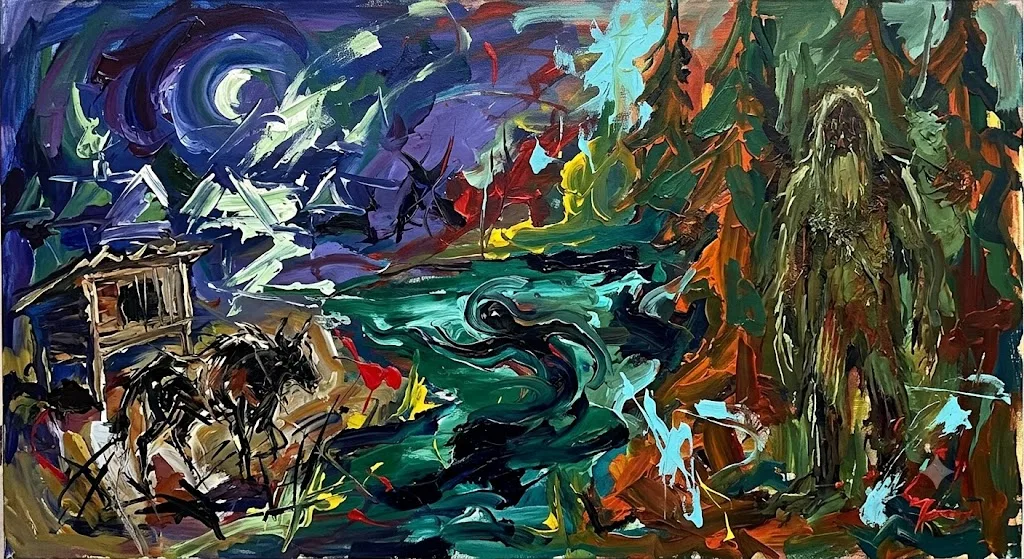
- The Carpathian forest man belongs primarily to folklore rather than cryptozoology. This hairy, human-shaped woodland being is generally portrayed as a protector of travellers, not as an unidentified ape awaiting scientific discovery.
- Chornobyl mutants occupy the border between urban legend, horror imagery and misunderstood science. Real wildlife has flourished in parts of the exclusion zone, but that does not amount to evidence for giant radioactive monsters.
These traditions should not be treated as equivalent. The forest guardian is an inherited mythic figure; the chupacabra was a short-lived monster flap; the Lake Somyn creature is increasingly presented as a place-based legend; and Chornobyl beasts largely belong to modern popular culture.
How the chupacabra reached rural Ukraine
Ukraine’s best-documented modern monster scare began around 2009. Villagers reported finding rabbits and poultry dead inside hutches or enclosures, sometimes in surprisingly large numbers. Accounts attributed broken cages, bite marks and apparently bloodless carcasses to a nocturnal creature. Reports circulated through Lviv, Ternopil, Zakarpattia, Kyiv, Cherkasy and neighbouring regions, although the exact geography changed as stories were repeated. A 2010 report, for example, described alleged attacks in western Ukraine before carrying the panic towards villages near Kyiv.[PravdaReport]english.pravda.ruReportChupacabra Devours Rabbits and Cats in UkraineJune 30, 2010 — 30 Jun 2010 — It goes about the so-called Chupacabra, which has…
Descriptions were inconsistent. Some witnesses imagined a large dog with bright eyes and a strong smell. Others described short forelegs, powerful hindquarters, grey skin, fangs or a fox-like head. A supposed specimen shot in 2012 was presented as a baffling dog-and-fox-like “mutant”, but contemporary coverage offered speculation rather than a documented anatomical or genetic identification.[Kyiv Post]archive.kyivpost.comVets in Ukraine say they are struggling to identify a "mutant" animal shotKyiv PostCatholic Online: Ukrainian scientists unsure if they've found…August 26, 2012 — 26 Aug 2012 — Ukrainian scientists unsure if…
That variability is important. The original chupacabra story emerged in Puerto Rico during the 1990s, where early accounts often described a spiny, upright, almost reptilian creature. North American cases later shifted towards hairless dog-like animals, many of which proved to be canids affected by mange or other disease. The Ukrainian version borrowed the famous name but attached it to a familiar rural problem: something was getting into animal pens at night.[Wikipedia]WikipediaOpen source on wikipedia.org.
A legend imported by television
There is little reason to regard the chupacabra as an old Ukrainian belief. The name, imagery and blood-draining narrative arrived through international popular culture and post-Soviet television rather than traditional village folklore. One historical analysis of Ukrainian and Belarusian coverage found that journalists frequently supplied the monster label while local witnesses simply described an unknown animal or unexplained livestock deaths.[Reddit]reddit.comHow did chupacabras get to Belarus?: r/AskHistorians… villages where an animal was found dead and people blamed chupacabras…
This process is common in modern monster scares. A famous foreign creature provides a ready-made explanation for a confusing local event. Once newspapers and television adopt the label, later witnesses interpret noises, tracks and ordinary predators through the same story. Each new report appears to confirm the previous one, even when descriptions conflict.
What probably attacked the animals?
Several ordinary predators could explain at least part of the Ukrainian flap. Foxes, feral dogs, wolves, martens and other carnivores can kill more captive animals than they consume, particularly when trapped prey repeatedly stimulates the attack response. Scattered carcasses or small feeding wounds may then be interpreted as deliberate blood extraction, although proving that an animal was genuinely drained of blood requires a proper post-mortem examination.
Raccoon dogs are especially relevant. These stocky Asian canids were deliberately introduced into the western Soviet Union, including Ukraine, for the fur trade during the twentieth century and subsequently spread across much of Europe. They are adaptable nocturnal animals whose appearance can become strikingly unfamiliar when wet, moulting, injured or diseased.[nonnativespecies.org]nonnativespecies.orgNon Native Species.org Raccoon DogRaccoon Dog - Nyctereutes procyonoidesThe species was introduced deliberately to Ukraine, Belarus, Latvia and European Russia between 192…
Mange can also transform a fox or dog. Hair loss exposes the skin, makes the tail appear thin and changes the apparent proportions of the body. An animal seen briefly at night may therefore look unlike any healthy species familiar to the observer. None of this proves that every reported attack had the same cause. It does, however, remove the need to propose a single unknown predator moving across widely separated Ukrainian regions.
Is there really a monster in Lake Somyn?
Lake Somyn, near the village of Somyn in Volyn, has acquired the nickname “Ukraine’s Loch Ness”. Current versions of the legend describe something with a snake-like head and crocodile-shaped body. Other retellings replace the reptile with an ancient giant catfish or even a prehistoric shark. The earliest supposed sighting is usually placed only vaguely, often “about thirty years ago”, and attributed to local residents or fishermen rather than to a surviving dated statement.[Konkurent Канал]konkurent.uaЧудовисько з волинського озера Сомин – хто це (версії,Чудовисько з волинського озера Сомин – хто це (версії,
The setting helps the story. Somyn is a karst lake with a reported maximum depth of about 56 metres, although much of it is considerably shallower. Deep holes, aquatic vegetation and uneven underwater terrain naturally encourage ideas about concealed passages or animals hiding below ordinary fishing depth.[Mapy.com]mapy.comOpen source on mapy.com.
The problem is that the monster narrative is much better documented as tourism and media folklore than as a sequence of independent sightings. Recent travel articles repeat similar claims but seldom provide names, dates, original photographs, physical traces or contemporary records. Reports also disagree about the creature’s basic identity. A crocodile-shaped animal, enormous catfish and surviving prehistoric shark are not competing observations of one consistent body plan; they are different stories attached to the same mysterious landscape.
A large catfish is the most ecologically plausible kernel. European catfish can reach impressive sizes, surface unexpectedly and create substantial disturbances in murky water. A partly seen fish, floating vegetation, swimming mammal or group of birds could readily become elongated or reptilian in recollection. The giant-catfish explanation also illustrates how a believable local animal can gradually acquire impossible dimensions through repetition.
Lake Somyn nevertheless matters to Ukraine’s monster tradition because it represents a shift from fleeting news scare to durable place legend. Its creature now gives the lake an identity beyond fishing and scenery. Comparisons with Loch Ness make the story immediately understandable to visitors, even though Somyn has nothing resembling Loch Ness’s extensive archive of dated reports, organised searches and long-established tourism industry.
The Carpathian forest man: cryptid or folklore spirit?
Western Ukraine’s Carpathians possess a much older hairy woodland figure. It is imagined as a large, shaggy man, sometimes called the forest man or forest grandfather. Accounts describe him roaming remote woods, warming himself at human fires, dancing, playing music and protecting people from dangerous female forest spirits. Unlike Bigfoot, he is not usually presented in traditional material as a flesh-and-blood ape hiding from science. He belongs to a populated supernatural landscape in which forests, winds, echoes and dangerous places have personalities.[wikipedia.org]WikipediaOpen source on wikipedia.org.
Folklorists recorded versions of the figure in the Hutsul region during the late nineteenth and early twentieth centuries. The being later became more widely known through literature, particularly portrayals that emphasised his cheerful or protective character. The surviving record is limited and regionally specific, but it is older and culturally deeper than Ukraine’s imported chupacabra stories.[Wikipedia]WikipediaOpen source on wikipedia.org.
Modern cryptid lists sometimes reclassify this figure as a possible “relict hominid”, placing him alongside the Yeti or Bigfoot. That interpretation strips away much of the original context. A being who hunts spirits, becomes a whirlwind, detaches a limb to chop wood or appears when ritual actions are performed is not simply an eyewitness description of an unknown primate.
This does not make the tradition irrelevant to cryptozoology. Folklore can influence what witnesses expect to see in remote landscapes. A bear briefly standing upright, a person in heavy clothing, a shadow among trees or an indistinct night-time encounter may be interpreted through existing stories. But the legend itself should not be misrepresented as zoological testimony.

Water spirits are not forgotten lake animals
Ukrainian tradition contains numerous beings connected with rivers, marshes, wells and lakes. They may drown careless people, damage mills, control fish or embody the danger of deep water. Such stories provided practical and moral warnings in communities where drowning, floods and unpredictable currents were everyday risks.
It is tempting to reinterpret every water spirit as a memory of some large aquatic animal. That approach usually oversimplifies folklore. Supernatural water beings change shape, speak, punish rule-breaking and act according to ritual calendars. Their behaviour is closer to that of a dangerous personified landscape than an undiscovered species. Modern lake-monster stories may borrow the old sense that deep water contains hidden agency, but their dinosaur-like bodies owe at least as much to twentieth-century monster culture.
The Lake Somyn story demonstrates the transition. Its setting fits an older tradition of perilous, mysterious water, while its crocodile body and “Ukrainian Loch Ness” label belong to the modern global vocabulary of lake monsters.
Chornobyl and the myth of radioactive beasts
The 1986 Chornobyl disaster produced an unusually powerful environment for monster stories: an abandoned city, restricted forests, invisible contamination and real scientific uncertainty. Films, games, novels and online photographs have filled this landscape with mutated dogs, giant fish and predatory creatures. In popular imagination, radiation becomes a rapid monster-making force.
The real ecology is both less cinematic and more interesting. The exclusion zone supports wolves, deer, wild boar, lynx, brown bears, Przewalski’s horses and other large animals. Reduced farming, hunting, traffic and settlement allowed many populations to recover despite continuing radioactive contamination. Scientists still debate the scale and significance of radiation-related effects in particular organisms, but abundant wildlife is not evidence that radiation has created new giant species.[theguardian.com]theguardian.comThis rewilding effect is echoed in other abandoned zones like Fukushima and the Korean DMZ, suggesting that nature can thrive even in rad…
Striking photographs are especially vulnerable to false interpretation. An oddly coloured or hairless dog may be called a mutant before mundane explanations such as disease, injury, staining or ordinary genetic variation have been investigated. In one recent example, blue-coated dogs photographed in the zone prompted mutation claims, although a scientist familiar with the animals considered external chemical staining the likely explanation.[People.com]people.comThe blue dogs are not evidence of mutation or evolutionary adaptation, but simply a result of external contamination. These animals are d…
Radiation can damage DNA and affect health; the mistake lies in jumping from that fact to the expectation of rapid, spectacular transformations. Harmful mutations are more likely to impair survival or reproduction than produce a stable population of enormous, anatomically novel predators. The Chornobyl monster is therefore best understood as a cultural creature created by the collision of genuine contamination with horror conventions.
Why ordinary wildlife can look extraordinary
Ukraine contains large forests, marshes, mountain valleys, farmland and extensive river systems. It also supports animals that many urban residents rarely see clearly in the wild. Several recurring conditions make misidentification likely.
Poor light changes proportions. At dawn, dusk or under a single farmyard lamp, the brain fills in missing detail. Eyeshine becomes “glowing eyes”, while shadows exaggerate legs, shoulders and teeth.
Disease removes familiar features. Mange, injury or moulting can make foxes and dogs look thin-skinned, long-legged and almost reptilian.
Captive prey produces dramatic scenes. A predator entering a rabbit enclosure may kill several animals rapidly. To a distressed owner, the result can look more deliberate and unnatural than ordinary feeding.
Large fish are seen in fragments. A broad back, tail movement or wake may be interpreted as several humps or a serpent-like body, particularly when observers already know the local monster story.
Memory becomes more definite over time. Witnesses may begin with “something like a dog” and later remember a creature with a fixed set of extraordinary features after seeing news illustrations or hearing other accounts.
These explanations are not accusations of dishonesty. Eyewitnesses can sincerely report what they believe they saw while being mistaken about distance, size or species. Hoaxes are only one part of monster folklore; expectation and ordinary perception do much of the work.
What evidence do the Ukrainian cases actually offer?
The Ukrainian record consists mainly of testimony, livestock-loss stories, press photographs, television reconstructions and repeated local legends. These sources are useful for tracing how a story spreads, but they are poor foundations for establishing a new animal species.
A persuasive zoological case would require several kinds of evidence working together: a recoverable body or tissue sample with documented custody; independent genetic testing; clear photographs or video showing diagnostic anatomy; tracks that can be measured and compared; and repeated observations in a habitat capable of supporting a breeding population. Ukraine’s leading mystery creatures have not met that standard.
The chupacabra cases came closest to producing physical specimens, yet reported carcasses were not accompanied by publicly available, conclusive scientific analyses demonstrating an unknown species. The Lake Somyn legend lacks even a stable chronology of sightings. The Carpathian forest man belongs to mythology, while Chornobyl mutant stories repeatedly turn real ecological research into exaggerated claims.
The resulting verdict is not that every incident has been individually solved. Some livestock attacks may never be reconstructed, and an indistinct lake sighting can remain unidentified. “Unidentified”, however, means that the available information is insufficient; it does not automatically support a monster.
How Ukraine’s cryptid traditions changed in retelling
Ukraine’s creature stories show three different paths by which monsters survive.
The Carpathian forest man moved from oral tradition into ethnographic writing, literature, art and modern folklore guides. Its continued appeal rests on regional identity and a sense of the forest as inhabited and morally meaningful.
The chupacabra travelled in the opposite direction: from global film and television culture into local news. It briefly became a common explanation for rural animal deaths, then faded as repeated reports failed to produce decisive evidence. Its importance lies in showing how quickly an imported monster can be naturalised.
Lake Somyn has developed into a destination legend. Recent articles increasingly emphasise the lake’s depth, scenery and mystery while retelling the creature in several forms. The absence of firm evidence is not necessarily fatal to that kind of story; uncertainty is part of the attraction.
Chornobyl’s beasts have achieved the widest international afterlife through games, films and internet imagery. They turn an inaccessible landscape into a modern forbidden zone populated by imagined biological consequences. Yet scientific observation points towards ecological release from human pressure, radiation damage at smaller biological scales and the adaptability of known wildlife—not a hidden menagerie of mutant giants.
Ukraine’s real cryptid pattern
Ukraine’s mystery-animal tradition is not centred on one convincing unknown creature. It is a meeting point between old landscape folklore and modern mass media. Forest guardians preserve Carpathian ideas about dangerous wilderness. Water-monster stories give deep lakes a memorable personality. Chupacabra reports reveal how international legends attach themselves to unexplained rural losses. Chornobyl myths transform a real environmental disaster into a biological horror setting.
The most evidence-aware reading keeps those categories separate. Folklore is not failed zoology, and an eyewitness claim is not automatically a traditional legend. A television label can create apparent consistency where none existed, while a plausible predator can leave a scene that looks deeply strange. Ukraine’s monster stories endure not because they have proved the existence of unknown animals, but because they offer vivid ways to talk about forests, livestock, deep water, environmental danger and places where ordinary explanations remain just out of sight.
Amazon book picks
Further Reading
Books and field guides related to What Creatures Haunt Ukraine's Wildest Stories?. Use these as the next step if you want deeper reading beyond the article.
Abominable Science!
Explains how cryptid claims develop through folklore, media, and misidentification.
Monsters
Provides context for evaluating creature traditions similar to those discussed in Ukraine.
The Book of Imaginary Beings
Explores legendary creatures and the cultural role of fantastic beings.
Encyclopedia of Things that Never Were
Covers the wider tradition of monsters and mythical beings that frames Ukrainian cryptid stories.
eBay marketplace picks
Marketplace Samples
Live-tested eBay searches with available results related to this page.


Endnotes
1.
Source: Wikipedia
Link:https://en.wikipedia.org/wiki/Chupacabra
2.
Source: reddit.com
Link:https://www.reddit.com/r/AskHistorians/comments/oayw81/how_did_chupacabras_get_to_belarus/
Source snippet
How did chupacabras get to Belarus?: r/AskHistorians... villages where an animal was found dead and people blamed chupacabras...
3.
Source: nonnativespecies.org
Title: Non Native Species.org Raccoon Dog
Link:https://www.nonnativespecies.org/non-native-species/information-portal/view/2377
Source snippet
Raccoon Dog - Nyctereutes procyonoidesThe species was introduced deliberately to Ukraine, Belarus, Latvia and European Russia between 192...
4.
Source: pmc.ncbi.nlm.nih.gov
Link:https://pmc.ncbi.nlm.nih.gov/articles/PMC7097217/
Source snippet
The biological potential of the raccoon dog (Nyctereutes...by A Sutor · 2013 · Cited by 87 — The raccoon dog (Nyctereutes procyonoide...
5.
Source: konkurent.ua
Title: Чудовисько з волинського озера Сомин – хто це (версії,
Link:https://konkurent.ua/publication/152489/chudovisko-z-volinskogo-ozera-somin-hto-tse-versii-legendi-video/
6.
Source: mapy.com
Link:https://mapy.com/en/%3Fsource%3Dosm%26id%3D1095462150
7.
Source: Wikipedia
Link:https://en.wikipedia.org/wiki/Chuhaister
8.
Source: ethnographiques.org
Link:https://www.ethnographiques.org/IMG/pdf/carpathians.pdf
9.
Source: people.com
Link:https://people.com/blue-dogs-at-chernobyl-site-scientist-offers-theory-11863766
Source snippet
The blue dogs are not evidence of mutation or evolutionary adaptation, but simply a result of external contamination. These animals are d...
10.
Source: Wikipedia
Title: Snake Island (Ukraine)
Link:https://en.wikipedia.org/wiki/Snake_Island_%28Ukraine%29
11.
Source: Wikipedia
Title: List of lake monsters
Link:https://en.wikipedia.org/wiki/List_of_lake_monsters
12.
Source: Wikipedia
Title: Wild man
Link:https://en.wikipedia.org/wiki/Wild_man
13.
Source: Wikipedia
Title: List of Destination Truth episodes
Link:https://en.wikipedia.org/wiki/List_of_Destination_Truth_episodes
14.
Source: Wikipedia
Title: Common raccoon dog
Link:https://en.wikipedia.org/wiki/Common_raccoon_dog
15.
Source: Wikipedia
Title: Sea serpent
Link:https://en.wikipedia.org/wiki/Sea_serpent
16.
Source: Wikipedia
Link:https://en.wikipedia.org/wiki/Svitiaz
17.
Source: Wikipedia
Link:https://uk.wikipedia.org/wiki/%D0%A1%D0%BE%D0%BC%D0%B8%D0%BD_%28%D0%BE%D0%B7%D0%B5%D1%80%D0%BE%2C_%D0%9B%D1%83%D0%BA%D1%96%D0%B2%D1%81%D1%8C%D0%BA%D0%B0%D1%81%D0%B5%D0%BB%D0%B8%D1%89%D0%BD%D0%B0%D0%B3%D1%80%D0%BE%D0%BC%D0%B0%D0%B4%D0%B0%29
18.
Source: reddit.com
Title: are there any cryptids in your country
Link:https://www.reddit.com/r/AskEurope/comments/jiat2o/are_there_any_cryptids_in_your_country/
19.
Source: reddit.com
Link:https://www.reddit.com/r/TrueCryptozoology/comments/1teyskh/were_there_any_cases_where_a_lake_monster_was/
20.
Source: reddit.com
Link:https://www.reddit.com/r/slavic_mythology/comments/1irc3vn/slavic_sea_monsters/
21.
Source: ukraine.ua
Title: volyn region
Link:https://ukraine.ua/regions-of-ukraine/volyn-region/
22.
Source: english.pravda.ru
Link:https://english.pravda.ru/society/114075-chupacabra/
Source snippet
ReportChupacabra Devours Rabbits and Cats in UkraineJune 30, 2010 — 30 Jun 2010 — It goes about the so-called Chupacabra, which has...
Published: June 30, 2010
23.
Source: archive.kyivpost.com
Title: Vets in Ukraine say they are struggling to identify a “mutant” animal shot
Link:https://archive.kyivpost.com/article/content/ukraine-politics/catholic-online-ukrainian-scientists-unsure-if-theyve-found-an-actual-chupacabra-312074.html
Source snippet
Kyiv PostCatholic Online: Ukrainian scientists unsure if they've found...August 26, 2012 — 26 Aug 2012 — Ukrainian scientists unsure if...
Published: August 26, 2012
24.
Source: theguardian.com
Link:https://www.theguardian.com/environment/2026/apr/23/exclusion-zone-chornobyl-wildlife-thrives-amid-pro-nuclear-shift
Source snippet
This rewilding effect is echoed in other abandoned zones like Fukushima and the Korean DMZ, suggesting that nature can thrive even in rad...
25.
Source: apnews.com
Link:https://apnews.com/article/a0b252dc78a539947835acec8540b9fe
Source snippet
While some subtle genetic effects of radiation are visible (like darker frog skin and bird cataracts), wildlife populations are generally...
26.
Source: cryptidz.fandom.com
Title: Lake Monsters
Link:https://cryptidz.fandom.com/wiki/Lake_Monsters
27.
Source: cryptidz.fandom.com
Link:https://cryptidz.fandom.com/wiki/Chupacabra
28.
Source: theguardian.com
Title: a toxic punch fears russia war black sea dolphins
Link:https://www.theguardian.com/world/2026/mar/26/a-toxic-punch-fears-russia-war-black-sea-dolphins
29.
Source: theguardian.com
Title: raccoon dogs britain non native pest invasive species
Link:https://www.theguardian.com/environment/2021/jun/09/raccoon-dogs-britain-non-native-pest-invasive-species
30.
Source: dj.univ-danubius.ro
Link:https://dj.univ-danubius.ro/index.php/JDSR/article/view/2519
Additional References
31.
Source: webgate.ec.europa.eu
Link:https://webgate.ec.europa.eu/life/publicWebsite/project/LIFE09-NAT-SE-000344/management-of-the-invasive-raccoon-dog-nyctereutes-procyonoides-in-the-north-european-countries
Source snippet
European CommissionManagement of the invasive Raccoon Dog (Nyctereutes...The species has been found to cause substantial ecological dama...
32.
Source: youtube.com
Title: TOP 10 Ukrainian monsters: fears that have faces!
Link:https://www.youtube.com/watch?v=HEq2haYNeDE
Source snippet
This documentary on The Mutated Animals of Chernobyl is relevant because it explores how radiation and wildlife recovery in the exclusion...
33.
Source: youtube.com
Title: Most TERRIFYING Creatures From Ukrainian Folklore You Never Knew About!
Link:https://www.youtube.com/watch?v=9b-EWLOjr64
Source snippet
THE CHUPACABRA IS BACK?! Where did the legendary monster disappear to and what has he done now?...
34.
Source: youtube.com
Title: Disturbing Mutated Animals in Chernobyl’s Exclusion Zone
Link:https://www.youtube.com/watch?v=kO1I9BdwXJ8
Source snippet
TOP 10 Ukrainian monsters: fears that have faces...
35.
Source: youtube.com
Link:https://www.youtube.com/watch?v=7QfqNHeLy-Y
Source snippet
The Mutated Animals of Chernobyl...
36.
Source: nupi.no
Link:https://www.nupi.no/content/pdf_preview/30774/file/NSC-NUPI-How-the-Snake-Island-matters-in-the-context-of-the-2022-war-in-Ukraine.pdf
37.
Source: instagram.com
Link:https://www.instagram.com/reel/DUE5R6cFQCc/?hl=en
38.
Source: facebook.com
Link:https://www.facebook.com/sonicgang/posts/chupacabra-the-blood-sucking-monster-urbanlegends-curiouspanti/757490973281080/
39.
Source: facebook.com
Link:https://www.facebook.com/groups/669979166452016/posts/9582457901870720/
40.
Source: rubryka.com
Link:https://rubryka.com/article/ukrainian-halloween/
Topic Tree
Follow this branch
Related pages 192
- Antigua Cryptids
- Maldives Monsters
- Malta Monsters
- Qatar Monsters
- Argentina Monsters
- +187 more in sidebar