Within Venezuela Cryptids
Was De Loys's Ape Ever a Real Animal?
One eerie photograph created Venezuela's most famous mystery ape, but testimony and anatomy point strongly to a staged spider monkey.
On this page
- The expedition story and the famous photograph
- Why the animal resembles a spider monkey
- Tejera's prank claim and the hoax verdict
Page outline Jump by section
Introduction
The answer to the question is almost certainly no. De Loys’s ape, the alleged giant tailless primate photographed near the Colombia–Venezuela border in the early twentieth century, is now widely regarded as either a deliberate hoax or a misrepresented spider monkey. Yet the case remains Venezuela’s most famous mystery-animal story because it rests on one remarkably persuasive image. For decades, that photograph appeared to show an unknown ape sitting upright on a crate in the jungle, seemingly challenging everything known about New World primates. The story demonstrates how a single photograph can create a lasting legend even when the physical evidence disappears and later testimony points in a very different direction.[Wikipedia]WikipediaDe Loys's apeDe Loys's ape
The Expedition Story and the Famous Photograph
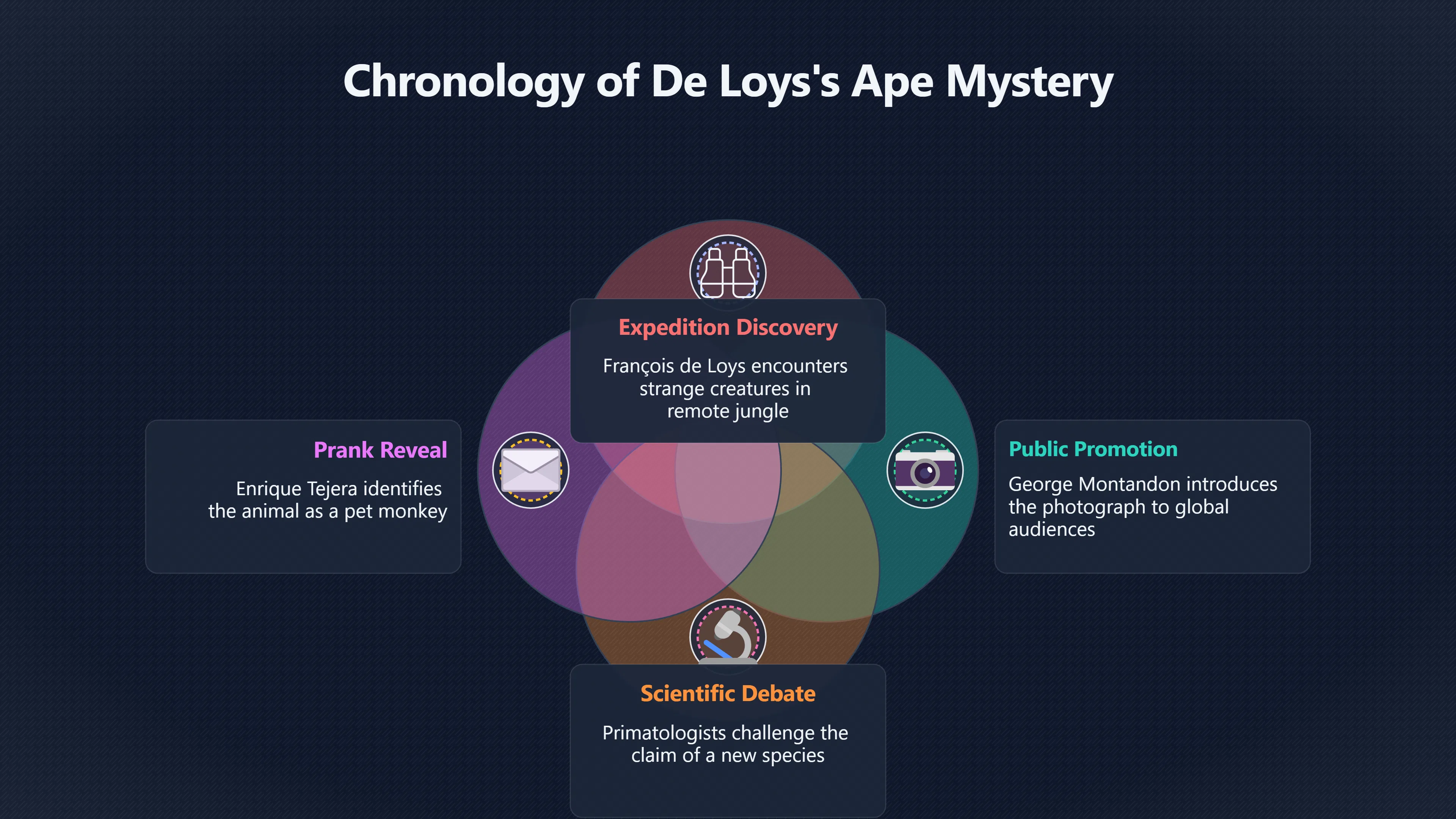
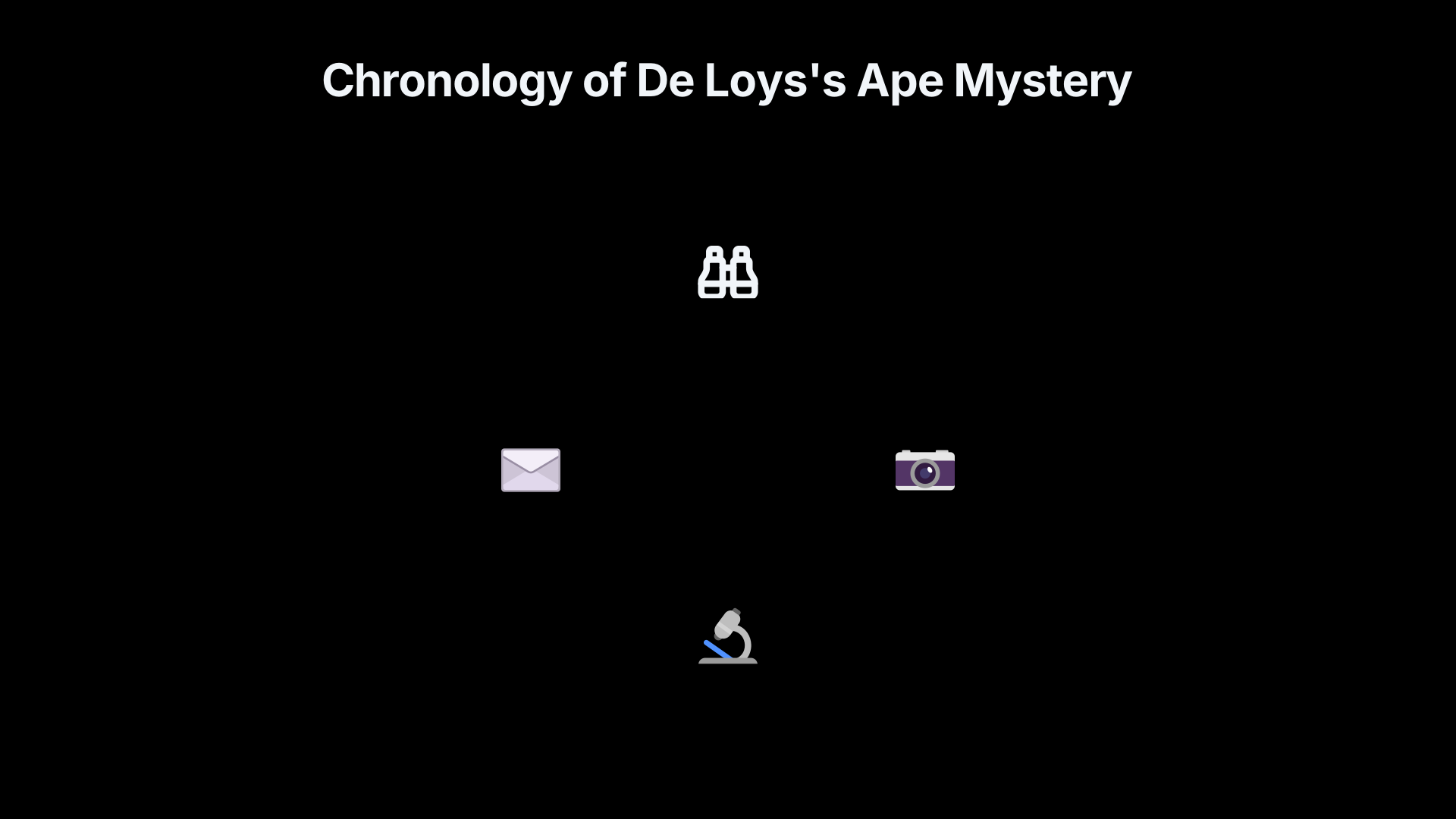
According to Swiss geologist François de Loys, his expedition was exploring remote forest along the Colombia–Venezuela frontier between 1917 and 1920 when the party encountered two strange ape-like creatures. He later claimed that the animals behaved aggressively and that one was shot. The carcass was supposedly placed on a wooden crate and photographed before any scientific examination could occur. De Loys stated that other evidence was later lost, leaving only a single surviving image.[Wikipedia]WikipediaDe Loys's apeDe Loys's ape
The photograph did not become famous immediately. It emerged publicly in 1929 when anthropologist George Montandon promoted it as evidence of an unknown anthropoid ape from South America. Montandon proposed the scientific name Ameranthropoides loysi and argued that the animal represented something far more significant than a local monkey. The image soon circulated internationally through newspapers and scientific discussions.[Wikipedia]WikipediaDe Loys's apeDe Loys's ape
Part of the photograph’s power comes from what it does not show. There is no reliable scale, no clear view of the animal’s rear, and no preserved skeleton, skin or skull available for later verification. Viewers see a dead primate posed upright, but they cannot independently judge its true size or whether a tail was present. Critics pointed out these weaknesses almost as soon as the image appeared.[Wikipedia]WikipediaDe Loys's apeDe Loys's ape
Why the Animal Resembles a Spider Monkey
The strongest sceptical argument is simple: the animal looks very much like a spider monkey, a genuine South American primate known for its long limbs, grasping feet and prehensile tail. Critics noted that the photograph conveniently hides the part of the body that would settle the question of the tail. Without that information, the claim that the creature was a tailless ape depends entirely on de Loys’s testimony.[Wikipedia]WikipediaDe Loys's apeDe Loys's ape
Anthropologist Arthur Keith was among the early critics who argued that the image showed an ordinary spider monkey rather than an unknown ape. Later primatologists reached similar conclusions, observing that the proportions of the limbs and body fit known South American monkeys far better than any hypothetical New World great ape.[Wikipedia]WikipediaDe Loys's apeDe Loys's ape
Another problem is the question of size. Supporters of the mystery animal often repeated claims that it stood roughly 1.5 to 1.6 metres tall. However, the crate in the photograph cannot be used confidently as a measuring device. Because the image lacks dependable scale references, estimates of the animal’s height are largely speculative. Critics argued that the apparent size could easily be exaggerated by the way the carcass was posed and photographed.[Wikipedia]WikipediaDe Loys's apeDe Loys's ape
Some later analyses also highlighted anatomical features associated with spider monkeys rather than apes. The overall body shape, limb proportions and visible characteristics fit a New World monkey far more comfortably than an unknown anthropoid species.[strangeanimalspodcast.blubrry.net]strangeanimalspodcast.blubrry.netEpisode 102: Three Mystery Apes | Strange Animals Podcast14 Jan 2019 — It's also an organ only found in spider monkeys and a few other ty…
Montandon’s Role and the Wider Controversy
The mystery survived partly because it arrived at a moment when debates about human evolution and human origins still attracted intense public interest. George Montandon championed the photograph and attempted to fit it into broader theories about human ancestry. He argued that the creature represented a previously unknown anthropoid primate from the Americas.[Wikipedia]WikipediaDe Loys's apeDe Loys's ape
Modern historians view this context as important. Montandon was associated with racial theories that are now thoroughly discredited, including ideas that different human populations evolved separately from different ape ancestors. The supposed discovery of a South American anthropoid fitted neatly into those beliefs, giving him a strong reason to promote the photograph beyond the available evidence.[Forbes]forbes.comde loys ape was a well played anthropological fraudA missing link, such as the supposed Ameranthropoides, was a perfect…Read more…
Not all scientists accepted the claim. Prominent zoologists and primatologists challenged the interpretation almost immediately. Some argued that the image showed nothing more than a monkey with misleading presentation, while others considered the entire story unreliable because no specimen survived for examination.[Swiss History Blog]blog.nationalmuseum.chswiss monster huntersSwiss History BlogSwiss monster hunters – Swiss National Museum6 Mar 2025 —… ape, Hershkovitz branded the find a fraud. He condemned d…
Tejera’s Prank Claim and the Hoax Verdict
The most damaging evidence against De Loys’s ape arrived decades later. In 1962, Venezuelan physician Enrique Tejera, who had known de Loys during oil-company work in the Maracaibo–Catatumbo region, published a letter in the Caracas newspaper El Universal. Tejera stated that the famous creature had actually been a pet spider monkey associated with de Loys and that the photograph originated as a practical joke rather than a zoological discovery.[AAPG]aapg.orga monkeys photo a prankster petroleum geologist and a fraudulent anthropologistA Monkey's Photo, a Prankster Petroleum Geologist and…1 Nov 2020 — The definitive clue that the Ameranthropoides loysi story was a…
According to accounts based on Tejera’s testimony, the monkey died and was then posed for the photograph. Later retellings added that details in the image helped conceal its ordinary size and nature. While some variations of the story differ in minor details, the central claim remained the same: the celebrated ape was not a new species but a manipulated presentation of a familiar animal.[AAPG]aapg.orga monkeys photo a prankster petroleum geologist and a fraudulent anthropologistA Monkey's Photo, a Prankster Petroleum Geologist and…1 Nov 2020 — The definitive clue that the Ameranthropoides loysi story was a…
Subsequent historical investigations into the expedition, the participants and the publication history strengthened the sceptical interpretation. Researchers found no physical evidence for an unknown South American ape and no confirmed sightings that could independently support de Loys’s story. As a result, the overwhelming modern consensus is that the photograph depicts a spider monkey and that the mystery was created through misrepresentation, embellishment or outright hoaxing.[aapg.org]aapg.orgA Monkey's Photo, a Prankster Petroleum Geologist and…1 Nov 2020 — According to de Loys, the ape's skin was removed afterwards…
Why the Photograph Still Matters
Despite the near-universal rejection of De Loys’s ape as a real species, the case remains central to Venezuela’s mystery-animal folklore. Unlike many monster stories, it has a concrete image attached to it. People can look at the photograph and decide for themselves whether it appears convincing. That visual impact has allowed the story to survive long after the scientific case collapsed.[Wikipedia]WikipediaDe Loys's apeDe Loys's ape
The episode is also a classic lesson in how cryptid legends develop. A dramatic photograph, a remote jungle setting, lost evidence and a confident eyewitness account combined to create a mystery that travelled around the world. Later criticism, contradictory testimony and the absence of supporting specimens never achieved the same public visibility as the original image.[AAPG]aapg.orgA Monkey's Photo, a Prankster Petroleum Geologist and…1 Nov 2020 — According to de Loys, the ape's skin was removed afterwards…
For Venezuela’s cryptid tradition, De Loys’s ape occupies a unique place: not because it is considered a genuine unknown animal, but because it demonstrates how easily an ordinary creature can become a legendary one when evidence is incomplete and the story is compelling enough.[AAPG]aapg.orgA Monkey's Photo, a Prankster Petroleum Geologist and…1 Nov 2020 — According to de Loys, the ape's skin was removed afterwards…
Amazon book picks
Further Reading
Books and field guides related to Was De Loys's Ape Ever a Real Animal?. Use these as the next step if you want deeper reading beyond the article.
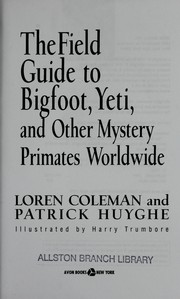
The field guide to Bigfoot, Yeti, and other mystery primates...
Places the alleged Venezuelan ape within global mystery-primate lore.
Why People Believe Weird Things
Explains how persuasive but weakly supported claims endure.
eBay marketplace picks
Marketplace Samples
Live-tested eBay searches with available results related to this page.



Endnotes
1.
Source: Wikipedia
Title: De Loys’s ape
Link:https://en.wikipedia.org/wiki/De_Loys%27s_ape
2.
Source: aapg.org
Link:https://www.aapg.org/news-and-media/explorer/a-monkeys-photo-a-prankster-petroleum-geologist-and-a-fraudulent-anthropologist/?srsltid=AfmBOopANhcoIvrigPgK3XX14nEfRG7h9LVEDYBhYq2yVcFvxpBcmdes
Source snippet
A Monkey's Photo, a Prankster Petroleum Geologist and...1 Nov 2020 — According to de Loys, the ape's skin was removed afterwards...
3.
Source: forbes.com
Title: de loys ape was a well played anthropological fraud
Link:https://www.forbes.com/sites/davidbressan/2016/01/31/de-loys-ape-was-a-well-played-anthropological-fraud/
Source snippet
A missing link, such as the supposed Ameranthropoides, was a perfect...Read more...
4.
Source: strangeanimalspodcast.blubrry.net
Link:https://strangeanimalspodcast.blubrry.net/2019/01/14/episode-102-three-mystery-apes/
Source snippet
Episode 102: Three Mystery Apes | Strange Animals Podcast14 Jan 2019 — It's also an organ only found in spider monkeys and a few other ty...
5.
Source: Wikipedia
Title: Ameranthropoides loysi
Link:https://es.wikipedia.org/wiki/Ameranthropoides_loysi
6.
Source: Wikipedia
Title: George Montandon
Link:https://en.wikipedia.org/wiki/George_Montandon
7.
Source: aapg.org
Title: a monkeys photo a prankster petroleum geologist and a fraudulent anthropologist
Link:https://www.aapg.org/news-and-media/explorer/a-monkeys-photo-a-prankster-petroleum-geologist-and-a-fraudulent-anthropologist/?srsltid=AfmBOorXcicQDeP38524Tw4G89K8JBoTlQ5zu1EzFbahQ0KUCTXfTRu3
Source snippet
A Monkey's Photo, a Prankster Petroleum Geologist and...1 Nov 2020 — The definitive clue that the Ameranthropoides loysi story was a...
8.
Source: Wikipedia
Link:https://it.wikipedia.org/wiki/Amerantropoide
9.
Source: blog.nationalmuseum.ch
Title: swiss monster hunters
Link:https://blog.nationalmuseum.ch/en/2025/03/swiss-monster-hunters/
Source snippet
Swiss History BlogSwiss monster hunters – Swiss National Museum6 Mar 2025 —... ape, Hershkovitz branded the find a fraud. He condemned d...
10.
Source: biologyonline.com
Title: Ameranthropoides loysi
Link:https://www.biologyonline.com/articles/ameranthropoides-loysi
Additional References
11.
Source: skeptoid.com
Link:https://skeptoid.com/episodes/302
Source snippet
De Loys' ApeThere are also conflicting accounts of the famous photograph's history. In 1962, a Dr. Enrique Tejera read an account of de L...
12.
Source: reddit.com
Link:https://www.reddit.com/r/Cryptozoology/comments/1gxj6y6/here_is_one_of_the_many_postscripts_to_the_de/
13.
Source: youtube.com
Title: The Racist Cryptid | De Loys’ Ape
Link:https://www.youtube.com/watch?v=L6i2lAvbql4
Source snippet
Here's The Hard Truth Behind These Bizarre Photographs...
14.
Source: reddit.com
Title: what do you think of the de loys ape this picture
Link:https://www.reddit.com/r/bigfoot/comments/hwgj0h/what_do_you_think_of_the_de_loys_ape_this_picture/
15.
Source: youtube.com
Title: De Loys’ Ape: A Eugenics Inspired Hoax?
Link:https://www.youtube.com/watch?v=_HhlZL6apZs
Source snippet
The Racist Cryptid | De Loys' Ape...
16.
Source: karlshuker.blogspot.com
Link:https://karlshuker.blogspot.com/2025/09/bringing-to-life-infamous-photograph-of.html
17.
Source: youtube.com
Title: Cryptid Profile
Link:https://www.youtube.com/watch?v=CIt6uJdrqRQ
Source snippet
De Loys' Ape: A Eugenics Inspired Hoax?...
18.
Source: youtube.com
Title: Legendary Creatures of South America
Link:https://www.youtube.com/watch?v=O405MMT1W54
19.
Source: fieldethos.com
Title: venezuelan bigfoot
Link:https://fieldethos.com/venezuelan-bigfoot/
20.
Source: reddit.com
Link:https://www.reddit.com/r/Cryptozoology/comments/1egx7tw/was_de_loys_ape_actually_a_gibbon/
Topic Tree