Within Vincentian Monsters
Was Any Vincentian Monster Ever Evidence Based?
No specimen or clear photograph supports a hidden animal, but bats, pigs, people, lights and poor visibility offer plausible sources for many reports.
On this page
- What evidence is missing
- Animals and sounds behind the stories
- Folklore claims versus zoological cases
Page outline Jump by section
Introduction
The short answer is no: no Vincentian monster tradition is supported by a specimen, verified trackway, clear photograph, DNA sample or sustained zoological investigation. The creatures most often remembered in Saint Vincent and the Grenadines, especially the Rounce, survive mainly through oral tradition, folklore collections and local memories rather than physical evidence. The stories remain culturally important, but they do not resemble the kinds of cases that zoologists would normally treat as evidence for an undiscovered animal.[searchlight.vc]searchlight.vcThe Cultural Heritage of StVincent and the GrenadinesOctober 24, 2008 — 24 Oct 2008 — Rounce is another evil character which grunts like a pig and will carry you aw…
That does not mean the reports are meaningless. Instead, they offer clues about how people interpreted strange sounds, fleeting night-time encounters and poorly lit landscapes. When researchers and sceptics look for natural explanations, they usually begin with the island’s real wildlife, especially nocturnal animals, environmental conditions and the limits of human perception after dark.
What Evidence Is Missing?
The most striking feature of Vincentian monster traditions is not the evidence that exists but the evidence that does not.
Accounts of the Rounce describe a dangerous being that grunts like a pig and prowls at night, yet surviving descriptions focus on behaviour and storytelling rules rather than anatomy. Witnesses do not leave behind a consistent body shape, measurements, tracks, bones or photographs. Instead, the creature functions largely as a character within oral tradition.[searchlight.vc]searchlight.vcThe Cultural Heritage of StVincent and the GrenadinesOctober 24, 2008 — 24 Oct 2008 — Rounce is another evil character which grunts like a pig and will carry you aw…
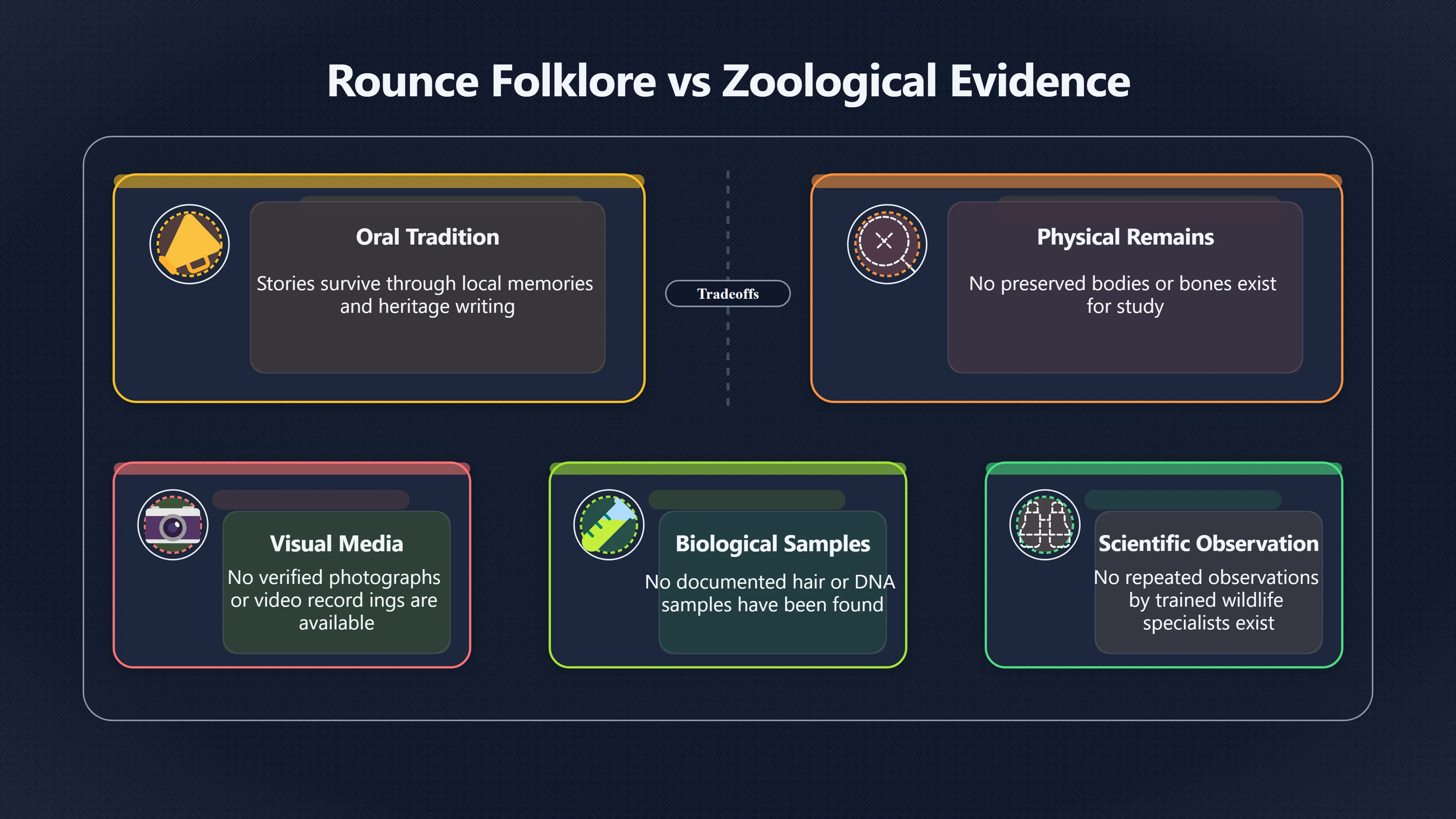
From a zoological perspective, several key forms of evidence are absent:
- No preserved body or physical remains.
- No verified photographs or video recordings.
- No documented hair, tissue or DNA samples.
- No repeated observations by trained wildlife specialists.
- No evidence of a breeding population of an unknown large animal.
This absence matters because Saint Vincent is a relatively small island with a well-studied fauna. New species can still be discovered, particularly among smaller animals, but a large hidden mammal capable of generating generations of reports would normally be expected to leave some physical trace. Even the island’s lesser-known mammals have been documented through surveys and scientific collection rather than folklore alone.[DigitalCommons]digitalcommons.unl.eduDigital Commons Bats of StVincent, Lesser Antilles - UNL Digital Commonsby GG Kwiecinski · Cited by 10 — The chiropteran fauna of the island of Saint Vincent, repr…
Animals and Sounds Behind the Stories
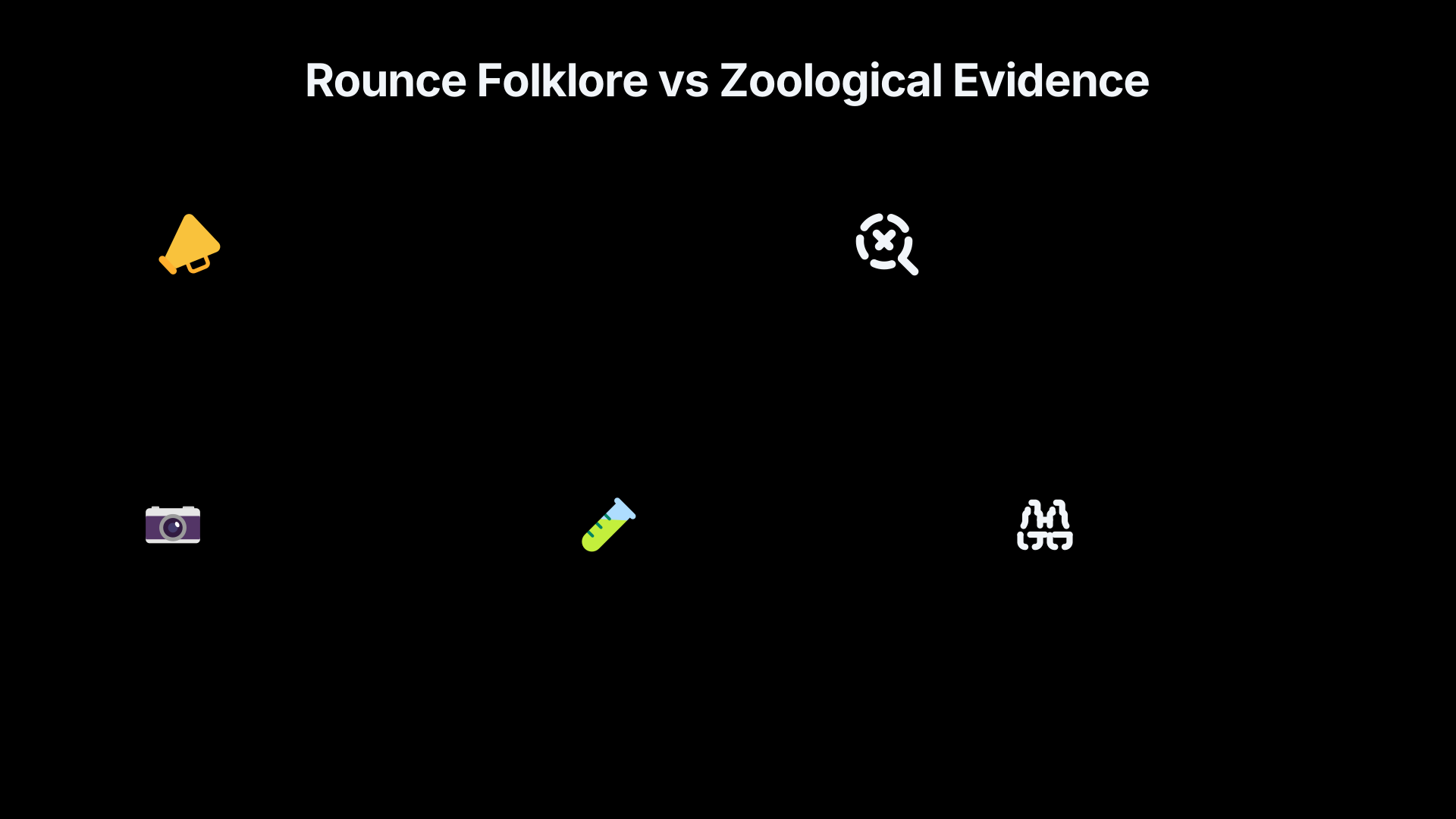
A natural explanation does not require every story to be mistaken in exactly the same way. Different reports may have had different causes.
Bats in the Darkness
Saint Vincent supports an unusually rich bat fauna for a Caribbean island, with around a dozen recorded species, including endemic forms found nowhere else. These bats occupy caves, forests, valleys and other habitats across the island.[unl.edu]digitalcommons.unl.eduDigital Commons Bats of StVincent, Lesser Antilles - UNL Digital Commonsby GG Kwiecinski · Cited by 10 — The chiropteran fauna of the island of Saint Vincent, repr…
Most bats are nocturnal and rely heavily on sound. Scientific research shows that bats produce complex vocalisations for navigation and social communication, while some Caribbean fruit bats emerge in large numbers shortly after sunset.[PubMed]pubmed.ncbi.nlm.nih.govWhat bats have to say about speech and languageby SC Vernes · 2017 · Cited by 83 — Bats employ complex vocalizations to facilitate…
For someone travelling along a dark road or crossing farmland at night, a sudden movement overhead, rustling vegetation or unfamiliar calls can be surprisingly unsettling. Bats are not likely to explain every monster story, but they demonstrate how ordinary wildlife can create unusual sensory experiences after dark.[PubMed]pubmed.ncbi.nlm.nih.govWhat bats have to say about speech and languageby SC Vernes · 2017 · Cited by 83 — Bats employ complex vocalizations to facilitate…
Pigs, Livestock and Misheard Noises
The Rounce is specifically described as grunting like a pig. That detail has encouraged a straightforward interpretation among some observers: the sound associated with the legend may have originated from ordinary animals.
Free-ranging livestock, feral animals, pigs moving through vegetation, or noises carried by wind can sound very different at night than they do during the day. In darkness, people often identify a sound before they identify its source. If a listener already knows a frightening local story, an ambiguous grunt may be interpreted through that cultural lens.
This does not prove that pig sounds created the Rounce legend, but it illustrates how a familiar animal noise can become attached to a supernatural narrative over time.
People as Explanations
Some folklore researchers note that monster traditions often serve social purposes. Stories can discourage children from wandering after dark, reinforce local rules about dangerous places or explain frightening encounters with strangers.
In isolated areas, a glimpse of another person in poor light may be enough to generate a memorable story. A prankster, a traveller or someone intentionally trying to frighten passers-by can easily become part of local legend once the event is retold and embellished.
The fact that Rounce stories focus on danger, kidnapping and staying indoors fits this broader pattern of cautionary folklore.[searchlight.vc]searchlight.vcThe Cultural Heritage of StVincent and the GrenadinesOctober 24, 2008 — 24 Oct 2008 — Rounce is another evil character which grunts like a pig and will carry you aw…
Why Night-Time Conditions Matter
Many reported monster experiences occur under conditions that reduce reliability.
Human vision is remarkably adaptable, but it is less accurate in darkness. Distances become harder to judge, colours disappear and moving shapes are easily misinterpreted. A person may correctly perceive that something is present while incorrectly identifying what it is.
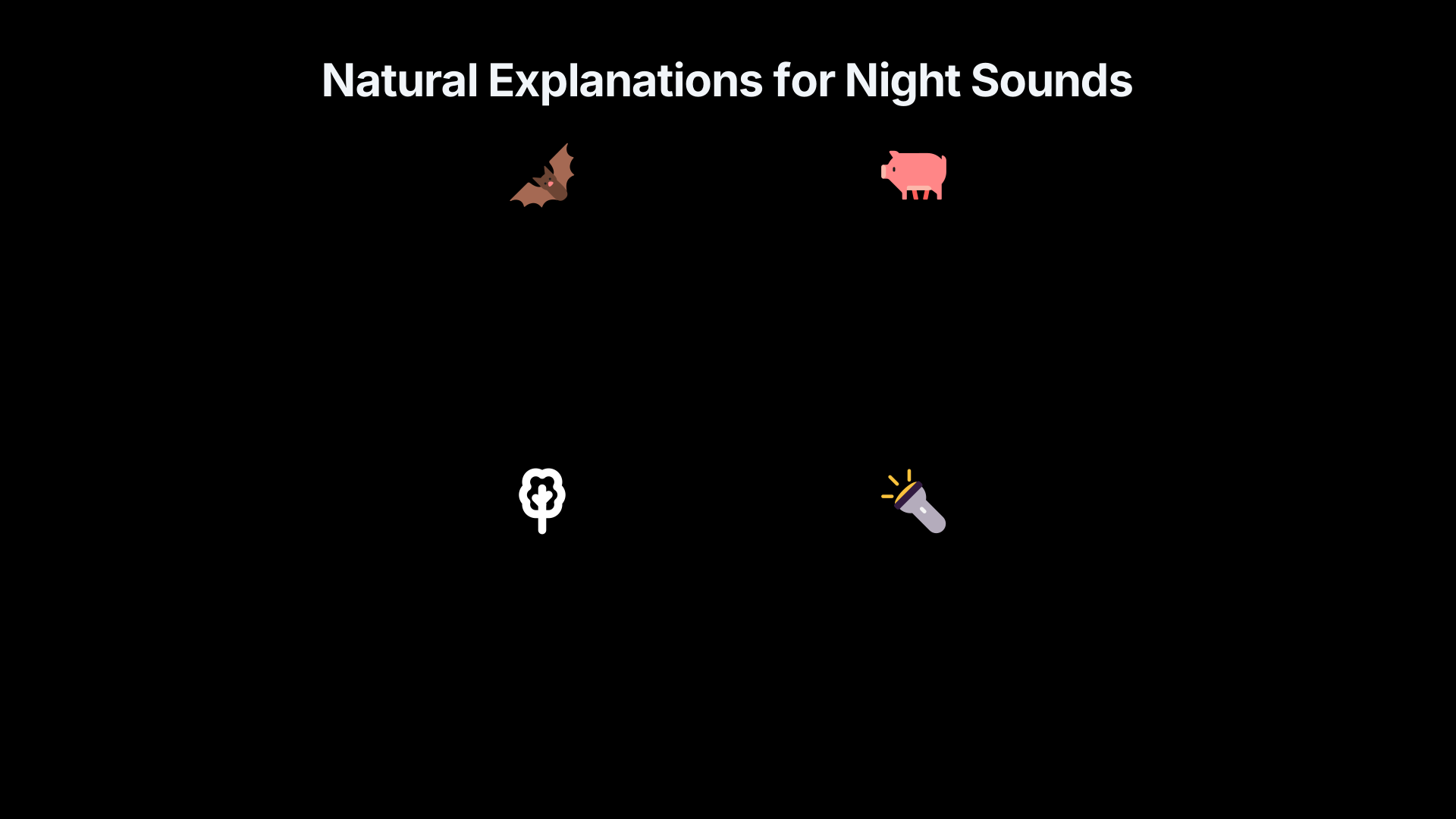
Several environmental factors common in Saint Vincent can contribute to this effect:
- Dense vegetation obscuring animals and people.
- Moonlight creating strong shadows.
- Wind-driven movement in trees and crops.
- Echoes and sound distortion in valleys.
- Sudden encounters on unlit roads and paths.
When combined with expectation and local folklore, these conditions can produce convincing experiences without requiring an unknown creature.
Folklore Claims Versus Zoological Cases
One useful way to understand Vincentian monster traditions is to separate folklore evidence from zoological evidence.
Folklore evidence asks different questions. It examines how stories are remembered, why they are told and what they reveal about a community. By that standard, the Rounce is well attested: it appears in cultural discussions, heritage writing and local memories as a recognised figure in Vincentian tradition.[searchlight.vc]searchlight.vcThe Cultural Heritage of StVincent and the GrenadinesOctober 24, 2008 — 24 Oct 2008 — Rounce is another evil character which grunts like a pig and will carry you aw…
Zoological evidence asks whether a real, undiscovered animal exists. Here the picture is very different. The available material consists largely of stories rather than biological data. No known report has crossed the threshold required for scientific recognition of a new large species.
That distinction helps explain why the Rounce remains important even though there is no evidence that it was a hidden animal. The creature survives because it functions successfully as folklore, not because it has accumulated convincing zoological support.
The Most Plausible Assessment
Looking strictly at the evidence, the strongest conclusion is that Vincentian monster traditions are cultural rather than zoological phenomena.
The reports are real in the sense that people told them, remembered them and passed them on. The missing photographs, specimens and physical traces make an undiscovered animal unlikely. Meanwhile, known wildlife, especially nocturnal animals, environmental sounds, darkness, human misperception and the influence of existing folklore provide plausible explanations for many encounters.[unl.edu]digitalcommons.unl.eduDigital Commons Bats of StVincent, Lesser Antilles - UNL Digital Commonsby GG Kwiecinski · Cited by 10 — The chiropteran fauna of the island of Saint Vincent, repr…
For readers interested in mystery animals, Saint Vincent and the Grenadines offers something slightly different from a classic cryptid hunt. Its stories reveal how ordinary landscapes, familiar wildlife and powerful folklore can combine to create monsters that remain memorable long after the evidence has disappeared.
eBay marketplace picks
Marketplace Samples
Live-tested eBay searches with available results related to this page.
Endnotes
1.
Source: searchlight.vc
Title: The Cultural Heritage of St
Link:https://www.searchlight.vc/special-feature/2008/10/24/the-cultural-heritage-of-st-vincent-and-the-grenadines/
Source snippet
Vincent and the GrenadinesOctober 24, 2008 — 24 Oct 2008 — Rounce is another evil character which grunts like a pig and will carry you aw...
Published: October 24, 2008
2.
Source: researchgate.net
Title: 331478788 Bats of Saint Vincent Lesser Antilles
Link:https://www.researchgate.net/publication/331478788_Bats_of_Saint_Vincent_Lesser_Antilles
Source snippet
In those individuals, hair loss was observed on the back and head; six of them were lactating and...Read more...
3.
Source: tourism.gov.vc
Link:https://tourism.gov.vc/tourism/index.php?Itemid=147&id=212&option=com_content&view=article
Source snippet
Vincent & the Grenadines. Culture is the way of life of a people, so Vincentian culture is the way of life of...Read more...
4.
Source: digitalcommons.unl.edu
Title: Digital Commons Bats of St
Link:https://digitalcommons.unl.edu/context/museummammalogy/article/1277/viewcontent/Bats_of_St._Vincent.pdf
Source snippet
Vincent, Lesser Antilles - UNL Digital Commonsby GG Kwiecinski · Cited by 10 — The chiropteran fauna of the island of Saint Vincent, repr...
5.
Source: pubmed.ncbi.nlm.nih.gov
Link:https://pubmed.ncbi.nlm.nih.gov/27368623/
Source snippet
What bats have to say about speech and languageby SC Vernes · 2017 · Cited by 83 — Bats employ complex vocalizations to facilitate...
Additional References
6.
Source: facebook.com
Link:https://www.facebook.com/TourismSVG/posts/we-were-definitely-excited-to-learn-about-some-unique-vincentian-sayings-and-cus/1670781083751582/
Source snippet
1. Did you know Vincentians have a tendency to say “...Even the most mischievous children and courageous adults cower in fear of...
7.
Source: worldwildlife.org
Link:https://www.worldwildlife.org/news/magazine/spring-2023/discovering-a-new-side-to-fruit-bats/
Source snippet
World Wildlife FundDiscovering a New Side to Fruit Bats | WWFLike most of the 1,400 species of bats, Egyptian fruit bats (Rousettus aegyp...
8.
Source: facebook.com
Link:https://www.facebook.com/reillytravers.imire/videos/releasing-this-bat-after-the-biologists-have-processed-this-creature-shows-a-sou/1973249563566986/
9.
Source: instagram.com
Link:https://www.instagram.com/reel/DTT6oVWCDYE/
10.
Source: instagram.com
Link:https://www.instagram.com/reel/DUfP6X1AIzA/?hl=en
11.
Source: instagram.com
Link:https://www.instagram.com/p/DT9vx2zj3hn/
12.
Source: instagram.com
Link:https://www.instagram.com/reel/DFpccPOy7iv/?hl=en
13.
Source: secemu.org
Title: Rydell et al 2018
Link:https://secemu.org/wp-content/uploads/2022/05/Rydell_et_al_2018.pdf
14.
Source: youtube.com
Title: Bat folklore
Link:https://www.youtube.com/shorts/dTQGuER2EpE
15.
Source: youtube.com
Link:https://www.youtube.com/watch?v=42DusrdVyzU
Topic Tree