Within Bosnian Beasts
Did Bosnia's Dragons Become Cryptids?
Bosnian monster lore also draws on older dragon, serpent and cave-creature traditions rather than only modern sightings.
On this page
- Azdaja and South Slavic dragon lore
- The olm and the baby dragon idea
- Where folklore ends and cryptid claims begin
Page outline Jump by section
Introduction
Bosnia and Herzegovina’s monster traditions do not begin with modern reports of mysterious creatures in forests or villages. Long before stories of the drekavac and other local beast legends, the region shared a rich South Slavic tradition of dragons, giant serpents and cave-dwelling creatures. These older beliefs helped create the imaginative landscape from which later monster stories emerged.
For readers interested in Bosnian cryptid traditions, dragons matter because they show how folklore can blur into reports of seemingly real creatures. Some dragon legends described supernatural beings that battled storms or heroes. Others became attached to actual animals found in the caves of the Dinaric karst. The most famous example is the olm, an unusual cave salamander that people once believed was a baby dragon. Together, these traditions reveal how Bosnia’s mystery-creature heritage grew from a mixture of folklore, landscape and encounters with unfamiliar wildlife.[Wikipedia]WikipediaOpen source on wikipedia.org.
Did Bosnia’s Dragons Become Cryptids?
The short answer is: not exactly, but they helped create the cultural foundation from which later cryptid-style stories developed.
Across South Slavic lands, including Bosnia and Herzegovina, dragon traditions existed in several forms. Some dragons were seen as intelligent supernatural beings associated with mountains, caves, storms and hidden treasures. Others appeared as monstrous serpent-like creatures defeated by saints or heroes. South Slavic folklore often distinguished between different dragon types rather than treating all dragons as the same creature.[Stribog's Forest]stribogsforest.wordpress.comStribog's ForestAre Dragons Evil, Part 3 – Slavic - Stribog's ForestApr 16, 2024 — In South Slavic folklore there is a distinction betwee…
Unlike modern cryptids, these dragons were usually understood as mythological beings rather than undiscovered animals. Yet the settings overlap remarkably with later mystery-beast traditions. Dragons were said to inhabit remote caves, deep forests, mountains and inaccessible waters—the same kinds of places where unusual creature reports often arise today.
In Bosnia and Herzegovina, stories of dragons also became woven into local identity. The continued popularity of dragon imagery in folklore, place legends and oral tradition helped keep the idea of hidden creatures alive even after belief in literal dragons declined.[islam4europeans.com]islam4europeans.comEuropean Muslim DragonsSep 23, 2018 — Unique in the Bosnian Muslim slavic mythology are the stories of the ”Aždaha”, the snake like drago…
Aždaja and South Slavic Dragon Lore
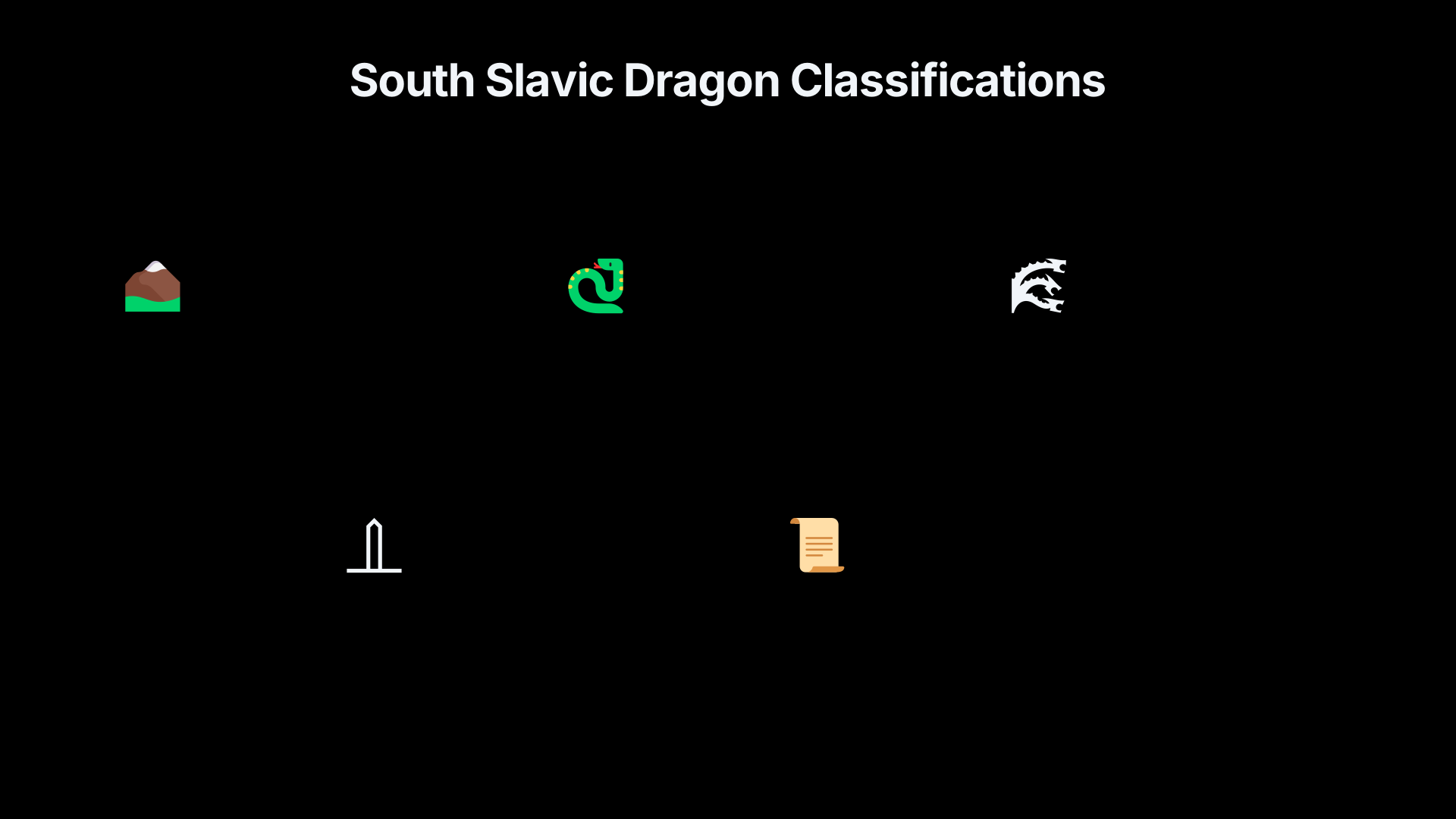
One of the most important dragon figures connected to Bosnia is the aždaja, a giant serpent-like dragon found throughout South Slavic folklore.
The name itself ultimately derives from an older Iranian and Persian dragon tradition before entering Balkan folklore through centuries of cultural contact. In Bosnian and Serbian traditions, the aždaja was usually portrayed as a destructive monster, often larger and more dangerous than other dragon-like beings. Some legends describe it as multi-headed, while others portray it as an enormous snake inhabiting mountains, caves or wild places.[Wikipedia]WikipediaSlavic dragonSlavic dragon
This distinction is important because South Slavic folklore often recognised two broad dragon categories:
- The more heroic or ambivalent dragon, sometimes seen as powerful and wise.
- The monstrous serpent-dragon represented by the aždaja.
The second type resembles many creatures that would today be labelled cryptids. It is usually tied to a physical location, described in animal-like terms and associated with frightening encounters in the landscape. Yet the stories remain firmly within folklore rather than eyewitness zoology.[Stribog's Forest]stribogsforest.wordpress.comStribog's ForestAre Dragons Evil, Part 3 – Slavic - Stribog's ForestApr 16, 2024 — In South Slavic folklore there is a distinction betwee…
Bosnian folklore also preserves traces of older serpent symbolism. Dragon and snake motifs appear in regional traditions and have been noted on some medieval stećak tombstones, suggesting that serpent-like supernatural creatures occupied an important place in local imagination long before modern monster stories emerged.[islam4europeans.com]islam4europeans.comEuropean Muslim DragonsSep 23, 2018 — Unique in the Bosnian Muslim slavic mythology are the stories of the ”Aždaha”, the snake like drago…

The Olm and the Baby Dragon Idea
If any creature connects Balkan dragon folklore to an actual animal, it is the olm.
The olm is a rare cave-dwelling salamander found in the underground waters of the Dinaric karst, including parts of Bosnia and Herzegovina. Pale, blind and strangely shaped, it spends its entire life in darkness beneath the surface. To people who occasionally saw one washed out of a cave system after heavy rains, it looked unlike any familiar animal.[Wikipedia]WikipediaOpen source on wikipedia.org.
Centuries ago, people living in the karst regions of the western Balkans developed an explanation: these strange creatures were baby dragons.
One of the earliest written accounts of the belief comes from the seventeenth century, when unusual cave animals emerging after floods were interpreted as offspring of great dragons hidden underground. The idea survived for generations and became one of the most famous pieces of Balkan natural folklore.[Wikipedia]WikipediaOpen source on wikipedia.org.
The connection is understandable. An olm has:
- A long serpent-like body.
- Tiny limbs.
- Pale, almost translucent skin.
- External red gills resembling fantastical ornaments.
- A mysterious underground habitat.
To pre-scientific observers, it looked less like a salamander than a creature from legend. Modern conservation organisations still reference the old nickname “baby dragon” because it became such a durable part of regional folklore.[Environment]environment.ec.europa.euEnvironment Postojna Cave – Baby dragon guardiansPostojna Cave – Baby dragon guardians - EU EnvironmentThe blind cave salamander, or olm (Proteus anguinus) – which was mistake…
For cryptid history, the olm is especially interesting because it demonstrates a recurring pattern: a genuinely unusual animal enters folklore, acquires supernatural explanations and eventually becomes part of local monster tradition.
Why Caves Matter So Much in Bosnian Monster Lore
Bosnia and Herzegovina lies within the wider Dinaric karst region, one of Europe’s most cave-rich landscapes. Vast underground river systems, sinkholes and hidden chambers have shaped local folklore for centuries.[Wikipedia]WikipediaOpen source on wikipedia.org.
In many cultures, caves become homes for monsters because they are inaccessible and mysterious. In the Balkans, caves were particularly important because they occasionally produced strange real animals. The olm is the clearest example, but the broader pattern encouraged stories about dragons, giant serpents and other hidden beings lurking beneath the mountains.
This geographical setting helps explain why Bosnian creature traditions often feel different from the lake-monster legends found elsewhere in Europe. The mystery here frequently comes from underground landscapes rather than open water. The cave itself becomes part of the monster story.
Where Folklore Ends and Cryptid Claims Begin
The dragon traditions of Bosnia and Herzegovina occupy an interesting middle ground between mythology and cryptozoology.
The aždaja belongs firmly to folklore. There are no modern investigations suggesting a real giant dragon-like animal inhabits Bosnia’s mountains. Stories about the creature function as legends, moral tales and expressions of older beliefs rather than reports of an unknown species.[Wikipedia]WikipediaSlavic dragonSlavic dragon
The olm, by contrast, is completely real. What changed over time was not the animal itself but the explanation attached to it. A creature once believed to be a dragon offspring became recognised through science as a specialised cave salamander.[Wikipedia]WikipediaOpen source on wikipedia.org.
This distinction highlights a useful rule for understanding Bosnian monster traditions:
- Some creatures began as myths and remained myths.
- Some creatures were real animals interpreted through myth.
- Modern cryptid stories often emerge somewhere between those two categories.
That is why dragons remain relevant to Bosnia’s creature folklore even though no one is seriously searching for flying fire-breathing beasts. They provide the deep historical roots of a tradition that later produced stories of screamers, cave monsters and unexplained creatures. The landscape changed little, but the way people interpreted strange experiences gradually shifted from dragon legends to modern mystery-animal reports.
Amazon book picks
Further Reading
Books and field guides related to Did Bosnia's Dragons Become Cryptids?. Use these as the next step if you want deeper reading beyond the article.
The Book of Dragons
Provides accessible context for how dragon traditions evolve across cultures.
The Mythical Creatures Bible
Helps place Bosnian dragon traditions within wider creature folklore.
The Element Encyclopedia of Magical Creatures
Includes dragon and serpent traditions from European folklore.
Encyclopedia of Things that Never Were
Covers legendary creatures and the boundary between myth and belief.
eBay marketplace picks
Marketplace Samples
Live-tested eBay searches with available results related to this page.

Endnotes
1.
Source: Wikipedia
Link:https://en.wikipedia.org/wiki/Olm
2.
Source: Wikipedia
Title: Slavic dragon
Link:https://en.wikipedia.org/wiki/Slavic_dragon
3.
Source: islam4europeans.com
Link:https://islam4europeans.com/2018/09/23/azdaha-european-muslim-dragons/
Source snippet
European Muslim DragonsSep 23, 2018 — Unique in the Bosnian Muslim slavic mythology are the stories of the ”Aždaha”, the snake like drago...
4.
Source: Wikipedia
Title: Bosnia and Herzegovina
Link:https://en.wikipedia.org/wiki/Bosnia_and_Herzegovina
Source snippet
Bosnia and HerzegovinaBosnia is a country in Southeast Europe, situated on the Balkan Peninsula. It borders Serbia to the east, Monten...
5.
Source: stribogsforest.wordpress.com
Link:https://stribogsforest.wordpress.com/2024/04/16/are-dragons-evil-part-3-slavic-mythology/
Source snippet
Stribog's ForestAre Dragons Evil, Part 3 – Slavic - Stribog's ForestApr 16, 2024 — In South Slavic folklore there is a distinction betwee...
6.
Source: environment.ec.europa.eu
Title: Environment Postojna Cave – Baby dragon guardians
Link:https://environment.ec.europa.eu/topics/nature-and-biodiversity/natura-2000-award/meet-natura-2000-heroes/postojna-cave-baby-dragon-guardians_en
Source snippet
Postojna Cave – Baby dragon guardians - EU EnvironmentThe blind cave salamander, or olm (Proteus anguinus) – which was mistake...
7.
Source: billsjohn.wordpress.com
Title: zmaj od bosne the badass dragon of bosnia
Link:https://billsjohn.wordpress.com/2019/08/31/zmaj-od-bosne-the-badass-dragon-of-bosnia/
Source snippet
OD BOSNE — The Badass Dragon of Bosnia31 Aug 2019 — You don't get such a nickname by chance of course, and the life of this dragon was an...
8.
Source: tfwalsh.wordpress.com
Title: mythology monday zmey the slavic dragon
Link:https://tfwalsh.wordpress.com/2013/02/11/mythology-monday-zmey-the-slavic-dragon/
Source snippet
F. Walsh11 Feb 2013 — South Slavic Dragons have a division on what they call them... creatures whose dragon origins often appear in folk...
9.
Source: dragonwisdom.fandom.com
Title: Slavic dragon
Link:https://dragonwisdom.fandom.com/wiki/Slavic_dragon
Source snippet
dragon | Dragonwisdom WikiHe is often referred to as "Zmaj od Bosne", meaning "The Dragon of Bosnia".... George icon is described as 'sl...
10.
Source: rodnovery.ru
Title: slavic dragon
Link:https://rodnovery.ru/en/articles/slavic-dragon
Source snippet
25 Nov 2015 — He is often referred to as "Zmaj od Bosne", meaning "The Dragon of Bosnia". The Serbian Despot Vuk Grgurević was also known...
Additional References
11.
Source: reddit.com
Link:https://www.reddit.com/r/bosnia/comments/1b0h2ub/a_question_about_bosnian_mythology/
Source snippet
A question about bosnian Mythology: r/bosniaAnd yes, we DO have folklore, our folklore and mythology comes from the southern Slav region...
12.
Source: facebook.com
Link:https://www.facebook.com/Postojnacavepark/posts/ten-years-ago-something-incredible-happened-in-postojna-cave-slovenia-for-the-fi/1340651058088395/
Source snippet
Postojnska jama Cave-Grotte-HöhleLong ago, locals believed it was a dragon's baby, but today we know it as the olm (Proteus anguinus). Ey...
13.
Source: facebook.com
Link:https://www.facebook.com/groups/138827139978186/posts/1920449768482572/
Source snippet
Slavic mythology dragons and their characteristicsThe Zmaj comes from the Slavic country Slovenia and has much in common with other Slavi...
14.
Source: postojnska-jama.eu
Link:https://www.postojnska-jama.eu/en/wonderland-stories/baby-dragons-secret-stories/
Source snippet
Postojna Cave ParkBaby Dragons' Secret StoriesThe earliest written accounts of the offspring of a terrible dragon living inside Postojna...
15.
Source: youtube.com
Link:https://www.youtube.com/watch?v=wl2yD9Cygkk
Source snippet
Zmey – The Terrible Dragon of Slavic MythologyZmey is a dragon in Slavic folklore. Often portrayed with multiple heads, he is known for k...
16.
Source: folklorethursday.com
Title: serbian folklore his majesty the zmaj and her majesty the vila
Link:https://folklorethursday.com/regional-folklore/serbian-folklore-his-majesty-the-zmaj-and-her-majesty-the-vila/
Source snippet
Slavic Mythology of Zmaj and Vila: Dragons, Nymphs and...Nov 3, 2016 — Zmaj is a mythical winged creature of extraordinary strength, som...
17.
Source: dragon-vibe.com
Link:https://dragon-vibe.com/blogs/dragon-blog/slavic-dragons?srsltid=AfmBOoqihamDIloPrVM5_rO4UPLNTaFjFgl86NyIadtOm4cxVfC-wznx
Source snippet
Slavic dragons - 5 beasts from Eastern Europe you didn't...Aug 7, 2020 — In all South Slavic folklore, the dragon is called zmaj, zmej o...
18.
Source: instagram.com
Link:https://www.instagram.com/p/DaL4d_MgFIp/
Source snippet
ti-headed dragon said to inhabit mountains, caves, and forests.Read more...
19.
Source: mythsterhood.com
Title: episode 17 dragons of the balkan
Link:https://mythsterhood.com/mythsterhood-episode-17-dragons-of-the-balkan/
Source snippet
Episode 17: Dragons of the Balkans22 Feb 2021 — So, in these countries, there are three types of serpent/dragon creatures. And these are...
20.
Source: europeanfolktales.com
Title: zmaj sa vodom the water dragon of bosnia
Link:https://europeanfolktales.com/zmaj-sa-vodom-the-water-dragon-of-bosnia/
Source snippet
Zmaj sa Vodom: The Water Dragon of Bosnia4 Dec 2025 — A powerful Bosnian folktale about courage and wisdom as a humble shepherd challenge...
Topic Tree