Cryptids of Afghanistan's Mountains
Afghanistan has no well-documented “national cryptid” in the way Scotland has the Loch Ness Monster or Nepal has the Yeti.
Page outline Jump by section
The Afghan monster map starts in the mountains
Afghanistan’s creature stories make most sense when set against its geography. The country is dominated by rugged mountains, with the Hindu Kush running through the north and centre and the Wakhan Corridor forming a far north-eastern meeting point between the Pamirs, Karakorams and Himalayas. That is exactly the kind of landscape where herders, hunters and travellers may glimpse animals at distance, lose tracks in snow or scree, and pass stories between valleys. Afghanistan’s high mountain ecosystems also contain real elusive wildlife, including snow leopards, wolves, brown bears and several wild cat species, so not every alarming report needs an imaginary source. The Wildlife Conservation Society notes that Afghanistan has unusually rich cat diversity, while Afghan snow leopard work in Wakhan has produced camera-trap evidence from many locations.[Wildlife Conservation Society]wcs.orgWildlife Conservation Society Temperate AsiaWildlife Conservation Society Temperate Asia[globalsnowleopard.org]globalsnowleopard.orgAfghanistan NSLEP 2Afghanistan NSLEP 2
That does not mean a “hidden ape-man” is likely. It means the setting is ideal for the ingredients of cryptid tradition: difficult access, sparse documentation, powerful animals, dangerous weather, local oral memory and outsiders arriving with their own expectations. In Afghanistan, the strongest creature traditions cluster less around lakes or sea monsters and more around mountains, caves, ravines, wolves, leopards, bears, dragons and giants.
The Barmanu: Afghanistan’s nearest thing to a wild-man cryptid
The best-known mystery hominid associated with Afghanistan is usually called the Barmanu or Barmanou, though most detailed reporting places it across the border in northern Pakistan, especially Chitral and the Hindu Kush fringe. The Afghan connection matters because the claimed range sits in a borderland of connected mountain valleys, and because some researchers and retellings extend the tradition into eastern Afghanistan and Nuristan. Spanish-born zoologist Jordi Magraner chose Chitral partly because Afghanistan and other Central Asian areas were difficult to explore freely; his 1991 field report says he wanted a study area close to places where “hairy hominids” were said to live.[Idaho State University]isu.eduOpen source on isu.edu.
Magraner’s report is the most substantial source for the wild-man tradition near Afghanistan, but it should be read carefully. It is not proof of a surviving human relative. It is a set of interviews, footprint observations and interpretations by a researcher already interested in “relict hominids”. In the report, witnesses describe a hairy upright figure with a human-like body, wide feet, flattened nose, prominent brow, strong smell and cave-dwelling habits. One shepherd account from 1977 describes a reddish-brown, unclothed “hairy man” seen at high elevation; other accounts mention broad human-like footprints and stories of the creature seeking women.[Idaho State University]isu.eduOpen source on isu.edu.
The useful part for an Afghanistan page is not to claim the Barmanu is Afghan Bigfoot. It is to understand the regional pattern. The Hindu Kush sits between better-known wild-man zones: the Yeti tradition to the east and Central Asian “wild man” traditions to the north. Magraner’s own statistics from Chitral summarised 27 eyewitness reports, 31 incidents or contacts, and seven observations of tracks, gathered from local informants over a claimed 40-year period.[Idaho State University]isu.eduOpen source on isu.edu.
Sceptically, the Barmanu remains unconfirmed. No body, bones, DNA-verified hair, clear photographs or independently repeated zoological evidence has established the creature as a real animal. Plausible explanations include bears seen briefly on two legs, distorted memories of frightening wildlife encounters, inherited folklore, and the way interview methods can shape witness descriptions. Still, among Afghanistan-adjacent cryptid traditions, the Barmanu is the one with the most sustained fieldwork behind it.

Bamiyan’s Dragon Valley: a monster turned into landscape
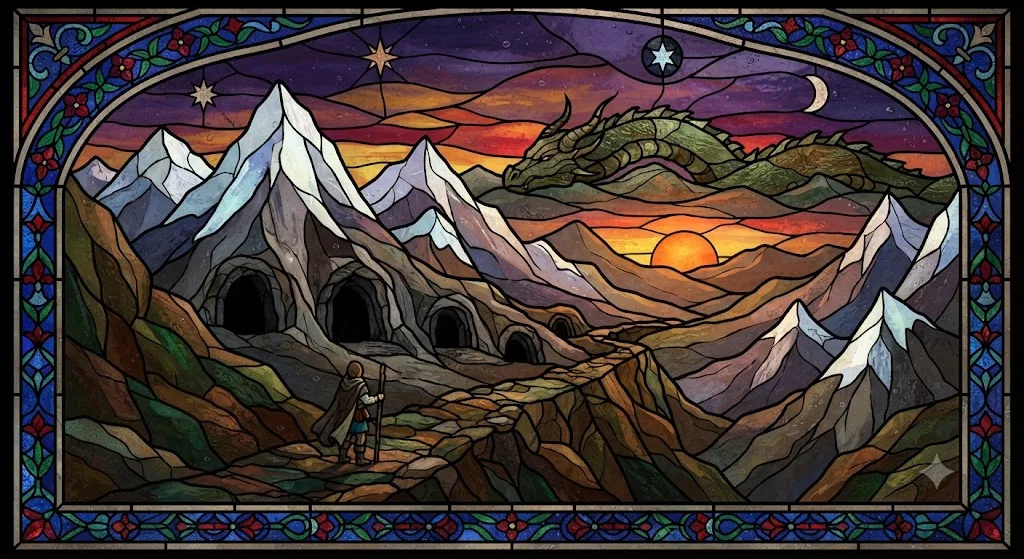
Afghanistan’s most memorable legendary creature is not hidden in a forest. It is visible as a landscape. Near Bamiyan lies the Valley of the Dragon, where a long fissured ridge is said in local legend to be the petrified body of a dragon slain by Ali, cousin and son-in-law of the Prophet Muhammad. AAN’s Bamiyan travel account describes the place as a canyon-like valley with strange rock formations, where the dragon’s back is cut by Ali’s sword and white mineral water becomes the creature’s tears.[Afghanistan Analysts Network - English]afghanistan-analysts.orgAfghanistan Analysts NetworkAfghanistan Analysts Network
The legend has an unusually strong “place story” quality. The ridge, the fissure, reddish deposits, mineral water and underground sounds all become parts of the creature’s body. A translated version of the Bamiyan dragon tale, traced to Joseph Hackin and Ahmad Ali Kohzad’s 1953 collection and Nancy Hatch Dupree’s 1963 The Valley of Bamiyan, tells of a dragon demanding daily tribute before Ali kills it and leaves the petrified body as proof of the miracle.[Tumblr]aftaabmag.comTumblr The Legend of the Dragon of BamiyanTumblr The Legend of the Dragon of Bamiyan
This is folklore, not cryptozoology in the strict sense. Nobody needs to propose a real dragon to see why the story stuck. Bamiyan is already a place where landscape, religion and history overlap: UNESCO describes the valley as a major cultural landscape with Buddhist monastic remains, Islamic-period fortified structures and the destroyed niches of the giant Buddha statues.[UNESCO World Heritage Centre]whc.unesco.orgOpen source on unesco.org. The dragon legend sits naturally in that setting. It makes geology readable as moral drama: a threatening monster, a holy hero, and a scar in the earth that still “proves” the tale.
The Giant of Kandahar: a modern war-zone legend, not an Afghan tradition
The “Giant of Kandahar” is the creature story many internet readers now associate with Afghanistan, but it is not well supported as Afghan folklore or as a real military incident. The common version says US special forces encountered a red-haired giant in a cave in Kandahar Province in 2002, killed it after heavy gunfire, and had the body removed by helicopter. Later versions add six fingers, two rows of teeth, a spear, missing patrols, secrecy oaths and a government cover-up.
The problem is that the story appears to have spread through paranormal radio, blogs, video retellings and anonymous claims rather than traceable military records. Military Times treated the Kandahar giant as an outlandish military myth and noted that Pentagon officials told Snopes they had no record of such an incident.[Military Times]militarytimes.comOpen source on militarytimes.com. Snopes itself reported in 2016 that a Department of Defense spokesman said there was no record or information about the alleged special-forces encounter.[Snopes]snopes.comu s special forces killed a giant in kandaharu s special forces killed a giant in kandahar
The Giant of Kandahar is still worth including because it shows how Afghanistan became a stage for imported monster ideas. The story borrows from biblical giant lore, modern conspiracy culture, special-forces mystique and the emotional fog of a long war. It is “Afghan” mainly by setting. Unlike the Bamiyan dragon, it does not appear to grow from a documented local place tradition. Unlike the Barmanu, it lacks a serious fieldwork trail. Its afterlife is online, not zoological.
Older monsters: dragons, giants and dev-like beings
Afghanistan’s creature folklore overlaps with wider Persianate, Islamic and Central Asian storytelling. That matters because many “Afghan monsters” are not unique national beings. They are local versions of a broader story world: dragons fought by saints or heroes, giant ogres in caves, wolves in cautionary tales, and spirits or demons attached to dangerous places.
The figure often translated as a demon, ogre or giant in Persianate lore is the div. Encyclopaedia Iranica describes the div as a monster or fiend often confused in folk and literary traditions with ghouls and jinn, and notes that the term can express “ogre”, “giant” and even “Satan” as well as demon.[Iranica Online]iranicaonline.orgIranica Online DĪVIranica Online DĪV This helps explain why Afghan monster stories can sound, to an English reader, as if they are switching categories. A creature may be part giant, part demon, part ogre and part moral test rather than a biological animal.
Badakhshan and the Pamir regions also preserve legends in which Ali fights pre-Islamic rulers and mysterious dragons. A study of Pamiri folktales notes that stories of Ali’s adventures in Wakhan and Zebak include battles with Qahqahah and dragon-like beings, and that these legends were transmitted orally before being recorded by late nineteenth- and early twentieth-century explorers.[Academia]academia.eduPDF) King of Men: ῾Ali ibn Abi Talib in Pamiri FolktalesPDF) King of Men: ῾Ali ibn Abi Talib in Pamiri Folktales That gives Afghanistan’s dragon and monster traditions a deeper regional pattern: powerful beings are often tied to conversion stories, sacred sites and memorable rocks or springs.
Real animals behind strange reports
The most evidence-aware explanation for many Afghan “mystery beast” claims is ordinary wildlife seen under extraordinary conditions. Snow leopards are secretive, mountain-dwelling predators; wolves and bears can frighten herders; leopards and other wild cats can be glimpsed briefly at night; and livestock kills can be hard to attribute in remote valleys. Afghan snow leopard conservation sources describe Wakhan as a major snow leopard landscape, with camera traps documenting the species repeatedly, while the same habitat also supports prey species and other predators including brown bear.[globalsnowleopard.org]globalsnowleopard.orgAfghanistan NSLEP 2Afghanistan NSLEP 2
This matters for folklore because real predators leave real fear. A leopard taking livestock, a bear rising on its hind legs, or wolves calling at night can become the seed of a larger story, especially where generations pass warnings through oral memory. Misidentification does not make people foolish; it is a normal human response to distance, darkness, fear and unfamiliar movement.
Afghanistan also has a long history of conflict and limited wildlife monitoring, which makes both claims and sceptical checking harder. Conservation sources note that conflict and resource constraints have limited ecological study in Afghanistan, while conservation groups emphasise knowledge gaps, community monitoring and anti-poaching work.[globalsnowleopard.org]globalsnowleopard.orgAfghanistan NSLEP 2Afghanistan NSLEP 2[Wildlife Conservation Society]wcs.orgWildlife Conservation Society Temperate AsiaWildlife Conservation Society Temperate Asia A remote sighting in such a context may remain unresolved not because it is paranormal, but because nobody is able to document it properly.

What counts as evidence in Afghan cryptid stories?
For Afghanistan, the evidence falls into three very different categories.
Folklore with a strong place anchor is the best-supported cultural material. Bamiyan’s Dragon Valley has named locations, repeated tellings, visible landscape features and links to older published legend collections. It is not evidence for dragons, but it is excellent evidence for a living monster tradition attached to a real place.[Tumblr]aftaabmag.comTumblr The Legend of the Dragon of BamiyanTumblr The Legend of the Dragon of Bamiyan[Afghanistan Analysts Network - English]afghanistan-analysts.orgAfghanistan Analysts NetworkAfghanistan Analysts Network
Eyewitness claim traditions are weaker but still worth examining. The Barmanu material includes interviews and claimed tracks from a region connected to Afghanistan by ecology and culture, yet it lacks physical proof. Magraner’s work is valuable as documentation of belief and testimony; it is not enough to establish a new species.[Idaho State University]isu.eduOpen source on isu.edu.
Viral military legends are the weakest. The Giant of Kandahar has vivid details but no verifiable body, record, named witness trail or official corroboration. Its strongest evidence is evidence of circulation: how a story spread through paranormal media and internet folklore.[Military Times]militarytimes.comOpen source on militarytimes.com.[Snopes]snopes.comu s special forces killed a giant in kandaharu s special forces killed a giant in kandahar
Why Afghanistan’s creature lore feels different
Afghanistan’s mystery-creature tradition is not built around one famous beast. It is a borderland collection: dragons fossilised into ridges, mountain wild-men reported just beyond or along the Hindu Kush, real predators in remote high country, and modern soldiers’ rumours turned into global internet myth. The country’s folklore is also deeply connected to neighbouring Iranian, Central Asian and South Asian traditions, so trying to isolate a perfectly “Afghan-only” monster can be misleading.
The most honest reading is also the most interesting one. Afghanistan has no confirmed hidden monster, and several famous claims are thin or plainly modern. Yet its landscapes and story traditions are unusually good at making monsters feel possible: a split ridge becomes a dragon’s corpse, a bear track becomes a wild man’s footprint, a distant heat signature becomes a giant, and a dangerous mountain valley becomes a place where the ordinary world seems to loosen at the edges.
Amazon book picks
Further Reading
Books and field guides related to What Monsters Haunt Afghanistan's Mountains?. Use these as the next step if you want deeper reading beyond the article.
The Mythology Book
Places dragons, giants and supernatural beings into wider mythological traditions.
The field guide to Bigfoot, Yeti, and other mystery primates...
Covers wild-man traditions and mystery hominids comparable to Afghan mountain creature reports.
Mysterious Creatures
Useful background on reported unknown creatures and monster lore.
Abominable Science!
"A sharp analysis of the quest for unreal critters―cryptids, as they are called―and the people who pursue them . . . entertaining and tho...
eBay marketplace picks
Marketplace Samples
Live-tested eBay searches with available results related to this page.
Endnotes
1.
Source: globalsnowleopard.org
Title: Afghanistan NSLEP 2
Link:https://globalsnowleopard.org/wp-content/uploads/2018/12/Afghanistan_NSLEP-2.pdf
2.
Source: afghanistan-analysts.org
Title: Afghanistan Analysts Network
Link:https://www.afghanistan-analysts.org/en/reports/context-culture/traveling-bamyan/
3.
Source: whc.unesco.org
Link:https://whc.unesco.org/en/list/208/
4.
Source: snopes.com
Title: u s special forces killed a giant in kandahar
Link:https://www.snopes.com/fact-check/u-s-special-forces-killed-a-giant-in-kandahar/
5.
Source: academia.edu
Title: (PDF) King of Men: ῾Ali ibn Abi Talib in Pamiri Folktales
Link:https://www.academia.edu/31356210/King_of_Men_Ali_ibn_Abi_Talib_in_Pamiri_Folktales
6.
Source: academia.edu
Link:https://www.academia.edu/69507405/_She_was_really_the_man_she_pretended_to_be_Change_of_Sex_in_Folk_Narratives
7.
Source: academia.edu
Link:https://www.academia.edu/62545766/Mitos_y_leyendas_eslavos
8.
Source: academia.edu
Link:https://www.academia.edu/106345250/A_Thesis_Presented_to_the_Faculty_of_the_American_University_of_Sharjah_College_of_Arts_and_Sciences_in_Partial_Fulfillment_of_the_Requirements_for_the_Degree_of_Master_of_Arts_in_Translation_and_Interpreting_English_Arabic_English_MATI_Sharjah_United_Arab_Emirates
9.
Source: academia.edu
Link:https://www.academia.edu/793740/The_Medieval_Hero_A_Comparative_Study_in_Indo_European_Tradition_3nd_ed_
10.
Source: academia.edu
Link:https://www.academia.edu/7885583/MITHRAIC_SOCIETIES_FROM_BROTHERHOOD_IDEAL_TO_RELIGIONS_ADVERSARY
11.
Source: academia.edu
Link:https://www.academia.edu/127477135/Classical_Persian_literature_in_contemporary_Iranian_art_or_the_Shahnameh_forever
12.
Source: academia.edu
Link:https://www.academia.edu/38637536/Arta_and_A%C5%A1a_in_proper_names_and_the_range_of_their_political_and_religious_concepts
13.
Source: academia.edu
Title: (PDF) A history of Persia
Link:https://www.academia.edu/116851185/A_history_of_Persia_Percy_Molesworth_Sykes_an_Exhaustive_look_into_Persian_Sumerian_Median_Elam_Iranian_Parthian_Aryan_Lydian_Roman_Seleucid_Macedonian_Bactrian_empires_With_Maps_and_82_Detailed_illustrations_of_Ancient_Citys_Relics_Beautiful_Art_Mythology_People
14.
Source: academia.edu
Link:https://www.academia.edu/111788658/Cultural_Crossroads_in_the_Middle_East_The_Historical_Cultural_and_Political_Legacy_of_Intercultural_Dialogue_and_Conflict_from_the_Ancient_Near_East_to_the_Present_Day_Second_revised_and_expanded_edition
15.
Source: globalsnowleopard.org
Title: afghanistan 3
Link:https://globalsnowleopard.org/afghanistan-3/
16.
Source: whc.unesco.org
Link:https://whc.unesco.org/en/decisions/628/
17.
Source: whc.unesco.org
Link:https://whc.unesco.org/en/news/719
18.
Source: whc.unesco.org
Link:https://whc.unesco.org/en/list/208/documents/
19.
Source: wcs.org
Title: Wildlife Conservation Society Temperate Asia
Link:https://www.wcs.org/our-work/regions/temperate-asia
20.
Source: isu.edu
Link:https://www.isu.edu/media/libraries/rhi/research-papers/MAGRANER-formatted.pdf
21.
Source: aftaabmag.com
Title: Tumblr The Legend of the Dragon of Bamiyan
Link:https://aftaabmag.com/post/661239737621839872/the-legend-of-the-dragon-of-bamiyan
22.
Source: militarytimes.com
Link:https://www.militarytimes.com/off-duty/military-culture/2022/11/01/here-be-giants-outlandish-tales-of-the-military-the-afghan-colossi/
23.
Source: iranicaonline.org
Title: Iranica Online DĪV
Link:https://www.iranicaonline.org/articles/div/
24.
Source: Wikipedia
Link:https://en.wikipedia.org/wiki/Barmanou
25.
Source: Wikipedia
Title: Hindu Kush
Link:https://en.wikipedia.org/wiki/Hindu_Kush
26.
Source: blog.togetherweserved.com
Title: the kandahar giant
Link:https://blog.togetherweserved.com/the-kandahar-giant/
27.
Source: visit-bamyan.com
Title: Dragon Valley
Link:https://visit-bamyan.com/dragon-valley/
28.
Source: cryptidz.fandom.com
Title: Giant of Kandahar
Link:https://cryptidz.fandom.com/wiki/Giant_of_Kandahar
29.
Source: cryptidarchives.fandom.com
Link:https://cryptidarchives.fandom.com/wiki/Barmanou
30.
Source: weirdnwildcreatures.fandom.com
Link:https://weirdnwildcreatures.fandom.com/wiki/Ghouls
31.
Source: bigfoot.fandom.com
Link:https://bigfoot.fandom.com/wiki/Barmanou
32.
Source: new-cryptozoology.fandom.com
Link:https://new-cryptozoology.fandom.com/wiki/Barmanou
33.
Source: the-demonic-paradise.fandom.com
Link:https://the-demonic-paradise.fandom.com/wiki/Div
34.
Source: monster.fandom.com
Title: Giant of Kandahar
Link:https://monster.fandom.com/wiki/Giant_of_Kandahar
35.
Source: facebook.com
Link:https://www.facebook.com/groups/933187425485125/posts/1240603191410212/
36.
Source: science.howstuffworks.com
Title: giant of kandahar
Link:https://science.howstuffworks.com/science-vs-myth/strange-creatures/giant-of-kandahar.htm
37.
Source: ebsco.com
Link:https://www.ebsco.com/research-starters/geography-and-cartography/afghanistan
38.
Source: geofactbook.com
Link:https://geofactbook.com/countries/afghanistan
Additional References
39.
Source: youtube.com
Title: The Truth About the Kandahar Giant Is worse Than We Thought
Link:http://www.youtube.com/watch?v=L_iBnAxvkkQ
Source snippet
BARMANU: The Terrifying Bigfoot of Pakistan | 4 Real Sightings of Pakistan’s Wild Man...
40.
Source: youtube.com
Link:http://www.youtube.com/watch?v=Yv1gPYrEPcQ
Source snippet
Barmanou: The Wild Man of the Hindu Kush...
41.
Source: science.org
Link:https://www.science.org/content/article/afghanistan-gets-first-national-park
42.
Source: youtube.com
Title: Special Forces ATTACKED by unidentified creature | The Kandahar Giant
Link:http://www.youtube.com/watch?v=T92e0aaizaI
Source snippet
The Truth About the Kandahar Giant Is worse Than We Thought...
43.
Source: youtube.com
Title: First hand account of the Kandahar Giant!
Link:http://www.youtube.com/watch?v=9EiLnqtqNcI
Source snippet
"Kandahar Giant" legend The Truth About the Kandahar Giant Is worse Than We Thought Unbelievable Tales...
44.
Source: cia.gov
Link:https://www.cia.gov/readingroom/docs/CIA-RDP79-00891A001300050001-4.pdf
45.
Source: researchgate.net
Link:https://www.researchgate.net/publication/361295797_Wildlife_conservation_in_Afghanistan
46.
Source: facebook.com
Link:https://www.facebook.com/groups/persianversion/posts/686614432035592/
47.
Source: researchgate.net
Link:https://www.researchgate.net/publication/329398685_Population_Status_and_Distribution_of_Himalayan_Brown_Bear_Ursus_arctos_isabellinus_in_Musk_Deer_National_Park_Neelum_Azad_Jammu_and_Kashmir_Pakistan
48.
Source: reddit.com
Link:https://www.reddit.com/r/Cryptozoology/comments/1i3e9by/a_theory_about_connecting_all_the_central_asian/
Topic Tree
Follow this branch
Related pages 192
- Antigua Cryptids
- Maldives Monsters
- Malta Monsters
- Qatar Monsters
- Argentina Monsters
- +187 more in sidebar