Cryptids of Dominica's Wild Places
Dominica does not have a single world-famous lake monster or Bigfoot-style cryptid at the centre of its mystery-animal tradition. Its creature lore is stranger and more local than that: night-flying blood-drinkers, forest jumbies, misleading voices in the dark, dangerous women on lonely roads, and occasional “sea creature” scares along the coast.
Page outline Jump by section
Introduction
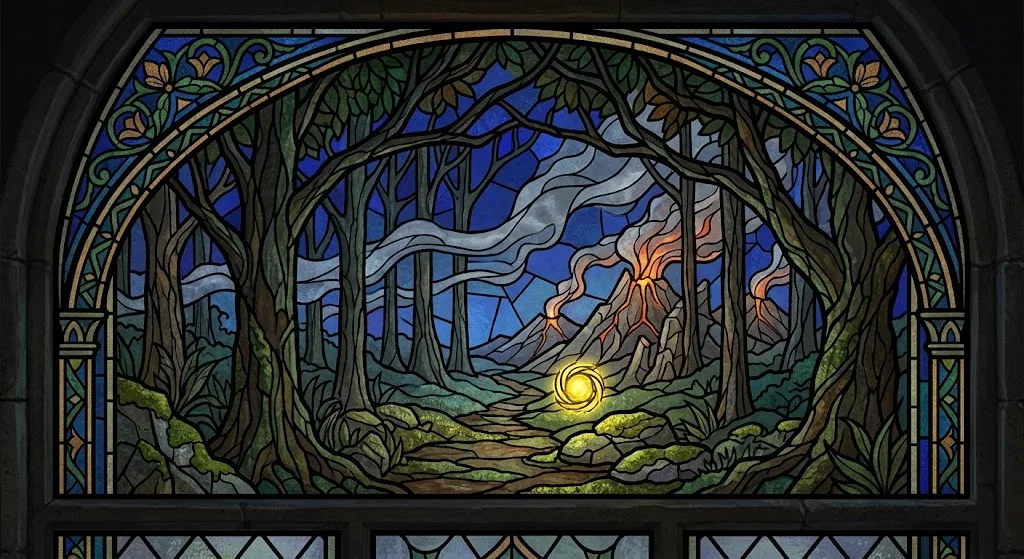
For cryptid readers, Dominica is best understood as a “thin-evidence, rich-folklore” country. The stories cluster around the places where Dominica already feels uncanny: mountain forest, rivers, ravines, hot sulphur vents, night roads, and deep offshore waters. That does not make the creatures real animals, but it does explain why the island’s monster stories have lasted.
What counts as Dominica’s creature lore?
Dominica’s best-attested “monster” material sits closer to Caribbean folklore than to modern cryptozoology. The recurring figures are not usually reported as unknown species seen once by a startled driver. They are named beings carried through oral tradition: the soukouyant, the lougaroo, the jumbie, the La Diablesse figure, and other forest or night entities. Dominica News Online’s 2011 “Ghost Stories” column, for example, treated lougarous and soukouyants as part of remembered village storytelling, describing them as men and women believed to gain powers, vanish, transform, or appear as lights at night.[Dominica News Online]dominicanewsonline.comDominica News Online GHOST STORIES: The Story of Lougarous and SoukouyantsDominica News Online GHOST STORIES: The Story of Lougarous and Soukouyants
That distinction matters. A cryptid page asks, “What animal might this be?” A folklore page asks, “What fear, warning, place, or experience is this story organising?” Dominica’s strongest cases usually answer the second question. The soukouyant explains mysterious weakness, night terror, bruises, bites, and social suspicion. The jumbie explains strange smells, voices, panic, and the feeling of being watched in darkness. The forest seductress tradition warns against temptation, wandering, and losing one’s way.
Dominica’s geography gives these stories unusually strong scenery. Morne Trois Pitons National Park contains steep volcanic slopes, deep valleys, hot springs, fumaroles, freshwater lakes, and the famous Boiling Lake; UNESCO describes the park as combining these dramatic geological features with some of the richest biodiversity in the Lesser Antilles.[UNESCO World Heritage Centre]whc.unesco.orgOpen source on unesco.org. The University of the West Indies Seismic Research Centre describes Boiling Lake as a volcano-hydrothermal feature near the Valley of Desolation, roughly 60 metres across and about 15 metres deep.[UWI Seismic Research Centre]uwiseismic.comOpen source on uwiseismic.com. In that setting, stories of sulphur smells, disorientating forests, and dangerous night presences do not need much embellishment to feel plausible to a listener.
The soukouyant: Dominica’s night-flying blood-drinker
The soukouyant, often spelt soucuyant, soukouyant or soukouyan, is probably the closest Dominica has to a classic “creature” in the cryptid-adjacent sense: a being with a recognisable body, behaviour, weakness, and method of attack. In wider Caribbean folklore, the soucouyant is usually described as an apparently ordinary old woman by day who sheds her skin at night, turns into a ball of fire, slips through cracks or keyholes, and drinks blood from sleeping victims.[Wikipedia]WikipediaOpen source on wikipedia.org.
In Dominica-focused retellings, the important detail is not only the horror image of the flying fireball. It is the social setting. Dominica News Online’s local account frames lougarous and soukouyants as village figures, “amongst us”, with the male figure called a lougaroo and the female figure called a soukouyant. The story is therefore not about a remote animal in the mountains; it is about suspicion inside a community.[Dominica News Online]dominicanewsonline.comDominica News Online GHOST STORIES: The Story of Lougarous and SoukouyantsDominica News Online GHOST STORIES: The Story of Lougarous and Soukouyants
Typical features of the tradition include:
- Night lights: The creature may be remembered as a fireball, firefly-like glow, or moving light in darkness.
- Blood loss and illness: Weakness, unexplained marks, or sickness may be attributed to its feeding.
- Skin-shedding: The soukouyant’s skin is left behind while the spirit travels.
- Salt as a countermeasure: Caribbean versions often say that salting the hidden skin prevents the creature from putting it back on.[Wikipedia]WikipediaOpen source on wikipedia.org.
- Gendered naming: In some Dominican commentary, the male version is distinguished as a lougaroo rather than a soukouyant.[Dominica News Online]dominicanewsonline.comDominica News Online GHOST STORIES: The Story of Lougarous and SoukouyantsDominica News Online GHOST STORIES: The Story of Lougarous and Soukouyants
From a sceptical angle, the soukouyant does not behave like a hidden animal population. It behaves like a folklore mechanism for interpreting misfortune, night fear, illness, insect bites, envy, old age, and village mistrust. Tracey Baptiste, a Caribbean-born author whose children’s fantasy draws on jumbie traditions, recalled that red itchy bites on her legs could be explained by adults as soucouyant bites rather than mosquitoes; that memory captures how the legend can turn everyday bodily evidence into supernatural suspicion.[The Brown Bookshelf]thebrownbookshelf.comThe Brown Bookshelf Tracey Baptiste and The Story Behind "The JumbiesThe Brown Bookshelf Tracey Baptiste and The Story Behind "The Jumbies
Jumbies, voices and the fear of the forest
“Jumbie” is a broad Caribbean term for a ghost, spirit, or troubling supernatural being, and in Dominica it is better treated as a category than as one creature. Some jumbie stories are ghostly; others are almost animal-like; others are trickster tales about being lured, mocked, or lost. Dominica News Online’s archive shows how alive this material remained in public storytelling in 2011, with entries on jumbies in the jungle, lougaroo stories, midnight mass stories, and other local ghost accounts.[Dominica News Online]dominicanewsonline.comghost storiesghost stories
The most cryptid-like part of this tradition is the physicality of some accounts. One Dominica News Online story about “the eyes and the smell of a Jumbie” centres on a frightening night walk and a sulphur-and-rotten-egg smell.[Dominica News Online]dominicanewsonline.comDominica News Online GHOST STORIES: The eyes and the smell of a JumbieDominica News Online GHOST STORIES: The eyes and the smell of a Jumbie That detail is especially interesting in Dominica because sulphurous odours are not just a gothic flourish: the island has active geothermal features, hot springs, fumaroles, and volcanic landscapes. UNESCO’s description of Morne Trois Pitons stresses fumaroles and hot springs, while official tourism material warns visitors in the Valley of Desolation to stay on the trail because of dangerous hot ground and protected park conditions.[UNESCO World Heritage Centre]whc.unesco.orgOpen source on unesco.org.
That does not “explain away” every jumbie story, but it gives readers a useful test. In Dominica, a terrifying smell, steam, mist, animal noise, darkness, and disorientation can have natural causes and still produce a powerful supernatural interpretation. The forest is dense, mountainous, wet, and acoustically confusing; a voice or animal call may seem to come from the wrong direction, and a person walking alone at night may experience ordinary fear as an encounter.
La Diablesse and the lonely-road warning
La Diablesse, often rendered in local Caribbean forms as a devil-woman figure, is a seductive female being who lures men into danger. In the wider Caribbean tradition she appears beautiful but has a hidden deformity, often a hoof, and leads victims into forest, ravine, river, or death.[Wikipedia]WikipediaLa DiablesseLa Diablesse
Dominica-specific online folklore pages place La Diablesse, or Lajables, within Dominican jumbie traditions and connect her to the deep forest interior.[DOM767]dom767.comLa Diablesse (LajablesLa Diablesse (Lajables The safest way to read this is not as evidence of a literal half-human animal, but as a cautionary landscape story. She belongs to roadsides, forest margins, ravines, and places where desire and danger meet. That makes her different from the soukouyant, who enters the home; La Diablesse pulls the victim out of the social world and into terrain where he becomes lost.
The legend also shows how Dominica shares creature traditions with neighbouring Caribbean societies while giving them local scenery. Trinidad, Grenada, Saint Lucia, Dominica, Haiti, and other islands all carry related jumbie, soucouyant, lougaroo, and devil-woman material, but each island attaches the beings to its own roads, villages, forests, rivers, and moral anxieties.[Wikipedia]WikipediaOpen source on wikipedia.org.
Are there lake monsters or sea serpents in Dominica?
There is no strong evidence for a recurring Dominica lake-monster tradition comparable to Loch Ness, Champ, or other named lake cryptids. Boiling Lake is dramatic enough to invite speculation: it steams, bubbles, sits in difficult volcanic terrain, and is reached through the Valley of Desolation. But its known character is geological rather than zoological. The University of the West Indies Seismic Research Centre identifies it as a volcano-hydrothermal feature, not a habitat likely to support a large unknown animal.[UWI Seismic Research Centre]uwiseismic.comOpen source on uwiseismic.com.
The sea is different. Dominica’s offshore waters are genuinely rich in large marine life. The International Whaling Commission’s Whale Watching Handbook notes that sperm whales are present year-round and are the main attraction for whale and dolphin watching tours, with seasonal humpback whales and several dolphin species also observed.[Whale Watching Handbook]wwhandbook.iwc.intOpen source on iwc.int. Modern whale research around Dominica has even produced large datasets of sperm-whale clicks and acoustic recordings, showing that the island’s “sea monster” environment is occupied by real, huge, intelligent animals rather than by pure invention.[arXiv]arxiv.orgOpen source on arxiv.org.
That marine richness can still generate monster moments. In August 2011, Dominica News Online reported a “strange fish” washed ashore at Purple Turtle Beach; the next day, an official from the Fisheries Division identified the “sea creature” as a pilot whale.[Dominica News Online]dominicanewsonline.comDominica News Online Strange fish washes ashore at Purple Turtle BeachDominica News Online Strange fish washes ashore at Purple Turtle Beach The story is a neat miniature of how many sea-monster claims work: an unfamiliar carcass appears, public guesses multiply, and a biological identification later narrows the mystery.
For a Dominica cryptid reader, the likely “sea serpent” explanations are therefore mundane but still impressive: pilot whales, sperm whales, dolphins, decomposed marine mammals, large fish, or rare deep-sea species. The broader oarfish tradition is relevant here because oarfish are long, rarely seen, and often linked to historic sea-serpent interpretations, but there is no good source tying a confirmed oarfish case specifically to Dominica in the material reviewed.[Wikipedia]WikipediaOpen source on wikipedia.org.
The Dominican macaw: a real mystery animal, but not a monster
One of Dominica’s most interesting mystery-animal cases is not a monster at all. It is the so-called Dominican green-and-yellow macaw, or Atwood’s macaw, a hypothetical extinct parrot known from Thomas Atwood’s 1791 description in The History of the Island of Dominica. Later ornithologists treated the account as possible evidence for a distinct macaw, but no archaeological remains are known, so the bird is widely considered hypothetical or disputed.[Wikipedia]WikipediaDominican green-and-yellow macawDominican green-and-yellow macaw
This case belongs on a Dominica cryptid page because it shows the boundary between cryptozoology and historical zoology. Atwood’s macaw is not a campfire monster, and there is no modern flap of sightings. It is a documentary puzzle: did a now-extinct endemic macaw live on Dominica, or did a colonial observer misdescribe, conflate, or misunderstand birds known from elsewhere in the Lesser Antilles?
The wider West Indian macaw problem is full of similar uncertainty. Some extinct Caribbean macaws are supported by remains; others rest mostly on old written accounts, trade records, paintings, or later taxonomic arguments. A 2015 study on Guadeloupe, for example, reported fossil evidence supporting an extinct endemic macaw there, which shows that old Lesser Antillean macaw reports cannot simply be dismissed out of hand.[ResearchGate]researchgate.netOpen source on researchgate.net. For Dominica, however, the missing physical evidence keeps Atwood’s macaw in the category of plausible historical mystery rather than confirmed lost species.
Why Dominica’s landscape makes monster stories feel credible
Dominica is marketed as the “Nature Island”, and for once the slogan is not empty. The official Discover Dominica site foregrounds rainforest air, hot springs, wellness, and itineraries built around the island’s natural setting.[discoverdominica.com]discoverdominica.comOpen source on discoverdominica.com. UNESCO describes Morne Trois Pitons National Park as a volcanic mountain landscape of deep canyons, hot springs, fumaroles, freshwater lakes, and exceptional biodiversity.[UNESCO World Heritage Centre]whc.unesco.orgOpen source on unesco.org. The Kalinago Territory, meanwhile, is presented by its official tourism site as the ancestral home of Dominica’s Indigenous people and a place of cultural immersion.[kalinagodominica.dm]kalinagodominica.dmOpen source on kalinagodominica.dm.
Those facts matter because creature traditions rarely float free of place. Dominica gives folklore several powerful anchors:
- Dense forest: A perfect setting for voices, misdirection, unseen movement, and fear of being lost.
- Volcanic heat and sulphur: Real smells, steam, and dangerous ground that can feel supernatural.
- Rivers, ravines and waterfalls: Places where La Diablesse-type stories about being led to danger make sense.
- Deep coastal waters: A real home for whales, dolphins, and occasional strange carcasses.
- Village life and oral memory: A social world in which night lights, illness, suspicion, and moral warnings can become named beings.
The island’s real animals also affect interpretation. Dominica has notable birdlife, reptiles, bats, marine mammals, and endemic species, but it does not have the kind of large terrestrial mammal fauna that would make an ape-man, phantom big cat, or surviving prehistoric beast especially plausible. When a Dominican story involves a frightening figure in the forest, the cultural explanation is usually stronger than the zoological one.
Folklore, misidentification or cryptid?
A helpful way to sort Dominica’s creature material is to ask what kind of claim is being made.
Folklore: The soukouyant, lougaroo, La Diablesse, and many jumbies are best treated as folklore beings. They have stable motifs, moral functions, regional variants, and deep oral roots. They are not supported by biological evidence, but they are culturally important.
Witness experience: Some accounts may begin with a sincere personal experience: a smell, light, voice, animal sound, illness, or night fright. The witness may be honest even when the interpretation is supernatural. Dominica’s terrain and geothermal features make this especially likely in forest and mountain stories.[Dominica News Online]dominicanewsonline.comDominica News Online GHOST STORIES: The eyes and the smell of a JumbieDominica News Online GHOST STORIES: The eyes and the smell of a Jumbie
Misidentified wildlife: Coastal “sea creature” reports can involve real animals in unfamiliar conditions. The Purple Turtle Beach case moved from “strange fish” to official pilot-whale identification in a day, which is exactly how many mystery-carcass stories resolve.[Dominica News Online]dominicanewsonline.comDominica News Online Strange fish washes ashore at Purple Turtle BeachDominica News Online Strange fish washes ashore at Purple Turtle Beach
Historical zoological puzzle: Atwood’s macaw is a different category: a possible extinct animal known from an old written source but lacking physical confirmation. It is closer to “lost species” research than to jumbie lore.[Wikipedia]WikipediaDominican green-and-yellow macawDominican green-and-yellow macaw
Tourism and pop culture: Dominica’s folklore beings now circulate online through blogs, children’s fantasy, Caribbean folklore projects, and local storytelling archives. That afterlife keeps the creatures visible even when modern evidence for literal monsters remains thin.[The Brown Bookshelf]thebrownbookshelf.comThe Brown Bookshelf Tracey Baptiste and The Story Behind "The JumbiesThe Brown Bookshelf Tracey Baptiste and The Story Behind "The Jumbies
The bottom line on Dominica’s cryptids
Dominica’s cryptid tradition is not built around one famous beast hiding in a lake or stalking a mountain road. It is a layered creature folklore shaped by rainforest, night travel, village memory, volcanic landscapes, and Caribbean spiritual traditions. The soukouyant is the standout figure: vivid, frightening, and strongly rooted in regional lore. Jumbies and La Diablesse carry the forest-and-roadside side of the tradition. Coastal mysteries tend to resolve into known marine animals, while the Dominican macaw remains a genuine but specialised historical animal puzzle.
The honest conclusion is therefore more interesting than a forced monster claim. Dominica’s creatures are not best read as confirmed unknown animals. They are stories that teach readers how the island has imagined danger: the glowing thing at night, the voice in the forest, the woman on the road, the unexplained weakness after sleep, the strange body on the beach, and the vanished bird glimpsed only through an old colonial description.
Amazon book picks
Further Reading
Books and field guides related to What Monsters Haunt Dominica's Wild Places?. Use these as the next step if you want deeper reading beyond the article.
The World of Lore: Monstrous Creatures
Provides context for monster traditions and supernatural beliefs.
eBay marketplace picks
Marketplace Samples
Live-tested eBay searches with available results related to this page.
Endnotes
1.
Source: whc.unesco.org
Link:https://whc.unesco.org/en/list/814/
2.
Source: Wikipedia
Link:https://en.wikipedia.org/wiki/Soucouyant
3.
Source: dom767.com
Link:https://www.dom767.com/dompedia/soucuyant-soukouyant-in-dominica/
4.
Source: Wikipedia
Title: La Diablesse
Link:https://en.wikipedia.org/wiki/La_Diablesse
5.
Source: dom767.com
Title: La Diablesse (Lajables)
Link:https://www.dom767.com/dompedia/la-diablesse-lajables-in-dominica/
6.
Source: arxiv.org
Link:https://arxiv.org/abs/2401.00900
7.
Source: Wikipedia
Link:https://en.wikipedia.org/wiki/Oarfish
8.
Source: Wikipedia
Title: Dominican green-and-yellow macaw
Link:https://en.wikipedia.org/wiki/Dominican_green-and-yellow_macaw
9.
Source: archive.org
Title: bim eighteenth century the history of the islan atwood thomas 1791
Link:https://archive.org/details/bim_eighteenth-century_the-history-of-the-islan_atwood-thomas_1791
10.
Source: researchgate.net
Link:https://www.researchgate.net/publication/275274018_Evidence_of_the_former_existence_of_an_endemic_macaw_in_Guadeloupe_Lesser_Antilles
11.
Source: discoverdominica.com
Link:https://discoverdominica.com/
12.
Source: kalinagodominica.dm
Link:https://kalinagodominica.dm/
13.
Source: dom767.com
Link:https://www.dom767.com/dompedia/jumbie-zombi-in-dominica/
14.
Source: dom767.com
Link:https://www.dom767.com/dompedia/dominica-wildlife/
15.
Source: dom767.com
Link:https://www.dom767.com/dompedia/mocking-jumbie-in-dominica/
16.
Source: dom767.com
Link:https://www.dom767.com/dompedia/dominicas-indigenous-tourism/
17.
Source: dom767.com
Link:https://www.dom767.com/dompedia/nature-island-of-the-caribbean/
18.
Source: researchgate.net
Link:https://www.researchgate.net/publication/376477231_Monstrous_Genealogies_Indo-Caribbean_Feminist_Reckonings_with_the_Violent_Past
19.
Source: Wikipedia
Link:https://en.wikipedia.org/wiki/Kalinago
20.
Source: Wikipedia
Title: Morne Trois Pitons National Park
Link:https://en.wikipedia.org/wiki/Morne_Trois_Pitons_National_Park
21.
Source: whc.unesco.org
Link:https://whc.unesco.org/document/217311
22.
Source: whc.unesco.org
Link:https://whc.unesco.org/document/154348
23.
Source: nature-island.com
Title: the kalinago territory
Link:https://www.nature-island.com/places-to-go/the-kalinago-territory/
24.
Source: nature-island.com
Link:https://www.nature-island.com/
25.
Source: youtube.com
Title: The Soucouyant: Caribbean Vampire Who Sheds Her Skin
Link:https://www.youtube.com/watch?v=CCyb8y_qXyo
26.
Source: dominicanewsonline.com
Title: Dominica News Online GHOST STORIES: The Story of Lougarous and Soukouyants
Link:https://dominicanewsonline.com/news/homepage/columns/ghost-stories/ghost-stories-the-story-of-lougarous-and-soukouyants/
27.
Source: uwiseismic.com
Link:https://uwiseismic.com/sp_faq/what-is-the-boiling-lake/
28.
Source: thebrownbookshelf.com
Title: The Brown Bookshelf Tracey Baptiste and The Story Behind “The Jumbies”
Link:https://thebrownbookshelf.com/2015/04/28/tracey-baptiste-and-the-story-behind-the-jumbies/
29.
Source: dominicanewsonline.com
Title: ghost stories
Link:https://dominicanewsonline.com/news/category/homepage/columns/ghost-stories/
30.
Source: dominicanewsonline.com
Title: Dominica News Online GHOST STORIES: The eyes and the smell of a Jumbie
Link:https://dominicanewsonline.com/news/homepage/columns/ghost-stories/ghost-stories-the-eyes-and-the-smell-of-a-jumbie/
31.
Source: wwhandbook.iwc.int
Link:https://wwhandbook.iwc.int/en/country-profiles/dominica
32.
Source: dominicanewsonline.com
Title: Dominica News Online Strange fish washes ashore at Purple Turtle Beach
Link:https://dominicanewsonline.com/news/homepage/news/environment/strange-fish-washes-ashore-at-purple-turtle-beach/
33.
Source: dominicanewsonline.com
Title: sea creature at purple turtle a pilot whale
Link:https://dominicanewsonline.com/news/homepage/news/environment/sea-creature-at-purple-turtle-a-pilot-whale/
34.
Source: the-demonic-paradise.fandom.com
Link:https://the-demonic-paradise.fandom.com/wiki/Soucouyant
35.
Source: cryptidz.fandom.com
Title: Dominican Macaw
Link:https://cryptidz.fandom.com/wiki/Dominican_Macaw
36.
Source: gods-goddess.fandom.com
Link:https://gods-goddess.fandom.com/wiki/Soucouyant
37.
Source: caribbeanfolkloremonth.wordpress.com
Title: la diablesse
Link:https://caribbeanfolkloremonth.wordpress.com/2025/09/07/la-diablesse/
38.
Source: raquelbahadoorsingh.wordpress.com
Title: la diablesse
Link:https://raquelbahadoorsingh.wordpress.com/la-diablesse/
39.
Source: earthlingnature.wordpress.com
Link:https://earthlingnature.wordpress.com/tag/dominica/
40.
Source: tripadvisor.com
Title: Valley of Desolation
Link:https://www.tripadvisor.com/Attraction_Review-g147284-d148315-Reviews-Valley_of_Desolation-Morne_Trois_Pitons_National_Park_Saint_Patrick_Parish_Dominic.html
41.
Source: tripadvisor.com
Title: Kalinago Territory
Link:https://www.tripadvisor.com/Attraction_Review-g147281-d147741-Reviews-Kalinago_Territory-Dominica.html
42.
Source: tripadvisor.com
Title: Boiling Lake
Link:https://www.tripadvisor.com/Attraction_Review-g147284-d147641-Reviews-Boiling_Lake-Morne_Trois_Pitons_National_Park_Saint_Patrick_Parish_Dominica.html
43.
Source: jstor.org
Link:https://www.jstor.org/stable/4070527
44.
Source: instagram.com
Link:https://www.instagram.com/discoverdominica/?hl=en
45.
Source: cc-tapis.com
Link:https://cc-tapis.com/collections/cryptid
46.
Source: moviesandmania.com
Link:https://moviesandmania.com/2015/01/08/soucouyant-folklore/
47.
Source: national-parks.org
Link:https://national-parks.org/dominica/morne-trois-pitons-national-park/
48.
Source: uwiseismic.com
Link:https://uwiseismic.com/dominicas-boiling-lake/
49.
Source: natureislandtravel.com
Title: Discover Dominica
Link:https://www.natureislandtravel.com/discover-dominica.html
Additional References
50.
Source: youtube.com
Title: A TERRIFYING Caribbean FOLKTALE: “La Diablesse” (The Devil Woman)
Link:https://www.youtube.com/watch?v=v16ZMLg_HV4
Source snippet
Caribbean Stories|Fact or FOLKlore |S1:E2| The Soucouyant...
51.
Source: youtube.com
Title: Most TERRIFYING Mythological Creatures From The Caribbean!
Link:https://www.youtube.com/watch?v=BDSldGP5rCI
Source snippet
A TERRIFYING Caribbean FOLKTALE: "La Diablesse" (The Devil Woman)...
52.
Source: youtube.com
Title: Caribbean Stories|Fact or FOLKlore |S1:E2| The Soucouyant
Link:https://www.youtube.com/watch?v=atnRQtK0lH8
Source snippet
Caribbean Stories|Fact or Folklore | S1: E1| La Diablesse...
53.
Source: instagram.com
Link:https://www.instagram.com/p/DaYmoZYk9f6/
54.
Source: reddit.com
Link:https://www.reddit.com/r/Cryptozoology/comments/1iexzqo/a_drawing_of_jon_downeys_serpent_seen_in_north/
55.
Source: facebook.com
Link:https://www.facebook.com/kabarsph/posts/a-massive-snake-was-discovered-onboard-the-vessel-causing-quite-a-stir-among-the/981788790750696/
56.
Source: facebook.com
Link:https://www.facebook.com/KATVChannel7/posts/an-oarfish-a-super-rare-fish-commonly-referred-to-as-the-doomsday-fish-recently-/1066240198865043/
57.
Source: facebook.com
Link:https://www.facebook.com/aarti.gosine/posts/been-doing-some-research-on-folk-lore-for-a-new-childrens-book-and-came-across-t/25671138919153207/
58.
Source: journeysinternational.com
Link:https://www.journeysinternational.com/destination/latin-america/dominica/boiling-lake/
59.
Source: justgodominica.com
Link:https://justgodominica.com/project/boiling-lake-experience/
Topic Tree
Follow this branch
Related pages 192
- Antigua Cryptids
- Maldives Monsters
- Malta Monsters
- Qatar Monsters
- Argentina Monsters
- +187 more in sidebar