Creature Lore of Uruguay's Wildest Stories
Uruguay does not have a single nationally dominant cryptid comparable with Scotland’s Loch Ness Monster or Argentina’s Nahuelito.
Page outline Jump by section
Introduction
The evidence for an undiscovered large creature in Uruguay is extremely thin. There are no verified bodies, diagnostic photographs, tracks tied to an unknown species or sustained scientific investigations producing anomalous results. What Uruguay does offer is a revealing case study in how monster traditions form: older beliefs travel across borders, ordinary wildlife supplies uncanny silhouettes, and isolated incidents acquire familiar names such as “lobizón” or “chupacabra”.
Which creature is most closely associated with Uruguay?
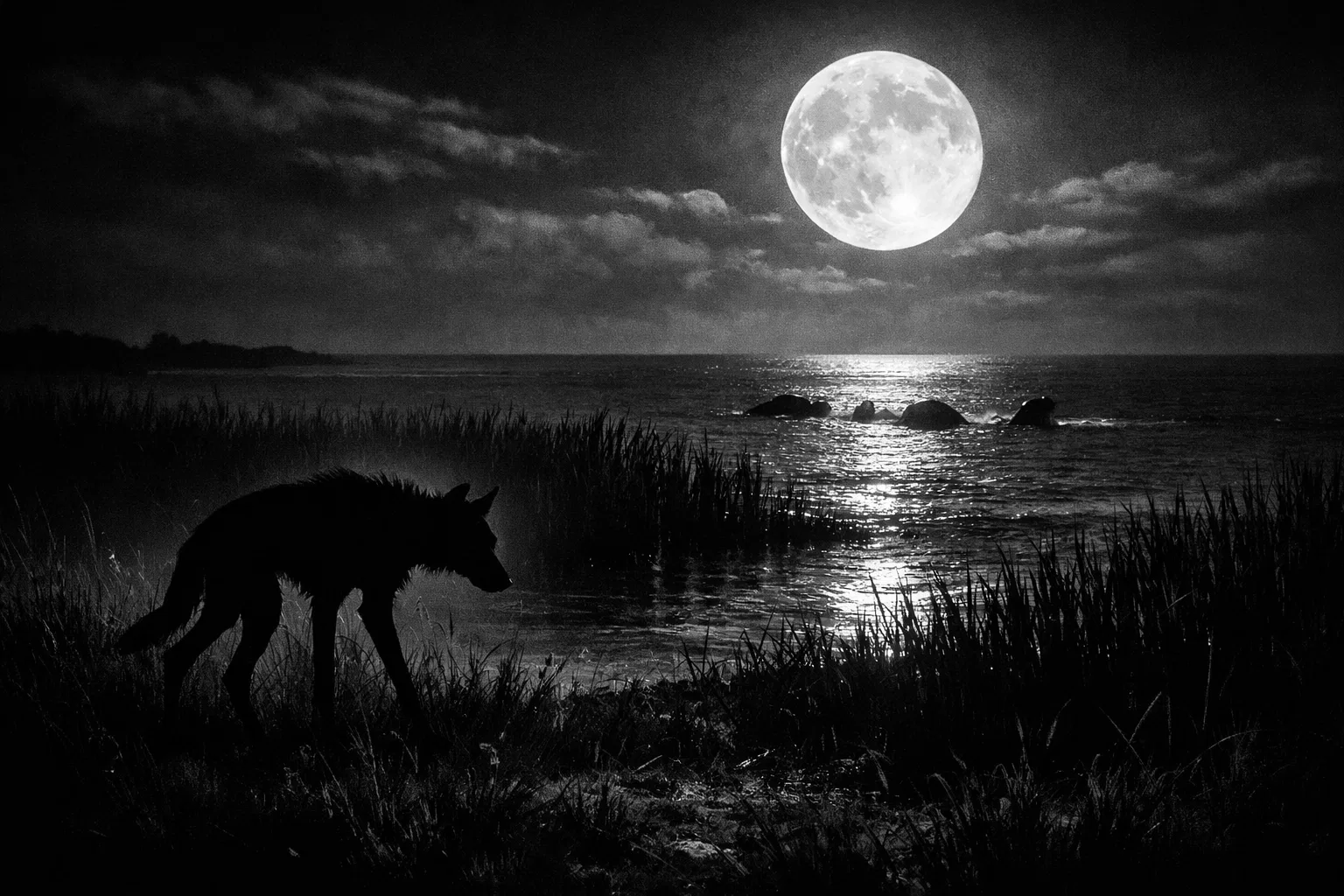
The strongest candidate is the lobizón, a southern South American relative of the werewolf. The tradition is not uniquely Uruguayan: it belongs to a wider cultural zone encompassing Paraguay, north-eastern Argentina, southern Brazil, Bolivia and northern Uruguay. In its best-known form, the seventh son is doomed to become a dog-like or wolf-like night creature, often under the influence of the full moon. The story combines the Guaraní figure Luisón, the last and most feared of seven monstrous offspring, with European werewolf ideas introduced during and after colonisation.[Wikipedia]WikipediaOpen source on wikipedia.org.
In Uruguay, the lobizón belongs primarily to oral tradition, rural storytelling and literature rather than to a well-documented sequence of modern zoological reports. Its place in national culture is nevertheless genuine. Uruguay’s National Academy of Letters has discussed the “mythic motif of the lobizón” in the work of writer José María Obaldía, while national bibliographic holdings include Uruguayan stories built around the creature. That literary afterlife matters because it shows how the legend persisted even where belief in a literal transformation weakened.[Gub.uy]gub.uyBoletín de la Academia Nacional de LetrasJune 30, 2015 — La excéntrica fundación de Treinta y Tres, el motivo mítico del lobizón, el tópico ancestral del pacto con el diablo, la…
Descriptions vary because the lobizón is a folklore figure rather than a consistently observed animal. It may be imagined as a huge black dog, a gaunt wolf, a hairy human-animal hybrid or a cemetery-haunting beast. These changing forms are evidence of adaptation, not biology. The European full-moon transformation, for example, sits alongside the older regional fear of a nocturnal, death-associated creature.
A real animal may occasionally reinforce the imagery. The maned wolf, or aguará guazú, is South America’s largest wild canid. Its extremely long legs, reddish body, dark mane and solitary behaviour can look uncanny, especially when it is glimpsed at dusk. Confirmed Uruguayan records are scarce, but specimens have been documented in Cerro Largo and Río Negro, and the species is considered nationally threatened. Uruguay also has native field and crab-eating foxes, providing several possible sources for brief reports of unfamiliar dog-like animals.[gub.uy]mnhn.gub.uyMuseo Nacional de Historia Natural Aguará observando atentamenteMuseo Nacional de Historia NaturalAguará observando atentamente - Album DigitalEs omnívoro y basa su dieta en frutas y pequeños animales…
This does not prove that every lobizón story began with a maned wolf. Most versions clearly belong to inherited belief. It does, however, explain why the legend can feel environmentally plausible: the countryside really does contain elusive, long-legged canids that many residents will never see clearly.
Are there lake or river monsters?
Uruguay’s geography appears ideal for aquatic monster tales. It has broad rivers, reed-fringed wetlands, coastal lagoons and the enormous Laguna Merín system on the Brazilian border. Yet there is no securely documented Uruguayan lake monster with a long, traceable chronology of named witnesses, photographs and repeated press investigations.
A supposed monster of Laguna Merín appears in recent local and social-media retellings. The story generally describes something large enough to seize livestock or drag animals towards the water, sometimes prompting hunters to search the lagoon. The difficulty is that accessible versions rarely provide a dated original newspaper report, identifiable witnesses or physical evidence. At present, it is safer to classify this as a local legend being recirculated online than as a documented historical “monster flap”.[Facebook]facebook.comOpen source on facebook.com.
The setting itself encourages such stories. Laguna Merín is one of Uruguay’s largest freshwater environments and supports substantial populations of silversides, catfish, trahiras and other fish. Large fish moving in shallow or turbid water can create unexpected wakes, while swimming mammals, floating vegetation and partly submerged logs can appear much larger when observers lack a clear view.[gub.uy]gub.uyOpen source on gub.uy.
Cattle losses near water also acquire dramatic explanations easily. An animal may drown, become trapped in mud, die from disease or be scavenged after death. Once soft tissue has decomposed or been eaten, the remains can look selectively mutilated. Without a prompt veterinary examination, it is difficult to reconstruct what happened.
This pattern distinguishes Laguna Merín from more developed lake-monster traditions. There is a recognisable story and a suitable landscape, but no stable body of evidence showing that residents have repeatedly reported the same unknown animal over many decades.
How the chupacabra reached Uruguay
The chupacabra is an imported legend rather than an old Uruguayan creature. It emerged in Puerto Rico in 1995, initially through reports of livestock and domestic animals supposedly found with puncture wounds and little visible blood. The name and basic narrative then spread quickly through Latin American television, newspapers and popular culture. Uruguay became one of many countries where unexplained animal deaths could be labelled “chupacabra” even when the incidents had little in common.[Wikipedia]WikipediaOpen source on wikipedia.org.
This flexibility is the secret of the legend’s success. In one report the creature is a spiny, upright reptilian being; in another it is a hairless dog; elsewhere no animal is seen at all, and the label is attached to dead poultry, sheep or cattle. “Chupacabra” consequently functions less like the name of a proposed species and more like a ready-made explanation for a disturbing rural scene.
Claims that an animal has been “drained of blood” require particular caution. Blood commonly settles internally after death, coagulates or is consumed by insects and scavengers. Small punctures may come from canine teeth, while missing eyes, lips or tongues are among the soft tissues most accessible to scavenging birds and mammals. In comparable South American livestock scares, veterinary and wildlife authorities have repeatedly considered dogs, foxes, rodents, insects and post-mortem decomposition rather than an unknown predator.[diarioeltiempo.com.ar]diarioeltiempo.com.arOpen source on com.ar.
For Uruguay, the evidence does not establish a distinctive national chupacabra animal. What it shows is how an international monster story can be fitted to local pastoral anxieties. In a country where livestock farming is economically and culturally important, unexplained losses naturally attract attention, and the chupacabra provides a vivid narrative before laboratory or veterinary findings are available.
Why the coast produces strange sightings
Uruguay’s Atlantic coast is the country’s most plausible setting for sincere reports of enormous or unfamiliar animals. It lies along migratory routes used by whales and supports major colonies of South American fur seals and sea lions. Elephant seals and other marine mammals also appear, sometimes far from the places where the public expects to see them.[gub.uy]turismorocha.gub.uyOpen source on gub.uy.
That ecological richness creates ideal conditions for misidentification. A seal swimming with only its head and part of its back visible can resemble a long-necked creature. Several animals surfacing in line may look like one undulating body. A whale’s back, fin or wake can be mistaken for something serpentine, while a decomposing shark, cetacean or large fish may lose the features normally used to identify it.
Scale is especially unreliable at sea. Without a nearby boat, buoy or shoreline feature, observers have little basis for judging length. Waves can conceal portions of an animal, making separate visible sections appear to belong to a much larger body. Mobile-phone zoom further reduces detail and exaggerates movement.
Uruguay’s coastal wildlife has also generated public excitement without any mystery being involved. Isla de Lobos, about eight kilometres from Punta del Este, holds an internationally important concentration of marine mammals, while Rocha’s islands and headlands offer regular opportunities to see seals, sea lions and migrating whales. An unfamiliar animal near Punta del Este or Cabo Polonio is therefore more likely to be an unusual view of known marine fauna than a new sea serpent.[Intendencia Maldonado]maldonado.gub.uyOpen source on gub.uy.
This does not mean witnesses are inventing what they see. Many monster reports begin with an honest encounter. The interpretive leap occurs afterwards, when a brief silhouette is turned into a specific creature before biological alternatives have been checked.

Folklore, sightings and media invention
Uruguay’s creature stories become clearer when separated into four categories.
Traditional folklore includes the lobizón and other beliefs shared across the Río de la Plata, Guaraní and southern Brazilian cultural regions. These stories can be historically and socially important without describing zoological species.
Eyewitness claims involve someone reporting an unusual animal, track or movement in the water. Such testimony may be sincere, but memory, distance, darkness and expectation can distort identification. A claim becomes stronger when independent witnesses agree before discussing it, the location and time are recorded, and photographs preserve useful scale.
Media-created monsters arise when headlines apply a dramatic label to ambiguous remains or footage. The label may then become more memorable than the eventual explanation. Online reposting intensifies this effect because dates, locations and original captions are often removed.
Known animals in unfamiliar circumstances form the most biologically productive category. Maned wolves, foxes, seals, sea lions, elephant seals, large fish and decomposed carcasses can all look extraordinary when encountered outside familiar settings. Uruguay’s official and university records show that several visually striking animals occur rarely or unevenly across the country, making genuine surprise entirely reasonable.[edu.uy]colibri.udelar.edu.uyColibri Modelación de la distribución potencial del aguará guazúColibri Modelación de la distribución potencial del aguará guazú
Hoaxes remain possible, particularly where a story depends on a single blurred image or anonymous account. Yet deliberate fraud is not needed to explain most cases. Folklore supplies the creature, the landscape supplies an ambiguous stimulus, and retelling gradually improves the drama.
Where reports are most likely to cluster
Uruguay’s mystery-animal geography follows its habitats rather than revealing a clear cryptid range.
In the northern and north-eastern grasslands and wetlands, rare encounters with maned wolves or native foxes can support dog-like monster reports. The lobizón tradition is also strongest where Uruguay meets the broader Guaraní-influenced cultural region.
Around Laguna Merín and the eastern wetlands, turbid water, extensive reeds, fishing activity and livestock near the shore create favourable conditions for stories about submerged animals. The area contains rich but known freshwater fauna; no credible evidence currently points to a giant unknown predator.
Along the Maldonado and Rocha coast, marine mammals, whales, large fish and floating carcasses provide the likeliest sources of sea-monster imagery. These are also major tourist areas, so an unusual sighting can be photographed and circulated rapidly.
In the pastoral interior, unexplained livestock deaths are more likely to generate chupacabra language. Here the key evidence is not the appearance of a creature but the condition of a carcass, making timely veterinary assessment crucial.
These clusters show why a country can accumulate monster stories without possessing a stable cryptid tradition. Different landscapes produce different mysteries, which are then grouped together after the fact.
What would count as convincing evidence?
A credible case for an unknown Uruguayan animal would require more than a frightening encounter. Useful evidence would include clear photographs from several angles, reliable scale, precise location data, tracks documented before contamination, biological material with a recorded chain of custody, or repeated observations by independent teams.
For livestock cases, prompt necropsies would need to establish the time and cause of death, whether wounds occurred before or after death, and whether saliva, hair, tooth spacing or DNA identified a predator. For aquatic reports, sonar or video would have to show a consistent animal form rather than a wake, submerged log or group of known animals.
No Uruguayan case presently available meets that standard. The country’s strongest mystery-creature material remains cultural rather than zoological: the lobizón as a durable regional legend, the chupacabra as a travelling media narrative, and lagoon or coastal monsters as examples of how unfamiliar wildlife becomes folklore.
Uruguay’s real monster story
The most interesting conclusion is not that Uruguay lacks monsters. It is that its monsters refuse to stay in one category. The lobizón moves between Guaraní tradition, European werewolf imagery and rural fiction. The chupacabra moves between television, farm losses and changing animal descriptions. Coastal “creatures” move between genuine surprise and the country’s abundant marine life. Laguna stories move between local memory and poorly sourced online repetition.
That mixture makes Uruguay valuable within a wider cryptid history. It shows that monster traditions do not always develop around one famous beast. Sometimes they form a loose ecosystem of inherited tales, rare wildlife encounters and media labels. The evidence for unknown large animals remains weak, but the stories reveal something more secure: how landscape, culture and uncertainty work together to make ordinary nature briefly monstrous.
eBay marketplace picks
Marketplace Samples
Live-tested eBay searches with available results related to this page.



Endnotes
1.
Source: Wikipedia
Link:https://es.wikipedia.org/wiki/Lobis%C3%B3n
2.
Source: gub.uy
Title: Boletín de la Academia Nacional de Letras
Link:https://www.gub.uy/ministerio-educacion-cultura/sites/ministerio-educacion-cultura/files/2025-06/ANL%20Bolet%C3%ADn%20N%C2%BA%2010.pdf
Source snippet
June 30, 2015 — La excéntrica fundación de Treinta y Tres, el motivo mítico del lobizón, el tópico ancestral del pacto con el diablo, la...
Published: June 30, 2015
3.
Source: pmb.parlamento.gub.uy
Title: PMB Parlamentocuentos uruguayos
Link:https://pmb.parlamento.gub.uy/pmb/opac_css/index.php?id=437&l_typdoc=&lvl=categ_see&nb_per_page_custom=200&nbr_lignes=2514&page=10
Source snippet
MontevideoEl lobizón La serpiente de cascabel En el Yabebiry. La leyenda del vikingo Convaleciente...
4.
Source: mnhn.gub.uy
Title: Museo Nacional de Historia Natural Aguará observando atentamente
Link:https://www.mnhn.gub.uy/museosdigitales/?buscador=fichas_fauna&buscadortodos=1&id=46&mod=ficha
Source snippet
Museo Nacional de Historia NaturalAguará observando atentamente - Album DigitalEs omnívoro y basa su dieta en frutas y pequeños animales...
5.
Source: facebook.com
Link:https://www.facebook.com/puntodeencuentroinfo/posts/mito-o-realidad-el-monstruo-de-la-laguna-merinla-laguna-merin-es-un-gran-cuerpo-/1470561038448052/
6.
Source: gub.uy
Link:https://www.gub.uy/ministerio-ganaderia-agricultura-pesca/sites/ministerio-ganaderia-agricultura-pesca/files/documentos/publicaciones/10_-_peces_de_uruguay_2011.pdf
7.
Source: turismorocha.gub.uy
Title: laguna merin
Link:https://turismorocha.gub.uy/atractivos/lagunas/laguna-merin
8.
Source: ambiente.gub.uy
Title: DCA Informe evaluación calidad de agua Laguna Merín 2015 2019
Link:https://www.ambiente.gub.uy/oan/documentos/DCA_Informe-evaluaci%C3%B3n-calidad-de-agua_Laguna-Mer%C3%ADn-2015-2019.pdf
9.
Source: Wikipedia
Link:https://es.wikipedia.org/wiki/Chupacabras
10.
Source: diarioeltiempo.com.ar
Link:https://www.diarioeltiempo.com.ar/nota-el-misterioso-fenomeno-de-las-vacas-mutiladas-que-azoto-la-provincia-en-el-otono-de-2002-171927
11.
Source: turismorocha.gub.uy
Link:https://turismorocha.gub.uy/atractivos/aire-libre/mirador-panoramico-de-fauna-marina-en-el-cerro-verde
12.
Source: gub.uy
Link:https://www.gub.uy/ministerio-ganaderia-agricultura-pesca/sites/ministerio-ganaderia-agricultura-pesca/files/documentos/publicaciones/biolog%C3%ADa%20y%20ecolog%C3%ADa%20de%20lobos%20y%20leones%20marinos.pdf
13.
Source: turismorocha.gub.uy
Link:https://turismorocha.gub.uy/Guia-Oficial-Turismo-Rocha.pdf
14.
Source: maldonado.gub.uy
Link:https://www.maldonado.gub.uy/descubre-maldonado/parques_y_paseos
15.
Source: facebook.com
Link:https://www.facebook.com/mr.goldentop/posts/leyendas-y-criaturas-mitol%C3%B3gicas-de-uruguay-1-la-luz-mala-el-alma-errante-de-los/1286337963601057/
16.
Source: facebook.com
Link:https://www.facebook.com/groups/1002571683091379/posts/25778717771716760/
17.
Source: facebook.com
Link:https://www.facebook.com/groups/178346891128690/posts/1262664372696931/
18.
Source: facebook.com
Title: se acuerdan del chupacabras en los 90s existió un rumor de que había un animal c
Link:https://www.facebook.com/EstoPasaEnLeon/posts/se-acuerdan-del-chupacabras-en-los-90s-existi%C3%B3-un-rumor-de-que-hab%C3%ADa-un-animal-c/1612938526862550/
19.
Source: facebook.com
Link:https://www.facebook.com/groups/1460114854096011/posts/27670145109332961/
20.
Source: facebook.com
Title: Grupo H
Link:https://www.facebook.com/NocturnaMexico/posts/d%C3%ADa-32-compartiendo-monstruos-de-cada-pa%C3%ADs-participante-del-mundial-de-f%C3%BAtbol-20/1730813365434933/
21.
Source: facebook.com
Link:https://www.facebook.com/diariochaco/posts/-misterio-en-colonia-popular-vacas-aparecieron-sin-ojos-ni-lengua-productores-ga/1351323860353959/
22.
Source: facebook.com
Link:https://www.facebook.com/SoyRafaCarbajal/posts/%EF%B8%8F-en-los-90-surgi%C3%B3-el-p%C3%A1nico-por-el-chupacabras-una-criatura-que-atacaba-cabras-/1130047692673590/
23.
Source: facebook.com
Link:https://www.facebook.com/cadenadelmarfm1065/posts/la-inusual-escena-ocurri%C3%B3-en-el-%C3%A1rea-donde-los-pescadores-comercializan-pescado-/1686723576115388/
24.
Source: facebook.com
Link:https://www.facebook.com/mastvec/posts/atencion-el-chupacabraseste-video-captado-por-camaras-de-seguridad-muestra-un-an/1454582466672347/
25.
Source: facebook.com
Link:https://www.facebook.com/Infobae/videos/hist%C3%B3rico-lograron-grabar-al-animal-que-inspira-la-leyenda-del-lobiz%C3%B3n/194806639256376/
26.
Source: facebook.com
Link:https://www.facebook.com/todonoticiasroca/posts/alerta-en-zona-del-n%C3%A1utico-hallan-una-serpiente-en-el-rioun-inusual-hallazgo-ocu/596942929538963/
27.
Source: facebook.com
Link:https://www.facebook.com/90.1fmideal/posts/monstruo-de-margat-verdad-o-leyendael-monstruo-de-margatmargat-desconocida-para-/1234812771979715/
28.
Source: facebook.com
Link:https://www.facebook.com/TelenocheUY/posts/la-intendencia-de-montevideo-advirti%C3%B3-que-funcionarios-de-limpieza-encontraron-u/3530996033673047/
29.
Source: facebook.com
Link:https://www.facebook.com/CorsosColorOran/posts/el-mayupata-el-monstruo-oculto-del-r%C3%ADo-bermejoconoc%C3%ADas-la-leyenda-del-mayupata-o/1684686489749363/
30.
Source: facebook.com
Link:https://www.facebook.com/CosasDeFutbolOficial/posts/joshua-kimmich-revel%C3%B3-que-encontraron-una-serpiente-venenosa-cerca-de-la-concent/1580468953635929/
31.
Source: facebook.com
Link:https://www.facebook.com/PULZO.COLOMBIA/posts/-de-terror-cientos-de-cobras-y-otras-serpientes-venenosas-quedaron-sueltas-tras-/1460563436107161/
32.
Source: bibliotecadigital.bibna.gub.uy
Link:https://bibliotecadigital.bibna.gub.uy/jspui/bitstream/123456789/137303/1/grillo20.pdf
33.
Source: Wikipedia
Title: List of lake monsters
Link:https://en.wikipedia.org/wiki/List_of_lake_monsters
34.
Source: Wikipedia
Title: Carbuncle (legendary creature)
Link:https://en.wikipedia.org/wiki/Carbuncle_%28legendary_creature%29
35.
Source: Wikipedia
Link:https://es.wikipedia.org/wiki/Anexo%3ACr%C3%ADptidos
36.
Source: pmb.parlamento.gub.uy
Link:https://pmb.parlamento.gub.uy/pmb/opac_css/index.php?id=8519&l_typdoc=&lvl=publisher_see&nb_per_page_custom=200&nbr_lignes=1212&page=3
37.
Source: pmb.parlamento.gub.uy
Link:https://pmb.parlamento.gub.uy/pmb/opac_css/index.php?id=8519&l_typdoc=&lvl=publisher_see&nb_per_page_custom=100&nbr_lignes=1270&page=6
38.
Source: mnhn.gub.uy
Title: Zorro de monte descansando sobre una roca
Link:https://www.mnhn.gub.uy/museosdigitales/?buscador=fichas_fauna&buscadortodos=1&mod=ficha&nombre=Zorro+de+Monte
39.
Source: mnhn.gub.uy
Title: Bagre Mochuelo
Link:https://www.mnhn.gub.uy/museosdigitales/?buscador=fichas_fauna&buscadortodos=1&mod=ficha&nombre=Mochuelo
40.
Source: mnhn.gub.uy
Title: Cabo Polonio
Link:https://www.mnhn.gub.uy/innovaportal/file/4674/1/04_cabopolonio_cerroverde_baja.pdf
41.
Source: gub.uy
Link:https://www.gub.uy/ministerio-educacion-cultura/sites/ministerio-educacion-cultura/files/2025-06/web_Revista%20de%20la%20academia%20No%2012.pdf
42.
Source: gub.uy
Link:https://www.gub.uy/ministerio-educacion-cultura/sites/ministerio-educacion-cultura/files/2025-06/ANL%20Bolet%C3%ADn%20N%C2%BA%2011.pdf
43.
Source: gub.uy
Title: especie peligro extincion fue registrada paso centurion sierra rios
Link:https://www.gub.uy/ministerio-ambiente/comunicacion/noticias/especie-peligro-extincion-fue-registrada-paso-centurion-sierra-rios
44.
Source: gub.uy
Title: Proyecto Sy D GEX
Link:https://www.gub.uy/ministerio-ambiente/sites/ministerio-ambiente/files/documentos/publicaciones/Proyecto_SyD_GEX.pdf
45.
Source: gub.uy
Link:https://www.gub.uy/ministerio-ambiente/sites/ministerio-ambiente/files/2023-08/ProyectoZEsterosZyZAlgarrobalesZdelZRoZUruguay.pdf
46.
Source: gub.uy
Title: Propuesta Lista Roja Mamíferos
Link:https://www.gub.uy/ministerio-ambiente/sites/ministerio-ambiente/files/documentos/noticias/Propuesta%20Lista%20Roja%20Mam%C3%ADferos.pdf
47.
Source: gub.uy
Link:https://www.gub.uy/ministerio-ganaderia-agricultura-pesca/sites/ministerio-ganaderia-agricultura-pesca/files/documentos/publicaciones/admnistracin_lagunas_costeras.pdf
48.
Source: gub.uy
Link:https://www.gub.uy/ministerio-ambiente/sites/ministerio-ambiente/files/2025-02/Proyecto%20de%20selecci%C3%B3n%20y%20delimitaci%C3%B3n%20Laguna%20Negra_2024.pdf
49.
Source: gub.uy
Title: Libro de Resúmenes Vll Congreso Áreas Naturales Protegidas
Link:https://www.gub.uy/ministerio-ambiente/sites/ministerio-ambiente/files/documentos/publicaciones/Libro%20de%20Res%C3%BAmenes%20_%20Vll%20Congreso%20%C3%81reas%20Naturales%20Protegidas.pdf
50.
Source: ambiente.gub.uy
Link:https://www.ambiente.gub.uy/oan/wp-content/uploads/2026/02/1.-Anexo-VI-3-Material-curso.pdf
51.
Source: ambiente.gub.uy
Title: Ficha Sitio N7 TERMAS
Link:https://www.ambiente.gub.uy/oan/documentos/N7_Termas.pdf
52.
Source: ambiente.gub.uy
Link:https://www.ambiente.gub.uy/oan/documentos/E17_Cerro-de-las-Cuentas.pdf
53.
Source: ambiente.gub.uy
Link:https://www.ambiente.gub.uy/geoservicios/
54.
Source: ambiente.gub.uy
Title: Ficha Sitio C20 CEBOLLATÍ
Link:https://www.ambiente.gub.uy/oan/documentos/C20_Cebollat%C3%AD.pdf
55.
Source: ambiente.gub.uy
Title: Ficha Sitio O6 COLONIA PALMA
Link:https://www.ambiente.gub.uy/oan/documentos/O6_Colonia-Palma.pdf
56.
Source: ambiente.gub.uy
Title: Ficha Sitio N5 TOMÁS GOMENSORO
Link:https://www.ambiente.gub.uy/oan/documentos/N5_Tom%C3%A1s-Gomensoro.pdf
57.
Source: ambiente.gub.uy
Title: Ficha Sitio M9 PASO DE LA LAGUNA
Link:https://www.ambiente.gub.uy/oan/documentos/M9_Paso-de-la-Laguna.pdf
58.
Source: ambiente.gub.uy
Title: APA sismica IAR
Link:https://www.ambiente.gub.uy/oan/prospeccion_sismica/APA/3/APA_sismica_IAR.pdf
59.
Source: mna.gub.uy
Link:https://www.mna.gub.uy/innovaportal/file/3419/1/ddd8.pdf
60.
Source: mna.gub.uy
Link:https://www.mna.gub.uy/innovaportal/file/3419/1/13.final-espanol.pdf
61.
Source: opp.gub.uy
Title: Guía de fiestas uy 2015 web
Link:https://www.opp.gub.uy/sites/default/files/documentos/2019-05/Gu%C3%ADa%20de%20fiestas_uy_2015_web.pdf
62.
Source: mvdaudiovisual.montevideo.gub.uy
Link:https://mvdaudiovisual.montevideo.gub.uy/sites/mvdaudiovisual.montevideo.gub.uy/files/tercerfilm_n2_pdf_web.pdf
63.
Source: cabofrio.utec.edu.uy
Title: la leyenda del [lobizon]({{ ‘lobizon/’ | relative_url }})
Link:https://cabofrio.utec.edu.uy/community/leyendas-categoria-1/la-leyenda-del-lobizon/
Source snippet
La leyenda del lobizón.30 Aug 2021 — La leyenda del hombre lobo o lobizón comenzó hace mucho tiempo en la época de los indios, un indio g...
64.
Source: colibri.udelar.edu.uy
Title: uy24 16465
Link:https://www.colibri.udelar.edu.uy/jspui/bitstream/20.500.12008/4027/1/uy24-16465.pdf
Source snippet
presencia de aguará guazú en dos localidades del Uruguay (Departamentos de Cerro Largo...Read more...
65.
Source: colibri.udelar.edu.uy
Title: uy24 20270
Link:https://www.colibri.udelar.edu.uy/jspui/bitstream/20.500.12008/35822/1/uy24-20270.pdf
Source snippet
Roles ecológicos y conflictos antrópicos de los zorros del...by N Mannise · 2021 — Las especies autóctonas son el zorro de monte...
66.
Source: colibri.udelar.edu.uy
Title: Colibri Modelación de la distribución potencial del aguará guazú (
Link:https://www.colibri.udelar.edu.uy/jspui/bitstream/20.500.12008/5130/1/uy24-16499.pdf
67.
Source: anaforas.fic.edu.uy
Title: DIASPAR n01
Link:https://anaforas.fic.edu.uy/jspui/bitstream/123456789/108751/1/DIASPAR_n01.pdf
68.
Source: anaforas.fic.edu.uy
Title: RevistaNacional 226 oct1965
Link:https://anaforas.fic.edu.uy/jspui/bitstream/123456789/69760/1/RevistaNacional_226_oct1965.pdf
69.
Source: anaforas.fic.edu.uy
Link:https://anaforas.fic.edu.uy/jspui/bitstream/123456789/11920/1/G_Roger_CarasYCaretas.pdf
70.
Source: colibri.udelar.edu.uy
Title: uy24 17292
Link:https://www.colibri.udelar.edu.uy/jspui/bitstream/20.500.12008/17138/1/uy24-17292.pdf
71.
Source: colibri.udelar.edu.uy
Title: udelar.edu.uyuniversidad de la república
Link:https://www.colibri.udelar.edu.uy/jspui/bitstream/20.500.12008/28843/1/FV-34338.pdf
72.
Source: colibri.udelar.edu.uy
Title: uy24 21679
Link:https://www.colibri.udelar.edu.uy/jspui/bitstream/20.500.12008/50144/1/uy24-21679.pdf
73.
Source: colibri.udelar.edu.uy
Title: FV 34073
Link:https://www.colibri.udelar.edu.uy/jspui/bitstream/20.500.12008/25771/1/FV-34073.pdf
74.
Source: colibri.udelar.edu.uy
Title: udelar.edu.uyuniversidad de la república
Link:https://www.colibri.udelar.edu.uy/jspui/bitstream/20.500.12008/24977/1/FV-33050.pdf
75.
Source: colibri.udelar.edu.uy
Title: uy24 20370
Link:https://www.colibri.udelar.edu.uy/jspui/bitstream/20.500.12008/42880/1/uy24-20370.pdf
76.
Source: colibri.udelar.edu.uy
Title: udelar.edu.uy RELACIONE S SOCIEDAD-NATURALEZA EN PASO
Link:https://www.colibri.udelar.edu.uy/jspui/bitstream/20.500.12008/34792/1/relaciones_sociedad-naturaleza_en_paso_centurion%20comprimido.pdf
Additional References
77.
Source: youtube.com
Title: Argentina’s bizarre law that prevents children from turning into werewolves
Link:https://www.youtube.com/watch?v=1FGi4jiDoQw
Source snippet
Myth or reality? The story behind the 'curse' of the seventh son...
78.
Source: youtube.com
Title: Myth or reality? The story behind the ‘curse’ of the seventh son
Link:https://www.youtube.com/watch?v=_LsXB8TQGzA
Source snippet
The Dark Family Tree of the Werewolf | The Ancestral Curse That Spawned the Legend...
79.
Source: youtube.com
Title: Werewolves:Types and Classes Explained
Link:https://www.youtube.com/watch?v=SZ5JI13MrJk
Source snippet
Argentina's bizarre law that prevents children from turning into werewolves...
80.
Source: instagram.com
Link:https://www.instagram.com/p/DZWANPKtbAW/
81.
Source: reddit.com
Link:https://www.reddit.com/r/uruguay/comments/1om6sm7/d%C3%B3nde_est%C3%A1n_los_monstruos_uruguayos/
82.
Source: instagram.com
Link:https://www.instagram.com/reel/DYddLhwxW1B/?hl=en
83.
Source: instagram.com
Link:https://www.instagram.com/reel/DWrkaO8CUZs/?hl=en
84.
Source: instagram.com
Link:https://www.instagram.com/reel/DWXd4aij7Qj/?hl=en
85.
Source: instagram.com
Link:https://www.instagram.com/reel/DZf1lBdpogp/
86.
Source: reddit.com
Link:https://www.reddit.com/r/Cryptozoology/comments/161j5vw/enough_about_most_plausible_cryptids_what_are_the/
Topic Tree
Follow this branch
Related pages 192
- Antigua Cryptids
- Maldives Monsters
- Malta Monsters
- Qatar Monsters
- Argentina Monsters
- +187 more in sidebar