Within Romanian Monsters
Were Romania's Dragons Ever Treated as Real?
Romania's dragons and giant adversaries belong to flexible folktales, not reports of undiscovered animal species.
On this page
- What the Balaur and Zmeu Are
- Storms, Lakes and Heroic Battles
- How Modern Cryptid Lists Distort the Folklore
Page outline Jump by section
Introduction
Romania’s best-known monster figures are not hidden animals lurking in remote forests or lakes. They are the balaur and the zmeu, two powerful beings from folk tradition whose forms shift from story to story. Modern cryptid lists sometimes present them as Romanian “dragons”, but that simplification misses what makes them interesting. The balaur is usually a many-headed serpent or dragon associated with destruction, storms, water and heroic combat. The zmeu is more human-like: a supernatural adversary, giant, dragon-man or shapeshifting kidnapper with ambitions, emotions and social status. Neither was traditionally treated as an undiscovered species. They belonged to the world of myth, fairy tales and moral storytelling.[Wikipedia]WikipediaOpen source on wikipedia.org.
Understanding the difference between these two figures helps explain how Romanian monster folklore developed and why modern retellings sometimes blur dragons, giants, weather spirits and fairy-tale villains into a single category.
What the Balaur and Zmeu Are
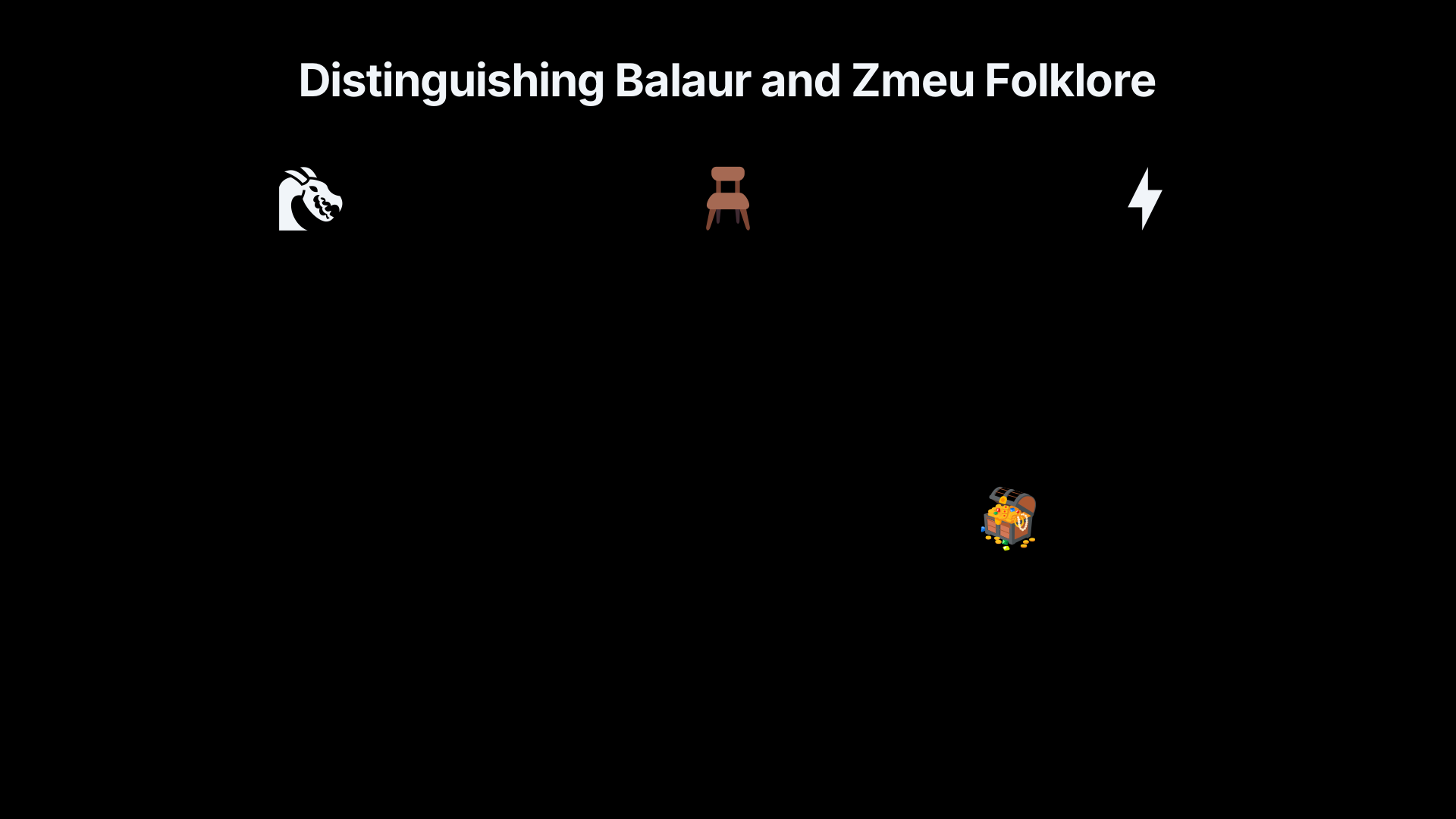
The balaur is usually described as a gigantic serpent or dragon with multiple heads. Folklore sources commonly give it three, seven or even twelve heads. It appears as a dangerous force that threatens communities, abducts maidens, guards treasures or blocks the path of heroes. In many tales, the creature is ultimately defeated by a champion such as Făt-Frumos, the handsome hero of Romanian folklore, or by Saint George.[Wikipedia]WikipediaOpen source on wikipedia.org.
The zmeu, by contrast, is far harder to classify. Although some translations call it a dragon, many traditional descriptions emphasise its human characteristics. A zmeu can speak, ride horses, wield weapons, own palaces and pursue marriage. It may have scales, wings or supernatural powers, yet it behaves less like a beast and more like a powerful rival or tyrant. Scholars and folklorists have variously compared it to an ogre, giant, demon or dragon-like humanoid.[Wikipedia]WikipediaOpen source on wikipedia.org.
This distinction matters because the two creatures often occupy different narrative roles:
- Balaur: a monstrous force of chaos, often animal-like and destructive.
- Zmeu: an intelligent antagonist with motives, desires and social ambitions.
- Both: opponents of heroes, kidnappers of princesses, and embodiments of danger that must be overcome.[Wikipedia]WikipediaOpen source on wikipedia.org.
Folk traditions sometimes blur the boundary between them, which is one reason modern summaries can appear contradictory. Even historical collectors of folklore noted that the two figures were occasionally confused or merged in storytelling.[Wikipedia]WikipediaOpen source on wikipedia.org.
Storms, Lakes and Heroic Battles
One of the most distinctive features of the balaur is its connection to weather. Some Romanian traditions describe dragons hidden beneath lakes or deep waters until summoned into the sky by magical weather-makers known as the Solomonari. These sorcerers were believed to ride dragon-like creatures and bring storms, hail and destructive weather. In some accounts the dragons are called balauri; in others they are identified as zmei, illustrating how fluid the folklore could become.[Wikipedia]WikipediaOpen source on wikipedia.org.
The weather-dragon traditions contain imagery that feels almost cryptid-like to modern readers. Dragons rise from lakes, fly through storm clouds and battle one another in the sky. Their struggles are said to produce violent winds, uprooted trees and sudden weather changes. Some stories even claim that dragons draw water upward to create rainstorms. Yet these accounts were explanations for natural forces, not eyewitness reports of unknown animals.[Wikipedia]WikipediaOpen source on wikipedia.org.
The heroic stories surrounding both creatures are equally important. In famous Romanian tales:
- Heroes battle multi-headed balauri threatening kingdoms.
- Zmei steal treasures, magical objects or royal daughters.
- Supernatural villains may even steal the sun and moon, plunging the world into darkness.
- Victory comes through courage, cleverness and persistence rather than brute strength alone.[Wikipedia]WikipediaOpen source on wikipedia.org.
These stories place the creatures firmly within the tradition of fairy-tale adversaries rather than mystery animals. Their role is symbolic: they test heroes and represent destructive forces such as greed, disorder or tyranny.[Wikipedia]WikipediaOpen source on wikipedia.org.
Were Romania’s Dragons Ever Treated as Real?
The answer depends on what “real” means.
Historically, many rural communities accepted the possibility of supernatural dragons, weather spirits and magical beings as part of a broader worldview that mixed Christian belief, folklore and local tradition. Stories about dragons living in lakes or causing storms were not always told purely as fiction. Some people regarded them as genuine supernatural forces affecting everyday life.[Wikipedia]WikipediaOpen source on wikipedia.org.
However, that is very different from claiming that balauri or zmei were unknown biological species waiting to be discovered. Traditional accounts describe creatures with multiple heads, magical powers, shape-shifting abilities, treasure-hoards and control over celestial bodies. Such traits place them firmly in the realm of folklore and mythology.[Wikipedia]WikipediaOpen source on wikipedia.org.
Unlike modern lake-monster or ape-man reports, there is no substantial body of eyewitness testimony describing ordinary animals that might later have been interpreted as balauri or zmei. Their stories were transmitted through folktales, songs, legends and oral tradition rather than through investigations of mysterious creatures.[Wikipedia]WikipediaOpen source on wikipedia.org.
How Modern Cryptid Lists Distort the Folklore
Internet lists of “Romanian cryptids” frequently include both the balaur and the zmeu alongside mystery animals from other countries. This can create a misleading impression that they belong to the same category as creatures such as Bigfoot or Nessie.
The traditional material points in a different direction. The balaur and zmeu are highly flexible narrative figures. Their appearance changes between regions and stories. A zmeu may look like a dragon in one tale and a giant nobleman in another. A balaur may be a lake-dwelling serpent, a weather dragon or a treasure guardian. Such flexibility is typical of folklore but unusual for alleged unknown animals.[Wikipedia]WikipediaOpen source on wikipedia.org.
Another distortion comes from translation. English-language retellings often render both creatures simply as “dragon”. While understandable, this flattens important differences. Romanian storytellers preserved a richer range of meanings, including giant-like, human-like and supernatural characteristics that do not fit neatly into the Western dragon category.[Wikipedia]WikipediaOpen source on wikipedia.org.
The result is that modern cryptid compilations sometimes transform complex folklore beings into supposed monster species. What survives from the original tradition is not evidence for hidden animals but evidence for how Romanian communities imagined danger, power, weather and heroism.
Why the Legends Still Matter
The balaur and zmeu remain among the most recognisable monsters in Romanian folklore because they sit at the crossroads of several traditions: dragon myths, giant stories, heroic epics and weather lore. They also show how difficult it can be to draw a sharp line between monster, spirit, giant and dragon in Eastern European folklore.[Wikipedia]WikipediaOpen source on wikipedia.org.
For readers interested in Romania’s monster traditions, these figures are important not because they generated reports of undiscovered creatures, but because they reveal how folklore evolved. The balaur embodies chaos, storms and monstrous power. The zmeu represents a more human threat—ambitious, intelligent and often dangerously possessive. Together they form the core of Romania’s dragon tradition, a body of stories far older than modern cryptozoology and far more culturally significant than any claim of a hidden species.[Wikipedia]WikipediaOpen source on wikipedia.org.
Amazon book picks
Further Reading
Books and field guides related to Were Romania's Dragons Ever Treated as Real?. Use these as the next step if you want deeper reading beyond the article.
The Element Encyclopedia of Magical Creatures
Includes dragon-like and folkloric beings from Europe.
The Hero with a Thousand Faces
Explains recurring hero-versus-monster motifs found in Romanian tales.
eBay marketplace picks
Marketplace Samples
Live-tested eBay searches with available results related to this page.
Endnotes
1.
Source: Wikipedia
Link:https://en.wikipedia.org/wiki/Balaur
2.
Source: Wikipedia
Link:https://en.wikipedia.org/wiki/Zmeu
3.
Source: Wikipedia
Link:https://fr.wikipedia.org/wiki/Zmeu
4.
Source: Wikipedia
Title: Slavic dragon
Link:https://en.wikipedia.org/wiki/Slavic_dragon
5.
Source: Wikipedia
Title: Folklore of Romania
Link:https://en.wikipedia.org/wiki/Folklore_of_Romania
6.
Source: Wikipedia
Title: Balaur bondoc
Link:https://en.wikipedia.org/wiki/Balaur_bondoc
7.
Source: dragons.fandom.com
Link:https://dragons.fandom.com/wiki/Zmeu
Source snippet
Dragons | FandomZmei figure prominently in many Romanian folk tales as the manifestations of the destructive forces of greed and selfis...
8.
Source: reddit.com
Link:https://www.reddit.com/r/Dracula/comments/mqpvy1/balaur_the_multiheaded_dragon_of_balkan_mythology/
9.
Source: brickthology.com
Link:https://brickthology.com/2016/06/29/zmeu/
Additional References
10.
Source: fromdilltodracula.com
Link:https://fromdilltodracula.com/lets-get-mythical-the-romanian-balaurs-incredible-journey/
Source snippet
The legend goes that they were once ordinary dragons who were blessed—or cursed, depending on how you look at it...Read more...
11.
Source: fromdilltodracula.com
Link:https://fromdilltodracula.com/lets-get-mythical-unraveling-the-epic-tale-of-the-romanian-zmeu/
Source snippet
Often depicted as a dragon-like creature, it boasts scaly skin, sharp claws, and sometimes...Read more...
12.
Source: van-helsing-own-story.fandom.com
Title: Van Helsing Own Story Zmei | Van Helsing Own Story Wiki
Link:https://van-helsing-own-story.fandom.com/wiki/Zmei
Source snippet
balauri) in Romanian folklore is a type of many-headed dragon or monstrous serpent, sometimes said to be equipped with wings. The number...
13.
Source: the-demonic-paradise.fandom.com
Link:https://the-demonic-paradise.fandom.com/wiki/Balaur
Source snippet
The Demonic Paradise Wiki - FandomAlthough the dragons ridden by the Solomonari are often said to be zmeu, they were balauri according...
14.
Source: cosmopoetry.ro
Link:https://www.cosmopoetry.ro/Romanian%20Astrohumanism%207/Pages/romanian_astrohumanism_VII-3.htm
15.
Source: scribd.com
Link:https://www.scribd.com/presentation/463069020/Romanian-Legends
16.
Source: facebook.com
Link:https://www.facebook.com/groups/281886105961506/posts/1553163178833786/
17.
Source: tumblr.com
Link:https://www.tumblr.com/bestiarium/657038913250213888/the-zmeu-romanian-mythology-along-with-the
18.
Source: youtube.com
Title: Mythical Creatures and Monsters of Romanian Folklore
Link:https://www.youtube.com/watch?v=3OXMYLbyHFM
Source snippet
8 Mythical Creatures From Romanian Folklore...
19.
Source: youtube.com
Title: Romanian Mythology
Link:https://www.youtube.com/watch?v=2LDwGFjRZ20
Source snippet
The Call of the Storm – The Myth of the Solomonari...
Topic Tree