Within Armenian Monsters
Why Armenian Monsters Are Not All Cryptids
Armenian creature lore also includes healing winged dogs and childbirth demons, showing that not every monster is a hidden animal claim.
On this page
- The aralez as a healing dog spirit
- The al as a childbirth demon
- What folklore explains that sightings cannot
Page outline Jump by section
Introduction
When people think about Armenia’s monster traditions, dragons and mountain spirits usually get the attention. Yet some of the country’s most enduring supernatural beings are not mysterious animals at all. The aralez and the al belong to a different category of folklore: one is a healing, dog-like spirit associated with resurrection, while the other is a feared demon linked to childbirth, miscarriage and infant mortality. Together they show why Armenian creature lore cannot be understood solely through the modern lens of cryptids or hidden animals.
These beings were not traditionally treated as undiscovered creatures lurking in remote valleys. Instead, they helped explain death, survival, illness, grief and hope. Their stories reveal how folklore answered questions that eyewitness reports, natural observation and practical experience could not easily resolve.[Wikipedia]WikipediaAralez (mythologyAralez (mythology
The aralez as a healing dog spirit
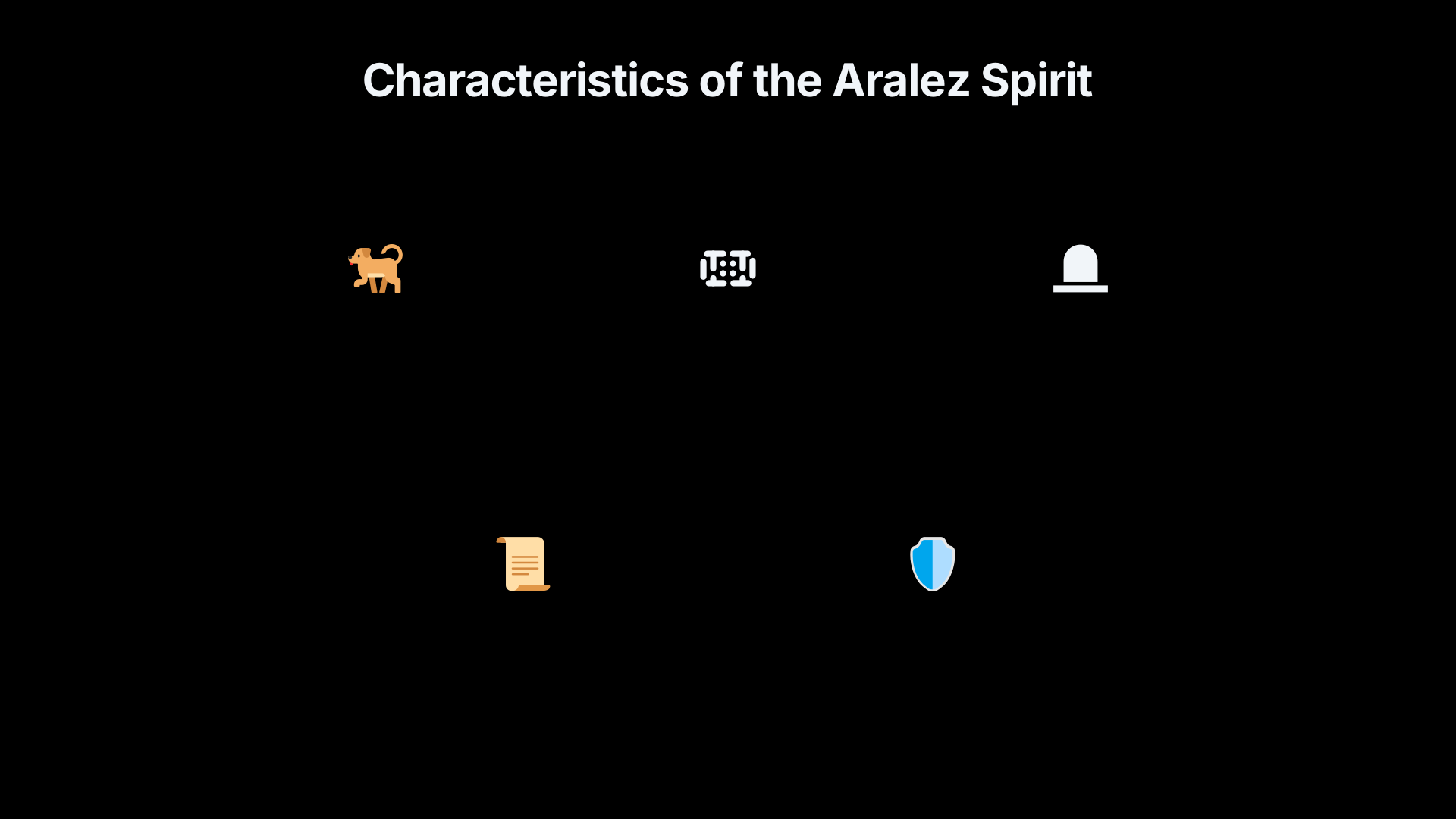
Among the most distinctive figures in Armenian tradition is the aralez, often described as a winged or heavenly dog-like being with the power to restore life. According to surviving accounts, the aralez descended upon fallen heroes and licked their wounds, healing them and sometimes bringing them back from death.[Wikipedia]WikipediaAralez (mythologyAralez (mythology
The best-known story connects the aralez with the legendary king Ara the Handsome. In the tale, Ara is killed during a conflict involving the Assyrian queen Semiramis. Hoping to reverse his death, she calls upon the aralez to revive him. Whether understood literally, symbolically or as a later embellishment, the story firmly links the creatures with resurrection and miraculous healing.[Wikipedia]WikipediaAralez (mythologyAralez (mythology
What makes the aralez especially interesting is that belief in them appears to have persisted long after Armenia adopted Christianity. Historical traditions recorded in late antique Armenian sources describe people placing the bodies of important warriors in elevated locations in the hope that the aralez would restore them to life. This suggests that the beings were more than literary inventions; they formed part of a living folk belief that survived alongside newer religious ideas.[Wikipedia]WikipediaAralez (mythologyAralez (mythology
Unlike a lake monster or an alleged unknown animal, the aralez left no trail of sightings, tracks or physical evidence. Their importance lay in what they represented. Dogs have often been linked with protection, loyalty and the boundary between life and death in Indo-European and Near Eastern traditions. The aralez transformed those themes into a uniquely Armenian image: celestial healing hounds who intervened on behalf of heroic figures.[Wikipedia]WikipediaAralez (mythologyAralez (mythology
The al as a childbirth demon
If the aralez embodied hope, the al embodied fear.
The al was believed to attack pregnant women, women in labour and new mothers. Across Armenian folklore, the creature was blamed for miscarriage, stillbirth, postpartum illness and the death of newborn children. In many versions, the al steals vital organs such as the liver, heart or lungs from a woman after childbirth, causing her death unless the creature is stopped before reaching water.[wikipedia.org]WikipediaAl (folkloreAl (folklore
Descriptions vary, but the al is usually portrayed as frightening rather than animal-like. Folklore depicts a grotesque being with tangled hair, sharp teeth, claws and an aged, crone-like appearance. Some traditions describe fiery eyes, brass or copper claws, iron teeth and boar-like tusks.[Wikipedia]WikipediaAl (folkloreAl (folklore
The legend spread far beyond Armenia. Related versions appear across the Caucasus, Iran and Central Asia, suggesting a very old tradition that travelled between cultures and languages over centuries. Scholars continue to debate its ultimate origins, with Iranian, Mesopotamian and other regional influences all proposed. What remains remarkably consistent is the creature’s role as a supernatural explanation for childbirth crises.[iranicaonline.org]iranicaonline.orgIranica OnlineĀLEncyclopaedia IranicaĀL, a folkloric being that personifies puerperal fever; the name apparently derives from Iranian āl “red.” Although…
The protective measures associated with the al are equally revealing. Families used charms, prayers, iron objects and various ritual precautions to protect mothers and infants. These practices reflect a world in which childbirth was dangerous and unpredictable. Before modern medicine, communities often lacked clear explanations for maternal death, infection or infant mortality. The al provided a framework through which those tragedies could be understood.[Wikipedia]WikipediaAl (folkloreAl (folklore

What folklore explains that sightings cannot
The aralez and the al occupy an important place in Armenia’s broader creature tradition because they highlight a difference often lost in modern discussions of monsters.
A cryptid claim usually begins with an alleged observation: a strange animal seen in a lake, forest or mountain range. The central question becomes whether a real but unknown species might exist. The aralez and the al function differently. Their purpose was explanatory rather than observational.[Wikipedia]WikipediaAralez (mythologyAralez (mythology
The aralez helped explain seemingly impossible hopes:
- Could a beloved hero return from death?
- Could wounds be healed through divine intervention?
- Might loyalty and courage be rewarded even after defeat?
The al addressed darker fears:
- Why did healthy mothers sometimes die suddenly?
- Why were newborns vulnerable to illness?
- Why did pregnancies end in tragedy despite every precaution?
In both cases, the folklore served social and emotional needs rather than documenting encounters with unknown wildlife. The stories offered meaning where direct evidence was absent.[Iranica Online]iranicaonline.orgIranica OnlineĀLEncyclopaedia IranicaĀL, a folkloric being that personifies puerperal fever; the name apparently derives from Iranian āl “red.” Although…
Why these creatures matter in Armenia’s monster tradition
Modern readers often group every legendary creature under the broad label of “monster”. Armenian folklore shows why that category can be misleading.
The aralez is not remembered as a beast hiding in remote mountains. It is a supernatural healer associated with heroism, resurrection and sacred intervention. The al is not an undiscovered predator but a personification of childbirth dangers that once threatened nearly every family.[Wikipedia]WikipediaAralez (mythologyAralez (mythology
Together they reveal a richer picture of Armenia’s creature lore. Alongside dragons, giants and other legendary beings, there exists a parallel tradition of spirits that explain life’s most profound experiences: death, recovery, birth and loss. These stories survived not because people were searching for hidden animals, but because they helped communities make sense of events that felt beyond ordinary human understanding.[Wikipedia]WikipediaAralez (mythologyAralez (mythology

Amazon book picks
Further Reading
Books and field guides related to Why Armenian Monsters Are Not All Cryptids. Use these as the next step if you want deeper reading beyond the article.
The Encyclopedia of Demons and Demonology
Helpful for understanding demon traditions like the al.
The Book of Imaginary Beings
Fits a page focused on supernatural beings rather than cryptids.
Myths of the Pagan North
Provides comparative context for mountain and dragon traditions.
eBay marketplace picks
Marketplace Samples
Live-tested eBay searches with available results related to this page.


Endnotes
1.
Source: Wikipedia
Title: Aralez (mythology)
Link:https://en.wikipedia.org/wiki/Aralez_%28mythology%29
2.
Source: Wikipedia
Title: Al (folklore)
Link:https://en.wikipedia.org/wiki/Al_%28folklore%29
3.
Source: Wikipedia
Title: Armenian mythology
Link:https://en.wikipedia.org/wiki/Armenian_mythology
Source snippet
Armenian mythologyAl – The Al is a dwarfish evil spirit that attacks pregnant women and steals newborn babies. · Aralez – Aralezner –...
4.
Source: iranicaonline.org
Title: Iranica OnlineĀL
Link:https://www.iranicaonline.org/articles/al-folkloric-being-that-personifies-puerperal-fever/
Source snippet
Encyclopaedia IranicaĀL, a folkloric being that personifies puerperal fever; the name apparently derives from Iranian āl “red.” Although...
5.
Source: caucasushistory.ru
Link:https://caucasushistory.ru/2618-6772/article/view/17071
Source snippet
Additionally, Al has similar names and functions among the peoples of the South and North...Read more...
Additional References
6.
Source: esoterx.com
Title: undead mans best friend licking ones wounds with the armenian arlez
Link:https://esoterx.com/2013/02/14/undead-mans-best-friend-licking-ones-wounds-with-the-armenian-arlez/
Source snippet
Licking One's Wounds with the Armenian Arlez14 Feb 2013 — Ancient Armenians believed that when a brave man fell in battle or by the hand...
7.
Source: researchgate.net
Title: 386475731 AL DEMON IN THE CONTEXT OF CAUCASIAN CONTACT ZONES
Link:https://www.researchgate.net/publication/386475731_AL_DEMON_IN_THE_CONTEXT_OF_CAUCASIAN_CONTACT_ZONES
Source snippet
al demon in the context of caucasian contact zones27 May 2026 — Based on the information provided in the article, it can be asserted that...
Published: May 2026
8.
Source: beastsoflegend.com
Title: aralez resurrection hound
Link:https://beastsoflegend.com/bestiary/asia-2/west-asia/aralez-resurrection-hound/
Source snippet
Aralez: Armenian Resurrection Hounds27 Dec 2025 — The Aralez, or Aralezner in plural, are dog-like resurrection spirits from Armenian tra...
9.
Source: brickthology.com
Link:https://brickthology.com/2015/01/12/aralez/
Source snippet
12 Jan 2015 — The Aralezner are an ancient race of dog-like beings, either spirits or minor gods with the powers of healing and resurrect...
10.
Source: facebook.com
Link:https://www.facebook.com/groups/155837376254411/posts/931733298664811/
Source snippet
Armenian mythology's celestial dog-like beingsAralezs, revered in Armenian mythology, are celestial, dog-like beings believed to possess...
11.
Source: genies.fandom.com
Link:https://genies.fandom.com/wiki/Agas
Source snippet
DemonologyThe Agas (Armenian: Աղաս – also spelled Agath, Agash, Aghas) is a demon or malevolent spirit in Armenian folklore and Christi...
12.
Source: mythbeasts.com
Title: Āl (Albastı)
Link:https://mythbeasts.com/beast/al/
Source snippet
The Childbirth Demon of Iranian & Armenian...Āl - a folkloric figure associated with childbirth danger in Iranian & Caucasian traditions...
13.
Source: nomadit.co.uk
Link:https://nomadit.co.uk/conference/sief2025/paper/88673
Source snippet
The mythological context of the armenian contemporary...6 Jun 2025 — The figure of the one-legged devil draws fascinating parallels to t...
14.
Source: youtube.com
Link:https://www.youtube.com/watch?v=xu-RxTmjLMc
Source snippet
AL- Demon from the ancient worldThe AL or Alk is a demon from Armenian Mythology. They are half human, half beasts & are androgynous. The...
15.
Source: youtube.com
Link:https://www.youtube.com/watch?v=jN4pULTTxxo
Topic Tree