Cryptids of Armenia's Mountains
Armenia’s strongest mystery-creature tradition is not a modern lake-monster flap or a Bigfoot-style media craze. It is older, stranger and more archaeological: the dragon of water, mountain and storm remembered in folklore and carved into prehistoric “dragon stones” in the Armenian highlands.
Page outline Jump by section
Introduction
The clearest answer is this: Armenia has no well-evidenced living cryptid, but it has a rich monster tradition anchored in water dragons, highland stelae, heroic mythology and the real animals of a rugged mountain ecology. The most important places are the high meadows of Mount Aragats, the Geghama, Sevan, Vardenis and Syunik mountains, and the cultural landscape around Lake Sevan, where water, weather and old dragon imagery naturally meet.[UNESCO World Heritage Centre]whc.unesco.orgWorld Heritage Centre The Vishaps and the Cultural Landscape of TirinkatarWorld Heritage Centre The Vishaps and the Cultural Landscape of Tirinkatar
Armenia’s main monster is a water dragon, not a hidden animal
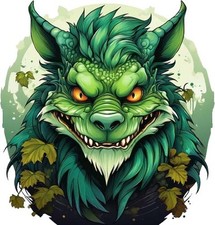
The creature most closely associated with Armenian monster lore is the vishap: a dragon or serpent-like being linked with water, storms, mountains, fertility and danger. In modern cryptid terms it can be tempting to treat the vishap as a “lake monster”, but that is not quite right. The tradition is older and more symbolic than a simple claim that a large unknown animal is hiding in one lake.
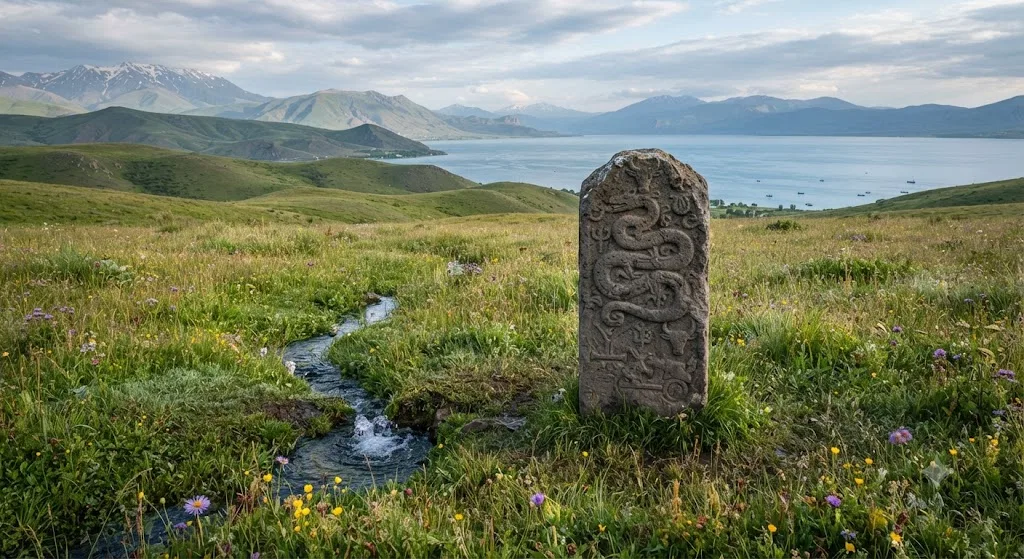
The most concrete trace of the vishap tradition is the remarkable body of stone monuments usually called vishap stelae or dragon stones. Armenia’s UNESCO Tentative List entry describes them as two-to-five-metre basalt stelae, traditionally called “vishap”, with fish, bovine-hide or hybrid animal imagery. About 150 examples are known, with the highest concentration in Armenia, especially around Mount Aragats and the Geghama, Sevan, Vardenis and Syunik mountains. They are typically found in secluded, water-rich high-altitude meadows, around 1,200 to 3,200 metres above sea level.[UNESCO World Heritage Centre]whc.unesco.orgWorld Heritage Centre The Vishaps and the Cultural Landscape of TirinkatarWorld Heritage Centre The Vishaps and the Cultural Landscape of Tirinkatar
That setting explains why the Armenian dragon feels different from a cave monster or forest ogre. The vishap belongs to springs, canals, mountain lakes, summer pastures and sudden weather. A 2025 study in npj Heritage Science argues that the distribution and size of these stelae point to deliberate, labour-intensive placement, and that their frequent closeness to springs and prehistoric irrigation systems supports the interpretation of a water cult. That does not prove that ancient people believed in a flesh-and-blood monster; it shows that dragon imagery was tied to water management, seasonal movement and ritual life in the highlands.[Nature]nature.comOpen source on nature.com.
For a reader looking for “Armenia’s Loch Ness monster”, this is the useful distinction. The vishap is not best read as a zoological claim. It is a mythic creature with an unusually strong archaeological footprint. The “evidence” is not a carcass or film clip; it is a landscape pattern of carved stones, watery places and later folklore.
Where reports and legends cluster
Armenia’s creature geography is strongly shaped by altitude. The country is small, landlocked and mountainous, with habitats ranging from arid steppe to forests and alpine meadows. World Land Trust describes Armenia as part of the Caucasus Biodiversity Hotspot, with semi-arid steppes, subalpine and alpine meadows between 2,200 and 4,000 metres, lower arid steppes and humid forests in the north-east. This varied terrain helps explain why Armenian folklore so often places strange beings in mountains, ravines, springs and remote pastureland.[World Land Trust]worldlandtrust.orgWorld Land Trust ArmeniaWorld Land Trust Armenia
The most important recurring areas are:
- Mount Aragats and the Geghama mountains, where many dragon stones are recorded and where the high-pasture setting fits the vishap’s water-and-weather associations.
- The Sevan region, where Armenia’s largest lake gives dragon lore an obvious natural stage, even though modern evidence for a specific Lake Sevan monster is thin.
- Syunik and other southern mountain landscapes, where rugged wildlife habitat, borderland history and old routes make the region a plausible setting for wild-animal misidentifications and mountain folklore.
- The wider Caucasus, relevant mainly for wild-man traditions such as the almasty, although the best-known reports cluster more strongly in the North Caucasus than in present-day Armenia.[UNESCO World Heritage Centre]whc.unesco.orgWorld Heritage Centre The Vishaps and the Cultural Landscape of TirinkatarWorld Heritage Centre The Vishaps and the Cultural Landscape of Tirinkatar
Lake Sevan deserves special care. It is tempting to attach every Armenian water-dragon story to the lake, but the better-supported pattern is broader: vishap imagery is distributed across highland water sources, not confined to one monster lake. Lake Sevan does, however, give the tradition a living ecological context. FAO notes that the lake’s native fish fauna historically included Sevan trout, Sevan khramulya and Sevan barbel, with later introduced fish changing the ecosystem and native stocks declining after lake-level changes. In other words, Sevan is a real place of deep environmental change, not just a scenic backdrop for legend.[FAOHome]fao.orgHome FISH AND FISHERIES AT HIGHER ALTITUDES: ASIAHome FISH AND FISHERIES AT HIGHER ALTITUDES: ASIA
Lake monsters, dragon winds and the Van problem
The most famous Armenian-linked lake monster story is often not in the Republic of Armenia at all: it is tied to Lake Van, now in eastern Turkey. Armenian historical and cultural memory is deeply connected with the Van region, and some accounts link older Armenian water-dragon traditions to Lake Van stories. For a country page on Armenia, that makes Lake Van relevant but secondary. It can illuminate Armenian dragon lore, but it should not replace Armenia’s own Sevan, Aragats and Geghama-centred material.
This distinction matters because modern internet lists sometimes blur “Armenian folklore”, “Armenian highlands” and the borders of present-day Armenia. The UNESCO entry itself treats the dragon-stone distribution as a wider highland phenomenon, with macro-regional limits extending beyond today’s Armenian state, while also noting that the highest concentration lies in Armenia. A careful country-level reading should therefore say: Armenia is central to the vishap tradition, but not every Armenian highland dragon story belongs geographically to modern Armenia.[UNESCO World Heritage Centre]whc.unesco.orgWorld Heritage Centre The Vishaps and the Cultural Landscape of TirinkatarWorld Heritage Centre The Vishaps and the Cultural Landscape of Tirinkatar
Lake Sevan has a better claim to be Armenia’s in-country water-monster landscape, but the available evidence does not support a robust modern “Sevan monster” case comparable with Loch Ness, Champ or other famous lake cryptids. What Sevan offers is a meeting point between water-dragon folklore, real large fish, ecological change and dramatic mountain weather. The old monster logic is easy to understand: a high lake with sudden winds, declining and introduced fish populations, and ancient dragon imagery nearby is exactly the kind of place where stories of water beings can persist without needing a confirmed unknown animal.[FAOHome]fao.orgHome FISH AND FISHERIES AT HIGHER ALTITUDES: ASIAHome FISH AND FISHERIES AT HIGHER ALTITUDES: ASIA
Winged dogs and healing beasts
Not every Armenian legendary creature is monstrous in the frightening sense. One of the most memorable is the aralez, a dog-like supernatural being associated with healing and resurrection. Encyclopaedia Iranica records the tradition of the arlez or aralez licking the wounds of the dead Ara back to life, and notes scholarly attempts to connect the legend with older Near Eastern and Zoroastrian dog-related beliefs.[Iranica Online]iranicaonline.orgIranica Online ARLEZIranica Online ARLEZ
For cryptid readers, the aralez is useful because it shows how Armenian creature lore is not just about “beasts seen in the wild”. Some beings function as ritual or mythic explanations for death, heroism and recovery. The aralez is not a plausible hidden species of winged dog. It is a supernatural helper in heroic memory, a creature whose power lies in what it does for the dead rather than where it might be sighted.
The aralez also helps explain why Armenian monster traditions can feel more mythological than journalistic. In many modern cryptid cultures, the key question is “What did the witness see?” In the aralez tradition, the key question is “What does the creature explain?” It explains heroic restoration, the boundary between death and life, and the sacred role of dogs in older belief systems.
Childbirth demons and domestic fear
Armenian folklore also includes darker domestic beings, including the al, a demon or witch-like figure associated across the Iranian world and the Caucasus with childbirth danger. Encyclopaedia Iranica describes the āl as a folkloric being personifying puerperal fever and notes its wider spread through Iranian, Caucasian and Central Asian traditions.[Iranica Online]iranicaonline.orgIranica OnlineĀLIranica OnlineĀL
This is not a cryptid in the animal sense. It belongs to the world of illness, childbirth risk and protective customs. Before modern medicine, sudden maternal fever, miscarriage, infant death and post-birth complications demanded explanation. A frightening being that attacks mothers and newborns gave shape to danger that families could not otherwise control.
For an Armenia monster page, the al matters because it shows how “creature” traditions often preserve social and medical anxieties. The al is not evidence of a hidden predator. It is evidence of how communities turned invisible danger into a memorable enemy with rules, weaknesses and protective rituals.
The Caucasus wild man reaches Armenia only at the edge
The almasty, or Caucasus wild man, is the closest regional parallel to Bigfoot. It is described in cryptozoological literature as a hairy, human-like being reported from parts of the Caucasus and neighbouring regions. Marie-Jeanne Koffmann’s well-known pro-almasty work collected many claimed witness reports in the Caucasus, including accounts of “men of the forest”, footprints and other alleged traces, while also acknowledging that the idea of an unknown hominoid surviving into the twentieth century was widely treated as absurd by sceptics.[Idaho State University]isu.eduOpen source on isu.edu.
Armenia, however, should not be oversold as a major almasty hotspot. Koffmann’s field emphasis was especially strong in areas such as Kabardino-Balkaria, Dagestan, Georgia and other Caucasus regions, rather than a clearly documented Armenian sighting tradition. The Caucasus as a whole is relevant because Armenia sits on the southern side of that wider mountain world, but a responsible Armenia page should treat the almasty as a neighbouring or regional cryptid motif, not as Armenia’s central mystery beast.[Idaho State University]isu.eduOpen source on isu.edu.
Sceptical explanations are also stronger here than the romantic version of the story. Mountain terrain, poor light, fear, hearsay, bears standing briefly on hind legs, shepherd stories, wild-haired humans, and the tendency of older travel literature to exoticise remote communities can all feed wild-man claims. None of that proves every report was invented. It does mean the almasty sits in the category of unresolved regional folklore and contested testimony, not confirmed zoology.

Real animals behind Armenian monster stories
Armenia’s real wildlife gives plenty of material for misidentification. WWF Armenia highlights leopard, Armenian mouflon, brown bear, Eurasian lynx and bezoar goat as important species in its conservation work. These animals are elusive, often active in remote terrain, and easily magnified by distance, fear or poor visibility.[WWF Armenia]origin-armenia_v2.wwf-sites.orgWWF Armenia Wildlife | WWFWWF Armenia Wildlife | WWF
A large brown bear glimpsed upright on a slope can become a hairy man. A lynx seen briefly at dusk can become a phantom cat. A wolf or jackal call at night can turn into a supernatural warning. A large fish breaking the surface of Lake Sevan can be retold as something stranger, especially in a culture already rich in dragon imagery. This does not make the folklore foolish; it shows how real ecology and imaginative tradition reinforce each other.
The most plausible “cryptid-like” misunderstandings in Armenia are therefore not unknown monsters but over-interpreted encounters with rare or shy animals. The Caucasus Wildlife Refuge has recorded brown bear, grey wolf and Eurasian lynx on camera traps, and conservation groups describe some Armenian large carnivores as scarce or rarely seen. Rare sightings create the perfect conditions for stories: people know the animals exist, but they do not see them often enough to feel ordinary.[CWR]cwr.fpwc.orgOpen source on fpwc.org.
Hoaxes, tourism and pop-culture afterlives
Armenia does not appear to have a major modern monster-hoax industry in the way some countries have built tourism around lake beasts or hairy hominids. The country’s creature culture is more often folded into heritage tourism, archaeology, pagan revival imagery, fantasy art and travel writing about “dragon stones”. The official heritage framing of the Tirinkatar vishaps presents them as archaeological monuments and cultural landscape, not as proof of dragons.[UNESCO World Heritage Centre]whc.unesco.orgWorld Heritage Centre The Vishaps and the Cultural Landscape of TirinkatarWorld Heritage Centre The Vishaps and the Cultural Landscape of Tirinkatar
That makes Armenia’s monster afterlife unusually dignified. The dragon is not mainly a roadside mascot or a tabloid creature. It appears in museum interpretation, highland archaeology, national mythology and the visual language of ancient stone. Travel articles sometimes make the dragons sound more literal or mysterious than the evidence allows, but the core material is strong enough that it does not need exaggeration.
The tourism risk is simplification. “Ancient Armenians worshipped dragons” is catchy, but it flattens a complex subject. The better version is more interesting: highland communities created large animal-carved stelae in difficult mountain settings, often near water, and later Armenian folklore remembered dragons as beings of water, storm and danger. The overlap is real, but the exact beliefs behind the stones are still interpreted rather than directly known.[Nature]nature.comOpen source on nature.com.
What the record supports about Armenia’s cryptid traditions
The evidence for Armenia’s mystery creatures is strongest where folklore and material culture overlap, and weakest where modern cryptid claims would require a hidden animal population. The dragon stones are real. Their highland locations are documented. Their link with water is a serious archaeological interpretation. The living dragon, however, remains a mythic and symbolic being, not an animal established by science.[UNESCO World Heritage Centre]whc.unesco.orgWorld Heritage Centre The Vishaps and the Cultural Landscape of TirinkatarWorld Heritage Centre The Vishaps and the Cultural Landscape of Tirinkatar
A fair ranking looks like this:
- Best supported as cultural history: the vishap tradition and dragon stones.[youtube.com]youtube.comVishapakar-Dragon StonesArmenia dragon stones vishap history Recent Excavations Of Armenia’s Ancient Vishap Dragon Stones Rusty's History Zone…
- Strong as folklore, not zoology: aralez healing dogs, al demons, dev-like giants and other mythic beings.
- Regionally relevant but weak for Armenia specifically: almasty-style wild-man claims.
- Plausible as misidentification: bears, lynx, wolves, large fish, weather effects and remote mountain encounters.
- Not well supported: a modern Armenian lake monster with a continuous sighting record, physical evidence or reliable documentation.
That does not make Armenia a poor cryptid country. It makes it a different kind of monster country. Its strangest creature tradition is not built around a single modern eyewitness event but around a long relationship between mountains, water, carved stone and myth.
Why Armenia’s creature lore still feels alive
Armenia’s monster traditions endure because they are rooted in places people can still visit and landscapes that still behave dramatically. High meadows still hold dragon stones. Lake Sevan still dominates the national imagination. Remote habitats still shelter bears, lynx, wolves and leopards. Sudden storms still make mountains feel animated. The old stories do not need a surviving dragon to remain powerful.
For cryptid readers, Armenia is most rewarding when approached with two questions at once: “What creature was imagined?” and “What real place made that creature believable?” The answer is rarely a neat hidden-animal case. It is a layered tradition in which water can be sacred, dangerous and life-giving; dogs can heal the heroic dead; childbirth fever can become a demon; and a mountain stone carved thousands of years ago can still make the word “dragon” feel oddly concrete.
Amazon book picks
Further Reading
Books and field guides related to What Monsters Haunt Armenia's Mountains?. Use these as the next step if you want deeper reading beyond the article.
eBay marketplace picks
Marketplace Samples
Live-tested eBay searches with available results related to this page.


Endnotes
1.
Source: whc.unesco.org
Title: World Heritage Centre The Vishaps and the Cultural Landscape of Tirinkatar
Link:https://whc.unesco.org/en/tentativelists/6702/
2.
Source: nature.com
Link:https://www.nature.com/articles/s40494-025-01998-z
3.
Source: fao.org
Title: Home FISH AND FISHERIES AT HIGHER ALTITUDES: ASIA
Link:https://www.fao.org/4/x2614e/x2614e13.htm
4.
Source: fao.org
Link:https://www.fao.org/home/en
5.
Source: fao.org
Link:https://www.fao.org/employment/en
6.
Source: armenia.travel
Link:https://armenia.travel/
7.
Source: worldlandtrust.org
Title: World Land Trust Armenia
Link:https://www.worldlandtrust.org/armenia/
8.
Source: isu.edu
Link:https://www.isu.edu/media/libraries/rhi/research-papers/Koffmann_1.pdf
9.
Source: Wikipedia
Title: Lake Sevan
Link:https://en.wikipedia.org/wiki/Lake_Sevan
10.
Source: iranicaonline.org
Title: Iranica Online ARLEZ
Link:https://www.iranicaonline.org/articles/arlez-term-for-a-supernatural-creature-in-armenian/
11.
Source: iranicaonline.org
Title: Iranica OnlineĀL
Link:https://www.iranicaonline.org/articles/al-folkloric-being-that-personifies-puerperal-fever/
12.
Source: origin-armenia_v2.wwf-sites.org
Title: WWF Armenia Wildlife | WWF
Link:https://origin-armenia_v2.wwf-sites.org/our_work_armenia/impact_areas/wildlife/
13.
Source: cwr.fpwc.org
Link:https://cwr.fpwc.org/bear-wolf-and-lynx/
14.
Source: fpwc.org
Title: 4 endangered animal species in armenia
Link:https://fpwc.org/contents/newsPress/4-endangered-animal-species-in-armenia
15.
Source: Wikipedia
Link:https://en.wikipedia.org/wiki/Vishap
16.
Source: Wikipedia
Link:https://en.wikipedia.org/wiki/Lake
17.
Source: Wikipedia
Link:https://en.wikipedia.org/wiki/Armenia
18.
Source: Wikipedia
Title: Sevan trout
Link:https://en.wikipedia.org/wiki/Sevan_trout
19.
Source: origin-armenia.wwf-sites.org
Link:https://origin-armenia.wwf-sites.org/en/wildlife/
20.
Source: freshwaterhabitats.org.uk
Link:https://freshwaterhabitats.org.uk/habitats/lakes/
21.
Source: instagram.com
Link:https://www.instagram.com/fao/?hl=en
22.
Source: GOV.UK
Link:https://www.gov.uk/foreign-travel-advice/armenia
23.
Source: isu.edu
Link:https://www.isu.edu/media/libraries/rhi/research-papers/Koffmann_2.pdf
24.
Source: store.steampowered.com
Link:https://store.steampowered.com/app/1118240/Lake/
25.
Source: fluidra.com
Link:https://www.fluidra.com/commercial-solutions/inspiration/blog/lake/
26.
Source: dragonology.fandom.com
Link:https://dragonology.fandom.com/wiki/Vishap
27.
Source: cryptidz.fandom.com
Title: Lake Monsters
Link:https://cryptidz.fandom.com/wiki/Lake_Monsters
28.
Source: creatures-of-myth.fandom.com
Link:https://creatures-of-myth.fandom.com/wiki/Aralez
29.
Source: dictionary.cambridge.org
Link:https://dictionary.cambridge.org/dictionary/english/lake
30.
Source: brickthology.com
Link:https://brickthology.com/2015/01/12/aralez/
31.
Source: folklore.usc.edu
Link:https://folklore.usc.edu/aralez/
32.
Source: barevarmenia.com
Link:https://barevarmenia.com/travelblog/vishaps/?srsltid=AfmBOoo8MKTuuimM2S9C6KdDxlPgKGYaU4jbGjwvnXfDsCMCC69l-GxJ
Additional References
33.
Source: youtube.com
Title: The Vishapakar Stones: Armenia’s Strangest Megalithic Mystery
Link:http://www.youtube.com/watch?v=nKEPS7N0T9Y
Source snippet
Vishapakar: The Dragon Stones and Armenia’s Water-Driven Megaliths...
34.
Source: youtube.com
Title: Vishapakar-Dragon Stones
Link:http://www.youtube.com/watch?v=eUaLN_u20rk
Source snippet
Armenia dragon stones vishap history Recent Excavations Of Armenia’s Ancient [Vishap Dragon Stones]({{ 'vishap-stones/' | relative_url }}) Rusty's History Zone...
35.
Source: youtube.com
Title: Recent Excavations Of Armenia’s Ancient Vishap Dragon Stones
Link:http://www.youtube.com/watch?v=eU9X-P3DcTM
Source snippet
The Vishapakar Stones: Armenia's Strangest Megalithic Mystery...
36.
Source: youtube.com
Title: Vishapakar: The Dragon Stones and Armenia’s Water-Driven Megaliths
Link:http://www.youtube.com/watch?v=Rko3euVWZcE
Source snippet
Banimacia - The Mystery of the Vishapakars...
37.
Source: tasteatlas.com
Link:https://www.tasteatlas.com/best-rated-freshwater-fish-in-armenia
38.
Source: facebook.com
Link:https://www.facebook.com/100064415032446/posts/ancient-dragon-stones-older-than-stonehenge-reveal-a-lost-water-cult-hidden-high/1426641592826328/
39.
Source: armeniadiscovery.com
Link:https://armeniadiscovery.com/en/region/aragatsotn
40.
Source: facebook.com
Link:https://www.facebook.com/groups/155837376254411/posts/695782732259870/
41.
Source: reddit.com
Link:https://www.reddit.com/r/armenia/comments/kmyrim/aralez/
42.
Source: theguardian.com
Link:https://www.theguardian.com/world/armenia
Topic Tree
Follow this branch
Related pages 192
- Antigua Cryptids
- Maldives Monsters
- Malta Monsters
- Qatar Monsters
- Argentina Monsters
- +187 more in sidebar