Creature Lore of Somalia's Stories
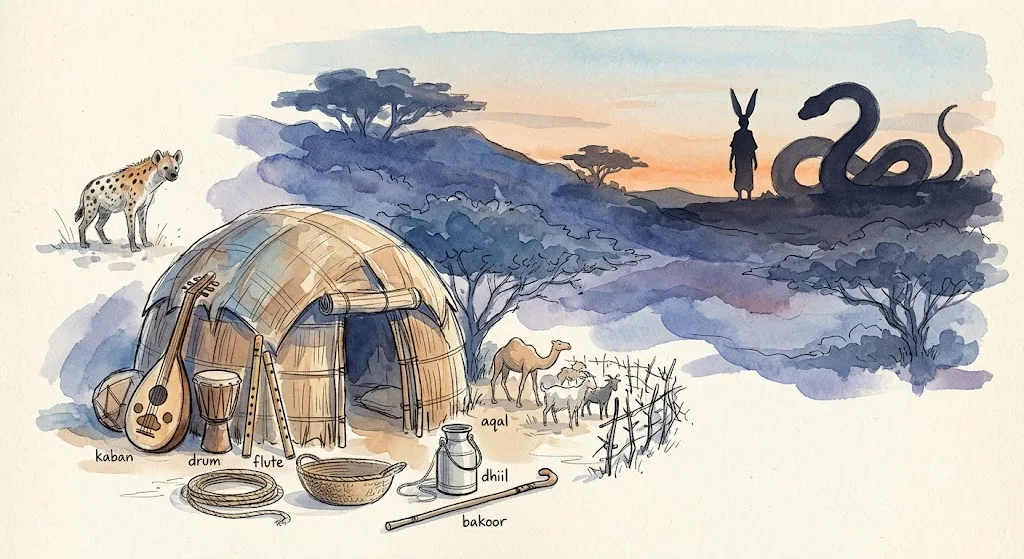
Somalia has no well-documented equivalent of the Loch Ness Monster or Bigfoot. Its strongest mystery-creature tradition lies instead in oral folklore: people who become hyenas, child-eating beings with unnatural senses, heroic or hostile giants, and enormous serpents.
Page outline Jump by section
Introduction
The central figure is Qori Ismaris, a human said to transform into a hyena after using a magical stick. Close behind is Dhegdheer, the long-eared cannibal of cautionary tales. Both belong more securely to folklore than cryptozoology. Their power comes from the landscape and the animals familiar to Somali pastoral life, especially hyenas, leopards and snakes. Historical wildlife records provide a useful reality check: Somalia contains formidable and sometimes poorly surveyed fauna, but zoological catalogues do not identify unknown bear-like, ape-like or dragon-like species.[uniroma3.it]arcadia.sba.uniroma3.itArc Adi AThe Somalies call all genres of folk-lore prose either tales orThe Somalies call all genres of folk-lore prose either tales orOctober 2, 2014 — by G Kapchits · 1993 · Cited by 2 — (Qori-ismaris…
Why Somalia’s creatures come from oral tradition
Somali culture has a particularly rich oral heritage. Poetry, tales, proverbs and informal performances have long preserved history, social criticism, humour and practical knowledge. Folklorist John William Johnson noted that Somali folklore was a substantial field of study by the early 1970s, while later scholarship has stressed that oral performance occurs not only in formal recitations but in everyday settings that older researchers could easily overlook.[jstor.org]jstor.orgResearch in Somali Folkloreby JW Johnson · 1973 · Cited by 7 — 7 Some of his work was reported in the Somali weekly newspaper Dawn…
That matters when discussing Somali monsters. There is often no single authorised version of a story, no first newspaper report and no fixed date on which a creature supposedly appeared. Details can change between families, regions, performers and published adaptations. A threatening figure may be described as a witch in one retelling, a cannibal in another and a creature with supernatural bodily features in a third.
Researcher Georgi Kapchits divided Somali folk narratives into categories including mythological tales, animal tales, fairy tales, legends and more realistic narrative tales. His work also records Qori Ismaris among stories of supernatural beings. This places the hyena-transformer within a recognised storytelling tradition rather than a modern catalogue of zoological sightings.[allsocialsciencejournal.com]allsocialsciencejournal.comPreserving the Traditional StoriesKapchits weaves together 172 tales, fragments of a vibrant Somali oral tradition now slipping into the shadows of…Read more…
Qori Ismaris: Somalia’s hyena-transformer
Qori Ismaris is the Somali creature most readily compared with a werewolf. The figure is generally described as a man who becomes a hyena at night by rubbing himself with a magical stick, then reverses the transformation before morning. The name is commonly translated as “one who rubs himself with a stick”. Published discussions of Somali folklore treat the character as a supernatural human rather than an unidentified animal.[uniroma3.it]arcadia.sba.uniroma3.itArc Adi AThe Somalies call all genres of folk-lore prose either tales orThe Somalies call all genres of folk-lore prose either tales orOctober 2, 2014 — by G Kapchits · 1993 · Cited by 2 — (Qori-ismaris…
The comparison with a European werewolf is useful but incomplete. A werewolf usually belongs to a tradition centred on wolves, curses and loss of human control. Qori Ismaris emerges from a landscape in which hyenas were real nocturnal predators and scavengers. The story therefore turns an already unsettling animal into a figure of secrecy and social suspicion: a neighbour can leave as a person and return as something that feeds in darkness.
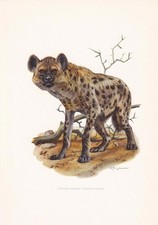
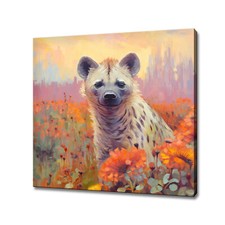
Hyenas are unusually effective raw material for such tales. They are largely nocturnal, can travel considerable distances, consume bones and carrion, and produce whoops, growls and calls that may sound disturbing or almost human to an unfamiliar listener. Across the wider Horn of Africa, hyenas have acquired contrasting reputations as livestock raiders, dangerous scavengers, spirit-sensitive animals and even protectors of settlements. Research on human–hyena relationships shows that the animals often live close to people and depend partly on food produced by human activity, making encounters both ordinary and emotionally charged.[tandfonline.com]tandfonline.comj.1931 0846.2006.tb00519.xj.1931 0846.2006.tb00519.x
This does not mean every story began with a misidentified hyena. Transformation is a narrative idea, not a zoological diagnosis. The more convincing interpretation is that observable hyena behaviour gave storytellers a believable foundation on which to build a tale about hidden identities, night danger and the uncertain boundary between the human settlement and the bush.
Dhegdheer: the danger that hears children coming
Dhegdheer is one of Somalia’s best-known monstrous figures. She is usually portrayed as a female cannibal with extraordinarily long ears, allowing her to detect travellers or children from far away. In published retellings, she inhabits a dangerous rural or forested landscape and consumes people unfortunate enough to cross her path.[humanitieslearning.org]humanitieslearning.orgOpen source on humanitieslearning.org.
Unlike Qori Ismaris, Dhegdheer is not usually presented as a possible unknown animal. She is more clearly a folktale monster, comparable to the witches, ogres and child-eaters found in many storytelling traditions. Her exaggerated hearing gives the tale its distinctive Somali form: hiding is difficult because the monster can hear danger approaching before she sees it.
The story works particularly well as a warning to children. It turns sensible rules—do not wander away, do not trust strangers and do not travel carelessly through isolated country—into memorable drama. Published educational versions explicitly interpret the tale through ideas of good, evil and justice rather than as testimony about a flesh-and-blood creature.[Humanities Learning]humanitieslearning.orgOpen source on humanitieslearning.org.
Modern illustrated books and bilingual storytelling projects have given Dhegdheer an afterlife beyond Somalia. These adaptations sometimes simplify or rearrange the narrative, fixing one version in print even though oral stories naturally vary. The result is a recognisable Somali monster whose contemporary fame rests on children’s literature, diaspora storytelling and cultural education rather than new sighting reports.
Giants, serpents and other beings
Somali folklore also contains giants and other supernatural figures, although their connection with cryptozoology is weaker. Some giants are villains, while others are heroic rulers or protectors. Biriir Ina-Barqo, for example, is remembered as a just giant who defeats a tyrannical rival. Such characters belong to heroic and moral storytelling rather than reports of enormous hominids roaming Somalia. Scholarly classifications of Somali tales show that supernatural beings appear within a broad narrative system containing adventure, morality and origin stories.[uniroma3.it]arcadia.sba.uniroma3.itArc Adi AThe Somalies call all genres of folk-lore prose either tales orThe Somalies call all genres of folk-lore prose either tales orOctober 2, 2014 — by G Kapchits · 1993 · Cited by 2 — (Qori-ismaris…
Large serpent or dragon traditions are much harder to document reliably. Online accounts frequently mention a Somali dragon called Masduula and describe a snake growing into a greater monster after surviving for centuries or consuming other serpents. However, most easily accessible versions circulate through social media, fantasy discussions and modern mythological compilations rather than clearly identified early collections. The motif may preserve genuine traditional material, but its exact age, distribution and standard form remain uncertain.[Reddit]reddit.comOpen source on reddit.com.
Somalia’s real reptiles offer an obvious basis for exaggerated serpent tales. Large pythons occur in parts of eastern Africa, while Nile crocodiles have historically been associated with the river systems of southern Somalia. A fleeting view beside water, an oversized shed skin or a retold encounter with a crocodile could easily grow into a giant-serpent story. That is a plausible mechanism, not proof that any particular legend began in this way. Historical faunal surveys include large reptiles but provide no accepted evidence for dragon-like animals.[Taylor & Francis Online]tandfonline.com1950 (Final report on <<An economic survey and reconnaissance of the. British Somaliland Protectorate…Read more…
The supposed Somali bear
One of the strangest modern claims concerns Madax Kuti, a name translated in contemporary discussions as “bear”. Internet posts allege that elders in former British Somaliland remembered a bear-like animal capable of standing upright or climbing trees. Some versions add stories about imported bears escaping from a wrecked ship or colonial hunters encountering the animal.[reddit.com]reddit.comOpen source on reddit.com.
The evidence is extremely weak. The claims are largely repeated in forums and social-media discussions without a verifiable specimen, museum skin, photograph, field note or securely identified colonial report. The shipwreck explanation appears to be modern speculation, and no dependable zoological source was found supporting a breeding population of escaped bears in Somalia.
Historical mammal works are especially important here. Ralph Evelyn Drake-Brockman’s The Mammals of Somaliland, published in 1910, and later scientific surveys of Somali mammals catalogue the region’s known fauna without establishing the presence of bears. Somalia lies far outside the recognised historical range of Africa’s Atlas bear, which belonged to north-western Africa.[Internet Archive]archive.orgInternet ArchiveThe mammals of Somaliland: Drake-Brockman, Ralph…23 Oct 2008 — The mammals of Somaliland; Publication date: 1910; T…
Several ordinary explanations are more economical. A honey badger can appear broad-backed and unusually fearless; a large baboon seen briefly may stand or climb; an aardvark has a strange silhouette; and a hyena observed in poor light can look heavier and less familiar than expected. The word may also have been used broadly in translation for a frightening, shaggy or heavy-bodied creature rather than for a member of the bear family.
Madax Kuti is therefore best treated as an intriguing but unverified fragment of oral vocabulary and online folklore. It should not be presented as evidence that bears survived in the Horn of Africa.

What real wildlife can explain
Somalia’s mystery-animal stories developed in a country with genuine large predators and a limited modern wildlife-monitoring network. Hyenas, leopards and caracals have been reported as prominent carnivores in biodiversity assessments, particularly where they attack livestock. Historical and conservation sources also record cheetahs, lions, jackals, crocodiles, aardvarks and numerous antelope species. NABU - Naturschutzbund Deutschland e.V.+2landscapealliance.org[nabu.de]nabu.deNaturschutzbund Deutschland e.V.Wildlife trade in SomaliaNaturschutzbund Deutschland e.V.Wildlife trade in Somalia
Several factors can turn encounters with these animals into monster reports:
- Darkness and distance: nocturnal predators are often seen only as outlines or reflected eyes.
- Unfamiliar movement: hyenas have sloping backs, powerful forequarters and an unusual gait; baboons may briefly walk upright.
- Livestock attacks: a badly damaged carcass encourages speculation when tracks have been erased or scavengers arrive after the original predator.
- Animal calls: hyena vocalisations, jackal calls and night birds can be interpreted as laughter, crying or speech.
- Rarity: war, habitat degradation and weak survey coverage mean that even recognised species may be poorly documented in particular districts.
- Storytelling pressure: repeated accounts tend to retain the most frightening features while losing ordinary details such as distance, lighting and duration.
Somalia has also produced genuine zoological surprises, although these should not be confused with cryptids. Species may disappear from scientific records for decades because researchers cannot reach their habitats, then be documented again through field surveys. The rediscovery of the Somali sengi in neighbouring Djibouti illustrates how an elusive known species can remain scientifically unrecorded without becoming a supernatural creature.[Africa Defense Forum]adf-magazine.comAfrica Defense Forum Animal Thought Lost to Time Found in DjiboutiAfrica Defense Forum Animal Thought Lost to Time Found in Djibouti
Such discoveries show why eyewitness knowledge should not simply be dismissed. Local herders and hunters may know that an animal persists before scientists confirm it. Nevertheless, confirmation requires repeatable evidence: diagnostic photographs, genetic material, remains, tracks assessed by specialists or a specimen studied under appropriate legal and ethical controls.
Why there is no Somali monster-sighting canon
The available record does not reveal a sustained Somali “monster flap” comparable with twentieth-century lake-monster or phantom-cat episodes elsewhere. There is no securely documented sequence of dated sightings, named witnesses and contemporary newspaper investigations centred on one unknown species. Instead, Somalia’s best-known creatures come mainly from oral tales later collected, classified or adapted for publication.
Several historical conditions help explain the gap. Much Somali knowledge was transmitted orally; colonial collectors recorded only part of it; and decades of conflict severely disrupted archives, universities, conservation work and local journalism. Wildlife research itself remains uneven. A lack of accessible reports therefore cannot prove that no regional mystery-animal traditions existed, but it does limit what can responsibly be claimed.
Online retellings create an additional problem. A brief traditional reference can be expanded into a detailed “cryptid profile” with invented measurements, habits and origin stories. Repetition then makes the additions appear old. The safest approach is to distinguish three layers:
- Collected folklore, supported by recognised tale collections or scholarship.
- Living oral testimony, valuable but dependent on the speaker, place and circumstances.
- Modern internet elaboration, which may preserve tradition, creatively adapt it or simply manufacture detail.
Qori Ismaris and Dhegdheer are supported as Somali folkloric figures. The Somali bear is a much thinner claim. Elaborate dragon biographies currently circulate more confidently online than the accessible documentary evidence permits.

What the Somali creature tradition really tells us
Somalia’s monster heritage is less a hunt for undiscovered animals than a record of how people understood risk. Hyenas embodied the danger just beyond the firelight. Dhegdheer warned children against wandering. Giants dramatised justice and tyranny. Serpents magnified the fear of hidden, venomous or water-dwelling animals.
The most evidence-aware conclusion is therefore also the most interesting: Somali creature stories do not need to describe unknown species to contain practical knowledge. Folktales can preserve observations about predators, unsafe terrain, livestock loss and social behaviour while adding magic, humour and moral consequence. Research on animal tales more broadly supports the idea that relationships between wild animals, domestic animals and people are often encoded through deception, pursuit and danger.[arXiv]arxiv.orgOpen source on arxiv.org.
No Somali cryptid is presently supported by mainstream zoological evidence. Yet the country has a distinctive mystery-creature tradition centred on transformation, heightened senses and dangerous encounters at the edge of settlement. Its most memorable monsters survive not because a footprint or carcass settled the question, but because the stories continue to explain what darkness, wilderness and predatory animals can mean to the people living beside them.
Amazon book picks
Further Reading
Books and field guides related to What Creatures Haunt Somalia's Stories?. Use these as the next step if you want deeper reading beyond the article.
Myths and Legends of the World
Provides comparative context for monster and folklore traditions.
The Annotated African American Folktales
Helps readers understand how oral traditions preserve monster stories.
The Hyena & Other Men
Explores cultural perceptions of hyenas, central to Somali monster lore.

PIETER HUGO THE HYENA AND OTHER MEN /ANGLAIS
First published 1999. Subjects: Portrait photography, Hyenas, Monkeys, Zoology, africa.
eBay marketplace picks
Marketplace Samples
Live-tested eBay searches with available results related to this page.
Endnotes
1.
Source: jstor.org
Link:https://www.jstor.org/stable/3818614
Source snippet
Research in Somali Folkloreby JW Johnson · 1973 · Cited by 7 — 7 Some of his work was reported in the Somali weekly newspaper Dawn...
2.
Source: archive.org
Link:https://archive.org/details/mammalsofsomalil00drak
Source snippet
Internet ArchiveThe mammals of Somaliland: Drake-Brockman, Ralph...23 Oct 2008 — The mammals of Somaliland; Publication date: 1910; T...
3.
Source: allsocialsciencejournal.com
Title: Preserving the Traditional Stories
Link:https://www.allsocialsciencejournal.com/uploads/archives/20250121182001_SER-2025-1-006.1.pdf
Source snippet
Kapchits weaves together 172 tales, fragments of a vibrant Somali oral tradition now slipping into the shadows of...Read more...
4.
Source: jstor.org
Link:https://www.jstor.org/stable/26158017
5.
Source: reddit.com
Link:https://www.reddit.com/r/Somalia/comments/1jgsbe9/somali_mythological_creatures/
6.
Source: reddit.com
Link:https://www.reddit.com/r/Africa/comments/1j53vwz/african_mythological_creature_the_masduula_a/
7.
Source: landscapealliance.org
Link:https://www.landscapealliance.org/publications/downloads/Publications/PDFS/WP16174.pdf
8.
Source: reddit.com
Link:https://www.reddit.com/r/Somalia/comments/mf9p4i/why_do_somalis_have_stories_about_bears_madax/
9.
Source: facebook.com
Link:https://www.facebook.com/groups/3909546555818971/posts/24326513700362290/
10.
Source: nabu.de
Title: Naturschutzbund Deutschland e.V.Wildlife trade in Somalia
Link:https://www.nabu.de/imperia/md/content/nabude/internationalerartenschutz/10.pdf
11.
Source: arxiv.org
Link:https://arxiv.org/abs/1907.03969
12.
Source: jstor.org
Link:https://www.jstor.org/stable/25473360
13.
Source: facebook.com
Link:https://www.facebook.com/groups/275114380263865/posts/668201644288468/
14.
Source: facebook.com
Link:https://www.facebook.com/groups/704609660332475/posts/1614308656029233/
15.
Source: facebook.com
Link:https://www.facebook.com/NTVUganda/posts/this-little-creature-is-called-the-somali-sengi-or-somali-elephant-shrew-researc/3295678543813910/
16.
Source: facebook.com
Link:https://www.facebook.com/brilliantmaps/posts/mythical-creatures-cryptids-of-africa/1104145065161436/
17.
Source: facebook.com
Link:https://www.facebook.com/kaydSomaliArts/posts/thriller-alert-muhiyadin-husein-eid-a-somali-week-festival-favorite-is-back-with/1583851286291096/
18.
Source: reddit.com
Link:https://www.reddit.com/r/UnresolvedMysteries/comments/887itl/strange_creature_sightingsstories_that_arentt/
19.
Source: reddit.com
Link:https://www.reddit.com/r/Somalia/comments/tr4wgg/if_someone_was_writing_a_fiction_novel_about/
20.
Source: archive.org
Title: somaliland report 1958
Link:https://archive.org/details/somaliland-report-1958
21.
Source: archive.org
Link:https://archive.org/download/throughunknownaf00smit/throughunknownaf00smit.pdf
22.
Source: archive.org
Link:https://archive.org/download/throughjubalandt00drac/throughjubalandt00drac.pdf
23.
Source: folktales.africa
Title: the hyenas secret somali version
Link:https://folktales.africa/the-hyenas-secret-somali-version/
24.
Source: arcadia.sba.uniroma3.it
Title: Arc Adi AThe Somalies call all genres of folk-lore prose either tales or
Link:https://arcadia.sba.uniroma3.it/bitstream/2307/3100/1/On%20types%20of%20Somali%20folk-tales.pdf
Source snippet
The Somalies call all genres of folk-lore prose either tales orOctober 2, 2014 — by G Kapchits · 1993 · Cited by 2 — (Qori-ismaris...
Published: October 2, 2014
25.
Source: tandfonline.com
Link:https://www.tandfonline.com/doi/pdf/10.1080/03749444.1966.10736746
Source snippet
1950 (Final report on <<An economic survey and reconnaissance of the. British Somaliland Protectorate...Read more...
26.
Source: arcadia.sba.uniroma3.it
Title: Research in Somali folklore lavorato
Link:https://arcadia.sba.uniroma3.it/bitstream/2307/2046/1/Research%20in%20Somali%20folklore_lavorato.pdf
Source snippet
1968. (txt.t). Johnson, John William. "A Bibliography of the Somali Language and Literature." Afri can Language Review 8...Read more...
27.
Source: persee.fr
Title: ista 0000 0000 1993 act 495 1 2881
Link:https://www.persee.fr/doc/ista_0000-0000_1993_act
28.
Source: tandfonline.com
Title: j.1931 0846.2006.tb00519.x
Link:https://www.tandfonline.com/doi/abs/10.1111/j.1931-0846.2006.tb00519.x
29.
Source: humanitieslearning.org
Link:https://humanitieslearning.org/resource/uploads/DHEGDHEER_pdf.pdf
30.
Source: libsearch.stkate.edu
Title: St. Kate’s Library Search Dhegdheer: a scary Somali folktale
Link:https://libsearch.stkate.edu/discovery/fulldisplay/alma9911934581504266/01CLIC_SCU%3ASTKATE
31.
Source: adf-magazine.com
Title: Africa Defense Forum Animal Thought Lost to Time Found in Djibouti
Link:https://adf-magazine.com/2021/06/animal-thought-lost-to-time-found-in-djibouti/
32.
Source: scribd.com
Link:https://www.scribd.com/doc/298358733/Dhegdheer-A-Scary-Somali-Folktale
33.
Source: books.google.com
Link:https://books.google.com/books/about/Dhegdheer.html?id=-CEJGgAACAAJ
34.
Source: somaliasample.weebly.com
Link:https://somaliasample.weebly.com/folktales.html
Additional References
35.
Source: resolve.cambridge.org
Link:https://resolve.cambridge.org/core/services/aop-cambridge-core/content/view/A868CA94CD82D34FCCCAD2070685E224/9780511521164c8_p111-121_CBO.pdf/power_marginality_and_somali_oral_poetry_case_studies_in_the_dynamics_of_tradition.pdf
Source snippet
John William Johnson. The performance of Somali oral poetry on the Horn of Africa is not limited to formal...Read more...
36.
Source: youtube.com
Title: NO ONE CAN BE TRUSTED! | QORISMARIS | Somali Horror Story | Scary Story
Link:https://www.youtube.com/watch?v=C5BxsJA–mo
Source snippet
The hyena and the fox. Somali traditional stories Ep 01...
37.
Source: youtube.com
Title: The hyena and the fox. Somali traditional stories Ep 01
Link:https://www.youtube.com/watch?v=rC7QzK3L0DI
Source snippet
Kids Stories in English: Story of Egal Shidad and The Tree Stump...
38.
Source: youtube.com
Title: Dhegdeer | A Scary Somali Folktale | Children’s Read Aloud Story
Link:https://www.youtube.com/watch?v=l2fwDc7py7g
Source snippet
Somali Mythology - Myths of creation and Origins...
39.
Source: youtube.com
Title: Somali Mythology
Link:https://www.youtube.com/watch?v=9B4hvSqbbHE
Source snippet
NO ONE CAN BE TRUSTED! | QORISMARIS | Somali Horror Story | Scary Story...
40.
Source: academia.edu
Link:https://www.academia.edu/27373536/Folktales
41.
Source: academia.edu
Link:https://www.academia.edu/145756955/Large_carnivore_distribution_conflicts_and_threats_in_the_east_of_the_Somali_region_Ethiopia
42.
Source: researchgate.net
Link:https://www.researchgate.net/publication/331772049_People_and_Spotted_Hyena_Crocuta-Crocuta_Interaction_The_Case_of_Kembata_Tembaro_Zone_Damboya_Woreda_Southern_Ethiopia
43.
Source: researchgate.net
Link:https://www.researchgate.net/publication/392430573_Large_carnivores_and_human-wildlife_conflict_warrant_attention_in_the_Horn_of_Africa
44.
Source: researchgate.net
Link:https://www.researchgate.net/publication/393061220_Survey_and_Documentation_of_Mammal_Wildlife_Resource_and_Constraints_in_Somali_Regional_State_of_Ethiopia
Topic Tree
Follow this branch
Related pages 192
- Antigua Cryptids
- Maldives Monsters
- Malta Monsters
- Qatar Monsters
- Argentina Monsters
- +187 more in sidebar