Where Are Antigua's Mystery Creatures?
Antigua and Barbuda does not have a well-documented “national cryptid” in the way that Scotland has the Loch Ness Monster or Puerto Rico has the chupacabra.
Page outline Jump by section
Introduction
The strongest evidence points to three overlapping strands: the jumbie as a ghostly or uncanny presence in Antiguan vernacular and literature; the moko jumbie as a once-frightening spirit figure that became a carnival performance tradition; and real wildlife, especially snakes, bats, turtles, mongooses and marine animals, that can easily be drawn into mystery-beast stories when glimpsed at night or out of context. Scholarly work specifically identifies a “jumbie aesthetic” in Antigua and Barbuda, noting that Antiguan folklore places jumbies in trees as beings that can move about at will.[JSTOR]jstor.orgOpen source on jstor.org.
Why Antigua and Barbuda has folklore creatures, but few classic cryptids
Readers looking for a named lake monster, ape-man, giant cat, or sea-serpent flap in Antigua and Barbuda will find the record surprisingly thin. That absence matters. It suggests that the country’s creature lore has not usually developed around a single recurring unknown animal, but around a wider Caribbean language of spirits, warning stories, and uncanny presences.
The geography helps explain this. Antigua, Barbuda and Redonda are small, dry, low-lying islands rather than vast forest frontiers. There are no deep inland lakes likely to generate a Nessie-style tradition, no large native land mammals to seed stories of panthers or ape-like beasts, and no remote mountain interior in which an unknown large animal could plausibly hide for generations. The Convention on Biological Diversity describes the country as part of an exceptionally important Caribbean biodiversity hotspot, but also one whose habitats have been heavily altered by sugar cane, cotton, tourism, invasive species, hurricanes and droughts.[Convention on Biological Diversity]cbd.intConvention on Biological Diversity Main DetailsConvention on Biological Diversity Main Details
That does not make the islands uninteresting for cryptid history. It changes the question. In Antigua and Barbuda, the “monster” tradition sits closer to folklore, plantation memory, night-time warning tales, Obeah anxiety, carnival performance, and the emotional charge attached to unfamiliar animals. The country’s best-known uncanny word is not the name of a single beast, but “jumbie”: a flexible Caribbean term for a ghost, spirit, or troubling presence.
The jumbie is the centre of the creature tradition
In Caribbean folklore, a jumbie is not simply a ghost in the pale-sheet sense. It is often treated as a presence that can disturb, frighten, warn, punish, or haunt. In Antigua and Barbuda, this tradition is not just imported general Caribbean colour; it appears in local scholarship, local storytelling, place language, music and contemporary fiction.
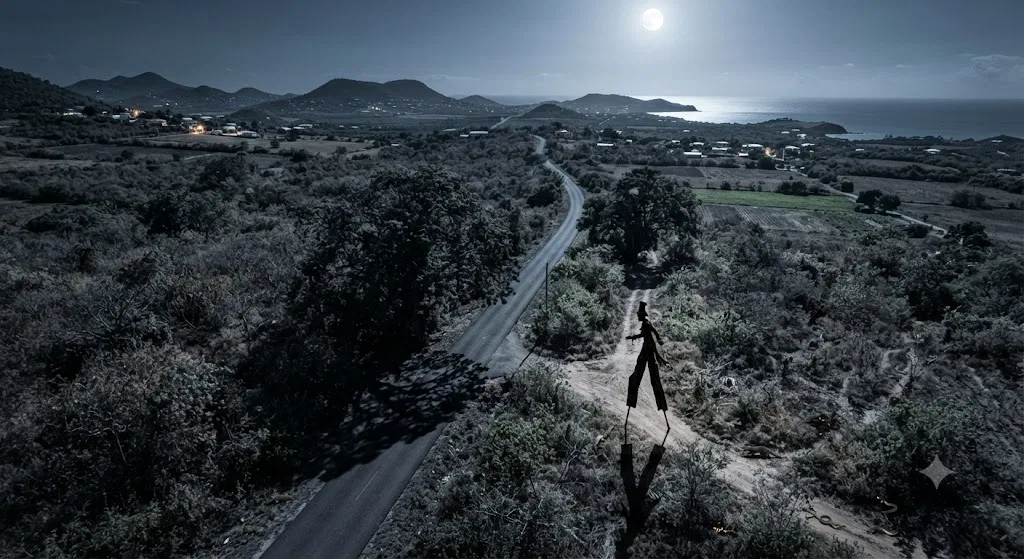
The most specific academic pointer is M. A. Olatunji’s article on a “Third Jumbie Aesthetic in Antigua and Barbuda”, which states that, according to Antigua’s folklore, jumbies “reside in trees for the most part” and can move about at will by day or night.[JSTOR]jstor.orgOpen source on jstor.org. That detail is important because it gives the Antiguan jumbie a local habitat. The frightening place is not necessarily a castle, a lake, or a cave; it may be a tree, a roadside, a yard, a shadowed public space, or somewhere ordinary that becomes uncanny after dark.
Local literary evidence points the same way. Antiguan writer Joanne C. Hillhouse’s short story “Papa Jumbie” is introduced by Akashic Books as a piece in which “a jumbie surfaces in Antiguan vernacular”, and the story places jumbie belief in the texture of everyday Antiguan speech and public memory.[Akashic Books]akashicbooks.comAkashic Books"Papa Jumbie" by Joanne C. HillhouseAkashic Books"Papa Jumbie" by Joanne C. Hillhouse The story is fiction, not a sighting report, but fiction is valuable here because it shows how the jumbie functions culturally: as a voice, a fear, a memory, and a way of making the dead feel close.
The jumbie also appears in Antiguan cultural commentary through calypso. The Jhohadli blog, run by Antiguan and Barbudan writer Joanne C. Hillhouse, discusses King Obstinate’s “Jumbie” and places it within Antigua and Barbuda’s calypso tradition.[jhohadli]jhohadli.comOpen source on jhohadli.com. That matters for a cryptid-focused reader because monster lore often survives not in formal “case files”, but in songs, jokes, children’s warnings, festival costumes and repeated phrases.
Moko jumbie: from frightening spirit to festival figure
The moko jumbie is one of the clearest examples of how a frightening or supernatural figure can become public performance. Today, moko jumbies are usually understood as stilt walkers: tall, brightly dressed carnival figures who tower over spectators. But the name still carries the jumbie root, and older memories connect their height with spiritual watching, protection and fear.
A cultural history account of Antigua between 1948 and 1951 recalls mocko-jumbies dancing down High Street on six- to seven-foot stilts and being tall enough to look into second-storey windows. The writer remembers hiding under the bed when they passed, and explains that folklore associated the original mocko-jumbies with African spirits summoned as village guardians.[The Lure]lure.asklioness.comdancing with the dead no 4 antigua nodancing with the dead no 4 antigua no
The Government-linked culture page found in search results describes the moko jumbie as a stilt walker introduced into Antiguan culture by Oscar Mason a few decades ago and later made a regular carnival feature.[Cpoise]cpoise.gov.agCpoise Moko Jumbie TodayCpoise Moko Jumbie Today That is a useful distinction: the modern Antiguan moko jumbie is not an alleged unknown animal, but a performed supernatural figure. It belongs in a cryptid-country page because it shows how “monster” imagery in Antigua and Barbuda often moves from fear into spectacle.
This is a pattern seen across the Caribbean. Jumbies can be scary, protective, comic, ancestral or theatrical depending on the setting. In Antigua and Barbuda, that flexibility matters more than any one fixed creature description.
Obeah, fear and the law around hidden forces
Creature folklore in Antigua and Barbuda also overlaps with Obeah, though the two should not be treated as identical. Obeah is a broad Caribbean category involving spiritual power, healing, protection, harm, spells and occult practice. It has long been demonised, criminalised and misunderstood through colonial law and Christian suspicion.
The Laws of Antigua and Barbuda still include an Obeah Act, whose definition includes witchcraft and “working or pretending to work by spells” or professed occult power.[Laws AG]laws.gov.agOpen source on laws.gov.ag. Historical research on Caribbean Obeah laws notes that Antigua was among the early places to amend vagrancy law against Obeah in the post-emancipation period, and that Antigua and Barbuda’s Obeah Act dates to 1904.[Cambridge University Press & Assessment]cambridge.orgUniversity Press & Assessment4University Press & Assessment4
For a mystery-creature page, the significance is not that Obeah “creates monsters”. It is that a culture with strong traditions of unseen forces, protective charms, night warnings and spiritual danger can give ordinary animal encounters a supernatural frame. A strange cry outside, a shadow in a tree, a sick animal, or a frightening night walk may be remembered less as zoology and more as a sign of hidden power.
That is why Antigua and Barbuda’s creature lore should be handled carefully. Some stories are playful. Some are religious or spiritual. Some come from colonial attempts to police African-derived traditions. Treating all of them as “cryptids” would flatten the history.
The Antiguan racer: the real snake that almost became a ghost
The most remarkable animal story in Antigua and Barbuda is not a cryptid, but it has exactly the kind of ingredients that often feed cryptid legend: fear, rarity, mistaken belief, disappearance, rediscovery and public re-education.
The Antiguan racer is a harmless snake found only in Antigua and Barbuda’s island system. Fauna & Flora states that it was declared extinct twice, including in the 1930s, before surviving animals were found on Great Bird Island. In 1995, only about 50 individuals remained; conservation work has since raised the wild population to more than 1,100 across four sites.[Fauna & Flora]fauna-flora.orgFauna & Flora Antiguan racer snakeFauna & Flora Antiguan racer snake
This is the opposite of a mystery beast being “proved real” after folklore. The racer was always a real animal, but public fear and ecological change helped push it towards disappearance. Mongooses were introduced in the 1890s to control black rats on sugar plantations, but they preyed heavily on native wildlife instead, including Antiguan racers.[Fauna & Flora]fauna-flora.orgFauna & Flora Antiguan racer snakeFauna & Flora Antiguan racer snake Durrell Wildlife Conservation Trust describes the racer as once considered the world’s rarest snake, with numbers plummeting to about 50 in the 1930s and recovery work beginning in 1995.[Durrell Wildlife Conservation Trust]durrell.orgWildlife Conservation Trust Saving the world's rarest snake | DurrellWildlife Conservation Trust Saving the world's rarest snake | Durrell
For readers interested in cryptids, the Antiguan racer offers a useful caution. A snake can become “monstrous” not because it is large or dangerous, but because people fear what they rarely see. Fauna & Flora notes that the species is placid and harmless to humans, with a musky smell as its only defence, and that education campaigns have helped turn it into a national conservation symbol.[Fauna & Flora]fauna-flora.orgFauna & Flora Antiguan racer snakeFauna & Flora Antiguan racer snake
What strange animal sightings are most likely to be
Because Antigua and Barbuda has no strong public archive of repeated unknown-animal flaps, sceptical explanation has to start with the animals that are actually there. The country’s environment includes coral reefs, seagrass beds, beaches, wetlands, offshore cays and dry scrub. Those habitats can produce startling encounters without requiring an undiscovered species.
Several real animals are especially relevant:
Snakes and lizards. The Antiguan racer, ground lizards and other reptiles can look more alarming when half-seen in leaf litter or near rocks. The country has endemic reptiles, and conservation sources emphasise how invasive predators damaged native reptile populations.[Convention on Biological Diversity]cbd.intConvention on Biological Diversity Main DetailsConvention on Biological Diversity Main Details
Mongooses and rats. The small Asian mongoose is not native, but it is now part of the Antiguan and Barbudan animal landscape. The Environmental Awareness Group notes that mongooses were brought from India to the West Indies in the 1800s and have no natural predators in Antigua and Barbuda.[eagantigua.net]eagantigua.netInvasive Alien Species | Environmental Awareness GroupInvasive Alien Species | Environmental Awareness Group A mongoose seen quickly at night, especially by a visitor unfamiliar with the animal, could easily become a “what was that?” story.
Bats. Bat-filled caves appear in local legend material, including a Government culture-page search result that mentions a cave said to contain thousands of bats.[Cpoise]cpoise.gov.agCpoise Legends ArchivesCpoise Legends Archives Bats are classic folklore amplifiers: they are real, nocturnal, fast-moving and easy to turn into a supernatural sign.
Sea turtles and marine animals. Antigua and Barbuda’s beaches and waters support endangered sea turtles, including hawksbill and green turtles, and the wider marine environment includes reefs and seagrass habitats.[Convention on Biological Diversity]cbd.intConvention on Biological Diversity Main DetailsConvention on Biological Diversity Main Details A large turtle surfacing at night, a ray, a tarpon, a floating log, or a group of fish breaking the surface could all produce brief “sea monster” impressions.
Lionfish and invasive marine life. The Environmental Awareness Group identifies lionfish as a Caribbean invasive species that breeds quickly and disrupts reef food chains.[eagantigua.net]eagantigua.netInvasive Alien Species | Environmental Awareness GroupInvasive Alien Species | Environmental Awareness Group Lionfish are not cryptids, but their spines and unfamiliar appearance show how real animals can look mythic to non-specialists.
Why there is no strong Antiguan chupacabra tradition
The chupacabra is the most famous modern Caribbean cryptid, but its centre of gravity is Puerto Rico, not Antigua and Barbuda. The classic chupacabra story begins with livestock deaths in Puerto Rico in 1995 and then spreads through Latin America, Mexico and the United States. The strongest sceptical explanation for many later “chupacabra” carcasses is diseased canids, especially coyotes or dogs with mange.[Wikipedia]WikipediaOpen source on wikipedia.org.
That matters because it is tempting to place every Caribbean island inside the chupacabra map. Antigua and Barbuda belongs geographically to the wider Caribbean, but current evidence does not support treating the chupacabra as a major Antiguan or Barbudan tradition. There may be imported awareness of the legend through media, the internet and regional conversation, but that is not the same as a local sighting history.
The better comparison is thematic. Chupacabra stories often begin with dead livestock, fear of an unknown predator, rumours of blood-draining, and media amplification. Antigua and Barbuda’s better-documented uncanny material works differently: it is rooted in jumbies, Obeah, oral storytelling, carnival figures and encounters with real island animals.
Where reports and stories cluster
The available evidence points less to a map of monster sightings and more to a map of storytelling environments.
One cluster is trees, yards and night roads, where jumbie stories gain atmosphere. Olatunji’s note that Antiguan jumbies are often associated with trees gives this tradition a strong landscape anchor.[JSTOR]jstor.orgOpen source on jstor.org.
Another cluster is public performance space, especially carnival routes and streets where moko jumbies appear. The remembered image of stilt walkers moving down High Street and peering into upper windows shows how a spirit figure can become a moving, public spectacle.[The Lure]lure.asklioness.comdancing with the dead no 4 antigua nodancing with the dead no 4 antigua no
A third cluster is offshore islands and conservation areas, not because monsters are reported there, but because rare animals and ecological surprises live there. Great Bird Island, Rabbit Island, Green Island and York Island are important to the Antiguan racer recovery story.[Fauna & Flora]fauna-flora.orgFauna & Flora Antiguan racer snakeFauna & Flora Antiguan racer snake For a mystery-animal reader, these are the closest Antigua and Barbuda comes to a genuine “hidden creature” setting: not a monster lair, but a refuge where an animal thought nearly gone survived.
A fourth cluster is caves, ruins and older colonial landscapes. Government culture-page search results mention local legends involving a cave full of bats, while plantation history and post-emancipation law provide the background for Obeah anxiety and jumbie memory.[Cpoise]cpoise.gov.agCpoise Legends ArchivesCpoise Legends Archives These are the places where folklore, history and environmental texture most naturally meet.
The changing story around Antigua and Barbuda’s cryptid traditions
Antigua and Barbuda’s creature tradition seems to have moved through four broad stages.
First came oral folklore, shaped by African, Indigenous, European and wider Caribbean influences. The jumbie belongs here: not as a fixed species, but as a flexible supernatural presence. Caribbean folklore explainers commonly place jumbies alongside Anansi and other figures carried, reshaped and localised through slavery, migration and island life.[Caribbean Authors]caribbeanauthors.wordpress.comCaribbean Authors Anansi and JumbieCaribbean Authors Anansi and Jumbie
Second came colonial control and suspicion, especially around Obeah. Laws did not merely record belief; they shaped how belief could be spoken about. By defining Obeah through witchcraft, spells, fraud and occult practice, colonial and postcolonial legal language helped frame African-derived spiritual traditions as dangerous or criminal.[Laws AG]laws.gov.agOpen source on laws.gov.ag.
Third came performance and popular culture. Moko jumbies entered carnival space. Jumbies appeared in calypso, children’s stories, fiction and local humour. The frightening figure did not disappear; it became something that could be danced, sung, staged and joked about.[jhohadli.com]jhohadli.comOpen source on jhohadli.com.
Fourth came conservation re-framing. The Antiguan racer shows how a feared animal can become a national point of pride when people understand its rarity and harmlessness. Fauna & Flora notes that education campaigns have helped place the racer in the national environmental curriculum.[Fauna & Flora]fauna-flora.orgFauna & Flora Antiguan racer snakeFauna & Flora Antiguan racer snake That is one of the most interesting modern turns in the country’s creature history: the “scary snake” becomes a symbol worth protecting.
What evidence would change the assessment
At present, Antigua and Barbuda’s cryptid record is thin if “cryptid” means a repeatedly sighted, allegedly unknown animal. There is no strong source trail for a named lake monster, giant ape, surviving prehistoric beast, phantom big cat, or national sea-serpent case. The evidence is stronger for folklore than for zoological mystery.
A more cryptid-like assessment would require one of three things: repeated independent eyewitness accounts of the same unusual animal; local newspaper archives documenting a sustained flap; or physical evidence such as photographs, carcasses, tracks, DNA samples or expert-reviewed remains. Without that, the honest conclusion is that Antigua and Barbuda’s creature tradition belongs mainly to folklore, performance and animal misidentification rather than unresolved zoology.
That does not make it less valuable. In fact, it makes the country’s strange-creature landscape more distinctive. Antigua and Barbuda is not a place where one monster dominates the imagination. It is a place where a jumbie may live in a tree, a stilt walker may turn fear into carnival, a cave full of bats may become legend, and a harmless snake once believed almost lost can return from the edge of extinction.
Amazon book picks
Further Reading
Books and field guides related to Where Are Antigua's Mystery Creatures?. Use these as the next step if you want deeper reading beyond the article.
The Jumbie God's Revenge
Introduces readers to jumbie traditions central to Caribbean creature lore.
The Mythical Creatures Bible
Offers comparative context for local mystery-creature traditions.
The Element Encyclopedia of Magical Creatures
Provides a broader framework for understanding folklore creatures.
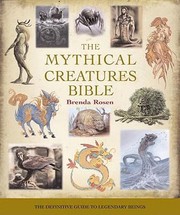
The Mythical Creatures Bible The Definitive Guide To Legendar...
First published 2009. Subjects: Animals, mythical.
eBay marketplace picks
Marketplace Samples
Live-tested eBay searches with available results related to this page.

Endnotes
1.
Source: jstor.org
Link:https://www.jstor.org/stable/26758902
2.
Source: jhohadli.com
Link:https://jhohadli.com/tag/caribbean-folklore/
3.
Source: cambridge.org
Title: University Press & Assessment4
Link:https://www.cambridge.org/core/books/cultural-politics-of-obeah/obeah-and-its-meanings-in-the-postemancipation-era/6A7F011F3389E7AB4E0211657CE0545C
4.
Source: jstor.org
Link:https://www.jstor.org/stable/26855622
5.
Source: eagantigua.net
Title: Invasive Alien Species | Environmental Awareness Group
Link:https://eagantigua.net/invasive-alien-species/
6.
Source: durrell.org
Title: Wildlife Conservation Trust Saving the world’s rarest snake | Durrell
Link:https://www.durrell.org/news/saving-the-worlds-rarest-snake/
7.
Source: Wikipedia
Link:https://en.wikipedia.org/wiki/Chupacabra
8.
Source: Wikipedia
Link:https://en.wikipedia.org/wiki/Jumbee
9.
Source: Wikipedia
Title: List of cryptids
Link:https://en.wikipedia.org/wiki/List_of_cryptids
10.
Source: Wikipedia
Title: Antiguan racer
Link:https://en.wikipedia.org/wiki/Antiguan_racer
11.
Source: Wikipedia
Title: Folklore of Antigua and Barbuda
Link:https://en.wikipedia.org/wiki/Folklore_of_Antigua_and_Barbuda
12.
Source: Wikipedia
Link:https://en.wikipedia.org/wiki/Obeah
13.
Source: Wikipedia
Link:https://en.wikipedia.org/wiki/Anansi
14.
Source: cbd.int
Title: Convention on Biological Diversity Main Details
Link:https://www.cbd.int/countries/profile/?country=ag
15.
Source: akashicbooks.com
Title: Akashic Books”Papa Jumbie” by Joanne C. Hillhouse
Link:https://www.akashicbooks.com/papa-jumbie-by-joanne-c-hillhouse/
16.
Source: lure.asklioness.com
Title: dancing with the dead no 4 antigua no 1 1948 1951
Link:https://lure.asklioness.com/2020/12/17/dancing-with-the-dead-no-4-antigua-no-1-1948-1951/
17.
Source: cpoise.gov.ag
Title: Cpoise Moko Jumbie Today
Link:https://cpoise.gov.ag/2022/10/18/moko-jumbie/
18.
Source: laws.gov.ag
Link:https://laws.gov.ag/wp-content/uploads/2018/08/cap-298.pdf
19.
Source: fauna-flora.org
Title: Fauna & Flora Antiguan racer snake
Link:https://www.fauna-flora.org/species/antiguan-racer/
20.
Source: cpoise.gov.ag
Title: Cpoise Legends Archives
Link:https://cpoise.gov.ag/tag/legends/
21.
Source: caribbeanauthors.wordpress.com
Title: Caribbean Authors Anansi and Jumbie
Link:https://caribbeanauthors.wordpress.com/2022/10/24/anansi-and-jumbie/
22.
Source: youtube.com
Title: King Obstinate
Link:https://www.youtube.com/watch?v=ZNLpMl5rHmE
23.
Source: caribbeanauthors.wordpress.com
Title: a little about caribbean folklore
Link:https://caribbeanauthors.wordpress.com/2021/10/01/a-little-about-caribbean-folklore/
24.
Source: thecaribbeanpen.wordpress.com
Title: what is a jumbee or a duppy
Link:https://thecaribbeanpen.wordpress.com/mythology-2/what-is-a-jumbee-or-a-duppy/
25.
Source: wadadlipen.wordpress.com
Title: comjumbie stories
Link:https://wadadlipen.wordpress.com/tag/jumbie-stories/
26.
Source: antiguastories.wordpress.com
Link:https://antiguastories.wordpress.com/folklore/
27.
Source: caribbeanauthors.wordpress.com
Title: moko jumbie and midnight robber
Link:https://caribbeanauthors.wordpress.com/2023/10/08/moko-jumbie-and-midnight-robber/
28.
Source: wadadlipen.wordpress.com
Title: antiguan and barbudan cultural icon paul king obstinate richards
Link:https://wadadlipen.wordpress.com/2012/11/12/antiguan-and-barbudan-cultural-icon-paul-king-obstinate-richards/
29.
Source: cbd.int
Link:https://www.cbd.int/doc/world/ag/ag-nr-04-en.pdf
30.
Source: laws.moj.gov.jm
Link:https://laws.moj.gov.jm/library/statute/the-obeah-act/download
31.
Source: ebsco.com
Link:https://www.ebsco.com/research-starters/literature-and-writing/anansi
32.
Source: jeromehandler.com
Link:https://jeromehandler.com/wp-content/uploads/Obeah_healing_Bilby-04.pdf
33.
Source: cpoise.gov.ag
Title: ag Culture Archives
Link:https://cpoise.gov.ag/category/culture/page/5/
34.
Source: laws.gov.ag
Link:https://laws.gov.ag/
Additional References
35.
Source: youtube.com
Title: moko jumbie stilt dancing kids in brooklyn moko jumbie
Link:https://www.youtube.com/watch?v=FKlo0YcXAC8
Source snippet
Moko Jumbie stilt dancing Caribbean Carnival performance Caribbean stilt dancers, Moko Jumbi johninpgh...
36.
Source: youtube.com
Title: Caribbean stilt dancers, Moko Jumbi
Link:https://www.youtube.com/watch?v=IOaAxp1ZYPk
Source snippet
Mocko Jumbie, Moko Jumbie, Carnival Stilt Walkers, Caribbean Carnival By Infinity Showgirls...
37.
Source: youtube.com
Link:https://www.youtube.com/watch?v=bzhFTXMEdzc
Source snippet
Kaisokah Moko Jumbies USA stilt dancing...
38.
Source: researchgate.net
Link:https://www.researchgate.net/publication/227726363Five_years_of_conserving_the%27world%27s_rarest_snake%27_the_Antiguan_racer_Alsophis_antiguae
39.
Source: researchgate.net
Link:https://www.researchgate.net/publication/261107959_An_introduction_to_the_herpetofauna_of_Antigua_Barbuda_and_Redonda_with_some_conservation_recommendations
40.
Source: history.co.uk
Link:https://www.history.co.uk/articles/strange-sea-serpent-sightings-from-history
41.
Source: biodb.com
Link:https://biodb.com/region/antigua-barbuda/
42.
Source: facebook.com
Link:https://www.facebook.com/MAFBAanu/posts/a-rare-encounter-with-nature-a-government-delegation-visits-the-home-of-the-anti/1176256957854649/
43.
Source: eowilsonfoundation.org
Link:https://eowilsonfoundation.org/national-report-card/antigua-and-barbuda/
44.
Source: river-stories.com
Link:https://river-stories.com/caribbean-folklore-folktales-fables-ananse/
Topic Tree
Follow this branch
Related pages 192
- Maldives Monsters
- Malta Monsters
- Qatar Monsters
- Argentina Monsters
- Austria Monsters
- +187 more in sidebar