Strange Creatures of Congo's Rivers and Swamps
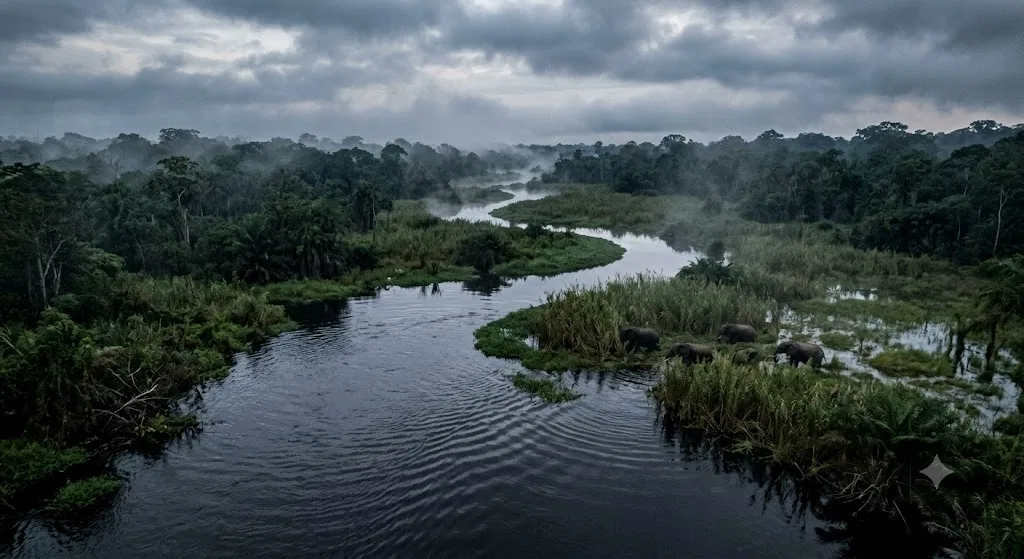
Congo’s best-known monster tradition is not a confirmed animal but a cluster of river-and-swamp stories centred on the creature usually called mokele-mbembe: a large, elusive being said to live around the Congo Basin’s waterways, especially the Likouala swamps and Lac Télé in the Republic of Congo.
Page outline Jump by section
Introduction
The evidence for a living dinosaur or unknown giant reptile is weak: no accepted body, bone, clear photograph, DNA sample, or reliable film has been produced after decades of searching. But the story has endured because the setting is genuinely wild, the animals already present are impressive, and the legend keeps adapting as people meet elephants, hippos, crocodiles, gorillas and other large forest animals in changing habitats.[Live Science]livescience.comLive Science Mokele-Mbembe: The Search for a Living Dinosaur | Live ScienceLive Science Mokele-Mbembe: The Search for a Living Dinosaur | Live Science
The creature most people ask about: mokele-mbembe
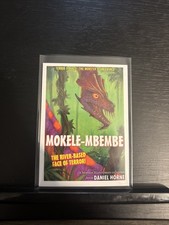
Mokele-mbembe is usually described in popular accounts as an elephant- or hippo-sized creature with a long neck, long tail, smooth skin, and a semi-aquatic life in rivers, swamps, or lakes. In Western retellings it is often made to look like a small sauropod dinosaur, the long-necked group that includes Apatosaurus and related animals. That dinosaur image, however, is not neutral folklore. It grew strongly in the 20th century, after dinosaur discoveries and “lost world” adventure fiction had already made surviving prehistoric beasts a thrilling idea for European and American readers.[Live Science]livescience.comLive Science Mokele-Mbembe: The Search for a Living Dinosaur | Live ScienceLive Science Mokele-Mbembe: The Search for a Living Dinosaur | Live Science
The name is commonly translated as “one who stops the flow of rivers”, and reports are especially associated with northern Republic of Congo, where the Likouala-aux-Herbes river system and Lac Télé provide exactly the kind of remote, wet, forested setting in which a hidden animal story can thrive. The Lac Télé Community Reserve is not just a monster-map location; it is a real protected landscape of swamp forest, rivers, flooded grasslands and peatlands, with major populations of gorillas, chimpanzees, forest elephants, crocodiles, waterbirds and fish.[WCS Congo]congo.wcs.orgWCS Congo > Wild Places > Lac Télé Community Reserve…
What makes mokele-mbembe unusual among African mystery-beast traditions is the way it has been pulled in two directions. Locally, it can be treated as a forest or water being embedded in place, memory and warning. Internationally, it has often been marketed as “Congo’s living dinosaur”, a framing that says as much about outside expectations as it does about Congolese tradition.
Why Lac Télé became the monster’s home ground
Lac Télé is a strong setting for a legend because it feels almost designed for mystery. It lies in the northern Republic of Congo, within a huge wetland system between major river corridors, and is surrounded by swamp forest that is hard to cross, seasonally flooded, and ecologically rich. The Key Biodiversity Areas factsheet describes the Lac Télé Community Reserve as a terrestrial and freshwater site in Likouala, covering about 4,511 square kilometres, with swamp forest, seasonally flooded grasslands, floating prairies, rivers and permanent freshwater lake habitat.[Key Biodiversity Areas]keybiodiversityareas.orgOpen source on keybiodiversityareas.org.
This does not make a dinosaur plausible, but it does explain why the story stuck. The region contains large animals that can be heard, glimpsed briefly, or partly obscured by vegetation and water. It also contains local communities whose daily lives are tied to fishing, hunting, rivers, forest paths and seasonal change. A sudden sound in dense forest, a wake crossing a lake, a large animal moving through reeds, or a half-seen shape at dusk can become part of a story world far more easily here than in an open landscape.
There is also a conservation irony. The same remoteness that made Lac Télé attractive to cryptozoologists is what makes it valuable to biologists. WCS describes the reserve as Congo’s only community-driven conservation area, home to about 20,000 people and to major biodiversity, including apes, crocodiles and water birds. It also identifies habitat loss, unsustainable resource use and poaching as challenges for the area.[WCS Congo]congo.wcs.orgWCS Congo > Wild Places > Lac Télé Community Reserve…
How the “living dinosaur” version took shape
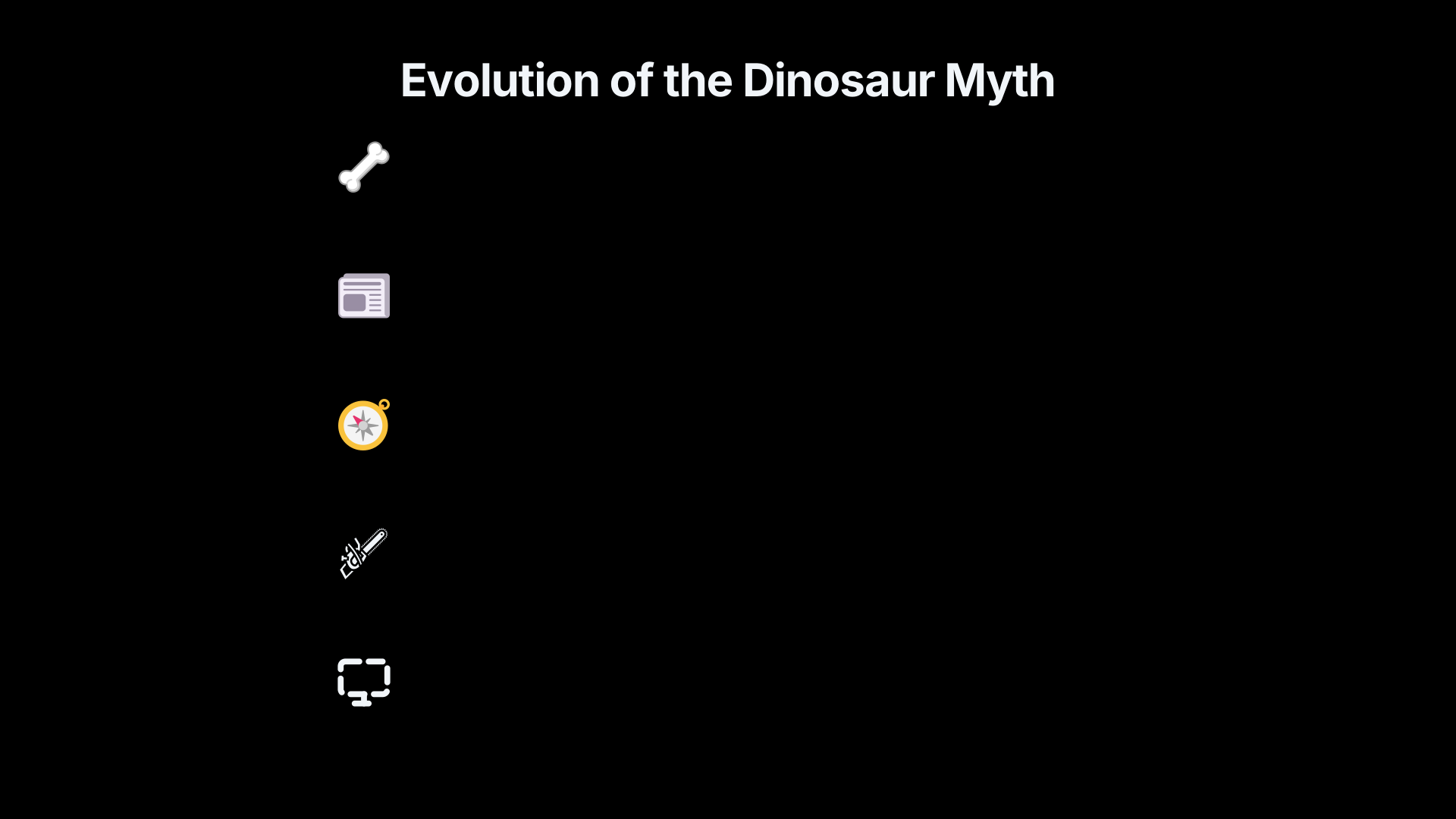
The modern dinosaur-shaped mokele-mbembe story is best understood as a layered tradition, not a single clean eyewitness record. Rumours of large unknown beasts in Central Africa circulated long before the 20th century, but the specific idea of a surviving sauropod gained force after dinosaur fossils and dinosaur art had already entered popular culture. Live Science, summarising Daniel Loxton and Donald Prothero’s sceptical history, notes that the dinosaur-like version developed after 19th-century fossil discoveries rather than emerging fully formed from older testimony.[Live Science]livescience.comLive Science Mokele-Mbembe: The Search for a Living Dinosaur | Live ScienceLive Science Mokele-Mbembe: The Search for a Living Dinosaur | Live Science
A key early booster was Carl Hagenbeck, the animal dealer and showman, whose book Beasts and Men linked African monster rumours to the possibility of surviving long-necked dinosaurs. The University of Chicago Magazine notes that Hagenbeck wrote of a “half elephant, half dragon” creature and suggested it might be something like a brontosaurus, a brief but influential leap that helped turn scattered monster rumours into a modern cryptozoological quest.[The University of Chicago Magazine]mag.uchicago.eduThe University of Chicago Magazine Roy Mackal’s wild speculationThe University of Chicago Magazine Roy Mackal’s wild speculation
The story then gained new energy in the early 1980s through Roy Mackal, a University of Chicago biochemist and committed cryptozoologist. Mackal and James Powell organised expeditions to the Congo Basin in 1980 and 1981, interviewing local people and looking around the Likouala and Lake Tele regions. They did not bring back accepted physical evidence, but Mackal’s book and public profile helped make mokele-mbembe one of the world’s most famous “living dinosaur” claims.[The University of Chicago Magazine]mag.uchicago.eduThe University of Chicago Magazine Roy Mackal’s wild speculationThe University of Chicago Magazine Roy Mackal’s wild speculation
That history matters because it changes how the evidence should be read. A witness saying “large animal in the water” is one thing. A later audience turning that into “sauropod dinosaur” is another. The popular image of mokele-mbembe was shaped by explorers, missionaries, journalists, television producers, cryptozoologists and readers who were already primed to imagine Africa as a place where prehistoric creatures might have survived.
What evidence has actually been offered?
The mokele-mbembe case rests mainly on stories, interviews, claimed tracks, ambiguous sightings and expedition narratives. Those are interesting cultural materials, but they are not the same as zoological evidence. After many searches, there is still no accepted specimen, skeleton, tooth, skin sample, clear photograph, reliable video or environmental DNA result proving the existence of a large unknown Congo swamp animal.[Live Science]livescience.comLive Science Mokele-Mbembe: The Search for a Living Dinosaur | Live ScienceLive Science Mokele-Mbembe: The Search for a Living Dinosaur | Live Science
The most frequently discussed evidence falls into a few categories:
- Eyewitness accounts: These vary in detail, location and interpretation. Some describe a long-necked water animal; others sound more like a rhinoceros, hippo, elephant, crocodile, snake or spiritual being.
- Tracks and traces: Claimed footprints have been reported, but they have not produced a secure scientific identification.
- Expedition testimony: Mackal and others collected stories, but even sympathetic accounts concede that the searches did not produce direct proof.
- Ambiguous film or water movement: A Japanese film crew’s 1992 aerial footage has sometimes been called strong evidence, but sceptics have argued that the shape could have been a crocodile, elephant, canoe, or another ordinary source of disturbance.[Live Science]livescience.comLive Science Mokele-Mbembe: The Search for a Living Dinosaur | Live ScienceLive Science Mokele-Mbembe: The Search for a Living Dinosaur | Live Science
The weakness of the evidence does not mean every local story is a hoax. It means the claim “there is a surviving sauropod in Congo” has not met the standard required for a major biological discovery. Large animals leave more than rumours: bodies, bones, dung, feeding signs, regular tracks, genetic traces and repeatable observations. A breeding population of huge animals would be especially hard to hide indefinitely, even in difficult terrain.
The most likely explanations
The best explanations are not mutually exclusive. Mokele-mbembe may be a moving blend of folklore, misidentified wildlife, memory, translation, tourist expectation and cryptozoological editing.
Forest elephants and hippos are obvious candidates for some encounters. A conservationist quoted by National Geographic recalled once fearing she had encountered mokele-mbembe in Odzala-Kokoua National Park, only to realise it was a large forest elephant. She added that elephants or hippos can be easy to misread in the forest, especially for someone startled or inexperienced.[National Geographic]nationalgeographic.comOpen source on nationalgeographic.com.
Crocodiles and large reptiles can account for water-based impressions. The Lac Télé region includes crocodiles, and the KBA factsheet notes very high density of dwarf crocodiles in the reserve. A crocodile seen partly submerged, crossing water or moving through reeds can produce a misleading impression, especially when filtered through an existing monster story.[Key Biodiversity Areas]keybiodiversityareas.orgOpen source on keybiodiversityareas.org.
Rhinoceros memory is often suggested, but with caution. Some sceptical accounts argue that mokele-mbembe may preserve memories or confused reports of rhinoceroses, especially because some descriptions emphasise a large body and a horn or tooth. This is plausible for parts of the wider Central African story-world, but it is not a perfect fit for every report, and rhinoceroses are not a normal modern presence in the Congo Basin swamp setting.
The “dinosaur” shape may be an imported frame. Once explorers, writers and film-makers began asking about a long-necked dinosaur, local answers could be pulled towards that picture. The University of Chicago Magazine’s account of Mackal’s expeditions includes a striking warning: some village testimony appears to have been shaped by pressure, expectation or economic incentive, rather than clean, independent observation.[The University of Chicago Magazine]mag.uchicago.eduThe University of Chicago Magazine Roy Mackal’s wild speculationThe University of Chicago Magazine Roy Mackal’s wild speculation

Other Congo mystery beasts: emela-ntouka, nguma-monene and the wider swamp bestiary
Mokele-mbembe is the headline creature, but it is not the only mystery beast attached to Congo’s swamp-and-river imagination. Cryptozoology literature also mentions emela-ntouka, usually glossed as an “elephant killer”, and nguma-monene, often described as a large serpentine or lizard-like creature. These claims are far thinner than the mokele-mbembe tradition and are best treated as secondary branches of the same wider Central African monster complex.
Emela-ntouka is usually pictured as a large, aggressive, horned animal of the Likouala swamps or neighbouring regions. In some cryptozoological retellings it becomes a surviving ceratopsian dinosaur; in more cautious readings it sounds closer to a rhinoceros-like memory, a distorted account of known megafauna, or a name applied inconsistently to more than one feared animal. The important point for readers is that the creature’s “dinosaur” identity is an interpretation, not a demonstrated fact.
Nguma-monene is typically described in modern cryptid catalogues as a long, low, reptilian or serpentine animal associated with rivers and remote forest. It has even less strong documentation than mokele-mbembe. Its value on a Congo country page is not as evidence for a hidden species, but as a sign that monster reports in the region often cluster around the same ecological ingredients: water, swamp forest, crocodilian shapes, snakes, dangerous river crossings and partly glimpsed movement.
Together, these creatures show how Congo’s cryptid tradition works less like a neat field guide and more like a shifting map of feared places and ambiguous animals. The same environment can produce a long-necked lake beast, a horned swamp animal, a giant river reptile and a spirit-like forest presence, depending on who is telling the story and what outside listener is ready to hear.
Why the legend keeps changing
A strange recent twist is that the mokele-mbembe story may be becoming more active, not less, in some places. National Geographic reported in 2025 that conservation workers were hearing more “dinosaur” claims as deforestation and settlement pushed people and wildlife into closer contact. In one account from northern Congo, gorillas displaced by nearby clearing raided fields at night, and a teenager who heard their cries interpreted the sound as mokele-mbembe roaring.[National Geographic]nationalgeographic.comOpen source on nationalgeographic.com.
That does not prove a monster. It shows how folklore can respond to ecological stress. When forests shrink, animals appear in places people do not expect. When roads, farms, logging, hunting and fire alter old patterns of movement, encounters become more frequent and more emotionally charged. A legend can become a language for talking about those changes.
This is one reason the Congo monster tradition should not be dismissed as mere nonsense. It may not reveal a surviving dinosaur, but it can reveal how people experience an environment where the boundary between village, river, field and forest is constantly negotiated. A frightening sound in the night is not just a zoological puzzle. It can be a warning about crops, danger, habitat loss, memory and respect for places where people do not feel fully in control.
Congo’s real “monsters” are already remarkable
The strongest evidence from the Lac Télé region points not to dinosaurs, but to living animals and ecosystems that are extraordinary without needing embellishment. The reserve contains one of the world’s highest known densities of gorillas, large populations of chimpanzees, critically endangered African forest elephants, pangolins, mangabeys, parrots, crocodiles, fish and major wetland habitats.[Key Biodiversity Areas]keybiodiversityareas.orgOpen source on keybiodiversityareas.org.
It also sits on globally important tropical peatlands. WCS notes that a 2017 study revealed about 145,500 square kilometres of peatlands in the Congo Basin, presumed to store around 30 billion tonnes of carbon, with Lac Télé containing the largest expanse of peatlands of any protected area in Central Africa.[WCS Congo]congo.wcs.orgWCS Congo > Wild Places > Lac Télé Community Reserve…
For a reader interested in mystery animals, that reality is not a let-down. It is the better story. Congo’s forests contain animals that are rare, powerful, difficult to observe and sometimes only recently well surveyed. They also contain communities whose knowledge of animals, waterways and seasonal rhythms is easy for outsiders to romanticise or misunderstand. The monster legend draws attention, but the known biodiversity is where the real conservation stakes lie.
How to read Congo cryptid claims responsibly
A good Congo cryptid page should keep two ideas in view at once. First, mokele-mbembe is a fascinating legend with deep roots in place, repeated retellings, and a major afterlife in books, television, journalism and online cryptozoology. Second, the claim that it is a surviving dinosaur is not supported by strong evidence.
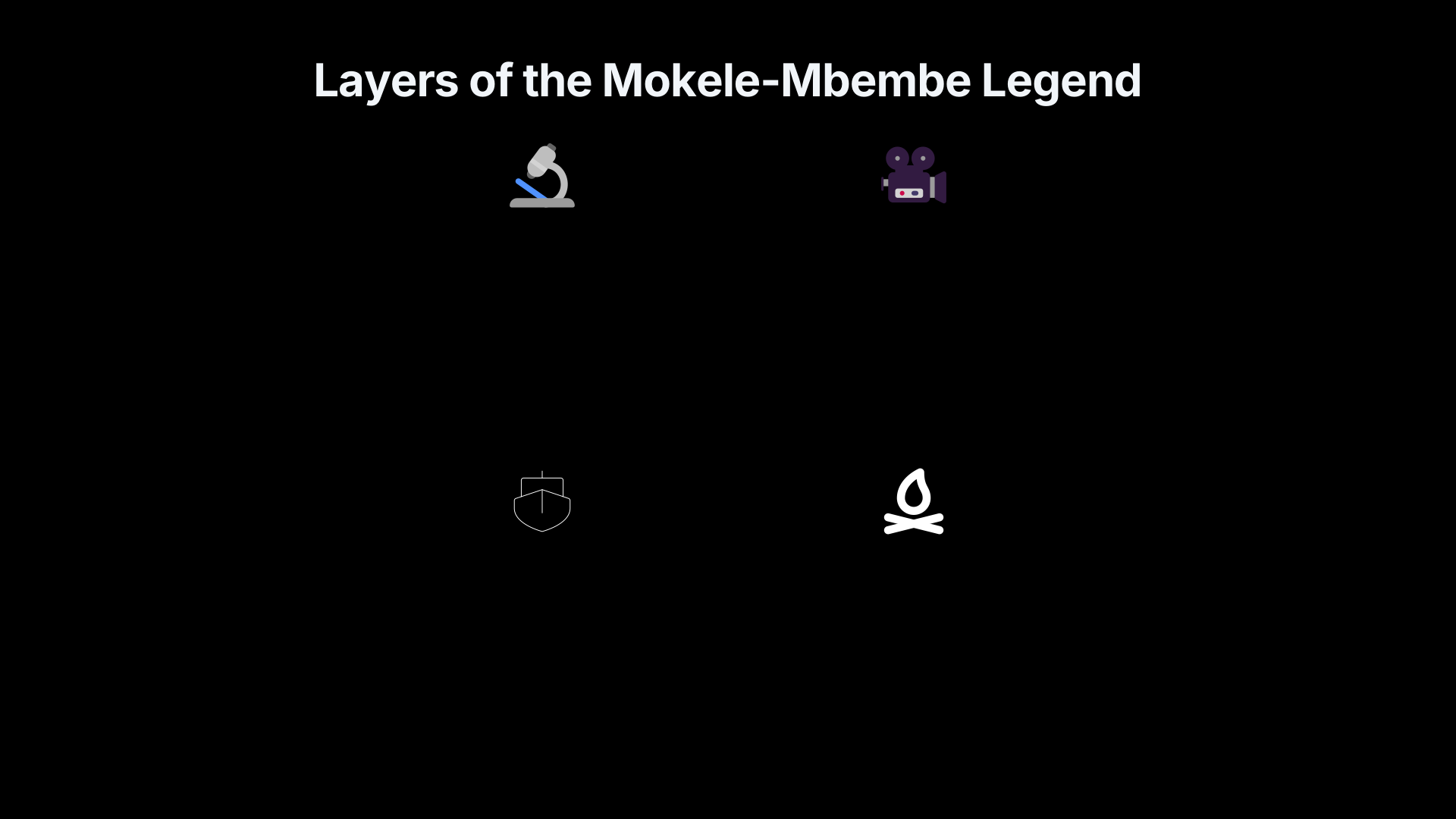
The most useful test is to separate four layers:
- Folklore: local stories, place-based warnings, spiritual or cultural meanings.
- Witness claim: a person says they saw, heard or found something unusual.
- Media interpretation: outsiders repackage the claim as a dinosaur, dragon, monster or tourist mystery.
- Biological evidence: physical, repeatable, testable proof that an unknown species exists.
Mokele-mbembe is strong in the first three layers and weak in the fourth. That makes it a classic cryptid: not a confirmed animal, but a story that tells us a great deal about landscape, imagination, scientific desire and the politics of who gets believed.
The lasting afterlife of Congo’s swamp monster
Mokele-mbembe has outgrown its original setting. It has appeared in documentaries, monster books, children’s fiction, video games, comics and “living dinosaur” debates. It is often described as Congo’s answer to the Loch Ness Monster: a creature whose fame depends less on proof than on the irresistible thought that something enormous might still be hidden in dark water.[Live Science]livescience.comLive Science Mokele-Mbembe: The Search for a Living Dinosaur | Live ScienceLive Science Mokele-Mbembe: The Search for a Living Dinosaur | Live Science
That comparison is useful, but incomplete. Loch Ness is a single lake with a tourist infrastructure built around a modern media monster. Congo’s monster tradition is spread through rivers, swamp forests, Indigenous and local knowledge, colonial exploration, missionary records, conservation work and global fantasies about the “lost world”. It is less a single beast than a conversation between many ways of seeing the forest.
The fairest conclusion is curious but sceptical. Congo’s cryptid tradition deserves attention because it is vivid, persistent and tied to a real landscape of great biological richness. But mokele-mbembe, emela-ntouka and related beasts should be presented as legends, claims and interpretations, not as proven survivors from the age of dinosaurs. The mystery that remains is not “why has science ignored a dinosaur?” but “why has this particular landscape generated such durable stories about hidden giants?”
Amazon book picks
Further Reading
Books and field guides related to What Haunts Congo's Rivers and Swamps?. Use these as the next step if you want deeper reading beyond the article.
Hunting Monsters
Covers mystery-animal claims and evaluates evidence in a scientific framework.
The Lost World
Helped popularize the surviving-prehistoric-creature idea that shaped Mokele-Mbembe narratives.
King Leopold's Ghost
Provides broader historical context for how outside explorers viewed Central Africa.
eBay marketplace picks
Marketplace Samples
Live-tested eBay searches with available results related to this page.
Endnotes
1.
Source: congo.wcs.org
Link:https://congo.wcs.org/Wild-Places/Lac-T%C3%A9l%C3%A9-Community-Reserve
Source snippet
WCS Congo > Wild Places > Lac Télé Community Reserve...
2.
Source: congo.wcs.org
Title: Ndoki Likouala Landscape
Link:https://congo.wcs.org/Landscapes/Ndoki-Likouala-Landscape
3.
Source: youtube.com
Title: MOKELE MBEMBE: The Last Living Dinosaur Cryptid | Documentary
Link:https://www.youtube.com/watch?v=N-zq-AgUmEw
Source snippet
Mokele-Mbembe | The Living Dinosaur...
4.
Source: youtube.com
Title: Mokele-Mbembe | The Living Dinosaur
Link:https://www.youtube.com/watch?v=zcSxFeR3Ddk
Source snippet
Two Creatures, One Legend: The Biology of the Mokele Mbembe...
5.
Source: livescience.com
Title: Live Science Mokele-Mbembe: The Search for a Living Dinosaur | Live Science
Link:https://www.livescience.com/38871-mokele-mbembe.html
6.
Source: nationalgeographic.com
Link:https://www.nationalgeographic.com/environment/article/congo-basin-mokele-mbembe-deforestation
7.
Source: mag.uchicago.edu
Title: The University of Chicago Magazine Roy Mackal’s wild speculation
Link:https://mag.uchicago.edu/science-medicine/roy-mackals-wild-speculation
8.
Source: keybiodiversityareas.org
Link:https://www.keybiodiversityareas.org/site/factsheet/24249
9.
Source: cryptidarchives.fandom.com
Title: A Living Dinosaur?
Link:https://cryptidarchives.fandom.com/wiki/A_Living_Dinosaur%3F
10.
Source: nationalgeographic.com
Title: congo basin carbon research climate change
Link:https://www.nationalgeographic.com/environment/article/congo-basin-carbon-research-climate-change
11.
Source: gtecodev.com
Title: Lac Télé COMMUNITY RESERVE
Link:https://www.gtecodev.com/lac-teacuteleacute-community-reserve.html
12.
Source: funkidslive.com
Link:https://www.funkidslive.com/podcast/bust-or-trust/episode/mokele-mbembe-the-dinosaur-in-the-congo/
13.
Source: ambacongo-us.org
Title: congo basin
Link:https://www.ambacongo-us.org/en/about-congo/congo-basin
14.
Source: kids.kiddle.co
Title: Carl Hagenbeck
Link:https://kids.kiddle.co/Carl_Hagenbeck
Additional References
15.
Source: youtube.com
Title: What Is Mokele-Mbembe? The Congo’s Most Mysterious Creature
Link:https://www.youtube.com/watch?v=G-6XbWL97Eg
Source snippet
MOKELE MBEMBE: The Last Living Dinosaur Cryptid | Documentary...
16.
Source: youtube.com
Title: Two Creatures, One Legend: The Biology of the Mokele Mbembe
Link:https://www.youtube.com/watch?v=uYbIP-aNpxY
Source snippet
Living Dinosaurs in the Congo: Mokele Mbembe Part 2...
17.
Source: researchgate.net
Link:https://www.researchgate.net/publication/237465931_A_reconnaissance_survey_in_the_Likouala_Swamps_of_Northern_Congo_and_its_implications_for_conservation
18.
Source: doi.org
Link:https://doi.org/10.7312/columbia/9780231153201.003.0006
19.
Source: reddit.com
Link:https://www.reddit.com/r/Cryptozoology/comments/1c7g9a1/about_the_mokelembembe/
20.
Source: abookofcreatures.com
Link:https://abookofcreatures.com/tag/african-folklore/page/2/
21.
Source: krugerpark.co.za
Link:https://www.krugerpark.co.za/krugerpark-times-e-5-apes-elephants-and-logging-25212.html
22.
Source: newspapers.com
Link:https://www.newspapers.com/article/the-washington-post-brontosaurus-still/21124801/
23.
Source: un.int
Link:https://www.un.int/congo/congo/congo-biodiversity
24.
Source: decadeonrestoration.org
Link:https://www.decadeonrestoration.org/conserving-heart-congo-basin-critical-[lac-tele
Topic Tree
Follow this branch
Related pages 192
- Antigua Cryptids
- Maldives Monsters
- Malta Monsters
- Qatar Monsters
- Argentina Monsters
- +187 more in sidebar