Cryptids of the Stories of Mauritius
Mauritius is not a country with a crowded catalogue of famous cryptids.
Page outline Jump by section
Why Mauritius Has Few “Classic” Cryptids
A reader looking for Mauritian lake monsters, ape-men or phantom big cats will probably be surprised by how thin the record is. That is partly ecological. Mauritius is an isolated volcanic island in the Indian Ocean, and its native land fauna evolved without the large terrestrial mammals that often feed cryptid traditions elsewhere. Government biodiversity material states that the only native mammals are bats, alongside the island’s remaining endemic birds and reptiles; the Convention on Biological Diversity profile likewise stresses the island’s high endemism among plants, non-marine birds, reptiles and bats.[Commerce and Consumer Protection]chm.govmu.orgCommerce and Consumer ProtectionTerrestrial biodiversityThe only native mammals are bats, and 9 remaining endemic bird and 11 remaining e…
That background changes the kinds of mystery animals Mauritius can plausibly produce. There is no native big cat behind a panther flap, no hidden ape population to explain a hairy humanoid tradition, and no deep inland lake famous for a recurring monster. Instead, Mauritian creature stories tend to fall into three more local categories:
- Extinct animals remembered as almost legendary, especially the dodo.
- Human-shaped or shapeshifting figures, often used in cautionary tales or moments of social fear.
- Sea and coast stories, including sea-serpent imagery, mermaid claims and oceanic monster motifs, where the surrounding Indian Ocean supplies the mystery.
This does not make Mauritius less interesting. It makes the evidence more textured. The island’s monster tradition is less about unknown zoology in the strict sense and more about how people explain shocks: extinction, darkness after a cyclone, danger at night, the sea’s unpredictability and the unsettling absence left by animals that are gone.
The Dodo: Real Animal, Extinction Icon, Almost a Cryptid
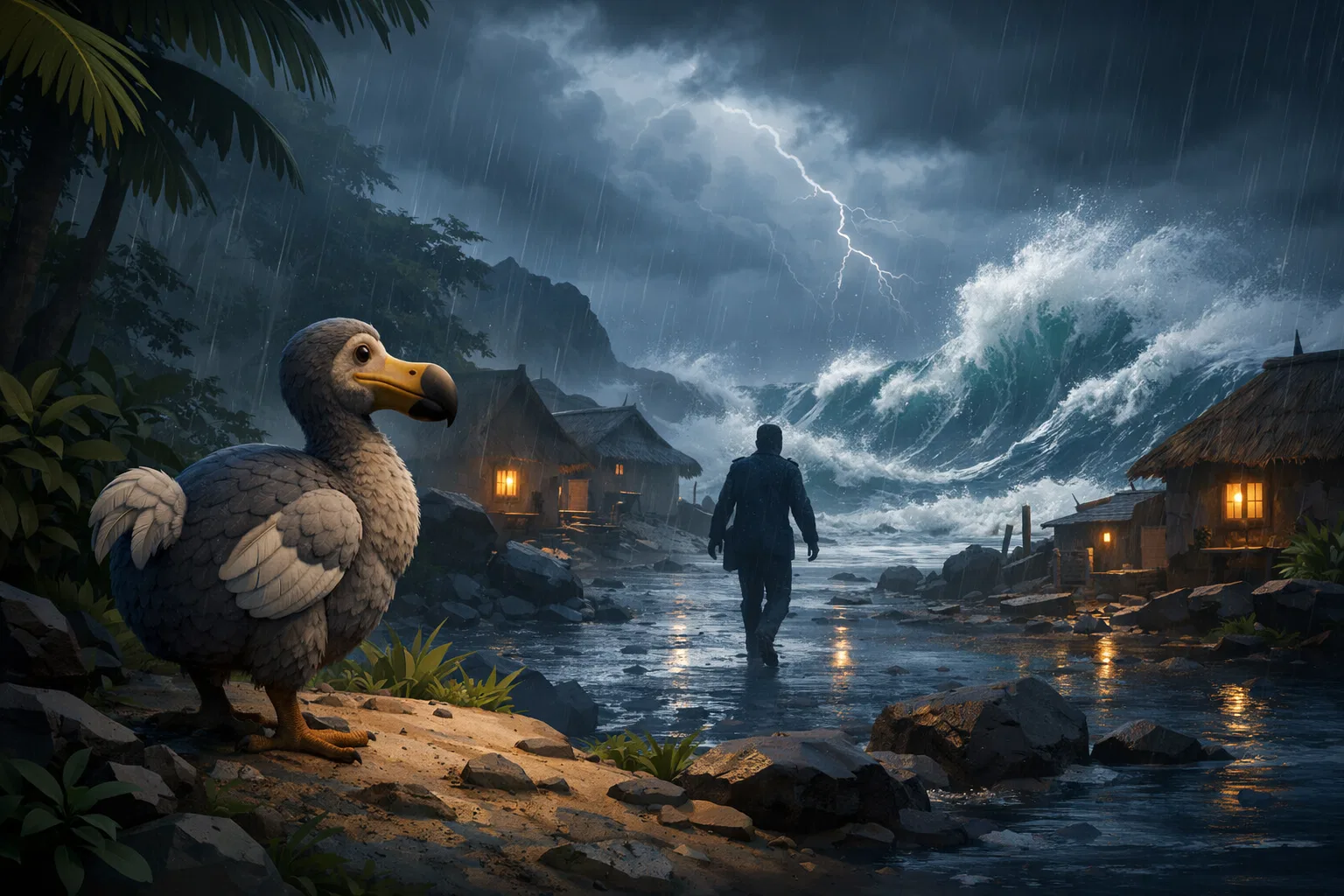
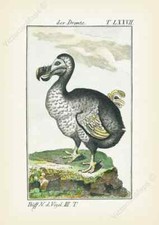
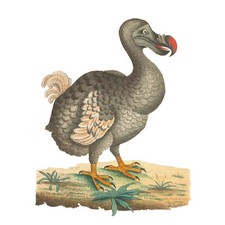
The dodo is the most important creature in any Mauritian mystery-animal history, even though it is not a cryptid in the ordinary sense. It was a real, flightless bird endemic to Mauritius, now scientifically accepted as extinct. The IUCN Red List records the dodo as formerly found in Mauritius and extinct, with human hunting and introduced pigs among the factors linked to its disappearance. The Natural History Museum gives the broad historical arc: Dutch sailors reached Mauritius in 1598, and within less than a century the dodo had vanished, with the last reliable sighting usually placed in 1662 or possibly later.[IUCN Red List]iucnredlist.orgIUCN Red ListRaphus cucullatus, DodoThis species was found in Mauritius, but is now Extinct as a result of hunting by settlers and nest p…
The dodo became cryptid-adjacent because for a time it occupied a strange cultural space between animal, traveller’s tale and museum puzzle. Early European descriptions were inconsistent; some later readers doubted aspects of the bird’s appearance, behaviour or even its reality. That uncertainty only began to resolve in the nineteenth century, when subfossil remains from Mauritius gave naturalists a stronger anatomical basis for reconstruction. Mare aux Songes, a swamp in south-eastern Mauritius, became especially important. A Mauritian environmental report notes that dodo and tortoise bones thousands of years old were found there, while Natural History Museum coverage explains that most complete-looking dodo skeletons in museums are composites assembled from bones of several individuals.[Government of Mauritius - Environment]environment.govmu.orgGovernment of Mauritius - EnvironmentHOLIDAY INN AIRPORT HOTEL Plaine Magnien…July 30, 2012 — Fossils and bones of dodo and tortoises…
That mix of real bones and mythic reputation is what makes the dodo central to Mauritian monster history. It is not an unknown animal waiting in the forest. It is the opposite: a known animal whose disappearance was so complete that it became a symbol of disbelief, loss and reconstruction. When modern writers treat the dodo as a “lost creature”, they are not usually making a serious survival claim; they are responding to the eerie fact that an animal can pass from living presence into legend in just a few generations.
Recent de-extinction projects have given the dodo a new afterlife. Reports in 2025 described genetic-engineering work by Colossal Biosciences aimed at producing dodo-like birds through avian reproductive technologies, while also noting scepticism about whether such animals could truly replicate the extinct bird or its ecological role. That controversy belongs more to conservation science than cryptozoology, but it shows why the dodo still behaves like a Mauritian mystery creature in public imagination: it keeps returning as a question about what counts as real, extinct, restored or merely reconstructed.[The Guardian]theguardian.comColossal’s chief scientist Beth Shapiro and CEO Ben Lamm maintain that the project, while still five to seven years from fruition, is via…
Touni Minwi: The Werewolf Panic After Cyclone Hollanda
The clearest modern Mauritian monster flap is Touni Minwi, remembered as a naked, oil-smeared, werewolf-like night figure that supposedly terrorised parts of the island after Cyclone Hollanda in February 1994. The story is strongly associated with Lallmatie, Flacq, Port Louis and the wider atmosphere of darkness and disruption after the cyclone. L’Express, in a retrospective, describes the figure as a strange half-man, half-beast, said by witnesses to jump from roof to roof, enter houses, frighten residents and sometimes transform into a large black dog before disappearing.[lexpress.mu]lexpress.muil etait une fois touni minwiIl était une fois le… Touni Minwi26 Feb 2023 — Au fur et à mesure que la lumière revenait, les histoires sur le Touni Minwi – ou le loup…
The timing matters. Mauritius Meteorological Services lists Hollanda as an intense cyclone passing very close to Mauritius from 9 to 11 February 1994, with a recorded gust of 216 km/h. ReliefWeb’s UN situation reporting from the time described widespread damage, including major electricity disruption and damage to coastal structures. L’Express links the Touni Minwi panic directly to that aftermath: much of the country was in darkness, rumours spread quickly, and fear became part of nightly life.[intnet.mu]metservice.intnet.muMetservice Mauritius List of Historical CyclonesMetservice Mauritius List of Historical Cyclones
The most useful scholarly treatment is the 2022 Geoforum article “Werewolves and warning signs: Cultural responses to tropical cyclones in Mauritius”. Its authors argue that the werewolf scare after Hollanda should not be dismissed as a silly, isolated episode. Instead, they place it within a longer Mauritian pattern of cultural responses to cyclones, including local warning signs, superstition and storm-related folklore. Their summary explicitly notes that after the 1994 cyclone “a considerable proportion of Mauritians” believed a werewolf was terrorising villagers, and that this was part of a wider meteorological vernacular rather than a one-off embarrassment.[ScienceDirect]sciencedirect.comCultural responses to tropical cyclones in Mauritiusby RA Walshe · 2022 · Cited by 8 — Werewolves and warning signs: Cultura…
The sceptical explanations are also important. L’Express reports suggestions that the sightings may have involved a prankster, burglar, sexual predator or rumour amplified by people making frightening telephone calls. It also records that residents formed vigilante groups, carried sticks, searched streets at night and never actually caught the creature. As electricity returned, the reports faded. That pattern is typical of a social panic: a frightening claim spreads under stressful conditions, becomes temporarily real in behaviour and memory, then recedes when normal routines return.[lexpress.mu]lexpress.muil etait une fois touni minwiIl était une fois le… Touni Minwi26 Feb 2023 — Au fur et à mesure que la lumière revenait, les histoires sur le Touni Minwi – ou le loup…
The lasting power of Touni Minwi comes from its ambiguity. It was probably not an unknown animal. It may not even have been one person. But as a Mauritian monster story, it is unusually well anchored: a named cyclone, a period of darkness, specific villages, remembered witnesses, police and religious concern, and a later academic interpretation that treats the panic as culturally meaningful rather than simply ridiculous.
Older Werewolf Folklore Behind the 1994 Scare
Touni Minwi did not appear out of nowhere. Mauritius already had werewolf-style folklore shaped by French, African, Malagasy and other cultural inheritances. The 2022 Geoforum article and L’Express both point back to older Mauritian cyclone and creature traditions, while L’Express notes that late nineteenth-century Mauritian folklore collections included a story about a man who transforms into a wolf through Malagasy-associated magic and terrorises women.[ScienceDirect]sciencedirect.comCultural responses to tropical cyclones in Mauritiusby RA Walshe · 2022 · Cited by 8 — Werewolves and warning signs: Cultura…
The key historical name here is Charles Baissac, a Mauritian writer, Creole specialist and collector of folklore. His nineteenth-century work, including “Le folklore de l’Île-Maurice”, is repeatedly cited in discussions of Mauritian folk tradition. Modern references describe him as a collector of Mauritian Creole tales and traditions, and later scholarship on island storytelling has used his work to trace recurring figures such as the werewolf-like night threat.[Wikipedia]WikipediaCharles BaissacCharles Baissac
This older background helps explain why the 1994 panic took the shape it did. A community can experience a power cut, a burglary scare or post-cyclone anxiety in many ways. In Mauritius, one available story-shape was the werewolf: a dangerous shapeshifter, active at night, crossing boundaries between human, animal and spirit. That does not prove any creature existed. It shows how folklore supplies a language for fear, especially when ordinary explanations feel inadequate.
The werewolf also functioned as a behavioural warning. Newspaper memories describe children being told to stay indoors or behave because Touni Minwi might take them. That is a familiar role for many monster traditions: the creature patrols the edge between safe home and risky outside world. In the Mauritian case, the edge became especially sharp after a cyclone, when roofs were damaged, lights were out, rumours travelled fast and night itself felt less controlled.[lexpress.mu]lexpress.muil etait une fois touni minwiIl était une fois le… Touni Minwi26 Feb 2023 — Au fur et à mesure que la lumière revenait, les histoires sur le Touni Minwi – ou le loup…
Bolom Sounga and the Child-Stealing Bogeyman
Another Mauritian figure often mentioned in local memory is Bolom Sounga, a bogeyman-like being used to frighten children into obedience. The online evidence is thinner and more informal than for Touni Minwi, but the pattern is clear enough to treat it as part of Mauritian folk-creature culture rather than as a zoological claim. L’Express explicitly notes that Touni Minwi sometimes replaced the “famous” Bolom Sounga as a warning used with children, while a local Mauritian glossary-style blog describes Bolom Sounga as a figure said to abduct naughty or disobedient children.[lexpress.mu]lexpress.muil etait une fois touni minwiIl était une fois le… Touni Minwi26 Feb 2023 — Au fur et à mesure que la lumière revenait, les histoires sur le Touni Minwi – ou le loup…
The difference between Bolom Sounga and a cryptid is worth spelling out. A cryptid claim usually involves an allegedly unknown animal: tracks, sightings, physical descriptions, a habitat and sometimes a campaign to prove existence. Bolom Sounga works more like a social warning figure. The creature’s power lies not in evidence but in use: it helps adults mark danger, discipline, night-time boundaries and the risks of wandering too far from home.
That does not make the story unimportant. In country-level monster history, bogeymen often preserve local anxieties better than spectacular beasts do. Bolom Sounga appears to belong to a domestic, village and childhood register: the monster at the edge of obedience, not the monster in a remote lake or jungle. Its survival in memory and social media suggests that it remains recognisable to many Mauritians even when written documentation is limited.

Sea Monsters, Mermaids and the Indian Ocean Edge
Mauritius is surrounded by a sea that has long carried sailors’ tales, wreck stories and monster imagery. The strongest Mauritian sea-monster evidence is not a well-documented recurring local beast, but a looser cluster of oceanic motifs: newspaper cuttings about sea serpents, references to mermaid traditions, and Indian Ocean maritime stories that pass near Mauritius or through Mauritian routes.
One archival image source catalogues a “Newspaper Cutting About Sea Monster Or Sea Serpent”, while another records illustrations of the famous HMS Daedalus sea serpent sighting of 1848 between the Cape and St Helena. That sighting was not in Mauritian waters, but it belongs to the same nineteenth-century maritime world that connected Mauritius to imperial shipping routes, island ports and newspaper circulation. A maritime history podcast by the Society for Nautical Research also discusses sea-monster eyewitness accounts, including a schooner said to be bound from Mauritius to Rangoon when a “Devil-Fish” story entered the record.[Mauritius Images]mauritius-images.comOpen source on mauritius-images.com.
These accounts should be handled carefully. Sea-serpent literature is notorious for misidentified whales, oarfish, basking sharks, floating debris, waves, hoaxes and exaggerated retellings. Even a classic nineteenth-century sea-serpent text discussing the Daedalus case places it in the wider genre of official-sounding maritime reports, not in confirmed zoology. The relevance to Mauritius is therefore cultural and maritime rather than proof of a local monster species.[Internet Sacred Text Archive]sacred-texts.comInternet Sacred Text Archive Mythical Monsters: Chapter IX. The Sea-SerpentInternet Sacred Text Archive Mythical Monsters: Chapter IX. The Sea-Serpent
More recent Mauritian popular writing also mentions a mermaid of Poste-Lafayette and a “dragon” of Baie-du-Tombeau in the context of forgotten local legends and a modern book on hidden Mauritian stories. Defi Media’s coverage is useful because it shows these motifs circulating in contemporary heritage and mystery writing, but it also criticises the way such material can blur fact, folklore and exoticised speculation. That caution is valuable: some modern “mystery” packaging may preserve real local motifs, but it can also inflate weakly sourced anecdotes into grand legends.[Defi Media Group]defimedia.infoOpen source on defimedia.info.
The “Karklo” Problem: Modern Legend or Manufactured Mystery?
The “mysterious creature of Karklo” appears in recent coverage of Mauritian myth and mystery as a large elusive being with sharp claws and a haunting cry, supposedly linked to forests and coasts. The available evidence, however, is weak. The main accessible reference comes through Defi Media’s discussion of Martin Combrinck’s “The Hidden History of Mauritius”, where Karklo is listed among intriguing stories alongside hidden pyramids, a weeping Madonna, a mermaid and other mystery material.[Defi Media Group]defimedia.infoOpen source on defimedia.info.
That does not mean Karklo is fake in a simple sense. It may reflect an oral tale, a localised story, a creative reconstruction or a modern literary invention based on older motifs. But it should not be treated as one of Mauritius’s best-attested cryptids without stronger sources: older newspaper reports, named witness accounts, consistent regional testimony, folklore collection entries or independent local documentation.
For readers, Karklo is a useful warning case. Not every creature name on a “mysteries of Mauritius” list has the same status. Touni Minwi has a documented 1994 panic and academic discussion. The dodo has bones, historical accounts and scientific literature. Bolom Sounga has recognisable oral-memory use. Karklo, at least in the sources currently visible, sits closer to modern mystery storytelling than established folklore or cryptid reportage.
Plausible Explanations for Mauritian Monster Reports
Most Mauritian creature traditions become clearer when separated into evidence types. The island’s best-known cases do not all ask the same question.
The dodo asks: how does a real animal become legendary after extinction? The answer lies in rapid disappearance, fragmentary early accounts, museum reconstruction and the emotional force of a vanished endemic species.[Natural History Museum]nhm.ac.ukNatural History MuseumThe dodo bird: The real facts about this icon of extinctionBut within less than a hundred years the dodo would be e…
Touni Minwi asks: how can a werewolf panic feel real to a modern society? The strongest explanation is a combination of cyclone trauma, darkness, rumour, older werewolf folklore, possible criminal or prank behaviour, and collective vigilance in damaged communities.[sciencedirect.com]sciencedirect.comCultural responses to tropical cyclones in Mauritiusby RA Walshe · 2022 · Cited by 8 — Werewolves and warning signs: Cultura…
Bolom Sounga asks: why do child-stealing monsters persist? The likely answer is social function. The figure gives danger a memorable face and helps mark boundaries around night, obedience and wandering away from safety.[lexpress.mu]lexpress.muil etait une fois touni minwiIl était une fois le… Touni Minwi26 Feb 2023 — Au fur et à mesure que la lumière revenait, les histoires sur le Touni Minwi – ou le loup…
Sea monsters ask: what happens when ocean uncertainty meets storytelling? Around Mauritius, as elsewhere, sailors’ reports and coastal legends can grow from real marine encounters, poor visibility, fear, rumour and the long tradition of sea-serpent journalism. The surrounding Indian Ocean makes such stories feel plausible even when the evidence remains anecdotal.[SNR]snr.org.ukSNRSea Monsters Part 2: The Eyewitness AccountsSNRSea Monsters Part 2: The Eyewitness Accounts
The island’s ecology also limits some explanations. Since Mauritius lacks native large land mammals apart from bats, reports of large land beasts would usually need to be explained through humans, dogs, introduced animals, escaped livestock, misperception or folklore rather than a hidden native predator. Introduced mammals have had major ecological impacts on western Indian Ocean islands, and Mauritius has had invasive species such as rats, pigs, deer, monkeys and mongooses, but that is a conservation issue rather than evidence for unknown megafauna.[govmu.org]chm.govmu.orgCommerce and Consumer ProtectionTerrestrial biodiversityThe only native mammals are bats, and 9 remaining endemic bird and 11 remaining e…
How Mauritius’ cryptid traditions changed in retelling
Mauritian creature lore has shifted from oral and literary folklore into newspapers, disaster memory, tourism-adjacent mystery writing and online discussion. In the nineteenth century, collectors such as Charles Baissac preserved Creole tales in print, including traditions that later readers connect with werewolf motifs. In the late twentieth century, Cyclone Hollanda turned old shapeshifter fears into a modern panic with street patrols, rumours and retrospective journalism. In the twenty-first century, the same stories circulate through articles, books, social media, music references and heritage-style mystery content.[wikipedia.org]WikipediaCharles BaissacCharles Baissac
The dodo followed a different path. It moved from living bird to sailor’s curiosity, then extinction emblem, then museum reconstruction, then conservation symbol, and now de-extinction debate. Its story is less frightening than Touni Minwi’s, but it is more haunting: a creature that definitely existed, vanished from Mauritius, and now returns again and again in models, logos, scientific projects and arguments about whether humans can repair ecological loss.[Natural History Museum]nhm.ac.ukNatural History MuseumThe dodo bird: The real facts about this icon of extinctionBut within less than a hundred years the dodo would be e…
This makes Mauritius unusual in cryptid terms. Its most powerful “monster” may be a real extinct bird, while its best modern beast flap may be a cyclone-era werewolf panic rather than an unknown animal. The island’s creature history is therefore not a list of monsters waiting to be proven. It is a record of how people on a small, storm-exposed, biodiverse and historically layered island have used animals and animal-like figures to think about fear, loss, discipline, memory and the dangerous beauty of the surrounding sea.
Amazon book picks
Further Reading
Books and field guides related to What Monsters Haunt the Stories of Mauritius?. Use these as the next step if you want deeper reading beyond the article.
The Song Of The Dodo
Island extinction and vanished creatures are central to Mauritian lore.
eBay marketplace picks
Marketplace Samples
Live-tested eBay searches with available results related to this page.
Endnotes
1.
Source: sciencedirect.com
Link:https://www.sciencedirect.com/science/article/pii/S0016718522001105
Source snippet
Cultural responses to tropical cyclones in Mauritiusby RA Walshe · 2022 · Cited by 8 — Werewolves and warning signs: Cultura...
2.
Source: lexpress.mu
Title: il etait une fois touni minwi
Link:https://lexpress.mu/s/article/419559/il-etait-une-fois-touni-minwi
Source snippet
Il était une fois le… Touni Minwi26 Feb 2023 — Au fur et à mesure que la lumière revenait, les histoires sur le Touni Minwi – ou le loup...
3.
Source: environment.govmu.org
Link:https://environment.govmu.org/Documents/eia/eiareports/airport_hotel_inn/chap3.pdf
Source snippet
Government of Mauritius - EnvironmentHOLIDAY INN AIRPORT HOTEL Plaine Magnien...July 30, 2012 — Fossils and bones of dodo and tortoises...
Published: July 30, 2012
4.
Source: reliefweb.int
Title: Relief Web Mauritius
Link:https://reliefweb.int/report/mauritius/mauritius-cyclones-hollandaivy-feb-1994-un-dha-situation-reports
5.
Source: Wikipedia
Title: Charles Baissac
Link:https://fr.wikipedia.org/wiki/Charles_Baissac
6.
Source: mauritius-images.com
Link:https://www.mauritius-images.com/en/asset/ME-PI-6374295_mauritius_images_image_number_12252809_newspaper-cutting-about-sea-monster-or-sea-serpent
7.
Source: mauritius-images.com
Link:https://www.mauritius-images.com/en/asset/ME-PI-6260231_mauritius_images_image_number_11920758_head-of-s-sea-serpent-seen-from-hms-daedalus-on-the-6th-august-1848-between-the-cape-and-st-helena
8.
Source: snr.org.uk
Title: SNRSea Monsters Part 2: The Eyewitness Accounts
Link:https://snr.org.uk/the-mariners-mirror-podcast/sea-monsters-part-2-the-eyewitness-accounts/
9.
Source: sciencedirect.com
Link:https://www.sciencedirect.com/science/article/pii/S2351989415300469
10.
Source: mauritius-images.com
Link:https://www.mauritius-images.com/en/asset/ME-PI-13430576_mauritius_images_image_number_13839972_mythical-creature
11.
Source: mauritius-images.com
Link:https://www.mauritius-images.com/en/asset/ME-PI-6374295_mauritius_images_bildnummer_12252809_newspaper-cutting-about-sea-monster-or-sea-serpent
12.
Source: mauritius-images.com
Link:https://www.mauritius-images.com/en/asset/ME-PI-6260274_mauritius_images_image_number_11920807_sea-serpent-seen-by-captain-m-quhae-from-the-daedalus-between-the-cape-and-st-helena-6th-august-1848-iln
13.
Source: mauritius-images.com
Link:https://www.mauritius-images.com/en/asset/ME-PI-1866803_mauritius_images_image_number_06628001_sea-monsters-are-sea-dwelling-mythical-or-legendary-creatures-often-believed-to-be-of-immense-size-marine-monsters-can-take-many-forms-including-sea-dragons-sea-serpents-or-multi-armed-beasts-they-can-be-slimy-or-scaly-and-are-often-pictured-threatening-ships-or-spouting-jets-of-water-image-appeared-in-the-naturalist-s-library-1833
14.
Source: mauritius-images.com
Link:https://www.mauritius-images.com/en/asset/ME-PI-12275442_mauritius_images_image_number_12936993_engraving-depicting-the-hms-agamemnon-after-laying-down-the-cable-for-the-atlantic-telegraph-dated-19th-century
15.
Source: Wikipedia
Title: List of legendary creatures by type
Link:https://en.wikipedia.org/wiki/List_of_legendary_creatures_by_type
16.
Source: Wikipedia
Title: List of cryptids
Link:https://en.wikipedia.org/wiki/List_of_cryptids
17.
Source: Wikipedia
Title: Mare aux Songes
Link:https://en.wikipedia.org/wiki/Mare_aux_Songes
18.
Source: Wikipedia
Link:https://en.wikipedia.org/wiki/Dodo
19.
Source: Wikipedia
Title: Public holidays in Mauritius
Link:https://en.wikipedia.org/wiki/Public_holidays_in_Mauritius?useskin=monobook
20.
Source: Wikipedia
Title: Cyclone Hollanda
Link:https://en.wikipedia.org/wiki/Cyclone_Hollanda
21.
Source: Wikipedia
Title: 1993–94 South West Indian Ocean cyclone season
Link:https://en.wikipedia.org/wiki/1993%E2%80%9394_South-West_Indian_Ocean_cyclone_season
22.
Source: Wikipedia
Title: Wildlife of Mauritius
Link:https://en.wikipedia.org/wiki/Wildlife_of_Mauritius
23.
Source: reliefweb.int
Title: Mauritius: Cyclones Hollanda/Ivy
Link:https://reliefweb.int/updates?advanced-search=%28D5229%29&list=Mauritius%3A+Cyclones+Hollanda%2FIvy+-+Feb+Updates
24.
Source: lexpress.mu
Link:https://lexpress.mu/s/article/first-ever-dodo-bones-fascinating-story
25.
Source: lexpress.mu
Link:https://lexpress.mu/amp/279239
26.
Source: lexpress.mu
Title: lecons rs 115 millions lamoresse aux rs 220 millions navin
Link:https://lexpress.mu/s/idee/315382/lecons-rs-115-millions-lamoresse-aux-rs-220-millions-navin
27.
Source: lexpress.mu
Title: premier ministre au repos rodrigues
Link:https://lexpress.mu/s/article/313595/premier-ministre-au-repos-rodrigues
28.
Source: colossal.com
Title: Reviving the Dodo
Link:https://colossal.com/dodo/
29.
Source: nhm.ac.uk
Link:https://www.nhm.ac.uk/discover/the-dodo-bird-the-real-facts-about-this-icon-of-extinction.html
Source snippet
Natural History MuseumThe dodo bird: The real facts about this icon of extinctionBut within less than a hundred years the dodo would be e...
30.
Source: iucnredlist.org
Link:https://www.iucnredlist.org/species/pdf/93259513
Source snippet
IUCN Red ListRaphus cucullatus, DodoThis species was found in Mauritius, but is now Extinct as a result of hunting by settlers and nest p...
31.
Source: chm.govmu.org
Link:https://chm.govmu.org/status-and-threats/terrestrial/
Source snippet
Commerce and Consumer ProtectionTerrestrial biodiversityThe only native mammals are bats, and 9 remaining endemic bird and 11 remaining e...
32.
Source: theguardian.com
Link:https://www.theguardian.com/science/2025/sep/17/dodo-birds-gene-editing-advance
Source snippet
Colossal’s chief scientist Beth Shapiro and CEO Ben Lamm maintain that the project, while still five to seven years from fruition, is via...
33.
Source: metservice.intnet.mu
Title: Metservice Mauritius List of Historical Cyclones
Link:https://metservice.intnet.mu/publications/list-of-historical-cyclones.php
34.
Source: sacred-texts.com
Title: Internet Sacred Text Archive Mythical Monsters: Chapter IX. The Sea-Serpent
Link:https://sacred-texts.com/earth/mm/mm12.htm
35.
Source: defimedia.info
Link:https://defimedia.info/mythes-et-mystere-de-maurice-la-madone-des-pyramides-cachees-et-une-mysterieuse-sirene
36.
Source: pes.govmu.org
Link:https://pes.govmu.org/
37.
Source: npcs.govmu.org
Link:https://npcs.govmu.org/SitePages/Index.aspx
38.
Source: cryptidarchives.fandom.com
Link:https://cryptidarchives.fandom.com/wiki/Dodo
39.
Source: cryptidz.fandom.com
Link:https://cryptidz.fandom.com/wiki/Dodo
Additional References
40.
Source: cbd.int
Title: Convention on Biological Diversity Mauritius
Link:https://www.cbd.int/countries/profile/?country=mu
Source snippet
Convention on Biological DiversityMauritius - Country ProfileThe country is characterized by a high level of endemism, with 39% of plants...
41.
Source: youtube.com
Link:https://www.youtube.com/watch?v=kUC_9Hrlj1k
Source snippet
Raphus Cucullatus: The Ballad of the Dodo...
42.
Source: youtube.com
Title: The Untold Story of Why the Dodo Went Extinct
Link:https://www.youtube.com/watch?v=k97Px-by9Xs
Source snippet
The Dodo: Extinction, Evolution, and the True Story of Mauritius (CGI Documentary)...
43.
Source: researchgate.net
Link:https://www.researchgate.net/publication/263752568_The_Dodo_From_extinction_to_the_fossil_record
44.
Source: facebook.com
Link:https://www.facebook.com/groups/IndianOceanTropicalCycloneSeason/posts/7109667249107031/
45.
Source: mauritian-wildlife.org
Link:https://www.mauritian-wildlife.org/mwf-files/files/files/2024%2003%2005%20Mauritian%20Wildlife%20Foundation%20Annual%20Report%202022%20Final.pdf
46.
Source: facebook.com
Link:https://www.facebook.com/babanisoundsystem/posts/on-the-corners-door-to-the-cosmos-is-out-nowsuper-stoked-to-have-our-track-touni/759825348172563/
47.
Source: ebonyforest.com
Link:https://www.ebonyforest.com/about-us/conservation/
48.
Source: aminer.cn
Link:https://www.aminer.cn/pub/62d16e235aee126c0fd5e667
49.
Source: migrationresearch.com
Link:https://migrationresearch.com/item/werewolves-and-warning-signs-cultural-responses-to-tropical-cyclones-in-mauritius/700656
Topic Tree
Follow this branch
Related pages 192
- Antigua Cryptids
- Maldives Monsters
- Malta Monsters
- Qatar Monsters
- Argentina Monsters
- +187 more in sidebar