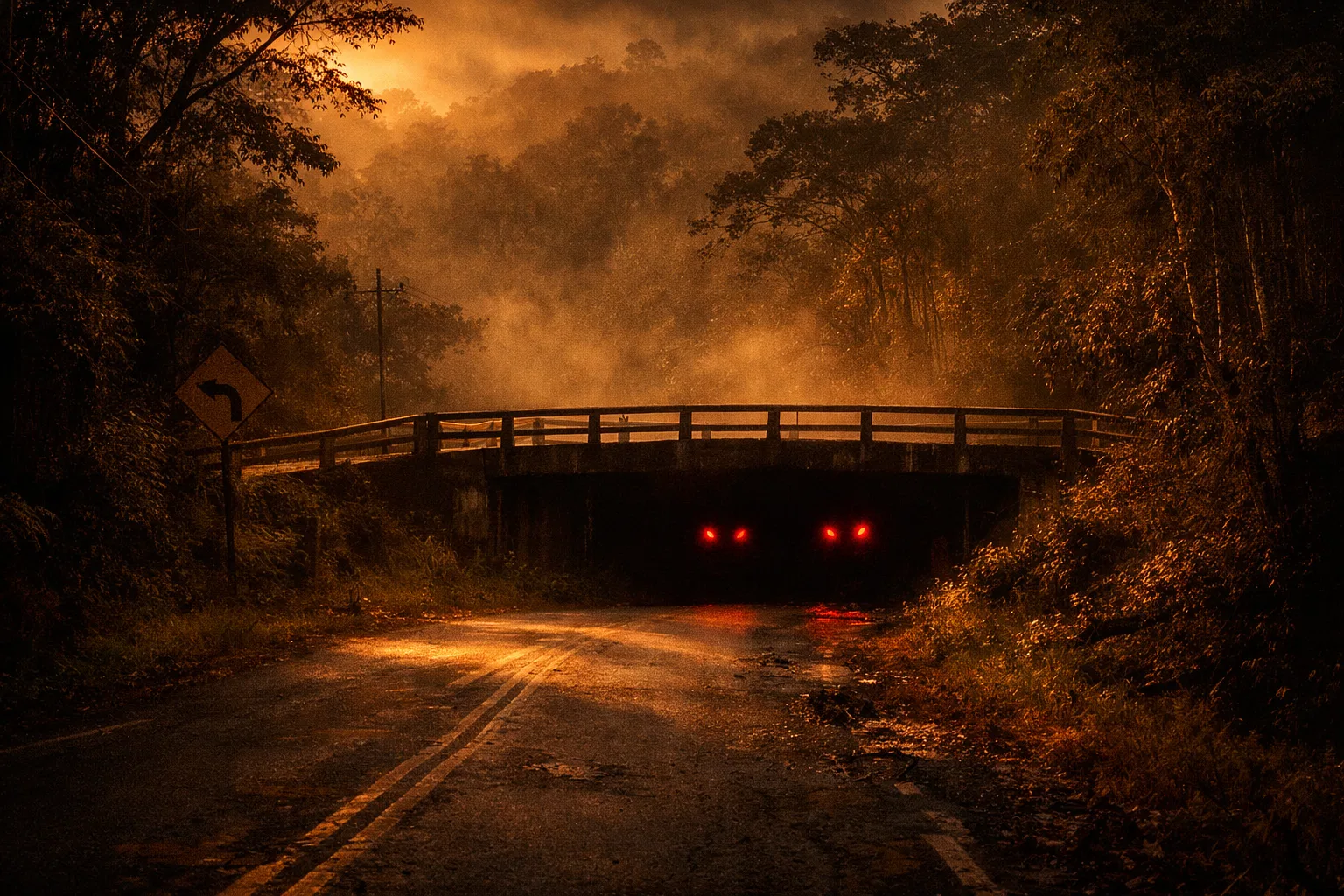
What Lurks on Costa Rica's Night Roads?
Costa Rica does not have one internationally famous “national cryptid” in the way Scotland has the Loch Ness Monster or Puerto Rico has the chupacabra.
Page outline Jump by section
Introduction
That natural abundance makes the stories feel plausible at first glance. A howl in a forest, a large shape by a bridge, a cat’s eyes in torchlight, livestock found wounded at dawn, or a snake washed onto a Pacific beach can all become monster material. But the evidence base is uneven. Costa Rica’s strongest “cryptid” material is folkloric rather than zoological: memorable creatures preserved in oral tradition, literature, tourism writing, school culture and popular media, not bodies, clear photographs, DNA, or sustained scientific investigation.
What are Costa Rica’s main monster traditions?
The recurring pattern in Costa Rican creature lore is the “warning monster”. These beings do not usually behave like undiscovered species with breeding ranges and food webs. They appear on roads, bridges, forests, rivers and lonely rural spaces at socially charged moments: late-night drinking, infidelity, reckless hunting, wandering alone, neglecting family duties, or entering dangerous terrain without respect.
The most important traditions include:
El Cadejos, a spectral dog or dog-like creature of lonely roads. Costa Rican travel and folklore summaries describe it as a large black dog with red eyes, shaggy hair, frightening teeth and sometimes goat-like feet, heard dragging chains at night.[Camino Travel]caminotravel.comCamino Travel Three Traditional, Scary Costa Rican LegendsCamino Travel Three Traditional, Scary Costa Rican Legends
La Cegua or La Segua, a woman who appears beautiful before changing into a horse-faced or horse-skulled monster, usually to terrify drunken, lustful or unfaithful men travelling at night. A University of Costa Rica-linked study describes the legend as a woman who transforms into an equine-faced figure to frighten womanisers and night wanderers, while Costa Rican folklore summaries place the encounter on lonely roads and in later retellings even in cars or on motorbikes.[Dialnet]dialnet.unirioja.esDialnet Manuel Martínez Herrera*Dialnet Manuel Martínez Herrera*
La Tulevieja, a bird-woman, river-haunt or monstrous maternal figure shared especially with Panama. Available summaries describe her as a female ghost with a distinctive hat, sometimes with bird or bat wings, bird claws, reversed tracks, and links to Indigenous Bribri, Huetar and Cabécar material as well as later colonial moral storytelling.[Wikipedia]WikipediaOpen source on wikipedia.org.
El Micomalo, a Costa Rican monkey-devil or monstrous ape-like being. It is described in Costa Rican folklore sources as a huge, black, fire-eyed monkey or “bad monkey” that appears at night near houses, bridges and trees, frightening travellers and sometimes serving as a demonic moral warning.[Wikipedia]WikipediaOpen source on wikipedia.org.
El Dueño del Monte or Viejo del Monte, a hairy forest guardian, sometimes one-eyed, who punishes hunters and protects animals. Costa Rican legend summaries place him in mountains, forests and pastures, where he cries out, frightens hunters, bends gun barrels, or transforms animals to prevent needless killing.[Wikipedia]WikipediaLeyendas de Costa RicaLeyendas de Costa Rica
These are not all “cryptids” in the strict modern sense. Some are ghosts, some are moral apparitions, some are demon-like beings, and some are forest spirits. But for a country-level mystery-creature page, they are the core material because they are the stories Costa Rica actually keeps returning to when it imagines uncanny animals, half-animals and night monsters.
Why roads, bridges and forests matter so much
Costa Rican monster stories often begin with movement through a risky place. A man is riding home late. A traveller hears chains. A boyero with a coffee cart reaches a bridge. A hunter sleeps in the mountains. Someone approaches a riverbank at night. The setting is not decoration; it is part of the mechanism of the legend.
That makes sense in a country where settlements, farms, mountains, wetlands and forests sit close together. Costa Rica’s protected-area system is internationally recognised, and official and international summaries describe a country with major terrestrial and marine protected areas, extensive forest ecosystems, and a national conservation identity built around biodiversity.[go.cr]sinac.go.crOpen source on go.cr. In folklore terms, that landscape gives the imagination plenty to work with: nocturnal animals, dense vegetation, difficult weather, sudden calls, and uncertain shapes at the edge of torchlight.
The stories also do cultural work. El Cadejos warns against drunken wandering. La Cegua polices male lust and public morality. El Dueño del Monte turns overhunting into a supernatural risk. La Tulevieja places maternal grief, rivers and wilderness into one frightening image. El Micomalo turns domestic disorder, night travel and demonic mischief into a monkey-like shape. The monster is rarely just “out there”; it arrives when someone has crossed a social, spiritual or environmental boundary.
El Cadejos: the black dog on the road
El Cadejos is one of the easiest Costa Rican legends for visitors to recognise because it fits a wider world pattern: the phantom black dog. In Costa Rican versions, the creature is commonly described as a big black, shaggy dog with glowing red eyes. Some accounts add chains, goat-like feet or teeth like a jaguar’s. Unlike versions elsewhere in Central America that split the creature into protective white and dangerous black forms, Costa Rican summaries often emphasise a single black figure that frightens night travellers but is not always fatal.[Camino Travel]caminotravel.comCamino Travel Three Traditional, Scary Costa Rican LegendsCamino Travel Three Traditional, Scary Costa Rican Legends
As a cryptid claim, Cadejos is weak: there is no stable biological description, no specimen trail, and no modern evidence that points to an unknown canine. As folklore, it is strong precisely because it is flexible. A stray dog, a farm dog, a coyote-like silhouette, a chain sound, or the ordinary fear of walking home in darkness can all become Cadejos-shaped in memory.
The legend also has a practical edge. It makes lonely roads feel morally charged. A person who has been drinking, gambling, cheating, or wandering too late may later describe the journey as an encounter with something that followed, watched or judged them. That is why the story survives well as a social warning: even people who do not believe in a literal spectral dog understand what the dog is there to do.
La Cegua: the horse-faced woman and the fear of the late ride home
La Cegua is Costa Rica’s most striking human-animal transformation legend. The usual story begins with a beautiful woman by the roadside. A man, often drunk, flirtatious or unfaithful, offers her a ride. Once she is close, she changes: the face becomes equine, skeletal or rotten, the eyes burn, the breath stinks, and the victim is left terrified, marked, speechless, mad or dead, depending on the version.[Dialnet]dialnet.unirioja.esDialnet Manuel Martínez Herrera*Dialnet Manuel Martínez Herrera*
The creature’s power comes from the sudden collapse of desire into horror. A University of Costa Rica-associated psychological and cultural study treats the legend as a story about female subjectivity, social control and the functions of myth and legend, rather than as an animal report.[Dialnet]dialnet.unirioja.esDialnet Manuel Martínez Herrera*Dialnet Manuel Martínez Herrera* That distinction matters. La Cegua is not a mystery horse species or a literal hybrid. She is a moral monster: a figure shaped by gender rules, fear of sexuality, colonial-era social boundaries, and the dangers of travelling at night.
For a modern reader, La Cegua is also a good example of how legends update their technology. Older versions put the man on horseback. Later accounts can move the same encounter into a car or motorcycle without changing the emotional structure. The creature survives because the core scene remains legible: a man thinks he controls the encounter, then discovers he has misread the road, the woman and himself.
La Tulevieja: bird-woman, river warning and old Indigenous roots
La Tulevieja is harder to reduce to a single image, which is part of her importance. She is often described as a female ghost or monstrous woman with a distinctive hat, sometimes poorly dressed and wild-haired, sometimes with enormous breasts, bird legs, claws, wings or reversed tracks. Some summaries connect the tale to Costa Rica and Panama, and to Indigenous Bribri, Huetar and Cabécar traditions that were later reshaped through colonial oral storytelling.[Wikipedia]WikipediaOpen source on wikipedia.org.
Her story is often linked with maternal transgression or loss: a woman abandons or loses a child and becomes a wandering, crying, frightening being. In that sense she overlaps with La Llorona, but the Costa Rica-Panama Tulevieja tradition is more creaturely. The bird features, claws, reversed footprints and wild landscape associations give her a stronger monster profile than a simple ghost.
The sceptical reading is not that someone misidentified a known bird-woman. Rather, it is that the legend gathers real fears around rivers, childbirth, shame, bad weather, forests and night travel into one figure. If El Cadejos belongs to the road and La Cegua to male temptation, La Tulevieja belongs to water, loss and the edge of the human household.
El Micomalo: Costa Rica’s bad monkey
El Micomalo is one of Costa Rica’s most cryptid-like folklore creatures because it is described in animal terms: a monkey-like monster, black and hairy, with fiery eyes, terrible cries, and a habit of swinging through trees or haunting bridges and houses at night. Some versions make it huge and terrifying; others describe it as smaller, pale, horned, red-eyed and clawed.[Wikipedia]WikipediaOpen source on wikipedia.org.
The ape-like shape invites comparison with Bigfoot-style traditions, but the Costa Rican logic is different. Micomalo is usually not treated as a hidden primate population. It is more often demonic, magical or moral. Sources describe it as linked to Central American witch-monkey traditions and, in Costa Rica, sometimes as the Devil in monkey form or as a creature sent to punish disorderly couples or people living outside Catholic marriage norms.[Wikipedia]WikipediaOpen source on wikipedia.org.
Misidentification could still play a role in some “bad monkey” experiences. Costa Rica has real monkeys, including howler monkeys whose calls can sound astonishingly loud and inhuman to visitors. But Micomalo’s folklore details — fiery eyes, demonic identity, invocation, attacks on travellers, bridge-blocking and household torment — place it firmly in legend rather than zoology.
El Dueño del Monte: the hairy forest guardian
El Dueño del Monte, also called Viejo del Monte, is one of Costa Rica’s most interesting monster figures because he points directly towards environmental ethics. He is described as a hairy giant or wild old man of forests and mountains, sometimes with one bright eye, sometimes as a monstrous horseman in Guanacaste and Puntarenas. His role is to frighten or punish hunters who kill animals wastefully.[Wikipedia]WikipediaLeyendas de Costa RicaLeyendas de Costa Rica
This makes him an unusually conservation-minded monster. In one strand of the legend, he is the soul of a hunter condemned to return as a defender of animals. He can frighten hunters, control or transform animals, and sabotage rifles. Some accounts link the tradition to Talamancan Indigenous mythology and to broader Latin American forest-guardian patterns.[Wikipedia]WikipediaDueño del monteDueño del monte
For cryptid readers, El Dueño del Monte is tempting because he resembles a hairy wild man. But the story is not built around tracks, nests, hair samples or repeated zoological sightings. It is built around the idea that the forest has an owner and that humans enter it under conditions. That idea sits naturally beside Costa Rica’s modern conservation identity, even though the legend itself is older and stranger than contemporary ecotourism language.
Chupacabra scares and livestock explanations
The chupacabra is not originally Costa Rican. The modern wave began in Puerto Rico in the 1990s and then spread through Latin America, the United States and internet culture. Costa Rica enters the story mostly as part of that wider regional circulation rather than as the birthplace of the creature. A Tico Times article on vampire bats notes that poultry or goats found apparently bled after bat attacks are often blamed on the mythical chupacabra in rural settings.[Tico Times]ticotimes.netTico Times Vampire Hunters Rescue Village Under SiegeTico Times Vampire Hunters Rescue Village Under Siege
This is where Costa Rica’s real wildlife matters. Vampire bats do exist in Latin America, and the Tico Times piece explains that vampire bat saliva contains an anticoagulant, meaning wounds can bleed heavily and may be reopened if bats return to the same victim.[Tico Times]ticotimes.netTico Times Vampire Hunters Rescue Village Under SiegeTico Times Vampire Hunters Rescue Village Under Siege That does not explain every livestock injury, but it shows how a dramatic-looking carcass can acquire a monster story before a veterinary explanation is checked.
The broader chupacabra pattern has repeatedly produced mundane explanations elsewhere: dogs, coyotes with mange, scavengers, predator attacks, decomposition, and media exaggeration. In Costa Rica, the strongest evidence points to chupacabra as an imported legend applied to local animal losses, not a distinct Costa Rican cryptid population.
Sea serpents, lake monsters and the Costa Rican coast
Costa Rica is not known for a major lake-monster tradition. Searches for Costa Rican lake monsters produce little of substance, and the country’s famous inland water bodies do not have a well-documented Nessie-style case history. That absence is worth saying plainly, because it prevents the page from inflating weak material.
There is, however, a real “sea serpent” that can confuse the conversation: the yellow-bellied sea snake, Hydrophis platurus. The University of Costa Rica’s Instituto Clodomiro Picado describes this venomous marine snake as pelagic, usually found 1–20 km off the Pacific coast and absent from the Atlantic side.[Instituto Clodomiro Picado]icp.ucr.ac.crOpen source on ucr.ac.cr. A washed-up or swimming sea snake can look uncanny to visitors, especially because it has a flattened tail and belongs to a group whose name is easily translated into monster language.
That does not make Costa Rica a sea-serpent hotspot in the cryptozoological sense. It does show how real animals can carry legendary labels. A snake at the tideline, a crocodile in brackish water, a caiman in wetlands, or a large fish breaking the surface can generate “monster” impressions without requiring an unknown species.
Phantom cats, jungle shapes and real predators
Costa Rica has real cats large enough and elusive enough to feed mystery-beast talk. Conservation groups and wildlife sources describe jaguars, pumas, ocelots, margays, jaguarundis and smaller spotted cats in the country, with camera traps and biological corridors used in wild-cat monitoring and conflict-reduction work.[Panthera]panthera.orgOpen source on panthera.org. Corcovado, the Osa Peninsula, Tortuguero and other forested regions are repeatedly associated with elusive wildlife, including jaguars and pumas, although sightings are difficult and often require expert guidance.[Costa Rica Insider]costa-rica.comOpen source on costa-rica.com.
This matters for phantom-cat claims because Costa Rica does not need an escaped panther theory to explain every large feline impression. It already has native felids. The more realistic question is usually identification: was the animal a jaguar, puma, ocelot, jaguarundi, domestic dog, shadow, or exaggerated memory?
The country’s biodiversity makes misidentification more likely, not less. A nocturnal mammal moving at the edge of a road, seen for seconds, can be honestly misread. Conservation science relies on camera traps, tracks, scat, genetic material and repeated records for that reason. Monster stories often begin where those tools are absent.
The Abbagoochie: an internet cryptid falsely pinned to Costa Rica
The Abbagoochie is a useful cautionary tale for Costa Rica cryptid research. Online cryptid pages describe it as a fierce owl-fox-deer creature supposedly native to Costa Rica and later introduced to West Virginia. But hoax-tracking sources identify the story as a spoof connected to West Virginia newspaper humour, and even the Museum of Hoaxes page includes comments from Costa Rican readers saying they had never heard of the creature locally.[Hoax Museum]hoaxes.orgOpen source on hoaxes.org.
That does not mean the Abbagoochie is uninteresting. It is a modern example of how cryptid lore travels backwards. A joke or hoax in one country borrows the exotic authority of another country’s rainforest, and later online lists repeat the claim until it looks like folklore. Costa Rica becomes a stage set: “dense jungle” plus “unknown creature” plus “foreign origin”.
For a Costa Rica-focused page, the Abbagoochie should be treated as imported internet folklore, not authentic Costa Rican oral tradition and not a serious zoological claim. It belongs in the “hoax and pop-culture afterlife” section, not beside Cadejos, Cegua, Tulevieja, Micomalo or Dueño del Monte.

Real strange animals that help explain monster feelings
Some Costa Rican animals are genuinely odd enough to show why monster stories attach so easily to the country. Velvet worms are a good example. Researchers Julián Monge-Nájera and Bernal Morera-Brenes documented cultural references to velvet worms in folklore and art, noting Costa Rica as one of the countries with notable per-capita references; a related study reported a giant Costa Rican velvet worm species from Caribbean coastal forest, with a female reaching 22 cm and using adhesive streams to capture prey.[arXiv]arxiv.orgOpen source on arxiv.org.
That is not a cryptid; it is a real invertebrate. But it shows how legitimate biodiversity can feel folkloric. A rare, soft-bodied “living fossil” that shoots glue-like slime from its head sounds invented until science confirms it. Costa Rica’s wildlife also includes crocodilians, rare snakes, striking insects, monkeys, tapirs, large cats and marine animals. When a country contains that much biological surprise, people do not need to invent everything from nothing. They often build legends around the emotional force of real encounters.
The difference is evidence. A velvet worm can be collected, described, measured and placed in a taxonomic paper. A Micomalo cannot. A sea snake can be identified by a university venom institute. A ghost dog cannot. Good Costa Rican cryptid writing keeps that distinction visible without draining the stories of their atmosphere.
Folklore, tourism and pop-culture afterlives
Costa Rican legends now circulate in several forms at once. They survive in oral telling, school culture, tourism articles, local heritage writing, theatre, television, animation and online folklore lists. The national-library record for Manuel Argüello Mora’s Costa Rica pintoresca: sus leyendas y tradiciones identifies it as an 1899 work reflecting Costa Rican cultural life, while archive and book records for Leyendas costarricenses show later compilations dedicated to Costa Rican legends.[go.cr]sinabi.go.crOpen source on go.cr.
La Segua has had a particularly strong cultural afterlife. Alberto Cañas wrote a play titled La Segua, and summaries of Costa Rican legend traditions note later film and performance adaptations.[Benemérita Biblioteca Nacional]sinabi.go.crBenemérita Biblioteca Nacional La segua.pdfBenemérita Biblioteca Nacional La segua.pdf La Tulevieja has also appeared in Costa Rican television and animation contexts, including references to the 1990s miniseries Leyendas, las Vivencias and the animated series Leyendas tremendas.[Wikipedia]WikipediaOpen source on wikipedia.org.
Tourism writing tends to simplify the stories into spooky attractions, while academic and literary sources ask what the legends reveal about gender, religion, colonial society, Indigenous inheritance and social control. Both forms keep the monsters alive, but they do different jobs. The tourist version says, “Here is a scary local tale.” The deeper version asks why that particular scary tale lasted.
How sceptics read Costa Rican creature reports
A sceptical reading of Costa Rica’s mystery creatures does not have to be dismissive. It simply separates different kinds of claims.
Folklore claims include Cadejos, Cegua, Tulevieja, Micomalo and Dueño del Monte. These are culturally important, but their evidence is oral, literary and symbolic rather than zoological.
Misidentification claims include strange night animals, phantom cats, sea-serpent impressions and some livestock scares. Costa Rica’s real wildlife gives many plausible candidates: wild cats, dogs, monkeys, bats, crocodilians, snakes and scavengers.[panthera.org]panthera.orgOpen source on panthera.org.
Hoax or internet claims include the Abbagoochie’s supposed Costa Rican origin. The available evidence points to a West Virginia spoof that later acquired online cryptid status.[Hoax Museum]hoaxes.orgOpen source on hoaxes.org.
Unresolved personal experiences may still matter to witnesses, but they are not the same as evidence for an unknown animal. A frightening encounter on a dark road can be meaningful even when it cannot be verified.
This approach is fairer to the stories than pretending they are failed biology. Costa Rican monster lore is strongest when read as a cultural map of roads, rivers, forests, temptation, danger and respect for the non-human world.
Evidence needed to test Costa Rica’s cryptid traditions
For a Costa Rican creature claim to move from folklore into serious mystery-animal territory, it would need more than a repeated story. Useful evidence would include clear photographs or video with location data, multiple independent sightings with consistent descriptions, tracks or scat examined by qualified biologists, veterinary reports for livestock cases, environmental context, and ideally genetic or physical material.
Costa Rica is unusually well suited to testing such claims because it already has a strong conservation and research culture. SINAC manages protected wildlife areas, conservation organisations use camera traps for wild-cat monitoring, and university-linked institutions publish on venomous snakes, invertebrates and biodiversity.[go.cr]sinac.go.crOpen source on go.cr. If an unknown large animal were repeatedly appearing in a specific region, it would have a better chance of leaving some trace in that monitoring landscape than in many less-studied places.
So far, Costa Rica’s monster record does not point to a hidden ape, lake serpent or new big predator. It points to something more culturally specific: a country where real biodiversity makes the night vivid, and where older stories turn that vividness into figures that warn, punish, protect and haunt.
Conclusion
Costa Rica’s cryptid history is best understood as folklore-rich rather than evidence-rich. Its most enduring creatures are not modern mystery animals with strong physical evidence, but memorable beings from oral tradition: the road-haunting Cadejos, the horse-faced Cegua, the bird-like Tulevieja, the demonic Micomalo and the hairy forest guardian Dueño del Monte. Around them orbit newer layers: chupacabra-style livestock scares, misidentified wildlife, real but strange animals such as sea snakes and velvet worms, and internet inventions like the Abbagoochie.
That mix makes Costa Rica a fascinating country for monster lore precisely because the boundary between animal, spirit, warning and landscape is so porous. The forests are real. The wildlife is real. The fear of the night road is real. The monsters, in most cases, belong to the stories people use to make sense of those realities.
Amazon book picks
Further Reading
Books and field guides related to What Lurks on Costa Rica's Night Roads?. Use these as the next step if you want deeper reading beyond the article.
Lonely Planet Costa Rica
Helps readers connect folklore with real Costa Rican landscapes.
The Encyclopedia of Ghosts and Spirits
Provides context for ghostly road and wilderness legends.
Gods of Jade and Shadow
Draws on Mesoamerican supernatural traditions related to regional folklore.
eBay marketplace picks
Marketplace Samples
Live-tested eBay searches with available results related to this page.


Endnotes
1.
Source: sinac.go.cr
Link:https://www.sinac.go.cr/EN-US/visasilves
2.
Source: Wikipedia
Link:https://en.wikipedia.org/wiki/Cadejo
3.
Source: Wikipedia
Title: Leyendas de Costa Rica
Link:https://es.wikipedia.org/wiki/Leyendas_de_Costa_Rica
4.
Source: Wikipedia
Link:https://en.wikipedia.org/wiki/Tulevieja
5.
Source: Wikipedia
Link:https://es.wikipedia.org/wiki/Tulevieja
6.
Source: Wikipedia
Link:https://es.wikipedia.org/wiki/Micomalo
7.
Source: Wikipedia
Title: Dueño del monte
Link:https://es.wikipedia.org/wiki/Due%C3%B1o_del_monte
8.
Source: sinac.go.cr
Link:https://www.sinac.go.cr/EN-US/asp
9.
Source: Wikipedia
Link:https://en.wikipedia.org/wiki/Talamancan_mythology
10.
Source: panthera.org
Link:https://panthera.org/panthera-costa-rica
11.
Source: costa-rica.com
Link:https://costa-rica.com/en/country-information/national-parks/
12.
Source: hoaxes.org
Link:https://hoaxes.org/animals/comments/abbagoochie/P30
13.
Source: arxiv.org
Link:https://arxiv.org/abs/1605.06706
14.
Source: arxiv.org
Link:https://arxiv.org/abs/1511.00983
15.
Source: archive.org
Link:https://archive.org/details/leyendascostarri0000unse
16.
Source: Wikipedia
Link:https://en.wikipedia.org/wiki/Chupacabra
17.
Source: Wikipedia
Title: List of lake monsters
Link:https://en.wikipedia.org/wiki/List_of_lake_monsters
18.
Source: Wikipedia
Title: Sea snake
Link:https://en.wikipedia.org/wiki/Sea_snake
19.
Source: Wikipedia
Title: La Segua (teatro)
Link:https://es.wikipedia.org/wiki/La_Segua_%28teatro%29
20.
Source: ia601002.us.archive.org
Title: Costa Rica pintoresca
Link:https://ia601002.us.archive.org/26/items/costa-rica-pintoresca/Costa%20Rica%20pintoresca.pdf
21.
Source: hoaxes.org
Link:https://hoaxes.org/animals/comments/abbagoochie
22.
Source: costa-rica.com
Link:https://costa-rica.com/en/nature-experience/flora-and-fauna/mammals/big-cats/
23.
Source: cbd.int
Title: Convention on Biological Diversity Costa Rica
Link:https://www.cbd.int/countries/profile/?country=cr
24.
Source: caminotravel.com
Title: Camino Travel Three Traditional, Scary Costa Rican Legends
Link:https://caminotravel.com/three-traditional-and-scary-costa-rica-legends/
25.
Source: dialnet.unirioja.es
Title: Dialnet Manuel Martínez Herrera*
Link:https://dialnet.unirioja.es/descarga/articulo/5619012.pdf
26.
Source: cbd.int
Link:https://www.cbd.int/pa/doc/dossiers/costa-rica-abt11-country-dossier2021.pdf
27.
Source: dialnet.unirioja.es
Link:https://dialnet.unirioja.es/servlet/articulo?codigo=5619012
28.
Source: ticotimes.net
Title: Tico Times Vampire Hunters Rescue Village Under Siege
Link:https://ticotimes.net/2009/03/06/vampire-hunters-rescue-village-under-siege
29.
Source: icp.ucr.ac.cr
Link:https://www.icp.ucr.ac.cr/en/information-and-materials/venomous-snakes-costa-rica/hydrophis-platura
30.
Source: sinabi.go.cr
Link:https://www.sinabi.go.cr/ver/biblioteca%20digital/libros%20completos/arguello%20mora%20manuel/Costa%20Rica%20Pitoresca%20parte%203.pdf
31.
Source: sinabi.go.cr
Title: Benemérita Biblioteca Nacional La segua.pdf
Link:https://www.sinabi.go.cr/biblioteca%20digital/libros%20completos/Canas%20Alberto/La%20segua.pdf
32.
Source: scribd.com
Link:https://www.scribd.com/document/628001876/Costa-Rica-Pintoresca
33.
Source: es.scribd.com
Title: Leyendas costarricenses
Link:https://es.scribd.com/document/516615204/Leyendas-costarricenses
34.
Source: facebook.com
Title: The Tico Times | San JoséWelcome to The Tico Times on Facebook
Link:https://www.facebook.com/TicoTimes/?locale=en_GB
35.
Source: reddit.com
Link:https://www.reddit.com/r/CostaRicaTravel/comments/1m2qj1m/tico_times_danger_in_costa_rica_rising_crime/
36.
Source: national-parks.org
Link:https://national-parks.org/costa-rica/guanacaste-national-park/
37.
Source: ticotimes.net
Link:https://ticotimes.net/2025/10/31/from-the-weeping-woman-to-the-naked-gringo-a-guide-to-costa-rica-s-spookiest-folklore
38.
Source: ticotimes.net
Link:https://ticotimes.net/
39.
Source: ticotimes.net
Link:https://ticotimes.net/2026/05/11/costa-rica-tourism-plan-focuses-on-limon-osa-and-southern-zone
40.
Source: ticotimes.net
Title: puma sits for the camera on a pacific cliff in rare costa rica footage
Link:https://ticotimes.net/2026/02/01/puma-sits-for-the-camera-on-a-pacific-cliff-in-rare-costa-rica-footage
41.
Source: ticotimes.net
Title: costa rica welcomes over one million tourists in first quarter
Link:https://ticotimes.net/2026/05/16/costa-rica-welcomes-over-one-million-tourists-in-first-quarter
42.
Source: tourism.co.cr
Link:https://www.tourism.co.cr/costa-rica-art-and-culture/costa-rica-cultural-heritage/legends.html
43.
Source: ballyraven.com
Link:https://www.ballyraven.com/encyclopedia/abbagoochie
44.
Source: cryptidarchives.fandom.com
Title: Sea serpent
Link:https://cryptidarchives.fandom.com/wiki/Sea_serpent
45.
Source: itsmth.fandom.com
Link:https://itsmth.fandom.com/wiki/Abbagoochie
46.
Source: leyenticasblog.wordpress.com
Link:https://leyenticasblog.wordpress.com/libros/
47.
Source: folklore.usc.edu
Title: la segua
Link:https://folklore.usc.edu/la-segua/
48.
Source: ticotimes.co.cr
Link:https://www.ticotimes.co.cr/
Additional References
49.
Source: facebook.com
Link:https://www.facebook.com/mostamazingtop10videos/posts/45-foot-sea-serpent-spotted-swimming-near-costa-rican-coast-seaserpent-costarica/1371340561030406/
50.
Source: facebook.com
Link:https://www.facebook.com/groups/217092875144407/posts/2630199803833690/
51.
Source: cyberuni.ir
Link:https://cyberuni.ir/en/book/book-57557/
52.
Source: academia.edu
Link:https://www.academia.edu/38488177/Construcci%C3%B3n_de_la_subjetividad_femenina_en_la_leyenda_de_La_Segua_pdf
53.
Source: biodb.com
Link:https://biodb.com/region/costa-rica/
54.
Source: instagram.com
Link:https://www.instagram.com/reel/DJCCaI_NC3C/
55.
Source: govisitcostarica.com
Link:https://www.govisitcostarica.com/travelInfo/nationalParks.asp
56.
Source: amazon.com
Link:https://www.amazon.com/-/es/Costa-Rica-Pintoresca-Leyendas-Tradiciones/dp/0483732834?tag=searcht-20
57.
Source: protectedplanet.net
Link:https://www.protectedplanet.net/en/country/CRI
58.
Source: facebook.com
Link:https://www.facebook.com/CostaRicaHappyPlace/photos/costa-rica-has-a-wonderful-collection-of-jungle-legends-that-have-been-whispered/2057694688401827/
Topic Tree
Follow this branch
Related pages 192
- Antigua Cryptids
- Maldives Monsters
- Malta Monsters
- Qatar Monsters
- Argentina Monsters
- +187 more in sidebar