Cryptids of Ecuador's Landscapes
Ecuador’s best-known mystery-creature material is not a single Loch Ness-style monster but a patchwork of Andean, coastal and Amazonian beings: the Chuzalongo of rural highland stories, the coastal Tin-Tin, the animal-guardian Bambero of Esmeraldas traditions, and a small cluster of Amazonian “unknown animal” reports such as the rainbow jaguar or...
Page outline Jump by section
Why Ecuador’s monster stories belong to the landscape
Ecuador’s creature lore makes most sense when placed on a map. The country is small, but its natural divisions are dramatic: Pacific coast, mountain range, Amazon and Galápagos. The Convention on Biological Diversity profile describes Ecuador as one of 17 megadiverse countries and links that richness to the Neotropics, the Andes and ocean currents; it also notes that the country contains globally important humid forests, Andean slopes and north-eastern Amazon forests.[Convention on Biological Diversity]cbd.intConvention on Biological Diversity Main DetailsConvention on Biological Diversity Main Details
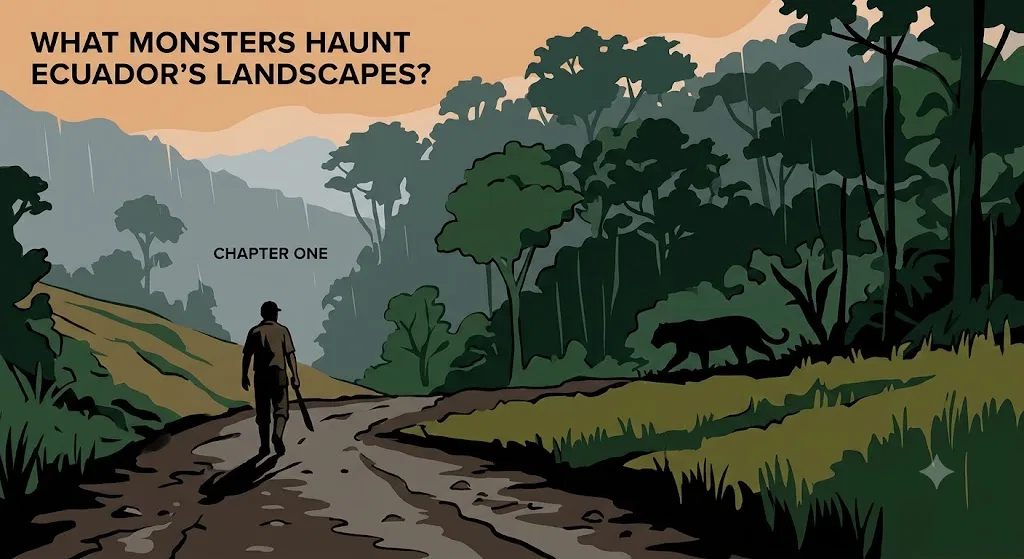
That geography matters because many Ecuadorian monster stories are not random “beasts in the dark”. They are attached to specific environments and social anxieties. The Chuzalongo belongs to agricultural lands, cliffs, mountains and rural paths. The Tin-Tin is usually coastal, especially in oral traditions from the Ecuadorian littoral. The Bambero belongs to Esmeraldas forest and mangrove worlds, where the story is less about proving an animal exists and more about regulating hunting and respect for the forest.[eluniverso.com]eluniverso.comEl Universo“Las nuevas generaciones ya no están escuchando sobreEl Universo“Las nuevas generaciones ya no están escuchando sobre
Ecuador’s real fauna also keeps the boundary between legend and misidentification lively. Sangay National Park, for example, is home to emblematic species including spectacled bear, mountain tapir, Andean condor, jaguar and giant anteater, according to UNESCO. In the Amazon and Chocó forests, a fleeting view of a jaguar, puma, ocelot, margay, tapir, bear or large primate-like movement in the canopy can become bigger in the telling, especially when the animal is rare, nocturnal or only glimpsed.[UNESCO World Heritage Centre]whc.unesco.orgOpen source on unesco.org.
The Chuzalongo: Ecuador’s most visible modern monster
The Chuzalongo is the Ecuadorian creature most likely to be recognised by a modern audience because it has recently crossed from oral tradition into cinema. In local coverage of Diego Ortuño’s film Chuzalongo, the being is described as a legendary creature associated with the fields of Ecuador’s coast and highlands, with different versions depending on who tells the story. The same report presents it as a fantasy figure said to harass women or strike down those who cross its path.[El Universo]eluniverso.comEl Universo“Las nuevas generaciones ya no están escuchando sobreEl Universo“Las nuevas generaciones ya no están escuchando sobre
The creature is often framed as small, childlike or goblin-like, but the point of the story is not cuteness. It is a threatening rural figure tied to sexuality, danger, isolation and vulnerable people moving through the countryside. The Cervantes Institute’s film synopsis describes the chuzalongo as a mythical creature of Ecuador’s agricultural lands that first appears as a lost child before luring women towards a tragic fate.[Instituto Cervantes]cultura.cervantes.esChuzalongo…
That “lost child” detail is important. It gives the legend its cruel mechanism: the creature approaches as something that should inspire pity, then becomes a danger. In a cryptid frame, this is less like a zoological report and more like a warning tale. It explains why the Chuzalongo can feel like a monster, a moral panic, a rural cautionary story and a folk-horror villain all at once.
The legend’s modern afterlife is unusually clear. Chuzalongo premiered in Ecuadorian cinemas on 31 October 2024, became the most-watched Ecuadorian film of 2024 with more than 20,000 tickets sold, and was later selected for Oscar consideration by Ecuador’s film academy, according to Primicias. The film’s success shows that the creature is no longer only a village tale: it has become a national cultural property that can be reworked for horror, identity and export.[Primicias]primicias.ecchuzalongo pelicula ecuador exito taquilla 86062chuzalongo pelicula ecuador exito taquilla 86062

Tin-Tin and the coastal double of the Chuzalongo
The Tin-Tin is often treated as the coastal cousin or counterpart of the Chuzalongo. A 2025 cultural article describes Tin-Tin as a mythical figure deeply rooted in Ecuadorian tradition, passed down through communities and linked with the Chusa-longo of the Andes.[PachaMamita Ecuador]pachamamitaecu.orgtin tin beyond the myth legends ecuadortin tin beyond the myth legends ecuador
In many retellings, Tin-Tin is a small nocturnal being associated with seduction, pursuit and fear around women’s safety. The interesting point for a cryptid-by-country page is not whether Tin-Tin is a biological animal — it is plainly a folkloric being — but how closely it resembles regional “little man”, goblin and forest-seducer traditions elsewhere in Latin America. The story adapts to local geography: where the Chuzalongo is rural-Andean or highland in flavour, Tin-Tin is coastal, associated with montubio and littoral storytelling.
This makes Tin-Tin useful for understanding how Ecuadorian monster traditions migrate. A creature type can shift name, setting and details while keeping the same emotional function. The “small male pursuer” motif becomes a way to talk about sexuality, danger, pregnancy, social boundaries and the vulnerability of women in isolated places. In that sense, Tin-Tin is not an eyewitness cryptid claim so much as a localised monster role.
The Bambero: not a beast to find, but a forest rule to remember
The Bambero is one of Ecuador’s most interesting creature traditions because it pushes against the usual cryptid question of “does it exist?” In Esmeraldas folklore, the Bambero is described as a small ghostly or spirit-like protector of animals and of good-hearted hunters. A 2014 report in El Universo says older people in rural Esmeraldas describe the Bambero as punishing hunters who kill forest animals for pleasure rather than need.[El Universo]eluniverso.combambero ser mitico que protege animalesbambero ser mitico que protege animales
That makes the Bambero an ecological monster: a figure who enforces restraint. Instead of being a mystery animal that people try to capture, it is a story about the correct relationship between humans and animals. The creature’s function is close to a moral conservation law. Hunt to eat, not to boast. Do not wound animals needlessly. Do not treat the forest as a place without consequences.
A separate Afro-Ecuadorian cultural source similarly describes the Bambero as a mythical protector of forest animals who imposes a rule on hunters: animals may be killed for food, but not abandoned wounded and suffering.[AfroEcuatorianos]afros.wordpress.comAfro Ecuatorianos BamberoAfro Ecuatorianos Bambero
For readers of cryptid history, the Bambero is a reminder that not every “monster” is a candidate species. Some are social technologies: memorable figures that teach rules more powerfully than a lecture could. In Ecuador’s creature map, the Bambero belongs beside the Chuzalongo and Tin-Tin not because it looks similar, but because it shows how monster stories can police behaviour in specific landscapes.
The rainbow jaguar: Ecuador’s strangest cryptozoological claim
The Tshenkutshen, often called the rainbow jaguar or rainbow tiger, is the closest Ecuador gets to a classic “unknown animal” dossier. The claim is associated with Shuar areas around Macas, Morona Santiago, the Trans-Cutucú region, the Sierra de Cutucú and the Sangay volcano area. Cryptozoologist Karl Shuker summarised Ángel Morant Forés’s 1999 field enquiries in southern Ecuador, reporting descriptions of a jaguar-sized black cat with coloured chest stripes and monkey-like forepaws.[ShukerNature]karlshuker.blogspot.comOpen source on blogspot.com.
The reported animal is striking because it combines plausible and implausible elements. Ecuador certainly has real big cats, including jaguars and pumas, and UNESCO lists jaguar among Sangay National Park’s emblematic species. Ecuador also has smaller arboreal cats such as margays, and jaguar sightings can be rare enough to feel extraordinary. But a jaguar-sized cat with rainbow-like chest striping, a hump and monkey-like hands is not known from zoology.[UNESCO World Heritage Centre]whc.unesco.orgOpen source on unesco.org.
That does not mean the story is worthless. It may preserve local naming for rare colour variants, exaggerated memory of jaguars, confusion with several animals, symbolic description, or a now-lost anecdote about an unusual carcass. Morant’s Ecuador material is also reported to include other possible unknown mammals, such as a bear-like creature and unusual cats, though even sympathetic summaries note that first-hand reports were limited for some of them.[mysterious-amazon.blogspot.com]blogspot.comAmazon: Mysteries of the Earth's Last Frontier: Angel's Cryptids of EcuadorAmazon: Mysteries of the Earth's Last Frontier: Angel's Cryptids of Ecuador
As evidence, the rainbow jaguar remains weak: no preserved specimen, no verified photographs, no genetic sample and no accepted scientific description. As folklore-inflected cryptozoology, it is valuable because it shows how Ecuador’s Amazonian borderlands generate claims that feel zoological rather than purely supernatural.
Amazonian “ape-men”, bears and sloth-like explanations
Ecuador sometimes appears on the edge of wider Amazonian monster traditions, especially stories about hairy forest beings, bear-like creatures and Mapinguari-type animals. The Mapinguari is better known from Brazil and other Amazonian contexts than from Ecuador, but some cryptid catalogues link Ecuadorian material to a local bear-like figure sometimes called ujea. These accounts are secondary and thin, so they should be treated as reports about reports rather than firm Ecuadorian tradition.[Cryptid Wiki]cryptidz.fandom.comCryptid Wiki MapinguariCryptid Wiki Mapinguari
The most plausible biological comparison for many “ape-man” or “bear-man” stories in the Andes and western Amazon is the spectacled bear, also called the Andean bear. It is the only living bear native to South America, and Ecuador lies within its range. The International Association for Bear Research and Management describes the Andean bear as South America’s only bear, with distinctive facial markings and a black-to-brown coat.[bearbiology.org]bearbiology.orgTremarctos ornatus (Andean bearTremarctos ornatus (Andean bear
This matters because a bear briefly seen in cloud forest, especially while standing, climbing or moving through dense vegetation, can become a “man-like” animal in local testimony. That does not explain every story, but it is a strong first-line explanation for some Ecuadorian mystery-beast claims in Andean and montane forest settings.
Ground-sloth explanations are more speculative. Across Amazonian cryptozoology, some writers have suggested that Mapinguari stories may preserve memory of extinct giant sloths, but there is no mainstream evidence that giant ground sloths survive in Ecuador today. In an Ecuador page, the safer interpretation is that sloth-like monster claims show how palaeontology, Indigenous oral tradition and cryptozoological imagination can become tangled, not that an extinct animal has been found.
Why Ecuador has fewer famous lake monsters than its neighbours
A reader expecting an Ecuadorian equivalent of Nessie may be surprised: the country’s strongest creature traditions are not lake monsters. Ecuador has dramatic crater lakes, Amazonian lagoons and Pacific waters, but the best-documented national monster material clusters around forests, agricultural lands, mountains, mangroves and rural roads.
That does not mean water is absent from Ecuadorian strange-animal imagination. Amazonian waterways are ideal settings for stories of giant snakes, river spirits, caimans, dolphins and unknown aquatic creatures, and the Cuyabeno region has the sort of flooded forest ecology that makes animal encounters difficult to verify. The Cuyabeno Wildlife Reserve is associated with permanent and semi-permanent lakes, black-water rivers, caimans, boas and anacondas, according to reserve summaries.[Wikipedia]WikipediaCuyabeno Wildlife ReserveCuyabeno Wildlife Reserve
Still, the evidence base is different from countries with named lake monsters repeatedly reported in newspapers over decades. In Ecuador, water-monster material appears more diffuse and regional, often blending into wider Amazonian giant-snake lore rather than producing a single national celebrity creature.
Misidentification is not a boring answer
Sceptical explanations are especially strong in Ecuador because the real wildlife is already spectacular. A jaguar seen once in poor light, a margay moving through branches, an Andean bear glimpsed upright, a giant anteater crossing a trail, or an anaconda surfacing in flooded forest can all create a report that sounds “wrong” when retold by someone who did not get a clear look.
The jaguar is a good example. Conservation reporting notes that Ecuador’s coastal jaguars have been heavily reduced by habitat loss, while the Amazon still holds healthier populations. Rare animals are often paradoxical in folklore: people know they exist, but they are seen so seldom that a glimpse can feel supernatural.[The Guardian]theguardian.comOpen source on theguardian.com.
The same applies to Sangay’s wildlife mix. A single protected landscape can contain spectacled bears, mountain tapirs, jaguars, giant anteaters and Andean condors. To a tired traveller, child, hunter or tourist, that is enough raw material for a monster story without inventing an unknown species.[UNESCO World Heritage Centre]whc.unesco.orgOpen source on unesco.org.
This does not flatten the folklore. Misidentification is part of how monster traditions work. A real animal gives the story weight; fear, taboo, moral teaching and retelling give it shape.
Folklore, tourism and pop culture afterlives
Ecuador’s monster traditions are increasingly visible through tourism writing, local media, film festivals and online folklore pages. That visibility changes the legends. A creature once told in a family, farming community or hunting context can become a horror character, a travel curiosity or an illustration on a cryptid website.
The Chuzalongo is the clearest case. Its recent film adaptation did not simply repeat the legend; it reframed it for folk horror, national cinema and international festival circuits. Primicias reported that the film drew on an Andean legendary character, opened in Ecuador on 31 October 2024 and became the country’s most-watched domestic film of that year.[Primicias]primicias.ecEl 'Chuzalongo' llega a los cines de Ecuador para sembrarEl 'Chuzalongo' llega a los cines de Ecuador para sembrar
That pop-culture turn can preserve a story, but it can also simplify it. A film monster needs a clear image and plot. Oral tradition often has contradictions, local variants and moral ambiguity. The public-facing Chuzalongo may become more standardised over time because cinema, posters and reviews give people a fixed version to remember.
Tin-Tin and the Bambero have not had the same international breakout, but they are well suited to future retellings: Tin-Tin as coastal folk horror, Bambero as an ecological guardian, and the rainbow jaguar as an Amazonian mystery-cat case. Those afterlives would be culturally interesting even if none produced evidence for a new animal.
What can be said with confidence
Ecuador has a rich monster-and-mystery-beast tradition, but the strongest conclusion is not that hidden animals have been proven. It is that Ecuador’s creature stories sort into different evidence categories:
Folkloric beings: The Chuzalongo, Tin-Tin and Bambero are best read as folklore rooted in place, morality and social fear. They are culturally real even when not zoologically real.
Cryptozoological claims: The Tshenkutshen or rainbow jaguar is a genuine mystery-animal claim in the sense that it has been described as an unknown creature by cryptozoological writers, but the evidence remains anecdotal and unverified.[ShukerNature]karlshuker.blogspot.comOpen source on blogspot.com.
Plausible animal explanations: Jaguars, pumas, margays, spectacled bears, tapirs, giant anteaters, anacondas and other real Ecuadorian species provide strong explanations for many strange sightings, especially in dense forest or poor visibility.[UNESCO World Heritage Centre]whc.unesco.orgOpen source on unesco.org.
Modern reinventions: Film, online folklore, tourism and cryptid catalogues now reshape how these beings are described. The Chuzalongo’s move into cinema is the clearest example of an old rural fear becoming a contemporary national monster.[Primicias]primicias.ecpelicula chuzalongo preseleccion premios oscar ecuador 105133pelicula chuzalongo preseleccion premios oscar ecuador 105133
The best way to enjoy Ecuador’s cryptids is therefore not to ask only “is it real?” A better question is: what kind of reality does each creature have? The Chuzalongo is real as a rural warning and cultural memory. The Bambero is real as a forest ethic. The Tin-Tin is real as coastal oral tradition. The rainbow jaguar is real as an unresolved report pattern, but not as a confirmed species. Ecuador’s monsters are most revealing when they are allowed to be strange, local and evidence-aware at the same time.
Amazon book picks
Further Reading
Books and field guides related to What Monsters Haunt Ecuador's Landscapes?. Use these as the next step if you want deeper reading beyond the article.
The Mythology Book
Provides a framework for understanding regional monster traditions.
Monsters
An Investigator's Guide to Magical Beings that takes you on a harrowing journey into the realm of monsters and the reality of the impossi...
Encyclopedia of Things that Never Were
Useful for comparing legendary beings across cultures.
eBay marketplace picks
Marketplace Samples
Live-tested eBay searches with available results related to this page.


Endnotes
1.
Source: whc.unesco.org
Link:https://whc.unesco.org/en/list/260/
2.
Source: cultura.cervantes.es
Title: Instituto Cervantes
Link:https://cultura.cervantes.es/losangeles/en-US/chuzalongo/181678
Source snippet
Chuzalongo...
3.
Source: primicias.ec
Title: chuzalongo pelicula ecuador exito taquilla 86062
Link:https://www.primicias.ec/entretenimiento/cine/chuzalongo-pelicula-ecuador-exito-taquilla-86062/
4.
Source: primicias.ec
Title: pelicula chuzalongo preseleccion premios oscar ecuador 105133
Link:https://www.primicias.ec/entretenimiento/cine/pelicula-chuzalongo-preseleccion-premios-oscar-ecuador-105133/
5.
Source: karlshuker.blogspot.com
Link:https://karlshuker.blogspot.com/2009/06/angel-and-his-amazing-technicolor-dream.html
6.
Source: mysterious-amazon.blogspot.com
Title: Amazon: Mysteries of the Earth’s Last Frontier: Angel’s Cryptids of Ecuador
Link:https://mysterious-amazon.blogspot.com/2014/12/angels-cryptids-of-ecuador.html?tag=searcht-20
7.
Source: bearbiology.org
Title: Tremarctos ornatus (Andean bear)
Link:https://www.bearbiology.org/the-eight-bear-species/tremarctos-ornatus-andean-bear/
8.
Source: Wikipedia
Title: Cuyabeno Wildlife Reserve
Link:https://en.wikipedia.org/wiki/Cuyabeno_Wildlife_Reserve
9.
Source: primicias.ec
Title: El ‘Chuzalongo’ llega a los cines de Ecuador para sembrar
Link:https://www.primicias.ec/entretenimiento/cine/chuzalongo-pelicula-terror-leyenda-ecuador-82427/
10.
Source: Wikipedia
Link:https://en.wikipedia.org/wiki/Chuzalongo
11.
Source: Wikipedia
Link:https://es.wikipedia.org/wiki/Chuzalongo
12.
Source: Wikipedia
Title: Monster of Lake Tota
Link:https://en.wikipedia.org/wiki/Monster_of_Lake_Tota
13.
Source: Wikipedia
Link:https://en.wikipedia.org/wiki/Mapinguari
14.
Source: Wikipedia
Title: Mono Grande
Link:https://en.wikipedia.org/wiki/Mono_Grande
15.
Source: Wikipedia
Title: Spectacled bear
Link:https://en.wikipedia.org/wiki/Spectacled_bear
16.
Source: Wikipedia
Title: Tin Tin
Link:https://es.wikipedia.org/wiki/Tin-Tin
17.
Source: Wikipedia
Link:https://es.wikipedia.org/wiki/Bambero
18.
Source: Wikipedia
Title: Sangay National Park
Link:https://en.wikipedia.org/wiki/Sangay_National_Park
19.
Source: karlshuker.blogspot.com
Title: anomalous jaguars and other speckled
Link:https://karlshuker.blogspot.com/2014/03/anomalous-jaguars-and-other-speckled.html
20.
Source: cryptid-tidbits.blogspot.com
Link:https://cryptid-tidbits.blogspot.com/2020/
21.
Source: primicias.ec
Title: peliculas ecuatorianas chuzalongo 7mujeres estreno 79309
Link:https://www.primicias.ec/entretenimiento/cine/peliculas-ecuatorianas-chuzalongo-7mujeres-estreno-79309/
22.
Source: primicias.ec
Link:https://www.primicias.ec/tag/cine-ecuatoriano/2/
23.
Source: primicias.ec
Title: chuzalongo cannes primicia cine ecuatoriano
Link:https://www.primicias.ec/noticias/el-chat/chuzalongo-cannes-primicia-cine-ecuatoriano/
24.
Source: primicias.ec
Link:https://www.primicias.ec/tag/premios-oscar/8/
25.
Source: primicias.ec
Link:https://www.primicias.ec/tag/peliculas/40/
26.
Source: primicias.ec
Title: leyenda dragon pelicula estreno ecuador 82810
Link:https://www.primicias.ec/entretenimiento/cine/leyenda-dragon-pelicula-estreno-ecuador-82810/
27.
Source: primicias.ec
Title: sitemap videos 202410.xml.gz
Link:https://www.primicias.ec/sitemap-videos-202410.xml.gz
28.
Source: cbd.int
Title: Convention on Biological Diversity Main Details
Link:https://www.cbd.int/countries/profile/?country=ec
29.
Source: eluniverso.com
Title: El Universo“Las nuevas generaciones ya no están escuchando sobre
Link:https://www.eluniverso.com/entretenimiento/cine/las-nuevas-generaciones-ya-no-estan-escuchando-sobre-leyendas-dice-diego-ortuno-director-de-la-pelicula-ecuatoriana-chuzalongo-nota/
30.
Source: pachamamitaecu.org
Title: tin tin beyond the myth legends ecuador
Link:https://pachamamitaecu.org/en/2025/01/22/tin-tin-beyond-the-myth-legends-ecuador/
31.
Source: eluniverso.com
Title: bambero ser mitico que protege animales
Link:https://www.eluniverso.com/vida-estilo/2014/10/12/nota/4093001/bambero-ser-mitico-que-protege-animales/
32.
Source: theguardian.com
Link:https://www.theguardian.com/environment/2019/nov/11/ecuadors-vanishing-jaguars-the-big-cat-vital-to-rainforest-survival
33.
Source: afros.wordpress.com
Title: Afro Ecuatorianos Bambero
Link:https://afros.wordpress.com/religiosidad-afroecuatoriana/cosmovision-afroecuatoriana/bambero/
34.
Source: cryptidz.fandom.com
Title: Cryptid Wiki Mapinguari
Link:https://cryptidz.fandom.com/wiki/Mapinguari
35.
Source: cryptidarchives.fandom.com
Title: Cryptid Archives Tshenkutshen | Encyclopaedia of Cryptozoology
Link:https://cryptidarchives.fandom.com/wiki/Tshenkutshen
36.
Source: cryptidz.fandom.com
Title: Tagua Tagua monster
Link:https://cryptidz.fandom.com/wiki/Tagua_Tagua_monster
37.
Source: cryptidarchives.fandom.com
Title: List of sea serpent sightings in the Pacific Ocean (1848–1891)
Link:https://cryptidarchives.fandom.com/wiki/List_of_sea_serpent_sightings_in_the_Pacific_Ocean_%281848%E2%80%931891%29
38.
Source: cryptidz.fandom.com
Title: Monster of Lake Tota
Link:https://cryptidz.fandom.com/wiki/Monster_of_Lake_Tota
39.
Source: cryptidz.fandom.com
Link:https://cryptidz.fandom.com/wiki/Tshenkutshen
40.
Source: non-aliencreatures.fandom.com
Link:https://non-aliencreatures.fandom.com/wiki/Tshenkutshen
41.
Source: cryptidarchives.fandom.com
Title: Angel Morant Forés
Link:https://cryptidarchives.fandom.com/wiki/Angel_Morant_For%C3%A9s
42.
Source: es.scribd.com
Link:https://es.scribd.com/document/612822302/Chuzalongo
43.
Source: eluniverso.com
Link:https://www.eluniverso.com/entretenimiento/inicio-el-festival-internacional-de-cine-de-guayaquil-chuzalongo-fue-la-pelicula-inaugural-del-evento-nota/
44.
Source: eluniverso.com
Link:https://www.eluniverso.com/entretenimiento/cine/festival-de-cine-friki-empieza-en-quito-manana-terror-fantasia-y-ciencia-ficcion-en-corto-y-largo-formato-compiten-en-una-muestra-internacional-nota/
45.
Source: eluniverso.com
Link:https://www.eluniverso.com/temas/leyendas/
46.
Source: strangeanimalspodcast.blubrry.net
Title: rainbow tiger
Link:https://strangeanimalspodcast.blubrry.net/tag/rainbow-tiger/
47.
Source: ecuadorrainforestlodge.com
Title: Cuyabeno Wildlife Reserve
Link:https://ecuadorrainforestlodge.com/cuyabeno-wildlife-reserve/
48.
Source: cuyabenolodge.com
Title: cuyabeno wildlife reserve
Link:https://www.cuyabenolodge.com/amazon-rainforest/cuyabeno-wildlife-reserve.htm
49.
Source: biofin.org
Link:https://www.biofin.org/news-and-media/ecuador
Additional References
50.
Source: youtube.com
Title: The tormented soul of the Maiden of Pumapungo •LEGENDS OF ECUADOR•
Link:https://www.youtube.com/watch?v=8Th9rHDD8Sk
Source snippet
INTRIGUING LEGENDS OF QUITO, ECUADOR A collection of fascinating legends...
51.
Source: youtube.com
Title: The SCARIEST LEGENDS of ECUADOR | ALISOL
Link:https://www.youtube.com/watch?v=CeT4BJbvZGQ
Source snippet
The tormented soul of the Maiden of Pumapungo •LEGENDS OF ECUADOR•...
52.
Source: reddit.com
Link:https://www.reddit.com/r/Cryptozoology/comments/jcrdor/the_beast_with_the_breath_of_hell_giant_ground/
53.
Source: facebook.com
Link:https://www.facebook.com/Troy.InFo/posts/ecuador-ba%C3%B1os-de-agua-santa-una-tierra-de-duendes-brujas-magia-leyendas-y-mister/901263626068428/
54.
Source: researchgate.net
Link:https://www.researchgate.net/publication/254560329_Biodiversity_and_Conservation_Status_of_Ecuadorian_Amphibians
55.
Source: history.co.uk
Link:https://www.history.co.uk/articles/strange-sea-serpent-sightings-from-history
56.
Source: facebook.com
Link:https://www.facebook.com/groups/263604823983552/posts/2558895854454426/
57.
Source: instagram.com
Link:https://www.instagram.com/p/DXjn_dtjXU2/
58.
Source: facebook.com
Link:https://www.facebook.com/javieraznarphotography/posts/captured-on-a-camera-trap-in-ecuador-this-elusive-puma-puma-concolor-reminds-us-/1494095575445266/
59.
Source: tumblr.com
Link:https://www.tumblr.com/shadyufo/730215631634530304/cryptids-creatures-of-folklore-drawtober-day-3
Topic Tree
Follow this branch
Related pages 192
- Antigua Cryptids
- Maldives Monsters
- Malta Monsters
- Qatar Monsters
- Argentina Monsters
- +187 more in sidebar