Within Congo Cryptids
Why Did Lac Tele Become Monster Country?
Lac Tele became monster country because real geography, wildlife and remoteness make strange sightings feel possible.
On this page
- The swamp landscape behind the legend
- Wildlife that shapes strange sightings
- Conservation value beyond the monster story
Page outline Jump by section
Introduction
Lac Télé is one of the main reasons the Republic of Congo became associated with monster stories in the modern imagination. While the area is often linked to reports of the legendary mokele-mbembe, the real significance of Lac Télé lies in its landscape. It is an enormous wetland region of swamp forest, flooded grasslands, rivers and peatlands where visibility is limited, travel is difficult and large animals can disappear into dense vegetation within seconds. That combination of remoteness, rich wildlife and challenging terrain has helped create one of Africa’s most enduring mystery-animal settings. At the same time, Lac Télé is a genuine conservation success story and one of the most important wetland ecosystems in the Congo Basin.[wcs.org]congo.wcs.orgCongo Wild Places Lac Télé Community ReserveWCS CongoWild Places Lac Télé Community Reserve - WCS CongoSpanning a mosaic of ecosystems, from swamp forests to terra firme rainforests…
Why Lac Télé Became Monster Country
Unlike many famous monster locations that exist mainly in folklore, Lac Télé is a real protected landscape in northern Republic of Congo. The Lac Télé Community Reserve covers thousands of square kilometres and forms part of a vast wetland complex connected to the Likouala river system. Much of the reserve consists of flooded forest and swamp habitat that can be extremely difficult to access.[wcs.org]congo.wcs.orgCongo Wild Places Lac Télé Community ReserveWCS CongoWild Places Lac Télé Community Reserve - WCS CongoSpanning a mosaic of ecosystems, from swamp forests to terra firme rainforests…
For generations, such landscapes have encouraged stories about unusual animals. The environment naturally limits observation. Distances are hard to judge across water. Vegetation hides movement. Sounds travel in strange ways through flooded forest. A large animal may leave only a wake, a splash or a brief silhouette before vanishing.
When outside cryptozoologists began searching for mokele-mbembe during the twentieth century, Lac Télé offered exactly the kind of setting that seemed compatible with a hidden creature. The lake and surrounding swamps became a focal point not because evidence for a monster was strong, but because the geography made the possibility feel imaginable.[researchgate.net]researchgate.netResearch Gate Lac Télé structure, Republic of Congo: Geological settingLac Télé structure, Republic of Congo: Geological setting…November 1, 2010 — Lac Télé is a large lake, ∼5.6 km in diameter…
The area’s reputation grew further through documentaries, books and expeditions that portrayed the region as a surviving “lost world”. Over time, the landscape itself became part of the legend. For many readers outside Central Africa, Lac Télé became almost inseparable from stories of mysterious swamp creatures.[National Geographic]nationalgeographic.comcongo basin mokele mbembe deforestationNational GeographicWhat's behind the strange rash of 'dinosaur' sightings in…4 Feb 2025 — The legend of mokele-mbembe remains alive, w…
The Swamp Landscape Behind the Legend
The environmental reality of Lac Télé is arguably more remarkable than the monster story.
The reserve lies within one of the largest tropical wetland systems on Earth. Conservation organisations describe the area as dominated by swamp forest, seasonally flooded grasslands, floating vegetation mats, rivers and permanent freshwater habitats. Around seventy per cent of the reserve consists of wetland environments.[Key Biodiversity Areas]keybiodiversityareas.orgThe main types of habitat are swamp forest, seasonally flooded grasslands and floating prairies; and are an…Read more…
Several features of the landscape encourage unusual sightings:
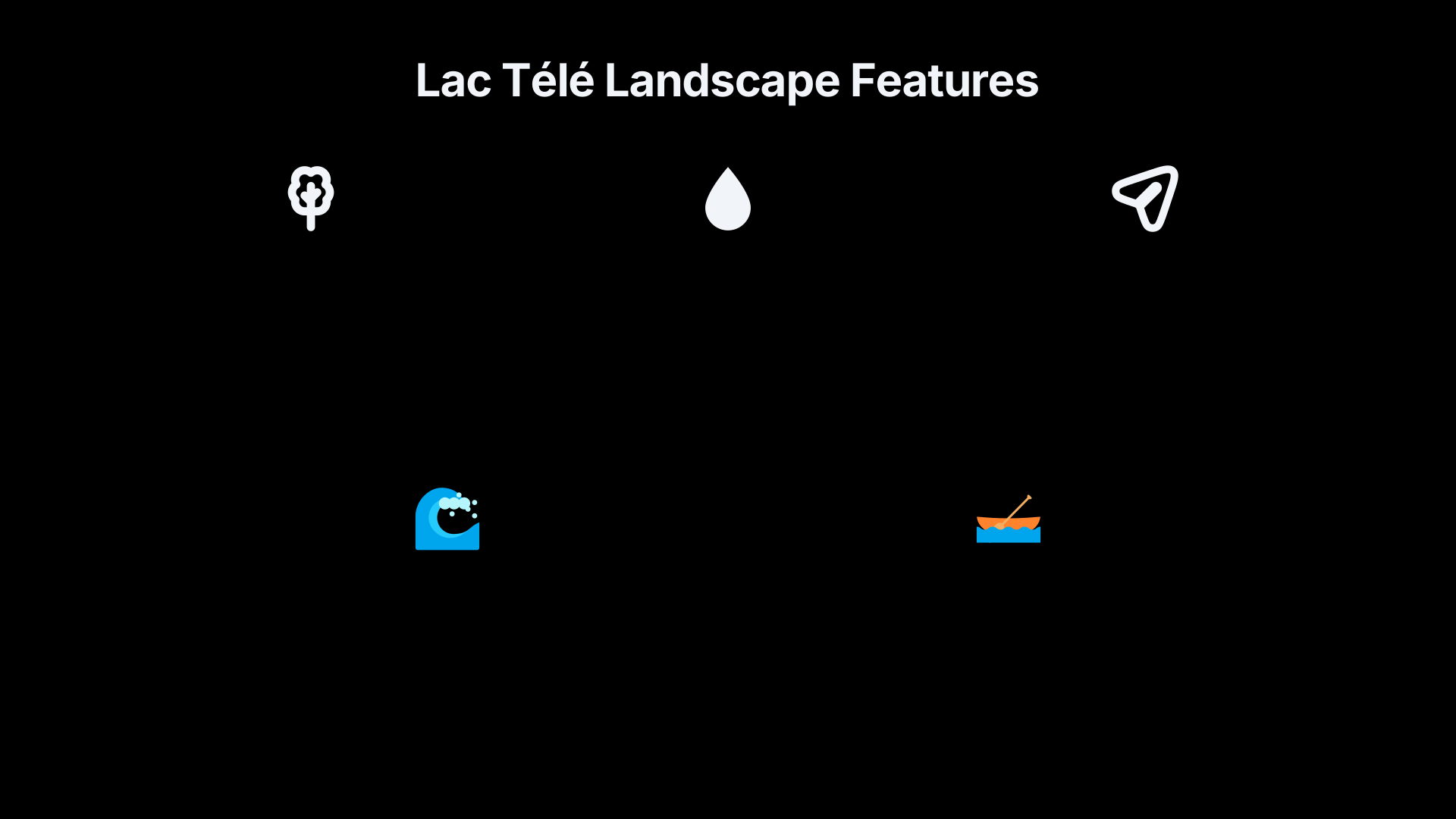
- Flooded forests create narrow viewing corridors where observers see only fragments of animals.
- Floating vegetation can appear to move independently across water.
- Low, flat terrain makes it difficult to judge size and distance.
- Frequent flooding changes shorelines and channels from season to season.
- Remote access routes mean many areas receive very little human traffic.[keybiodiversityareas.org]keybiodiversityareas.orgThe main types of habitat are swamp forest, seasonally flooded grasslands and floating prairies; and are an…Read more…
The lake itself has an unusual appearance. Geological studies note its distinct oval shape, which has inspired speculation and local stories over the years. Scientists studying the lake’s origins, however, have found geological explanations for its formation and have argued against more exotic ideas.[ResearchGate]researchgate.netResearch Gate Lac Télé structure, Republic of Congo: Geological settingLac Télé structure, Republic of Congo: Geological setting…November 1, 2010 — Lac Télé is a large lake, ∼5.6 km in diameter…
For cryptid enthusiasts, the landscape feels mysterious. For ecologists, it is an important example of how vast wetlands function within the Congo Basin.
Wildlife That Shapes Strange Sightings
One reason monster stories persist around Lac Télé is that the reserve already contains impressive wildlife.
The area supports populations of western lowland gorillas, chimpanzees, forest elephants, crocodiles, hippos, buffalo and numerous bird species. Surveys have repeatedly shown that the reserve contains exceptionally rich biodiversity.[wcs.org]congo.wcs.orgCongo Wild Places Lac Télé Community ReserveWCS CongoWild Places Lac Télé Community Reserve - WCS CongoSpanning a mosaic of ecosystems, from swamp forests to terra firme rainforests…
Many of these animals can produce observations that sound mysterious when seen briefly or under poor conditions.
A forest elephant crossing a channel may expose only its back and trunk above the water. A hippo surfacing unexpectedly can appear much larger than it is. Crocodiles create wakes and disturbances that may seem disproportionate to their visible size. Gorillas moving through swamp vegetation can generate loud noises without revealing themselves clearly.[wcs.org]congo.wcs.orgCongo Research and BiomonitoringWCS CongoResearch and Biomonitoring - WCS CongoA census of the Reserve's small population of hippos is carried out every three years, soo…
Some researchers and local observers have suggested that at least some mokele-mbembe reports may stem from encounters with known animals viewed in unusual circumstances. A frequently cited example comes from a BBC documentary in which local people reportedly associated images used by outsiders with a rhinoceros rather than a dinosaur-like creature. Although rhinoceroses no longer occur naturally in the region, this highlights how stories can shift as they pass between cultures and generations.[Wikipedia]WikipediaOpen source on wikipedia.org.
The important point is not that every report has a simple explanation. Rather, Lac Télé contains enough large wildlife to generate genuine uncertainty during brief encounters.
Why Remoteness Matters More Than Monsters
A recurring theme in accounts of Lac Télé is isolation.
Large portions of the reserve have no road access, and travel often depends on rivers, canoes and long journeys through swamp terrain. Researchers, conservation workers and local communities all operate within an environment that remains difficult to survey comprehensively.[Wikipedia]WikipediaLake Télé Community ReserveLake Télé Community Reserve
This remoteness creates two effects.
First, it encourages speculation. People naturally wonder what may exist in places that are rarely visited.
Second, it makes verification difficult. Claims about unusual animals are harder to investigate than they would be in a heavily populated landscape. A report may originate from a fleeting observation in a location that researchers cannot easily revisit.
Cryptozoological interest has often focused on the first effect. Scientists tend to focus on the second. The result is a continuing tension between mystery and evidence. Despite decades of expeditions, no accepted physical evidence for a giant unknown swamp animal has emerged from Lac Télé.[nationalgeographic.com]nationalgeographic.comcongo basin mokele mbembe deforestationNational GeographicWhat's behind the strange rash of 'dinosaur' sightings in…4 Feb 2025 — The legend of mokele-mbembe remains alive, w…
Conservation Value Beyond the Monster Story
The modern importance of Lac Télé increasingly has little to do with monsters.
The reserve is recognised internationally for its biodiversity and wetland ecosystems. It forms part of a huge Ramsar wetland complex and sits within the world’s largest tropical peatland region, a landscape that stores enormous amounts of carbon and plays a significant role in regulating water systems across the Congo Basin.[keybiodiversityareas.org]keybiodiversityareas.orgThe main types of habitat are swamp forest, seasonally flooded grasslands and floating prairies; and are an…Read more…
Research in recent years has highlighted the area’s ecological significance, including its wildlife populations, peat-rich soils and importance for climate regulation. Conservation programmes monitor species such as crocodiles, gorillas and hippos while working alongside local communities who depend on the landscape’s natural resources.[wcs.org]congo.wcs.orgCongo Research and BiomonitoringWCS CongoResearch and Biomonitoring - WCS CongoA census of the Reserve's small population of hippos is carried out every three years, soo…
This creates an interesting irony. The same qualities that made Lac Télé attractive to monster hunters—vast wetlands, hidden waterways and apparent wilderness—are the qualities that make it one of Central Africa’s most valuable conservation landscapes. The legend helped draw attention to the area, but the enduring story of Lac Télé may ultimately be its ecological importance rather than any undiscovered creature lurking in the swamps.[wcs.org]congo.wcs.orgCongo Wild Places Lac Télé Community ReserveWCS CongoWild Places Lac Télé Community Reserve - WCS CongoSpanning a mosaic of ecosystems, from swamp forests to terra firme rainforests…
Amazon book picks
Further Reading
Books and field guides related to Why Did Lac Tele Become Monster Country?. Use these as the next step if you want deeper reading beyond the article.
Congo Journey
Conveys the difficulty and mystery of Central African river and forest environments.
King Leopold's Ghost
Adds historical context for outside engagement with the Congo Basin.
The Last Place on Earth
Appeals to readers interested in remote landscapes and exploration culture.
eBay marketplace picks
Marketplace Samples
Live-tested eBay searches with available results related to this page.




Endnotes
1.
Source: congo.wcs.org
Title: Congo Wild Places Lac Télé Community Reserve
Link:https://congo.wcs.org/Wild-Places/Lac-T%C3%A9l%C3%A9-Community-Reserve
Source snippet
WCS CongoWild Places Lac Télé Community Reserve - WCS CongoSpanning a mosaic of ecosystems, from swamp forests to terra firme rainforests...
2.
Source: rufford.org
Link:https://www.rufford.org/projects/milena-beekmann/understanding-climate-and-biodiversity-interlinkages-in-the-lac-tele-community-landscape-republic-of-congo/
Source snippet
Rufford FoundationUnderstanding Climate and Biodiversity Interlinkages in...Nov 28, 2022 — The Lac Télé Community Reserve, located in th...
3.
Source: researchgate.net
Title: Research Gate Lac Télé structure, Republic of Congo: Geological setting
Link:https://www.researchgate.net/publication/251678536_Lac_Tele_structure_Republic_of_Congo_Geological_setting_of_a_cryptozoological_and_biodiversity_hotspot_and_evidence_against_an_impact_origin
Source snippet
Lac Télé structure, Republic of Congo: Geological setting...November 1, 2010 — Lac Télé is a large lake, ∼5.6 km in diameter...
Published: November 1, 2010
4.
Source: Wikipedia
Link:https://en.wikipedia.org/wiki/Mokele-mbembe
5.
Source: Wikipedia
Title: Western Congolian swamp forests
Link:https://en.wikipedia.org/wiki/Western_Congolian_swamp_forests
6.
Source: programs.wcs.org
Link:https://programs.wcs.org/Portals/255/Reports/LTCR%20annual%20report%202024%20EN.pdf?ver=rFFDqG2VaVN15yyMu0yxyg%3D%3D
Source snippet
WCS ProgramsLAC TÉLÉ COMMUNITY RESERVEIt is home to remarkable biodiversity (large populations of western lowland gorillas, common chimpa...
7.
Source: researchgate.net
Title: 389634084 New surveys reveal high biodiversity of Lake Tele Congo
Link:https://www.researchgate.net/publication/389634084_New_surveys_reveal_high_biodiversity_of_Lake_Tele_Congo
Source snippet
New surveys reveal high biodiversity of Lake Télé, CongoPDF | On Mar 6, 2025, David Brugiere and others published New surveys reveal high...
8.
Source: congo.wcs.org
Title: Congo Research and Biomonitoring
Link:https://congo.wcs.org/Wild-Places/Lac-T%C3%A9l%C3%A9-Community-Reserve/Research-and-Biomonitoring
Source snippet
WCS CongoResearch and Biomonitoring - WCS CongoA census of the Reserve's small population of hippos is carried out every three years, soo...
9.
Source: Wikipedia
Title: Lake Télé Community Reserve
Link:https://en.wikipedia.org/wiki/Lake_T%C3%A9l%C3%A9_Community_Reserve
10.
Source: rsis.ramsar.org
Title: Sites annotated
Link:https://rsis.ramsar.org/sites/default/files/rsiswp_search/exports/Ramsar-Sites-annotated-summary-Congo.pdf?1522100690=
Source snippet
Ramsar Sites Information ServiceAnnotated List of Wetlands of International Importance25 Sept 2017 — The water of Lac Télé is turbid, and...
11.
Source: congo.wcs.org
Link:https://congo.wcs.org/Portals/255/Reports/Lac_Te%CC%81le%CC%81_Community_Reserve_annual_report_2025_EN.pdf?ver=RwlNHIuT0E94is5v63Ocig%3D%3D
Source snippet
WCS CongoLAC TÉLÉ COMMUNITY RESERVEThe Lac Télé Community Reserve is an area where biodiversity, climate and local development are closel...
12.
Source: Wikipedia
Title: Liste des lacs en république du Congo
Link:https://fr.wikipedia.org/wiki/Liste_des_lacs_en_r%C3%A9publique_du_Congo
Source snippet
Liste des lacs en république du CongoLa liste des lacs en république du Congo fournit un inventaire incomplet des étendues d'eau prése...
13.
Source: keybiodiversityareas.org
Link:https://www.keybiodiversityareas.org/site/factsheet/24249
Source snippet
The main types of habitat are swamp forest, seasonally flooded grasslands and floating prairies; and are an...Read more...
14.
Source: nationalgeographic.com
Title: congo basin mokele mbembe deforestation
Link:https://www.nationalgeographic.com/environment/article/congo-basin-mokele-mbembe-deforestation
Source snippet
National GeographicWhat's behind the strange rash of 'dinosaur' sightings in...4 Feb 2025 — The legend of mokele-mbembe remains alive, w...
15.
Source: wiki.iucnapesportal.org
Link:https://wiki.iucnapesportal.org/index.php/Lac_T%C3%A9l%C3%A9_Community_Reserve
Source snippet
APES AtlasLac Télé Community Reserve - The APES AtlasIn the centre of the reserve lies an area of firm land, which is an important habita...
16.
Source: congolandscapes.org
Link:https://www.congolandscapes.org/news/guardians-water-counting-crocodiles-lac-tele-community-reserve-rclt
Source snippet
Congo Basin Landscapes InitiativeCounting Crocodiles in the Lac Télé Community Reserve...Deep within the Lac Télé Community Reserve (RCL...
Additional References
17.
Source: un.int
Link:https://www.un.int/congo/congo/congo-biodiversity
Source snippet
Congo BioDiversityA diverse range of rare and endangered mammals, insects and plants – forest elephants, chimpanzees, western lowland gor...
18.
Source: ebsco.com
Link:https://www.ebsco.com/research-starters/science/mokele-mbembe-cryptozoology
Source snippet
Mokele-Mbembe (cryptozoology) | ScienceOften described as resembling a sauropod dinosaur, it has been likened to the Loch Ness Monster, c...
19.
Source: facebook.com
Link:https://www.facebook.com/NatGeoHistory/posts/for-centuries-locals-have-told-stories-of-mokele-mbembe-a-mythical-dinosaur-and-/1262003935286059/
Source snippet
Mokele-mbembe dinosaur legend in Congo BasinFor centuries, locals have told stories of mokele-mbembe, a mythical dinosaur and legendary c...
20.
Source: impactpool.org
Link:https://www.impactpool.org/jobs/1016494
Source snippet
Peatland Programme Coordinator, WCS-CongoThe position is responsible for leading the development of a peatland protection roadmap to supp...
21.
Source: protectedplanet.net
Link:https://www.protectedplanet.net/166739
Source snippet
Lac Télé/Likouala-aux-herbesProtected Planet is the most up to date and complete source of data on protected areas and other effective ar...
22.
Source: congopeat.net
Link:https://congopeat.net/new-report/
Source snippet
Protecting the Congo Peatlands ReportThere are plans for the Lac Télé Community Reserve to be extended, by 193,400 hectares to the southe...
23.
Source: venturetheplanet.com
Link:https://venturetheplanet.com/searching-for-dinosaurs-in-the-central-african-forests-of-lac-tele-republic-of-congo/
Source snippet
Searching for a Dinosaur Named Mokele Mbembe in...23 May 2021 — The lake is no secret and many adventurers and scientists over the last...
Published: May 2021
24.
Source: herpconbio.org
Link:https://www.herpconbio.org/Volume_2/Issue_2/Jackson_etal_2007.pdf
Source snippet
amphibians and reptiles of the lac télé community reserve...by K JACKSON · 2007 · Cited by 41 — Approximately 62,500 km2 of the Congo f...
25.
Source: youtube.com
Link:https://www.youtube.com/watch?v=mtZ6cjZ_tl4
Source snippet
More Locals Claim to See a Long-Necked Beast in Congo Rivers — Proof of the Mokele Mbembe Mystery...
26.
Source: gtecodev.com
Title: lac teacuteleacute community reserve
Link:https://www.gtecodev.com/lac-teacuteleacute-community-reserve.html
Source snippet
Guido Trivellini Ecology and DevelopmentLac Télé COMMUNITY RESERVE - Guido Trivellini Ecology...The reserve overlaps the world' s larges...
Topic Tree