Why Japan Keeps Finding Monsters
Japan’s mystery-creature tradition is less a single “Japanese Bigfoot” story than a crowded landscape of lake monsters, mountain apes, strange snakes, river beings, giant sea animals, manufactured mummies, tourist mascots and old illustrated folklore.
Page outline Jump by section
Introduction
The useful way to read these stories is not to ask whether Japan has “proved” a hidden monster. It has not. It is to ask why particular landscapes keep producing particular claims. Deep volcanic lakes suggest hidden aquatic beasts; forested mountains invite ape or bear misidentifications; rivers produce cautionary water monsters; and coastal communities turn real marine danger into giant-octopus or mermaid lore. Japan’s cryptid map is therefore a map of terrain, memory, media and imagination as much as a map of alleged animals.
What counts as a Japanese cryptid?
In Japan, many creatures that English-speaking readers might casually group under “cryptids” belong more naturally to folklore. A river being, a giant octopus god, or a strange water imp may be part of local belief, ritual, children’s warnings, Edo-period illustrated books, shrine culture or tourist storytelling rather than a modern biological claim. The National Diet Library notes that Edo-period people wrote treatises about water imps, including an 1820 collection devoted to them, showing that some “monster reports” were already being catalogued long before modern cryptozoology existed.[国立国会図書館]ndl.go.jp国立国会図書館Chapter 3 Rare Birds, Beasts, and Fish国立国会図書館Chapter 3 Rare Birds, Beasts, and Fish
That distinction matters. A cryptid-style claim usually asks, “Is there an unknown animal here?” Folklore often asks something different: “What does this river, mountain or bay mean to the people who live beside it?” Japan’s creature traditions often sit between the two. A local witness may report an odd animal; a newspaper may turn it into a sensation; a town may adopt it as a mascot; and later retellings may fold it back into folklore.
For readers, the clearest categories are:
Modern sighting clusters: reports tied to a time and place, such as Mount Hiba in the 1970s or Lake Ikeda in 1978.
Folklore with animal texture: old creature traditions that resemble otters, turtles, salamanders, octopuses, monkeys, snakes or eels.
Tourism and media afterlives: statues, mascots, films, festivals, souvenirs and local trails that keep a creature alive after evidence fades.
Hoaxes and manufactured specimens: especially “mermaid” and water-creature mummies, which can be culturally interesting without being biological evidence.
Why Lake Ikeda has its own Loch Ness story
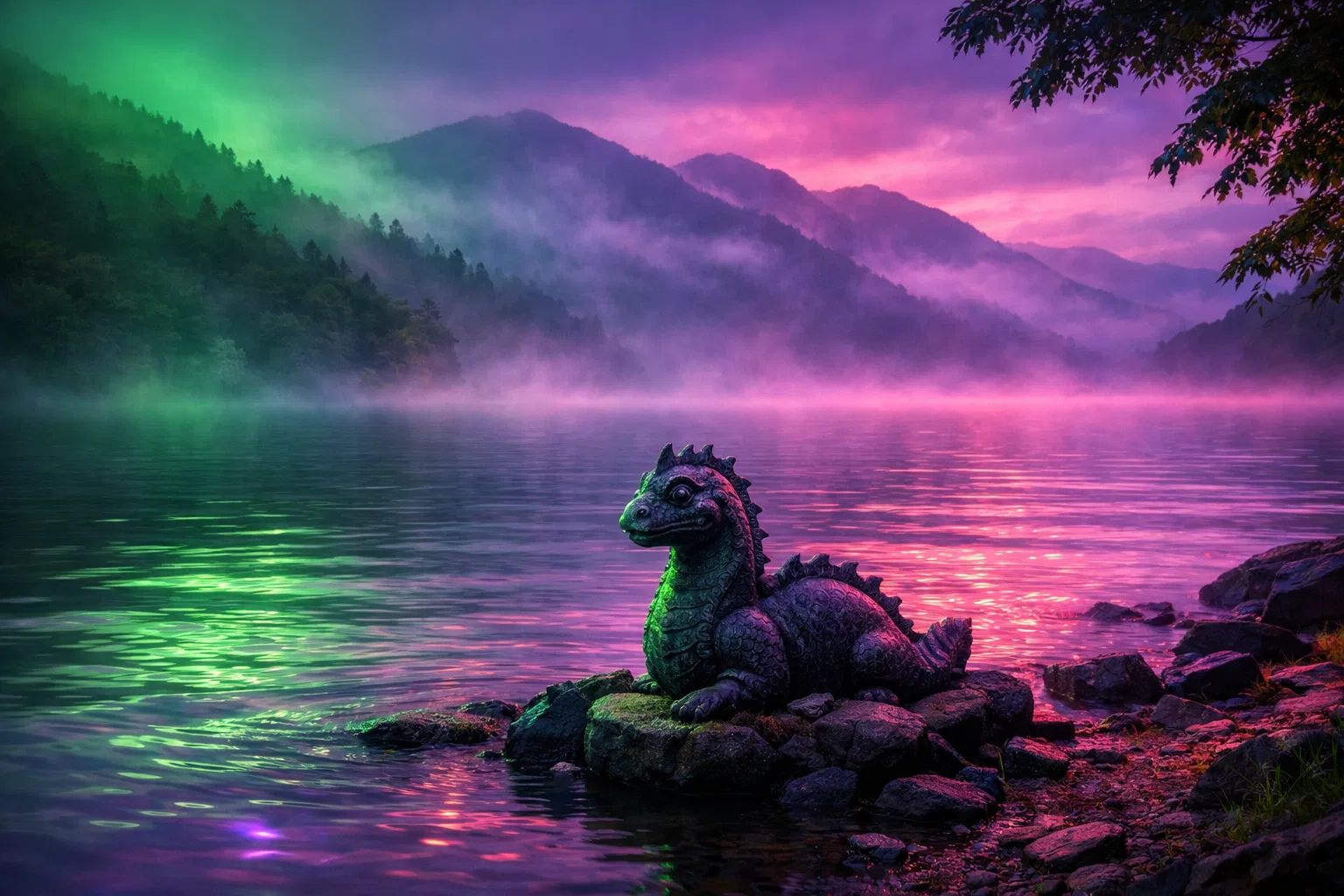
The Lake Ikeda monster is one of Japan’s most recognisable lake-creature legends because it has the right ingredients: a deep volcanic lake, a tourist setting, a dramatic sighting date and a nickname clearly echoing Loch Ness. Lake Ikeda, in Kagoshima Prefecture on Kyushu, is described by Japan’s national tourism organisation as Kyushu’s largest volcanic lake, with a circumference of about 15 kilometres and a depth of more than 200 metres. It is isolated, with no rivers flowing in or out, and is home to large eels that can reach around two metres.[Japan Travel]japan.travelkyushu lake ikeda summer activities kagoshimakyushu lake ikeda summer activities kagoshima
The modern lake-monster story is usually traced to 1978, when people living near the lake reportedly saw something that looked like a large lake creature. A reward of 100,000 yen was offered for a photograph, but the tourism account is blunt about the result: today, the lake’s visible “evidence” is a lakeside statue.[Japan Travel]japan.travelkyushu lake ikeda summer activities kagoshimakyushu lake ikeda summer activities kagoshima
That does not make the story uninteresting. It makes it a clean example of how a cryptid legend can attach itself to a real habitat. A deep lake with large eels gives the imagination something to work with. From a distance, a surfacing eel, wake, floating debris, swimming animal, wave pattern or low-light reflection can become a “body” or “hump”. Once a lake has a monster name, later ambiguous sights are easier to interpret through that lens.
Lake Ikeda also shows the tourism cycle. The monster is not treated by official travel writing as a confirmed animal; it is presented as a local legend folded into the lake’s appeal, alongside watersports, views of Mount Kaimon and seasonal flowers.[Japan Travel]japan.travelkyushu lake ikeda summer activities kagoshimakyushu lake ikeda summer activities kagoshima In other words, the creature has become part of the place even though the biological case remains weak.
The Mount Hiba ape that became Japan’s Bigfoot
The ape-like creature reported around Mount Hiba in Hiroshima Prefecture is probably Japan’s closest equivalent to the Bigfoot pattern: hairy, upright, elusive, seen in a concentrated rural area, and later absorbed into local identity. The sightings are usually associated with what is now Shobara City and the forested Mount Hiba area. A Hiroshima tourism page even folds the creature into a local adventure story, noting that in 1971 Shobara was attracting national attention because an unknown creature had appeared on Mount Hiba.[〖公式〗広島の観光・旅行情報サイト Dive! Hiroshima]dive-hiroshima.com〖公式〗広島の観光・旅行情報サイト Dive! Hiroshima Shobara Izanami Adventure〖公式〗広島の観光・旅行情報サイト Dive! Hiroshima Shobara Izanami Adventure
Retellings differ on exact dates and descriptions, but the core pattern is consistent: the creature was described as ape-like, hairy and human-sized or slightly smaller than many overseas “wild man” traditions. Yokai.com places the first reported sightings in July 1970 in what is now Shobara City, while later summaries describe a cluster of reports through the early 1970s.[yokai.com]yokai.comOpen source on yokai.com.
The strongest sceptical explanation is not exotic. Japan has real large mammals and primates. Japanese macaques, Asiatic black bears, wild boar and deer occupy or have expanded through many rural landscapes, and recent ecological work has mapped the changing ranges of large terrestrial mammals across the main islands.[Nature]nature.comOpen source on nature.com. A fleeting view of a bear standing, a macaque at an unusual angle, a dark animal in brush, or a person in poor visibility could generate a story without requiring an unknown primate.
The Mount Hiba case also shows how a sighting flap can outlive the sightings. Once newspapers, explorers, police attention and visitors arrive, a local animal report becomes a regional brand. Souvenirs, tours and pop-culture references can preserve the creature long after hard evidence stalls. That does not mean every witness invented what they saw. It means the legend we inherit is a mixture of eyewitness interpretation, local fear, media amplification and later playfulness.
The squat mystery snake people still hunt
The squat snake-like creature often described as short, thick-bodied and elusive is one of Japan’s most charming modern mystery-animal traditions because it has repeatedly moved from folklore into public search events. Reports are widespread rather than tied to one lake or mountain, but certain villages and rural areas have made the creature part of local promotion.
The post-war and late twentieth-century version became especially visible through sighting waves, bounties and organised searches. The Japan Times reported in 2001 that unproven sightings of the creature had been common in the post-war period but were met with scepticism, reflecting the tension between local excitement and the lack of a specimen.[The Japan Times]japantimes.co.jptown touting mythical snake find is rare creature really a cash cowtown touting mythical snake find is rare creature really a cash cow Later coverage and summaries of Shimokitayama in Nara Prefecture describe a village expedition launched in the late 1980s, with cash rewards offered for capture or physical evidence, and no confirmed animal found.[Wikipedia]WikipediaOpen source on wikipedia.org.
This is a useful case because the likely explanations are very down-to-earth. Japan has real snakes. A snake that has recently fed may appear unusually thick in the middle. A partially hidden snake, a damaged specimen, a misjudged length, a lizard seen briefly, or a story reshaped by expectation can all produce the “short, fat snake” image. Cryptid catalogues commonly point towards misidentified known snakes or escaped exotic reptiles as possibilities, but the simpler point is that no confirmed specimen has emerged despite repeated attention.[Cryptid Wiki]cryptidz.fandom.comCryptid Wiki Tsuchinoko | Cryptid WikiCryptid Wiki Tsuchinoko | Cryptid Wiki
The creature’s endurance comes from the search itself. Bounties, expeditions, local parks, festivals and films turn absence into an event. People are not only asking whether the animal exists; they are taking part in a rural mystery game with deep roots in mountain storytelling.
River monsters, real animals and the warning built into folklore
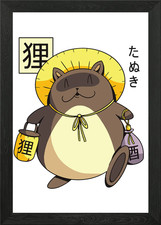
Japan’s river beings are not “cryptids” in the narrow zoological sense, but they are essential to the country’s mystery-creature tradition. The best-known water figure is usually described as a small aquatic being associated with rivers, ponds and pools. Older accounts could be dangerous, warning of drowning, livestock attacks or children straying too close to water; later art and popular culture often made the creature comic, cute or mischievous.
The National Diet Library’s material on Edo-period rare beasts and fish notes that people believed in water imps and that treatises about them were produced, including the 1820 collection mentioned earlier.[国立国会図書館]ndl.go.jp国立国会図書館Chapter 3 Rare Birds, Beasts, and Fish国立国会図書館Chapter 3 Rare Birds, Beasts, and Fish Folklore scholarship also stresses how these beings appear across many genres: local belief, legends, folktales, folk religion and metaphor. One academic article describes the water creature as probably the best-known being of Japan’s folk imagination, associated especially with slow freshwater rivers and pools but known widely across the archipelago.[National Diet Library Digital Collection]dl.ndl.go.jpNational Diet Library Digital Collection The Metamorphosis of the KappaNational Diet Library Digital Collection The Metamorphosis of the Kappa
The animal texture is important. In different places, river beings have been imagined with features recalling otters, turtles, frogs, monkeys or salamanders. Some local names and depictions point towards real river animals; others are clearly supernatural. That blend is exactly why they sit at the edge of cryptid history. They are not evidence for an unknown species, but they show how ordinary animal encounters, drowning danger and river ecology can become memorable creature lore.
Japan’s real freshwater giant also complicates the picture. The Japanese giant salamander is a genuine, protected animal of western Honshu, Shikoku and parts of Kyushu. Ueno Zoo lists it as a mountain-river species that can reach up to 150 centimetres, while the Smithsonian’s National Zoo describes it as one of the world’s largest salamanders, reaching up to about 1.5 metres and 23 kilograms.[Tokyo Zoo]tokyo-zoo.netTokyo Zoo Japanese Giant SalamanderTokyo Zoo Japanese Giant Salamander A nocturnal, wrinkled, large amphibian glimpsed in a stream is not a monster, but it helps explain why Japanese freshwater folklore can feel so physically convincing.
Sea serpents, giant octopuses and the coast’s older monsters
Japan is an island country with long coastlines, fishing communities and deep marine uncertainty, so sea creatures occupy a different imaginative space from lake and mountain cryptids. Some are not cryptids at all but folklore beings rooted in coastal danger, storms, strange surfacing animals and the scale of the sea.
A good example is the giant octopus tradition associated with Hokkaido and Ainu folklore. The creature is usually linked to Uchiura Bay, also known as Funka Bay, and described as a vast octopus-like being. Modern summaries of the tradition preserve striking details: a red body, enormous size, ship-threatening power and a localised bay setting.[Wikipedia]WikipediaOpen source on wikipedia.org.
The biological explanation here is not that a hundred-metre octopus is hiding in the bay. It is that octopuses are real, intelligent, uncanny marine animals, and giant squid, whales, oarfish, sharks, seals, floating carcasses and turbulent water can all generate outsized sea stories. Fishing cultures also encode risk in memorable forms. A monster that can capsize a boat is a story about the sea’s power, not just an animal claim.
Japan also has a long tradition of human-fish and mermaid-like beings, but these belong more to religion, art, medicine, omen lore and curiosity culture than to modern field zoology. That becomes especially clear in the case of “mummified mermaids”.
The mummified mermaid problem: fascinating, but not evidence
Japan’s “mermaid mummies” are among the most visually dramatic mystery-creature objects, but they are also among the clearest examples of why artefacts need testing. A famous specimen kept at a temple in Okayama Prefecture was scientifically examined in the early 2020s. Reports on the analysis describe a creature that had been treated as mysterious for generations, only for scans and materials study to show it was a constructed object rather than a preserved unknown animal.[Live Science]livescience.comLive Science Haunting 'mermaid' mummy discovered in Japan is evenLive Science Haunting 'mermaid' mummy discovered in Japan is even
That result is not a disappointment. It is the point. Manufactured mermaids were part of a wider curiosity economy in which fish parts, paper, cloth, animal hair, scales and other materials could be assembled into wonder objects. They could be displayed, revered, sold, used to attract attention, or framed as relics. Their cultural life may be genuine even when their biology is not.
The mermaid mummy case offers a useful rule for Japanese cryptid material: physical objects are strongest when they can be independently tested, but many famous objects turn out to be crafted, mislabelled or devotional. The correct response is not to sneer at them. It is to separate the biological question from the cultural one. As evidence for hidden animals, they are poor. As evidence for how people made, displayed and believed in monsters, they are excellent.
Why Japan’s cryptid reports often become tourism
Many Japanese mystery creatures survive because towns and regions make them enjoyable. Lake Ikeda has a monster statue. Mount Hiba’s ape-like creature appears in local tourism. Snake hunts become village events. River beings appear in museums, mascots and local goods. This does not automatically mean the stories were invented cynically. Often the process is softer: a reported sighting creates excitement; outsiders arrive; newspapers amplify the tale; and local businesses discover that the creature gives the place a memorable identity.
Tourism also changes the tone. A frightening water being can become cute. A mountain ape can become a mascot. A failed search can become an annual hunt. In that form, the creature no longer depends entirely on evidence. It becomes a shared local joke, a brand, a festival theme or a way to keep rural places visible.
This is especially clear in the Lake Ikeda account. The official tourism framing does not argue that the monster exists. It places the creature alongside the lake’s volcanic origin, large eels, scenery and leisure activities.[Japan Travel]japan.travelkyushu lake ikeda summer activities kagoshimakyushu lake ikeda summer activities kagoshima The cryptid becomes one more way to remember the lake.
The most plausible explanations
Japan’s cryptid landscape does not need one grand explanation. Different cases call for different levels of scepticism.
Misidentified known animals are the strongest explanation for many modern reports. Bears, macaques, large eels, giant salamanders, snakes, boar, deer, marine mammals and large fish all create brief, confusing encounters. Recent research on Japan’s large mammals shows that animal ranges are not static, which matters because unusual sightings can increase when wildlife moves into new or newly quiet human spaces.[Nature]nature.comOpen source on nature.com.
Landscape effects matter too. Deep lakes create wakes, reflections and partial views. Mountain forests hide animals until the last second. Rivers distort size and shape. Fog, dusk, rain, glare and fear all degrade witness interpretation.
Folklore templates shape what people think they have seen. A person who already knows a lake has a monster, a mountain has an ape, or a village has a mystery snake has a ready-made category for an ambiguous sight.
Media and tourism can preserve and amplify reports. Once a creature receives a name, reward, statue, mascot or newspaper label, later retellings become more coherent than the original evidence.
Hoaxes and crafted objects explain some physical “proof”. The mermaid mummy research is the clearest cautionary example: a dramatic specimen may be a cultural artefact, not a biological one.[Live Science]livescience.comLive Science Haunting 'mermaid' mummy discovered in Japan is evenLive Science Haunting 'mermaid' mummy discovered in Japan is even

What a stronger case for Japan’s cryptid traditions would require
The standard for taking a Japanese cryptid seriously as an unknown animal would be the same as anywhere else: verifiable physical evidence, clear provenance, repeatable observation and independent expert analysis. A blurred photograph, a witness memory, a statue, a tourist sign or a centuries-old drawing can be culturally valuable, but it is not enough to establish a new species.
For a lake monster, strong evidence would mean clear footage with scale, location and continuity, plus biological traces such as environmental DNA that cannot be explained by known species. For an ape-like mountain creature, it would mean hair, scat, footprints with reliable chain of custody, or repeated camera-trap records. For a mystery snake, it would mean a captured specimen examined by herpetologists.
Japan already has serious wildlife research infrastructure, protected species programmes and biodiversity monitoring. The Japanese giant salamander, for example, is not treated as a rumour: it is measured, conserved, displayed by zoos and studied in its mountain-river habitat.[si.edu]nationalzoo.si.eduOpen source on si.edu. That contrast is helpful. A real rare animal leaves a research trail; most cryptids leave a story trail.
Why the stories still matter
Japan’s cryptids are worth reading because they reveal how people interpret strange animals through place. A deep Kyushu lake gets a lake monster. A Hiroshima mountain gets an ape-like figure. Rural snake country gets a squat serpent that people keep trying to catch. Rivers get dangerous beings that warn children away from water. Northern seas get enormous tentacled powers. Temples and curiosity markets get preserved “mermaids” that later science can unpack.
The evidence for unknown animals is generally thin. The evidence for rich local storytelling is extremely strong. Japan’s mystery creatures are therefore best approached with two attitudes at once: curiosity about what witnesses and communities have claimed, and caution about turning every old monster into a hidden species. The real pleasure is in the overlap, where ecology, folklore, misidentification, hoax, tourism and pop culture all leave tracks in the same mud.
Amazon book picks
Further Reading
Books and field guides related to Why Japan Keeps Finding Monsters. Use these as the next step if you want deeper reading beyond the article.
The Book of Yokai
Explains Japan's creature traditions from folklore to modern monster culture.
Japanese Tales of Mystery and Imagination
Captures the atmosphere that sustains mystery-creature fascination.
eBay marketplace picks
Marketplace Samples
Live-tested eBay searches with available results related to this page.


Endnotes
1.
Source: japan.travel
Title: kyushu lake ikeda summer activities kagoshima
Link:https://www.japan.travel/en/sg/guide/kyushu-lake-ikeda-summer-activities-kagoshima/
2.
Source: yokai.com
Link:https://yokai.com/hibagon/?srsltid=AfmBOooj52CDTeUD9Jt43LRIZT7KArtCriM-UrcLCrBoFzlTPyHa38js
3.
Source: Wikipedia
Link:https://en.wikipedia.org/wiki/Hibagon
4.
Source: nature.com
Link:https://www.nature.com/articles/s43247-025-02261-w
5.
Source: Wikipedia
Link:https://en.wikipedia.org/wiki/Tsuchinoko
6.
Source: tokyo-zoo.net
Title: Tokyo Zoo Japanese Giant Salamander
Link:https://www.tokyo-zoo.net/en/ueno/encyclopedia/japanese-giant-salamander/index.html
7.
Source: Wikipedia
Link:https://en.wikipedia.org/wiki/Akkorokamui
8.
Source: yokai.com
Link:https://yokai.com/akkorokamui/?srsltid=AfmBOoqJy1UEsxnYffzuky2u6W68H_9OjAtNVY1yk_2HHPuOmYYsV9WW
9.
Source: yokai.com
Link:https://yokai.com/hibagon/?srsltid=AfmBOordOle0BjhZz9TsdHwoAnR1hxKWD0obkRAOVmd-yYkoWp_4jhv0
10.
Source: yokai.com
Link:https://yokai.com/hibagon/?srsltid=AfmBOopLDhJeWhTM7r2L2apDQDkb3E6OlYxinvhRKE9ZvnlOUSxdJq2P
11.
Source: yokai.com
Link:https://yokai.com/kappa/?srsltid=AfmBOoptOdTEZzQny9HtswZfZONw25OTghNaDKsmaIwdnyZpteLvzxBm
12.
Source: yokai.com
Link:https://yokai.com/kappa/?srsltid=AfmBOooPSJePYR1Sj3rgtQ2NT1bbsusFr1k_Cd5wXwKZ2RGFV_FhrNI4
13.
Source: yokai.com
Link:https://yokai.com/?srsltid=AfmBOopd0r5M53B-HrQczrWuVW6WmcERS0oru5uhPtP5J9WHX8fkmTCo
14.
Source: Wikipedia
Title: Lake Ikeda
Link:https://en.wikipedia.org/wiki/Lake_Ikeda
15.
Source: Wikipedia
Title: Kappa (folklore)
Link:https://en.wikipedia.org/wiki/Kappa_%28folklore%29
16.
Source: Wikipedia
Title: Japanese giant salamander
Link:https://en.wikipedia.org/wiki/Japanese_giant_salamander
17.
Source: ndl.go.jp
Title: 国立国会図書館Chapter 3 Rare Birds, Beasts, and Fish
Link:https://www.ndl.go.jp/en/nature/31
18.
Source: dive-hiroshima.com
Title: 〖公式〗広島の観光・旅行情報サイト Dive! Hiroshima Shobara Izanami Adventure
Link:https://dive-hiroshima.com/en/explore/3600/
19.
Source: japantimes.co.jp
Title: town touting mythical snake find is rare creature really a cash cow
Link:https://www.japantimes.co.jp/news/2001/06/16/national/town-touting-mythical-snake-find-is-rare-creature-really-a-cash-cow/
20.
Source: cryptidz.fandom.com
Title: Cryptid Wiki Tsuchinoko | Cryptid Wiki
Link:https://cryptidz.fandom.com/wiki/Tsuchinoko
21.
Source: dl.ndl.go.jp
Title: National Diet Library Digital Collection The Metamorphosis of the Kappa
Link:https://dl.ndl.go.jp/view/prepareDownload?itemId=info%3Andljp%2Fpid%2F10209528
22.
Source: nationalzoo.si.edu
Link:https://nationalzoo.si.edu/animals/japanese-giant-salamander
23.
Source: livescience.com
Title: Live Science Haunting ‘mermaid’ mummy discovered in Japan is even
Link:https://www.livescience.com/haunting-mermaid-mummy-discovered-in-japan-is-even-weirder-than-scientists-expected
24.
Source: cryptidz.fandom.com
Link:https://cryptidz.fandom.com/wiki/Issie
25.
Source: cryptidarchives.fandom.com
Link:https://cryptidarchives.fandom.com/wiki/Hibagon
26.
Source: cryptidarchives.fandom.com
Link:https://cryptidarchives.fandom.com/wiki/Issie
27.
Source: cryptidarchives.fandom.com
Link:https://cryptidarchives.fandom.com/wiki/Tsuchinoko
28.
Source: cryptidz.fandom.com
Title: Reiwa Hibagon
Link:https://cryptidz.fandom.com/wiki/Reiwa_Hibagon
29.
Source: mythus.fandom.com
Link:https://mythus.fandom.com/wiki/Kappa
30.
Source: monster.fandom.com
Link:https://monster.fandom.com/wiki/Akkorokamui
31.
Source: nationalzoo.si.edu
Title: new zoo japanese giant salamander
Link:https://nationalzoo.si.edu/animals/news/new-zoo-japanese-giant-salamander
32.
Source: nationalzoo.si.edu
Title: featured creature japanese giant salamander
Link:https://nationalzoo.si.edu/animals/news/featured-creature-japanese-giant-salamander
33.
Source: reddit.com
Link:https://www.reddit.com/r/Cryptozoology/comments/1fz53xu/tsuchinoko_theory_on_existence_of_this_cryptid/
34.
Source: intojapanwaraku.com
Link:https://intojapanwaraku.com/culture/306520/
35.
Source: espace.library.uq.edu.au
Link:https://espace.library.uq.edu.au/view/UQ%3A5294562
36.
Source: cryptidnomi.com
Link:https://cryptidnomi.com/entries/hibagon
37.
Source: dl.ndl.go.jp
Link:https://dl.ndl.go.jp/view/download/digidepo_10208282_po_1304.pdf?alternativeNo=&contentNo=1
38.
Source: atozmonsters.com
Link:https://atozmonsters.com/akkorokamui/
39.
Source: abookofcreatures.com
Link:https://abookofcreatures.com/2015/05/25/tsuchinoko/
Additional References
40.
Source: youtube.com
Title: Japan’s Underwater Nightmare: The Ningen
Link:http://www.youtube.com/watch?v=XQ1R76Y91Is
Source snippet
Japanese cryptids documentary Exploring 25+ Monsters & Spirits of Japanese Folklore | The Ultimate Yokai Documentary Forgotten Lore...
41.
Source: youtube.com
Title: Ancient Aliens: The Legendary Japanese Kappa (S8, E7) | History
Link:http://www.youtube.com/watch?v=mjOWPD7hJhw
Source snippet
Japan's Underwater Nightmare: The Ningen...
42.
Source: reddit.com
Link:https://www.reddit.com/r/history/comments/11cbnze/mermaid_mummy_at_enjuin_temple_japan_a_mythical/
43.
Source: facebook.com
Link:https://www.facebook.com/groups/davidattenboroughfanss/posts/3216929901911495/
44.
Source: researchgate.net
Link:https://www.researchgate.net/publication/232690881_Environmental_Factors_Affecting_the_Distribution_of_the_Wild_Boar_Sika_Deer_Asiatic_Black_Bear_and_Japanese_Macaque_in_Central_Japan_with_Implications_for_Human-Wildlife_Conflict
45.
Source: facebook.com
Link:https://www.facebook.com/japandailydotjp/posts/a-japanese-giant-salamander-which-is-a-designated-special-national-natural-monum/1511693491000300/
46.
Source: instagram.com
Link:https://www.instagram.com/p/DWyIV3AiBz9/?hl=en
47.
Source: facebook.com
Link:https://www.facebook.com/johanegerkranspublic/posts/akkorokamui-is-a-gigantic-octopus-like-monstercryptid-from-ainu-folklore-similar/1404019808192262/
48.
Source: sustainabledaisen.org
Link:https://www.sustainabledaisen.org/en/all-about-japanese-giant-salamanders-1
49.
Source: researchgate.net
Link:https://www.researchgate.net/publication/237617167_Characteristics_of_Japanese_giant_salamander_Andrias_japonicus_population_in_two_small_tributary_streams_in_Hiroshima_prefecture_western_Honshu_Japan
Topic Tree
Follow this branch
Related pages 192
- Antigua Cryptids
- Maldives Monsters
- Malta Monsters
- Qatar Monsters
- Argentina Monsters
- +187 more in sidebar