Cryptid Reports from Zimbabwe's Rivers and Dams
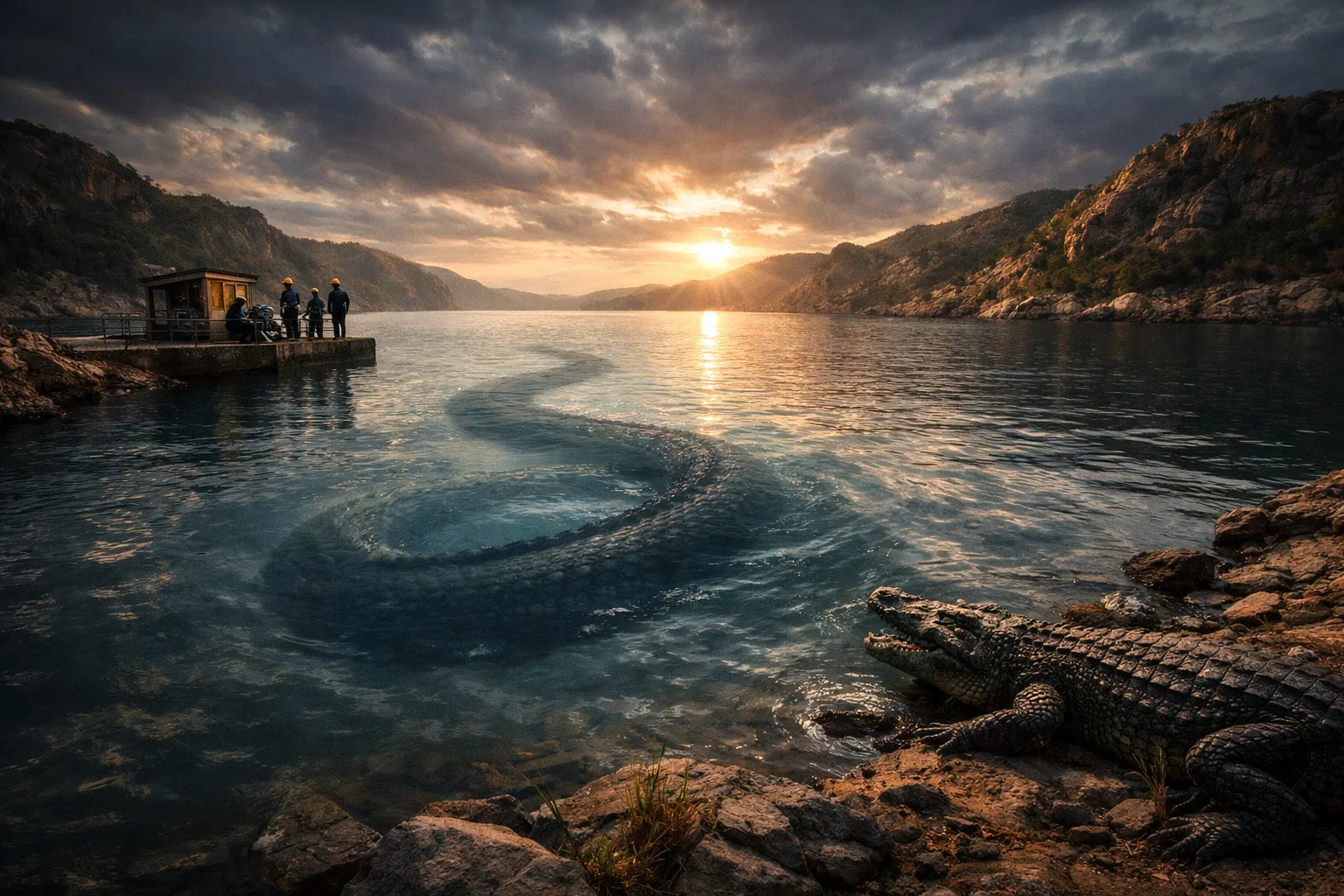
Zimbabwe’s mystery-creature tradition is dominated not by a long catalogue of supposed undiscovered animals, but by powerful beings associated with rivers, dams and dangerous water. The best-known is Nyami Nyami, the serpent-like guardian of the Zambezi whose modern legend became inseparable from the building of Kariba Dam.
Page outline Jump by section
Introduction
What makes the Zimbabwean material compelling is the way folklore, colonial engineering, environmental danger and newspaper reporting overlap. A flood can be both a hydrological event and, within a living spiritual tradition, the anger of a river guardian. A drowning can have an ordinary physical cause while also becoming part of a community’s account of sacred water, forbidden places and proper conduct.
Which creature is Zimbabwe most famous for?
Nyami Nyami is usually represented as a vast river serpent, sometimes with the head of a fish, living in the Zambezi around Kariba Gorge. In popular retellings he protects the Tonga people, controls the river and provides sustenance in difficult times. He is better understood as a river deity or guardian spirit than as a conventional cryptid. Treating him simply as “Zimbabwe’s Loch Ness Monster” strips away the religious and historical meaning that made the story important in the first place.[researchgate.net]researchgate.netResearch Gate Nyami Nyami the Zambezi River god and the Operation NoahNyami Nyami the Zambezi River god and the Operation NoahJuly 5, 2023 — 5 Jul 2023 — Nyami Nyami is a legendary creature and a…
The version most visitors encounter today centres on Kariba Dam, constructed across the Zambezi on the border between what are now Zimbabwe and Zambia. According to the legend, the dam wall separated Nyami Nyami from his mate and violated his home. Major floods struck the construction works in 1957 and 1958, damaging roads, bridges, temporary barriers and equipment. These real disasters were interpreted by some Tonga communities and later storytellers as the river god resisting the project. Engineering accounts explain them as extreme floods in a basin whose behaviour had been estimated from an inadequate historical record.[zambiatourism.com]zambiatourism.comZambia TourismHistory of the Building of Lake KaribaHISTORY OF THE BUILDIND OF LAKE KARIBA The dam was an initiative of the… In 1957…
The story gained emotional force because the dam was not merely a dramatic construction site. Its reservoir displaced Gwembe Tonga communities from the Zambezi valley, in some cases forcibly and with deeply inadequate resettlement. A later World Bank assessment described affected communities as having been forcibly displaced and improperly resettled. Against that history, a river deity fighting the dam can be read not only as a monster tale, but as a story about lost land, ruptured relationships with the river and resistance to colonial power.[World Bank]documents1.worldbank.orgOpen source on worldbank.org.
Some of the most colourful details are harder to verify. Tourist versions frequently claim that drowned workers’ bodies appeared after Tonga elders sacrificed a black calf, or that experts calculated impossible odds against two successive floods. Such episodes circulate widely, but their wording varies and they are often repeated by travel sites rather than supported by contemporary engineering records. The floods themselves are historical; the sacrifice narrative belongs to the legend’s developing oral and commercial afterlife.[wikipedia.org]WikipediaNyami NyamiNyami Nyami

Why do “mermaids” appear in a landlocked country?
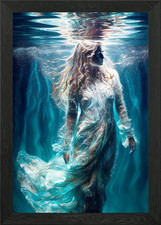
Zimbabwean mermaid reports concern freshwater beings, not sea creatures accidentally stranded inland. English-language news coverage commonly calls them mermaids, while researchers describe them more carefully as water spirits inhabiting rivers, pools, wells, lakes and reservoirs. In Shona traditions, such beings may be dangerous, but they can also possess, instruct or confer healing knowledge on chosen people. Their meaning therefore extends well beyond the familiar European image of a woman with a fish tail.[persee.fr]persee.frPerséechanging Allegories for the Njuzu in Shona LiteraturePerséechanging Allegories for the Njuzu in Shona Literature
Water-spirit stories often mark particular pools as places where ordinary behaviour is unsafe or disrespectful. Accounts may warn against approaching deep water carelessly, crying for someone believed to have been taken, ignoring ritual restrictions or entering a spiritually protected area. Whether or not a reader accepts the supernatural explanation, such traditions can operate as social rules around genuinely hazardous environments. Zimbabwean scholarship has also linked water-spirit beliefs with rainmaking, environmental guardianship and community obligations towards rivers and wetlands.[Academic Journals]academicjournals.orgAcademic JournalsAcademic Journals
The most famous modern episode emerged in 2011–12, when workers reportedly refused to continue installing or repairing pumps at reservoirs near Gokwe and Mutare. Water Resources Minister Samuel Sipepa Nkomo told a Senate committee that frightened employees said they had been driven away by mermaids. Traditional leaders subsequently organised ceremonies intended to appease the water spirits, and an academic account states that pumping at Gokwe resumed after rituals were performed.[voazimbabwe.com]voazimbabwe.comVoice of America'Mermaid' Sightings in Zimbabwe Spark Debate OverVoice of America'Mermaid' Sightings in Zimbabwe Spark Debate Over
This was not evidence that officials had scientifically established the existence of aquatic humanoids. It showed that the belief had practical consequences: workers would not return, equipment remained idle and administrators had to respond to the explanation accepted by people at the site. News reports sometimes framed the affair as a bizarre national curiosity, whereas local and academic treatments placed it within a broader system of sacred-water belief.[theworld.org]theworld.orgzimbabwe mermaids appeased traditional beer ritualzimbabwe mermaids appeased traditional beer ritual
Where do the stories cluster?
Zimbabwe’s strongest creature traditions follow water rather than remote mountain forests. The principal clusters are:
- The Zambezi and Lake Kariba: the territory of Nyami Nyami, especially Kariba Gorge and communities affected by the dam.
- Gokwe and the Midlands: associated with the pump-work stoppage and subsequent ceremonies.
- Mutare and Manicaland: another focus of the 2011–12 reservoir reports.
- Rural dams, pools and rivers elsewhere: places where drownings, disappearances or dangerous currents may be interpreted through water-spirit traditions.[academicjournals.org]academicjournals.orgAcademic JournalsAcademic Journals
This geography matters. Deep pools, sudden drop-offs, crocodiles, submerged branches, poor visibility and powerful currents can all generate frightening encounters without an unknown animal being present. Large dams add machinery failures, intake pipes, turbulence and unfamiliar artificial shorelines. The landscape supplies real danger; folklore supplies a memorable agent and a set of rules for understanding it.
Was there an actual Zimbabwean lake monster flap?
One obscure case sometimes listed in cryptozoological catalogues is the “Umguza monster”, allegedly seen near the Umguza Dam outside Bulawayo around 1950. The surviving online account describes a luminous creature emerging from the water and covering a jetty, accompanied by crabs. It is an extraordinary image, but the modern record appears to rest on specialist cryptid compilations rather than accessible contemporary newspaper pages, photographs or official documentation. It should therefore be treated as an archival curiosity, not a securely established sighting series.[Cryptid Archives]cryptidarchives.fandom.comCryptid Archives Umguza monster | Encyclopaedia of CryptozoologyCryptid Archives Umguza monster | Encyclopaedia of Cryptozoology
That thin documentation illustrates a wider problem. Repetition can make a story seem better evidenced than it is. A claim may pass from an old newspaper summary into a monster encyclopaedia, then into blogs and social media, with every retelling appearing to be a new source. Unless the original report can be located and checked, the number of webpages repeating it tells us little about whether the event occurred as described.
Zimbabwe has no well-supported equivalent of a decades-long Loch Ness campaign involving repeated expeditions, sonar surveys, famous photographs and a large independent witness archive. Its most enduring “monster” narratives remain embedded in spiritual traditions and historical events rather than in sustained attempts to classify an unknown animal.
What ordinary animals can become monsters?
Zimbabwe contains animals quite capable of producing a terrifying glimpse. Crocodiles can surface almost silently, drag prey underwater and leave few clues. Hippopotamuses travel on land at night and may be seen well away from the water. Large monitor lizards, pythons, otters and floating logs can create serpent-like shapes, especially in poor light. A group of swimming animals can also appear to be one long, undulating body.
On land, spotted hyenas have sloping backs, powerful shoulders and strange vocalisations; an unhealthy individual can look very different from the familiar wildlife-guide image. Leopards are secretive and may be reported as unusually large or oddly coloured when glimpsed briefly. Owls, large bats and birds seen against the moon can acquire exaggerated proportions. None of these explanations proves that every witness was mistaken, but they show why a report needs more than sincerity to establish an unknown species.
Water itself is an especially effective monster-maker. Waves crossing in different directions can resemble humps. A crocodile’s head and tail may be mistaken for separate parts of one enormous creature. Foam, vegetation and reflected light can make an object appear luminous or moving against the current. Where people already expect a dangerous water being, an ambiguous shape is more likely to be interpreted within that tradition.
Folklore, eyewitness claim or zoological evidence?
Zimbabwe’s stories become clearer when their different categories are kept separate.
Folklore includes inherited accounts of river guardians and water spirits. These may express religious belief, environmental obligations and collective memory. They do not require physical evidence to have cultural meaning.
Eyewitness claims are reports that someone saw or experienced something unusual. They are evidence that an experience was reported, not automatically evidence that the witness identified its cause correctly.
Media stories record what officials, workers or residents said. The 2012 mermaid coverage is valuable because it documents a work stoppage and a public dispute over its cause. It does not verify mermaids as biological creatures.[abc.net.au]abc.net.aumermaids feared in landlocked zimbabwemermaids feared in landlocked zimbabwe
Zoological evidence would require clear, independently examinable material: a body, tissue with a reliable chain of custody, repeatable observations, diagnostic photographs or environmental DNA that could not be attributed to a known species. No comparable evidence has emerged for Nyami Nyami, mermaid-like beings or the Umguza monster.
This distinction is not a demand that folklore be dismissed. It prevents two opposite mistakes: presenting sacred traditions as failed science, or presenting culturally important stories as proof of literal undiscovered animals.
How Zimbabwe’s cryptid traditions changed in retelling
Nyami Nyami’s best-known modern narrative was reshaped by the Kariba project. A river guardian became the supernatural opponent of a vast dam; floods became acts of retaliation; displacement became separation from the deity’s landscape. The legend could then be told as a concise drama of nature against machinery, even when the much harsher human history of forced resettlement was left in the background.[worldbank.org]documents1.worldbank.orgOpen source on worldbank.org.
Tourism further standardised the image. Carvings, pendants and souvenirs commonly portray a curling snake-bodied creature with a fish-like head. Travel writing often gives him a fixed size, personality and family story, although oral traditions are rarely so uniform. The creature now functions simultaneously as sacred guardian, regional emblem, tourist symbol and popular lake monster.[wikipedia.org]WikipediaNyami NyamiNyami Nyami
The mermaid stories have travelled differently. Their older roots lie in water-spirit traditions, but newspaper language translated them into the globally familiar category of “mermaids”. That made the 2012 pump dispute easy to circulate internationally, while flattening distinctions between spiritual possession, ritual authority, dangerous pools and claims of seeing a physical half-fish being.[abc.net.au]abc.net.aumermaids feared in landlocked zimbabwemermaids feared in landlocked zimbabwe
Modern social media adds another layer. Unverified photographs, recycled stories and generic mermaid imagery can be attached to Zimbabwean locations without a traceable witness or date. The most dependable approach is to work backwards: find the earliest report, identify who made the claim, ask whether independent witnesses agreed, and separate later illustrations from evidence created at the time.
What is the most reasonable verdict?
There is no strong mainstream evidence that Zimbabwe contains an undiscovered giant river animal, aquatic humanoid or other zoological cryptid. The most famous accounts are better classified as religious tradition, folklore, community testimony, media-amplified incident and occasional poorly documented monster report.
That conclusion does not make the stories empty. Nyami Nyami preserves a relationship between the Tonga people and the Zambezi while carrying the memory of a dam that transformed both landscape and community. Water-spirit reports show how belief can affect safety, labour and government decisions in the present. Even the obscure Umguza tale demonstrates how a single dramatic report can survive for decades after its original documentation becomes difficult to trace.
Zimbabwe’s monster tradition is therefore most revealing when read on two levels at once. On the physical level, dangerous wildlife, turbulent water, optical ambiguity and ordinary mechanical failures offer plausible explanations. On the cultural level, the creatures give form to fear, sacred geography, environmental responsibility and historical loss. The mystery is not simply whether a serpent waits beneath Lake Kariba. It is why the serpent remains such a powerful way of talking about what happened there.
Amazon book picks
Further Reading
Books and field guides related to What Lurks in Zimbabwe's Rivers and Dams?. Use these as the next step if you want deeper reading beyond the article.
The World of Lore: Monstrous Creatures
Examines legendary creatures and how stories persist.
African Folktales
Explores oral traditions that underpin Zimbabwean water-creature stories.
eBay marketplace picks
Marketplace Samples
Live-tested eBay searches with available results related to this page.



Endnotes
1.
Source: researchgate.net
Title: Research Gate Nyami Nyami the Zambezi River god and the Operation Noah
Link:https://www.researchgate.net/publication/372133322_Nyami_Nyami_the_Zambezi_River_god_and_the_Operation_Noah
Source snippet
Nyami Nyami the Zambezi River god and the Operation NoahJuly 5, 2023 — 5 Jul 2023 — Nyami Nyami is a legendary creature and a...
Published: July 5, 2023
2.
Source: chezanami.org
Link:https://chezanami.org/zimbabwes-legendary-nyami-nyami-river-monster/
Source snippet
Zimbabwe's legendary Nyami Nyami River MonsterThe Nyami Nyami is one of the Tonga people's most important gods. Living on the banks of th...
3.
Source: Wikipedia
Title: Nyami Nyami
Link:https://en.wikipedia.org/wiki/Nyami_Nyami
4.
Source: archive.olats.org
Link:https://archive.olats.org/africa/projets/gpEau/genie/contrib/contrib_zilberg.shtml
5.
Source: academicjournals.org
Title: Academic Journals
Link:https://academicjournals.org/journal/IJSA/article-full-text-pdf/B5D05C941150
6.
Source: theworld.org
Title: zimbabwe mermaids appeased traditional beer ritual
Link:https://theworld.org/stories/2017/05/13/zimbabwe-mermaids-appeased-traditional-beer-ritual
7.
Source: Wikipedia
Title: List of lake monsters
Link:https://en.wikipedia.org/wiki/List_of_lake_monsters
8.
Source: Wikipedia
Title: List of cryptids
Link:https://en.wikipedia.org/wiki/List_of_cryptids
9.
Source: Wikipedia
Title: Water spirit
Link:https://en.wikipedia.org/wiki/Water_spirit
10.
Source: Wikipedia
Title: Kariba Dam
Link:https://en.wikipedia.org/wiki/Kariba_Dam
11.
Source: archive.org
Link:https://archive.org/stream/Cryptozoology_201608/Cryptozoology_djvu.txt
12.
Source: zambiatourism.com
Link:https://www.zambiatourism.com/destinations/lakes/lake-kariba/history/
Source snippet
Zambia TourismHistory of the Building of Lake KaribaHISTORY OF THE BUILDIND OF LAKE KARIBA The dam was an initiative of the... In 1957...
13.
Source: zambianhistory.com
Link:https://www.zambianhistory.com/kariba
Source snippet
Zambian Historykariba dam - History on Northern Rhodesia currently Zambia.The unprecedented floods of 1957 had been exceeded, and this ca...
14.
Source: documents1.worldbank.org
Link:https://documents1.worldbank.org/curated/en/673251468334892737/pdf/37848.pdf
15.
Source: documents1.worldbank.org
Title: World Bank Vo L. 2
Link:https://documents1.worldbank.org/curated/en/313541493249083622/pdf/profiles-of-large-dams-background-document.pdf
16.
Source: changasafaricamp.com
Link:https://changasafaricamp.com/the-legend-of-nyami-nyami/
17.
Source: siyabona.com
Title: Kariba Dam
Link:https://www.siyabona.com/kariba-dam-history.html
18.
Source: persee.fr
Title: Perséechanging Allegories for the Njuzu in Shona Literature
Link:https://www.persee.fr/doc/jafr_0399-0346_1999_num
19.
Source: mg.co.za
Title: 2020 02 06 chasing mermaids in zimbabwe
Link:https://mg.co.za/news/africa/2020-02-06-chasing-mermaids-in-zimbabwe/
20.
Source: voazimbabwe.com
Title: Voice of America’Mermaid’ Sightings in Zimbabwe Spark Debate Over
Link:https://www.voazimbabwe.com/a/zimbabwe-mermaids-problem-for-water-minister-138664059/1467126.html
21.
Source: abc.net.au
Title: mermaids feared in landlocked zimbabwe
Link:https://www.abc.net.au/news/2012-04-29/mermaids-feared-in-landlocked-zimbabwe/3978462
22.
Source: cryptidarchives.fandom.com
Title: Cryptid Archives Umguza monster | Encyclopaedia of Cryptozoology
Link:https://cryptidarchives.fandom.com/wiki/Umguza_monster
23.
Source: scielo.org.za
Link:https://scielo.org.za/pdf/jsr/v28n2/07.pdf
24.
Source: yorktheatreroyal.co.uk
Title: York Theatre Royal Nyami Nyami
Link:https://www.yorktheatreroyal.co.uk/latest/nyami-nyami-the-river-god/
25.
Source: documents1.worldbank.org
Title: multi page
Link:https://documents1.worldbank.org/curated/en/495981468767432101/pdf/multi-page.pdf
26.
Source: documents1.worldbank.org
Title: Environmental and Social Impact Assessment
Link:https://documents1.worldbank.org/curated/en/408081604056963425/pdf/Environmental-and-Social-Impact-Assessment.pdf
27.
Source: documents.worldbank.org
Link:https://documents.worldbank.org/curated/en/909961468740152010/pdf/multi0page.pdf
28.
Source: documents1.worldbank.org
Title: SFG2994 V1 RP P102459 Box402886B PUBLIC Disclosed 2 8 2017
Link:https://documents1.worldbank.org/curated/en/893101486621621055/pdf/SFG2994-V1-RP-P102459-Box402886B-PUBLIC-Disclosed-2-8-2017.pdf
29.
Source: documents1.worldbank.org
Title: REP480 JRN PUBLIC Box393225B
Link:https://documents1.worldbank.org/curated/en/240901467987832046/pdf/REP480-JRN-PUBLIC-Box393225B.pdf
30.
Source: documents1.worldbank.org
Link:https://documents1.worldbank.org/curated/en/421681468180239228/pdf/RP9960RP0P10241C10SF1AFR1EA1P102459.pdf
31.
Source: documents.worldbank.org
Title: multi page
Link:https://documents.worldbank.org/curated/en/646631468739505595/pdf/multi-page.pdf
32.
Source: documents1.worldbank.org
Link:https://documents1.worldbank.org/curated/en/312711468191648859/pdf/PAD9070P146515010Box385378B00OUO090.pdft
33.
Source: abookofcreatures.com
Link:https://abookofcreatures.com/category/zimbabwe/
34.
Source: cryptidz.fandom.com
Link:https://cryptidz.fandom.com/wiki/Agogwe
35.
Source: cryptidz.fandom.com
Title: Lake Monsters
Link:https://cryptidz.fandom.com/wiki/Lake_Monsters
36.
Source: cryptidz.fandom.com
Link:https://cryptidz.fandom.com/wiki/Otang
37.
Source: cryptidarchives.fandom.com
Title: Mokele mbembe
Link:https://cryptidarchives.fandom.com/wiki/Mokele-mbembe
38.
Source: cryptidarchives.fandom.com
Link:https://cryptidarchives.fandom.com/wiki/Chipekwe
39.
Source: makuda.no
Title: Nyami Nyami
Link:https://www.makuda.no/post/grow-your-blog-community
Additional References
40.
Source: newyorker.com
Link:https://www.newyorker.com/tech/annals-of-technology/one-of-africas-biggest-dams-is-falling-apart
Source snippet
Mosul Dam urgently requires maintenance due to the unstable gypsum bedrock beneath it, which poses a massive risk of collapse and potenti...
41.
Source: victoriafalls-guide.net
Link:https://www.victoriafalls-guide.net/african-mythology.html
Source snippet
Victoria Falls GuideAfrican Mythology in Zimbabwe and ZambiaAfrican mythology of Nyami Nyami - rare weather and seismic phenomena in Kari...
42.
Source: youtube.com
Title: Nyami Nyami, The Zambezi River god
Link:https://www.youtube.com/watch?v=n6TjGpkJ3Qo
Source snippet
The mystical legend of Nyami Nyami and the untold secrets of the Kariba Dam...
43.
Source: youtube.com
Title: The mystical legend of Nyami Nyami and the untold secrets of the Kariba Dam
Link:https://www.youtube.com/watch?v=XANIZ953KFc
Source snippet
The Untold Story of Njuzu/Mermaids in Zimbabwe...
44.
Source: youtube.com
Title: The Story Of Nyami Nyami (The River God)
Link:https://www.youtube.com/watch?v=I4q-wajejcc
Source snippet
Nyami Nyami, The Zambezi River god - MYTHS & LEGENDS OF AFRICA...
45.
Source: facebook.com
Link:https://www.facebook.com/groups/875714655853865/posts/8921168201308430/
46.
Source: messybeast.com
Link:https://messybeast.com/genetics/anomalous-bigcats.html
47.
Source: abookofcreatures.com
Link:https://abookofcreatures.com/tag/african-folklore/
48.
Source: reddit.com
Link:https://www.reddit.com/r/Cryptozoology/comments/11n5rsl/african_primates/
49.
Source: facebook.com
Link:https://www.facebook.com/itsnandwa/posts/breaking-newspolice-are-currently-doing-investigation-after-a-strange-animal-was/1483308503166761/
Topic Tree
Follow this branch
Related pages 192
- Antigua Cryptids
- Maldives Monsters
- Malta Monsters
- Qatar Monsters
- Argentina Monsters
- +187 more in sidebar