Within Zambia Cryptids
Why Do Zambia's Wetlands Breed Monster Stories?
Floods, hidden animals and poor visibility can turn dangerous wetlands into lasting stories of flying and water-dwelling monsters.
On this page
- Hazards hidden in swamps and river crossings
- Birds, bats, crocodiles and mistaken sightings
- How folklore combines many dangers into one creature
Page outline Jump by section
Introduction
Many of Zambia’s most famous monster stories come from wetlands rather than mountains or deep forests. That is not a coincidence. Vast swamp systems such as the Jiundu wetlands in the north-west and the Bangweulu wetlands in the north-east are places where visibility is poor, water levels change quickly, wildlife often appears only briefly, and travel can be genuinely dangerous. In such environments, a glimpse of an unusual bird, a crocodile surfacing among reeds, or a sudden disturbance in dark water can easily become the seed of a lasting story.
The result is not simply a collection of strange creature tales. Zambia’s wetland legends show how real environmental hazards, local folklore and fleeting encounters with wildlife can merge into reports of flying monsters, mysterious water beasts and other unexplained creatures. Understanding the landscape helps explain why these stories have survived for so long.[africanparks.org]africanparks.orgAfrican ParksBangweulu WetlandsBangweulu Wetlands ・ home to hundreds of fish and bird species, the endemic ・ the Endangered shoebill. rei…
Why Wetlands Are Perfect Settings for Monster Reports
The Bangweulu system alone covers thousands of square kilometres of floodplains, swamps, lagoons and shallow lakes. Its name is often translated as “where the water meets the sky”, a reminder of how difficult it can be to distinguish land, water and horizon during floods. Seasonal expansion can transform familiar routes and create new channels, islands and reed beds.[Wikipedia]WikipediaBangweulu WetlandsBangweulu Wetlands
For people travelling by canoe or crossing rivers, wetlands create several conditions that encourage unusual reports:
- Distances are difficult to judge across flat water.
- Animals are often partly hidden by reeds or papyrus.
- Mist, glare and heat haze can distort shapes.
- Floods can arrive suddenly and seem almost supernatural.
- Dangerous wildlife may be heard long before it is clearly seen.
A brief sighting in such conditions rarely provides a complete picture. Witnesses often see only wings, a head, a wake in the water, or movement in vegetation. The human mind naturally fills in the missing details, especially when local traditions already offer explanations for mysterious events.
Hazards Hidden in Swamps and River Crossings
One recurring feature of Zambian monster traditions is their connection to dangerous waterways. Early accounts of the kongamato were tied to river crossings, ferries and swamp routes where travellers faced real risks from flooding and navigation errors. Rather than being described solely as an animal, the creature was sometimes associated with sudden water hazards and accidents.
This connection makes practical sense. Wetlands are environments where people can disappear, canoes can overturn and bodies may never be recovered. When deaths occur without witnesses, communities often develop stories that personalise the danger. Instead of an unpredictable combination of currents, weather and wildlife, a single feared creature becomes the explanation.
The same process appears in many parts of the world. Dangerous stretches of water acquire a reputation, that reputation becomes attached to a creature, and over time the creature becomes a recognised part of local folklore. In Zambia, the swampy landscapes associated with the kongamato and other water beings fit this pattern remarkably well.[Wikipedia]WikipediaOpen source on wikipedia.org.
Birds, Bats, Crocodiles and Mistaken Sightings
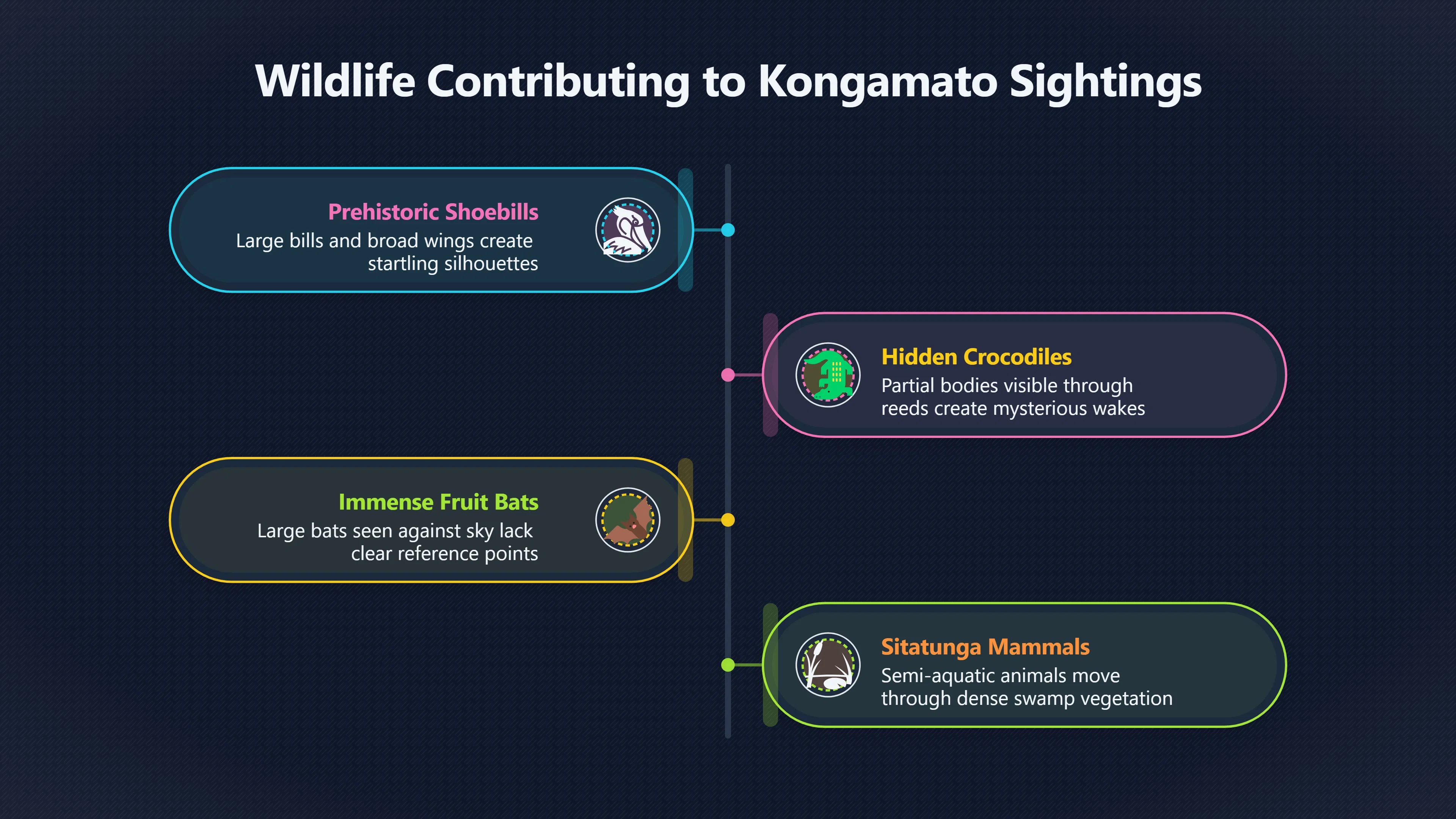
Wetlands contain some of the most visually unusual animals in Africa. Bangweulu supports hundreds of bird species, including the famous shoebill, a large, prehistoric-looking bird that can stand motionless for long periods before suddenly taking flight. The region also hosts large populations of water birds, bats, crocodiles and semi-aquatic mammals.[africanparks.org]africanparks.orgAfrican ParksBangweulu WetlandsBangweulu Wetlands ・ home to hundreds of fish and bird species, the endemic ・ the Endangered shoebill. rei…
Several of these animals can contribute to monster reports.
Large birds: A shoebill seen unexpectedly at close range can appear startling even to experienced wildlife observers. Its enormous bill, broad wings and unusual silhouette make it look unlike most familiar birds. Visitors routinely describe it as prehistoric-looking.[africanparks.org]africanparks.orgAfrican ParksVisit BangweuluBangweulu is one of the best places to view the rare and prehistoric-looking shoebill – as well as hundreds o…
Crocodiles: Crocodiles often expose only part of their bodies above water. A head, tail or wake seen through reeds may look much larger or stranger than it really is. Bangweulu’s wetlands support substantial crocodile populations.[Wikipedia]WikipediaBangweulu WetlandsBangweulu Wetlands
Fruit bats: Northern Zambia is famous for immense bat concentrations. Large bats viewed at dusk can appear much bigger than they are, especially when seen against the sky with no clear reference point.[Wikipedia]WikipediaBangweulu WetlandsBangweulu Wetlands
Sitatunga and other wetland mammals: Animals adapted to swamp life frequently move through dense vegetation with only parts of their bodies visible. An observer may see a horn, a neck or a splash without identifying the animal itself.[African Parks]africanparks.orgOpen source on africanparks.org.
When reports of creatures such as the kongamato are examined, sceptical explanations often focus on unusual birds, large bats or brief sightings of known wildlife rather than unknown species. The conditions of the wetlands make those mistakes easier to understand.[Wikipedia]WikipediaOpen source on wikipedia.org.

Why Flying Monsters Appear More Often Than Forest Monsters
The kongamato tradition is especially associated with swamps and river systems. That habitat may be important to understanding why the creature became a flying monster rather than a land beast.
Across open wetlands, large birds are highly visible. A distant animal crossing the sky can attract attention from far away, while details remain impossible to distinguish. Witnesses may remember the wings and general shape but disagree about size, colour or anatomy.
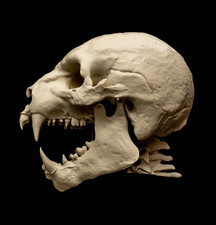
Wetlands also produce dramatic silhouettes. Birds flying at dawn or dusk often appear as dark outlines against bright skies or reflective water. In those conditions, ordinary species can look unfamiliar. A beak may resemble teeth, a crest may resemble horns and a broad wingbeat may seem reptilian.
The fact that later descriptions of the kongamato often emphasised wings, beaks and aerial attacks is consistent with the kinds of encounters people are most likely to have in marsh environments. Whether the original stories referred to an actual animal, a spirit-like being or a mixture of both, the wetland setting naturally encourages flying-creature reports.[Wikipedia]WikipediaOpen source on wikipedia.org.
How Folklore Combines Many Dangers Into One Creature
Perhaps the most important point is that monster stories do not always originate from a single mysterious sighting. Folklore often combines many separate fears into one memorable figure.
In a wetland environment those fears can include:
- Drowning during floods.
- Crocodile attacks.
- Getting lost in reed beds.
- Sudden storms.
- Dangerous river crossings.
- Encounters with unfamiliar wildlife.
A legendary creature becomes a way to represent all of these threats at once. Instead of remembering a long list of hazards, people remember a monster associated with a particular place.
This helps explain why descriptions of some Zambian creatures vary so widely. Different witnesses may be describing different experiences, while the folklore tradition gathers them under one name. The resulting creature becomes less like a biological species and more like a symbol of the landscape itself.
Wetland Mysteries and the Persistence of Monster Legends
The wetlands of Zambia remain among the most remote and ecologically rich environments in Africa. Bangweulu alone supports hundreds of bird species, large mammals, crocodiles and vast areas that are difficult to access or survey completely.[africanparks.org]africanparks.orgAfrican ParksBangweulu WetlandsBangweulu Wetlands ・ home to hundreds of fish and bird species, the endemic ・ the Endangered shoebill. rei…
That remoteness helps keep monster stories alive. Most sightings are brief. Many locations are hard to revisit. Environmental conditions change with the seasons. Even today, visitors can encounter strange sounds, unexpected wildlife and confusing visual effects.
For believers, those conditions leave room for unknown creatures. For sceptics, they provide a natural explanation for why extraordinary reports emerge repeatedly from the same landscapes. Either way, Zambia’s wetlands demonstrate how floods, reeds, hidden animals and genuine danger can turn ordinary encounters into enduring tales of monsters.
Amazon book picks
Further Reading
Books and field guides related to Why Do Zambia's Wetlands Breed Monster Stories?. Use these as the next step if you want deeper reading beyond the article.
Field Guide To Bigfoot, Yeti, & Other Mystery Primates Worldwide
Useful for readers exploring how local legends fit global patterns.
On the Track of Unknown Animals
Provides comparative cases of mystery creatures worldwide.
eBay marketplace picks
Marketplace Samples
Live-tested eBay searches with available results related to this page.

Endnotes
1.
Source: Wikipedia
Title: Bangweulu Wetlands
Link:https://en.wikipedia.org/wiki/Bangweulu_Wetlands
2.
Source: Wikipedia
Title: Lake Bangweulu
Link:https://en.wikipedia.org/wiki/Lake_Bangweulu
3.
Source: modis.gsfc.nasa.gov
Link:https://modis.gsfc.nasa.gov/gallery/individual.php?db_date=2021
Source snippet
May 8, 2021 - Lake Bangweulu, Zambia - MODIS Web - NASA8 May 2021 — Lake Bangweulu and the surrounding wetlands have been identified...
Published: May 8, 2021
4.
Source: Wikipedia
Link:https://en.wikipedia.org/wiki/Kongamato
5.
Source: whc.unesco.org
Link:https://whc.unesco.org/en/tentativelists/6989/
Source snippet
UNESCO World Heritage CentreBangweulu WetlandsThe wetland supports a globally important assemblage of other species, including the threat...
6.
Source: science.nasa.gov
Link:https://science.nasa.gov/earth/earth-observatory/a-swampy-home-for-shoebills-148400/
7.
Source: zambia.travel
Link:https://www.zambia.travel/bangweulu.html
8.
Source: youtube.com
Title: Bangweulu wetlands
Link:https://www.youtube.com/watch?v=P2yh6KpwZzs
Source snippet
3 Mini Monster: Kongamato...
9.
Source: africanparks.org
Link:https://www.africanparks.org/the-parks/bangweulu
Source snippet
African ParksBangweulu WetlandsBangweulu Wetlands ・ home to hundreds of fish and bird species, the endemic ・ the Endangered shoebill. rei...
10.
Source: abookofcreatures.com
Link:https://abookofcreatures.com/2019/05/20/kongamato/
Source snippet
A Book of CreaturesKongamato20 May 2019 — The Kongamato, “overwhelmer of boats”, is a river-shutter of Kasempa District in northern Zambi...
Published: May 2019
11.
Source: africanparks.org
Link:https://www.africanparks.org/the-parks/bangweulu/visit-bangweulu
Source snippet
African ParksVisit BangweuluBangweulu is one of the best places to view the rare and prehistoric-looking shoebill – as well as hundreds o...
12.
Source: ebsco.com
Link:https://www.ebsco.com/research-starters/zoology/bangweulu-wetlands
13.
Source: africanparks.org
Link:https://www.africanparks.org/the-parks/bangweulu/biodiversity-conservation
14.
Source: cryptidarchives.fandom.com
Link:https://cryptidarchives.fandom.com/wiki/Kongamato
15.
Source: safarifrank.com
Link:https://safarifrank.com/locations/bangweulu-wetlands/
Additional References
16.
Source: birdingplaces.eu
Link:https://birdingplaces.eu/en/birdingplaces/zambia/bangweulu-wetlands
Source snippet
Bangweulu WetlandsBangweulu is home to between 300 and 500 Shoebills, the most southerly population of Shoebills in the world. Another sp...
17.
Source: youtube.com
Title: Zambia part 2: Bangweulu Wetlands Park
Link:https://www.youtube.com/watch?v=fQF7ipWK0xU
Source snippet
6 Filming in the swamps of Busanga with Nick and Nate...
18.
Source: audleytravel.com
Link:https://www.audleytravel.com/zambia/places-to-go/bangweulu-wetlands
19.
Source: safarioptions.com
Link:https://safarioptions.com/bangweulu-wetlands-safari
20.
Source: ukuri.travel
Link:https://ukuri.travel/places/bangweulu-wetlands
21.
Source: facebook.com
Link:https://www.facebook.com/zambiatourism/posts/bangweulu-is-one-of-the-worlds-great-wetland-systems-comprising-lake-bangweulu-t/2163806097011912/
22.
Source: mythlok.com
Link:https://mythlok.com/kongamato/
23.
Source: reddit.com
Link:https://www.reddit.com/r/TwoSentenceHorror/comments/14xdlf9/our_canoeing_group_was_told_that_the_fjords_near/
24.
Source: facebook.com
Link:https://www.facebook.com/61572216817251/posts/the-kongamato-the-winged-menace-of-the-african-swampslurking-within-the-dense-is/122163752108740560/
25.
Source: instagram.com
Link:https://www.instagram.com/reel/DUNT-HsirQy/
Topic Tree