Does Eswatini Have Its Own Monster Legend?
Eswatini does not have a well-documented modern “monster flap” comparable to Loch Ness, Mokele-mbembe, or South Africa’s 1997 Mamlambo panic.
Page outline Jump by section
Introduction
That matters because the most honest “cryptids of Eswatini” page is not a catalogue of alleged lake monsters and phantom cats. It is a careful look at how Swazi oral literature uses animal-like beings, water, skins, birds, frogs, ogres, and river spaces to make the natural world feel alive with danger and moral force. Modern tourism promotes Eswatini for wildlife, scenery, culture, reserves, mountains, valleys, forests and plains, but those real landscapes also help explain why older stories so often place strange beings at pools, rivers and wooded places.[The Kingdom of Eswatini]thekingdomofeswatini.comOpen source on thekingdomofeswatini.com.
The main creature: Nya-nya Bulembu, the moss-green water beast
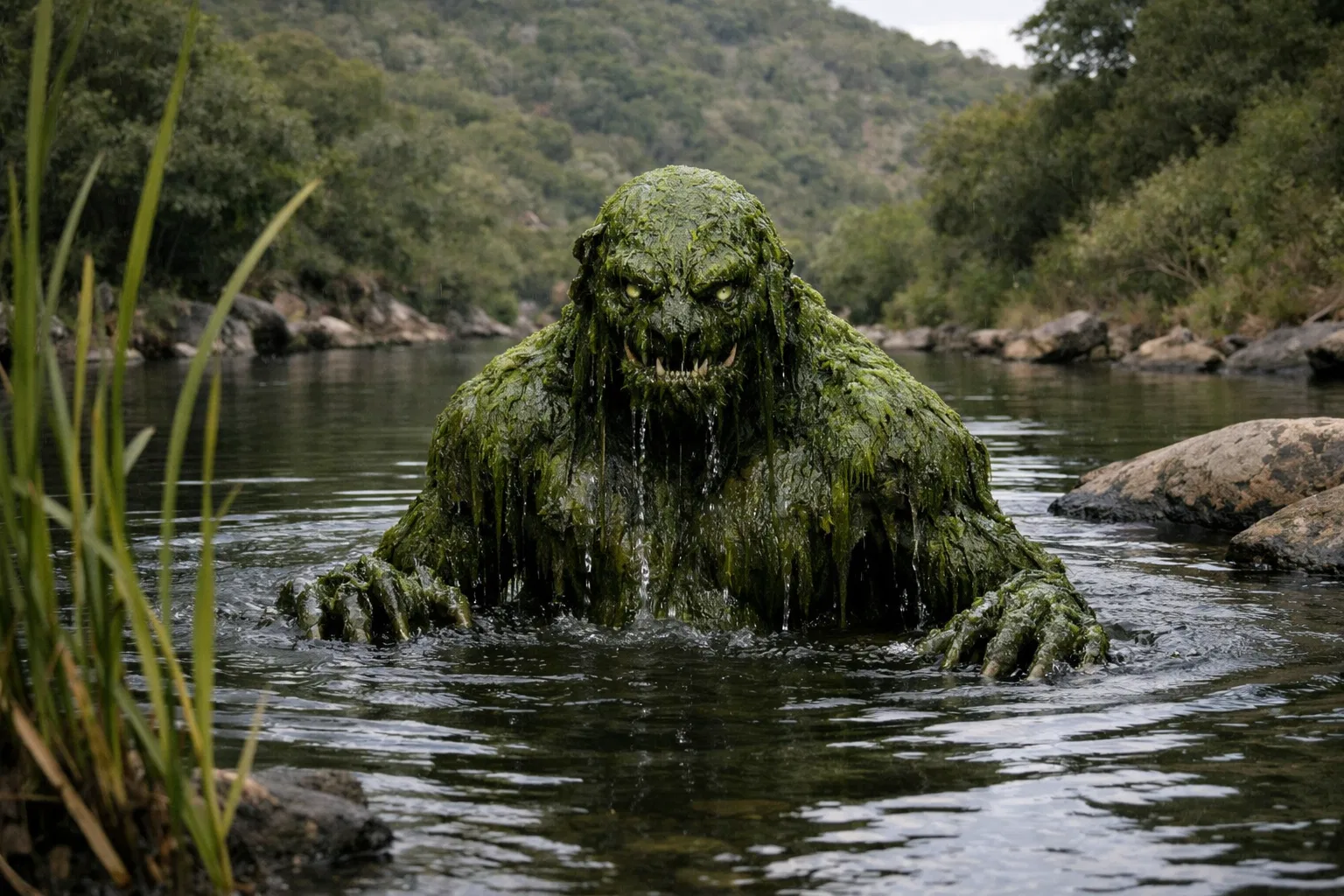
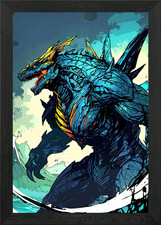
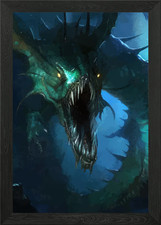
The clearest named monster associated with Swaziland/Eswatini in accessible English sources is Nya-nya Bulembu. In the 1908 collection, the editors say most of the stories were told by Swazis, with others from Zulu and neighbouring communities, and they specifically list “Nya-nya Bulembu” among well-known tales. The tale itself introduces the creature as “a strange beast who lives in the water”, with long teeth and claws and a skin covered in bright green moss.[Reading Room]readingroo.msReading Room Fairy tales from South Africa | Project GutenbergReading Room Fairy tales from South Africa | Project Gutenberg
The story is vivid enough to feel almost like a cryptid account at first glance. A chief orders hunters to bring back the creature’s skin so he can humiliate his disliked daughter Kitila by dressing her as the monster. The hunters follow a river to deep pools, sing to summon the beast, reject unsuitable specimens, and finally capture a young green Bulembu at a bright green pool. That setting gives the creature its memorable texture: not a roaming dragon, but a pool-dweller, summoned from water and visually fused with moss, wetness and riverbank vegetation.[Reading Room]readingroo.msReading Room Fairy tales from South Africa | Project GutenbergReading Room Fairy tales from South Africa | Project Gutenberg
Yet the tale quickly moves away from natural-history mystery. When the beast is killed, fine beadwork, mats and royal ornaments come from its body; when Kitila later enters the water, the monstrous skin falls away and she appears in her true form. The Bulembu is therefore not presented as a zoological puzzle but as an enchanted being whose skin becomes a social disguise, a curse and finally a path to recognition.[Reading Room]readingroo.msReading Room Fairy tales from South Africa | Project GutenbergReading Room Fairy tales from South Africa | Project Gutenberg
Is there evidence for a real animal behind the tale?
There is no strong evidence that Nya-nya Bulembu began as a modern sighting report of an unknown animal. The best source places it inside a fairy-tale collection, not a newspaper archive, expedition diary or wildlife report. The book’s own framing compares such beings with fairies and ogres, and its preface explicitly treats these stories as oral tales being written down before they disappeared from regular telling.[Reading Room]readingroo.msReading Room Fairy tales from South Africa | Project GutenbergReading Room Fairy tales from South Africa | Project Gutenberg
That does not make the creature meaningless. Folklore often preserves how people think about places, hazards and behaviour rather than offering literal field notes. A 2016 study of Swazi oral literature argues that Swazi oral traditions encode relationships between nature, culture and environmental knowledge, and that customary knowledge can matter for biodiversity and sustainable development. In that light, the Bulembu’s deep pools and mossy body are not random decoration: they make water places feel potent, dangerous and morally charged.[unisapressjournals.co.za]unisapressjournals.co.zaSWAZI ORAL LITERATURE, ECO-CULTURE AND ENVIRONMENTAL APOCALYPSE | Southern African Journal for Folklore Studies…
The simplest reading is that Nya-nya Bulembu belongs to the same broad family as ogres, water beings and enchanted animal helpers in southern African oral literature. It may draw on real sensory details — green water, moss, hidden pools, dangerous riverbanks, fear of submerged creatures — but the published tale gives no reason to identify it as a surviving unknown species.
Why Eswatini’s landscape suits water-beast stories
Eswatini is small, landlocked and highly varied, with tourism material describing mountains and valleys, forests and plains, highveld scenery, gorges, reserves and the Great Usutu River among its visitor landscapes. The official tourism site also presents the country as a place where wildlife, culture and scenery sit close together rather than in separate worlds.[The Kingdom of Eswatini]thekingdomofeswatini.comOpen source on thekingdomofeswatini.com.
That mix helps explain why the best Eswatini monster story is not a sea serpent or ocean creature, but a water-pool beast. In a country of rivers, dams, valleys and seasonal contrasts, a deep pool is a natural stage for uncertainty. Water hides bodies, distorts movement, reflects vegetation, and creates places where ordinary animals can appear strange. A mossy pool monster is therefore good folklore even without being good zoology.
There are also plausible real-world ingredients. Eswatini’s biodiversity is significant for its size; a 2026 national biodiversity report summary describes roughly 8,000 species, including mammals, birds, reptiles and plants, while conservation sources stress the country’s varied topography and ecological richness. Reptiles are a serious part of the regional fauna: a recent SANBI-linked reptile conservation volume covers South Africa, Lesotho and Eswatini and assesses hundreds of reptile species across the region.[Climate Policy Radar]cdn.climatepolicyradar.orgClimate Policy Radar Online Reporting ToolClimate Policy Radar Online Reporting Tool
None of that proves a cryptid. It simply shows why stories of hidden, dangerous, animal-like beings could feel locally convincing. Crocodiles, large snakes, monitor lizards, otters, fish movement, floating vegetation and shadows in dark water can all feed the imagination around pools and rivers. Folklore then does what field biology does not: it turns uncertainty into a memorable character.

Other creatures near the Eswatini border of belief
Eswatini sits inside a wider Nguni and southern African cultural zone, so readers often expect familiar regional beings such as the Tokoloshe, Mamlambo or storm-serpent traditions to appear. They are relevant for comparison, but they should not be carelessly claimed as Eswatini-specific cryptids unless the evidence actually places them there.
The Tokoloshe is the safest regional comparison. It is widely described as a small, troublesome or dangerous spirit-being in Nguni and wider southern African belief, sometimes linked to water, witchcraft, night attacks and household fear. A study of traditional healers in Swaziland also appears to list tokoloshe among named traditional afflictions or spirit-related categories, which suggests that the idea has circulated in Swazi healing and belief contexts rather than being only a South African pop-culture import.[Wikipedia]WikipediaOpen source on wikipedia.org.
Mamlambo is more clearly South African in the famous cryptid sense. The best-known modern Mamlambo reports cluster around the Mzintlava River near Mount Ayliff in 1997, where newspapers described a giant reptile-like water monster and local deaths were attributed by some villagers to the creature; police explanations reportedly pointed instead to bodies being affected by water exposure and scavenging. That makes Mamlambo useful as a neighbouring comparison for river-monster belief, but not as a core Eswatini case.[Wikipedia]WikipediaOpen source on wikipedia.org.
Likewise, giant-snake and storm-serpent stories circulate widely across southern Africa, especially in South African Zulu contexts, but web references that casually map such creatures onto Eswatini are often secondary, social-media-based or too thin to support a firm country claim. For this page, they are best treated as regional relatives rather than Eswatini’s own documented monster tradition.
Folklore, witness claim, or misidentified wildlife?
A useful way to read Eswatini’s creature material is to separate four categories.
Folklore: Nya-nya Bulembu belongs here. It is a named monster in a collected oral tale, with an enchanted plot and moral structure. The creature’s value lies in storytelling, symbolism and cultural memory, not in proving an unknown animal.
Belief tradition: Tokoloshe-type accounts sit closer to lived supernatural belief. They may be discussed through traditional healing, household fear or social conflict, but they are not normally framed as animals to be photographed, tracked or classified.
Modern sighting claim: Eswatini has little strong public evidence for recurring modern mystery-animal reports. Searches for lake monsters, ape-like creatures, phantom cats, giant reptiles and newspaper-style flaps do not reveal a clear, well-sourced national case comparable to better-known cryptid traditions elsewhere.
Misidentified wildlife: This is the most plausible explanation for any isolated “monster” report from rivers, dams or bush margins. Eswatini has real wildlife and reptiles, and official tourism emphasises reserves and big-game experiences. In such settings, a crocodile, python, large lizard, nocturnal mammal, escaped livestock, floating carcass or badly seen animal can become stranger in retelling.[The Kingdom of Eswatini]thekingdomofeswatini.comOpen source on thekingdomofeswatini.com.

How the legend has changed in modern culture
Nya-nya Bulembu has not become a global cryptid celebrity, but it has had a modest afterlife in retellings. The tale appears in public-domain audiobook and e-text versions of Fairy Tales from South Africa, and modern folklore blogs and children’s-story projects have retold it as “The Moss-Green Princess” or a moss-monster fairy tale.[LibriVox]librivox.orgfairy tales from south africa by mrs e j bourhillfairy tales from south africa by mrs e j bourhill
That afterlife changes the creature’s role. In the original-style tale, the Bulembu is frightening, magical and morally ambiguous: hunted as a monster, killed for its skin, yet connected to gifts, transformation and the heroine’s hidden worth. In modern retellings, it is easier for the creature to become a neat “mythical monster of Eswatini” entry, especially in online maps of African cryptids. That is useful for discovery, but it can flatten the story if the monster is pulled away from Kitila, the river pool, the social cruelty and the final reversal that give the tale its force.[Reading Room]readingroo.msReading Room Fairy tales from South Africa | Project GutenbergReading Room Fairy tales from South Africa | Project Gutenberg
The best way to remember Eswatini’s cryptid material is therefore not as a hunt for a hidden beast, but as a small, distinctive folklore file: a moss-green pool monster; a princess mistaken for a beast; a landscape where water, wildlife and oral tradition meet; and a reminder that not every “cryptid by country” needs to be forced into the shape of a modern sighting case.
Amazon book picks
Further Reading
Books and field guides related to Does Eswatini Have Its Own Monster Legend?. Use these as the next step if you want deeper reading beyond the article.
African Folktales
Provides strong context for Eswatini monster and folklore narratives.

The Penguin Book of Dragons
Useful for readers comparing creature traditions globally.
eBay marketplace picks
Marketplace Samples
Live-tested eBay searches with available results related to this page.
Endnotes
1.
Source: unisapressjournals.co.za
Link:https://unisapressjournals.co.za/index.php/SAJFS/article/view/1264
Source snippet
SWAZI ORAL LITERATURE, ECO-CULTURE AND ENVIRONMENTAL APOCALYPSE | Southern African Journal for Folklore Studies...
2.
Source: librivox.org
Title: fairy tales from south africa by mrs e j bourhill
Link:https://librivox.org/fairy-tales-from-south-africa-by-mrs-e-j-bourhill/
3.
Source: sanbi.org
Link:https://www.sanbi.org/news/unveiling-hidden-realms-a-comprehensive-exploration-of-southern-african-reptile-conservation/
4.
Source: Wikipedia
Link:https://en.wikipedia.org/wiki/Tokoloshe
5.
Source: Wikipedia
Link:https://en.wikipedia.org/wiki/Mamlambo
6.
Source: sanbi.org
Link:https://www.sanbi.org/wp-content/uploads/2024/06/2023_Suricata10.pdf
7.
Source: archive.org
Link:https://archive.org/details/powerpraisepoems0000vail
8.
Source: journals.co.za
Title: EJC 6a0bfb289
Link:https://journals.co.za/doi/pdf/10.10520/EJC-6a0bfb289
9.
Source: journals.co.za
Title: AJA10168427 90
Link:https://journals.co.za/doi/pdf/10.10520/AJA10168427_90
10.
Source: Wikipedia
Title: West African mythology
Link:https://en.wikipedia.org/wiki/West_African_mythology
11.
Source: readingroo.ms
Title: Reading Room Fairy tales from South Africa | Project Gutenberg
Link:https://readingroo.ms/7/5/8/3/75833/75833-h/75833-h.htm
12.
Source: thekingdomofeswatini.com
Link:https://www.thekingdomofeswatini.com/
13.
Source: cdn.climatepolicyradar.org
Title: Climate Policy Radar Online Reporting Tool
Link:https://cdn.climatepolicyradar.org/navigator/SWZ/2026/eswatini-7th-national-report-nr7-2026_f5077b08388dbe6e4ebb2f62fb04fd6d.pdf
14.
Source: cryptidz.fandom.com
Link:https://cryptidz.fandom.com/wiki/Mamlambo
15.
Source: cryptidz.fandom.com
Link:https://cryptidz.fandom.com/wiki/Tokoloshe
16.
Source: writinginmargins.weebly.com
Link:https://writinginmargins.weebly.com/home/category/africa
17.
Source: entc.org.sz
Link:https://entc.org.sz/mbuluzi/tag/animals/
18.
Source: beastsoflegend.com
Link:https://beastsoflegend.com/bestiary/africa/southern/
19.
Source: oriire.com
Link:https://oriire.com/article/tokoloshe—fear-witchcraft-and-the-unseen-forces-of-zulu-society
20.
Source: everyculture.com
Link:https://www.everyculture.com/wc/Rwanda-to-Syria/Swazis.html
21.
Source: sk.sagepub.com
Link:https://sk.sagepub.com/ency/edvol/download/africanreligion/chpt/swazi.pdf
22.
Source: swaziland.freeservers.com
Link:https://www.swaziland.freeservers.com/tour/folklore.html
Additional References
23.
Source: youtube.com
Link:https://www.youtube.com/watch?v=BDYtgY3tXfQ
Source snippet
WHITE COLLARED CROW (ESWATINI STORY) AFRICAN STORIES // AFRICAN FOLKLORE @StoryCrossroads...
24.
Source: youtube.com
Link:https://www.youtube.com/watch?v=BZzf6pOxY10
Source snippet
Eswatini's Traditional Folklore and Its Animal Spirits #animal2024 #wildlife...
25.
Source: youtube.com
Link:https://www.youtube.com/watch?v=Nv5rkuDxNvg
Source snippet
Important Cultural Lessons from the Kingdom of Eswatini...
26.
Source: youtube.com
Title: Important Cultural Lessons from the Kingdom of Eswatini!
Link:https://www.youtube.com/watch?v=UDbnms9yYyI
Source snippet
A peek into the way of living in Eswatini...
27.
Source: academia.edu
Link:https://www.academia.edu/961478/Swazi_Oral_Literature_Studies_Yesterday_and_Today_The_Way_Forward
28.
Source: academia.edu
Link:https://www.academia.edu/48250111/Traditional_healers_in_Swaziland_Toward_improved_cooperation_between_the_traditional_and_modern_health_sectors
29.
Source: facebook.com
Link:https://www.facebook.com/EswatiniObserver/posts/crocodile-threat-neutralised-in-manjengenia-dangerous-crocodile-threatening-manj/1320517943428725/
30.
Source: study.com
Link:https://study.com/academy/lesson/video/african-mythological-creatures.html
31.
Source: abookofcreatures.com
Link:https://abookofcreatures.com/tag/african-folklore/
32.
Source: instagram.com
Link:https://www.instagram.com/reel/DWoqKF-lIKO/
Topic Tree
Follow this branch
Related pages 192
- Antigua Cryptids
- Maldives Monsters
- Malta Monsters
- Qatar Monsters
- Argentina Monsters
- +187 more in sidebar